Taiwan jails soldiers guarding president’s office for spying for China

China and TaiwanFOUR TAIWANESE SOLDIERS WITH access to “extremely sensitive” secrets have received jail sentences for spying for Chinese intelligence, as Taiwanese authorities have warned of a sharp rise in Chinese espionage cases. Three of the soldiers had been detailed to the security of the Office of the President, while the fourth soldier was a member of staff at the Taiwanese Ministry of National Defense’s Information and Telecommunications Command.

According to the prosecution, the soldiers made use of their personal mobile phones to photograph “internal military information” they had access to. They then shared the photographs with their Chinese intelligence handlers. In return for their services, their handlers compensated the soldiers by paying them between $7,000 and $20,000 each. The espionage arrangement between the soldiers and their handlers lasted between 2002 to 2024, the court heard.

No information was shared during the open-door portion of the court case about the type of information that the four soldiers were accused of having shared with their Chinese handlers. But the prosecution alleged that the digital photographs given to the Chinese contained information that the four alleged spies had acquired while working in “extremely sensitive and important units” of the Taiwanese military. At the conclusion of the court case, the court sentenced the soldiers to between 70 and 84 months in prison for violating Taiwan’s national security law. In sentencing the accused, the judge said they had engaged in acts that “betrayed the country and endangered national security”.

Meanwhile, the Taiwanese National Security Bureau announced late last week that the number of people who were prosecuted for involvement in Chinese espionage in 2024 broke all recent records for the second year in a row. Specifically, there were 10 prosecutions for Chinese espionage in 2022, 48 in 2023, and 64 in 2024. Many of those caught spying for China were either active or former members of the Taiwanese military. These individuals were deliberately targeted by Chinese intelligence officers because they had knowledge of Taiwanese military secrets, the National Security Bureau said.

Author: Joseph Fitsanakis | Date: 31 March 2025 | Permalink

European Union exploring spy satellites to replace its reliance on US network

European Space AgencyTHE EUROPEAN UNION IS  considering building its own military satellite network in an effort to reduce or eliminate its reliance on American satellite capabilities, according to reports. The London-based Financial Times newspaper said on Saturday that the exploratory project is being led by Andrius Kubilius, a veteran Lithuanian politician who is serving as the European Commissioner for Defense Industry and Space.

Speaking to The Financial Times, Kubilius confirmed that the European Union is considering the construction of a low Earth orbit (LEO) satellite system. Such a system would complement the European Union’s existing Copernicus Earth observation program, which is managed by the European Commission in partnership with the individual European Union member states. The costs and benefits of Copernicus are shared by member states and by several agencies, including the European Space Agency, the European Environment Agency, and the European Maritime Safety Agency.

Unlike Copernicus, a new LEO satellite system would primarily satisfy military priorities and would generate imagery updates every 30 minutes, thus providing near-real-time intelligence on targets. In contrast, Copernicus satellites are able to generate new imagery every 24 hours. Moreover, a new LEO satellite system would integrate into IRIS², an internet network of multi-orbit satellites intended to provide on-demand location-tracking, security surveillance and secure communications links to European Union member states. IRIS² is scheduled to become operational in 2027.

In his comments to The Financial Times, Kubilius acknowledged that the idea for a new European Union LEO satellite system was sparked by “changes in the geopolitical situation” relating to the United States. Subsequently, the European Union is exploring ways to “reduce its reliance on United States military assets”, he said. The commissioner admitted that such a project would be costly—perhaps in excess of $540 billion—as well as time-consuming. But there was much desire to proceed, he said.

In the meantime, the European Union is considering “commercial alternatives” until an independent European Union-run satellite network becomes fully operational, according to the The Financial Times.

Author: Joseph Fitsanakis | Date: 17 March 2025 | Permalink
Eighth person detained in sprawling Taiwanese probe of Chinese spy ring

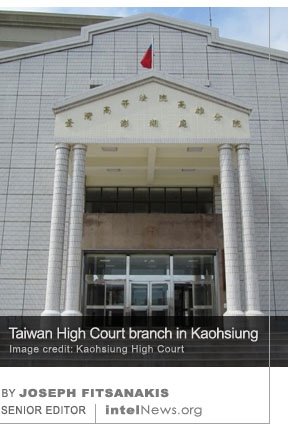
Kaohsiung High Court, TaiwanA SEVENTH PERSON HAS been detained in Taiwan as a result of a broadening investigation into a Chinese spy ring that allegedly provided Beijing with sensitive military intelligence. The existence of the investigation was revealed in January of this year, when the Taiwanese authorities announced the arrests of one retired and six active-duty military officers, all of whom were charged with spying for China.
On January 6 of this year, a retired Taiwanese Air Force colonel, identified only by his last name, Liu, was arrested for spying. According to court documents unsealed at the Taiwan High Court branch in Kaohsiung, Liu retired from the Air Force 2013. Soon afterwards, he began business dealings in China. It was during one of his trips to China when Liu was allegedly recruited by the Chinese government. He then carried out espionage operations on behalf of Beijing for approximately eight years.

Throughout his espionage activities, Liu allegedly used his military contacts to recruit six active-duty Taiwanese Air Force and Navy officers to carry out espionage, in return for monetary payments. The six active-duty military officers were arrested along with Liu on January 6. In April of this year, all seven individuals were formally charged with spying for China, in violation of Taiwan’s Classified National Security Information Protection Act.

Taiwanese government prosecutors alleged that each member of the spy ring received between NT$200,000 and NT$700,000 (approximately US$6,500-23,000) for agreeing to spy for Beijing. As the principal agent, Liu received individual bonuses of between NT$30,000 and NT$100,000 (US$1,000-3,200) each time he gave his Chinese handlers information gathered by one of the members of the spy ring.

On August 16, the Taiwanese government announced that one more individual, referred to as “a field officer” was detained on suspicion of spying for China. The suspect was identified only by his last name, Cheng. He was reportedly arraigned in the Taiwan High Court branch in Kaohsiung, the same court that last January delivered espionage charges against the other seven suspects involved in the spy ring investigation. All eight suspects have been denied bail. Their trial has not yet been set.

Author: Joseph Fitsanakis | Date: 21 August 2023 | Permalink

Seized Russian weapons systems could be ‘goldmine’ for Western intelligence

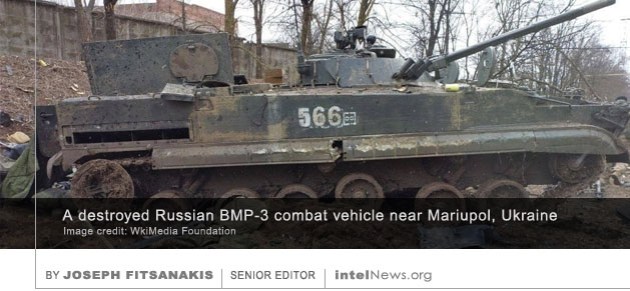
Russia Ukraine warA WIDE ARRAY OF Russian military equipment, which has been falling in the hands of the Ukrainian forces since February 24, could prove a “goldmine” for American and other Western spy agencies, experts claim. As the war enters its third week, there are reports that the Ukrainian forces have captured numerous Russian command-and-control vehicles, as well as other logistical military equipment. Reports also suggest that a large array of Russian weapons systems have been falling into the hands of the Ukrainian armed forces and paramilitary units.

Some of the confiscated Russian weapons include Pantsir surface-to-air missile systems and TOS-1A thermobaric multiple-launch rocket systems, which have been found mounted on abandoned tanks or armored trucks. The Ukrainians also claim to have captured Russian fighter jets, such as the Sukhoi Su-34, in working condition. The government in Kyiv is frequently reminding Ukrainian regular troops and paramilitaries to preserve the integrity of captured Russian military equipment, to include helicopters, warplanes and land-based weapons systems, as well as Russian-language user manuals.

On Tuesday, the American newsmagazine Newsweek cited “current and former US military personnel” as stating that the war in Ukraine gives Washington a rare opportunity to get its hands on the latest Russian military equipment. There is a longstanding intelligence cooperation agreement between the US and Ukraine, so sharing captured military and intelligence equipment is “normal practice”, especially on the Ukrainian side, sources told Newsweek. In today’s digitized combat environment, such equipment regularly includes microchips, which enable communication with command posts. The software found on this equipment can be critical for rival intelligence agencies, as they can use it to develop and test malware. Such malware can be deployed during combat, with potentially disastrous consequences for the adversary’s military.

Some of this equipment can be so crucial that “it’s like capturing an Enigma machine”, one expert told Newsweek, referring to the sophisticated cipher device used by the Wehrmacht during World War II to secure its military communications. Such equipment can potentially be reverse-engineered, and then shared by the United States with other Western intelligence agencies, for purposes of developing ways of jamming them, sabotaging them, or otherwise compromising them, experts said.

Author: Joseph Fitsanakis | Date: 09 March 2022 | Permalink

Ukrainian cities could soon face ‘profound pressure’ by Russian forces, US warns

Kiev KyivLARGE URBAN CENTERS IN Ukraine, such as Kiev, are likely to come “under profound pressure” by Russian forces in the coming days, as an “increasingly frustrated” Vladimir Putin demands results from his generals, according to reports by United States intelligence agencies. At least three American news outlets have cited unnamed “American officials” briefed on the intelligence about Ukraine, in claiming that the Russian president is growing impatient with the progress of the military campaign. Putin may therefore “see his only option as doubling down on violence” and could “imminently increase the intensity of the attack” on Ukrainian cities, according to CNN.

Quoting “an American source familiar with the intelligence”, the news network warned that, from a purely military and tactical standpoint “Russia has the manpower and firepower to take [Kiev]. No question. And no matter how much resistance the Ukrainians put up”. Unnamed American lawmakers and administration officials, who are familiar with intelligence briefings on the matter, told CNN that Ukraine is “massively outgunned and outmanned” and could “by sheer numbers be able to overcome the Ukrainian resistance”. According to two sources “familiar with the intelligence”, some analysts are speculating that Russia may be planning to attack Ukraine “in waves”. The idea would be to exhaust the Ukrainian defenses with the first wave, before “demolish[ing] them with a second wave of fresh troops”.

The question is, how brutal are Putin’s intentions? The American news network NBC cites “current and former US officials briefed on the matter” in claiming that the Russian president may be close to ordering an all-out attack on Ukrainian cities. The officials tell NBC that Putin has been displaying “a different pattern of behavior than in the past” and has been “lashing out in anger at underlings” during “unusual bursts of anger”, while remaining “largely isolated from the Kremlin” due partly to concerns about COVID-19. Due to his isolation from the majority of his advisors, Putin may not have been able to form “a realistic understanding” of the situation on the ground in Ukraine, according to the report.

Some suggest that the Russian dictator may be feeling like he is “backed into a corner”. Consequently, he may resort to using “brute force to seize [Kiev] and other cities, by employing indiscriminate bombing and shelling of civilian areas”. This would not be a first for Putin. He instructed his generals to make use of “scorched earth” tactics in Syria during the civil war there, and he authorized the Russian military to flatten Grozny, the capital of the Russian province of Chechnya, during the Second Chechen War of 1999-2000.

Author: Joseph Fitsanakis | Date: 01 March 2022 | Permalink

Moscow denounces ‘NATO propaganda’ as Albania probes alleged Russian spies

DEFENDER-Europe 21

THE RUSSIAN GOVERNMENT HAS accused media in Albania of channeling “propaganda”, as authorities in the Balkan country are investigating alleged military espionage by two Russian citizens. The case centers on DEFENDER Europe 21, a large-scale multinational military exercise, which is held every year under the auspices of the United States Army and the North Atlantic Treaty Organization (NATO). A portion of the exercise, which brings together nearly 30,000 troops from 26 nations, took place in Albania in April and May of this year.

Late last month, reports in the Albanian media said that the Office of the Prosecutor in the capital Tirana was investigating two Russian and five Czech citizens, who may have engaged in espionage activities. According to the reports, one of the Russian citizens had entered Albania on May 12, and traveled to Durres, Albania’s second most populous city, which is centrally located along the country’s Adriatic coast. Durres is the closest urban center to the site of the DEFENDER Europe 21 exercise. A few days later, the Russian citizen was found deploying a drone, according to the Tirana prosecutor.

The Albanian authorities then began looking into the case of another Russian citizen, who had entered the country in March, and was based in Orikum, a small coastal town southern Albania. Like Durres, Orikum is in close proximity to military training facilities. Albanian authorities have not disclosed any information about the fate of the five Czech nationals. But they said last week that a criminal case had been opened against the two Russians.

Last Friday, the Russian Ministry of Foreign Affairs accused the Albanian media of “fueling the hype” about the two Russians, adding that the case was “an exercise in NATO propaganda”. Meanwhile, the Russian embassy in Tirana said that it had sent a formal inquiry about the criminal case to Albania’s Ministry for Europe and Foreign Affairs. Relations between the former Warsaw Pact allies are currently at a low point. In January of this year, Tirana expelled a Russian diplomat, accusing him of ignoring safety protocols relating to COVID-19. In 2018, two Russian diplomats were expelled from Albania after they allegedly engaged in espionage. Shortly afterwards, Moscow expelled two Albanian diplomats in return.

Author: Joseph Fitsanakis | Date: 12 July 2021 | Permalink

Polish counterintelligence arrest man for giving military secrets to Russia

Poland ABW

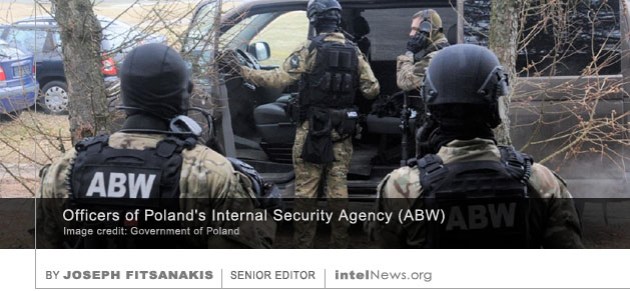
POLAND’S COUNTERINTELLIGENCE AGENCY HAS announced the arrest of a Polish citizen, who reportedly admitted spying for Russian military intelligence. The 43-year-old man has been named only as “Marcin K.”, in compliance with Polish law. He was reportedly arrested on May 5 by officers of the Internal Security Agency (ABW), Poland’s domestic counter-intelligence agency.

According to ABW spokesman Stanisław Żaryn, the accused spy had been handing over classified “information and materials” to the Russian secret services. Much of the classified information reportedly related to the “military field”. The Russians also received sensitive information relating to “Polish entities and citizens”, according to government prosecutors. The Polish government described the information as “extremely important for Russian operations […] and to the detriment of the Republic of Poland”. No further information has been provided about the case.

Importantly, Polish authorities have not shared information about Marcin K.’s possible Russian handlers, who are likely to be employees of the Russian embassy in Warsaw. Regular intelNews readers will recall that Poland was among several European countries that expelled Russian diplomats last month, following a call for solidarity by the Czech Republic. Prague issued the call after it expelled 18 Russian diplomats in protest against an explosion that totaled a remote munition depot in the east of the country, which the Czechs claim was part of a Russian intelligence operation. In addition to expelling a number of Russian diplomats, Poland joined Hungary and Slovakia in issuing a joint statement decrying what it described as “deplorable act[s] of aggression and breach of international law committed by Russia on European soil”.

According to news reports, Marcin K. has been placed in pre-trial detention for three months, as investigators are interviewing witnesses and gathering material evidence for a pending trial.

Author: Joseph Fitsanakis | Date: 18 May 2021 | Permalink

Bulgaria expels two Russian diplomats for espionage, Russia vows to respond in kind

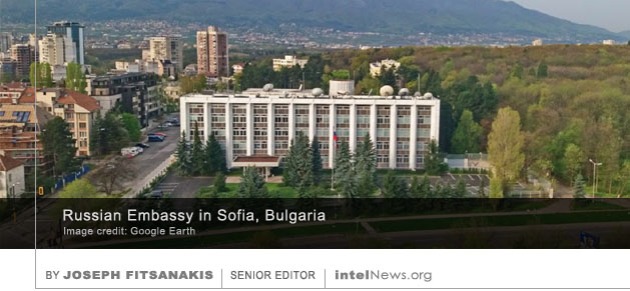
Russian embassy BulgariaBulgaria, a once close Soviet ally, which is now a member of the European Union and the North Atlantic Treaty Organization, has expelled two Russian diplomats whom it accuses of conducting military espionage. This raises to five the number of Russian diplomats who have been expelled from Bulgaria for espionage in the past year.

In a hastily announced press conference on Wednesday, a spokesman for the Ministry of Foreign Affairs told reporters in the Bulgarian capital Sofia that the ministry had “declared two Russian diplomats personae non grate”, a Latin term meaning unwanted persons. He added that the Bulgarian government had notified the Russian embassy of its decision with an official diplomatic note. The two Russian diplomats, who have not been named, were given 72 hours to leave the country, said the spokesman.

In addition to the expulsion of the two diplomats, it was later reported that the Bulgarian government had denied an earlier request by Moscow to provide diplomatic accreditation to Russia’s new military attaché to the country, who was expected to assume his post in Sofia this coming December. It is believed that this action by the Bulgarian government is connected to the alleged espionage case involving the two Russian diplomats.

Bulgarian government prosecutors allege that the two Russians have engaged in espionage activities in Bulgaria since 2016. Their goal, according to the Bulgarians, was to obtain classified information about the technological modernization of the Bulgarian Armed Forces, which is ongoing. They had allegedly already made contacts with Bulgarian officials who were privy to such information, and in some cases had already provided them with money in exchange for secrets. The two diplomats are believed to be working for the Main Directorate of the Russian Armed Forces’ General Staff, which is commonly referred to as GRU.

The Russian Embassy in Sofia confirmed late on Wednesday that it had received a telephone call from the Bulgarian Ministry of Foreign Affairs, informing it of the expulsion order issued for the two diplomats. It added, however, that it had not been given proof of acts of espionage by the two diplomats. In the same statement, the Russian Embassy said the two diplomats would leave Bulgaria as instructed, but warned that Moscow reserved the right “to a response in kind”.

Author: Joseph Fitsanakis | Date: 24 September 2020 | Permalink

Danish military spy chief ‘relieved of duty’ following whistleblower revelations

Lars FindsenThe director of Denmark’s military intelligence service has been “relieved of duty for the time being”, following a series of whistleblower revelations, according to the country’s Ministry of Defense. Little is known about the precise nature of the revelations, but they are believed to relate to large-scale intelligence collection of information belonging to Danish citizens, which the spy agency is prohibited from accessing.
The news was revealed on Monday by the Danish Oversight Board, known as TET, which is responsible for supervising the work of Denmark’s intelligence agencies. The TET said that “whistleblower complaints” had revealed information that pointed to improper intelligence collection practices by the Danish Defense Intelligence Service (FE, or DDIS in English). Moreover, when confronted by the TET, the DDIS “withheld key information” about its collection practices and even gave “incorrect information relating to the collection and disclosure of information”, according to the watchdog.

The press release by the TET said that the DDIS had carried out “operational activities” that violated Danish law and violated the privacy of Danish citizens. It also said that the illegal “operational activities” had taken place “for as many as six years”. However, the watchdog added that, given the “classified content” of the intelligence service’s mission and activities, it could “not provide further information to the public”. It is believed, however, that the controversy involves a system of mass surveillance of telecommunications, which somehow collected information exchanged domestically between Danish citizens, or between them and foreign nationals. The DDIS is forbidden by law to spy on the domestic activities of Danes.

The Danish Ministry of Defense announced on Monday that DDIS Director Lars Findsen, had been “relieved of duty for the time being”, while officials investigated a multi-volume report produced by TET investigators about the alleged improprieties by the spy agency. The ministry added that two more senior DDIS officials had been placed on leave, but said they could not be named for reasons of national security.

Author: Joseph Fitsanakis | Date: 26 August 2020 | Permalink

Militaries around the world scramble to contain impact of COVID-19

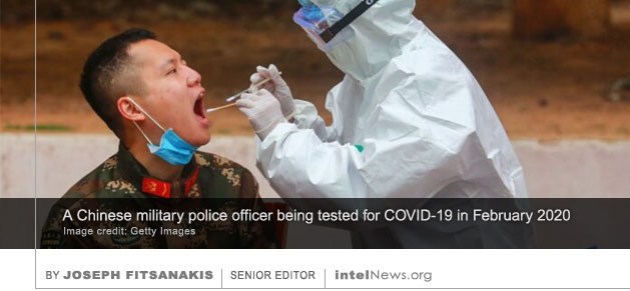
COVID-19 ChinaMilitary forces around the world are scrambling to contain the impact of COVID-19 on military readiness, as the virus continues to infect troops and commanders at an alarming rate. On Tuesday, the Polish government announced that General Jaroslaw Mika, who serves as general commander of Branches of the Armed Forces, had tested positive for the coronavirus. General Mika is believed to have contracted the virus during a military conference that took place in the German city of Wiesbaden, where North Atlantic Treaty Organization commanders gathered to plan an American-led military exercise.

Also on Tuesday, the United States Department of Defense said that the commander of the US Army in Europe, Lieutenant General Christopher Cavoli, participated at the Wiesbaden conference, along with several other US Army staff members. They are currently being tested for exposure to COVID-19. Meanwhile the Reuters news agency reported that the US Pentagon acknowledged that “the US military’s official tally of servicemembers and related personnel who have been infected by the coronavirus likely undercounts the actual total”. Sources told the news agency that the low age and good health of American troops was “a mixed blessing of sorts”, since it allows US servicemembers to survive the virus but at the same time reduces their symptoms that would normally trigger testing for COVID-19.

The government of Taiwan said on Tuesday that over 400 members of its armed forces had entered self-imposed quarantine in order to prevent a possible COVID-19 outbreak among military personnel. This brings the total number of Taiwanese servicemembers who are currently in quarantine to over 2,000, which includes two generals. The country’s Minister of Defense, Yen De-fa, insisted on Tuesday that the virus had not impacted Taiwan’s military readiness.

Chinese officials have not provided information about the effect of the coronavirus on the country’s military. The Chinese-language website of The Epoch Times said last week that, according to unnamed insiders, the Chinese People’s Liberation Army had “forcibly isolated” tens of thousands of servicemembers this month. There are no reports of specific numbers in the Chinese media or non-Chinese news outlets.

Finally, according to Daily NK, a South Korean website that specializes on news from North Korea, approximately 180 North Korean soldiers have died as a result of contracting COVID-19 in the past month. The website cited “a source inside the North Korean military”, who said that Pyongyang had forcibly quarantined at around 3,700 soldiers of all ranks to prevent the spread of COVID-19 in the country’s military.

Author: Joseph Fitsanakis | Date: 10 March 2020 | Permalink

Russia detains American diplomats for traveling to top-secret military site

SeverodvinskRussian authorities detained three American diplomats because they allegedly tried to enter a highly secret weapons testing site in northern Russia, according to reports. The site in question is located near the northern Russian city of Severodvinsk. The city is home to a number of military shipyards and is thus restricted for non-Russians. The latter require a special permit to enter it.
In August of this year, Western media reported on a mysterious explosion that took place in a weapons research site located near Severodvinsk. The explosion allegedly happened during testing of a top-secret prototype rocket engine. Russian authorities revealed that five workers died as a result of the explosion, but denied media reports that the explosion had caused a radiation leak that had affected Severodvinsk. The Russian Ministry of Defense also denied allegations that a large-scale nuclear clean-up operation had been conducted in and around Severodvinsk. At the same time, Russian authorities restricted maritime traffic in the White Sea, on the shores of which Severodvinsk is situated.

On Wednesday, the Russian news agency Interfax reported that three American diplomats had been detained by authorities near Severodvinsk, allegedly because they tried to enter the city without the necessary permits. The diplomats were not named but are believed to be military attachés that serve in the United States embassy in Moscow. Interfax said the three were detained on Monday while onboard a passenger train. They were removed from the train, questioned and eventually released. However, they might still face charges of trying to enter a restricted area without permission.

The United States Department of State issued a statement claiming that the three diplomats “were on official travel and had properly notified Russian authorities of their travel”. A State Department spokesman said on Wednesday that the three diplomats’ travel plans had been authorized by the Russian Ministry of Defense. But authorities in Russia said that the three military attachés had been authorized to travel to the city of Arkhangelsk, which is located approximately 30 miles east of Severodvinsk. “We are quite willing to provide the United States embassy with a map of the Russian Federation”, the Russian statement concluded.

Author: Joseph Fitsanakis | Date: 17 October 2019 | Permalink

Colombian spy chief resigns over fake dossier that linked militants to Venezuela

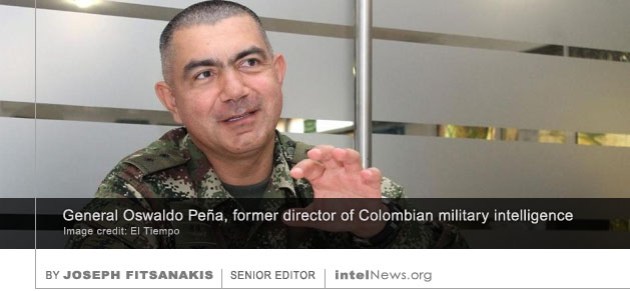
Comando Conjunto de InteligenciaColombia’s military spy chief has resigned, after the Colombian president was found to have misused intelligence at a United Nations speech to blame Venezuela for allegedly aiding paramilitary groups. For many years, authorities in Bogotá have accused Venezuela of aiding armed groups such as the National Liberation Army (ELN) and the Revolutionary Armed Forces of Colombia (FARC). These groups have been engaged in a decades-long guerrilla war against the Colombian state. In 2017, the largest of these groups, the FARC, laid down its weapons and signed a peace treaty with the Colombian government. But the ELN has refused to follow suit, while a number of hardline FARC leaders recently announced that they would be resuming their armed struggle against the Colombian authorities.

In recent months, the rise of Venezuela’s Western-supported opposition leader Juan Guaidó has further-fueled tensions between Colombia and Venezuela. Bogotá has come out in support of Guaidó, while many anti-government Venezuelans, some of them armed, have sought refuge in Colombia. Colombia rejects Venezuela’s claims that it is giving shelter to terrorists and argues instead that it is providing humanitarian aid to Venezuelan refugees. In turn, it accuses Caracas of sheltering ELN and FARC guerrillas, a claim that the Venezuelan government strongly denies.

Last week, during the United Nations General Assembly in New York, Colombian President Iván Duque unveiled a dossier of evidence that purportedly proved beyond doubt Venezuela’s collusion with Colombian paramilitaries. Duque told the United Nations gathering that the collusion was supervised by no other than the President of Venezuela, Nicolás Maduro. But within hours of Duque’s speech, reporters who scrutinized the dossier found that much of the photographic evidence in it had been downloaded from the Internet. Moreover, the photographs were not taken in Venezuela, as Duque claimed in his speech, but in Colombia.

The revelations have dominated the news headlines in Colombia and Venezuela in the past week, with the Colombian government engaging in damage control. On Monday, General Oswaldo Peña, Colombia’s military intelligence chief, resigned over the fake dossier. General Peña directed the Comando Conjunto de Inteligencia (Joint Intelligene Command) of the Colombian Armed Forces, which was seen as the primary spy agency behind the information contained in the dossier. In his resignation letter, General Peña wrote that “as a general of the [Colombian] Republic” he was fully aware that he needed to take responsibility for his activities and the activities of his subordinates. President Duque has not commented on the general’s resignation.

Author: Joseph Fitsanakis | Date: 03 October 2019 | Permalink

Russia is looking for nuclear missile that went missing, US sources claim

Russian nuclear-powered missileRussia is preparing to carry out an extensive search for a nuclear-powered missile that went missing during a test several months ago, according to American intelligence sources. The missing missile appears to be part of a new Russian-made weapon system that President Vladimir Putin boasted about earlier this year. During his annual state-of-the-union speech in Moscow on March 1, Putin said that Russia had developed a new type of nuclear-powered missile with a virtually unlimited range. This new type of weapon, said the Russian president, could fly indefinitely and thus deliver nuclear warheads to any target around the world. Additionally, the new system was designed in such a way that it could evade every known missile defense system and was thus “invulnerable to interception”, he claimed.
According to observers, the recently announced Russian weapon has been in development for more than 15 years. It is based on gasoline-powered engines that are used during the missile’s takeoff. But soon afterwards, they give way to a nuclear-powered engine that guides the missile to its eventual destination. However, despite Putin’s claims, the weapon has never been successfully tested according to American intelligence sources. The Americans claim that the Russian military tested these missiles at least four times between November of 2017 and February of this year, and that all four missiles crashed long before they reached their intended destination. The idea of indefinite flight, therefore, which Putin boasted about earlier this year, remains unrealized, according to American sources. Moscow, however, denies that the missiles crashed during the testing stage.

Now the American news network CNBC has said that Russia is preparing to launch a large-scale search operation for one of the nuclear-powered missiles that went missing in the Arctic Ocean in November of 2017. It is believed that the missile crashed in the Barents Sea, a vast expanse of water located off the northern coasts of Russia and Norway. Citing anonymous individuals “with direct knowledge of a US intelligence report” on the subject, CNBC said on Tuesday that the Russian search mission will consist of three vessels, at least one of which will be specially equipped to handle radioactive material from the missing missile’s nuclear core. The American news network said that the Russian search mission has no definite timeline. The Russian government has not commented on CNBC’s allegations.

Author: Joseph Fitsanakis | Date: 24 August 2018 | Research credit: A.G.B. | Permalink

Taiwan admits for the first time that Chinese general Liu Liankun was one of its spies

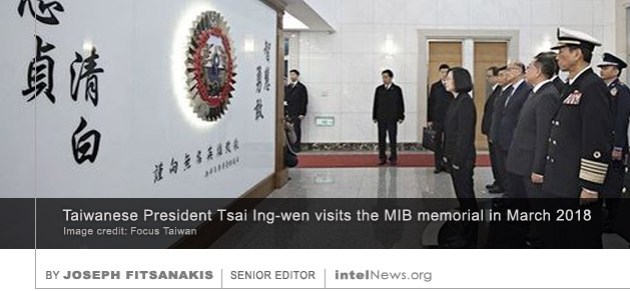
Taiwan MIBThe government of Taiwan has acknowledged publicly for the first time that a Chinese major general, who was executed by Beijing in 1999 for espionage, was indeed one of its spies. The military officer was Liu Liankun, a logistician for the Chinese People’s Liberation Army, who headed its Department of General Logistics. However, China arrested Liu for espionage in 1999, and accused him of having spied for Taiwan for five years, in exchange for money. At the time, Taiwan denied that Liu spied on its behalf and refused to acknowledge that it had any role in the major general’s alleged espionage activities.
According to his Chinese government accusers, Liu passed information to Taiwan during the so-called 1996 missile crisis —known in Taiwan as the 1996 Taiwan Strait crisis. The crisis was prompted by a series of missile tests conducted by Beijing in the waters around the island of Taiwan. The crisis lasted several months, from July of 1995 to March of 1996. Many in Taiwan were convinced that China’s missile tests were the precursors of a military advance by Beijing, aimed at conquering the island one and for all. However, Taiwan’s Ministry of Defense eventually issued a press statement saying it was aware that the Chinese missiles were not equipped with armed warheads. The information was correct, but it made China realize that Taiwan was receiving information from a highly placed source inside its military. After an extensive counterintelligence investigation, the Chinese arrested Liu and accused him of having spied for Taiwan in exchange for nearly $2 million in bribes. Liu was eventually executed by lethal injection in a Beijing prison. He was 58. At the time of his conviction, Liu was the most senior Chinese military officer to have ever been convicted of spying for Taiwan.

But Taiwan continued to deny any involvement in Liu’s case. That changed last week, however, when Taiwan’s Military Information Bureau unveiled its renovated memorial, which is housed at its headquarters in Taipei City. The memorial features plaques commemorating 75 individuals who have died while carrying out MIB intelligence operations. Those featured include both intelligence officers and their assets —foreign people recruited by intelligence officers to spy for Taiwan. Among the plaques, visitors to the memorial saw one dedicated to Liu for the first time. A note beneath the plaque acknowledges Liu’s contributions during the 1996 missile crisis. But it also states that the Chinese military official also provided assistance to Taiwan during earlier crises with China in the 1990s, as well as inside information about the death of Chinese Premier Deng Xiaoping in 1997.

Author: Joseph Fitsanakis | Date: 6 April 2018 | Permalink

Latvian citizen arrested for allegedly spying for Russia

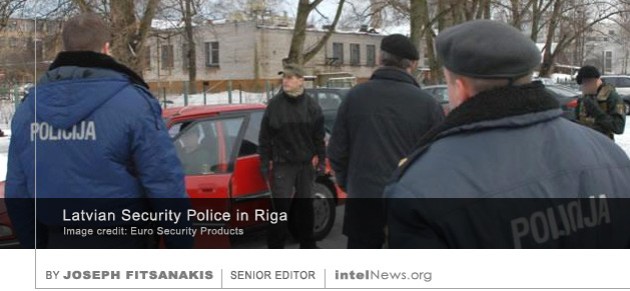
Latvian Security PoliceThe Latvian Security Police have announced the arrest of a man who is suspected of spying for a foreign country, with some reports claiming it is Russia. The Latvian state-owned news agency, LETA, said late last month that the man, who has not been named, was arrested by Security Police officers on Tuesday, December 19, 2017. However, the arrest was not announced by Latvian authorities until recently. A statement issued by government authorities in Riga said that the man’s arrest had been followed by searches at several different properties in the Latvian capital.

The detainee, who is reportedly a Latvian national, is being investigated for espionage and has already been charged with illegally possessing a firearm. A court in the Latvian capital ruled last week that the suspect should be remanded in custody. Initially, the Security Police refused to identify the detainee or reveal the name of the country that he allegedly spied for. But some private Latvian news outlets, who are believed to be close to the government, said on the morning of February 7 that the detainee worked for the Russian state. One report claimed that the man was tasked with collecting military-related information from the region of Latvia that borders Russia. He would then share the information with his Russian handlers, according to the report. On February 8, the Security Police confirmed that the detainee was indeed suspected of working for Russia. According to the agency, he gave his Russian handlers information about the National Armed Forces, Latvia’s military force.

Also on February 8, Latvian authorities warned the country’s citizens that they should remain vigilant. A government statement said that Moscow was intensely interested in collecting classified information about Latvia and that the Russian secret services preferred to recruit Latvians when the latter visited Russia. Reports late last week said that, if found guilty of spying, the detained man could face up to 14 years in prison.

Author: Joseph Fitsanakis | Date: 12 February 2018 | Permalink