Russia announces detention of Norwegian citizen on espionage charges

Frode BergAuthorities in Russia have announced the arrest of a Norwegian citizen, whom they accuse of receiving classified information relating to Russia’s Armed Forces. The detainee has been named as Frode Berg, 62, from Kirkenes, a small town in Norway’s far north, located 100 miles from the Russian city of Murmansk. According to articles in the Russian press, Berg is a 24-year veteran of the Office of the Norwegian Border Commissioner, an obscure government agency that operates under Norway’s Ministry of Justice and Public Security. Among other tasks, the Office of the Norwegian Border Commissioner is responsible for enforcing and monitoring bilateral compliance with the Soviet (now Russian)-Norwegian Border Agreement of 1949. Berg, who worked closely with Norway’s National Police Directorate as part of his job, retired from the Office in 2014.

According to reports in the Russian media, Berg was arrested two weeks ago by officers of the Russian Federal Security Service (FSB), the agency responsible for domestic security and counterintelligence. He is now in detention and is accused of receiving classified information relating to the Russian Navy. It is believed that Berg received the classified documents from an unnamed Russian national, who was arrested by the FSB in early December and now faces charges of high treason. No further information has been made public about Berg’s arrest. Relations between Norway and Russia have been tense in recent years, partly due to attempts by the two nations to assert control over undersea territories in the arctic region, which are becoming accessible due to global warming. In 2015, Norway’s state broadcaster accused the FSB of pressuring a Norwegian newspaper, The Barents Observer, to fire one of its journalists who covered fossil fuel exploration in the Arctic Ocean. But the Russian government denied that it has played any role in the journalist’s firing.

Norway’s Ministry of Foreign Affairs said on Tuesday that it had established contact with a Norwegian national who was behind bars in Russia, but did not give the person’s name or further details. Berg’s family in Norway said the last time they had news from him was two weeks ago, when he was holidaying in Moscow. The Russian state prosecutor’s office said that Berg’s lawyers had filed an appeal against his detention, but that the Norwegian would remain in jail until his appeal is heard in court.

Author: Joseph Fitsanakis | Date: 20 December 2017 | Permalink

Swedish intelligence says it identified foreign spies searching for secrets

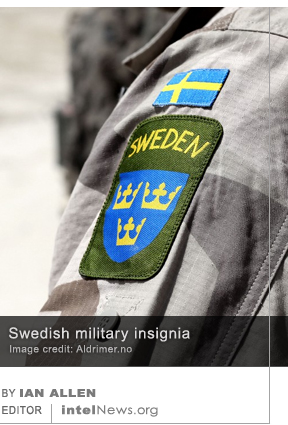
Sweden militaryThe military intelligence service of Sweden warned last week that there were increasing incidents of espionage perpetrated against Sweden by operatives identified “beyond doubt” as agents of foreign powers. In its annual report for 2016, the Swedish Military Intelligence and Security Service (MUST) said large numbers of spies were detected around “sensitive installations” mostly of a military nature. Headed by an Army general, MUST is responsible for military intelligence and counterintelligence in Sweden. Every year it produces a report of its activities for the Swedish government and defense establishment, and also publishes a declassified version. Its latest report warns about growing attempts by foreign countries to “gather intelligence about Sweden’s defense assets and capabilities”.

On Friday, Swedish newspaper Svenska Dagbladet published an interview with senior MUST official Jan Kinnander. He told the paper that MUST was able to identify beyond doubt that certain individuals were “connected to the intelligence services of foreign states”. These persons traveled to Sweden “under false pretenses”, according to the official. A few of them were diplomats, said Kinnander, while most attempted to travel around the Scandinavian country using “conspiratorial methods”. Many were detected prowling around government installations that are linked to Sweden’s national defense while having “no reasonable cause” to be there, said Kinnander.

When asked to identify the countries that engage in espionage against Sweden, Kinnander said he could not elaborate, except to say that MUST linked the alleged spies with “several countries, including Russia”. In December of last year, MUST Director Gunnar Karlsson told Swedish media that Russia was a leading perpetrator of intelligence operations against Sweden. These operations included active measures involving propaganda, deception and other psychological activities, he said. In recent years, the Swedish authorities have arrested Polish, Lithuanian and other Eastern European nationals, allegedly because they were seen photographing Swedish military installations.

Author: Ian Allen | Date: 27 February 2017 | Permalink
Greece jails member of alleged network of German retirees spying for Turkey

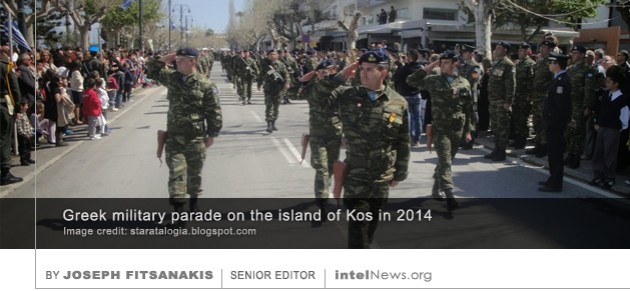
Kos GreeceA German retiree living in Greece, who admitted in court that he was part of a network of German and other Western European residents of Greece recruited as spies by Turkish intelligence, has been jailed for 14 years. The 65-year-old man, who has not been named, was arrested two years ago in the southeastern Aegean island of Kos. He was born in Cold-War-era East Germany and worked as a locksmith before serving for 15 years in the East German National People’s Army. From 2009 to 2012, he lived in Turkey before moving permanently to Greece.
On the morning of October 15, 2014, the German national was arrested by Greek police, who said they spotted him taking pictures of a Greek military outpost while sitting in his parked car. The police officers confiscated his camera and searched his vehicle, finding a pair of binoculars, various camera lenses and several memory sticks. His camera contained photographs of Greek military installations and government buildings on the island, which is located less than 3 miles off the Turkish coast. More photographs of Greek defense installations, military vehicles and communications facilities were found in the man’s house on the island. Police also found there documents in the Turkish language and notepads bearing coordinates of Greek military bases, public buildings and bridges located on Kos. The prosecution claimed that the German man was also monitoring the activities of Frontex, the European Border and Coast Guard Agency that maintains a base on the Greek island.

During the trial, the accused said he was recruited by Turkey’s intelligence service, known as MİT, in 2011, when he was living in Turkey. He also told the court that he was one of many German and other Western European retirees living in Greece, who have been recruited by Turkish intelligence to spy on Greek military and civilian government facilities. He added that, in return for his services, his Turkish handlers deposited €2,000 every month to his bank account in Germany. He had also been instructed to meet his handlers in Germany, not in Greece or Turkey. A court in the Greek island of Rhodes convicted the German man to 14 years in prison, one year less than the 15-year sentence requested by the prosecution.

Author: Joseph Fitsanakis | Date: 09 Dec 2016 | Research credit: Strategy Reports | Permalink

Mossad had prior knowledge of Six-Day War plans, says Israeli ex-spy chief

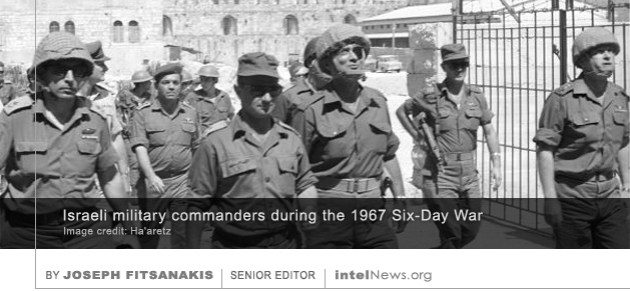
first-post-hIsrael’s intelligence services had access to recordings of secret talks between Arab heads of state in 1965, which helped the Jewish state win the Six-Day War, according to the former director of the country’s Military Intelligence Directorate. The brief but important conflict, which is also known as the Third Arab-Israeli War, broke out on June 5, 1967, when the Egyptian, Syrian and Jordanian armies attacked Israel. But within hours the Jewish state had managed to decimate the assailants’ air forces, and went on to deliver fatal blows to its adversaries. By the end of the war, Israel’s territory had increased threefold and Israeli troops were in control of the West Bank, the Gaza Strip and the Sinai Peninsula, among other areas.
But according to Major General Shlomo Gazit, who directed Israel’s Military Intelligence Directorate in the 1970s, Israel’s victory was sealed in September 1965. At that time, a conference of Arab heads of state was held in Casablanca, Morocco, with the participation of senior Arab military commanders and intelligence chiefs. The centerpiece of the conference was a secret meeting where preparations were made for a war with the Jewish state. Participants discussed plans for setting up a joint Arab military command to coordinate the war and shared insights on the strength and state of readiness of their respective militaries.

Major General Gazit told the Israeli newspaper Yedioth Ahronoth that Morocco’s King Hassan II, who was mistrustful of his fellow Arab heads of state, invited the Israeli intelligence services to monitor the conference. Speaking to Yedioth Ahronoth’s military correspondent Ronen Bergman, Gazit said that a team of spies from the Mossad, Israel’s external intelligence service, and the Shin Bet, its domestic equivalent, arrived in Casablanca prior to the start of the conference. Acting on the King’s orders, Moroccan authorities designated an entire floor in the luxury hotel where the conference was held for the use of the Israelis. After the conference ended, King Hassan gave the Mossad copies of secret recordings of all closed-door meetings. These were promptly transcribed and translated into Hebrew by the Research Unit of Israel’s Military Intelligence Directorate, said Gazit.

According to the former spy chief, these transcripts produced “massive amounts of intelligence”. They were combined with other sources of information and crucially helped Israel anticipate the Six-Day War. Thanks to these recordings, said Gazit, Israel “was in full knowledge of how unprepared [the Arab forces] were for war”, especially the Egyptian forces, which were “in a terrible shape”. Israeli military commanders were thus certain that the Jewish state would prevail in an armed conflict with its Arab neighbors.

The public disclosure of the fact that the Mossad had access to the content of the secret negotiations between Arab leaders in 1965 is not new. Bergman and his fellow author Shlomo Nakdimon revealed it in a 2015 article about the broader intelligence relationship between Israel and Morocco in the 1960s and 1970s. But the latest revelation highlights the significance of the secret recordings for Israel’s military posture during the Six-Day War. Indeed, Bergman reports that, after the end of the war, Meir Amit, who was the then director of the Mossad, drafted a letter to Israel’s Prime Minster Levi Eshkol, in which he described the Casablanca operation as “one of the greatest moments of Israeli intelligence”.

Author: Joseph Fitsanakis | Date: 17 October 2016 | Permalink

US files espionage charges against military contractors with Turkish ties

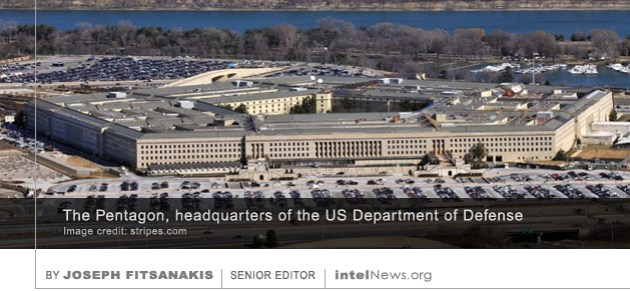
PentagonIn a development that is expected to contribute to the downward spiral in Turkish-American relations, the United States government has reportedly filed espionage charges against three Department of Defense contractors with Turkish background. The three are believed to have been charged with transferring US military secrets abroad and are currently in prison.
A statement published by the US Pentagon said that the group consists of two men and a woman, all of whom are of Turkish background. Two of them are naturalized American citizens. They are listed as owners of a company that conducts research in military technology and has contracted for many years with the US Pentagon. All contracts were allegedly won following competitive bids and can only be awarded to bidders who are in possession of US citizenship and top security clearances. According to Turkey’s pro-government English-language newspaper, Daily Sabah, the three contractors have helped develop and manufacture parts for missile-launching systems used on American warplanes. They have also worked on several generations of grenade launchers used by the US military.

But on Sunday, the three contractors were arrested in simultaneous raids and charged with “funneling military secrets out of the country”, according to Sabah. The paper said the US government decided to arrest the three once it became known that some hardware parts related to the Pentagon bids handled by their company were being illegally manufactured in Turkey. There is no information in the Pentagon’s press release on whether the top-secret military components were also shared with the Turkish government. Relations between Washington and Ankara, two North Atlantic Treaty Organization member-states, have suffered since the failed July 15 military coup in Turkey. Many in the administration of Turkish President Recep Tayyip Erdoğan blame Washington for the coup and for allegedly shielding the man behind it, the Islamic cleric Muhammed Fethullah Gülen, who lives in the US state of Pennsylvania.

Author: Joseph Fitsanakis | Date: 12 October 2016 | Permalink

Russia ‘mobilizing for war’ warns Canadian intelligence report

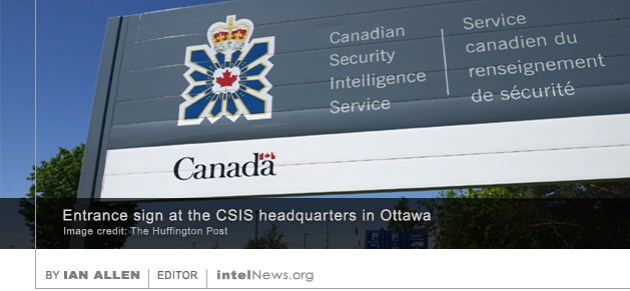
CSIS Canada A report by Canada’s primary intelligence agency warns in stark language that Russia is “retooling its military for a fight” and appears to be “mobilizing for war”. The classified report was accessed by the Canadian Broadcasting Corporation (CBC), the country’s state-owned broadcaster. According to the CBC, the document was produced by the Canadian Security Intelligence Service (CSIS), Canada’s primary national intelligence service. It is titled 2018 Security Outlook and is described by the CBC as a “distillation” of information from open sources and publicly available academic research, without input from internal CSIS assessments.
The 104-page report contends that, in the absence of any serious opposition inside Russia, the hardline nationalistic policies of Russian President Vladimir Putin are going unchallenged and becoming “more deeply entrenched”. When assessed collectively, Putin’s maneuvers in the area of national defense reveal that he is “retooling [the Russian] military for a fight”, claims the CSIS report. It goes on to add that Moscow “is not modernizing its military primarily to extend its capacity to pursue hybrid warfare”. The term ‘hybrid warfare’ is used by some experts to describe Russia’s utilization of irregular military tactics during its invasion and annexation of Crimea in 2014, and many believe that it points to the future evolution of Russian military thinking. But the CSIS document argues that President Putin is primarily modernizing Russian “conventional military capability on a large scale” and argues that “the state is mobilizing for war”.

The CSIS report is believed to be among several reasons why Ottawa is considering contributing hundreds of troops to a new 4,000-strong North Atlantic Treaty Organization (NATO) force that is expected to be stationed in the Baltic States in the coming months. The Canadian intelligence agency argues in favor of a more aggressive NATO policy vis-à-vis Russia in its report, stating that the economic sanctions imposed by the West on Moscow after the annexation of Crimea are not working. Instead of faltering due to outside economic pressures, the Kremlin “appears to be coherent, durable and united”, says CSIS. Consequently, “Western assessments that Russia is vulnerable to economic collapse and disruptive internal discontent are exaggerated”, according to the report. The document concludes that Russia is “adapting to diversity [by] deliberately tilting [its economy] to security, rather than economic freedom”.

Author: Ian Allen | Date: 16 June 2016 | Permalink

Turkey arrests senior official for selling weapons plans to US-based firm

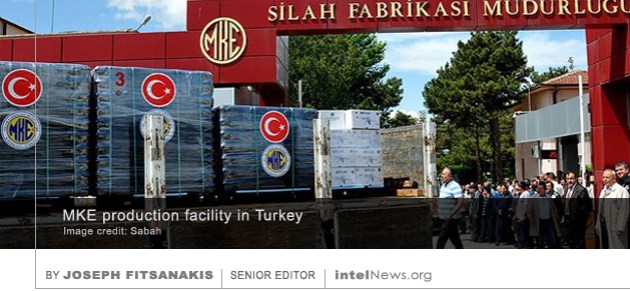
MKE TurkeyA senior official of Turkey’s state-run weapons manufacturer has been arrested on espionage charges, after he was caught selling weapons blueprints to the employee of an arms firm based in the United States. The official was named by Turkish authorities as Mustafa Tanriverdi, the general manager of one of Turkey’s largest weapons production facilities, located in the town of Kirikkale, 50 miles east of Turkish capital Ankara. Tanriverdi is reportedly employed by the Mechanical and Chemical Industry Corporation (MKE), a government-run manufacturing firm that provides much of the Turkish Armed Forces’ weaponry. The company also has a growing list of international buyers, which includes nearly 30 foreign governments.
Tanriverdi was arrested on Thursday by undercover members of Turkey’s security services, as he was leaving a restaurant in Ankara. Moments earlier, he had sold design blueprints and production plans for two MKE-manufactured weapons. According to Turkish authorities, the plans related to two Turkish-designed weapons, namely the MPT-76 infantry rifle and the MP-5 submachine gun. Tanriverdi is accused of having sold the information on the weapons for nearly $500,000 to an unnamed man working for a Turkish-owned weapons manufacturer that is based in the US.

Reports in the Turkish media said the man who purchased Tanriverdi’s documents is a US-based Turkish business executive. But his name remains unknown, as he is identified only as K.K. in news reports. Allegedly, K.K. had notified Turkish authorities about Tanriverdi and was himself part of a sting operation aimed at apprehending the Turkish official. The latter has now been charged with espionage, disloyalty to the Turkish state and exploiting state secrets for financial gain. He is said to have told the authorities that he did not sell classified information but was instead striking a “legitimate business agreement” with a man he thought was a weapons trader working for Turkey.

Author: Joseph Fitsanakis | Date: 12 April 2016 | Permalink

Dual US-Russian citizen pleads guilty to spying for Russia

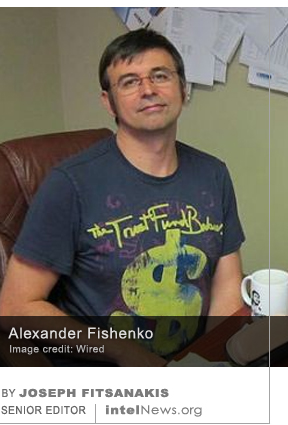
Alexander FishenkoA resident of Texas, who is accused by United States authorities of setting up a front company in order to illegally acquire American technology on behalf of Russia’s intelligence services, has pleaded guilty to espionage charges. Alexander Fishenko, 49, was one of 11 people arrested in October 2012 by the Federal Bureau of Investigation. The arrests came during several raids in locations around Houston, Texas, which included the headquarters of Arc Electronics, Inc. The FBI accused the export firm of having shipped over $50 million-worth of military-grade micro-electronics since 2008. The supplies were received in Moscow, Russia, by a mysterious procurement company called Apex System LLC. Counter-intelligence investigators in the US claim that both firms are part of an elaborate scheme set up by Russian military intelligence, aimed at stealing dual-use electronics hardware created by American firms.
According to the indictment, Arc Electronics told its US suppliers that the microelectronics technologies were intended for use in various types of streetlights. But in reality, said the FBI, the company gave the hi-tech supplies to the Russian Ministry of Defense for use in airborne surveillance systems, as well as in remote weapons guidance systems, among other military applications. Federal prosecutors said that, for over four years, Arc Electronics engaged in a prolonged “surreptitious and systematic” scheme to circumvent US government export controls, thus seriously damaging US national security. Following the early-morning raids, the FBI unsealed indictments against 11 Arc Electronics employees, most of whom were charged with “acting as unregistered agents of the Russian Federation in the United States” —legal jargon for espionage.

Fishenko, who is originally from Kazakhstan, was scheduled to face trial on September 21 in New York. But on Wednesday he chose to plead guilty to the charges leveled against him. He is the fifth member of the 11 Apex System employees arrested back in 2012 to plead guilty to espionage. A government spokesman said the Fishenko’s plea did not result from an agreement to cooperate with the FBI. He now faces up to 15 years in prison. His lawyer, Richard Levitt, declined comment when he was contacted on Wednesday. The Russian government has denied that it had any involvement with Fishenko’s operations.

Author: Joseph Fitsanakis | Date: 08 September 2015 | Permalink

French-US spy cooperation continues despite WikiLeaks revelations

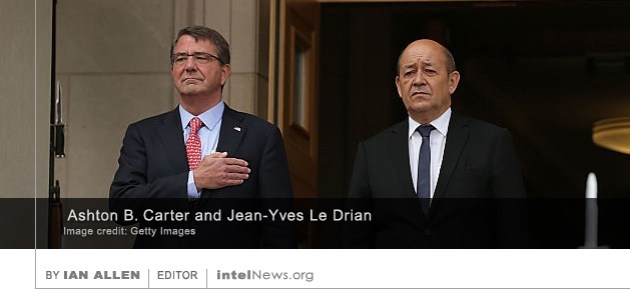
 Ashton B. Carter and  Jean-Yves Le DrianA fortnight ago, I gave an interview to Spanish newspaper La Razón, in which I argued that last month’s WikiLeaks revelations about American espionage against France would not cause any drastic disruption in the intelligence cooperation between the two countries. I added that “the two countries depend on each other to address a number of international issues that affect both, such the worrying situation in Syria and Iraq, the continuing crises in Ukraine and in Libya, as well as the financial meltdown in Greece. So there is a recognition that their intelligence agencies must continue to work together on several pressing issues”.

This was confirmed on Monday morning, as the American and French defense secretaries met in the US. French Minister of Defense Jean-Yves Le Drian paid his first visit to the Pentagon since Ashton B. Carter was appointed Secretary of Defense, in February of this year. After an extensive meeting behind closed doors, the two men told reporters gathered at the Pentagon that America’s security cooperation with France “has never been stronger”. Secretary Carter pointed to France’s leading military involvement in several African nations, including Mali, Chad, and Niger, and said that French forces deployed there could expect “more intelligence-sharing with the United States”. He added that actions had been taken during that morning’s meeting to “increase that [intelligence-sharing] yet further”.

The French Defense Minister agreed with his American counterpart and added that the “multiplication of international crises” were bringing the defense and intelligence establishments of France and the US closer. Both men pointed to examples of ongoing French-American security collaboration in Mali and Chad, where the Pentagon is providing French military forces with aerial cargo delivery and refueling facilities. They also mentioned the FS Charles de Gaulle, France’s flagship aircraft carrier, which has been deployed to the Arabian Gulf since March of this year. Secretary Carter told reporters that the Charles de Gaulle had “integrated seamlessly” with American forces in the region, and was helping the Pentagon launch airstrikes against Islamic State forces in Iraq.

The two men declined comment on last month’s claims by WikiLeaks that the US National Security Agency wiretapped three successive French presidents, including the country’s current head of state, Francois Hollande.

Author: Ian Allen | Date: 08 July 2015 | Permalink: https://intelnews.org/2015/07/08/01-1731/

Peru recalls ambassador from Chile as espionage probe widens

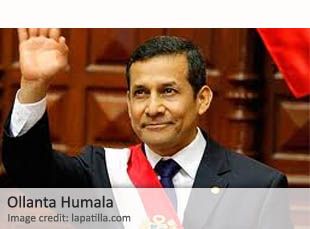
Ollanta HumalaBy IAN ALLEN | intelNews.org
The government of Peru has officially recalled its ambassador from Chile as it investigates three Peruvian naval officers who are said to have passed military secrets to Chilean intelligence. Peruvian President Ollanta Humala announced on Saturday that the decision had been taken to recall the country’s ambassador from Santiago following an emergency meeting of the cabinet. The espionage allegations against the three officers appeared in the Peruvian media last Thursday. Several leading newspapers, among them the Lima-based El Comercio, said the three junior Peruvian officers were suspected of having spied for Chile from 2005 to 2012.

On the following day, Peru’s Minister of National Defense, Pedro Cateriano, officially confirmed the reports and said two of the officers had been arrested and would be tried in a military court. A third one was being investigated for possible connections with the Chilean spy ring, said Cateriano. According to the Peruvian government, the naval officers stole classified military documents and passed them on to their Chilean handlers in exchange for money. They are alleged to have traveled abroad on several instances between 2005 and 2012, in order to conduct secret meetings with Chilean diplomats and intelligence officers, in countries such as Argentina, Bolivia, Brazil and even Argentina itself. It was there, according to reports from Peru, that the three alleged spies passed on classified information to their handlers. Defense Minister Cateriano implied on Friday that the officers came under suspicion when their superiors, who knew the level of their government pay, deduced that they did not have sufficient funds to pay for international travel, and concluded that someone else must be funding their frequent trips abroad.

Following an emergency session on Friday, the Peruvian Congress issued a statement urging Chile to provide “firm guarantees” that such “aggressive actions” against Peruvian sovereignty would not be repeated. The Chilean government said late on Friday that it did not condone or promote espionage. But Peruvian President Humala told reporters on Saturday that a more precise and direct answer was in order. The two naval officers are not expected to stand trial until the summer. Meanwhile, authorities in Peru say they are investigating possible involvement by high-ranking military officers in the alleged spy ring.

War alone will not defeat Islamists, says US ex-military intel chief

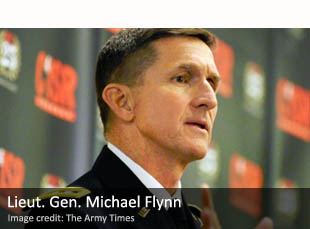
Lieutenant General Michael FlynnBy IAN ALLEN | intelNews.org
The former chief of military intelligence in the United States has warned that military force cannot defeat Islamic-inspired militancy without a broader strategic plan. Lieutenant General Michael Flynn led the US Defense Intelligence Agency from July 2012 until August of this year, serving essentially as the most senior intelligence official in the US Armed Forces. He stepped down amidst rumors that he had been asked to resign because his plans to modernize military intelligence operations were “disruptive”. On Wednesday, while addressing the annual Maneuver Conference at the US Army’s Maneuver Center of Excellence in Fort Benning, Georgia, General Flynn addressed the issue of Sunni militancy and how to counter groups like the Islamic State. Responding to a question from the audience, the former DIA director said “what this audience wants [to hear] is ‘kill ’em all, let God sort ’em out, get the T-shirt [and] go down to Ranger Joe’s” (a military clothing retailer). And he added: “we can kill all day long, but until we understand why there are [such large] numbers of [fundamentalist] believers globally, [groups like the Islamic State] will not be defeated”. Flynn went on to say that America is losing initiative in the war of ideas with Islamic radicalism, as the latter is spreading rapidly across the world, especially in regions such as Africa and South Asia. Responding to another question from the audience, the former DIA director dismissed the view that there is an ideological split between al-Qaeda and the Islamic State, saying: “there is no tension; they hate us equally; it is an expansion”. Last month, Flynn gave an interview in which he said the international environment was “is the most uncertain, chaotic and confused” he had witnessed in his three-decade career. Read more of this post

Egypt ex-president charged with spying for Qatar, faces death penalty

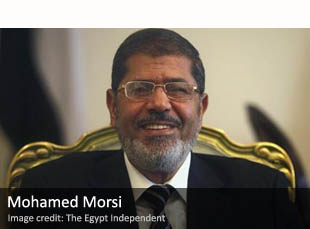
Mohamed MorsiBy IAN ALLEN | intelNews.org
Egypt’s ousted president Mohammed Morsi has been officially charged with spying for the government of Qatar, in what Egypt’s state prosecutor calls the biggest espionage case in the country’s history. In the summer of 2012, Morsi, representing the Muslim Brotherhood, became the first democratically elected national leader in Egyptian history, after winning the presidential election with nearly 52 percent of the vote. But he was ousted in a military coup a year later, following widespread protests against him and the Muslim Brotherhood, and has been held in prison ever since. Now Egypt’s state prosecutor has charged Morsi and eight others, including two former presidential aides, with spying on behalf of the government of Qatar. Egypt’s government accuses Morsi of selling classified documents “with direct bearing on Egypt’s national security” to the intelligence services of Qatar in exchange for $1 million. The documents allegedly included sensitive information on Egyptian military strategy, as well as tactical “positioning and the nature of its armaments”. The indictment says Morsi authorized the transfer of the documents through the Muslim Brotherhood’s “international bureau”, and that the illegal exchange was facilitated by television network Al Jazeera, which is owned by the royal family of Qatar. The oil kingdom is among the strongest international supporters of the Egyptian Muslim Brotherhood, as well as Hamas, which is the Muslim Brotherhood’s sister organization in the Occupied Territories. Speaking to Reuters news agency, an Al Jazeera representative denied that the network played any role in transferring classified Egyptian documents to the government of Qatar. He told the news agency that “any information received by Al Jazeera is handled with the highest standard of journalistic ethics. Read more of this post

Aruba releases Venezuelan ex-spy despite US calls to detain him

Hugo Carvajal BarriosBy IAN ALLEN | intelNews.org
The former director of Venezuela’s military intelligence, who had been arrested in Aruba following a request by the United States for his capture, has been released, sparking protests from Washington. On July 24, authorities in the Dutch-controlled Caribbean island announced the arrest of Hugo Carvajal Barrios, former director of Venezuela’s Dirección General de Inteligencia Militar (DGIM). Carvajal, a close associate of the country’s late president Hugo Chavez, was accused by the US Department of the Treasury in 2008 of weapons and drugs smuggling. According to the US government, Carvajal was personally involved in illegally providing weapons to the Revolutionary Armed Forces of Colombia (FARC), a leftwing guerrilla group engaged in a decades-long insurgency war against the government of Colombia. It also accused the Venezuelan official of helping the FARC smuggle cocaine out of the country, in a bid to help them raise funds to support their insurgency against Colombian authorities. In January of this year, Caracas appointed Carvajal consul-general to Aruba. Aruban officials told reporters last week that, although Carvajal held a Venezuelan diplomatic passport, he had not yet received his official diplomatic accreditation from the Aruban authorities at the time of his arrest, and was therefore not an accredited diplomat. By the end of last week, it appeared almost certain that Carvajal would be extradited to the US. But the Dutch government suddenly reversed its position on Monday and decided to release Carvajal, who has reportedly been expelled from Aruba and declared persona non grata (unwanted person). Some observers, including Venezuela’s former ambassador to the United Nations, Milos Alcalay, opined that the Dutch territory reversed its decision following “diplomatic threats” by Venezuela, “entailing severe economic relations”. Read more of this post

Aruba arrests ex-head of Venezuelan intelligence, after US request

Hugo Carvajal BarriosBy IAN ALLEN | intelNews.org
The former director of Venezuela’s military intelligence, who was a close associate of the country’s late president Hugo Chavez, has been arrested in Aruba following a request by the United States. Authorities in the Dutch-controlled Caribbean island announced on Thursday the arrest of Hugo Carvajal Barrios, former director of Venezuela’s Dirección General de Inteligencia Militar (DGIM), which is Venezuela’s military intelligence agency. A close comrade of Venezuela’s late socialist leader, Carvajal was accused by the US Department of the Treasury in 2008 of weapons and drugs smuggling. According to the US government, Carvajal was personally involved in illegally providing weapons to the Revolutionary Armed Forces of Colombia (FARC), a leftwing guerrilla group involved in a decades-long insurgency war against the government of Colombia. It also accused the Venezuelan official of helping the FARC smuggle cocaine out of the country, in a bid to help them raise funds to support their insurgency against Colombian authorities. But the government of Venezuela rejects all charges and has been sheltering Carvajal. In January of this year it appointed him consul-general to Aruba, a Dutch colony in the Caribbean located just 15 miles off Venezuela’s coast. Caracas reacted strongly to Carvajal’s arrest, saying the detention of the diplomat was a violation of the Vienna Convention, which grants international diplomats immunity from arrest or detention. But Aruban officials told reporters on Thursday that, although Carvajal holds a Venezuelan diplomatic passport, he has not yet received his official diplomatic accreditation from the Aruban authorities, and is therefore not an accredited diplomat. A spokesperson for the Aruban prosecutor’s office told the Associated Press that Carvajal “does not have any function here in Aruba. He is not the consul-general. Therefore he has no immunity”. Read more of this post

Germany probes second case of intelligence officer who spied for US

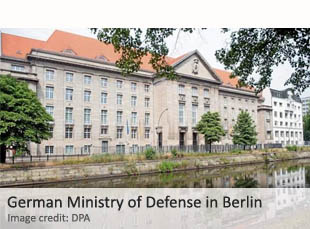
Germany’s Federal Ministry of DefenseBy JOSEPH FITSANAKIS | intelNews.org
Just days after announcing the arrest of an intelligence officer on charges of spying for the United States, German authorities say they are investigating a second individual on suspicion of espionage. Federal prosecutors said yesterday that the individual in question is a German citizen and is under “initial suspicion of activity for an intelligence agency” of a foreign country. They refused to provide further information and added that an arrest had not yet been made. But German newspaper Süddeutsche Zeitung said on Wednesday that the subject of the investigation is suspected of spying for the United States. The news comes less than a week after an officer of the BND, Germany’s main external intelligence organization, was found to have allegedly spied for the US Central Intelligence Agency for over two years. According to Süddeutsche’s sources, the second suspect works for Germany’s Federal Ministry of Defense. German newsmagazine Der Spiegel reported that the unnamed individual specializes in “global security policy” and that he came under the suspicion of Germany’s military counterintelligence agency because of his “close proximity to alleged American intelligence operatives”. Later on Wednesday, German federal government spokesman Steffen Seibert confirmed that Berlin had opened “investigations in two cases of suspected espionage, on very serious suspicions”. Seibert refused to elaborate, but added that police had raided a number of properties in the German capital. Meanwhile, Germany’s Minister for Foreign Affairs, Frank-Walter Steinmeier, told the Saarbrücker Zeitung that he failed to understand why Washington would want to spy on his country. “We talk to each other all the time, and no side keeps its views secret”, he told the Saarland-based newspaper. “The attempt to use conspiratorial tactics to find out about Germany’s position is not simply unseemly, it is unnecessary”. But an unnamed former senior intelligence official, who has liaised extensively with the BND, protested to The Washington Post that “the Germans do lots and lots of stuff and don’t tell us everything they do”. Read more of this post