Ukrainian drone strikes may have targeted Moscow homes of Russian spies
June 8, 2023 1 Comment
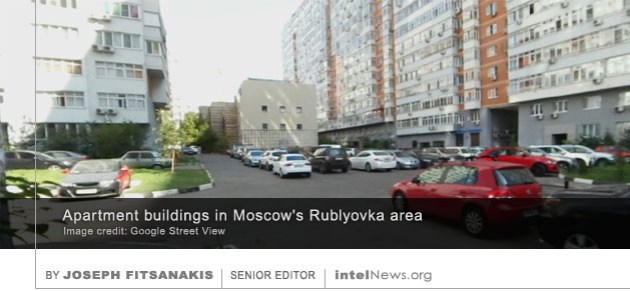 A SERIES OF COORDINATED drone strikes that struck Moscow last week were not random, but may in fact have targeted the homes of senior Russian intelligence officials, according to a new report by an American television network, which cited knowledgeable sources and data by an open-source research firm.
In the early morning hours of May 30, a fleet of at least six unmanned aerial vehicles (UAVs) struck what appeared to be residential apartment blocks in Moscow’s southeastern suburbs. The targets were all located in Moscow’s Rublyovka area, which contains some of the wealthiest neighborhoods in the Russian capital. Many expressed surprise at the airborne assault, as it was the first known attack against residential targets in Moscow since the latest phase of the Russian invasion of Ukraine, which began in February 2022.
Upon initial inspection, the targets of the early-morning attack appeared to have been chosen at random. Yesterday, however, the American television network NBC claimed that the targets of the attack had been carefully selected as “a part of Ukraine’s strategy of psychological warfare against Russia”. Citing “multiple sources familiar with the strikes”, including a senior United States official and a congressional staffer, NBC said that the targets of the attacks were all residences of Russian government personnel.
The television network also cited data by Strider Technologies, an open-source strategic intelligence company located in the American state of Utah, according to which at least one of the buildings that were struck by the UAVs housed a Russian state-controlled military contractor. According to Strider Technologies, the contractor provides services to a military unit that is known to be a front for Russia’s Foreign Intelligence Service (SVR). NBC further claimed that other targets in the alleged Ukrainian operation targeted the residences of senior Russian intelligence personnel.
► Author: Joseph Fitsanakis | Date: 08 June 2023 | Permalink
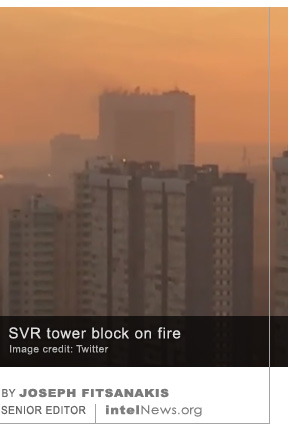 A massive fire that broke out at a top-secret spy facility in Moscow on Wednesday brought to the foreground prior reports about the unprecedented growth of the headquarters of Russia’s foreign spy service. The fire was reported at a government compound in Yasenevo, a leafy district on the southern outskirts of the Russian capital. The compound serves as the headquarters of the Russian Foreign Intelligence Service, known by its initials, SVR. The SVR is one of the successor agencies to the Soviet-era KGB. During Soviet times, the present-day SVR was known as the First Chief Directorate or First Main Directorate of the KGB. Despite its name change, however, its mission remains the same, namely to collect secrets from targets outside the Russian Federation —often through the use of espionage— and to disseminate intelligence to the president.
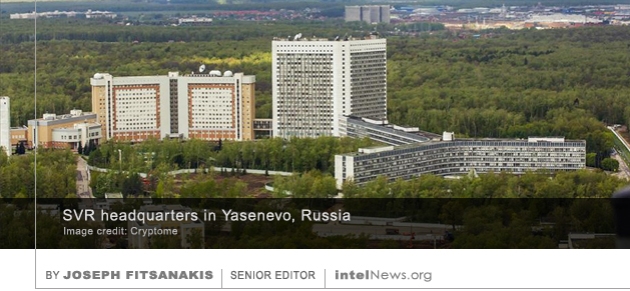 Recent satellite images reveal that the headquarters of the Russian Federation’s external intelligence agency has doubled, and possibly tripled, in size in the past nine years. The Russian Foreign Intelligence Service, known as SVR, is one of the successor agencies of the Soviet-era KGB. During the Soviet times, the present-day SVR was known as the First Chief Directorate or First Main Directorate of the KGB. Despite its name change, however, its mission remains the same, namely to collect secrets from targets outside the Russian Federation —often through the use of espionage— and to disseminate intelligence to the president. In the Soviet days, along with most of the KGB, the First Chief Directorate was headquartered in the imposing Lubyanka building, which is located in Moscow’s Meshchansky District. But in the early 1970s, the entire First Chief Directorate began a decade-long process of moving to a new, state-of-the-art complex in the southern suburbs of the Russian capital. The complex, which is located in Yasenevo, today houses the entire apparatus of the SVR, including its espionage wing, and is informally known as les (the forest) or kontora (the office).
 American Scientists’ Secrecy News blog, has







 intelNews.org
Russian hacker group using Internet service providers to spy on foreign embassies
August 2, 2025 by Joseph Fitsanakis 3 Comments
Turla began its attempt to compromise a host of Russian internet service providers in February, according to Microsoft’s report. The group’s apparent goal has been to gain access to the software that enables Russian security agencies to legally intercept internet traffic, following the issuance of warrants by judges. This software is governed by Russia’s System for Operative Investigative Activities (SORM), which became law in 1995, under the presidency of Boris Yeltsin. All local, state, and federal government agencies in Russia use the SORM system to facilitate court-authorized telecommunications surveillance.
According to Microsoft, targeted Internet users receive an error message prompting them to update their browser’s cryptographic certificate. Consent by the user results in the targeted computer downloading and installing a malware. Termed ApolloShadow by Microsoft, the malware is disguised as a security update from Kaspersky, Russia’s most widely known antivirus software provider. Once installed the malware gives the hackers access to the content of the targeted user’s secure communications.
The Microsoft report states that, although Turla has been involved in prior attacks against diplomatic targets in Russia and abroad, this is the first time that the hacker group has been confirmed to have the capability to attack its targets at the Internet Service Provider (ISP) level. In doing so, Turla has been able to incorporate Russia’s domestic telecommunications infrastructure into its attack tool-kit, the report states. The report does not name the diplomatic facilities or the countries whose diplomats have been targeted by Turla hackers. But it warns that all “diplomatic personnel using local [internet service providers] or telecommunications services in Russia are highly likely targets” of the group.
► Author: Joseph Fitsanakis | Date: 02 August 2025 | Permalink
Filed under Expert news and commentary on intelligence, espionage, spies and spying Tagged with ApolloShadow, computer hacking, cyberespionage, diplomatic security, Moscow, News, Russia, Secret Blizzard, Snake malware, SORM (Russia), System for Operative Investigative Activities (Russia), Turla