Ashraf Marwan: Israel’s ‘Angel’ or Egypt’s Double Agent?

Ashraf MarwanASHRAF MARWAN, POPULARLY KNOWN “the Angel,” is regarded as one of the greatest spies in Israeli intelligence history—the man on whom the entire Israeli government relied, and the informant who warned of the Yom Kippur War. Long-standing suspicions that he was actually a double agent have been strongly dismissed.

However, a comprehensive investigation by two Israeli journalists, Ronen Bergman and Yuval Robovitz, published in the popular Israeli newspaper Yedioth Ahronoth under the title “The Angel of Lies”, presents a different picture. Based on thousands of secret documents not yet revealed and rare conversations with people involved in the operation, their report claims that ‘the Angel’ was actually the spearhead of Egypt’s deception plan before and during the war—and that he succeeded beyond all expectations.

A Spy or Double Agent?

Bergman and Robovitz examined whether Ashraf Marwan—advisor to Egyptian President Anwar Sadat and a Mossad agent who died in 2007—was truly the best agent Israel had before the Yom Kippur War. Their findings indicate that a series of serious operational failures, combined with arrogance within the Israeli intelligence community, made Marwan one of the most dangerous spies ever to act against Israel.

They also investigated whether he was genuinely an Israeli agent who contributed meaningfully to Israel’s national security, as claimed by Mossad and by scholar Professor Uri Bar-Joseph, who wrote extensively about the Yom Kippur War intelligence failure and authored the well-known book The Angel: The Egyptian Spy Who Saved Israel. Netflix later produced a film, The Angel, based on Bar-Joseph’s book.

Or, was Marwan, as the journalists argue, a double agent working for Egypt from the beginning—since volunteering for Israeli intelligence in 1970—and who managed to deceive Israel for years, particularly by delaying his warning about Egypt’s impending attack until roughly 12 hours before it began? According to Bergman and Robovitz, Marwan knew about Egypt’s plans weeks earlier but withheld that information, allowing Egypt to launch a surprise attack.

A Public Debate

Following the article’s publication, a public debate erupted between Bergman and Robovitz on one side and Professor Uri Bar-Joseph on the other, over Marwan’s true motives. Whether he was a double agent or a loyal Israeli operative, all agree he played a key role in the intelligence drama preceding the Yom Kippur War. Read more of this post

Mossad had ‘some 100 agents’ on the ground in Iran on June 13, Israeli officials claim

Mossad inside IranTHE MOSSAD, ISRAEL’S PRIMARY covert action agency, had “some 100 agents” on the ground in Iran at the start of the Twelve-Day War, according to senior Israeli government officials who participated in a television documentary. The documentary was aired last week on Israel’s Channel 13 television channel. It features interviews with senior Israeli government officials, including Prime Minister Benjamin Netanyahu, Minister of Defense Israel Katz, Minister of Foreign Affairs Gideon Sa’ar, and National Security Adviser Tzachi Hanegbi.

According to the documentary, several new intelligence units focusing on Iran were established across the Israeli military establishment in the summer of 2023, in anticipation of a war with the Islamic Republic. These units acted in coordination with the Mossad in the lead-up to June 13, when Israel launched the opening salvos of the Twelve-Day War. The documentary claims that around 100 Mossad agents were active on the ground in the early hours of June 13. It appears that the term “agents”, as used in the documentary, refers primarily to Iranian Mossad assets, rather than Mossad officers.

Israeli officials describe the Mossad operation as “unprecedented” in scale, as never before had so many operatives been simultaneously activated for a single mission. It was also unprecedented in complexity, because it involved the deployment missile systems, the documentary claims. These systems had been previously smuggled into Iran and were used to destroy Iran’s anti-aircraft installations and ballistic missile launchers. Iranian war planners had not considered the possibility of missile attacks against their military installations originating from within Iran’s borders.

In addition to the Mossad-led component of the operation, members of the Israel Defense Forces were also active outside Israel’s borders that day. According to Brigadier General Gilad Keinan, commander of Israeli Air Forces’ Air Operations Group, Israeli troops were “on the ground somewhere in the Middle East” on the evening of June 13. He did not provide further details.

Author: Joseph Fitsanakis | Date: 22 September 2025 | Permalink

Senior Mossad veteran discusses recruitment of Iranian assets in rare interview

Mossad - ABTHE MOSSAD, ISRAEL’S PRIMARY foreign-intelligence agency, played a crucial role in Israel’s most recent attack on Iran. It is clear that, without unique intelligence on key Iranian figures and nuclear sites, much of it gathered by the Mossad, the Israeli Air Force could not have been so precise and deadly against Iranian targets.
It is a rare occasion to hear directly from a senior veteran of the Mossad. Oded Eilam (or Ailam), now 71, served in the Mossad for 24 years. In an interview with the German newspaper Bild, Eilam described the strategy that allowed the Israeli intelligence agency to successfully recruit and maintain an “extensive network” of spies inside Iran.

According to Eilam, the key to the Mossad’s success lies in Iran’s complex social structure. “Only 40% of [Iran’s] population of 90 million are Persians,” Eilam said, explaining that the ethnic divide makes it difficult for the Iranian government to control the population. “The [Iranian government’s] surveillance system has huge gaps; you can’t compare it to what the Stasi did in East Germany,” he added.

The former Mossad official explained that various ethnic groups inside Iran, such as Kurds, Turkmen, Baluchis, and Azeris, make up a potential pool for recruiting agents. According to Eilam, the motivation for cooperating with the Mossad is not necessarily support for Israel or financial reward, but often stems from dissatisfaction with the Iranian regime.

“Many people in Iran are unhappy. Large parts of society live in poverty,” explained Eilam. “While Iran has significant gas reserves, instead of investing this money in their country, the clerics have funneled billions into terrorist organizations like Hezbollah,” he added. Another factor that helps Mossad’s activities, according to Eilam, is Iran’s long territorial borders and the difficulty of monitoring them thoroughly. “This makes it possible to smuggle everything into the country,” he noted.

Eilam also emphasized the Mossad’s commitment to safeguarding its assets. “When someone works for us, we take care not only of them but also of their family,” he said, clarifying that the Mossad is dedicated to bringing its spies and their families to safety if needed. Although there are many opportunities to recruit agents in Iran, the Mossad is not in a rush. Eilam highlighted that the organization spends a significant amount of time on the process of selecting and screening candidates. “When we are looking for agents, we don’t just choose someone; we take a lot of time to ensure that the person is suitable.”

“When someone works for us,” the former officer noted, “the importance the Mossad attaches to verifying information. For a target, we do not use information from just one agent, but always multiple sources to be sure that the right person is hit,” said Eilam, also hinting at the extensive vetting processes the organization conducts before operational actions.

Eilam’s interview is a unique source of insight into the espionage operations of the Mossad. It is unclear why it was published—possibly to warn the Iranians to think twice before taking any offensive actions against Israel.

Author: Dr. Avner Barnea* | Date: 22 July 2025 | Permalink

Dr. Avner Barnea is a research fellow at the National Security Studies Center of the University of Haifa in Israel. He served as a senior officer in the Israel Security Agency (ISA). He is the author of We Never Expected That: A Comparative Study of Failures in National and Business Intelligence (Lexington Books, 2021).

Israeli spy agency set up bases deep inside Iran years before June 13 strike

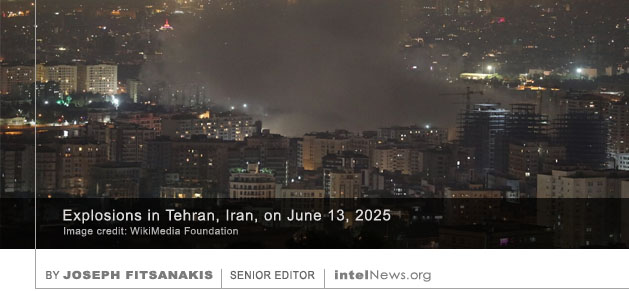
Tehran IranTHE MOSSAD, ISRAEL’S PRIMARY external intelligence agency, had set up forward-operating bases deep inside Iranian territory several years prior to last week’s attacks, which targeted Iran’s military and nuclear infrastructure. In some cases, Mossad operatives, including commando forces, were operating inside the vicinity of the Iranian capital Tehran for months prior to June 13, according to Israeli media outlets.
June 13 marked the commencement of Operation RISING LION, a joint Mossad/Israel Defense Force (IDF) campaign to decimate Iran’s military leadership, diminish its defense capabilities, and destroy its nuclear infrastructure. The assault, which is ongoing as of today, has been described by the Associated Press as the largest attack suffered by Iran since the Iran-Iraq War of the 1980s.

Reports that emerged in the past 48 hours suggest that the success of the Israeli operation hinged decisively on a network of bases that the Mossad had managed to establish deep inside Iranian territory for quite some time. The bases had been set up by Mossad operatives that, in some cases, had managed to operate inside Iran for years. Additional support was allegedly provided by “special units of Iranian operatives working for Mossad”, according to one report.

The Mossad bases hosted “precision weapons” that had been smuggled in from Isarel over time. These were used to target selected Iranian surface-to-air missile installations shortly prior to the main phase of the attack, which was carried out by over 200 IDF fighter jets. With key Iranian defensive installations destroyed, the IDF fighter jets were able to carry out their missions without obstruction in the early hours of June 13.

Moreover, the Mossad appears to have //penetrated// the battle plans that were to be followed by the Islamic Republic’s senior military leadership during a possible military confrontation with Iran. Therefore, as the IDF attack commenced, Israeli missiles destroyed the top-secret bunker that was used by the leadership of the Artesh (Iran’s conventional military force) and the Islamic Revolutionary Guard Corps (IRGC). At least two dozen senior Artesh and IRGC commanders were killed as a result of this intelligence penetration, according to reports.

Author: Joseph Fitsanakis | Date: 16 June 2025 | Permalink

250 ex-Mossad members sign letter criticizing Netanyahu’s stance on hostages

MossadOVER 250 FORMER MEMBERS of the Mossad, Israel’s external spy agency, have drafted an open letter criticizing the government of Prime Minister Benjamin Netanyahu and warning that they will “not continue to stand by”. The letter campaign is reportedly led by former senior Mossad official Gail Shoresh and renowned hostage negotiator David Meidan. It comes in the heels of similar letters issued last week by Israel Air Force active service personnel and veterans, and by former members of Unit 8200—the cyber and signals intelligence branch of the Israel Defense Forces.
The letter is signed by dozens of former Mossad department heads and deputy department heads, one former deputy director, and three former directors: Tamir Pardo, Efraim Halevy and Danni Yatom. It openly criticizes the administration of Prime Minister Netanyahu for prioritizing the war against Hamas over the lives of 59 Israeli hostages, who are believed to remain captive by the militant Palestinian organization in the Gaza Strip. It also calls on Israeli officials to “make brave decisions and act responsibly for the security of the country and its citizens”.

The letter claims to voice the views of “Mossad and special services veterans, who have dedicated many years to safeguarding the country’s security”. It lambasts the Netanyahu government for refusing to negotiate with Hamas to secure the release of the Israeli hostages, and warns that Mossad and special services veterans “will not continue to stand by” any longer. It also expresses “full support” for an earlier letter written by Israel Air Force pilots, some of whom were subsequently dismissed form the service for criticizing the government.

The letter by the ex-Mossad service members shares the authors’ “deep concern for the future of the country” and calls for Prime Minister Netanyahu “to act immediately to reach an agreement to return all 59 abductees home, without delay, even at the cost of ceasing fighting.” It concludes with a direct message to the embattled Netanyahu: “The sanctity of life, Mr. Prime Minister, takes precedence over ‘God of Revenge’”.

Author: Joseph Fitsanakis | Date: 14 April 2025 | Permalink

Israel reportedly trying to recover spy’s remains from Syria

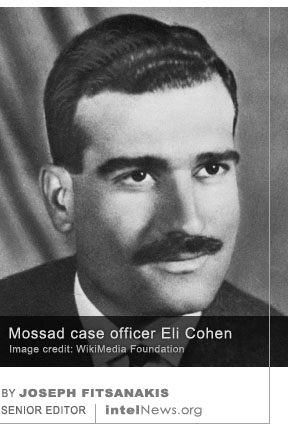
Eli CohenISRAELI OFFICIALS ARE REPORTEDLY trying to recover the remains of Eli Cohen, an Israeli spy who was hanged in Syria in 1965, after his espionage activities were discovered. Born in Alexandria in 1924, Cohen was an Egyptian Jew, whose family immigrated to Israel after 1949. After joining the Mossad, Israel’s primary external intelligence agency, Cohen became a katsa, or case officer.
The spy agency utilized Cohen’s fluency in Arabic and Spanish and sent him to Argentina, where he built his intelligence cover under the name Kamel Amin Thaabet. He pretended to be a Syrian businessman whose family had immigrated to Argentina in the 1920s. While in Argentina, Cohen became an active member of the Arab and Syrian diasporas and joined the Syrian Ba’ath Party.

In 1962, shortly before Ba’athist officers seized power in Syria, the Mossad instructed Cohen to relocate to Damascus. While there, Cohen became a well-known socialite with close connections to the administration of Syrian President Amin al-Hafiz. However, in 1965, Cohen’s espionage was uncovered by Syrian counterintelligence, who utilized technical countermeasures provided by Soviet intelligence. Cohen was convicted of espionage and publicly executed by hanging in Damascus on May 18, 1965.

Since Cohen’s execution, the Syrian state has rejected requests to reveal the location of his tomb and the whereabouts of his remains. On at least two instances, Israel, which views Cohen as a national hero, has offered to exchange Syrian and other Arab prisoners of war in return for the spy’s remains, but Damascus has rebuffed these offers. There are rumors that Syrian authorities regularly relocate Cohen’s remains so as to prevent Israel from covertly retrieving them.

According to reports from Middle Eastern media, since the fall of the administration of former Syrian President Bashar al-Assad, Israeli officials have been in negotiations to gain access to Cohen’s remains. The negotiations are allegedly taking place between Israeli government representatives and former members of the Assad regime, who have knowledge of the whereabouts of the late spy’s remains. In a television interview last week, Eli Cohen’s widow, Nadia, implied that Mossad Director David Barnea is personally involved in the ongoing negotiations.

Author: Joseph Fitsanakis | Date:16 December 2024 | Permalink

Netanyahu ignored calls to disrupt Hamas finances, claims ex-Mossad official

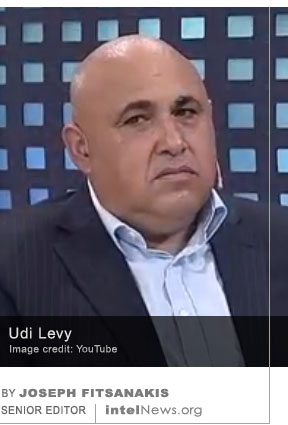
Udi LevyA RETIRED SENIOR MOSSAD official has alleged that Israeli Prime Minister Benjamin Netanyahu repeatedly ignored, and even frustrated, efforts to stop the flow of hundreds of millions of dollars to Hamas. This inaction may have enabled the Palestinian militant group to plan, organize and execute Operation Al-Aqsa Flood, which killed over 1400 Israelis on October 7, 2023, and sparked the current war between Israel and Hamas.

The allegation was made by Udi Levy, a 30-year veteran of the Israeli intelligence community, who served as an intelligence officer in the Israel Defense Forces before being appointed to head the Economic Warfare Division of the Mossad, Israel’s external intelligence agency. During his tenure in the Mossad, which ended with his retirement in 2016, Levy was a member of Task Force Harpoon, which aimed to disrupt the flow of funds to militant Palestinian groups, including Hamas.

Last week, Levy told the BBC’s flagship investigative television program Panorama that Task Force Harpoon had identified around 40 companies in the Middle East and North Africa, which were part of Hamas’ investment portfolio. These companies, based in countries such as Sudan, Algeria, Turkey, Saudi Arabia, and Qatar, were active in the areas of real estate, mining, construction, and tourism, among others. Some of the companies were even directly controlled by Hamas, said Levy.

The income from these financial investments allowed Hamas to use “billions, not millions” of dollars to build its military infrastructure in the Gaza Strip, according to the former Mossad official. That investment income was supplemented with direct cash infusions from Iran and Qatar, which in some cases arrived monthly through special envoys, according to Levy. He added that Turkey was “a critical focal point” in Hamas’ money network, as it served as a financial hub for the militant group’s holdings.

Levy told the BBC that he personally advised Netanyahu to “target Hamas’ finances” and explained to him that “Israel had the means to crush Hamas by using only financial tools”. However, Levy claims that, not only did the Israeli prime minister ignore Levy’s advice, but he proceeded to shut down the Mossad’s Task Force Harpoon. This is not the first time that Levy has made these claims. In December 2023, he told The New York Times that Task Force Harpoon analysts were so frustrated with the Israeli government’s inertia, that they resorted to “uploading some documents to Facebook” in hopes that the Israeli authorities would be forced to take action once details about Hamas’ finances were disclosed.

Author: Joseph Fitsanakis | Date: 26 February 2024 | Permalink

Analysis: Killing of Hamas leader in Lebanon marks a new phase in Israel’s war

Dahiyeh BeirutMIDDLE EAST OBSERVERS WERE hardly surprised by yesterday’s news of the apparent assassination of Hamas leader Saleh al-Arouri in Lebanon. Not only was al-Arouri a senior Hamas official, but he also headed the militant group’s contact team with Lebanese Hezbollah and its Iranian patrons. He was likely at the top of Israel’s permanent assassination list even prior to Hamas’ bloody assault on Israel last October 7. Yet, within the explosive content of the ongoing Israel-Hamas war, Tuesday’s assassination signals the opening of a new and highly unpredictable phase in an already uncertain conflict.
The vague statements issued by Israeli officials in response to the news of al-Arouri’s assassination did little to dispel the broadly accepted view that Israel’s intelligence services were behind the killing. Headed by its external intelligence agency, the Mossad, Israel’s intelligence services have a long history of extrajudicial assassinations. In his seminal book Rise and Kill First, the Israeli investigative journalist Ronen Bergman discusses in detail the history of these assassinations, which predate the postwar establishment of the state of Israel. Bergman’s data-rich research reveals that the Israeli intelligence services have performed approximately 2,700 extrajudicial assassinations in their history —more than any Western state.

Given such a prolific history of targeted killings, al-Arouri’s assassination in Beirut can be described as both expected and unremarkable. Indeed, Israeli officials have stated repeatedly since October 7 that Hamas’ senior leadership will be targeted worldwide. In a leaked recording that emerged last month, Ronen Bar, director of the Israeli Security Agency, was heard announcing to members of Israel’s Knesset that Hamas’ senior leadership would be targeted “in Gaza, in the West Bank, in Lebanon, in Turkey, in Qatar, everywhere”.

At the time the recorded conversation leaked, nobody thought that Bar, a seasoned intelligence officer, was bluffing. Indeed, the operational capabilities and reach of the Mossad are well understood by everyone in the Middle East. That al-Arouri was assassinated in southern Beirut’s Dahiyeh suburb is significant. An undisputed Hezbollah stronghold, Dahiyeh is tightly controlled by the Shiite militant group, which prides itself on ensuring the safety of its residents. Yesterday’s assassination at the very heart of Hezbollah’s lair was nothing short of a demonstration of the Mossad’s competency in special operations.

If Israel is truly intent on neutralizing the leadership of Hamas, Mossad’s competency will be increasingly tested in the coming months, as the Jewish state will have to strike repeatedly beyond its borders. This is because, unlike the beleaguered Gazans, who are currently experiencing the most destructive bombing campaign of the 21st century, most leaders of Hamas live in relative luxury in Doha, Ankara, Beirut, Damascus, and other Middle Eastern metropolitan centers. It is there, and not in the razed neighborhoods of Khan Yunis and Jabalia, that Israeli assassination teams will need to operate with increasing dexterity. Read more of this post

Israeli, Italian intelligence officers drown as boat capsizes in Lake Maggiore

ONE ISRAELI AND TWO Italian intelligence officers are among the victims of a boating accident in northern Italy. Local reports indicate that the incident occurred last Sunday evening, when a passenger boat named the Gooduria capsized and sank rapidly in Italian territorial waters. The boat was on a sightseeing trip near the Italian shoreline of Lake Maggiore, a popular destination situated on the southern side of the Alps between Italy and Switzerland.

It has been reported that nearly all of the approximately two dozen passengers aboard the Gooduria were current or former members of the Italian and Israeli intelligence services. These individuals were believed to have collaborated professionally as intelligence officers and had gathered for “a convivial meeting to celebrate the birthday of one of the group”, according to a statement issued by the Italian government.

It is worth noting that some Italian news outlets have expressed skepticism about the precise nature of the gathering. An article in the Italian daily Corriere della Sera suggested that “the gathering was a working meeting of intelligence agents”. Another Italian daily, La Stampa, said that the gathering was “an opportunity to exchange information between agents of the two countries”. These claims have not been confirmed by the Italian and Israeli governments.

Italian authorities have stated that no foul play is suspected in the accident. Instead, it is believed that inclement weather, possibly coupled with overcrowding onboard the Gooduria, contributed to the incident. The Ministry of Foreign Affairs of Israel released a brief statement on Sunday acknowledging the death of a retired member of the Israeli intelligence services, without identifying the victim by name or professional title. However, local media reports have identified the deceased as Shimoni Erez, 50, a recent retiree from the Mossad, Israel’s external intelligence agency.

The two Italian victims of the accident have been identified as Claudio Alonzi, 62, and Tiziana Barnobi, 53, both of whom were intelligence officers. Additionally, among the casualties was a Russian national named Anna Bozhkova, 50, who was reportedly the wife of the captain of the Gooduria. Following the capsizing of the boat, Israeli diplomats promptly arranged for the immediate evacuation of ten active Israeli intelligence officers from Italy. They were swiftly removed from regional hospitals and transported back to Israel via a military flight.

Author: Ian Allen | Date: 31 May 2023 | Permalink

Turkey claims it uncovered Israeli spy cell that targeted Iran

Israeli consulate Istanbul TurkeyON MONDYA, TURKEY’S NATIONAL intelligence organization (MİT) announced the arrest of several members of an alleged spy network, who were reportedly recruited, trained and handled by Israel’s intelligence agency, the Mossad. Two members of the alleged spy ring were arrested two months ago, according to the Office of the Istanbul Chief Public Prosecutor and Turkey’s National Intelligence Organization (MİT).

The arrests reportedly came as a result of an investigation into a threatening package sent that was sent in the mail by one of the spy suspects. The investigation was initiated by the Istanbul branch of the General Directorate of Security (Turkish police), which later revealed a connection with a separate 18-month long counterintelligence investigation by the MİT. It eventually led to the arrest of  Selçuk Küçükkaya, a Turkish national, who is accused of operating as the head of the alleged spy ring.

On Monday, Istanbul police arrested 11 associates of Küçükkaya, who the MİT believes to be members of the alleged spy cell. Some reports indicate that Turkish authorities are still searching for two additional suspects who are believed to be part of the alleged spy ring. The MİT states that the spy ring had established a front company through which its members conducted business activities in Iran, with the assistance of intermediaries operating abroad.

The Istanbul Chief Public Prosecutor’s office alleges that Küçükkaya made contact with Israeli intelligence through a member of the so-called Gülen movement. The Gülen movement consists of supporters of Muslim cleric Fethullah Gülen, who runs a global network of schools, charities and businesses from his home-in-exile in the United States. The Turkish government has designated Gülen’s group a terrorist organization and claims it was behind the failed 2016 coup against Turkey’s President, Recep Tayyip Erdoğan.

Küçükkaya is further-accused of having had several in-person meetings with Mossad officers in various locations around Europe. During those meetings, Küçükkaya allegedly received assignments designed to test his intelligence-gathering abilities. It is alleged that Küçükkaya was eventually hired as a spy by the Mossad, who also provided him with instructions on how to use a clandestine communication system to contact his Israeli handlers.

The claim by the Turkish government that it has busted a Mossad spy cell operating in its territory is not unprecedented. In October 2021, the MİT disclosed the arrests of 15 members of an alleged Mossad spy ring following a series of raids across four Turkish provinces. Last December, Turkish media reported that 44 individuals had been detained and interrogated for allegedly spying on Palestinian exiles living in Turkey on behalf of the Mossad. What is new about this latest claim is the alleged connection between the Mossad and the Gülen movement, which the administration of Turkish President Erdoğan views as an existential domestic security threat.

Author: Joseph Fitsanakis | Date: 24 May 2023 | Permalink

A dramatic kidnap case in Malaysia may point to changes in Mossad’s tactics

Kuala Lumpur MalaysiaREPORTS FROM KUALA LUMPUR SUGGEST that Malaysian agents operating in the service of Israeli intelligence carried out the kidnapping of a Palestinian engineer, Omar al-Balbaisi, on September 28. According to the Malaysian newspaper The Straits Times, the kidnap operation was orchestrated by the Israeli external intelligence agency, the Mossad.

Omar al-Balbaisi completed a bachelor’s degree in computer science at the Islamic University in Gaza, where he allegedly joined the Izz-ad-Din Al-Qassam Brigades, specializing in hacking mobile phones. In or around 2020, al-Balbaisi left the Gaza Strip for Istanbul, where, according to reports, a Hamas secret intelligence and cyber unit was established in 2020. The unit allegedly operated on instructions from the Hamas leadership in Gaza, without the knowledge of the Turkish authorities.

When al-Balbaisi was kidnapped, he was reportedly returning from lunch with another Palestinian expatriate. According to the report, a white van drove toward the two men. Four people emerged from the van, grabbed al-Balbaisi and dragged him into the vehicle, while yelling at him: “our boss wants to talk to you”. The other Palestinian tried to help al-Balbaisi, but was warned to stay away from the scene. He subsequently filed a report at a police station, reportedly about 40 minutes after his friend was kidnapped.

According to the reports, the kidnapped Palestinian was taken bound and blindfolded to a safe house, where his Malaysian captors tied him to a chair. They then called two men, allegedly Israelis, who told the abductee: “you know why you are here”. According to another report, al-Balbaisi was interrogated, allegedly by two Israelis, believed to be Mossad agents, via a video call. However, the video call was disconnected when Malaysian police officers broke into the safe house.

Upon receiving the information about the kidnapping, Malaysian police immediately sought to locate al-Balbaisi. They subsequently managed to raid the house where the Palestinian was being held, while his interrogation was underway. A source told the Malaysian newspaper that “the Israelis wanted to know about [al-Balbaisi’s] experience in the field of software, about the strengths of Hamas in this field, and the members of the Izz ad-Din al-Qassam Brigades that he knew”. Read more of this post

Many see Israel behind May 22 killing of Iranian paramilitary leader in Tehran

IRGC IranA GROWING NUMBER OF security observers point to Israel as the most likely culprit behind the assassination of a leading member of the Islamic Revolutionary Guard Corps (IRGC), Iran’s powerful paramilitary force. Brigadier General Hassan Sayyad Khodaei, who was killed in broad daylight in Tehran on May 22, served as deputy director of the Quds Force, a major branch of the IRGC. The mission of the Quds Force is to carry out unconventional warfare, especially in support of IRGC operations against adversaries abroad.
Observers regularly describe the IRGC as a ‘praetorian guard’ that operates inside Iran’s governing apparatus. Today the IRGC is a military force with a command structure that is distinct from Iran’s regular Armed Forces. It maintains its own army, navy and air force, has its own paramilitary and political protection units, and oversees Iran’s nuclear program. The IRGC’s weapons development falls under the duties of the Quds Force, in which Khodaei was a leading figure. He was also known to have been closely mentored by IRGC Commander Qasem Soleimani, who was assassinated by the United States in 2020.

Kodaei was assassinated in broad daylight on May 22, as he was heading home from his office in downtown Tehran, located a few blocks from the main building of Iran’s Consultative Assembly. According to eyewitness reports, Kodaei’s vehicle was rapidly approached by two individuals riding on a motorbike. They sped away seconds after shooting Kodaei five times, killing him almost instantly. The entrance to the street where Kodaei was attacked was allegedly blocked by a white van, which also sped away following the shooting.

Israel is known for carrying out assassinations of Iranian officials using motorbikes, which can move with relative ease in the congested streets of Tehran. IntelNews regulars will recall that Israeli intelligence claimed last month to have detained and interrogated an alleged Iranian assassin named Mansour Rasouli. A video of his alleged testimony emerged, which was reportedly filmed at a Mossad safehouse somewhere in Iran. Meanwhile, Kodaei’s assassins remain at large.

Author: Joseph Fitsanakis | Date: 25 May 2022 | Permalink

Mossad allegedly uncovered Iranian plot to kill Israeli, American officials abroad

Israeli consulate Istanbul TurkeyISRAEL’S MOSSAD INTELLIGENCE AGENCY allegedly foiled a plot by Iranian intelligence to send assassins abroad and kill an Israeli diplomat, an American military official and a French reporter, according to reports. The information about the alleged plot first surfaced late last week in the Iran International News Channel, a British-based Iranian news agency, which is opposed to the government in Tehran. The news agency claimed that the plot had been organized by the Quds Force, the paramilitary wing of the Islamic Revolutionary Guards Corps.

Shortly after news of the alleged plot emerged, Israeli media reported the existence of a video of an Iranian man who identifies himself as Mansour Rasouli (or Rassouli). In the video, the man claims to be a member of Unit 840, the part of the Quds Force that plans and executes operations overseas. He also claims that he was paid $150,000 to plan the assassination of an Israeli consular official in Istanbul, Turkey, as well as an American military general stationed in Turkey. A third target for assassination was a Jewish French journalist. The names of the alleged targets are not known. He adds that he had planned to carry out the assassinations with the use of networks of drug smugglers.

Rasouli then claims that the Quds Force had promised to pay him an additional $1 million following the successful conclusion of the assassinations. Toward the end of his statement, Rasouli says he had made an “error of judgment” in agreeing to participate in the operation, and promises to refrain from targeting individuals for assassination in the future. According to Iran International, Rasouli’s interview was filmed by officers of the Mossad in Turkey, where he was allegedly captured before he was able to execute the first of the planned assassinations. However, Israeli media later claimed that the Mossad officers filmed the interview in Iran, during a covert operation that resulted in the capture and interrogation of Rasouli.

IntelNews readers will recall that, in October of last year, Israel accused Iran of being behind a plot to kill Israeli citizens in Cyprus. The accusation came after the arrest of an Azeri national, who was reportedly found carrying a gun fitted with a silencer in the Cypriot capital Nicosia. A year earlier, it was reported that American intelligence agencies had uncovered an Iranian plot to kill the United States’ ambassador to South Africa, in an effort to avenge the assassination of General Qassem Soleimani by the United States in January of 2020.

Author: Joseph Fitsanakis | Date: 02 May 2022 | Permalink

Mossad targeted cell phones ‘unofficially’ with Pegasus software, report alleges

NSO GroupISRAEL’S EXTERNAL INTELLIGENCE AGENCY, the Mossad, made unofficial use of the Pegasus spyware, whose developer has been sanctioned by the United States government, according to a report from Israel. NSO Group Technologies was one of two Israeli firms that were placed on a US Department of Commerce sanctions list last November. According to a statement issued by the US Department of Commerce, the two firms engaged “in activities that are contrary to the national security or foreign policy interests of the United States”.
The move followed revelations about a spy software known as Pegasus, which is marketed by NSO Group. Pegasus is able to install itself on targeted telephones without requiring their users to click a link or download an application. Upon installation, the software provides the spying party with near-complete control of a targeted telephone. This includes the ability to browse through the device’s contents, such as photographs and videos, record conversations, as well as activate the telephone’s built-in microphone and camera at any time, without its user’s consent or knowledge.

Now a report by Haaretz, one of Israel’s leading newspapers, alleges that, under its previous director, Yossi Cohen, the Mossad worked closely with NSO Group Technologies. Citing NSO Group “employees, who asked to remain anonymous”, Haaretz alleges that Mossad officials “frequently visited the company headquarters in Herzliya”, in the northern outskirts of Tel Aviv. Initially, the Mossad officials sought to learn about the uses and capabilities of the spy software, according to Haaretz. Later, however, they began to bring with them foreign officials from countries like Saudi Arabia and Angola, whose governments were interested in acquiring the software.

On “several occasions”, the Mossad officials asked NSO Group to make use Pegasus in order to “hack certain phones” on behalf of the Mossad. It is not known whether this was because NSO Group’s spyware was more advanced than the Mossad’s spyware, or whether the spy agency was engaged in “unofficial intelligence gathering”, says Haaretz. The paper adds that, under its current director, David Barnea, the Mossad has distanced itself from NSO Technologies.

Author: Joseph Fitsanakis | Date: 14 February 2022 | Permalink

Israel likely behind 1981 bombings of German, Swiss engineering firms, expert claims

MossadISRAEL’S PRIMARY EXTERNAL INTELLIGENCE agency, the Mossad, was likely behind a series of mysterious bombings in 1981, which targeted German and Swiss engineering firms believed to be aiding the Pakistani nuclear program, according to new exposé by a leading Swiss newspaper. Several bomb attacks targeted a number of engineering firms in Switzerland and what was then West Germany in 1981. Alongside these attacks, there were threatening telephone calls that targeted West German and Swiss engineers.


A previously unknown militant group calling itself the Organization for the Non-Proliferation of Nuclear Weapons in South Asia took responsibility for these actions. Its members mailed a number of political manifestos to the German and Swiss press, and repeatedly issue proclamations via telephone in broken German or English, according to contemporary accounts. Interestingly, the Organization for the Non-Proliferation of Nuclear Weapons in South Asia has never been heard of since.

Now, however, one of Switzerland’s leading newspapers, the Neue Zürcher Zeitung (NZZ), claims in a new report that the violent actions against German and Swiss scientists and engineering firms were likely undertaken by the Israeli Mossad. In a leading article published on Saturday, the Swiss daily cited “new, previously unseen documents from archives” in Switzerland and the United States, which allegedly shed light on these mysterious attacks.

The report rests partly on the work of Swiss historian Adrian Hänni, who argues that Israeli intelligence was eager to prevent Pakistan from acquiring access to nuclear energy. The prospect of Pakistan becoming the first Muslim-majority nuclear state was viewed by Israel as an “existential threat”, according to Hänni. Additionally, the Mossad had credible information that senior officials in Islamabad worked closely with the Islamic Republic of Iran, one of Israel’s mortal regional enemies. These factors convinced the Israeli leadership of the time to authorize a covert operation against a number of European firms and scientists who were allegedly aiding Islamabad’s pursuit of a nuclear arsenal, according to the NZZ.

Author: Joseph Fitsanakis | Date: 05 January 2022 | Permalink


