Russian spy agency reveals identities of undercover officers in rare move
January 29, 2020 5 Comments
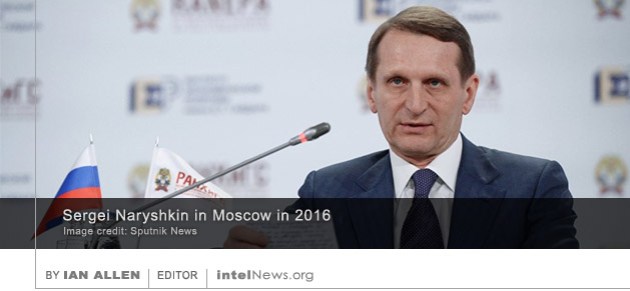 In an extremely rare move, the head of Russia’s spy agency has disclosed the identities of several undercover officers during an event marking the centenary of the KGB and its modern-day successor, the Russian Foreign Intelligence Service, or SVR.
The identities of the officers —most of whom are now retired or dead— were disclosed on Tuesday by Sergei Naryshkin, head of the SVR. Speaking at a press conference in Moscow, Naryshkin revealed the names and read the brief biographical notes of seven non-official-cover officers, referred to in Russian as “pазведчики-нелегалы”, or ‘illegals’. The term refers to undercover intelligence officers who are secretly posted abroad without diplomatic cover. Accordingly, they have no official connection to a Russian diplomatic facility, while some even pose as citizens of third countries.
Since 1922, illegals have operated out of the KGB’s and (after 1991) the SVR’s “S” Directorate, whose formal title is First Main Directorate or First Chief Directorate. It is customary to keep the identities of illegals secret following their retirement and even after death. However, in December of last year Naryshkin surprised many by announcing that he would soon disclose the identities of a number of former members of what he described as the “special reserve staff”, at an event to mark the centenary of the KGB and SVR.
He did so on Tuesday, when he disclosed the names of seven individuals and described their work in broad terms. The names disclosed by Naryshkin were: Yury Anatolievich Shevchenko (born 1939), Yevgeny Ivanovich Kim (1932-1998), Mikhail Anatolyevich Vasenkov (born 1942), Vitaly Viacheslavovich Netyksa (1946-2011) and his spouse Tamara Ivanovna Netyksa (born 1949), Vladimir Iosifovich Lokhov (1924-2002) and Vitaly Alekseyevich Nuykin (1939-1998).
The accompanying biographies released by the SVR disclose no specifics about the countries in which these illegals operated, the type of work they carried out, and the specific dates in which they were active. Most of them operated between the late 1960s and the early 1990s.
► Author: Ian Allen | Date: 29 January 2020 | Permalink
 Russian authorities detained a Japanese journalist last month, and eventually expelled him after accusing him of espionage, according to sources. Even though it occurred last month, the incident was reported only on Monday by Russia’s RIA Novosty news agency.
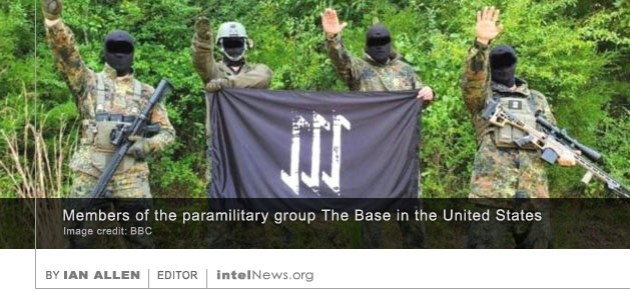 The mysterious leader of an American far-right paramilitary group, which authorities say is seeking to overthrow the United States government, runs the organization from Russia, according to a probe conducted by the BBC. The group, which calls itself The Base, is thought to have been formed in the summer of 2018. Since then, it is believed to have recruited dozens of members using encrypted messaging applications.
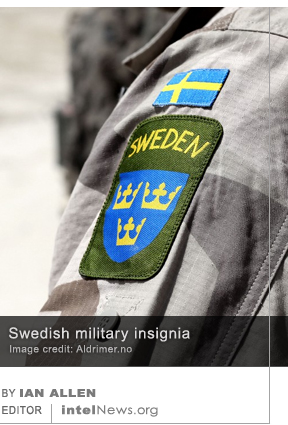 A man who rose through the ranks of the Swedish Armed Forces by using forged credentials, and worked as an intelligence officer in NATO while liaising with the Russian security services, did not betray national secrets, according to Swedish officials.
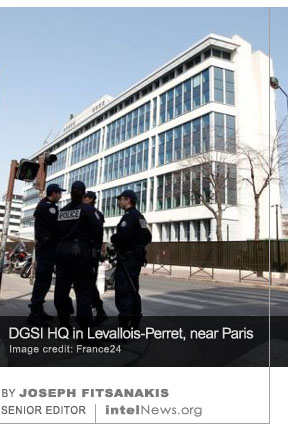 An officer in France’s elite counterterrorism agency is to be tried along with four accomplices for selling forged identity documents and private data on the darknet. The case first emerged in 2018, after officers with France’s Central Office for the Prevention of Illegal Immigration (OCRIEST) detected a seller of high quality forged copies of official documents on the darknet.
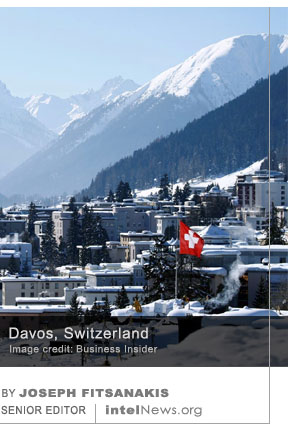 A Swiss newspaper has revealed a previously unreported detention of two Russian diplomats in the luxury Swiss Alpine resort of Davos, which is currently hosting the annual meeting of the World Economic Forum (WEF). The development prompted British authorities to warn some British citizens participating in the WEF meeting that they may be in physical danger.
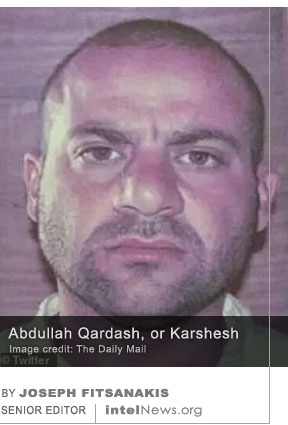 Western intelligence agencies have reportedly confirmed that a non-Arab is now leading the Islamic State for the first time in the organization’s history. Rumors of a new leader of the group began to circulate just hours after American forces
 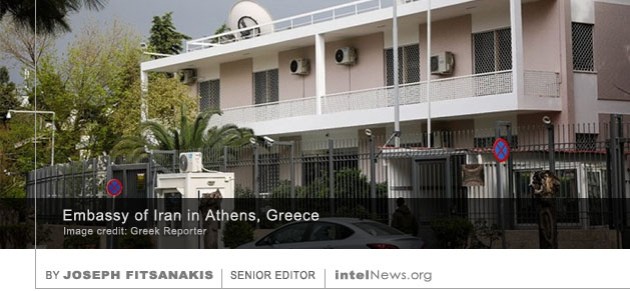 Iran has issued a warning against Greece, saying that it will retaliate if the United States attacks the Islamic Republic using its military bases on Greek soil. It is the first time that Iran has threatened to launch attacks against a member of the European Union in connection with the recent rise in tensions between Tehran and Washington.
 There was chaos in the Sudanese capital Khartoum yesterday, as hundreds of members of Sudan’s intelligence agency staged an armed uprising against the country’s new government. At least five people —including two soldiers— are believed to have died in the uprising, while several dozen intelligence officers were reportedly arrested.
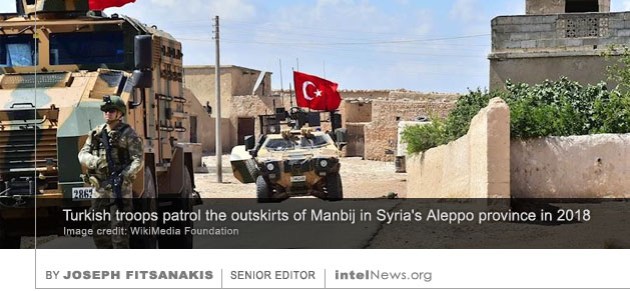 In a move that surprised observers, the intelligence chiefs of Turkey and Syria —two bitter rivals in the ongoing Syrian civil war— met in Russia on Monday. The meeting was held in Moscow and was acknowledged by officials from both sides, making it the first explicit contact between Turkish and Syrian intelligence in over a decade.
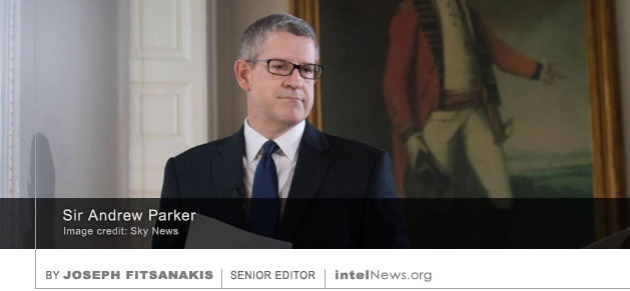 The director of Britain’s domestic intelligence agency has dismissed warnings by the United States that intelligence sharing between the two allies will be impeded if London decides to use Chinese-made telecommunications hardware. The British government has come under relentless pressure by Washington to bar Huawei Technologies, one of the world’s leading telecommunications hardware manufacturers, from competing for contracts to build the United Kingdom’s 5th generation cellular communications infrastructure.
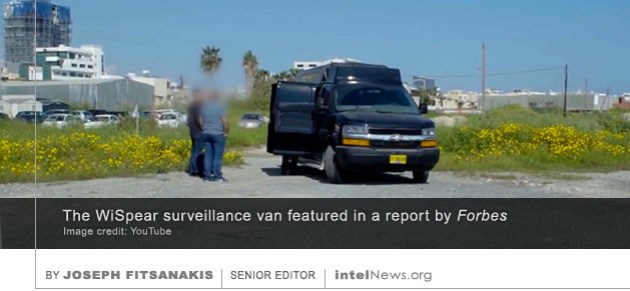 The government of Cyprus has issued international arrest warrants for three Israeli citizens, who are wanted in connection with a private security company that allegedly carried out espionage operations on the Mediterranean island. The warrants were sparked by what has become known in Cyprus as the “spy van case”.
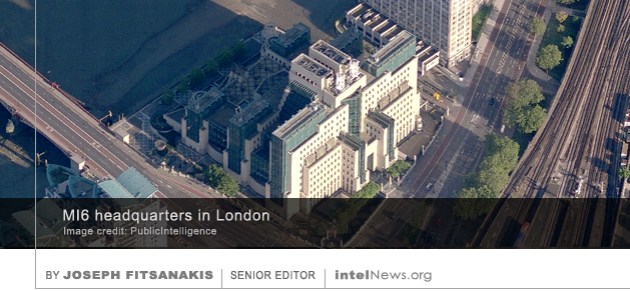 The floor plans of the headquarters of MI6, Britain’s foreign-intelligence agency, were temporarily lost by a contractor, an incident that led to a temporary lockdown of the building and the termination of the contract, according to media reports. The alleged incident took place at 85 Albert Embankment, a distinctive-looking building that has served since 1994 as the headquarters of MI6 —known officially as the Secret Intelligence Service, or SIS. The imposing structure is located on the bank of the River Thames alongside Vauxhall Bridge in downtown London.
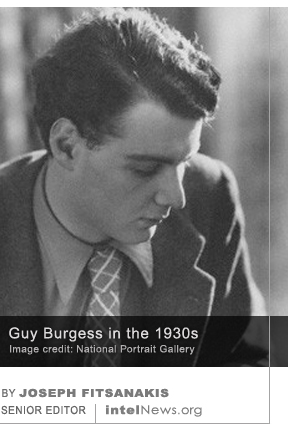 The intelligence service of Russia has openly honored two British members of the so-called Cambridge Five spy ring, who caused great controversy during the Cold War by defecting to Moscow. The intelligence services of the Soviet Union recruited five Enlishmen, H.A.R. ‘Kim’ Philby, John Cairncross, Donald Maclean, Anthony Blunt, as well as an unnamed fifth person, to spy for them in the 1930s. All five were recruited while they were promising young students at Britain’s elite Cambridge University, and entered the diplomatic and security services in order to supply Moscow with classified information about Britain and its allies.








United Nations targeted in sophisticated cyber-espionage operation
January 30, 2020 by Joseph Fitsanakis 1 Comment
According to the Associated Press report, hackers used IP addresses in Romania to stage a meticulously organized infiltration of dozens of United Nations computer servers. The servers that were compromised included those used by the Office of the United Nations High Commissioner for Human Rights (OHCHR), which collects sensitive personal data regarding human rights abuses by governments around the world. The OHCHR has regularly been the subject of verbal attacks by authoritarian governments around the world in recent years.
The identity of the hackers remains unclear, said the report. However, their degree of technical sophistication was so substantial that forensic investigators suspect that a state actor was behind the espionage operation, according to the Associated Press. The news agency relayed an email message it received from United Nations spokesman Rupert Colville, which claimed that the hackers did penetrate the OHCHR system but “did not get very far, [as] nothing confidential was compromised”.
But the above statement appears to contradict the leaked study, which suggests that the cyber-espionage operation against the United Nations resulted in a compromise of “core infrastructure components” that were “determined to be serious”. Among the accounts that were compromised by the hackers were those of some domain administrators, who have access to large segments of the United Nations’ computer networks. The Associated Press spoke to an anonymous United Nations official, who said that the attack was “sophisticated”, and that the organization’s computer systems were “reinforced” in the months following the incident.
► Author: Joseph Fitsanakis | Date: 30 January 2020 | Permalink
Filed under Expert news and commentary on intelligence, espionage, spies and spying Tagged with computer hacking, cyberespionage, News, Rupert Colville, UN High Commissioner for Human Rights, United Nations