Mossad chief sees historic shift of alliances as Arab states side with Israel against Iran
July 2, 2019 2 Comments
 In a rare public appearance, the director of the Mossad spy agency said that the Middle East is witnessing a historic shift of alliances as many Arab states are forming tacit pacts with Israel against Iran and its proxies. Yosef “Yossi” Cohen spoke on Monday morning at the Herzliya Conference, a security-themed event organized by the Interdisciplinary Center, a university in Herzliya, just north of Tel Aviv.
In his 40-minute speech Cohen said that the Mossad had identified the present time as “a rare opportunity —perhaps the first in the history of the Middle East— to reach a regional understanding that would lead to an inclusive regional peace agreement” between Israel and most of the Arab states. He justified his reasoning by claiming that many Arab states are siding with Israel to pursue “common interests [such as] the fight against rivals like Iran and jihadist terrorism”. This historic shift in alliances is happening as Israel is enjoying “close relations with the White House” and keeping open “channels of communication with the Kremlin”, said the spy chief. These factors “combine to create what might be a one-time window of opportunity” for Israel to form a strategic alliance with the majority of its Arab neighbors, said Cohen.
The Mossad chief went on to allege that the Islamic Revolutionary Guard Corps (IRGC) were behind the recent bombings of commercial oil tankers in the Persian Gulf. He told the conference that he could “say with certainty that Iran was behind these attacks” and that they were “approved by the Iranian leadership and carried out by the [IRGC]”. Cohen cited “the best sources of Israeli and Western intelligence” but did not provide specific evidence to support his allegation, which Iran denies. Later in his speech, Cohen said that the IRGC and Iranian intelligence agencies had carried out assassinations throughout Europe and had discussed further plans to attack Jewish and Israeli targets in Denmark, Azerbaijan and the North America. “And that is only the tip of the iceberg”, said Cohen, and went on to claim that the IRGC had set up a network of 300 agents in the African continent and was heavily present in Syria, mainly through its Lebanese proxy Hezbollah.
At the conclusion of his speech, the Mossad chief repeated prior warnings by Israeli officials that the Jewish state would never allow the development of an Iranian nuclear arsenal. “Mossad and the State of Israel have not signed the nuclear deal and will do all to ensure Iran will never possess a nuclear arsenal”, said Cohen.
► Author: Joseph Fitsanakis | Date: 02 July 2019 | Permalink
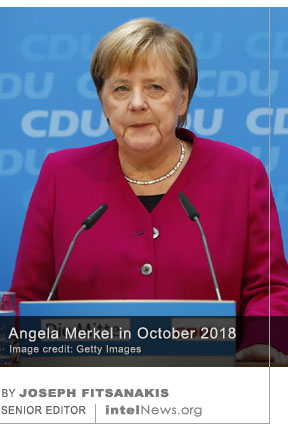 Foreign intelligence agencies are allegedly trying to acquire the medical file of German Chancellor Angela Merkel after she was seen trembling uncontrollably in public twice in as many weeks. Reports about foreign spy interest in Merkel’s health emerged in German and British newspapers last weekend, after the German chancellor was seen trembling during high-level meetings earlier this month. The first incident took place during an official meeting with Ukrainian President Volodymyr Zelensky on June 18. The German Chancellery said Merkel had suffered from dehydration and “felt like herself again after drinking a few cups of water”. But the tremors were back again on June 27 during the German leader’s visit to Japan for the G20 Summit.
 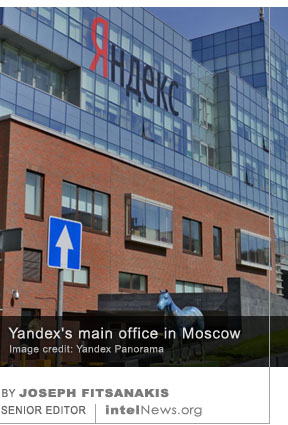 Hackers used a malware described by experts as the “crown jewel” of cyber-espionage tools to hack into Russia’s version of Google, in an effort to breach user accounts, according to the Reuters news agency. The hackers targeted Yandex (Яндекс), a Moscow-headquartered company that operates as the Russian version of Google. Yandex is the largest technology venture company in the Russian Federation and the fifth most popular search engine in the world. It also provides services such as mapping and email in Russia and several other countries in Central Asia and the Middle East. It claims that it serves more than 150 million monthly users worldwide.
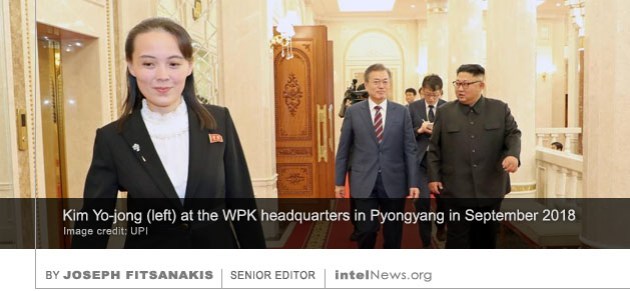 The younger sister of North Korea’s Supreme Leader Kim Jong-un appears to have been promoted to the number two position in the country’s ruling apparatus, according to a South Korean intelligence assessment. Until recently, Kim Yo-jong (pictured), 30, was Director of the Propaganda and Agitation Department of the ruling Workers’ Party of Korea (WPK). She also served as an alternate member of the Political Bureau, which is the highest decision-making body within the WPK.
 Iranian state media announced on Sunday the arrest of 16 officials in the country’s Ministry of Petroleum, allegedly for sabotaging Iranian energy policy. It is not known whether these arrests are in any way connected with Tehran’s announcement last week that it had dismantled “one of the most complicated” espionage operations by the United States Central Intelligence Agency in several countries. According to the state-owned Fars News Agency, the 16 officials were arrested over the weekend in synchronized pre-dawn raids. All of them had managerial positions in Iran’s oil industry —including in the areas of exploration, production and distribution of Iran’s oil and petrochemical products inside the country as well as abroad.
 It is not at all clear that the Islamic State and its leader, Abu Bakr al-Baghdadi, who claimed responsibility of the Sri Lanka bombings in April, had foreknowledge of the attacks, according to a top official. The militant Sunni group claimed it was behind the nine suicide blasts that targeted Catholic churches and five-star hotels in Sri Lanka’s western and eastern coastal regions on April 21. The near-simultaneous bombings killed 258 people and injured over 500. They are believed to constitute the bloodiest terrorist attack in the country’s history. Interestingly, many questioned the authenticity of the Islamic State’s claim of responsibility, which came a full two days following the deadly blasts. The group typically issues statements immediately following attacks by its followers around the world. The 48-hour delay in the case of the Sri Lanka bombings, therefore, was deemed “uncharacteristic” by some experts.
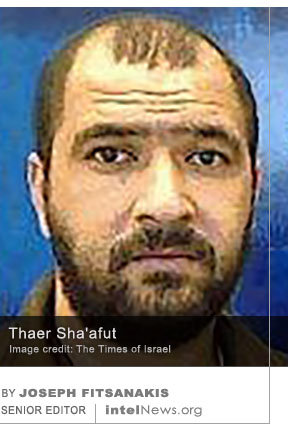 Israeli authorities announced on Thursday the arrest of a deep-cover intelligence operative who allegedly attempted to establish a base for Iranian intelligence in Israel and the West Bank, according to news reports from Israel. Shin Bet, Israel’s domestic security and counterintelligence agency,
 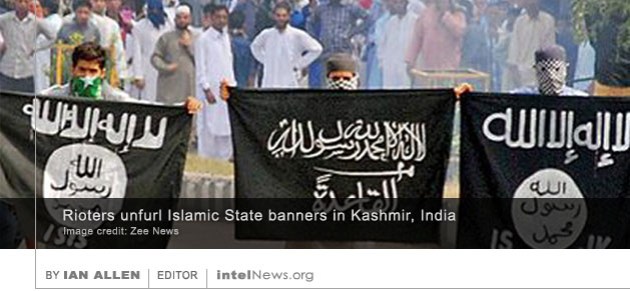 Indian counterterrorism officials have alleged in court that four members of the Islamic State in Indian-administered Kashmir were guided by a handler from Pakistan. The court case involves four young men from Jammu and Kashmir who were arrested last November on terrorism charges. Court documents filed recently identify the four as members of the Islamic State. This development is significant because Indian officials have until recently dismissed as overstated claims that the Islamic State is present in Kashmir. The unfurling of Islamic State banners by anti-government rioters is a regular phenomenon in Indian Kashmir. But government officials dismiss those who wave such banners as impressionable youth who have no access to weaponry or logistical support from the Islamic State. Last November’s arrests, however, highlighted the fact that the Islamic State does in fact have an armed presence on the ground in India.
 A senior Iranian security official said on Monday that Tehran had dismantled “one of the most complicated” espionage operations by the United States Central Intelligence Agency, leading to “arrests and confessions” of suspects in several countries. The announcement was made by Ali Shamkhani (pictured), secretary of the Supreme National Security Council of Iran, the Islamic Republic’s highest security decision-making body, which is chaired by the country’s president.
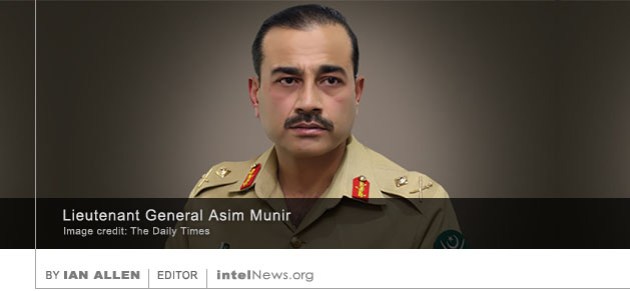 In a surprising move the Pakistani military has dismissed the head of the powerful Inter-Services Intelligence (ISI) spy agency just eight months after appointing him to that position. The decision was announced on Sunday in a brief statement by the Inter-Services Public Relations, the public-relations wing of the Pakistan Armed Forces. The statement said that Lieutenant General Asim Munir had stepped down from his post as director of ISI and would take over as commander of the Gujranwala Corps in Punjab, Pakistan’s second-largest province. The statement did not explain the reasons for the reshuffle; the latter came as a surprise, as ISI directors typically serve for at least three years in that post. General Munir’s tenure
 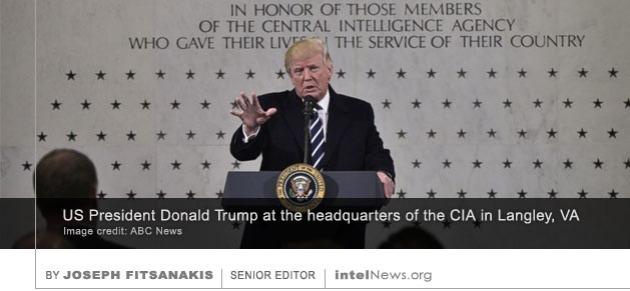 United States President Donald Trump said on Tuesday that he would not allow American intelligence agencies to use spies against North Korea, raising eyebrows in Washington, before appearing to backtrack a day later. The American president was speaking to reporters at the White House on Tuesday, when he was asked about a report that appeared in The Wall Street Journal that day. According to the
  Kim Jong-nam, the half-brother of North Korean leader Kim Jong-un, held regular meetings with American intelligence officers before he was assassinated with VX nerve gas at a busy airport terminal in Malaysia. Two women
 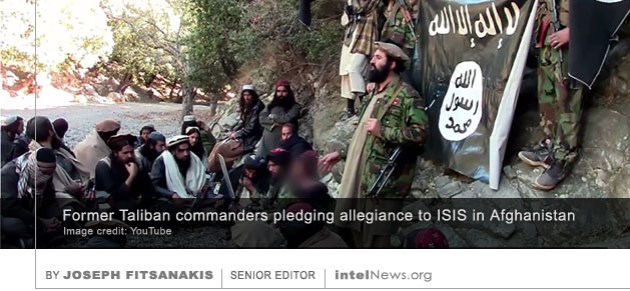 The Islamic State group in Afghanistan is now more threatening than the Taliban to both Afghan and Western interests, according to some experts, who warn that many of its fighters are moving there from the Middle East. It was in late 2014 when the Islamic State, known formerly as the Islamic State of Iraq and Syria (ISIS), made its initial appearance in Afghanistan. Soon an official Islamic State affiliate emerged in Afghanistan, calling itself Islamic State – Khorasan Province. Security observers estimated the group’s strength to below 150 armed fighters, most of them Pakistani Taliban who had sought refuge in Afghanistan, or small cadres of Afghan Taliban who pursued a more globalized Salafist agenda. Aided by the growing worldwide notoriety of its parent organization in Iraq and Syria, the Islamic State – Khorasan Province grew in size in 2015 and 2016. Its armed cadres were joined by Salafist-jihadists from Central Asia and the Indian subcontinent, as well as by radical Muslims from China’s northwestern Xinjiang Province. In 2016, as the Islamic State began retreating in the Middle East, fighters from there gradually began to make their way to Afghanistan, adding to the numerical strength of the organization’s Khorasan Province branch.
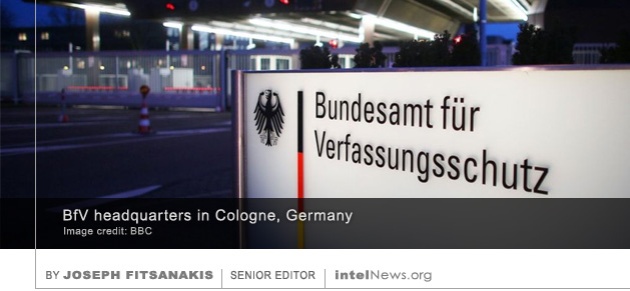 Turkey’s spy agency has developed a smart phone application to enable pro-government Turks living in Germany inform on their compatriots who speak out against the ruling Justice and Development Party (AKP). The existence of the phone application was revealed in the annual report of the Federal Office for the Protection of the Constitution (BfV), Germany’s primary counterintelligence agency. The report covers terrorist and foreign intelligence activity that took place in 2018 in Baden-Württemberg, a state in southwest Germany that borders Switzerland and France. Deutsche Welle, Germany’s state broadcaster, which






 intelNews.org
ISIS militant was first-ever Filipino suicide bomber, say police officials
July 3, 2019 by Joseph Fitsanakis Leave a comment
The Islamic State —known also as the Islamic State of Iraq and Syria (ISIS)— claimed responsibility for the attack, leading many to speculate that the suicide bombers were not Filipinos, but other Arab nationals. That would fit the pattern of the two previous suicide bombings that have taken place in the history of the Philippines. In July of 2018, a Moroccan ISIS follower drove a van laden with explosives at an army checkpoint on the island of Basilan, killing ten people. And in January of this year, two Indonesian suicide bombers attacked a Roman Catholic congregation on Jolo Island, killing 23 and injuring over 100 churchgoers. All three suicide bombers were members of Abu Sayyaf, a Filipino Salafi jihadist group that pledged allegiance to ISIS in 2014. Moreover, none of the three suicide bombers were native Filipinos; rather they had traveled to the island country in order to carry out terrorist attacks.
This pattern may have changed as of last Friday, however. According to local military officials, a Filipino woman identified the remains of one of the two suicide bombers as belonging to her son. The woman reportedly told authorities that her son was named Norman Lasuca and was 23 years old. She also said that he, like his father, belonged to the Tausūg, a million-strong predominantly Muslim ethnic group that includes many recent converts to Islam.
On Tuesday, several Philippine Army commanders gave a press conference in Sulu, where they discussed the latest information regarding last week’s suicide attacks. One of the speakers, Brigadier-General Edgard Arevalo, said that the purported mother of the suicide bomber had provided DNA samples to the authorities, in order to help positively identify the body. If the DNA tests are positive “then […] we can say conclusively that the person is Filipino”, which will be a first, said Arevalo. A positive result would suggest that the ideology of ISIS may be more appealing to local Filipino youth than has generally been assumed by counterterrorism officials, Arevalo concluded.
► Author: Joseph Fitsanakis | Date: 03 July 2019 | Permalink
Filed under Expert news and commentary on intelligence, espionage, spies and spying Tagged with Abu Sayyaf Group, Basilan (Philippines), Islamic State, Moro ethnic group, News, Philippines, suicide bombings, Sulu (Philippines), terrorism