Senior Belgian counterintelligence officer arrested on suspicion of spying for Russia
February 18, 2019 1 Comment
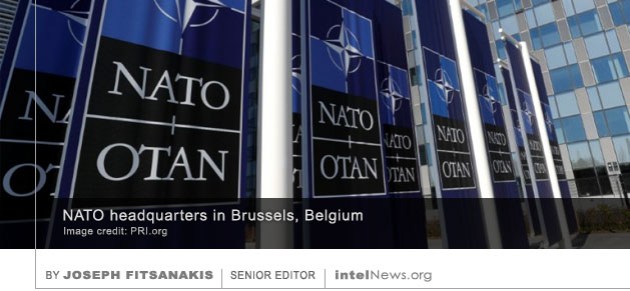 A senior counterintelligence official in Belgium’s external intelligence service is under house arrest on suspicion of sharing classified documents with Russian spies, according to a Belgian newspaper. Additionally, the chief of the agency’s counterintelligence directorate has been barred from his office while an internal investigation is underway on allegations that he illegally destroyed government documents. These allegations surfaced last Thursday in a leading article in De Morgen, a Flemish-language daily based in Brussels.
Citing anonymous sources from the General Information and Security Service —Belgium’s military intelligence agency— the paper said that the arrestee has the equivalent rank of major in the General Intelligence and Security Service. Known as GISS, the agency operates as the Belgian equivalent of the United States Central Intelligence Agency or Britain’s Secret Intelligence Service —better known as MI6. GISS officers collect information abroad and are not permitted to operate within Belgium’s borders. The man, a career counterintelligence official, is suspected of having passed secrets to Russia with the help of a woman who claims to be Serbian, but who is in fact believed to be an operative for Russian intelligence. It is not known whether the compromised information included secrets involving the North Atlantic Treaty Organization, of which Belgium is a founding member. In the same article, De Morgen also said that Clement Vandenborre, who serves as chief of GISS’s counterintelligence directorate, has been barred from his office while an investigation is taking place into allegations of mismanagement. He is also accused of having shredded classified government documents without permission. It is not believed that this case is connected with the alleged Russian penetration.
De Morgen quoted a spokesperson for Belgium’s Ministry of Defense, who confirmed that an investigation into alleged foreign espionage targeting a GISS employee was underway, but added that “no comment” would be made on the subject so as “not to hinder” the probe. Ironically, German newspaper Die Welt am Sonntag reported last week that the European Union’s diplomatic agency warned officials in Belgium to watch out for “hundreds of spies” from various foreign countries, including from Russia and China. The warning, issued by the European Union’s diplomatic agency, the European External Action Service (EEAS), said that “approximately 250 Chinese and 200 Russian spies” were operating in Brussels.
► Author: Joseph Fitsanakis | Date: 18 February 2019 | Permalink
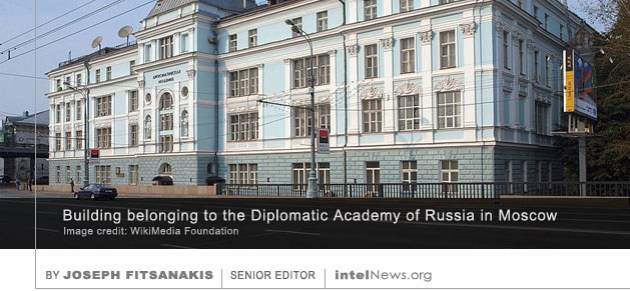 An investigative website has linked a graduate of an elite intelligence academy in Moscow with the attempted assassination of a Russian former double spy in Britain last year. Reports last year identified Dr. Alexander Yevgenyevich Mishkin (cover name ‘Alexander Petrov’) and Colonel Anatoliy Chepiga (cover name ‘Ruslan Boshirov’) as the two men that tried to kill Sergei Skripal in the English town of Salisbury in March 2018. Skripal, a former officer in Russia’s military intelligence service, the GRU, was resettled in Salisbury in 2010, after spending several years in a Russian prison for spying on behalf of Britain. But he and his daughter Yulia almost died last March, after they were
 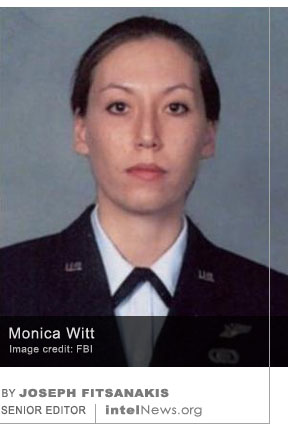 An American intelligence officer, who held the highest level of security clearance for over a decade, defected to Iran in 2012 and has been spying against the United States ever since, it was revealed yesterday. Monica Witt, 39, was a counterintelligence officer for the United States Air Force from 1997 until 2008, specializing in the Middle East. Throughout her career, she was deployed by the US military to the Middle East on several occasions, in order to carry out counterintelligence missions the details of which remain classified to this day.
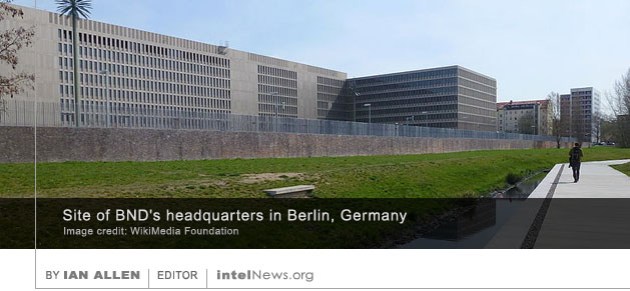 The chancellor of Germany has officially inaugurated the largest headquarters of any spy agency in the world. Last Friday, Angela Merkel led the public ceremony that marked the opening of the Zentrale des Bundesnachrichtendienstes, which is the new headquarters of the German Federal Intelligence Service. Known by the initials BND, the agency operates as Germany’s primary foreign intelligence service. It employs close to 7,000 people in more than 300 locations around the world, and its annual budget is approximately €1 billion ($1.13 billion).
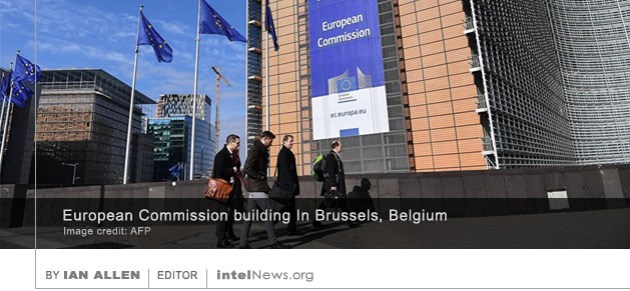 The European Union’s diplomatic agency has warned officials who are active in Belgium to watch out for “hundreds of spies” from various foreign countries, according to a German news report. The report appeared last weekend in Germany’s Welt am Sonntag newspaper, which cited a report from the European External Action Service (EEAS). Based in Brussels, the EEAS operates as the European Union’s diplomatic agency and is headed by Federica Mogherini, an Italian former government minister who has been serving as the European Union’s High Representative for Foreign Affairs and Security Policy since 2014.
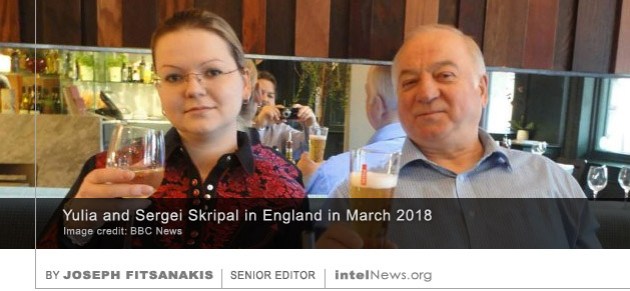 New reports from Russian investigative sites claim that a third man using a fake name was involved in the attempted assassination of former double spy Sergei Skripal in England last year. Skripal, a former military intelligence officer, was resettled in the English town of Salisbury in 2010, after spending several years in a Russian prison for spying on behalf of Britain. But he and his daughter Yulia almost died in March 2018, after they were
  Weapons supplied to the Saudi and Emirati governments by the United States and other Western nations are ending up in the hands of al-Qaeda-linked Sunni militias in Yemen, according to two separate investigations. The weapons are being supplied to the militaries of Saudi Arabia and the United Arab Emirates by the West on the understanding that they will be used in the war in Yemen. The war has been going on since 2015, when a alliance of rebel groups from Yemen’s Shiite communities formed the Houthi movement, which quickly seized control of much of the country. The Houthis effectively toppled the government, prompting a reaction by a coalition of Sunni Arab states, which see the Shiite movement as an Iranian front. In an effort to restore Yemen’s Sunni-dominated government, Western countries have supplied Saudi Arabia and the United Arab Emirates with more than $5 billion-worth of weaponry.
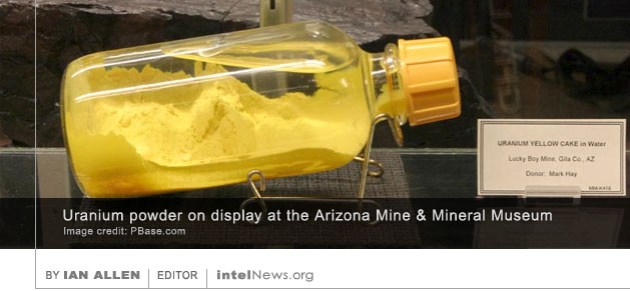 Police in Japan are investigating how a man was able to offer uranium for sale through an online auction website operated by Yahoo!, a California-based provider of Internet services. Japanese news agencies reported on Friday that the alleged product was displayed packed inside a transparent glass tube on the online auctions site. It was advertised as “Uranium 99.9%”. There was no information about the sale’s starting price on Yahoo! Auctions. The website, Yahoo! Kantan Kessai, is a rare remnant of the California-based company’s worldwide auction service, which terminated its operations in most countries between 2002 and 2008. But smaller segments survive in Taiwan, Japan and Hong Kong.
 Media reports in Pakistan claimed yesterday that “an international spying network” had been dismantled in the country following the arrests of at least five intelligence officials who were working for foreign interests.
  Morton Sobell, an American radar engineer who in 1951 was convicted of conspiracy alongside Julius and Ethel Rosenberg in one of the Cold War’s most prominent espionage cases, has died at 101 years old. His death was
 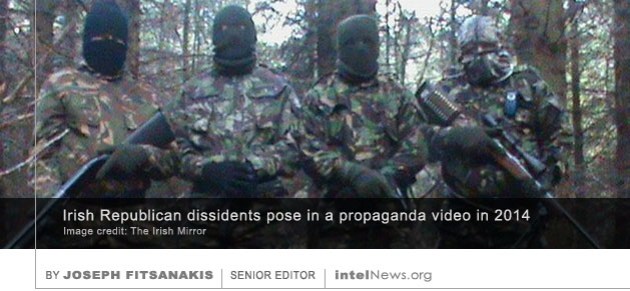 The British Security Service (MI5) has over 700 officers —more than 20 percent of its entire force— stationed in Northern Ireland, due to fears that the Brexit process might reignite the centuries-long sectarian conflict there. In 1922, nationalist rebels managed to dislodge Ireland from the British Empire. But six counties in Ireland’s north remained under British dominion, and today form the British territory of Northern Ireland. Irish nationalists have for decades engaged in an unsuccessful campaign —at times peaceful and at times violent— to unite these counties with the Republic of Ireland. Following the Good Friday Agreement of 1998, nationalist and British loyalist groups in Northern Ireland terminated their armed operations and entered the political arena, effectively sharing power in the British territory. The integration of Ireland and Britain into the European Union helped in that process by effectively bringing to an end border checks between the two countries. Thus, pro-British loyalists continued to live under British rule, while nationalists have been able to cross from Northern Ireland to the Irish Republic and back without restrictions, as if the two states were effectively unified.
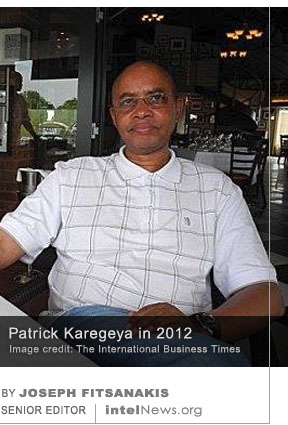 A public inquest into the 2014 killing of a Rwandan dissident and former spy chief, who had been given political asylum in South Africa, has unearthed evidence showing that South African authorities believed the killers had close links to the government of Rwanda. It also appears that the South Africans chose not to prosecute the killers in order to protect their diplomatic ties with the Rwandan government. Patrick Karegeya was a leading member of the Rwandan Patriotic Army (RPA), the armed wing of the Rwandan Patriotic Front (RPF), which was founded in 1987 in Uganda by Rwandan Tutsi refugees. In 1994, the RPA, led by Paul Kagame, took control of Rwanda, thus putting an end to the genocide of up to a million Tutsis and moderate Hutus. Soon afterwards Karegeya was named Director General of External Intelligence in the RPA, which was renamed to Rwandan Defense Forces.
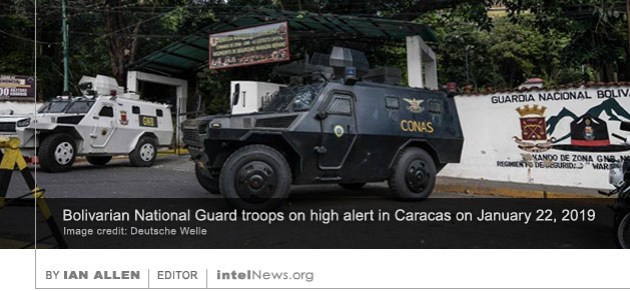 The government of Venezuela said on Tuesday that it had quelled an armed uprising by nearly 30 members of the Bolivarian National Guard (GNB) in Caracas, which sparked an all-night riot in the Venezuelan capital. On Tuesday government officials announced the arrest of 27 members of the GNB who allegedly revolted against the government of President Nicolás Maduro. Several videos were posted in pro-opposition social media accounts the night before. They showed young men in military uniforms brandishing weapons and calling on all Venezuelans to rise up against the country’s government. In one
 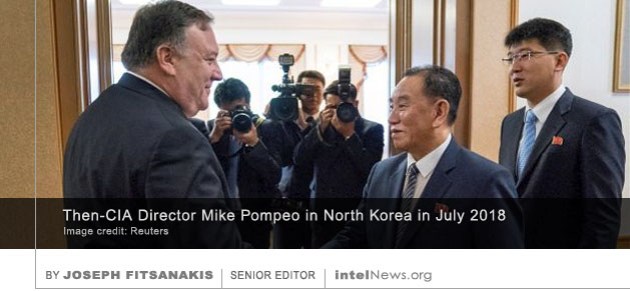 With presidential approval, the United States Central Intelligence Agency has maintained a secret channel of communication with North Korea since at least 2009, according to The Wall Street Journal. Many were surprised in 2018, when the then CIA director Mike Pompeo made a sudden visit to Pyongyang to speak with senior North Korean officials. But according to The Wall Street Journal, the CIA channel with the North Koreans had been there since at least 2009 and Pompeo simply “re-energized it” after being instructed to do so by the White House.






 intelNews.org
Lithuania widens espionage probe, several now in custody for spying for Russia
February 20, 2019 by Joseph Fitsanakis 1 Comment
Government prosecutors allege that Sheshel was part of a sizeable spy network of Lithuanians who were recruited by Russia in the past five years and whose “activities threatened Lithuanian national security”. Among them is allegedly Alģirds Paleckis, a former parliamentarian and diplomat, Paleckis was born in 1971 in Switzerland, where his father, Justas Vincas, served as a Soviet diplomat. His grandfather, Justas Paleckis, was a towering figure in the Communist Party of Lithuania, which in 1940 spearheaded Lithuania’s amalgamation into the Soviet Union. But his son, Paleckis’ father, broke ranks with the family’s communist past and became a leading nationalist parliamentarian in 1990, when the country seceded from the USSR. Paleckis followed in his father’s footsteps and joined the diplomatic service before entering parliament. But in 2008, after a successful career as a pro-Western reformist politician, Paleckis began to veer to the left, eventually founding the Lithuanian Socialist People’s Front, a small leftist party that is often accused of being too close to Moscow. The party is a vocal opponent of Lithuania’s membership in the European Union and NATO. Paleckis’ critics also note that he is married to a Russian woman whose father is reportedly a Russian intelligence officer.
The German news agency Deutsche Welle reported last week that Paleckis attracted the attention of Lithuanian counterintelligence investigators after he “fully paid back the mortgage on a house too quickly”. He is now accused of giving his Russian handlers information about a Lithuanian government investigation into Soviet-era informant networks in the small Baltic country. He has been in custody since last October, along with an undisclosed number of other alleged members of a purported Russian spy ring. Earlier this week, Lithuanian authorities said that evidence collected from the unnamed detainees are helping them broaden their probe into alleged Russian espionage.
► Author: Joseph Fitsanakis | Date: 20 February 2019 | Permalink
Filed under Expert news and commentary on intelligence, espionage, spies and spying Tagged with Alģirds Paleckis, counterintelligence, Lithuania, Lithuanian Socialist People's Front, News, Russia