“External attack” may have caused crash that killed UN secretary general in 1961
September 27, 2017 7 Comments
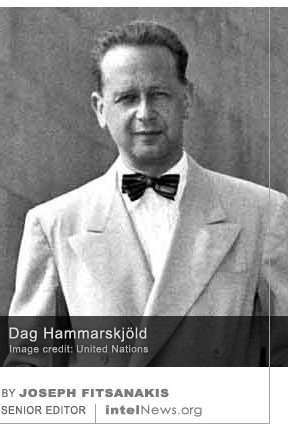 A deliberate attack by another aircraft may have caused the plane crash that killed the United Nations Secretary General in 1961, according to a report commissioned by the intergovernmental organization. On September 17, 1961, a Douglas DC-6 transport aircraft carrying United Nations Secretary General Dag Hammarskjöld crashed in the British-administered territory of Northern Rhodesia (now Zambia). The crash killed everyone onboard. At the time of his death, Hammarskjöld was flying to the Congo’s mineral-rich Katanga region to meet European-supported chieftains who in 1960 had seceded from the nationalist government of Congolese Prime Minister Patrice Lumumba. Ironically, Lumumba had been assassinated in a Western-backed coup exactly eight months before Hammarskjöld’s death.
Three successive investigations into the crash, conducted by the Rhodesian Board of Investigation, the Rhodesian Commission of Inquiry, and the United Nations Commission of Investigation, pointed to “pilot error” as the most likely cause of the tragedy. However, research carried out in recent years, including by the Hammarskjöld Commission, which was composed of a diplomat and three judges from the Netherlands, the United Kingdom, South Africa, and Sweden, has shown that the crash could have been the result of deliberate actions. In February of this year, following a recommendation by a UN-appointed three-member expert panel, the organization tasked Mohamed Chande Othman, a former Tanzanian chief justice, to research the topic in depth. Othman reportedly delivered his final report to the UN Secretary General António Guterres in August. However, it has not yet been made public.
On Tuesday, however, British newspaper The Guardian said it had seen an executive summary of Othman’s report. Read more of this post
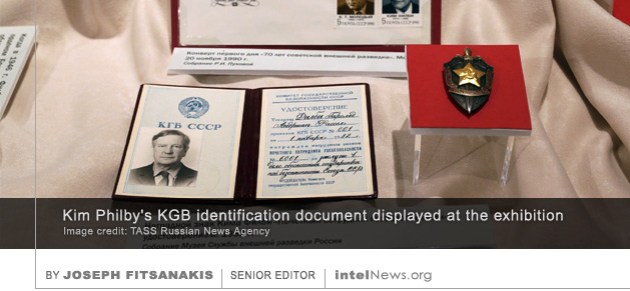 The life of Kim Philby, one of the Cold War’s most recognizable espionage figures, is the subject of a new exhibition that opened last week in Moscow. Items displayed at the exhibition include secret documents stolen by Philby and passed to his Soviet handlers during his three decades in the service of Soviet intelligence. While working as a senior member of British intelligence, Harold Adrian Russell Philby, known as ‘Kim’ to his friends, spied on behalf of the Soviet NKVD and KGB. His espionage lasted from about 1933 until 1963, when he secretly defected to the USSR from his home in Beirut, Lebanon. Philby’s defection sent ripples of shock across Western intelligence and is often seen as one of the most dramatic incidents of the Cold War.
 The world’s largest building materials manufacturer, LafargeHolcim, which is headquartered in France and Switzerland, allegedly bribed the Islamic State to keep its factory working in Syria, according to court witnesses. The company specializes in the manufacture of building materials such as cement, concrete and various byproducts. It was formed in 2015 by a merger of France-based Lafarge and Swiss-based Holcim, and currently employs an estimated 120,000 employees in nearly 100 countries around the world.
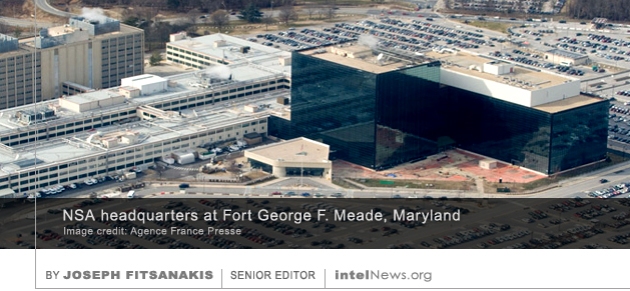 Representatives from the United States National Security Agency (NSA) withdrew a proposal to introduce new global industry standards for data encryption, after encountering prolonged skepticism by experts representing other Western countries. Some observers have interpreted this development as indicative of the damaged relationship between the NSA and its Western counterparts following revelations by American defector Edward Snowden.
 A group of cyber spies with close links to the Iranian government is becoming increasingly competent and adept, and could soon bring down entire computer networks, according to a leading cyber security firm. The California-based cyber security company FireEye said that it has been monitoring the operations of the mysterious group of cyber spies since 2013. The company, whose clients include Sony Pictures, JP Morgan Chase and Target, said that the Iranian group appears to be especially interested in gathering secrets from aviation, aerospace and petrochemical companies.
 Australia rejected a secret request by the United States Central Intelligence Agency to open an embassy in North Korea, which the Americans hoped to use as a base from where to collect intelligence on the communist state.
  Germany’s most famous living spy is on trial this week for hiding assets totaling $50 million in offshore bank accounts. He claims the money was given to him by unspecified “Western intelligence agencies” for his services. Werner Mauss became widely known in 1997, when he was arrested in Colombia for using a forged passport. He had traveled to the Latin American country to secure the release of a German woman who had been kidnapped by leftist guerrillas. The Colombian authorities eventually released him, following heavy diplomatic pressure from the German government. But the German media began investigating his background, and it soon became apparent that he was working for the German Federal Intelligence Service.
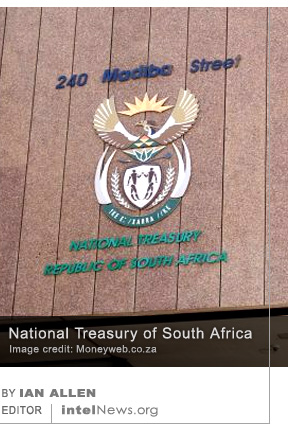 South Africa’s National Treasury threatened to terminate all funding for covert operations last year, after the country’s spy agency refused to account for tens of millions of dollars in expenses, saying the money had been put to “secret use”. An investigation by two leading South African news outlets, the Afrikaans-language weekly newspaper Rapport and the English-language online news portal News24, has revealed the existence of a major bureaucratic spat between the National Treasury and the State Security Agency (SSA), the country’s primary civilian intelligence organization.
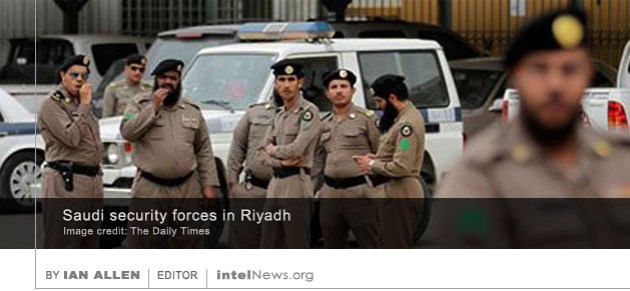 Officials in Saudi Arabia said on Tuesday that they foiled an elaborate suicide attack on the country’s defense ministry headquarters and infiltrated a foreign spy ring in the Kingdom, arresting its members. The near-simultaneous announcements were made by a member of the Presidency of State Security, an intelligence body founded only in July of this year, which is directly accountable to the county’s prime minister.
 A former director of Kazakhstan’s feared intelligence agency has been given a lengthy prison sentence, as a ruthless power struggle between rival factions surrounding the country’s president widens. From 2001 to 2006, Nartai Dutbayev directed the Kazakh National Security Committee (KNB), a direct institutional descendant of the Soviet-era KGB. Founded in 1992, the KNB is today directly controlled by Kazakhstan’s authoritarian President, Nursultan Nazarbayev. Many officials serving in senior KNB positions are members of the president’s family, or close friends.
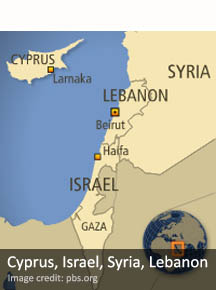 A sophisticated spying device disguised as a rock, which was allegedly planted by Israeli intelligence, was found by Lebanese Army troops on a hill located a few miles from the Lebanese-Israeli border. The discovery was reported early on Saturday by several Lebanese news websites, including Al-Mayadeen and Al-Manar, which are closely affiliated with Hezbollah. Al-Manar
  The Turkish government has refused to comment on reports from Iraq, which suggest that Kurdish forces have captured at least two senior Turkish intelligence officers. News of the arrests first
 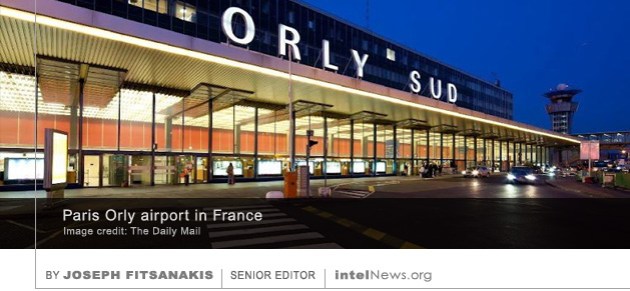 A French police officer has been charged with illegally sharing secret government documents in an espionage case involving France’s border police and diplomats from Morocco and Algeria. According to information published by the French daily Libération, the police officer supplied Moroccan intelligence with classified information about France’s border-control policies and procedures. He also gave the Moroccans information about the movements in France of Moroccan nationals and senior Algerian government officials.
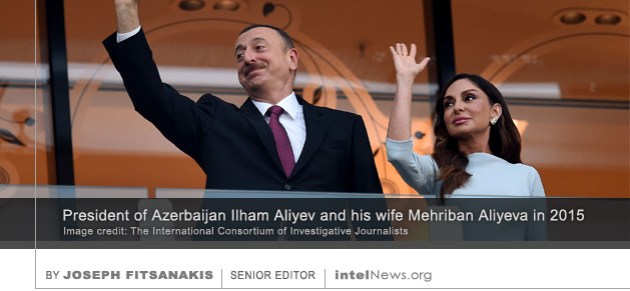 An investigation by a consortium of European newspapers has uncovered details of a massive slush fund worth nearly $3 billion, which was allegedly used by Azerbaijan’s governing elite to bribe officials, business leaders and journalists at home and abroad. The fund was operated out of Baku, the capital of the former Soviet state, which is routinely accused of human-rights abuses. Western countries, including the United States,







Western-supported Libyan warlord guilty of war crimes, say investigators
September 28, 2017 by Joseph Fitsanakis Leave a comment
But Haftar’s reputation as a military commander is now being challenged by two leading American legal experts. They are Ryan Goodman, a professor and former special counsel to the general counsel of the United States Department of Defense, and Alex Whiting, a Harvard University law professor who served as an international criminal prosecutor at the International Criminal Court. Together they have published a report on the Just Security blog, which is affiliated with several institutions, including the New York University School of Law. The two scholars argue that Haftar has publicly urged his troops to commit war crimes in several instances. Their report references a video that contains a brief given by Haftar in September 2015 to LNA commanders, in which he calls on them to take no prisoners. In a transcript of the LNA leader’s speech, he is reported to have told his audience: “Give no consideration to bringing prisoner[s] here. There is no prison here”. The two legal experts interpret Haftar’s statement as a clear case of “denial of quarter”, which they say is “a firmly settled part of the laws of war”. In another video, recorded in August 2016, Beleed al-Sheikhy, who is a spokesman for the LNA, is seen briefing LNA commanders about an upcoming battle in Ganfouda, a southern suburb of the port city of Benghazi. Al-Sheikhy says in the video that “anyone who is above 14 years of age will never get out [of Ganfouda] alive”. He tells the LNA troops that they should “consider this a confirmed notice”.
In June of this year, a report published by the United Nations suggested that the main reason for the LNA’s military prowess lies in the secret support it receives from the United Arab Emirates and Saudi Arabia. In August, a British-based newspaper claimed that Haftar has been holding secret meetings with Israeli officials since 2015, and that the Mossad, Israel’s intelligence agency, has secretly provided the LNA with military aid, including night vision equipment and various sniper rifles.
► Author: Joseph Fitsanakis | Date: 28 September 2017 | Permalink
Filed under Expert news and commentary on intelligence, espionage, spies and spying Tagged with 2011 Libyan civil war, Alex Whiting, Beleed al-Sheikhy, Khalifa Haftar, Libya, Libyan National Army, News, Ryan Goodman, war crimes