More facts revealed about mystery sonic attacks on US embassy in Cuba
September 4, 2017 3 Comments
 American officials have revealed more information about a mysterious sonic device that is believed to have caused numerous diplomats to suffer hearing loss and other serious ailments. Last month, the Associated Press reported that the first hearing-loss symptoms were reported by personnel at the US embassy in Havana in the fall of 2016. The news agency said that at least five embassy personnel reported suffering from sudden and unexplained loss of hearing. The symptoms were so serious that caused some American diplomats “to cancel their tours early and return to the United States”, according to the Associated Press.
Now new information has been disclosed by the United States Department of State. It suggests that, although diplomats began reporting hearing-loss symptoms in as early as fall 2016, the incidents continued until mid-August of this year. In a report published on Saturday, the BBC said that the bizarre incidents had not ended “several months ago” as was initially believed. Instead, they continued even after the last week of May, when the US deported two Cuban diplomats from Washington, DC. The move was in response to what Washington believes was a deliberate attempt to sabotage its diplomatic mission in Havana. The American embassy in the Cuban capital reopened in 2015, 54 years after it was closed down following a series of diplomatic rifts between Cuba and the US during the height of the Cold War.
Additionally, the Department of State said on Friday that the number of American diplomats and other US embassy personnel who have reported sonic-related symptoms has increased to 19. State Department spokeswoman Heather Nauert told reporters in Washington that doctors were still evaluating the health of those serving at the US embassy in Havana. She added that new cases of people suffering from sonic-related medical symptoms could not be ruled out. A report from the American Foreign Service Association, which represents members of the United States Foreign Service, said on Friday that its representatives had spoken to 10 people who had received various treatments for ailments related to the alleged sonic attacks in Cuba. It said that many had suffered “permanent hearing loss”, while others were diagnosed with mild brain injuries.
According to media reports, Washington has concluded that the American diplomats were exposed to “an advanced device that was deployed either inside or outside their residences”. But the Cuban government denied that it had anything to do with the American diplomats’ symptoms, and some believe that the alleged “covert sonic device” may have been deployed by an intelligence service of a third country —possibly Russia— without the knowledge of Cuban authorities.
► Author: Joseph Fitsanakis | Date: 04 September 2017 | Permalink
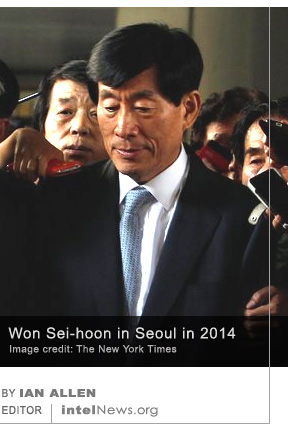 The former director of South Korea’s main intelligence agency has been sent to prison for organizing a large-scale illegal campaign to influence the result of the country’s 2012 presidential election. Won Sei-hoon headed the NIS from 2008 to 2013, during the administration of conservative President Lee Myung-bak. During the 2012 presidential election, Won ordered a group of NIS officers to “flood the Internet” with messages accusing liberal political candidates of being “North Korean sympathizers”. One of those candidates, Moon Jae-in, of the left-of-center Democratic Party of Korea, is now the country’s president. Mr. Moon succeeded his main right-wing rival, Park Geun-hye, who resigned in March of this year following a series of financial scandals. She is now facing charges of bribery, abuse of power, leaking government secrets, and corruption.
 American troops deployed in Syria have exchanged fire with rebels that were until recently supported by the United States Central Intelligence Agency. In 2013, soon after the outbreak of the Syrian Civil War, the then-US President Barack Obama instructed the Central Intelligence Agency to provide covert support to fighters in Syria. Acting on the president’s directive, the CIA promptly joined forces with spy agencies from Britain, France, Saudi Arabia and the United Arab Emirates, to assist fighters affiliated with the Free Syrian Army. At that time, Washington saw the Free Syrian Army and forces affiliated with it as ideologically moderate. It also agreed with the group’s main aim, which was to topple the regime of Syrian President Bashar al-Assad.
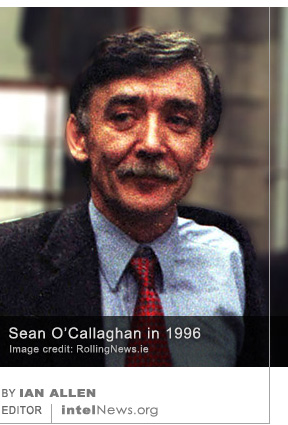 Sean O’Callaghan, one of the most contentious figures in the history of the Provisional Irish Republican Army, has died in Jamaica. He was born in County Kerry, Republic of Ireland, in a strongly republican family, which sided with opponents of the Ango-Irish treaty and fought against the official Irish government in the Irish Civil War of 1922-1923. In 1971, aged just 17, O’Callaghan joined the Provisional Irish Republican Army, which fought to unite British-controlled Northern Ireland with the independent Republic of Ireland. Not long after, O’Callaghan was arrested by the Garda Síochána (Irish police) in his home county of Kerry, when a small quantity of explosives he was hiding in his parents’ house accidentally detonated.
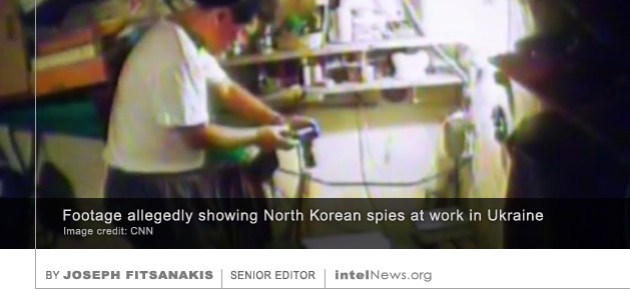 Ukrainian authorities have released rare surveillance footage filmed during a sting operation that ended with the capture of three North Korean spies. The North Koreans, two of whom are now serving prison sentences in Ukraine, had traveled there in 2011 believing they would be given missile technology secrets. Last July, North Korea surprised missile technology experts by successfully testing two intercontinental ballistic missiles (ICBMs). Government-controlled media in Pyongyang claimed that North Korean ICBMs were capable of reaching the United States’ mainland.
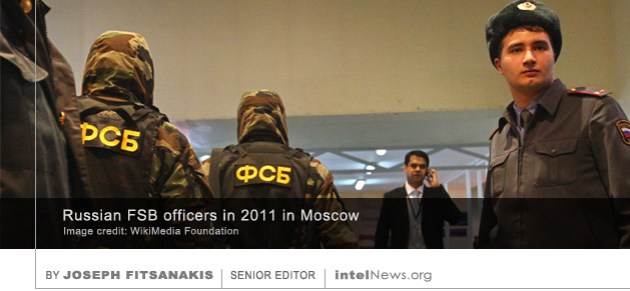 Two senior officers in the Russian intelligence services were charged with treason after they were found to have helped the United States catch two notorious Russian hackers, according to reports in the Russian media. Sergey Mikhailov was a career officer in the Federal Security Service —a descendant of the domestic section of the Soviet-era KGB— which is often referred to as Russia’s equivalent of the United States Federal Bureau of Investigation. Mikhailov had risen through the ranks of the FSB to eventually head the agency’s Center for Information Security. Known in Russia as CIB, the Center is tasked with investigating electronic crime in the Russian Federation.
 Canadian spy organizations are working with domestic and international agencies in response to reports that several Canadian far-right activists attended the “Unite the Right” rally in Charlottesville, Virginia, earlier this month. The rally drew the attention of the world’s media after violent clashes between protesters and counter-protesters left a woman dead. Two Virginia State Police officers were also killed when a helicopter used in crowd control in Charlottesville crashed near the site of the demonstrations. The rally, which took place on August 11 and 12, drew members of various white supremacist, white nationalist, neo-Nazi and neo-Confederate groups. There were also heavily armed members of a self-styled militia at Emancipation Park, where a soon-to-be-removed statue of the late Confederate General Robert E. Lee became the focal point of the far-right demonstrators.
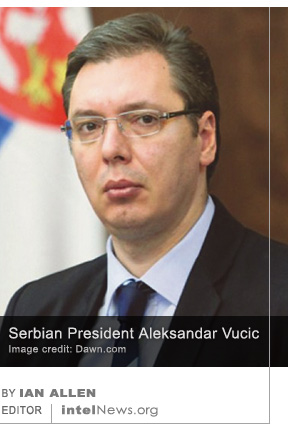 Serbia recalled its entire diplomatic staff from its embassy in the Former Yugoslav Republic of Macedonia on Monday, claiming that it wanted to protect its diplomats from “offensive intelligence activities” directed against them. The move came without warning and surprised journalists in the two former Yugoslav republics. No official reason was given for the
  Australia has expressed concern about a plan by a Chinese telecommunications company to provide high-speed Internet to the Solomon Islands, a small Pacific island nation with which Australia shares Internet resources. The company, Huawei Technologies, a private Chinese venture, is one of the world’s leading telecommunications hardware manufacturers. In recent years, however, it has come under scrutiny by Western intelligence agencies, who view it as being too close to the Communist Party of China.
 The United States Central Intelligence Agency recently warned Spanish authorities that the Islamic State planned to attack Barcelona, according to Spanish media. The disclosure follows Thursday’s dramatic events in the Catalan capital, where a white van deliberately drove into a crowd in the pedestrian mall of La Rambla, killing at least 16 people and injuring more than 100. The attack was followed by reports early on Friday that Catalan police had shot dead four suspects who were planning a second strike.
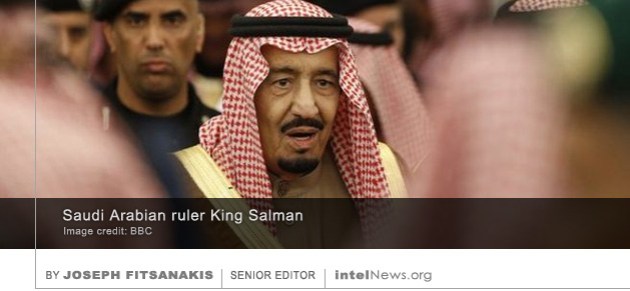 At least three prominent Saudi dissidents living in Europe, who openly criticized Saudi Arabia’s system of government, have been illegally abducted by the country’s monarchy in the past two years, according to a report by the BBC. All three, who are members of the Saudi royal family, are missing, believed to be dead or held against their will in Saudi Arabia. But the country’s government will not comment on their fate.
 Germany has launched an unprecedented investigation into three officers of Switzerland’s intelligence agency on suspicion that they spied on German tax investigators who were probing the activities of Swiss banks. News of the investigation comes three months after authorities in Germany
 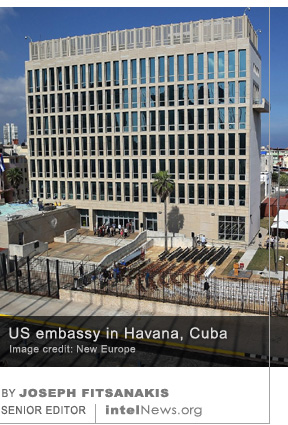 Authorities in Cuba, the United States and Canada are investigating reports that several foreign diplomats stationed in Havana have been experiencing severe hearing loss in recent months.
  Russian intelligence services say they have foiled a large-scale bomb plot, after raiding an explosives laboratory belonging to the Islamic State and arresting four suspects. The four men were allegedly planning to target the Moscow Metro transit system and a busy shopping center in the Russian capital. In a statement released to the media this morning, the Russian Federal Security Service (FSB) did not specify the intended targets of the plotters. But it said it had arrested four people during an early morning raid at an explosives laboratory located in the Moscow suburbs. The FSB said that its officers








Australian parliament reviews use of Chinese-made cell phones
September 5, 2017 by Ian Allen 1 Comment
The handset is manufactured by ZTE Corporation, a leading Chinese telecommunications equipment and systems company that is headquartered in the city of Shenzhen in China’s Guangdong province. On Monday, the News Corp Australia Network, a major Australian news agency, said it had contacted the parliament with information that ZTE Corporation’s links to the Chinese military may be of concern. News Corp said it informed the DST that members of the United States Congress and the House of Representatives’ intelligence committee, have expressed serious concerns about the Chinese telecommunications manufacturer in recent years.
As intelNews reported in 2010, three American senators told the US Federal Communications Commission that the ZTE was “effectively controlled by China’s civilian and military intelligence establishment”. The senators were trying to prevent a proposed collaboration between American wireless telecommunications manufacturers and two Chinese companies, including ZTE Corporation. In 2012, the intelligence committee of the US House of Representatives investigated similar concerns. It concluded that telephone handsets manufactured by ZTE should not be used by US government employees due to the company’s strong links with the Chinese state. And in 2016, US-based security firm Kryptowire warned that some ZTE cell phone handsets contained a suspicious backdoor feature that could potentially allow their users’ private data to be shared with remote servers at regular intervals.
A DST spokesman told the News Corp Australia Network that the ZTE-manufactured cell phones had been selected for use by Australian parliamentarians based on “technical and support requirements, [DST] customers’ feedback and cost”. The spokesman added that the DST “is currently reviewing the ongoing suitability” of the T55 handsets, following reports about ZTE’s links with China’s security establishment.
► Author: Ian Allen | Date: 05 September 2017 | Permalink
Filed under Expert news and commentary on intelligence, espionage, spies and spying Tagged with Australia, cellular telephony, China, News, Parliament of Australia, telecommunications hardware, ZTE Corporation