Cold War files show CIA support for guerrilla warfare inside USSR (Part I)
August 10, 2017 3 Comments
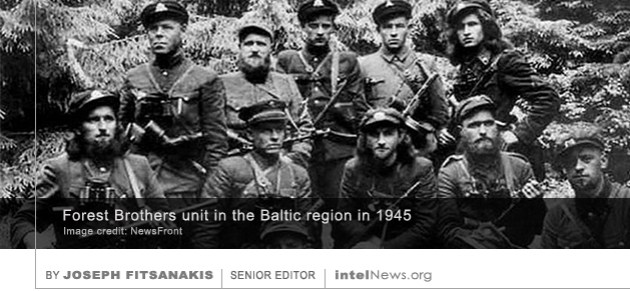 Recently declassified documents from the archive of the Central Intelligence Agency detail financial and material support given by the United States to groups of armed guerrillas in Soviet Latvia in the 1950s. The documents, initially marked ‘Top Secret’ but now declassified, show that the CIA was aware and supported the activities of an anti-Soviet guerrilla army known as ‘the Forest Brothers’. Known also as ‘the Forest Brethren’, the group was formed in the Baltic States in 1944, as the Soviet Red Army established Soviet control over the previously German-occupied states of Estonia, Latvia and Lithuania. The Soviet Union had previously occupied and annexed the three Baltic countries, in a failed attempt to pre-empt Germany’s eastward military expansion. Groups like the Forest Brothers consisted of the most militant members of anti-Soviet groups in the Baltic States, many of whom were ideologically opposed to Soviet Communism.
The role of the CIA in funding and helping to organize anti-Soviet groups inside the USSR has been known for decades. But the recently released documents, unearthed by Russian-language service of Latvian state television, shed light into the CIA’s early understanding of the identity, strength and operations of these groups. They also contain new information about the background and structure of underground anti-Soviet groups like the Forest Brothers in Latvia.
The first declassified CIA document that contains information on anti-Soviet resistance in Latvia is dated November 29, 1949, and is titled “The Organization of the Underground Resistance Movement in Eastern Europe”. It was soon followed by two other documents, entitled “Latvian Resistance to Russian Occupation” and “Request for [Support] to the Latvian Resistance Movement”. The latter document was produced in mid-1950, after the CIA was able to establish contact with anti-Soviet Latvian expatriates living in Germany and Sweden. From these contacts, the CIA was able to determine that active (and possibly armed) resistance to the Soviet Red Army in Latvia was limited to approximately 5,000 individuals, many of whom conducted periodic guerrilla attacks against Soviet troops or installations. However, the CIA report said that, as of 1950, the majority of these armed guerrillas remained dormant, “waiting for a more opportune moment” to return to action. The CIA memorandum also stated that clandestine radio communication existed between the leadership of Latvia’s anti-Soviet underground in Riga and exile Latvian communities in Sweden.
Note: Part II of this report can be found here.
► Author: Joseph Fitsanakis | Date: 10 August 2017 | Permalink
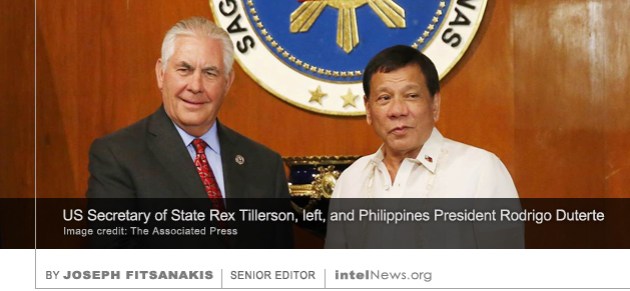 The United States is reportedly weighing plans to launch airstrikes in the Philippines, against militant groups that are affiliated with the Islamic State of Iraq and Syria. However, some American officials are skeptical about reports of possible airstrikes, while Philippine government officials claim no such action is necessary. For more than 40 years, the Philippine army has been fighting a counterinsurgency campaign against secessionist Moros in the country’s southwest. The region is home to most of the Philippines’ Muslim population, which constitutes around 6 percent of the country’s overall population. In recent years, some Muslim secessionist groups, including the most formidable, Abu Sayyaf, have pledged allegiance to the Islamic State of Iraq and Syria, known as ISIS.
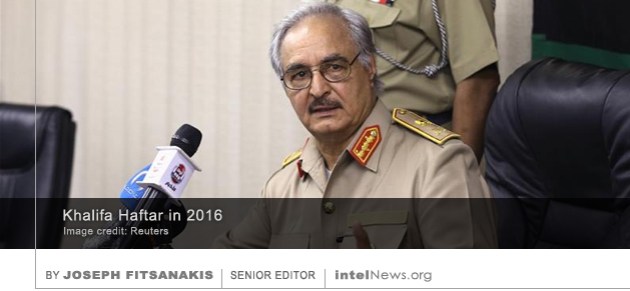 Israel is secretly providing military assistance to Khalifa Haftar, commander of the Libyan National Army, one of the factions in the Libyan Civil War, according to a British-based publication. Libya has remained in a state of war since 2011, when a popular uprising backed by the West and its allies led to the demise of the country’s dictator, Colonel Muammar Gaddafi. Currently the strongest faction in the ongoing Libyan Civil War is the eastern-based Tobruk-led Government, which is affiliated with the Libyan National Army (LNA). The commander of the LNA is Field Marshal Khalifa Haftar, an old adversary of Colonel Gaddafi, who lived in the United States under Washington’s protection for several decades before returning to Libya in 2011 to launch his military campaign.
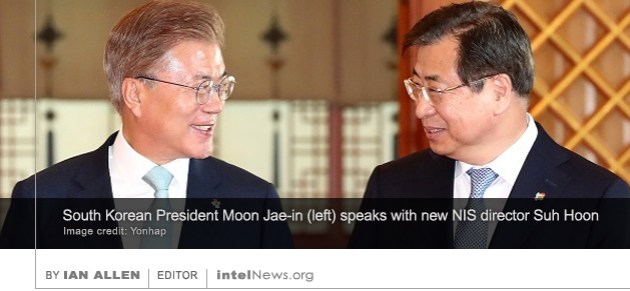 An internal investigation has found that the intelligence agency of South Korea tried to steer the result of the 2012 presidential election in favor of the conservative candidate, and placed liberal politicians under surveillance in the run-up to the election. South Korea’s intelligence agency, the National Intelligence Service (NIS) has fallen into disrepute in recent years, after it was found to have secretly sided with conservative political candidates for public office.
 The decision by the White House to terminate American support for rebels in war-torn Syria could backfire by causing the suddenly unemployed fighters to join jihadist organizations, according to experts. The United States’ support for the rebels began in secret in early 2013, after the then US President, Barack Obama, instructed the Central Intelligence Agency to provide covert support to fighters in Syria. The CIA then joined forces with spy agencies from Britain, France, Saudi Arabia and the United Arab Emirates, to assist fighters affiliated with the Free Syrian Army. At that time, Washington saw the Free Syrian Army and forces affiliated with it as ideologically moderate. It also agreed with the group’s main aim, which was to topple the regime of Syrian President Bashar al-Assad.
 Nearly half a billion of American taxpayers’ funds were wasted by contractors hired by the United States government to train Afghan intelligence personnel, according to a scathing report by a Congressional body. The funds were spent between 2010 and 2013 by the US Department of Defense, in order to train several thousand members and a few dozen aspiring trainees of the Afghanistan National Defense and Security Forces (ANDSF). Two companies, Legacy Afghanistan R&D and Afghanistan Source Operations Management, oversaw the training program. It was primarily executed by a contractor, Imperatis Corporation, and a subcontractor, New Century Consulting, at a total cost of $457 million to the US taxpayer.
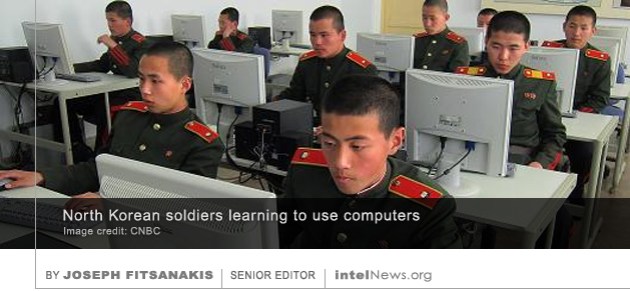 North Korea’s intelligence establishment has shifted its attention from spying for political gain to spying for commercial advantage –primarily to secure funds for the cash-strapped country, according to a new report. Since the 1990s, the Democratic People’s Republic of Korea (DPRK) has used computer hacking in order to steal political and military secrets from its rivals. But there is increasing evidence that Pyongyang is now deploying armies of computer hackers in order to steal cash from foreign financial institutions and internet-based firms. This is the conclusion of a new report by the Financial Security Institute of South Korea, an agency that was set up by Seoul to safeguard the stability of the country’s financial sector.
 A cyber espionage group that has alarmed security researchers by its careful targeting of government agencies has links to the Iranian state, according to a new report. The existence of the group calling itself CopyKittens was first confirmed publicly in November of 2015. Since that time, forensic analyses of cyber attacks against various targets have indicated that the group has been active since at least early 2013. During that time, CopyKittens has carefully targeted agencies or officials working for Jordan, Saudi Arabia, Turkey, Israel, the United States, and Germany, among other countries. It has also targeted specific offices and officials working for the United Nations.
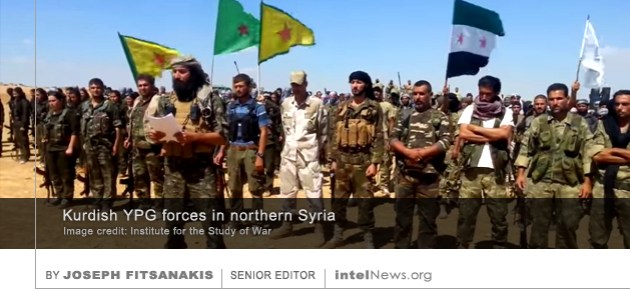 Dozens of Western European and American citizens are participating in the ongoing takeover of Raqqa, the de facto capital of the Islamic State in Syria, despite being prohibited from doing so by their own governments, according to recent news reports. Much has been written about foreign fighters who enter Iraq and Syria in order to join the ranks of the Islamic State, the Sunni militant group that previously went by the name Islamic State of Iraq and Syria (ISIS). But relatively little attention has been paid to the thousands of foreign fighters who have traveled to the region to join the war against ISIS.
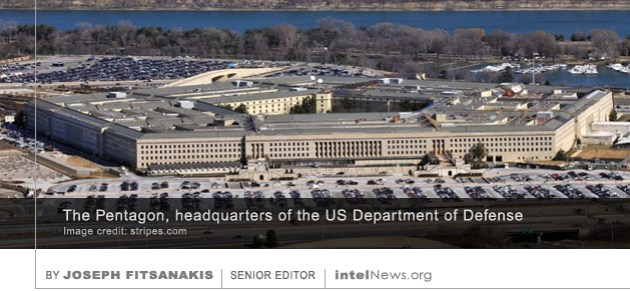 The White House will soon announce its decision to strengthen the United States Cyber Command and separate cyber war operations from intelligence functions, according to insider reports. For many decades, the National Security Agency has been in charge of protecting America’s cyber network and combating online threats. But in 2009, the Administration of US President Barack Obama established a brand new Cyber Command, proposing that the online environment represented a new theater of war. Since that time, the US Department of Defense has been campaigning in favor of strengthening the new Cyber Command and completely removing it from the patronage of the NSA –despite the fact that the latter is also a Pentagon agency.
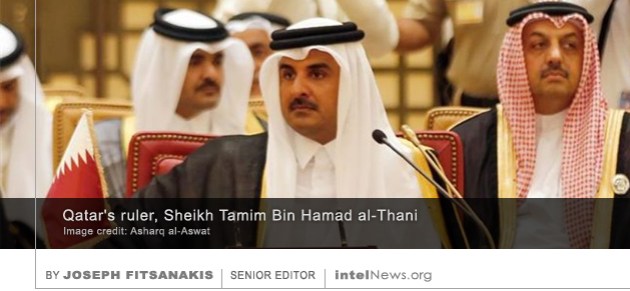 American officials appear to confirm Qatar’s allegations that its news media were hacked by its Gulf adversaries, who then used the fake news posted by hackers to launch a massive campaign against it. Tensions between Qatar and other Muslim countries have risen since late May, when the country’s state-controlled news agency appeared to publish an incendiary
 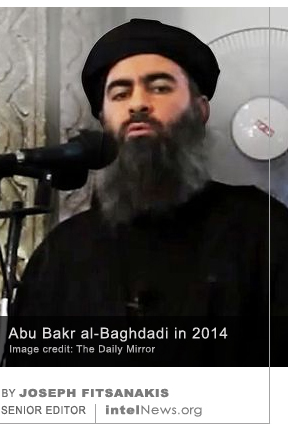 A senior Iraqi intelligence official has rejected assurances given by Russia that Abu Bakr al-Baghdadi, the founder and leader of the Islamic State, is dead, insisting instead that the Iraqi-born cleric is alive in Syria. In mid- June, Russia’s Ministry of Defense said that, according to its sources, al-Baghdadi
 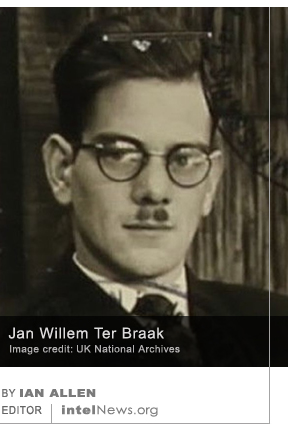 The unmarked grave of a Dutch-born Nazi spy, who killed himself after spending several months working undercover in wartime Britain, will be marked with a headstone, 76 years after his death by suicide. Born in 1914 in The Hague, Holland, Englebertus Fukken joined the National Socialist Movement in the Netherlands, the Dutch affiliate of the National Socialist German Workers’ Party led by Adolf Hitler, in 1933. In 1940, shortly after the German invasion of Holland, Fukken, who had been trained as a journalist, was recruited by the Abwehr, Nazi Germany’s military intelligence. Abwehr’s leadership decided to include Fukken in the ranks of undercover agents sent to Britain in preparation for Operation SEA LION, Germany’s plan to invade Britain.
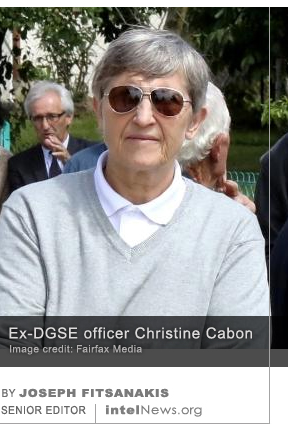 A French spy who infiltrated the environmentalist group Greenpeace and in 1985 helped bomb the organization’s flagship, the Rainbow Warrior, has spoken to the media for the first time. The British-based activist organization had purchased the trawler from the British government in 1977 and used it to carry out maritime research and other operations. In July 1985, the Rainbow Warrior, captained by the American environmental activist Peter Wilcox, was docked at the port of Auckland, New Zealand. It was being prepared to lead a flotilla of vessels to the French Polynesian atoll of Mororoa, in order to try to stop a planned nuclear test by the French military.








Cold War files show CIA support for guerrilla warfare inside USSR (Part II)
August 11, 2017 by Joseph Fitsanakis 2 Comments
Judging that Latvia’s anti-Soviet underground movement could be “of considerable operational value”, the CIA initiated project ZRLYNCH in the summer of 1950. Operated out of the CIA’s Munich station in Germany, ZRLYNCH was intended as a long-term project supervised by the Office of Policy Coordination, an early Cold War covert operations outfit that in 1952 was absorbed into the CIA’s Directorate of Operations. The Latvia operation was part of a wider effort by the CIA, which was aimed at subverting Soviet power in Eastern Europe.
For the first year of ZRLYNCH, the CIA’s Office of Policy Coordination asked for —and received— a budget of $30,000. The top-secret document unearthed recently by Latvian state television states that the budget was to be used primarily for intelligence collection inside Soviet territory, as well as for covert operations by the Forest Brothers (for information about the group, see part I of this post). The latter were to conduct sabotage activities as part of organized guerrilla warfare. These activities are not specified in the CIA documents. By the end of the first year, it appears that the CIA had recruited three Latvian agents in Europe (one in Sweden and two in Germany), who were acting as mediators between the CIA and the Forest Brothers inside the USSR. Less than three years later, the ZRLYNCH budget had risen to $134,000, with $52,000 going toward covert —mostly psychological— operations and the rest being used to fund intelligence collection efforts. The CIA was also funding the travel expenses of leading Latvian émigré figures in the US, and was diverting tens of thousands of dollars toward Latvian émigré conferences in America, which aimed to unite the various political factions of the fragmented Latvian community in the States.
But the CIA officers behind ZRLYNCH were extremely concerned about operational security. They did not want the Kremlin finding out that the Agency was behind efforts to stir up armed resistance against Soviet power in the Baltic region. One CIA document states that there would be no tolerance for “any breaches of security” that compromised ZRLYNCH. Consequently, any action that uncovered the link between the US government and the Forest Bothers would lead “to an immediate cessation of financial support” for ZRLYNCH, states the memo.
Ultimately, ZRLYNCH failed to seriously challenge Soviet power in Latvia. Most of the members of the Forest Brothers were killed during Red Army counterinsurgency operations, and much of the organization’s structure was penetrated by agents of Soviet intelligence. Eventually, the Forest Brothers became extinct in 1957, when their last members emerged from the forest and surrendered to Latvian and Soviet authorities.
► Author: Joseph Fitsanakis | Date: 11 August 2017 | Permalink
Filed under Expert news and commentary on intelligence, espionage, spies and spying Tagged with CIA, Cold War, covert action, declassification, Forest Brothers, history, Latvia, News, United States, USSR, ZRLYNCH