FBI acting head says he will report attempts to stop Russia probe

Andrew McCabeThe interim director of the Federal Bureau of Investigation has told an intelligence panel in the United States Senate that he will not hesitate to report any attempts by the White House to interfere with an official investigation into Russia’s role in the 2016 presidential election. Andrew McCabe assumed the leadership of the FBI on Tuesday, after US President Donald Trump abruptly fired the Bureau’s director, James Comey. A trained lawyer who joined the FBI in 1996, McCabe amassed significant experience in countering organized crime and terrorism before being appointed Deputy Director of the Bureau in 2016.

It is worth noting that Republican Party officials have criticized McCabe for being close to former Democratic Party presidential candidate Hillary Clinton. McCabe’s wife, Dr. Jill McCabe, campaigned for a seat in the Virginia State Senate in 2015, on a Democratic Party ticket.

McCabe spoke on Thursday before the US Senate’s Select Committee on Intelligence, along with the directors of five other American intelligence agencies, including the Central Intelligence Agency and the National Security Agency. During their testimony, the six intelligence officials repeated their agencies’ previously stated claims that Moscow engaged in systematic efforts to assist the election of Donald Trump in last November’s presidential elections. McCabe also responded to specific questions by Democratic senators about alleged attempts by the White House to prevent probes in to Russia’s alleged intervention.

When asked by Democratic Senator Mark Warner whether he would inform the Senate’s Select Committee on Intelligence of attempts by the Trump administration to stop the probe, McCabe responded saying: “I absolutely do”. There are currently at least three parallel investigations into Russia’s alleged involvement in the US presidential elections, of which the Senate’s is one. The US House of Representatives and the Department of Justice are also conducting separate investigations.

Author: Joseph Fitsanakis | Date: 12 May 2017 | Permalink

Swiss officials defend alleged spying on German tax-fraud investigators

SwitzerlandSenior Swiss government officials, including the defense minister and the director of the country’s intelligence agency, have defended Switzerland’s right to spy on European tax-fraud investigators who meddle in Swiss affairs. Earlier this week, German authorities announced the arrest of a Swiss national who was allegedly spying on the activities of German tax-fraud investigators in Frankfurt. According to German officials and media reports, the man, identified only as Daniel M., is an employee of the Swiss Federal Intelligence Service. The agency, known by its German-language initials, NDB, is Switzerland’s main intelligence organization.

As intelNews reported on Monday, Daniel M. was said to be monitoring the activities of German tax-fraud investigators who have been trying for years to stop German citizens from having secret bank accounts abroad. In the past decade, German authorities have paid nearly $100 million to employees of Swiss banks in return for information about the identities of German bank account holders in the small alpine country. The Swiss government has strongly criticized Berlin for encouraging Swiss banking sector employees to steal internal corporate information, a practice that goes against Switzerland’s stringent privacy laws. On Tuesday, Germany’s Foreign Minister, Sigmar Gabriel, summoned Switzerland’s ambassador to Germany, Christine Schraner Burgener, to the Foreign Ministry, in order discuss Daniel M.’s arrest. A press statement that the Foreign Ministry sent on Tuesday to the German media said that the meeting had been called “in the interest of German-Swiss friendship”.

But the Swiss do not appear to be interested in discussing. On Tuesday, Markus Seiler, Director of the NDB, defended his agency’s right to spy on anyone who “uses illegal methods in Switzerland to steal state or business secrets”. Seiler, who was speaking in Bern, classified all such practices as espionage targeting the the Swiss economy. Asked by reporters whether Daniel M. was an NDB employee, Seiler said he could not comment. But he defended the NDB’s right to “fight the theft of business secrets” and “uphold Swiss laws”. He also refused to specify whether the NDB is active in Germany, stating instead that the agency is “active at home and abroad”. Switzerland’s Minister of Defense, Guy Parmelin, who supervises the NDB’s activities, was equally general when asked to discuss the arrest of Daniel M. He said simply that he and other Swiss government officials had to “protect [the NDB’s] methods and sources”.

Author: Joseph Fitsanakis | Date: 04 April 2017 | Permalink

CIA director makes unannounced visit to South Korea to discuss tensions

Korean DMZThe director of the United States Central Intelligence Agency made an unannounced visit to South Korea over the weekend, to discuss the rising tensions in the Korean Peninsula with his South Korean counterpart and other senior officials. A spokesperson from the US embassy in Seoul made an official announcement on Monday, in which he revealed the visit by Mike Pompeo, the CIA director who was appointed by US President Donald Trump in January of this year. When asked for details, however, the spokesperson refused to provide them. Consequently, Pompeo’s date of arrival to Seoul remains unknown, as is his date of departure. It is believed that he is now back in the US.

During his visit to the South Korean capital, Pompeo met with South Korean counterpart, Lee Byung-ho, who heads South Korea’s National Intelligence Service. South Korean media reports said Pompeo also met with senior officials in the office of the South Korean president. Additionally, he is said to have held several meetings with American intelligence and military officials stationed in South Korea, including a meeting with General Vincent Brooks, commander of United States Forces Korea. Reports in local media outlets said Pompeo’s visit aimed to coordinate American and South Korean intelligence responses to what Washington claims is increasing provocation by North Korea. The United States objects to North Korea’s repeated missile tests in recent weeks. On Saturday, Pyongyang attempted to launch a missile without success. The attempt, the third one in a month, elicited strong criticism from Washington and Seoul.

Pompeo’s trip to Seoul marked the fourth visit to South Korea by a senior US government official in recent weeks. The CIA director’s unannounced visit was preceded by separate official visits to Seoul by US Vice President Mike pence, Secretary of State Rex Tillerson, and Secretary of Defense James Mattis. Additionally, last Wednesday the White House organized an “extraordinary national security briefing” about North Korea for members of the United States Senate. The briefing featured presentations by senior American diplomats and military officials.

Author: Ian Allen | Date: 02 May 2017 | Permalink

Germany arrests Swiss spy who was monitoring tax-fraud investigators

Frankfurt AirportAuthorities in Germany have announced the arrest of a Swiss national who was allegedly spying on the activities of German tax-fraud investigators in Frankfurt. According to prosecutors in the German state of Hesse, of which Frankfurt is the largest city, the Swiss man was arrested on Friday and is currently in custody. He has been identified only as Daniel M., and is believed to be in his mid-50s. According to news reports, German counterintelligence officers had been monitoring the suspect for over a year. They were issued a warrant for his arrest in December of last year, but waited until he was on German soil to arrest him. He was arrested at Frankfurt Airport.

German federal prosecutors said simply that Daniel M. was employed in the financial and banking sectors of Germany until early 2012. However after that time, he is believed to have been employed by “the intelligence service of a foreign power”. German officials refused to identify the “foreign power”. However, the Berlin-based German newspaper Die Welt said on Sunday that the Swiss man arrested on Friday is an employee of the Swiss Federal Intelligence Service. The agency, known by its German-language initials, NDB, is Switzerland’s main intelligence agency, tasked with safeguarding the security of the small alpine nation by collecting and analyzing information.

The question is, what was a Swiss spy doing in Germany, and why was he arrested? According to Die Welt, Daniel M. was monitoring the activities of German tax-fraud investigators who have been trying for years to stop German citizens from having secret bank accounts abroad. The German government believes that billions of euros are deposited by its citizens in banking institutions in European tax-havens like Liechtenstein, Switzerland or Monaco. For the past decade, German authorities have resorted to bribing whistleblowers in offshore banks in order to acquire internal documents that reveal the identities of German citizens who are hiding their money in foreign bank accounts. It is estimated that over a hundred million dollars have been paid to whistleblowers by German authorities since 2006. The latter argue that the proceeds collected from unpaid taxes and fines more than justify the payments made out to whistleblowers. But the Swiss government has strongly criticized Berlin for encouraging Swiss banking sector employees to steal internal corporate information that often breaks Switzerland’s stringent privacy laws.

It is believed that Daniel M. was arrested while monitoring efforts by German tax-fraud investigators to approach potential whistleblowers working in the Swiss banking sector. Soon after the Swiss man’s arrest, officers from Germany’s Federal Criminal Police Office (BKA) searched a hotel room, several apartments and a number of business premises in Frankfurt and nearby cities. It is worth noting that Frankfurt is a major global financial center, which also hosts the headquarters of the European Central Bank. If found guilty, Daniel M. could face up to 10 years in prison for espionage.

Author: Joseph Fitsanakis | Date: 01 May 2017 | Permalink

Same hacker group is targeting French and German elections, says report

Konrad Adenauer FoundationThe same group cyber-spies that attacked the campaign of French presidential candidate Emmanuel Macron is now attacking German institutions that are connected to the country’s ruling coalition parties, according to a report by a leading cyber-security firm. The Tokyo-based security software company Trend Micro published a 41-page report on Tuesday, in which it tracks and traces the attacks against French and German political targets over the past two years. The report, entitled From Espionage to Cyber Propaganda: Pawn Storm’s Activities over the Past Two Years, concludes that the hackers are seeking to influence the results of the national elections in the European Union’s two most powerful nations, France and Germany.

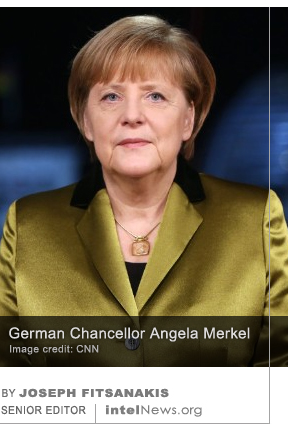
The Trend Micro report focuses on a mysterious group that cyber-security experts have dubbed Pawn Storm —otherwise known as Sednit, Fancy Bear, APT28, Sofacy, and STRONTIUM. It says that the group has launched an aggressive phishing campaign against German political institutions, which has intensified in the past two months. The group allegedly set up fake computer servers in Germany and the Ukraine, and used them to try to infiltrate the computer networks of two elite German think-tanks, the Konrad Adenauer Foundation (KAF) and the Friedrich Ebert Foundation (FEF). The KAF is connected with the Christian Democratic Union party, which is led by Germany’s Chancellor, Angela Merkel. The FEF has strong ties with the centrist Social Democratic Party, which is part of Germany’s governing alliance.

The report’s leading author, cyber-security expert Feike Hacquebord, told the Reuters news agency that the hackers were possibly seeking to infiltrate the two think-tanks as a means of gaining access to the two political parties that are connected with them. Some cyber-security experts in Europe and the United States have said that the Russian Main Intelligence Directorate, the country’s military intelligence agency, known as GRU, is behind the cyber-attacks on France, Germany and the United States. But the Trend Micro report did not attempt to place blame on Moscow or any other country for the cyber-attacks. The Kremlin has denied involvement with the alleged hacking operations.

Author: Ian Allen | Date: 26 April 2017 | Permalink

Iranian spies second most active in Germany, says Interior Ministry

BND GermanyIranian intelligence operatives are the second most active in Germany after Russian spies, with much of their activity focusing on Israeli targets in the country, according to the German Interior Ministry. The information is contained in a report that was issued in response to a request by a member of Germany’s Bundestag last week. It states that Iranian spies have engaged in nearly two dozen known intelligence operations on German soil since 2007, and have even targeted individuals for assassination.

The Interior Ministry’s report reveals that German authorities initiated counterintelligence investigations against 22 cases of espionage by Iranian agents during the past decade. These account for over 17 percent of all counterintelligence cases conducted by the German state since 2007. Of the remaining cases, 27 concerned Russian spies, while China and Turkey are believed to be behind 15 spy cases each. Syrian intelligence operatives were found to be behind a total of eight spy operations conducted on German soil in the past decade. According to the report, the majority of intelligence operations conducted in Germany by Iranian agents were attempts to secure material and technologies that could be used in Iran’s nuclear program. Approximately half of Germany’s federal states reported attempts by Iranian agents to secure nuclear-related goods in recent years.

But Tehran has also allegedly been implicated in attempted assassinations of German citizens, according to the report. One example mentioned in the document is that of Mustafa Haidar Syed-Naqfi. Sayed-Naqfi, who is a Pakistani national, was arrested in the northern German city of Bremen in January of this year for spying on behalf of Iran. According to German authorities, the Pakistani man compiled lists of potential targets for assassination by Iran. As intelNews reported at the time, Syed-Naqfi’s list of targets included prominent Jews or German-Israelis living in northern Germany. Among them was Reinhold Robbe, a politician with the center-left Social Democratic Party (SPD), who served for a number of years as president of the German-Israeli Congress. According to reports, the spy had compiled detailed maps of Robbe’s daily movements, which outlined his travel routines and the routes he took from his home to the DIG headquarters in Berlin. German officials believe that the type of surveillance that Sayed-Naqfi. carried out against Robbe indisputably leads to the conclusion that the politician’s assassination was being planned.

German authorities believe that Syed-Naqfi worked for the Quds Force, a Special-Forces unit of Iran’s Revolutionary Guards Corps, which is responsible for covert operations outside Iran. Last month, the Pakistani man was given a four-year prison sentence by a Berlin court for engaging in espionage on German soil.

Author: Joseph Fitsanakis | Date: 25 April 2017 | Permalink

EU Council president grilled in closed-door probe of Polish-Russian spy deal

Donald TuskSenior European Union official Donald Tusk was grilled for several hours on Wednesday, in the context of a Polish government probe into an intelligence agreement between Warsaw and Moscow. But Tusk, who is the current president of the European Council, and served as Poland’s prime minister from 2007 to 2014, dismissed the probe as politicized and said it was deliberately designed to harm his political career. The investigation was launched by the government of Poland earlier this year. Its stated goal is to investigate an agreement that was struck in late 2013 between Poland’s Military Counterintelligence Service (MCS) and the Federal Security Service (FSB) of the Russian Federation. The agreement allegedly took place in secret, but was never implemented. The government of Poland canceled it in 2014, after accusing Moscow of illegally annexing the Ukrainian region of Crimea.

On Wednesday, Tusk spent nearly three hours at the office of the prosecutor in Warsaw, in a question-and-answer session that was held entirely behind closed doors. As he was leaving the building, the former Polish prime minister said he could not comment on the content of his testimony. But he used strong words to dismiss the entire investigation as “extremely political”, while accusing those behind it as holding a vendetta against him. Tusk and his supporters believe that the probe was primarily initiated by Jarosław Kaczyński, leader of the conservative Law and Justice party. They also claim that Kaczyński, who is Tusk’s political arch-foe in Poland, is spearheading a campaign of personal vindictiveness against him.

The rivalry between the two men began in 2010, when an airplane carrying a Polish government delegation to a World War II commemoration event in Russia crashed near the Russian city of Smolensk, killing everyone onboard. Among the dead was Polish President Lech Kaczyński, Jarosław Kaczyński’s brother. Since the air disaster, the leader of the Law and Justice party has maintained that the Russian government deliberately brought down the plane. He also accuses Tusk, who was Poland’s prime minister at the time, of colluding with Moscow to eliminate his brother. These allegations remain unsubstantiated, but they have contributed to the emergence of a venomous political climate in Poland that has dominated national politics for years.

On Wednesday, during Tusk’s three-hour testimony, several thousands of his supporters demonstrated outside the office of the prosecutor, urging Tusk to run for president in a few years. It is a common expectation in Poland that Tusk will soon turn his attention to domestic Polish politics and run for the highest office in the land in 2020.

Author: Joseph Fitsanakis | Date: 21 April 2017 | Permalink

Nigerian spy chief suspended after $43 million cash stash found in apartment

EFCC NigeriaThe director of Nigeria’s powerful intelligence agency has been suspended on orders of the president, after a massive stash of cash totaling $43 million was found in an apartment in Lagos. The money was discovered by investigators working for the Nigerian Economic and Financial Crimes Commission (EFCC). Based in Abuja, the EFCC is a high-profile body that was created in 2003, in response to accusations by the international community that Nigeria is used as a major base for global money-laundering schemes.

According to media reports, the money was found in a vacant apartment located in Ikoyi, arguably the most affluent neighborhood of the Nigerian capital and one of the wealthiest urban areas in Africa. The cash had been wrapped in transparent plastic sheets and hidden inside several metallic filing cabinets, as well as concealed behind a fake partition in a wooden wardrobe. According to a statement issued by the Nigerian government, the apartment was searched following tip-offs by local residents. The latter allegedly reported that a mysterious woman was seen entering or leaving the apartment with suspicious-looking bags at all hours of the day or night. Some residents told EFCC investigators that the woman may have been a man in disguise.

Government officials in Lagos said on Wednesday that the apartment belongs to the National Intelligence Agency, Nigeria’s primary intelligence organization. An investigation has therefore been launched into how the cash was accumulated in the apartment, and whether it had been authorized by intelligence officials or other government executives. In the meantime, Nigerian President Muhammadu Buhari ordered the immediate suspension of Ambassador Ayo Oke, who has been serving as director of the National Intelligence Agency. The ambassador is believed to be under house arrest and is not permitted to resume his professional duties until after the investigation has been completed. President Buhari has asked to be given the results of the investigation in two weeks.

Author: Joseph Fitsanakis | Date: 20 April 2017 | Permalink

British tip helped French police foil ‘imminent’ terrorist attack

DGSEA tip from British intelligence helped French counterterrorist officials arrest two men who are thought to have been in the final stages of planning a large-scale terrorist attack, according to French media. Government sources in Paris say officers from the country’s domestic intelligence agency, DGSE, arrested two men on Monday. Both men are reportedly French citizens from France’s northern regions. They were residing in the southern port city of Marseilles, where they were arrested by the DGSE. They were later named as Merabet Mahiedine, 29, and Clement Baur, 23. It is alleged that Mahiedine has North African roots, but that Baur is a Caucasian convert to Islam. Both were allegedly known to French police for having repeatedly stated views in support of radical Islamist policies.

According to France’s Minister of the Interior, Matthias Fekl, the two men were planning to carry out a large-scale armed attack in Marseilles this week, which is the last before the long-awaited presidential election in the country. Some sources in the French intelligence community claim that the two men planned to kill one of the major candidates in the election. A number of reports suggest that their target was François Fillon, a conservative presidential candidate who served as Prime Minister from 2007 to 2012 under President Nicolas Sarkozy. It is not known why Fillon may have been targeted, though some observers speculate that radical Islamists seek to promote the aspirations of Fillon’s main rival, the far-right candidate Marine LePen, whom they see as someone whose policies would further-radicalize Muslims in France and North Africa.

Reports in the French media state that DGSE officers confiscated several guns and significant quantities of bomb-making material that were found in an apartment belonging to one of the two men. Meanwhile, an aide to Mr. Fillon told the Paris-based newspaper Le Figaro that the primary tip that led to the arrest of the two men in Marseilles came from British intelligence. The subsequent capture of the two men prevented an attack that would have almost certainly taken place “in the next couple of days”, according to sources in Paris.

Author: Joseph Fitsanakis | Date: 19 April 2017 | Permalink

Crisis looms over Pakistan’s impending execution of alleged Indian spy

Kulbhushan JadhavAnalysts warn that South Asia may witness its worst crisis since the 2008 Mumbai attacks if Pakistan carries out its threat to execute an Indian former naval officer whom it accuses of espionage. Authorities in Islamabad say Kulbhushan Jadhav (pictured) worked for the Indian Navy until 2003, when he was recruited by India’s Research and Analysis Wing (RAW), a government intelligence agency that conducts operations abroad. The Pakistanis claim that Jadhav was arrested in southwest Pakistan in 2016, where he was engaged in funding and training secessionist militants from Pakistan’s Baluch minority. The Baluch are an Iranic people, most of whom live in a region known as Baluchistan, which is split between Iran and Pakistan. There are populous Baluch communities in the southern city of Karachi, one of Pakistan’s most populous ports. Some members of the Baluch community have secessionist aspirations and are accused of terrorism by Iranian and Pakistani authorities.

Soon after Jadhav’s arrest in March 2016, the Pakistani military released excerpts of an alleged videotaped confession by the Indian former naval officer. In it, Jadhav can be seen confessing to having worked on instructions by the Indian government to inflame ethnic divisions in Pakistan, from 2013 until his arrest. Last month, a secret military court in Pakistan sentenced Jadhav to death on charges of espionage. India, however, has rejected Pakistan’s allegations, saying that Jadhav’s confession was extracted through torture. The Indians claim that Jadhav was kidnapped by Pakistani operatives in Iran and brought to Pakistan by force. Indian officials dismissed Islamabad’s claim Jadhav was carrying his Indian passport when the Pakistanis captured him, saying that no undercover intelligence officer operating abroad would be carrying an Indian passport. New Delhi has warned of “serious consequences” if Pakistan engages in “premeditated murder” by executing Jadhav.

Some observers have noted that Jadhav was tried by a secret court martial, which signifies a radical break from standard practice. Moreover, the public announcements about his fate were made by the Pakistani military, rather than the civilian government, which is unprecedented. This leads some analysts to the conclusion that the Jadhav case is being handled solely by the military, which is trying to use Jadhav’s case to dissuade the government in Islamabad from reaching out to India with an offer for negotiations. There are also suggestions that the timing of Jadhav’s sentence might indicate that Islamabad hopes to exchange him for one or more of its intelligence officers that are being held by India.

Author: Joseph Fitsanakis | Date: 17 April 2017 | Permalink

Pristine Cold War-era wiretapping rooms uncovered in Slovenian hotel

Hotel JamaFour hidden communications-surveillance compartments which are believed to date back to the Cold War, have been found in one of the most prestigious hotels of the former Yugoslavia. The discovery was made during an extensive renovation project that was recently completed in the Hotel Jama. The hotel is located in the southeastern Slovenian city of Postojnska, near the Italian border. For over a century, Postojnska has been famous for its network of limestone caves, which are among the largest in the world. Eager to cater to Italian, Austrian and other Western tourists, the government of Yugoslavia began construction on Hotel Jama in 1969. The hotel opened its doors in 1971, amidst much publicity and fanfare. It eventually became known as one of the most luxurious hotels in the communist world.

As the hotel’s reputation soared, the government of Yugoslavia began hosting foreign dignitaries there. Though socialist, the government of Yugoslavia never became an integral member of the communist bloc, preferring a policy of nonalignment. Because of that, it was courted by both East and West, with many Western leaders and other officials visiting the country regularly. On many occasions, they would use Hotel Jama as a retreat. Numerous world leaders stayed there with their entourage, escorted by Yugoslavia’s longtime communist leader Josip Broz, known commonly as Tito.

Today the hotel is situated on the territory of Slovenia, a small mountainous state of two million people, which declared its independence from Yugoslavia in 1991. The regional instability caused by the Yugoslav Wars of the 1990s nearly demolished Slovenia’s tourism industry, and Hotel Jama was forced to declare bankruptcy. In 2010, under new ownership, the hotel underwent major renovations. These were completed in 2016, when the hotel opened its doors to the public once again. It was during these renovations that construction crews discovered the surveillance rooms. The four compartmented rooms were found behind a large door made of steel at the back of the hotel, and are adjacent to a network of limestone caves, for which the area is famous.

News reports said the four rooms feature 1970s-era wiretapping equipment, most of which appears to be in pristine condition. There is a thick layer of dust over all the surfaces, which indicates that the rooms have not been used in several decades. The construction crews also found sets of cables that run from the surveillance compartments to several guest rooms in the hotel’s original wing that dates to the early 1970s.

Experts suggest that the rooms were built in the early stages of the hotel’s construction in the late 1960s. The equipment was probably operated by the State Security Service (SDB), Yugoslavia’s internal security police. It is believed that the surveillance facilities were used to facilitate the systematic wiretapping of foreign dignitaries and delegations that frequented the hotel during the Cold War. Hotel Jama’s administration said on Wednesday that there are plans to turn the surveillance rooms into part of an exhibit on the Cold War history of the establishment.

Author: Joseph Fitsanakis | Date: 13 April 2017 | Permalink

New report details one of history’s “largest ever” cyber espionage operations

GCHQ center in Cheltenham, EnglandA new report authored by a consortium of government and private organizations in Britain has revealed the existence of a computer hacking operation, allegedly based in China, that is said to be “one of the largest ever” such campaigns globally. The operation is believed to have compromised sensitive information from an inestimable number of private companies in Southeast Asia, Europe and the United States. The report was produced by a consortium of public and private organizations, including BAE systems and the London-based National Cyber Security Centre, an office of the United Kingdom’s signals intelligence agency, the Government Communications Headquarters. It details the outcome of Operation CLOUD HOPPER, which was launched to uncover the cyber espionage activities.

According to the report, the attacks were first launched several years ago against targets in Japan’s government and private sector. But after 2016, they spread to at least 14 other countries, including France, the United Kingdom and the United States. It is claimed that the attacks are “highly likely” to originate from China, given that the targets selected appear to be “closely aligned with strategic Chinese interests”. The authors of the report have named the hacker group APT10, but provide limited information about its possible links —or lack thereof— with the Chinese government.

The report claims that APT10 uses specially designed malware that is customized for most of their targets, thus constituting what experts describe as “spear fishing”. Past successful attacks have already resulted in an “unprecedented web of victims” who have had their information compromised, say the authors. The victims’ losses range from intellectual property to personal data. One of the report’s authors, Dr. Adrian Nish, who is head of threat intelligence at BAE Systems, told the BBC that it is currently impossible to estimate the number of organizations and agencies that have been impacted by APT10’s activities.

Author: Ian Allen | Date: 05 April 2017 | Permalink

Trump trying to assert control over intelligence agencies, say sources

Dan CoatsRelentless bureaucratic skirmishes between the White House and the United States Intelligence Community are occurring daily, with administration officials attempting to “seize the reins” of agencies, according to sources. The Associated Press reports that senior officials around US President Donald Trump continue to “deep[ly] distrust” the Intelligence Community”. This tendency is reportedly more prevalent among those of Mr. Trump’s senior political advisers who are “government newcomers” and have never before been privy to classified information or intelligence programs.

According to the Associated Press, the US president has been trying various ways to “seize the reins” of the Intelligence Community. The news agency cites unnamed “US officials” who claim that Mr. Trump and his senior advisers have requested that they be given access to raw intelligence. At the same time, they have expressed little interest in being exposed to the analysis of raw intelligence produced by intelligence professionals. Typically, White House officials will rely primarily on the expert opinions of intelligence analysts and will not seek to access the raw data that these opinions rest on. But it appears that Mr. Trump and his team of advisers do not think highly of the analytical assessments of the Intelligence Community, preferring instead to make up their own mind based on their own reading of raw intelligence reports. According to the Associated Press report, that appears to be one of the ways in which the White House has been trying to assert its power over the Intelligence Community.

Meanwhile, Mr. Trump’s advisers are pressing on with a comprehensive review of the structure and operations of the Intelligence Community. The review is now being led by Dan Coats, a Congressman from Indiana and former US Ambassador to Germany, who last month was confirmed to serve as the Director of National Intelligence. According to sources, Coats resisted initial plans by the White House to abolish the Office of the Director of National Intelligence, which was set up after the 9/11 attacks to coordinate the work of the Intelligence Community. The Trump team still plans to “trim and optimize” the Intelligence Community, but probably will not outright dismantle agencies like the Office of the Director of National Intelligence, according to the Associated Press.

Author: Joseph Fitsanakis | Date: 03 April 2017 | Permalink | Research credit: SF

FBI accuses US State Department official of contacts with Chinese spies

US Department of StateAn employee of the United States Department of State has been charged with lying to authorities about her contacts with Chinese intelligence operatives, who gave her money and gifts in return for information. Candace Claiborne, 60, joined the Department of State in 1999 as an office management specialist. She lives in Washington, DC, but has served overseas in American diplomatic facilities in Baghdad, Iraq, Khartoum, Sudan, and China, where she was stationed in Beijing and Shanghai. According to information provided by the Federal Bureau of Investigation, Claiborne had a top security clearance, which required her to report contacts with foreign nationals.

However, federal prosecutors said earlier this week that Claiborne interacted on a regular basis with Chinese intelligence personnel without informing her employer. According to court documents, her contacts with the Chinese were extensive and occurred from 2011 until earlier this year. The Chinese gave Claiborne gifts, including computers and smartphones, tuition-free studies in a Chinese technical school, and an all-expenses-paid holiday to Thailand. They also gave her a regular stipend and provided her with a furnished apartment abroad, according to prosecutors. In return, Claiborne allegedly gave the Chinese information relating to American economic policy on China, among other topics.

It appears that the FBI monitored the State Department employee for a while, after securing a Foreign Intelligence Surveillance Act court warrant. When it confronted Claiborne, she apparently denied the accusations and lied to FBI agents. She is now charged with obstruction of justice and providing false statements to the FBI. Claiborne is currently under house arrest and will remain there until April 18, when she will appear at a preliminary hearing in Washington. She is reportedly facing a maximum of 25 years in prison.

Author: Ian Allen | Date: 31 March 2017 | Permalink

Analysis: Unease in Europe as Turkey intensifies espionage abroad

BND GermanyEarlier this week, it was revealed that the German government rejected a request by the head of Turkish intelligence to spy on Turks living in Germany. The rejection was an important moment in German-Turkish relations and highlights the growing unease in high-level exchanges between Turkey and the European Union.

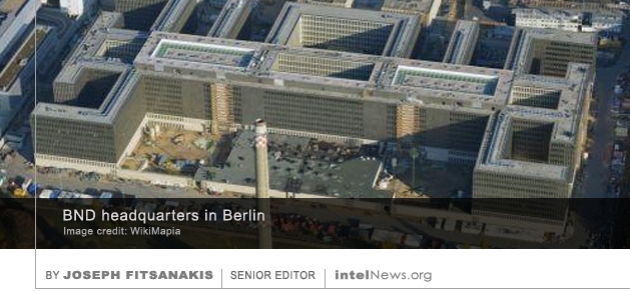
On Monday, Germany’s Süddeutsche Zeitung newspaper alleged that the head of Turkey’s National Intelligence Organization (MİT), gave his German counterpart a list containing the names hundreds of Turks living in Germany, and asked him to spy on them. According to the newspaper, the list was given by MİT chief Hakan Fidan to Bruno Kahl, head of the Bundesnachrichtendienst, Germany’s Federal Intelligence Service, known as BND. The two men reportedly met at a security conference held in Munich last February. The Süddeutsche Zeitung claims that the list given to Kahl included 300 individuals and approximately 200 groups and organizations that the MİT wanted the BND to monitor.

It is extremely uncommon for information of this kind to be communicated informally between directors of intelligence organizations. Typically the exchange of information between cooperating intelligence agencies happens in a very formal and prescribed environment, not circumstantially during a conference. The episode described by the Süddeutsche Zeitung demonstrates a degree of amateurism on behalf of Turkey’s MİT. It is also symptomatic of the pressure that the agency is under by the Turkish government, following last July’s failed military coup in Ankara and Istanbul.

The government of Turkish President Recep Tayyip Erdoğan accuses members of the so-called Gülen movement of orchestrating the failed coup, which included an armed attack on the country’s parliament and the murder of over 200 people across Turkey. The Gülen movement consists of supporters of Muslim cleric Fethullah Gülen, who runs a global network of schools, charities and businesses from his home in the United States. The government of Turkey has designated Gülen’s group a terrorist organization and claims that its members have stealthily infiltrated state institutions since the 1980s. In responding to the post-coup security pressures, MİT has been stretched to its limit. Asking the BND for assistance illustrates the Turkish agency’s limitations, especially when it comes to spying abroad. Read more of this post