Germany publicly rejects Turkish spies’ request to monitor dissidents

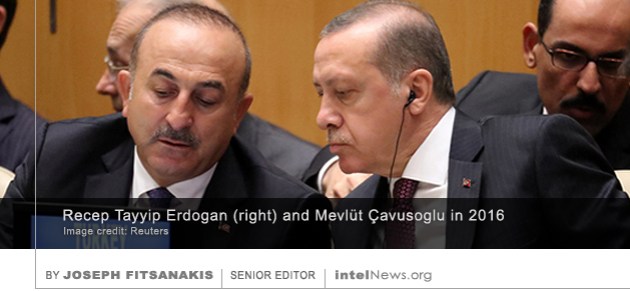
KurdsGerman intelligence and security agencies have publicly rejected a direct request made by Turkey’s intelligence chief to gather information on Turks who are living in Germany and are critical of the Turkish government. The request reportedly relates to attempts by the Turkish government to round up its critics, following a failed military coup in July of last year. The government of Turkish President Recep Tayyip Erdoğan accuses members of the so-called Gülen movement of orchestrating the coup, which included an armed attack on the country’s parliament and the murder of over 200 people across Turkey. The Gülen movement consists of supporters of Muslim cleric Fethullah Gülen, who runs a global network of schools, charities and businesses from his home in the United States. The government of Turkey has designated Gülen’s group a terrorist organization and claims that its members have stealthily infiltrated state institutions since the 1980s.

Since the end of the failed coup, the Turkish state has initiated a nationwide political crackdown against alleged supporters of the coup. Over 100,000 people have been fired from their jobs, while hundreds of thousands have been demoted, censured or warned. Another 41,000 are believed to be in prison, charged with supporting the failed coup or being members of the Gülen network. But many observers in Europe view the coup as a catalyst that was exploited by the government in Ankara neutralize its political opponents.

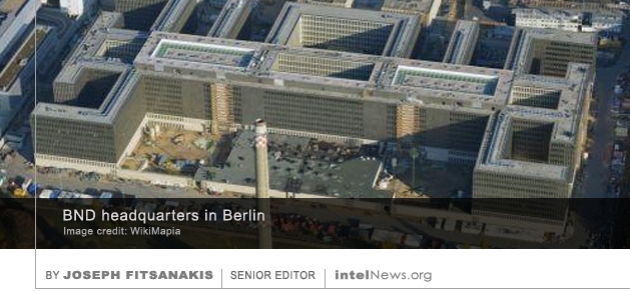
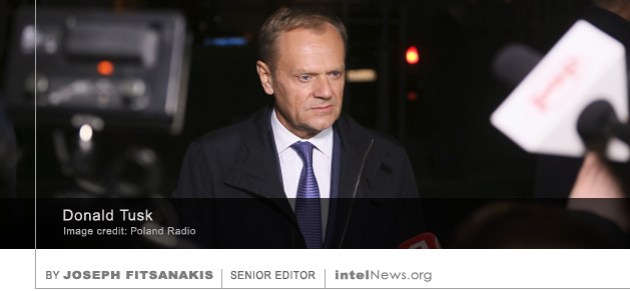
On Monday, Germany’s Süddeutsche Zeitung newspaper claimed that Turkey’s National Intelligence Organization, known as MİT, gave its German counterpart a list containing the names hundreds of Turks living in Germany, and asked him to spy on them. According to the newspaper, the list was given by MİT chief Hakan Fidan to Bruno Kahl, head of the Bundesnachrichtendienst, Germany’s Federal Intelligence Service, known as BND. The two men allegedly met at a security conference held in Munich last February. The Süddeutsche Zeitung claims that the list given to Kahl included 300 individuals and approximately 200 groups and organizations that the MİT wanted the BND to monitor.

But instead of spying on these targets, the BND wrote to them and warned them that the Turkish state was after them. The German spy agency also warned them to stay away from any contact with Turkish authorities in Germany and to refrain from traveling to Turkey. On Tuesday, Germany’s Interior Minister, Thomas De Maiziere, confirmed the Süddeutsche Zeitung article and warned Turkey to respect Germany’s territorial sovereignty. “Here German jurisdiction applies”, said De Maiziere, “and citizens will not be spied on by foreign countries”.

Author: Joseph Fitsanakis | Date: 29 March 2017 | Permalink

Sophistication of Hamas official’s killing points to Mossad, say sources

Mazen FaqhaThe sophistication behind the killing of a senior Hamas official, who was assassinated in his home in the Gaza Strip on Friday evening, points almost certainly to Israel, according to observers. Mazen Faqha, 38, helped plan several lethal operations by the Palestinian militant group, including a 2002 suicide bombing that killed nine and wounded over 50. Following an extensive manhunt, Israeli authorities arrested Faqha in the West Bank and in 2003 convicted him to nine life sentences. But in 2011, Faqha was among 1,027 Palestinian and Arab-Israeli prisoners that Israel released in exchange for Gilad Shalit, a soldier in the Israel Defense Forces, who was held prisoner by Hamas. Since that time, Faqha had lived in the Gaza Strip, the Hamas-controlled Palestinian enclave that has been under strict Israeli blockade since 2006.

Last Friday, March 24, Faqha was found dead inside the garage of his apartment block in Tel el-Hawa, a densely populated neighborhood in southwestern Gaza City. Initial reports stated that the Hamas official had been shot dead by a team of assailants outside his home. But subsequent accounts revealed that several gunmen were waiting for Faqha inside the car garage located on the bottom floor of the building that houses his apartment. It now appears that the assailants had been hiding in the garage for several hours before Faqha entered it with his car. Minutes earlier, his wife and young daughter had exited the car and made their way to the front door of their apartment. As soon as Faqha drove his car to the garage and closed the garage’s electric door, the gunmen shot him four times in the head from point-blank range and vanished. There was hardly a sound, because the assailants used weapons equipped with silencers. Faqha’s body was not discovered until 7:30 in the evening, a full 90 minutes after he was shot dead. His wife apparently thought that he was talking to their neighbors.

Investigators who are looking into Faqha’s murder say that his killers were intimately familiar with the architectural details of the apartment building where he lived, and had studied his daily routine. They also made sure to leave no traces behind. Consequently, their identity remains a mystery despite the presence of security cameras around the building. Hamas security officials say they believe that Faqha’s killers entered and exited the Gaza Strip by boat. The Palestinian militant group lost little time in blaming the murder on the Mossad, Israel’s primary external intelligence agency, which has targeted several Hamas officials for assassination in the past. Khalil al-Haya, Hamas’ second-in-command in the Gaza Strip said that Israel was the only beneficiary of Faqha’s demise. Khaled Mashal, who chairs Hamas’ Political Bureau, said Israel had “changed the rules of the game” by killing Faqha, adding that Hamas would “accept the challenge”. There has been no official comment from Israel in regards to Faqha’s killing.

Author: Joseph Fitsanakis | Date: 28 March 2017 | Permalink | Research credit: SF

North Korea is now robbing banks, says US intelligence official

North KoreaComments made by a senior American intelligence official on Tuesday appeared to suggest that the North Korean government was behind an attempt to steal nearly $1 billion from a Bangladeshi bank last year. The heist took place in February of 2016, when a computer malware was used to issue several requests to transfer funds from Bangladesh Bank —the state-owned central bank of Bangladesh— using the SWIFT network. The hackers were able to transfer five separate sums of $101 million each to a linked Bangladesh Bank account at New York’s Federal Reserve Bank. However, when further requests were issued, Federal Reserve Bank employees contacted Bangladesh Bank and blocked further transactions. Eventually, most of the transferred funds, which neared $1 billion, were recovered; but the hackers managed to get away with approximately $81 million worth of funds.

Forensic investigators described the heist as technically advanced. The antivirus company Symantec said it identified a piece of code in the malware that is known to have been used by North Korean government hackers in the past. Not everyone agreed with the claim that Pyongyang was behind the bank heist. But those who did, said that it was unprecedented in scope and aggressiveness. Some even said that the heist showed that North Korea’s cyber capabilities were among the most sophisticated and powerful in the world.

Meanwhile the United States government did not comment on the matter. However, this past Tuesday the deputy director of the National Security Agency appeared to confirm reports that North Korea was behind the Bangladesh Bank heist. Rick Ledgett, a 30-year veteran of the NSA, who is due to retire in 2018, was speaking at a public event hosted by the Aspen Institute in Washington, DC. He reminded the audience that private researchers had connected the malware code used in the Bangladesh Bank heist with that used in previous hacking attempts launched by North Korea. “If that linkage […] is accurate”, said Ledgett, it “means that a nation state is robbing banks”. When asked by the moderator whether he believes that to be the case, Ledgett responded “I do. And that’s a big deal”. Foreign Policy magazine reached out to Ledgett following his talk and asked him for clarification about his comments regarding the Bangladesh Bank heist. But the NSA official simply said that “the public case [about the heist] was well-made”. Foreign Policy also contacted the NSA, but the agency said it preferred not to comment on the matter.

Author: Joseph Fitsanakis | Date: 23 March 2017 | Permalink

Israel’s chief of staff says Hezbollah killed its own commander in Syria

Mustafa Amine BadreddineAn Israeli military official has repeated claims in the Arab media that the Lebanese Shiite group Hezbollah killed its own military commander in Syria, following a dispute with Iran. Mustafa Amine Badreddine, 55, an expert in explosives and former bomb-maker, was a senior military commander in the military wing of Hezbollah. He rose through the ranks of the organization to become a trusted adviser to Hezbollah’s Secretary General, Hassan Nasrallah. In 2011, the Special Tribunal for Lebanon, set up by the United Nations, charged Badreddine with organizing the assassination of Lebanese Prime Minister Rafik Hariri. Hariri was killed with over 20 other people in a massive bomb blast in Beirut, in February of 2005.

Soon after the outbreak of the Syrian Civil War, the leadership of Hezbollah dispatched Badreddine to the Syrian capital Damascus. His stated mission was to command thousands of Hezbollah troops, who fought under Iranian guidance in support of the Syrian President Bashar al-Assad. But on May 13, 2016, Badreddine was reportedly killed in Damascus, causing observers to describe his death as the biggest setback for the Shiite militant group since the 2008 assassination of its leading commander, Imad Mughniyeh. Initial reports in Hezbollah-controlled Lebanese media suggested that Badreddine might have been killed in an Israeli air attack. But a press statement issued later by Hezbollah said the commander had been killed as a result of an armed attack by Sunni rebels. However, on March 8 of this year, the Saudi-owned pan-Arab television network al-Arabiya said it had conducted its own investigation into Badreddine’s death, and had concluded that he was killed by Hezbollah itself. The network claimed that Hezbollah’s Secretary General Nasrallah had ordered Badreddine’s killing, after the Iranians demanded it. Apparently the Iranians wanted him killed because he disputed the authority of Major General Qasem Soleimani, commander of Iran’s Revolutionary Guard Corps, who is often credited with having saved the Syrian government from demise during the Civil War.

The claim that Badreddine was killed by Hezbollah was echoed on Tuesday by Lieutenant General Gadi Eisenkot, Chief of the General Staff of the Israel Defense Forces. Speaking to the Associated Press, Lt Gen Eisenkot said that reports from Arab media that Badreddine was killed by his own forces agreed “with intelligence we have”, referring to the Israeli military. It is worth noting that Israeli officials rarely comment on intelligence operations, including assassination operations, choosing instead to adhere to a “refuse to confirm or deny” policy.

Author: Joseph Fitsanakis | Date: 22 March 2017 | Permalink

China has 5,000 spies in Taiwan, says official amidst espionage arrests

China and TaiwanA Taiwanese government official has alleged that China maintains an army of more than 5,000 spies in Taiwan, many of whom have infiltrated the highest levels of government and industry. The allegation came after two sensational arrests were made in Taiwan last week, of people accused of spying for Beijing. Taiwanese counterintelligence officers reportedly arrested a bodyguard of Annette Lu, Taiwan’s former vice president. The bodyguard, who has been identified in Taiwanese media as Wang Hong-ju, has been charged with receiving payments from his Chinese intelligence handler in return for providing information about Mrs. Lu. This incident followed another arrest, made earlier in the week, this time of a Chinese man who is believed to have initially come to Taiwan as a student. Zhou Hong-xu is accused of trying to recruit officials in the Taiwanese government by offering them money.

Following reports of the arrests, Taiwanese media quoted an official, who spoke on condition of anonymity, as saying that Beijing maintains “about 5,000 individuals” who spy in Taiwan. These agents are allegedly tasked with “collecting state secrets” in the island country, over which China claims ownership. The anonymous Taiwanese official said that authorities in Taipei had uncovered no fewer than 60 espionage plots linked to China since 2002. Less than a third of those were uncovered before 2009, said the official. The year is important, because it marks the time when communications and transportation systems between the two nations were reestablished after decades of mutual isolation. The ease with which people from the two countries can travel in each other’s territory has increased exponentially since 2009. But so have instances of espionage by China, said the Taiwanese official.

Asked about the alleged targets of Chinese espionage in Taiwan, the official said that nearly 80 percent of identified cases of espionage by Beijing’s agents were aimed at military targets, with only 20 percent focusing on the civilian sector. However, the apparent disparity in numbers does not mean that China shows more interest in Taiwanese military secrets. Rather, the Taiwanese military has better counterintelligence defenses and thus a higher detection rate than the country’s civilian sector, said the anonymous source.

Author: Joseph Fitsanakis | Date: 20 March 2017 | Permalink

Russian special forces troops seen in Egypt and Libya, say reports

Khalifa HaftarRussia may have become the latest country to deploy special forces soldiers in Libya, according to news reports citing anonymous United States officials. Late on Tuesday, the Reuters news agency reported that Russian special forces troops had been seen on the border between Libya and Egypt. The news agency said that the information came from “two US officials, who spoke on condition of anonymity”. The same article cited unnamed “Egyptian security forces”, who said that a 22-member Russian paramilitary team had set up an operations base in the Egyptian town of Sidi Barrani, which is located 60 miles from Libyan territory.

Libya has descended into a state of complete anarchy since the demise of the country’s dictator, Colonel Muammar Gaddafi. The Libyan strongman was killed in 2011, as a result of a popular uprising backed by Western powers and the North Atlantic Treaty Organization. Arguably the strongest faction in the ongoing Libyan Civil War is the so-called Tobruk-led Government, which is affiliated with the Libyan National Army. The commander of the Libyan National Army is Field Marshal Khalifa Haftar, an old adversary of Colonel Gaddafi, who lived in the US under Washington’s protection for many decades before returning to Libya in 2011 to participate in the war. The Tobruk-led Government is ostensibly supported by the US. However, its military wing, led by Haftar, operates semi-autonomously, and some believe that Haftar has aspirations to lead his own armed faction in Libya. Last November, Haftar visited Moscow, where he met with senior government officials, including Russian Foreign Minister Sergei Lavrov. There are reports that the Russian special forces troops alleged seen in Egypt are operating in support of Haftar.

Earlier this week, a spokesman for the Tobruk-led government told Russian media that Moscow had promised to provide it with funding and military aid. Earlier this year, it was confirmed that a number of Russian private security contractors were in Libya and were providing services to Haftar’s militias. But there are no confirmed reports of the presence of Russian government troops on the ground in Libya. On Tuesday, Moscow denied the Reuters report and accused “certain Western mass media” of “spreading false information from anonymous sources” in order to “smear Russia”.

Author: Joseph Fitsanakis | Date: 16 March 2017 | Permalink

Trump authorizes CIA to bring back regular use of drone strikes

DroneUnited States President Donald Trump has reportedly authorized the Central Intelligence Agency to bring back the routine use of lethal airstrikes by unmanned aerial vehicles (UAVs), which his predecessor, Barack Obama, curtailed in 2013. Washington began employing limited strikes by UAVs, otherwise known as drones, in the early 1990s, during the administration of President Bill Clinton. But it was under the Obama administration that the use of drone strikes reached an all-time high, with hundreds of such attacks documented after 2008. It is believed that Obama used this remote attack method to combat the Taliban and al-Qaeda, while at the same time keeping his promise of bringing back American troops from the Middle East and Central Asia. However, in 2013 the US president severely curtailed the controversial program, which some say damaged America’s image by inflicting civilian casualties.

But on Monday, The Wall Street Journal reported that President Trump had resuscitated the drone program and authorized the CIA to begin using Predator drones on a regular basis against identified targets in the Middle East and Central Asia. According to the newspaper, the president gave senior CIA project mangers the right to authorize drone strikes. Under the Obama administration, the president himself, or especially designated National Security Council officials, had to give the go-ahead before the CIA could carry out drone strikes around the world.

The Wall Street Journal said that President Trump made the decision on January 21, just hours after taking office, following a secret meeting with senior officials from the CIA. According to the report, the CIA requested some time to rebuild the program. But the agency has allegedly conducted at least one drone strike, which targeted Abu al-Khayr al-Masri, a known al-Qaeda senior commander in Syria, who was reputed to be a son-in-law of the late al-Qaeda leader Osama bin Laden.

Author: Ian Allen | Date: 15 March 2017 | Permalink

Russia possibly tried to kill Montenegro PM, says British foreign secretary

Boris JohsonBoris Johnson, the British foreign secretary has said in an interview that Russian spies may have orchestrated last year’s failed attempt to kill the then-prime minister of Montenegro, Milo Dukanović. Mr. Johnson, a senior figure in the Conservative Party of the United Kingdom, was a major contender for the prime minister’s position in 2016, after the administration of David Cameron collapsed under the weight of the Brexit vote result. Speaking on Sunday morning to reporter Robert Peston, of Britain’s ITV television network, Mr. Johnson said that the West should “engage” with Russia, but warned that it should also “beware” of Moscow’s “dirty tricks” in Europe and the United States.

The British foreign secretary spoke following reports that British intelligence services called an emergency meeting with representatives of the country’s major political parties, in order to warn them that Russia planned to use cyber-attacks to disrupt regional and national elections in the country. Mr. Johnson said that the government had “no evidence the Russians are actually involved in trying to undermine our democratic processes at the moment”. But he added that there was “plenty of evidence that the Russians are capable of doing that. And there is no doubt”, he went on, “that they’ve been up to all sorts of dirty tricks”. Some of those “dirty tricks”, said Mr. Johnson, targeted the former Yugoslav Republic of Montenegro, where last year there was “an attempted coup and possibly an attempted assassination”.

The British politician was referring to allegations made last October by authorities in Montenegro that “nationalists from Russia” and Serbia were behind a failed plot to kill the country’s then-Prime Minister Milo Dukanović and spark a pro-Russian coup in the country. The allegations surfaced after 20 Serbians and Montenegrins were arrested by police in Montenegro for allegedly planning a military coup against the government. The arrests took place on election day, October 16, as Montenegrins were voting across the Balkan country of 650,000 people. The plotters had allegedly hired a “long-distance sharpshooter” who was “a professional killer” for the task of killing Đukanović. After killing the Prime Minister, the plotters planned to storm the parliament and prompt a pro-Russian coup in Montenegro, according to authorities. In response to allegations that the coup had been hatched in neighboring Serbia, Serbian Prime Minister Vučić said that he would not allow Serbia to “act as the puppet of world powers”, a comment that was clearly directed at Moscow. Russia vehemently denied the allegations.

Meanwhile, Mr. Johnson is preparing to visit Moscow in a few days to meet with his Russian counterpart, Minister of Foreign Affairs Sergey Lavrov. He told ITV that he planned to deliver his “personal feeling” to Mr. Lavrov, which “is one of deep, deep sadness” about Russia’s foreign policy under President Vladimir Putin.

Author: Ian Allen | Date: 13 March 2017 | Permalink

Islamic State leader al-Baghdadi abandons Mosul, say intelligence sources

Abu Bakr al-BaghdadiThe leader of the Islamic State has abandoned the city of Mosul and is hiding in the desert zone of western Iraq, according to intelligence sources. Meanwhile Mosul, once the most populous city under the Islamic State’s control, is now reportedly being defended by a diminishing cadre of fewer than 3,000 Sunni militants, who are facing a 110,000-strong invading army.

Abu Bakr al-Baghdadi became the center of worldwide attention in July of 2014, when Islamic State troops swept rapidly through western Iraq and captured the region’s largest city, Mosul, in a spectacular coordinated attack. Soon after Mosul was captured by the Islamic State, al-Baghdadi led Friday prayers at Mosul’s Great Mosque and proclaimed himself caliph —emperor of the world’s Muslims. In the following months, the Islamic State reached the height of its power, commanding large expanses of land that stretched from the northern regions of Syria to the outskirts of Iraq’s capital Baghdad. Soon after al-Baghdadi’s public appearance in Mosul, the United States government set up a joint task force aimed at killing or capturing him. The group, which is still operational today, includes representatives from the Armed Forces, the National Security Council, and the Intelligence Community. Al-Baghdadi is believed to have stayed in Mosul, but has proven difficult to trace. He almost never uses electronic communications and is constantly on the move, sleeping at different locations every night.

Last October, US-backed Iraqi government troops, Shiite militias and Kurdish forces launched a large-scale military operation to recapture Mosul and drive out the Islamic State from the region. The assailants, whose combined forces are said to exceed 110,000 troops, reclaimed much of eastern Mosul earlier this year, and are preparing to launch a large-scale military advance on the western half of the city. While the operation to complete the recapture of Mosul is underway, American and Iraqi intelligence sources report that al-Baghdadi has not been public heard from since early November of last year. This leads many analysts to believe that the Islamic State leader has left the city and is now hiding in the vast and inhospitable desert that stretches along the Iraqi-Syrian border. Moreover, intelligence analysts claim that the Islamic State’s online activity has fallen sharply, to about half of what it was during the group’s peak in late 2014. This leads to the conclusion that the Islamic State is now increasingly focusing on essential functions aimed simply at the survival of the regime. The group has reportedly lost at least 3,000 fighters in Mosul, but an estimated 2,400 armed men have vouched to defend the city to the very end.

Author: Ian Allen | Date: 10 March 2017 | Permalink

FBI launches criminal investigation into WikiLeaks’ CIA disclosures

WikiLeaksThe United States federal government has launched a criminal investigation into the public disclosure of thousands of documents that purportedly belong to the Central Intelligence Agency. The documents were released on Tuesday by the anti-secrecy website WikiLeaks. They reveal what appear to be technical collection methods used by the CIA to extract information from digital applications and electronic devices, ranging from flash drives to smart screen televisions. WikiLeaks named the collection “Vault 7”, and said that it consists of nearly 8,000 web pages and 1,000 attachments. It also said that its editors redacted hundreds of pages of computer code, in order to prevent the public release of advanced cyberweapons allegedly used by the CIA to sabotage electronic devices and systems.

On Wednesday, former director of the CIA Michael Hayden told the BBC that the disclosure appeared “incredibly damaging”, because it revealed some of the methods that the CIA uses to acquire information. But some cybersecurity experts said that the techniques contained in the leaked documents did not appear to be uniquely advanced, and most focused on exploiting technical vulnerabilities that were generally known. Still, The New York Times reported on Wednesday that the CIA had begun to assess the damage caused by the release. The agency was also trying to contain the extent of the damage, and had even “halt[ed] work on some projects”, said The Times. Officials from the CIA are reportedly in communication with the Federal Bureau of Investigation, which on Wednesday launched a criminal investigation into the “Vault 7” release.

The main purpose of the FBI investigation is to find out how WikiLeaks acquired the files. The website said that the documents were leaked by a CIA contractor, which would imply that they were accessed from a server outside the CIA’s computer network. However, federal investigators are not excluding the possibility that the leaker of the information may be a full-time CIA employee. Reports suggest that the FBI is preparing to conduct hundreds, and possibly thousands, of interviews with individuals who are believed to have had access to the documents that were released by WikiLeaks. Meanwhile, neither the FBI nor the CIA have commented on the authenticity of the information contained in “Vault 7”. WikiLeaks said that Tuesday’s release, which it codenamed “Year Zero”, was the first part of several installments of documents that will be released under its Vault 7 program.

Author: Joseph Fitsanakis | Date: 09 March 2017 | Permalink

Files released by WikiLeaks show advanced CIA technical collection methods

Julian AssangeThousands of documents belonging to the United States Central Intelligence Agency, which were released on Tuesday by the international anti-secrecy website WikiLeaks, are almost certainly genuine. They reveal an entire universe of technical intelligence collection methods used by the CIA to extract information from digital applications and electronic devices, ranging from flash drives to smart screen televisions. WikiLeaks named the collection Vault 7, and said that it consists of nearly 8,000 web pages and 1,000 attachments. It also said that its editors redacted hundreds of pages of computer code, in order to prevent the public release of advanced cyberweapons that are allegedly used by the CIA to sabotage electronic devices and systems.

The information contained in the leaked documents is almost certainly genuine, and most likely belongs to the CIA —though many of the programs listed may be jointly run by the CIA and the National Security Agency (NSA). These programs, with names such as McNUGGET, CRUNCHYLIMESKIES, ELDERPIGGY, ANGERQUAKE and WRECKINGCREW, appear to be designed to compromise computer systems using a series of sophisticated methods that force entry or exploit built-in vulnerabilities or systems. Targets include popular communications systems like Skype and WhatsApp, smartphones produced by Google and Apple, commercial software like PDF and Microsoft Windows, and even so-called smart televisions that connect to the Internet.

The WikiLeaks revelations are most likely related to operations conducted under the auspices of the Special Collection Service (SCS), a joint CIA/NSA program that dates to the earliest days of the Cold War. The program was started by the United States Armed Forces but was eventually transferred to civilian hands and monitored by the CIA. It used advanced communications-interception facilities around the world to collect information. Over the years, the CIA collaborated with the NSA and developed many SCS projects targeting several foreign countries using technical and human means. In recent years the SCS has been primarily operated by the NSA, which oversees the program’s technical platforms.

WikiLeaks did not reveal the source of the documents. But it said that they had been “circulated [by the CIA] among former US government hackers and contractors” and that it was one of the latter that leaked them to the anti-secrecy website. A statement by WikiLeaks said that Tuesday’s release, which it codenamed “Year Zero”, was part one of several installments of documents that will be released under its Vault 7 program. The site also claimed that the information in “Year Zero” has “eclipsed the total number of pages published over the first three years of the Edward Snowden NSA leaks”. The CIA, the NSA and the White House have not commented on this development.

Author: Joseph Fitsanakis | Date: 08 March 2017 | Permalink

MI6 to revert to old-fashioned ways of recruitment, says director

Alex YoungerBritain’s primary external-intelligence agency will revert to old-fashioned ways of recruiting employees, including the co-called “tap on the shoulder” method, according to its director. Known informally as MI6, the Secret Intelligence Service (SIS) was founded in 1908 to protect Britain’s national security by collecting intelligence from foreign sources. However, the agency has had difficulty recruiting a diverse group of people, and many still view it as a professional destination for a small wealthy elite, drawn primarily from Britain’s most prestigious universities such as Oxford and Cambridge.

MI6 is now trying to diversify the makeup of its employees, according to its director, Alex Younger. Younger, who is known at MI6 as ‘C’, gave an interview to British newspaper The Guardian on Thursday. He did so as the agency he leads prepares to increase its personnel numbers by 40 percent in the next four years. Last year, the British government announced that MI6’s personnel strength would grow from its current size of 2,500 employees to approximately 3,500 by 2020. The reason for the increase, said Younger, is that Britain is facing “more threats than ever before […] from terrorist groups and hostile states”. As a result, “the demands on our services [and] capabilities are on the up”, Younger told The Guardian in his first-ever interview with a national newspaper.

But MI6 would function more efficiently and achieve better results it if had a “more diverse workforce”, said Younger. Therefore, he said, the agency must go out of its way to “draw in a new cadre of black and Asian officers”. In doing so, the spy service would need to reach out to minority communities who are “selecting themselves out” of working for the British intelligence community. Useful in this process are what Younger called “old recruitment techniques”, such as the so-called “tap on the shoulder”. The term refers to the deliberate recruitment of individuals who will be approached by MI6 without having applied for employment with the agency. “We have to go to people that would not have thought of being recruited to MI6”, said Younger, adding that the “tap on the shoulder” method can be redeployed in order to increase diversity among MI6’s workforce and “reflect the society we live in”.

The spy agency is preparing to launch an aggressive recruitment campaign next week, aiming at bringing its overall size to 3,500 —a historic high, according to intelligence observers.

Author: Joseph Fitsanakis | Date: 03 March 2017 | Permalink

Islamic State faces imminent financial collapse, claims new study

ISIS meetingThe Islamic State is facing imminent financial collapse, according to a new study conducted by a London-based research group in association with one of the world’s leading international accounting firms. The recently launched report is entitled Caliphate in Decline: An Estimate of Islamic State’s Financial Fortunes. The analysis that forms the basis of the report was conducted by scholars at the International Center for the Study of Radicalization, a research center that operates out of the Department of War Studies at King’s College in London. The report’s authors were joined by financial analysts at Ernst & Young, a British-based company that is often referred to as one of the world’s ‘big four’ accounting firms.

The report challenges the widely accepted claim that the Islamic State is the wealthiest terrorist organization in history. Its authors argue that the organization’s wealth is connected to its function as “a quasi-state”, with a geographical territory under its control and a subject population that lives in it. Territorial control, say the report’s authors, allows the Islamic State to amass significant revenue from sources like direct and indirect taxation, extraction of natural resources, and confiscation of property from citizens, among others. Even though much of the Islamic State’s financial activity is hidden, the study uses open sources to make the claim that the group’s income in 2014 was close to $2 billion. Last year, however, the overall income amassed from all sources dropped to less than $900 million, an estimated reduction of 45 percent, say the researchers.

The reason for the drop is that the financial revenue model of the Islamic State is directly linked to its territorial control. In comparison to the peak of its power in the spring of 2014, the Islamic State has today lost control of over 60 percent of its territory in Iraq and nearly a third of its territory in neighboring Syria. As coalition forces are beginning to retake Mosul, the Islamic State is facing the potential loss of the caliphate’s commercial capital. These developments will continue to seriously erode the group’s tax base and severely limit its revenue streams. There are no signs, say the researchers, that the Islamic State has been able to devise new forms of revenue streams that are not connected to direct territorial control. However, the authors of the study warn that a potential financial collapse of the Islamic State will not prevent the organization from carrying out terrorist activities in the Middle East and beyond.

Author: Joseph Fitsanakis | Date: 01 March 2017 | Permalink

Swedish intelligence says it identified foreign spies searching for secrets

Sweden militaryThe military intelligence service of Sweden warned last week that there were increasing incidents of espionage perpetrated against Sweden by operatives identified “beyond doubt” as agents of foreign powers. In its annual report for 2016, the Swedish Military Intelligence and Security Service (MUST) said large numbers of spies were detected around “sensitive installations” mostly of a military nature. Headed by an Army general, MUST is responsible for military intelligence and counterintelligence in Sweden. Every year it produces a report of its activities for the Swedish government and defense establishment, and also publishes a declassified version. Its latest report warns about growing attempts by foreign countries to “gather intelligence about Sweden’s defense assets and capabilities”.

On Friday, Swedish newspaper Svenska Dagbladet published an interview with senior MUST official Jan Kinnander. He told the paper that MUST was able to identify beyond doubt that certain individuals were “connected to the intelligence services of foreign states”. These persons traveled to Sweden “under false pretenses”, according to the official. A few of them were diplomats, said Kinnander, while most attempted to travel around the Scandinavian country using “conspiratorial methods”. Many were detected prowling around government installations that are linked to Sweden’s national defense while having “no reasonable cause” to be there, said Kinnander.

When asked to identify the countries that engage in espionage against Sweden, Kinnander said he could not elaborate, except to say that MUST linked the alleged spies with “several countries, including Russia”. In December of last year, MUST Director Gunnar Karlsson told Swedish media that Russia was a leading perpetrator of intelligence operations against Sweden. These operations included active measures involving propaganda, deception and other psychological activities, he said. In recent years, the Swedish authorities have arrested Polish, Lithuanian and other Eastern European nationals, allegedly because they were seen photographing Swedish military installations.

Author: Ian Allen | Date: 27 February 2017 | Permalink

Trump administration instructs CIA to halt support for anti-Assad rebels in Syria

Free Syrian ArmyThe White House has instructed the Central Intelligence Agency to halt military support to armed groups that are associated with the Free Syrian Army (FSA), a group opposed to Syrian President Bashar al-Assad. Some believe that the move indicates a change in American policy under United States President Donald Trump. But Syrian rebel commanders say they believe the move is temporary, and that military aid will be restored. For several years, the CIA has provided training and other forms of assistance to rebel groups in Syria, such as the New Syrian Force, which operate under the umbrella of the FSA. Aside from training, the assistance has included light and heavy ammunition, including antitank missiles, mines and grenades.

However, it appears that the CIA was instructed nearly a month ago by the White House to freeze all assistance to these rebel groups. Correspondents from the Reuters news agency said they confirmed the change in policy by speaking to senior rebel commanders from five armed groups operating under the FSA. These commanders told Reuters that they had not been given any official reason for the sudden termination of all CIA assistance. The change coincided with the change of guard at the White House, from Barack Obama to Donald Trump. Some in Washington, as well as some members of rebel factions in Syria, are concerned that the change in the CIA’s stance might denote a broader policy shift in the White House. During his election campaign, Mr. Trump said repeatedly that he would end America’s overt and covert support for the FSA and would focus instead on defeating the Islamic State.

But the rebel commanders themselves told Reuters that the freeze in CIA support was due to a wave of renewed attacks against them by Jabhat Fateh al-Sham, a Sunni militant group that was previously affiliated with al-Qaeda. The rebels said that the CIA was concerned that weaponry provided to the FSA would end up in the hands of jihadist militants, so it temporarily halted its support until Jabhat Fateh al-Sham could be pushed back by FSA forces. Reuters published comments by two anonymous officials who were familiar with the CIA’s operations in Syria. They told the newspaper that the freeze of the CIA’s program had “nothing to do with US President Donald Trump replacing Barack Obama in January”. Additionally, said Reuters, Mr. Trump’s policy in Syria remains unknown. Several newspapers and news agencies contacted the CIA asking for comments, but the agency declined all requests on Wednesday.

Author: Ian Allen | Date: 23 February 2017 | Permalink