Officials puzzled by attacks that killed 16 in relatively stable Mozambique
October 26, 2017 Leave a comment
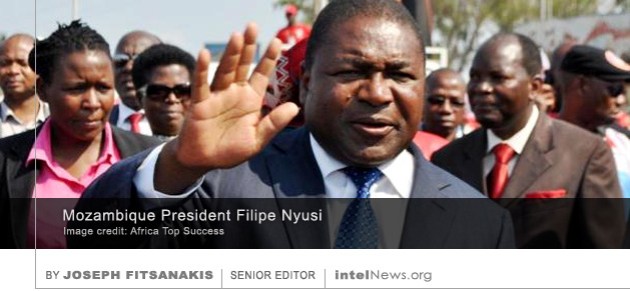 In a surprise move, the president of Mozambique has fired the head of the military and the director of the country’s intelligence service, two weeks after attacks by an unidentified group left 16 people dead in a northern town. The attacks occurred on October 5 and 6 in Mocimboa da Praia, a small town of about 30,000 people located along Mozambique’s extreme northern coastline. The town lies only a few miles south of Mozambique’s border with Tanzania and within sight of several offshore gas fields in the Indian Ocean. According to local reports, several dozen assailants targeted police stations in Mocimboa da Praia with firearms and explosives, killing two police officers. An estimated 14 assailants also died in the coordinated attacks, while at least 12 more were wounded. Police forces were able to reclaim control of the town only after the eventual arrival of reinforcements from the tourist resort of Pemba, located 350 miles to the south of Mocimboa da Praia.
Two weeks after the attacks, however, the ideological backgrounds and motives of the assailants remain unclear. Mozambique has seen armed attacks by guerrillas before, but these are usually attributed to Renamo, a rightwing paramilitary group that was financially supported by Rhodesia and apartheid-era South Africa during the Cold War. The group is still in existence, but has mostly transformed itself into a political party. Its military wing declared a unilateral ceasefire in December of last year, which has been broadly observed. Importantly, the government did not attribute the Mocimboa da Praia attacks to Renamo. But if Renamo was not behind the attacks, then who was it? Local reports have mentioned a so-called “radical Islamist sect”; but Mozambique is a predominantly Christian country and does not have a history of Islamic radicalism. Nor is there known activity in Mozambique of African Islamist groups like Boko Haram or Al-Shabaab, which are strong in western and eastern Africa respectively.
In the days following the attacks in Mocimboa da Praia, police detained 52 people, including Muslim religious leaders, and confiscated half a dozen firearms, as well as hundreds of rounds of ammunition. But by the middle of last week, police officials began to dismiss earlier claims that the attackers were linked to an organized terrorist group. Some southeastern Africa watchers have suggested that the assailants were members of Swalissuna, a locally based militant opposition group that rejects the authority of the central government in capital Maputo, located in Mozambique’s south. The group is virtually unknown and is believed to have been founded in 2011 or 2012. It has no religious affiliation and its members are motivated by domestic grievances related to economic restructuring, corruption and political reform.
On Tuesday, Mozambique President Filipe Nyusi announced the surprise replacement of the country’s two most powerful security officials. Lagos Lidimo, director general of the State Information and Security Service (SISE), which reports directly to the President, was dismissed overnight and replaced by Julio Jane, who until Monday was the commander of the Mozambican National Police. Also replaced was Graça Chongo, head of the country’s armed forces. His replacement has not yet been named.
► Author: Joseph Fitsanakis | Date: 26 October 2017 | Permalink
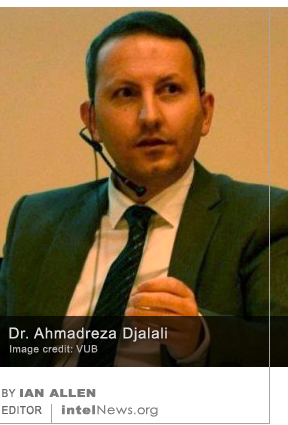 A court in Iran has sentenced a prominent Iranian academic to death for allegedly helping Israel assassinate nuclear scientists and sabotage Tehran’s nuclear program. Four Iranian physicists, who were employed in Iran’s nuclear program, are known to have been
 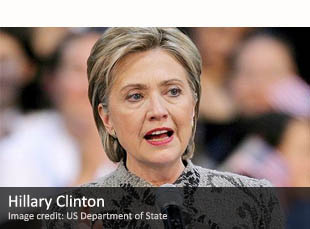 A major reason behind the Federal Bureau of Investigation’s decision to arrest ten Russian spies across the United States in 2010 was their increasing proximity to the then-Secretary of State Hillary Clinton, it has been claimed. The spies had been specifically instructed by their handlers in Moscow to target Clinton, who was seen as the most likely successor to US President Barack Obama, according to recently released FBI files. Ten Russian deep-cover spies, who had no official cover and thus no diplomatic immunity, were
 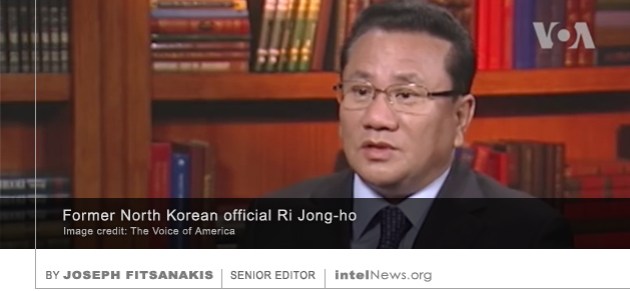 North Korean Supreme Leader Kim Jong-un has consolidated his position by killing hundreds of domestic critics in recent years, but he lacks confidence and will not go to war against outside powers, according to a senior North Korean defector. Ri Jong-ho was a senior official in North Korea under its previous leader, the late Kim Jong-il. He rose through the ranks of the Workers’ Party of Korea and was directly mentored by Kim, who personally appointed him to a post in Bureau 39. The powerful body is in charge of securing much-needed foreign currency for Pyongyang —often through illegal activities— and partly funds the personal accounts of the ruling Kim dynasty.
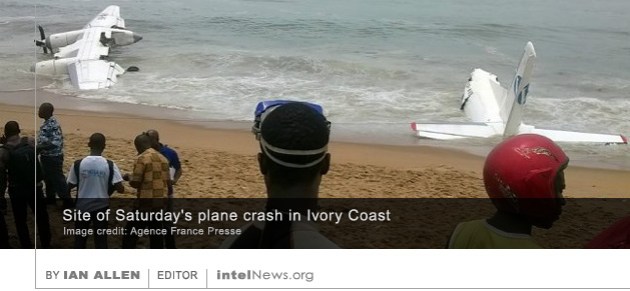 A plane crash that killed four off Côte d’Ivoire last week had been chartered by the French military as part of its counterinsurgency mission in West Africa, it has been admitted. Ivorian authorities identified the aircraft as a Ukrainian-made Antonov transport airplane. It reportedly took off from Ouagadougou, the capital of Burkina Faso, on last Saturday morning. Shortly afterwards, the aircraft crash-landed in the Atlantic Ocean past Abidjan, one of West Africa’s largest cities, on the southern coast of Côte d’Ivoire. Local officials said the airplane broke in half and immediately caught fire. Of the ten people that were on board, four are reportedly dead; six others are seriously hurt. Reports said that the four dead passengers were all Moldovan nationals. Two other Moldovans and four French nationals were injured.
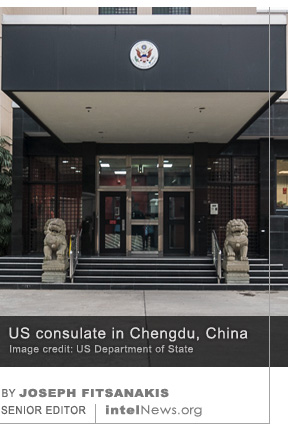 An American diplomat stationed in China was abducted and interrogated for several hours by Chinese authorities, who believed him to be an officer of the Central Intelligence Agency working under official cover. The alleged abduction took place in early 2016 but was revealed this week by the online news outlet Politico. The website said that the diplomat, who has not been named, was stationed at the United States consulate general in Chengdu, a city of 14 million that is the administrative capital of western China’s Sichuan province. Founded in 1985, the US consulate in Chengdu is one of Washington’s seven diplomatic and consular posts in China. It is staffed by 130 people, approximately 30 of whom are Americans and 100 are locally hired Chinese citizens. The facility’s consular district includes several Chinese provinces, including the politically sensitive Tibet Autonomous Region.
 Israeli spy services were reportedly behind the United States government’s recent decision to purge Kaspersky Lab antivirus software from its computers, citing possible collusion with Russian intelligence. Last month, the US Department of Homeland Security issued a directive ordering that all government computers should be free of software products designed by Kaspersky Lab. Formed in the late 1990s by Russian cybersecurity expert Eugene Kaspersky, the multinational antivirus software provider operates out of Moscow but is technically based in the United Kingdom. Its antivirus and cybersecurity products are installed on tens of millions of computers around the world, including computers belonging to government agencies in the US and elsewhere. But last month’s memorandum by the US government’s domestic security arm alarmed the cybersecurity community by alleging direct operational links between the antivirus company and the Kremlin.
 A symposium about the life, activities and legacy of World War I-era double spy Mata Hari is to take place in London this month, on the 100th anniversary of her death by execution. Mata Hari was born Margaretha Geertruida Zelle in Holland in 1876. In 1895 she married Rudolf MacLeod, a Dutch Army Captain of Scottish descent serving the Dutch colonial administration of what is now Indonesia. She eventually divorced the alcoholic and abusive MacLeod, who was 20 years her senior, and joined the circus in Paris. Eventually she became wildly popular as an exotic dancer, a position that placed her in direct and close contact with several influential men in France, including the millionaire industrialist Émile Étienne Guimet, who became her longtime lover. Several of her male devotees came from military backgrounds from various European countries. Most historians agree that by 1916 Mata Hari was working for French intelligence, gathering information from her German lovers. However, in February of the following year she was arrested by French counterintelligence officers in Paris and accused of spying on behalf of the German Empire. French prosecutors accused her of having provided Germany with tactical intelligence that cost the Triple Entente the lives of over 50,000 soldiers.
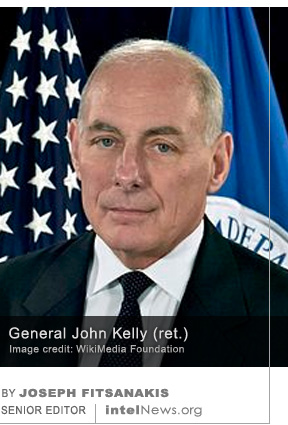 The personal cell phone of the White House Chief of Staff John Kelly (photo) was compromised by persons unknown and may have been bugged for nearly a year, according to United States government officials. General Kelly retired from the US Marine Corps in 2016, after serving as chief of the US Pentagon’s Southern Command, where he supervised American military operations in Latin America and the Caribbean. Soon afterwards, he was appointed by US President Donald Trump to lead the Department of Homeland Security, which he joined in January of 2017. Six months later, however, he replaced Reince Priebus, who resigned abruptly from the post of White House Chief of Staff, citing differences over management style with the Trump administration.
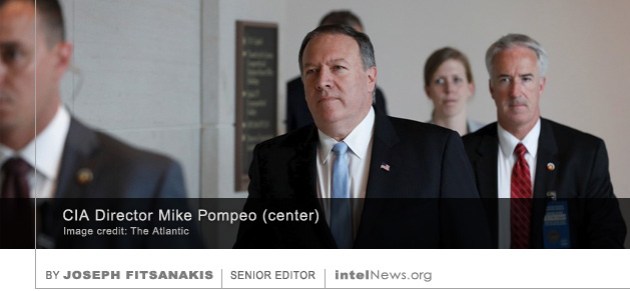 The man appointed by President Donald Trump to lead the United States Central Intelligence Agency has outlined his plans to promote more aggressive intelligence operations and combat what he described as “red tape” in the agency’s culture. Mike Pompeo, a former aerospace and oil executive, who is a member of the conservative Tea Party movement, assumed the directorship of the CIA in January of this year. He succeeded John Brennan, a career CIA officer, who has been an outspoken critic of the Trump administration’s attitude to intelligence since he left office in January.
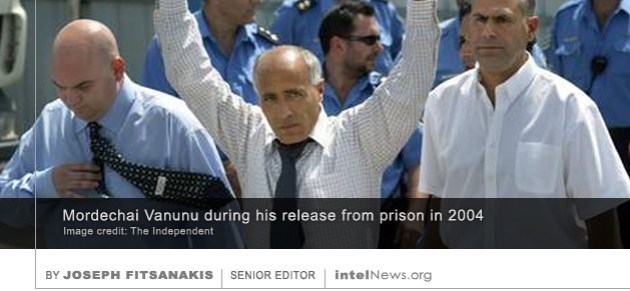 The controversial Israeli nuclear whistleblower Mordechai Vanunu, who was jailed for 18 years for revealing the existence of Israel’s nuclear program, has been invited to go to Norway to be reunited with his new wife. Vanunu was employed at Israel’s top-secret Negev Nuclear Research Center, located in the desert city of Dimona, which was used to develop the country’s nuclear arsenal. But he became a fervent supporter of nuclear disarmament and in 1986 fled to the United Kingdom, where he revealed the existence of the Israeli nuclear weapons program to the London-based newspaper The Times. His action was in direct violation of the non-disclosure agreement he had signed with the government of Israel; moreover, it directly challenged Israel’s official policy of ‘nuclear ambiguity’, which means that the country refuses to confirm or deny that it maintains a nuclear weapons program.
 The seizure earlier this year of a North Korean ship secretly carrying thousands of weapons for use by the Egyptian military has revealed the scale of one of Pyongyang’s most profitable money-making ventures: global arms sales. Experts say that the North Korean state continues to supply thousands of tons of Cold-War-era conventional weapons to countries such as Eritrea, Cuba, Burma and Iran, as well as to some American allies, including as Egypt. There is also evidence that at least two non-state militant organizations, including the Lebanon-based group Hezbollah, are among Pyongyang’s customers. The latter take advantage of North Korea’s vast arsenal of weapons produced in the 1960s and 1970s, which are being sold on the international arms market at very low prices.
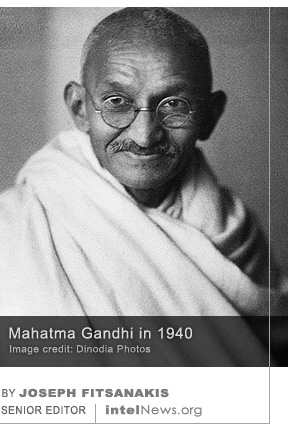 A researcher is seeking access to a potentially revealing classified telegram sent by a United States diplomat who witnessed the assassination of Indian leader Mahatma Gandhi in 1948. Gandhi, the leader of the Indian movement for independence, and a towering civil rights figure of the 20th century, was assassinated on January 30, 1948, as he was about to hold a prayer meeting in downtown New Delhi. His assassin, Nathuram Vinayak Godse, was a member of a Hindu nationalist paramilitary group, who blamed Gandhi for the bloody partition of India. He and a co-conspirator, Narayan Apte, were arrested for Gandhi’s murder and put to death in 1949.
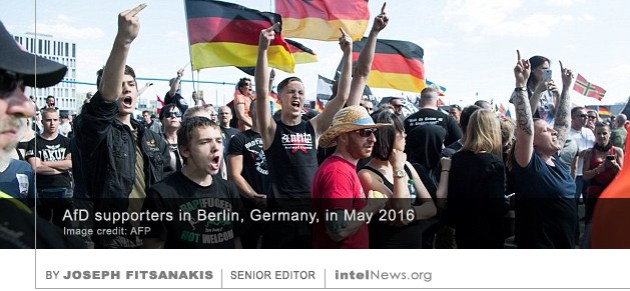 A senior German intelligence official has warned that foreign powers, including Russia, could try to shape the outcome of talks by German parties to form a governing coalition, following last week’s national elections. The elections resulted in a major shakeup of Germany’s political landscape, as Chancellor Angela Merkel’s Christian Democratic Union lost nearly 10 percentage points compared to its 2013 election result. It is now forced to seek the participation of other conservative or centrist political parties in a broad governing alliance. Meanwhile, the far-right Alternative for Germany (AfD) won 12.6 percent, propelling it to third place and giving it 91 seats in the Bundestag. The AfD result marks the first time since 1945 that a German far-right party has managed to secure parliamentary representation.








Islamist gunmen who stormed Mogadishu hotel posed as intelligence officers
October 30, 2017 by Joseph Fitsanakis Leave a comment
But the men were members of al-Shabaab, a Somali-based Sunni insurgency group that claimed responsibility for the attack on the Naso-Hablod less than an hour after the truck bomb exploded. After gaining entrance into the hotel, three of the heavily armed men fought back attempts by Somali police and security forces to enter the building. The remaining two Islamists entered guest rooms and shot guests, ultimately killing 30. The killings continued for 12 hours, until three of the five attackers were shot dead. Two more were captured alive, still dressed in NISA uniforms with what appeared to be NISA-issued identity cards pinned on them. Government officials told local media that the uniforms and identity cards worn by the attackers did not differ from those issued to actual NISA employees.
On Sunday, the government of Somalia announced the firing of NISA’s Director-General, Abdullahi Mohamed Ali. The head of the federal police, General Abdihakim Saeed, was also dismissed at the same time. According to reports from the Somali capital, the government is concerned about a possible NISA connection to the Naso-Hablod attack. There are fears that al-Shabaab may have systematically infiltrated the intelligence service, or that the group may have sympathizers within the ranks of the agency. Two weeks ago, the Somali capital witnessed the worst terrorist attack in its recent history, when a massive bomb killed over 350 people. No group has claimed responsibility for the attack, but most observers believe that al-Shabaab was behind it.
► Author: Joseph Fitsanakis | Date: 30 October 2017 | Permalink
Filed under Expert news and commentary on intelligence, espionage, spies and spying Tagged with Abdihakim Said, Abdullahi Mohamed Ali, al-Shabaab, Hotel Naso Hablod, Mogadishu (Somalia), News, NISA (Somalia), Somalia