Montenegro says “nationalists from Russia” planned to kill prime minister
November 7, 2016 Leave a comment
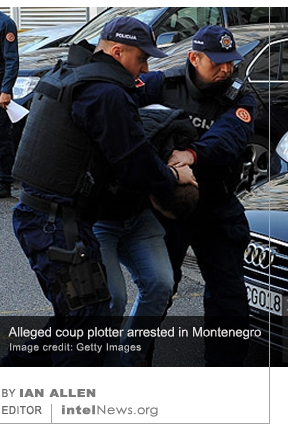 Authorities in the former Yugoslav Republic of Montenegro say that “nationalists from Russia” and Serbia were behind a failed plot to kill the country’s prime minister and spark a pro-Russian coup in the country. As intelNews reported last week, the coup allegations surfaced on October 16, after 20 Serbians and Montenegrins were arrested by authorities for allegedly planning a military coup against the government of Montenegro. The arrests took place on election day, as Montenegrins were voting across the Balkan country of 650,000 people.
On Sunday, at a press conference in Montenegro’s capital and largest city, Podgorica, the country’s Chief Special Prosecutor, Milivoje Katnić, reiterated claims that the failed coup aimed to prevent the reelection of Prime Minister Milo Đukanović, whose push for Montenegro to join the North Atlantic Treaty Organization has prompted strong objections from Moscow. Katnić told journalists that the plotters had hired a “long-distance sharpshooter” who was “a professional killer”, for the task of killing Đukanović. After killing the Prime Minister, the plotters had planned to storm the parliament and prompt a pro-Russian coup in the former Yugoslav Republic, said the special prosecutor. He added that authorities had confiscated weapons, military uniforms and nearly $140,000 in cash that were found in the possession of the alleged coup plotters.
Asked about the fate of the 20 alleged coup plotters, Katnić said that 14 of them remained in custody in Podgorica, while six others had been extradited to Serbia. The Serbian government of Prime Minister Vučić has accepted Montenegro’s allegations that the coup was hatched in Serbia and has offered to help investigate alleged links between the plotters and the Russian state. However, said Katnić, his team of investigators had no evidence of direct involvement by Russia in the alleged coup plot. But, he said, “two nationalists from Russia”, whom he did not name, were among the leaders of the plot. In a press statement, Katnić’s office said that other coup plotters in addition to the 20 men arrested, remained at large, having escaped from Serbia. They could now be in Russia, he said. Moscow has not responded to the claims by the Montenegrin authorities.
► Author: Ian Allen | Date: 07 November 2016 | Permalink
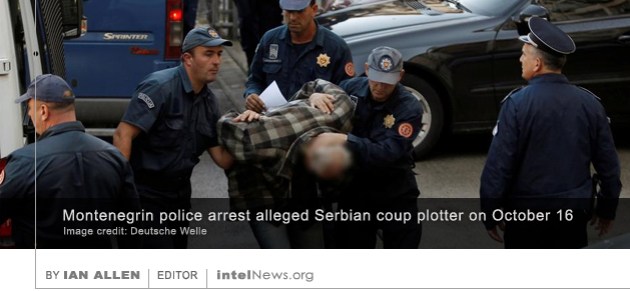 A weapons cache that was found buried last week near the apartment of Serbia’s prime minister has fuelled tensions in the Balkan country, amid rumors that a failed coup in neighboring Montenegro was planned in Serbia by Russian spies. Serbian authorities announced the discovery of the stockpile on October 29; it included ammunition, hand grenades and a portable missile launcher and was located near the residence of Prime Minister Aleksandar Vučić. The government later said that the weapons find dated back to the Balkan wars of the 1990s and was not connected with at Vučić’s administration. But politics in the country remain tense, following allegations made earlier in October that Russian intelligence agents used Serbia as a base to plan a military coup in Montenegro.
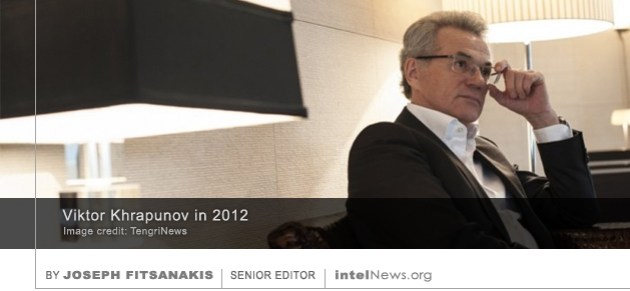 A Swiss court has reopened an investigation of alleged espionage activities by agents of the government of Kazakhstan against a high-profile political exile living in Switzerland. The case, which dates to 2014, centers on Viktor Khrapunov, a former senior Kazakh government official, who has been living in Geneva since 2008. In the years immediately following the dissolution of the Soviet Union, Khrapunov served as Kazakhstan’s Minister for Energy and Coal, a post that was later renamed to Minister of Energy and Natural Resources. After 1997, he was appointed mayor of Almaty, Kazakhstan’s largest city, which is inhabited by 10 percent of the country’s population. But by 2006, Khrapunov had fallen out with the government of Kazakhstan’s authoritarian President Nursultan Nazarbayev. The government claimed that Khrapunov was embroiled in a series of fraudulent real-estate schemes and that he laundered large sums of money for his own personal use.
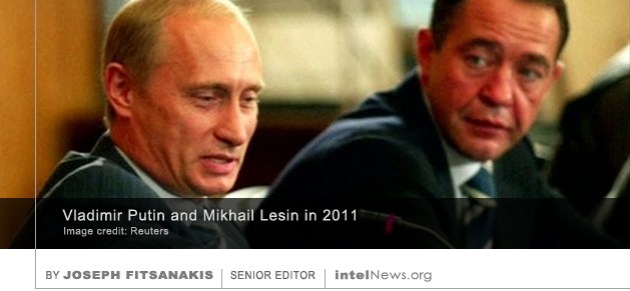 The mysterious death in Washington, DC, of a former senior adviser to Russian President Vladimir Putin, who had fallen out with the Russian president, was the result of an accident, US authorities have concluded after a year-long investigation. The body of Mikhail Yuriyevich Lesin, a well-known Russian media mogul, was
 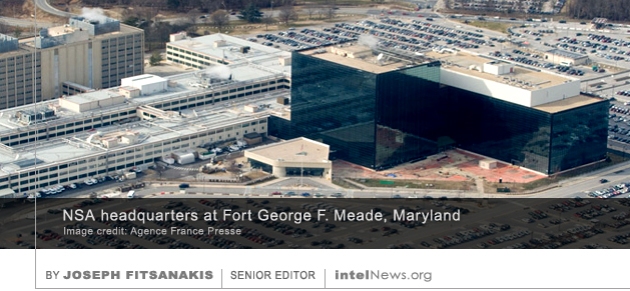 Classified information stolen by a United States federal contractor, who was charged with espionage last month, includes the true identities of American intelligence officers posted in undercover assignments abroad, according to court documents. In August of this year, Harold Thomas Martin III, was arrested by the Federal Bureau of Investigation on charges of stealing government property and illegally removing classified material. Martin, 51, served as a US Navy officer for over a decade, where he acquired a top secret clearance and specialized in cyber security. At the time of his arrest earlier this year, he was working for Booz Allen Hamilton, one of the largest federal contractors in the US. Some media
 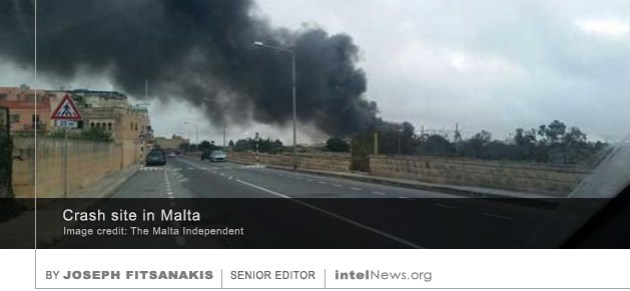 Despite initial denials, it appears that at least three of the five French citizens who were killed in an airplane crash in Malta earlier this week were employees of the country’s external intelligence agency. The crash happened in the early hours of Monday near the village of Luqa in southern Malta. Early reports identified that the plane as a light aircraft and was carrying five French citizens when it crashed, shortly after taking off from the nearby Malta International Airport. Initial statements from Maltese and French government officials said the plane was on a local flight route and had not been scheduled to land outside of the Mediterranean island. The five passengers were identified in press statements as “customs officers” who were conducting a joint project with their Maltese counterparts.
 At least 35 Turkish nationals with diplomatic passports have applied for political asylum in Germany following last July’s failed military coup in Turkey, according to German authorities. The administration of Turkish President Recep Tayyip Erdoğan accuses members of the so-called Gülen movement of orchestrating the coup, which included an armed attack on the country’s parliament and the murder of over 200 people across Turkey. The Gülen movement consists of supporters of Muslim cleric Fethullah Gülen, who runs a global network of schools, charities and businesses from his home in the United States. The government of Turkey has designated Gülen’s group a terrorist organization and claims its members have stealthily infiltrated state institutions since the 1980s.
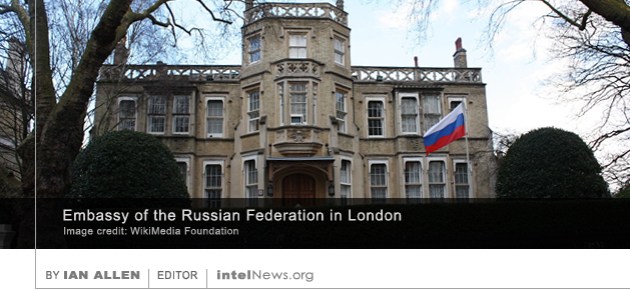 Russia’s ambassador to the United Kingdom has accused the British Foreign Office of deliberately delaying the issuance of visas for its diplomatic officials who have been assigned to join the Russian embassy in London. Alexander Yakovenko, Russia’s former Deputy Minister of Foreign Affairs, who has been heading the Russian embassy in London since 2011,
 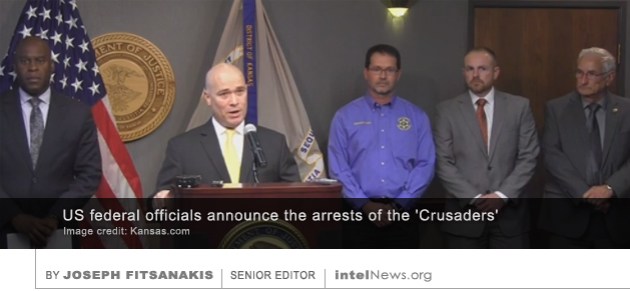 Federal authorities in the United States have charged three men with conspiring to use a weapon of mass destruction with the intention of blowing up an apartment complex in a predominantly Muslim neighborhood in Kansas. The men, Patrick Eugene Stein, Curtis Allen and Gavin Wright, who called themselves ‘the Crusaders’, allegedly wanted to spark a religious war between Christians and Muslims in the United States. They were arrested last week in simultaneous raids conducted by the Federal Bureau of Investigation, after they obtained guns and chemicals for making bombs.
 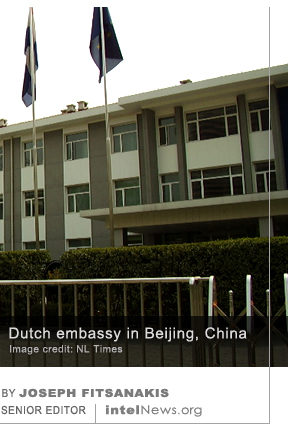 The Dutch government has suspended its ambassador to China and has launched an official investigation into an alleged secret relationship between the ambassador and a female Chinese employee at the Dutch embassy. The ambassador, Ron Keller, is a career diplomat and senior member of the Dutch foreign service corps, who has served in Russia and Turkey among other international posts. He assumed duties as Holland’s ambassador to China in late 2015. In December of that year, he arrived in Beijing and took command of one of the largest Dutch embassies in the world.
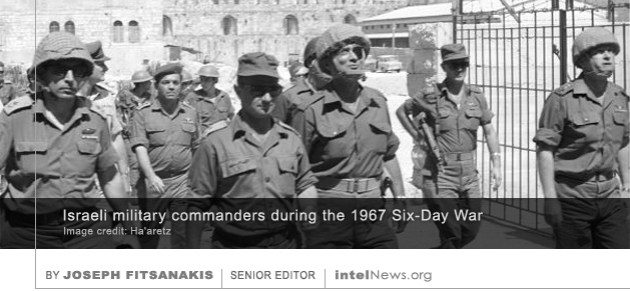 Israel’s intelligence services had access to recordings of secret talks between Arab heads of state in 1965, which helped the Jewish state win the Six-Day War, according to the former director of the country’s Military Intelligence Directorate. The brief but important conflict, which is also known as the Third Arab-Israeli War, broke out on June 5, 1967, when the Egyptian, Syrian and Jordanian armies attacked Israel. But within hours the Jewish state had managed to decimate the assailants’ air forces, and went on to deliver fatal blows to its adversaries. By the end of the war, Israel’s territory had increased threefold and Israeli troops were in control of the West Bank, the Gaza Strip and the Sinai Peninsula, among other areas.
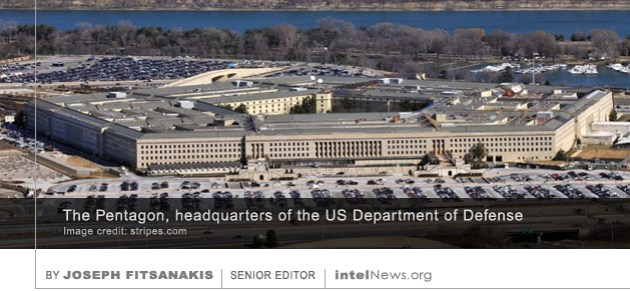 In a development that is expected to contribute to the downward spiral in Turkish-American relations, the United States government has reportedly filed espionage charges against three Department of Defense contractors with Turkish background. The three are believed to have been charged with transferring US military secrets abroad and are currently in prison.







 intelNews.org
Senior anti-corruption official to lead China’s main spy organization
November 8, 2016 by Joseph Fitsanakis 1 Comment
Chen, a native of China’s southwestern Sichuan province, joined the police force at a young age and rose through the ranks to become the local director of the Ministry of State Security’s local field office. After eight years in that post, he was appointed provincial director of the Central Commission for Discipline Inspection (CCDI), the Communist Party’s agency responsible for combating corruption among Party apparatchiks. In 2012, Chen became the youngest-ever deputy director of the CCDI, working under the commission’s chairman, Wang Qishan. From that post, Chen helped lead a massive anti-corruption campaign that resulted in the purging of over 100 senior Communist Party officials on charges of dishonesty and sleaze. Those purged included several senior officials at Ministry of State Security. Among them was Zhou Yongkang, Secretary of China’s Central Political and Legal Affairs Commission, which oversees the country’s security, intelligence and law enforcement institutions. The crackdown also targeted the deputy director of the Ministry of State Security, Ma Jian, and its once-powerful Beijing director, Liang Ke.
In recent years, several officials from the CCDI, who are seen by many as uncorrupted and incorruptible, have filled the positions of former Ministry of State Security bureaucrats who were fired during the government’s anti-corruption campaign. Chens’ appointment makes him the third senior CCDI official to be appointed to a senior post in the Ministry of State Security. Some experts believe that Chen’s move affirms the growing power of the CCDI, which has been the main implementation vehicle of President Xi Jinping’s ongoing anticorruption campaign that has gripped China since his rise to power in 2012.
► Author: Joseph Fitsanakis | Date: 08 November 2016 | Permalink
Filed under Expert news and commentary on intelligence, espionage, spies and spying Tagged with Chen Wenqing, China, Chinese Ministry of State Security, Communist Party of China Central Commission for Discipline Inspection, Geng Huichang, News, Wang Qishan