Ex-Mossad chief calls on Israel to speak with Hamas
June 1, 2016 Leave a comment
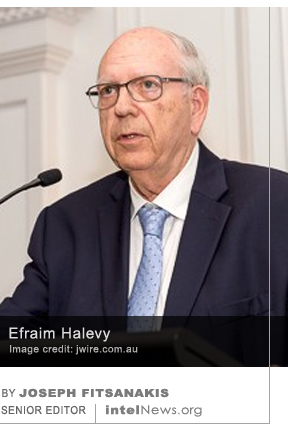 A former director of Israel’s Mossad intelligence agency has called on the Israeli government to reach out to Hamas, arguing that the Palestinian group is now ready to accept a peace settlement. Efraim Halevy directed the Mossad, Israel’s primary external intelligence agency, for five years before retiring in 2002. He is best known for helping forge a historic peace treaty between Israel and Jordan in 1994, which made the Hashemite Kingdom the second Arab country, after Egypt, to sing a peace accord with the Jewish state.
Halevy was speaking last week at an annual conference hosted in New York by the Israel-based newspaper The Jerusalem Post. During a panel entitled “Does the World Have an Answer to Islamic Terror?”, Halevy said it was time for Israel to speak to Hamas about the possibility of a peace treaty. The former Mossad director said he knew that “senior figures in the United States” had already established contacts with the Palestinian militant group, which controls the Gaza Strip. He also said that he knew “with certainty” that the leadership of Hamas was prepared to consider some kind of a “temporary settlement” based on the promise of the establishment of a Palestinian state along the pre-1967 Six-Day War borders. “The leadership of Hamas knows that they have no chance of destroying Israel”, said Halevy, adding that “now is the time to talk to Hamas”. According to the retired spy, a temporary settlement between Israel and Hamas that seeks to establish a Palestinian state would amount to a start in negotiations for a recognition of the state of Israel by Hamas. Halevy criticized Israel for refusing to speak with Hamas, saying that “as long as Israel refuses to talk with Hamas, and in the absence of any other alternative, [Hamas] has no option but to do what it does now”.
Last week was not the first time that Halevy has called for Israel to negotiate with Hamas. In July 2014, he told the American television network CNN that there were numerous radical groups in the Gaza Strip that were more threatening to Israel’s security than Hamas, not to mention Sunni Islamist groups like the Islamic State, which posed a much more pertinent challenge to regional stability. Two years earlier, n 2012, Halevy had issued a public call for dialogue between Israel and Iran, saying that “the Iranians, in their heart of hearts, would like to get out of their conundrum”, referring to Tehran’s nuclear program.
► Author: Joseph Fitsanakis | Date: 01 June 2016 | Permalink
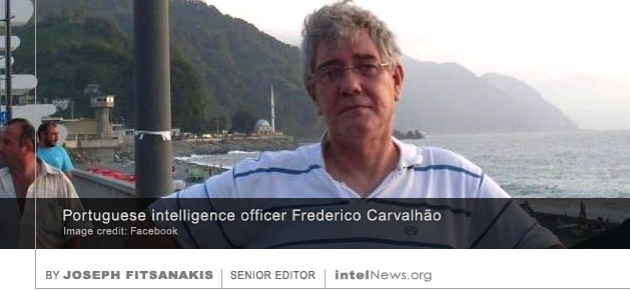 A Portuguese intelligence officer arrested a week ago in Rome, allegedly while passing classified documents to his Russian handler, may have accomplices with access to North Atlantic Treaty Organization (NATO) secrets. IntelNews
  A Russian intelligence officer, who posed as a banker in the United States, has been handed a prison sentence by a court in New York. Evgeny Buryakov, 41, posed as an employee of the New York branch of Vnesheconombank, a Russian state-owned bank headquartered in Moscow. However, in January 2015, the Federal Bureau of Investigation
 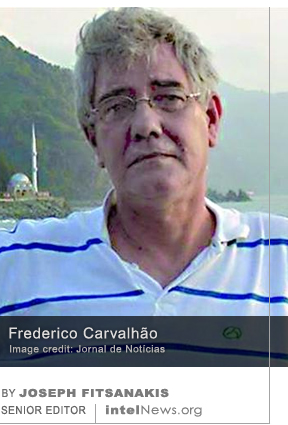 Two intelligence officers, one Russian and one Portuguese, have been arrested by Italian authorities on charges of espionage. The arrests took place in Rome on Monday by Italian police, who were reportedly accompanied by Portuguese counterintelligence officers. It is suggested in Portuguese media that the two men were arrested in the act of exchanging classified documents and money. The Portuguese intelligence officer has been identified in
 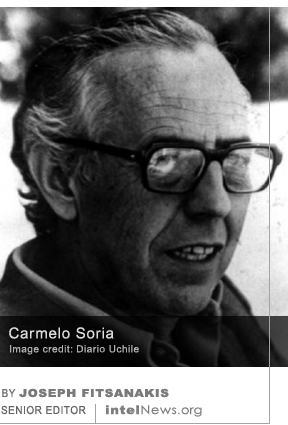 The Supreme Court of Chile will request that the United States extradites three individuals, including an American former professional assassin, who are implicated in the kidnapping, torture and murder of a United Nations diplomat. Carmelo Soria was a Spanish diplomat with dual Chilean nationality, who in the early 1970s was employed in the United Nations Economic Commission for Latin America and the Caribbean. In 1971, when the leftist Popular Unity party won Chile’s elections and became the nation’s governing coalition, Soria became an advisor to the country’s Marxist President, Salvador Allende. After the 1973 violent military coup, which killed Allende and overthrew his government, Soria used his diplomatic status to extend political asylum to a number of pro-Allende activists who were being hunted down by the new rightwing government of General August Pinochet.
 Egypt’s aviation minister has joined the head of Russia’s domestic security service, unnamed US intelligence sources, as well as a host of aviation security experts, in seeing terrorism as the most likely cause behind the EgyptAir MS804 air disaster. That is despite the absence of a clear ‘smoking gun’ and silence from the Islamic State, which leads many to still caution that the possibility of an accident should not be ruled out. The regularly scheduled flight departed Paris, France, late on Wednesday, heading for Cairo, Egypt. But it disappeared from radar screens just minutes after entering Egyptian airspace and is now believed to have crashed into the Mediterranean Sea.
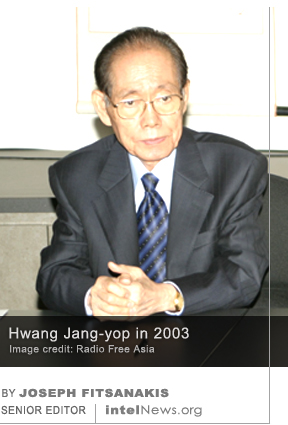 An appeals court in Seoul has upheld the conviction of a South Korean member of a spy cell that planned to assassinate the most senior North Korean defector to the South. The man, identified in media reports only by his last name, Park, is a South Korean citizen who allegedly helped a North Korean spy cell “based in China” plan the assassination of Hwang Jang-yop. In 1997, Hwang caused a sensation on both sides of the border when he defected to the South. A former secretary of the Korean Workers’ Party, Hwang was Pyongyang’s primary theorist and the ideological architect of juche, the philosophy of self-reliance, which is North Korea’s officially sanctioned state dogma. He was also believed to have ideologically mentored North Korean Supreme Leader Kim Jong-il, the father of the country’s current Supreme Leader, Kim Jong-un. Until his
 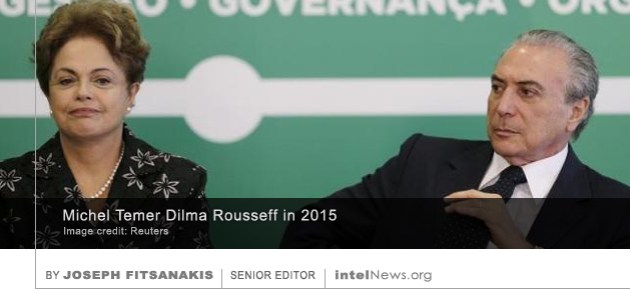 The new acting president of Brazil briefed American diplomats on sensitive political matters in 2006, according to cables published by the international whistleblower website WikiLeaks. Michel Temer is leader of the Brazilian Democratic Movement Party, known as PMDB. Although it is one of Brazil’s largest political parties, the PMDB has been unable to muster enough electoral support to govern the country on its own. As a result, under Temer’s leadership, the PMDB has been a partner of every governing coalition in Brazil since 1995. During the administration of leftwing President Dilma Rousseff, Temer held the post of Vice President.
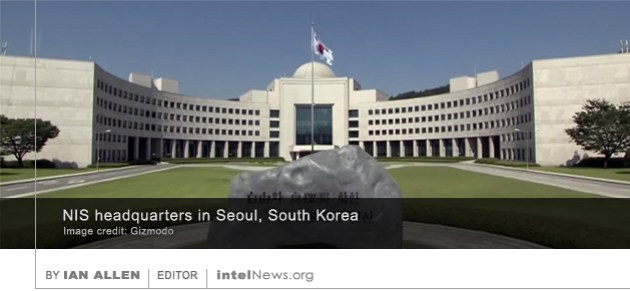 The intelligence agency of South Korea has admitted it made an error when it claimed earlier this year that North Korean authorities had executed one of the regime’s most prominent military figures. On February 10, South Korean newspapers printed a series of articles suggesting that Pyongyang had executed General Ri Yong-gil, who led the Korean People’s Army (KPA), holding post that was equivalent to the United States’ chairman of the Joint Chiefs of Staff. The articles said at the time that the information about General Ri’s execution came directly from the National Intelligence Service (NIS), South Korea’s primary external spy agency. The general had allegedly been executed after being found guilty of “factionalism, abuse of power and corruption”. The reports added that General Ri had turned into an alcoholic and was in poor health as a result. Speculation as to the reason for General Ri’s alleged execution brought up the possibility that he had led an opposition faction within the KPA. This, in turn, led some analysts to speculate that the administration of Kim Jong-un was close to collapse.
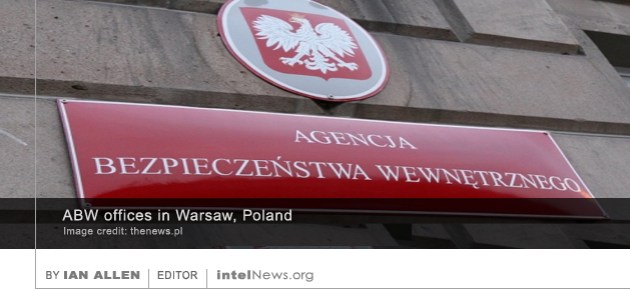 Over 50 journalists and their contacts were systematically spied on by the Polish intelligence services between 2007 and 2015, according to the former director of an anti-corruption watchdog. Until 2009, Mariusz Kamiński led the Central Anti-Corruption Bureau, which was set up by the office of the Polish Prime Minister in 2006 to address corruption in the country. The body is also responsible for monitoring the operations of Poland’s intelligence services, including the Internal Security Agency (ABW).
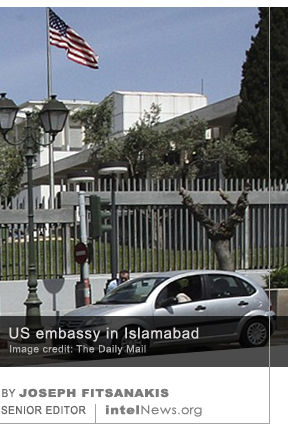 A leading article in The Washington Post suggests that the United States Central Intelligence Agency suspected that its most senior officer in Pakistan was poisoned by the host country’s intelligence services, in an attempt to kill him. The CIA pulled its station chief from Islamabad in the summer of 2011, two months after Operation NEPTUNE SPEAR, which saw the killing in Abbottabad of al-Qaeda founder Osama bin Laden. The CIA official, who has since been identified as Mark Kelton, acted as the senior US intelligence representative in the Asian country. He had assumed the post, which was supposed to last at least two years, only seven months earlier. His abrupt removal raised questions, which were informally answered by Langley. There were rumors that Kelton’s return to the US was health-related, but that the decision to replace him was also affected by his extremely poor relations with the Inter-Services Intelligence (ISI) directorate, Pakistan’s powerful spy service.
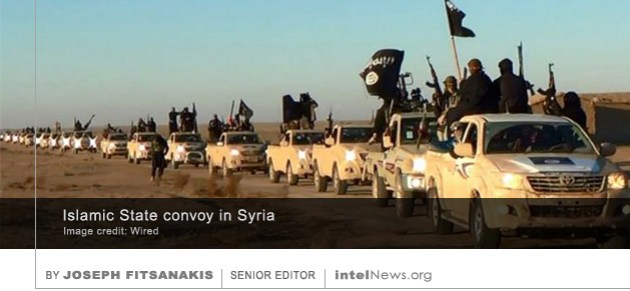 The two main warring parties in the Syrian Civil War, the government of Syria and the Islamic State, frequently contact one another in pursuit of commercial and military deals, according to internal Islamic State documents. British-based news agency Sky News said on Monday that it had acquired “secret Islamic State files”, which included handwritten orders to operatives sent directly from officials at the organization’s headquarters in Raqqa, Syria. The group said it received the documents from a regional branch of the Free Syrian Army (FSA), a largely secular armed opposition group that was formed in 2011 by defectors from the Syrian Armed Forces. The FSA unit in Raqqa left the Syrian city once it was occupied by the Islamic State, and is currently based in Turkey. One of the group’s core preoccupations is assisting Islamic State defectors in their efforts to escape from Raqqa and reach Turkey. It was through these defectors, according to Sky News, that the secret Islamic State documents were acquired.
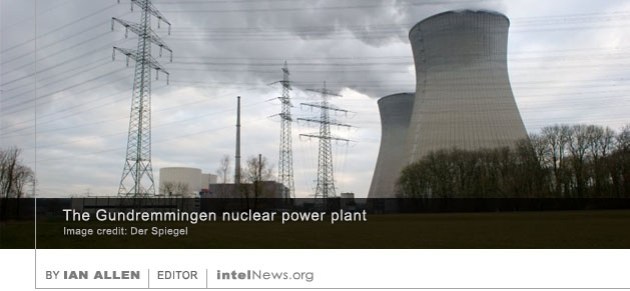 The computers of a nuclear power plant in southern Germany have been found to be infected with computer viruses that are designed to steal files and provide attackers with remote control of the system. The power plant, known as Gundremmingen, is located in Germany’s southern district of Günzburg, about 75 miles northwest of the city of Munich. The facility is owned and operated by RWE AG, Germany’s second-largest electricity producer, which is based in Essen, North Rhine-Westphalia. The company provides energy to over 30 million customers throughout Europe.
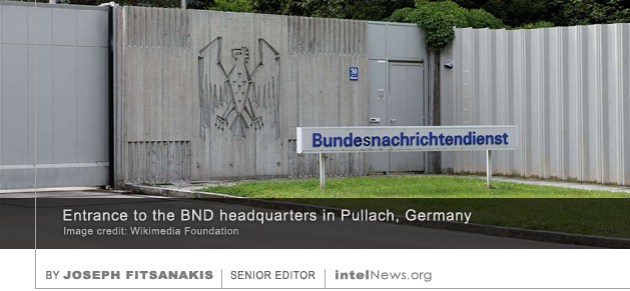 The head of Germany’s foreign intelligence agency has been removed from his post in a move described by observers as surprising. Gerhard Schindler, 63, had led Germany’s Federal Intelligence Service, known as Bundesnachrichtendienst, or BND, since 2012. Founded 60 years ago with direct input from the United States Central Intelligence Agency, the BND is today responsible for collecting intelligence abroad in the service of German national interests. Headquartered in the southern German city of Pullach, near Munich, the BND is directly subordinate to the office of German Chancellor Angela Merkel.








Relations between UK spy agencies “broke down” during war on terrorism
June 2, 2016 by Joseph Fitsanakis 1 Comment
In Britain, the administration of Prime Minister Tony Blair secretly supported Washington’s extraordinary rendition operations. It instructed the Secret Intelligence Service, known as MI6, to assist its American counterpart, the Central Intelligence Agency, in efforts to abduct and rendition terrorism suspects. However, not everyone in Britain’s intelligence establishment was in agreement with government policy. One strong critic was Eliza Manningham-Buller, the then-director of Britain’s Security Service, commonly known as MI5, which she led from 2002 to 2007. According to The Guardian’s sources, Manningham-Buller was “evidently furious” when she discovered that MI6 had secretly colluded with governments like those of Libya and Egypt to rendition terrorism detainees. Believing extraordinary rendition and torture to be “wrong and never justified”, the MI5 director effectively stopped her agency from cooperating with MI6. She even “threw out” of MI5’s Thames House headquarters several MI6 liaison staff who were working there at the time, said The Guardian.
Soon afterwards, Manningham-Buller complained in writing to Prime Minister Blair about the conduct of some MI6 officers, whose actions allegedly “threatened Britain’s intelligence gathering” and “compromised the security and safety of MI5 officers and their informants”. The Guardian does not provide further elaboration of the contents of Manningham-Buller’s letter to the prime minister, but alleges that it contributed to a “serious and prolonged breakdown” in relations between MI5 and MI6. The paper says it contacted the two intelligence agencies, as well as Manningham-Buller, who has since retired, but no one wished to comment on the story. Sources did tell the paper, however, that the relationship between the two agencies “has now been repaired after a difficult period”.
► Author: Joseph Fitsanakis | Date: 02 Jun 2016 | Permalink
Filed under Expert news and commentary on intelligence, espionage, spies and spying Tagged with Eliza Manningham-Buller, extraordinary rendition, intelligence cooperation, MI5, MI6, News, torture, UK