IRA source in high-profile counterfeit money case claims his life is in danger
July 4, 2016 Leave a comment
 A former senior member of the Official Irish Republican Army in the United Kingdom claims that he was abandoned by British and American spy agencies after he testified in a high-profile counterfeiting case. The case involves members of the Official IRA, including its alleged former chief of staff, who is wanted in the United States in connection with the so-called supernote counterfeit money investigation. The supernote, also known as superdollar or superbill, is a fake 100-dollar bill believed to be one of the highest-quality counterfeit banknotes ever detected. The US government believes that a nation-state is behind the production of the supernote, with North Korea being the primary suspect.
In 2000, in cooperation with the US Secret Service, British intelligence conducted a large-scale undercover operation codenamed MALI. According to the BBC’s investigative news program Panorama, the operation focused on Seán Garland, the former chief of staff of the Official IRA and former president of its political wing, the Workers’ Party of Ireland. The Official IRA and the Provisional IRA were the two main splinter groups of the “old” IRA, which parted ways in 1969 due to ideological and tactical differences. In 1972, the Official IRA declared a unilateral ceasefire and eventually morphed in to a leftwing political party calling itself the Workers’ Party of Ireland. Operation MALI allegedly found that the Workers’ Party former president, Seán Garland, traveled to Russia and visited the embassy of North Korea in Moscow. He is said to have picked up a package containing supernotes, which he then secretly smuggled into Ireland and from there to England, in exchange for money. Garland was arrested in 2005 in Belfast, UK, but managed to flee to Ireland when he was released on medical leave. He was arrested again in 2009 and released on bail. In 2011, his extradition request to the US was rejected by an Irish court on a technicality, but he remains wanted by Washington. Ireland is also considering whether there are legal grounds to prosecute Garland in Dublin. He and his supporters deny the charges against him and claim that they are politically motivated.
Last week, however, the man believed to be behind the tip-off that led to Garland’s arrest, said his life was in danger. The man, who uses the pseudonym “Michael O’Brien”, was a member of the Official IRA in the 1970s. But he says that after 1996 he worked as an undercover informant for Britain’s Security Service (MI5) and the Anti-Terrorist Branch of the British Police. He claims that it was he who first alerted British authorities about the involvement of members of the Workers’ Party of Ireland in the distribution of supernotes from Russia to Europe. He is also believed to have testified behind closed doors at a US court hearing involving Garland and other alleged conspirators in the counterfeit money case. However, O’Brien told The Sunday Times last week that his cover was blown in January of this year. Since then, he has allegedly been the subject of death threats and had to abandon his home in Belfast as a result. He also claims that the US Secret Service and British police have failed to provide him with protection. O’Brien told The Times that he chose to speak to the media in order to protect himself from possible assassination by Irish republicans.
► Author: Joseph Fitsanakis | Date: 04 July 2016 | Permalink
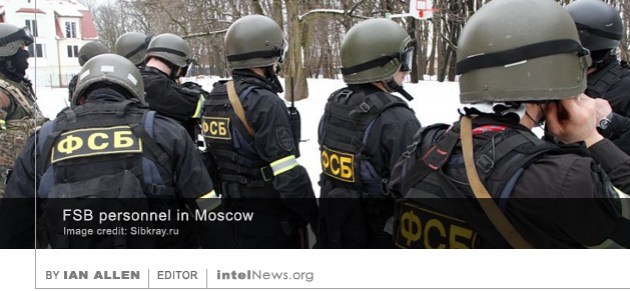 The Russian government says that an American diplomat, who was allegedly beaten up by a Russian security guard outside the United States embassy compound in Moscow, is an undercover spy. The man, who has not been named, was stationed in the Russian capital by the State Department as an accredited diplomat with immunity from prosecution in Russia. However, The Washington Post
  The senior executive body of the German government has approved draft legislation that reforms the country’s intelligence services, following revelations that Germany helped the United States spy on European states. The legislation is seen as a response by the German government to a number of recent public controversies involving the Bundesnachrichtendienst, Germany’s Federal Intelligence Service, known as BND.
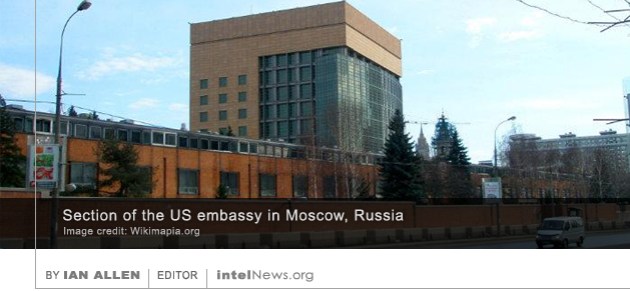 A notable increase in incidents of harassment of American diplomats stationed in Europe by Russian intelligence personnel appears to be part of what some officials describe as an escalating “gray war” between the US and Russia. For over a year now, American State Department personnel stationed in Europe have been complaining of a systematic campaign of “harassment and intimidation” against them and their families by Russian intelligence operatives. The campaign is allegedly being waged in Moscow and other European capitals, and has prompted one US diplomat to say that he and his colleagues were “feeling embattled out there in the embassy”. The Washington Post, which published the
 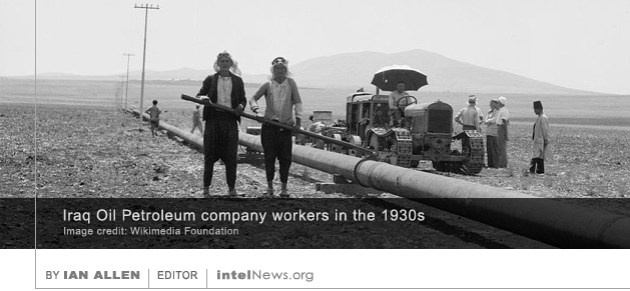 Recently uncovered documents shed further light on an ultra-secret plan, devised by the British and American governments, to destroy oil facilities in the Middle East in the event the region was invaded by Soviet troops. The
  Senior United States intelligence officials have filed parole documents arguing that an American Navy analyst, who was recently released from prison after serving a 30-year sentence for spying for Israel, continues to pose a threat to national security. Jonathan Jay Pollard is a former intelligence analyst for the United States Navy, who has was jailed in 1985 for selling American government secrets to Israel. During his trial, the US government successfully argued that Pollard was one of the most damaging spies in American history, having stolen a high volume of classified documents in a relatively short period of time.
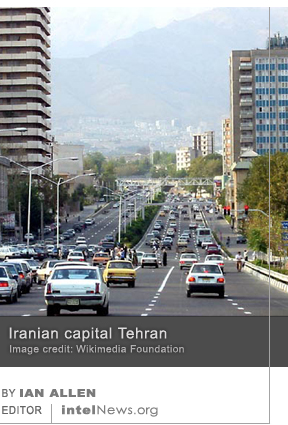 Iranian intelligence officials said on Monday that they foiled “one of the largest terrorist attacks ever planned” against the country, allegedly plotted by Sunni militants aiming to inflict mass casualties during the month of Ramadan. A statement by the Islamic Republic’s Ministry of Intelligence said that the attacks had been planned to take place simultaneously in the capital Tehran and several other Iranian cities. Iranian state-owned news agencies reported that an unspecified number of suspects had been arrested and were under interrogation by the authorities.
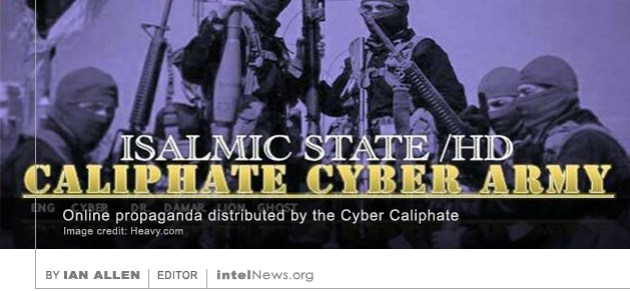 A German intelligence report alleges that the so-called ‘Cyber Caliphate’, the online hacker wing of the Islamic State, is in fact a Russian front, ingeniously conceived to permit Moscow to hack Western targets without retaliation. The group calling itself Cyber Caliphate first appeared in early 2014, purporting to operate as the online wing of the Islamic State of Iraq and Syria (ISIS), later renamed Islamic State. Today the Cyber Caliphate boasts a virtual army of hackers from dozens of countries, who are ostensibly operating as the online arm of the Islamic State. Their known activities include a strong and often concentrated social media presence, and computer hacking, primarily in the form of cyber espionage and cyber sabotage.
 A report by Canada’s primary intelligence agency warns in stark language that Russia is “retooling its military for a fight” and appears to be “mobilizing for war”. The classified report was
 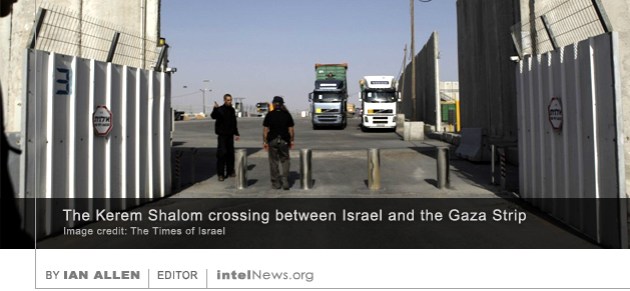 A senior member of the military wing of Hamas, the Palestinian militant group that governs the Gaza Strip, is believed to have defected to Israel. News of the rumored defection first appeared on the website of Al-Hayat al-Jadida, the official newspaper of the Palestinian Authority, which is based in the West Bank. On Tuesday, Al-Hayat said that the man, a member of the Izz ad-Din al-Qassam Brigades, Hamas’ military wing, had not been seen for several days.
 Former directors of the Central Intelligence Agency, the National Security Agency, as well as several 3- and 4-star generals and admirals have launched a new effort to control the sales of guns in the United States. The effort is certain to attract attention after last weekend’s deadly mass shooting in Orlando, Florida. The group, which calls itself Veterans Coalition for Common Sense, is led by former CIA Director David Petraeus, former CIA and NSA Director Michael Hayden, and US Army General (ret.) Stanely McChrystal. The group’s advisory committee includes recognizable figures such as that of Admiral Eric Olson, who led US Special Operations Command from 2007 to 2011 and was the first US Navy SEAL to be appointed to four-star rank. Other advisory committee members include high-ranking veterans from every branch of the US Armed Forces, such as R. Adm. Jamie Barnett, Brig. Gen. Stephen Cheney and Air Force commander Lt. Gen. Norman Seip.
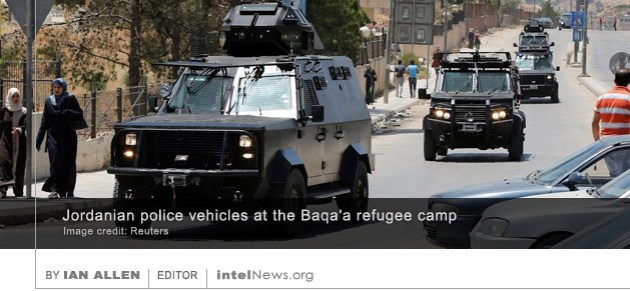 A rare armed attack on a Jordanian intelligence agency facility has left five people dead, including three intelligence officers. The attack took place on Monday at the General Intelligence Department (GID) building in the Baqa’a refugee camp, located just north of the capital Amman. Built in 1968, Baqa’a is the largest of Jordan’s 10 government-sanctioned refugee camps, and houses 100,000 Palestinians —approximately 10 percent of the country’s 1 million-strong Palestinian population.
 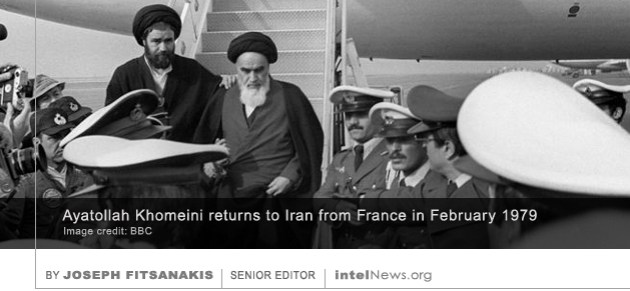 Newly declassified files show that Ayatollah Khomeini, who led Iran after the 1979 Islamic Revolution, had a secret channel of communication with the United States, and even sent a personal letter to US President Jimmy Carter. On January 16, 1979, after nearly a year of street clashes and protests against his leadership, the king of Iran, Mohammad Reza Shah Pahlavi, fled the country for the US. His decision to leave was strongly influenced by his American advisors, who feared that Iran was heading toward a catastrophic civil war. The Shah’s departure did little to calm tensions in the country. Protesters —many of them armed— engaged in daily street battles with members of the police and the military, who remained loyal to Pahlavi. Meanwhile, a national strike had brought the Iranian oil sector to a standstill, thereby threatening to bring about a global energy crisis. Moreover, the country was home to thousands of American military advisors and the Iranian military was almost exclusively funded and supplied by Washington. The Carter administration worried that the weaponry and technical knowledge might fall into the hands of a new, pro-Soviet government in Tehran.
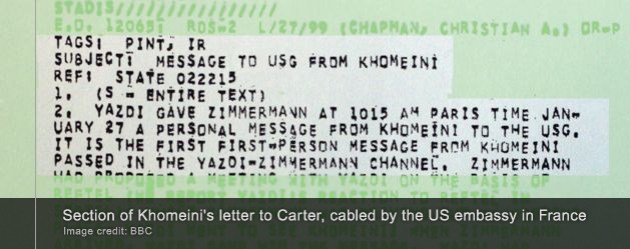 Nine days later, on January 27, Dr. Yazdi gave Zimmerman a letter written by Khomeini and addressed to President Carter. The letter, which addressed Carter in the first person, was cabled to the Department of State from the US embassy in Paris and, according to the BBC, reached the US president. In the letter, Khomeini promises to protect “America’s interests and citizens in Iran” if Washington pressured the Iranian military to stand aside and allow him and his advisers to return to Iran. Khomeini’s fear was that the royalist Iranian military would not allow a new government to take hold in Tehran. But the exiled cleric was aware of America’s influence in Iranian military circles, which at the time were effectively under the command of General Robert Huyser, Deputy Commander of US Forces in Europe, who had been dispatched to Tehran by President Carter. Before answering Khomeini’s letter, the White House sent a draft response to the embassy in Tehran for input and advice. But Khomeini did not wait for Washington’s response. On February 1, he returned to Iran, where he was greeted by millions of people in the streets and welcomed as the next leader of the country. Meanwhile, Washington had already instructed General Huyser to rule out the so-called “option C”, namely a military coup carried out by the Iranian armed forces.
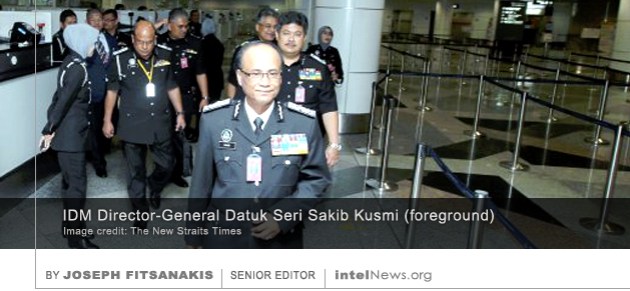 As many as 100 Malaysian immigration officers are implicated in a widening investigation involving the deliberate sabotage of the country’s electronic passport control system. The investigation, which began over three months ago, focuses on a criminal ring of immigration personnel at the Kuala Lumpur International Airport (KLIA), one of Southeast Asia’s major travel hubs.







Egypt president removes spy officials following damning human-rights report
July 5, 2016 by Joseph Fitsanakis 1 Comment
The announcement of the intelligence officers’ removal came shortly after the publication of the annual report on the state of human rights in Egypt by the country’s official government monitoring organization. Egypt’s National Council for Human Rights said in its 2016 report, published over the weekend, that the rights of citizens have “not yet become a priority for the state”. It added that the state of human rights in Egypt remains alarmingly poor despite the adoption of the country’s new constitution in 2014. Egyptian and international rights monitoring organizations claim that as many as 60,000 people have been arrested for political reasons since 2013, when the military overthrew the government of Muslim Brotherhood leader Mohamed Morsi, following months of protests against his administration.
Focusing on the period between April 2015 and March of this year, the report lists over 260 cases of enforced disappearances of individuals, of which 143 remain under what is termed by the authorities “pretrial detention”. The report further notes that “pretrial detention”, which is often indefinite, has become “a punishment in itself”, and points out that the numbers of prisoners currently held pretrial detention centers exceed their capacity three times over. Consequently, pretrial detainees are forced to “take turns sleeping due to lack of space”, says the report. It also criticizes Egypt’s security and intelligence services for failing to curb the use of torture, which remains widespread despite its condemnation by the government and the conviction of several police and security officers who were found to have tortured detainees to death.
The removal of the 17 senior GID officers highlights the embattled state and internal divisions that continue to plague the Sisi administration, two years after the military strongman assumed power in the country, following a military coup. His administration has focused largely on a violent crackdown against the Egyptian Muslim Brotherhood, which includes the imposition of death sentences on hundreds of thousands of people who were convicted in mass trials. Sisi’s legitimacy is disputed by the Muslim Brotherhood —arguably Egypt’s most popular social movement— and secularist reformers, who boycotted en masse the election that propelled him to the presidency. Sisi won with 97 percent of the vote in a heavily boycotted ballot that was reminiscent of the staged elections held by longtime Egyptian dictator Hosni Mubarak. At the same time, however, Sisi is facing challenges from within the military and intelligence services, which some believe may be planning another coup. In June 2014, a less than a month after taking office, SIS replaced 14 senior GID officials. He fired another 11 a year later, while 13 more were forced to retire last December.
► Author: Joseph Fitsanakis | Date: 05 July 2016 | Permalink
Filed under Expert news and commentary on intelligence, espionage, spies and spying Tagged with Abdel Fatah al-Sisi, Egypt, Egyptian National Council for Human Rights, General Intelligence Directorate (Egypt), human rights, intelligence oversight, News