Countries using Eastern Europe to flood Syria with weapons, study finds
July 29, 2016 3 Comments
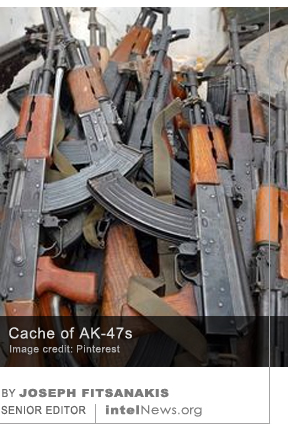 Unprecedented quantities of weapons and ammunition worth in nearly $1.5 billion have been procured from Eastern Europe and sent to Syria to arm nearly every side in the ongoing civil war, a study has found. The weapons are transported through the Balkans and sold legally to countries bordering Syria, including Jordan, Saudi Arabia and Turkey. Once there, they are secretly transported to Syria for use in the bloody five-year civil war, which has so far killed or displaced millions. The revelation resulted from a year-long investigative project by the Serbia-based Balkan Investigative Reporting Network (BIRN) in the Organised Crime and Corruption Reporting Project (OCCRP) in Bosnia.
The probe found that the weapons transferred to the Middle East include heavy machine guns, rocket and mortar launchers and shells, anti-tank weapons, as well as thousands of assault rifles and rounds of ammunition. Many originate from Ukraine, Belarus and the former Yugoslavia and are procured by companies in eight Eastern European countries including Bulgaria, Slovakia, Romania, the Czech Republic, Montenegro, and Bosnia. The governments of these countries give the companies permission to sell weapons to Middle Eastern countries, even though it is informally understood that they will eventually end up in Syria, in contravention of international agreements.
Investigators say the smuggled weapons have been traced to various factions fighting in Syria, primarily the Free Syrian Army, which is fighting against the government of Syrian President Bashar al-Assad. But many have ended up in the hands of Islamist militias, including the Islamic State, Ansar al-Islam, and the group formerly known as Jabhat al-Nusra. Some of the weapons have also surfaced in Yemen, in the hands of Sunni fighters there. According to the probe’s findings, Middle Eastern countries like Turkey, Jordan or Saudi Arabia, whose militaries use Western-made weaponry, were never large purchasers of Eastern European weapons. But that quickly changed in 2012, as the Syrian Civil War picked up pace.
According to British newspaper The Guardian, which published some of the findings of the BIRN-OCCRP report, the United States has used this weapons-smuggling channel as a way to arm Syrian opposition forces. The study found that, since December of last year, the US military’s Joint Special Operations Command has commissioned at least three cargo ships that left ports in the Black Sea for the Middle East carrying weapons for Syria. Regular intelNews readers will remember a report from November 2013, according to which the Greek authorities seized a ship that had left Ukraine heading for Syria or Libya, carrying 20,000 AK-47s, as well as explosives and ammunition. Two years later, in November 2015, we reported on allegations that Ukraine may be secretly arming the Islamic State in an effort to impair its regional foe, Russia.
► Author: Joseph Fitsanakis | Date: 29 July 2016 | Permalink
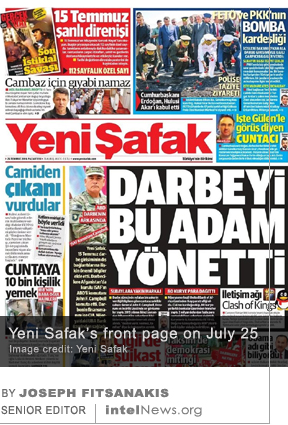 American officials have strongly denied accusations in the Turkish press that Washington was behind the failed July 15 coup in Turkey. On July 25, Yeni Şafak, a popular Turkish daily, alleged that the failed coup had been funded and organized by the United States government. The newspaper, which is headquartered in Istanbul, is known for its conservative political stance and close links to the AKP, the party of Turkish President Recep Tayyip Erdoğan. Its editorials typically reflect the AKP’s position on the political affairs of the day.
 Police in Ireland say they have arrested two individuals in connection with the 2006 killing of a senior member of the Irish Republican Army, who had previously been outed as a spy for the British state. Denis Donaldson joined the Provisional IRA as a volunteer in mid-1960s, before the outbreak of the Troubles, which rocked Northern Ireland from the late 1960s until 1998. He was trained in paramilitary operations in Lebanon and participated in many IRA actions. He served time at the Long Kesh Detention Centre along with IRA volunteer and Member of Parliament Bobby Sands, who died in the famed 1981 Irish hunger strike. After Sands’ death, Donaldson stood as a general election candidate in Belfast East for Sinn Féin, the IRA’s political wing. In the process, he became a close associate of Sinn Féin President Gerry Adams. In 2000, shortly after the end of the IRA’s 30-year military campaign, Sinn Féin appointed Donaldson as the administrator of its parliamentary group in Stormont, the devolved Northern Irish parliament.
 For the first time in history, India has refused to extend temporary residency visas for three senior Chinese media correspondents, effectively expelling them from the country, allegedly for espionage activities. All three reporters are employees of China’s state-run Xinhua news agency. They include Xinhua’s bureau chief in the Indian capital, New Delhi, Wu Xiang, and the agency’s Mumbai bureau chief, Lu Tang. A third journalist, She Yonggang, also based in Mumbai, has been asked to leave India by no later than July 31.
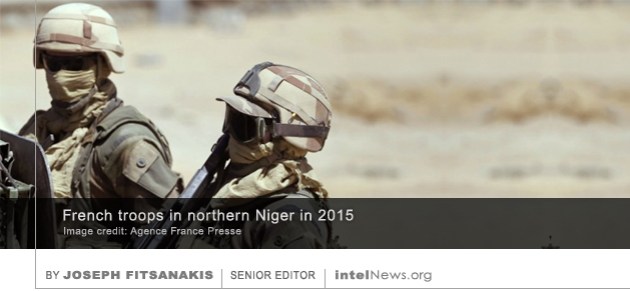 The death of three French Special Forces soldiers in Libya has prompted the first public acknowledgement by France that its troops are involved in “dangerous intelligence operations” in the North African country. The acknowledgement was made on Wednesday in an official statement issued by Jean-Yves Le Drian, France’s Minister of Defense. In the statement, Le Drian said he “regretted the loss of three French officers who expired while on mission in Libya”. The
 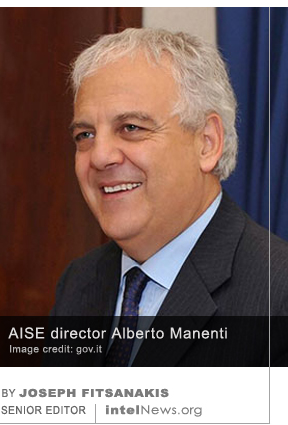 The head of Italian intelligence paid a secret visit to Syria earlier this month, a week after his Syrian counterpart visited Rome, according to reports from the Middle East. The Dubai-based newspaper Gulf News, which first reported the alleged behind-the-scenes exchange, said the visits focused on counter-terrorism cooperation between Syria and the European Union. The paper said that the initial contact was made in late June by Major General Deeb Zeitoun, head of Syria’s General Intelligence Directorate, who paid a secret visit to Rome. General Zeitoun’s visit was allegedly in response to an official invitation issued by the Italian government. The general is believed to have stayed in a secluded private villa, which was provided by the Italian External Intelligence and Security Agency, known as AISE. He subsequently met with several Italian intelligence officials, including AISE Director, General Alberto Manenti.
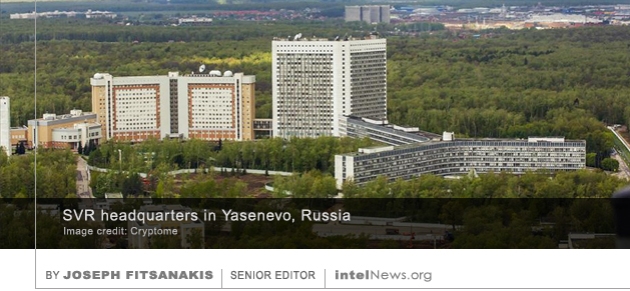 Recent satellite images reveal that the headquarters of the Russian Federation’s external intelligence agency has doubled, and possibly tripled, in size in the past nine years. The Russian Foreign Intelligence Service, known as SVR, is one of the successor agencies of the Soviet-era KGB. During the Soviet times, the present-day SVR was known as the First Chief Directorate or First Main Directorate of the KGB. Despite its name change, however, its mission remains the same, namely to collect secrets from targets outside the Russian Federation —often through the use of espionage— and to disseminate intelligence to the president. In the Soviet days, along with most of the KGB, the First Chief Directorate was headquartered in the imposing Lubyanka building, which is located in Moscow’s Meshchansky District. But in the early 1970s, the entire First Chief Directorate began a decade-long process of moving to a new, state-of-the-art complex in the southern suburbs of the Russian capital. The complex, which is located in Yasenevo, today houses the entire apparatus of the SVR, including its espionage wing, and is informally known as les (the forest) or kontora (the office).
 American Scientists’ Secrecy News blog, has
 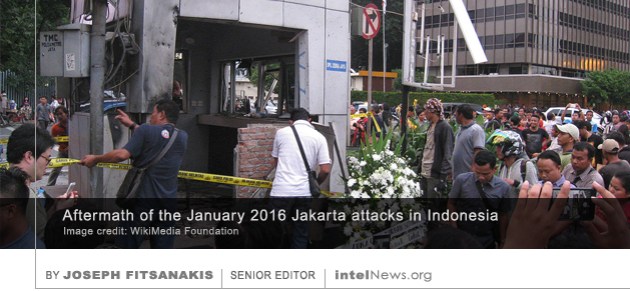 An ambitious new personnel exchange program between intelligence agencies in Australia and Indonesia aims to combat the unprecedented rise of militant Islamism in Southeast Asia, which is fueled by the Islamic State. The program, which is already underway, aims to strengthen intelligence cooperation between two traditionally adversarial regional powers.
 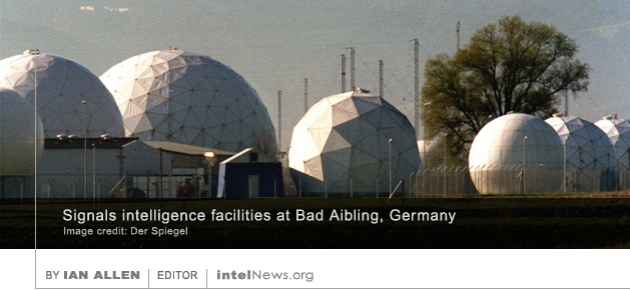 A major parliamentary inquiry into the operations of Germany’s main intelligence agency has concluded that it spied on nearly 3,500 foreign targets in recent years, most of which belonged to allied countries. The inquiry was initiated by the German government in response to a number of recent public controversies involving the Bundesnachrichtendienst, Germany’s Federal Intelligence Service, known as BND.
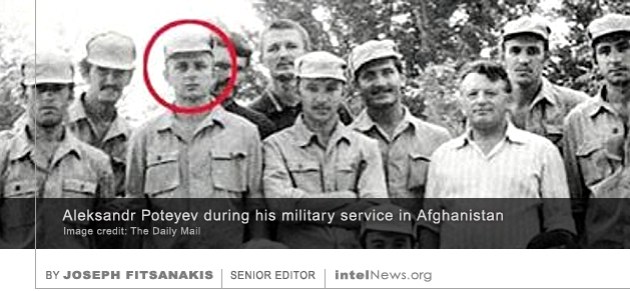 A Russian former senior intelligence officer, who reportedly defected to the United States after helping the Federal Bureau of Investigation arrest 10 Russian spies in 2010, is believed to have died. The arrests, which revealed the so-called “Russian illegals program” in the US, were part of a counterintelligence operation codenamed GHOST STORIES by the FBI. The operation culminated in June 2010 with the
 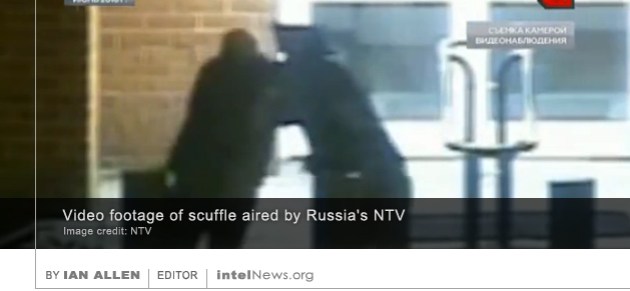 A Russian television station has aired footage allegedly showing a Russian guard stationed outside the United States embassy in Moscow trying to stop an American diplomat from entering the embassy. The Kremlin claims that the alleged US diplomat was in fact a Central Intelligence Agency officer who was returning to the embassy in disguise following a spy operation. As intelNews
 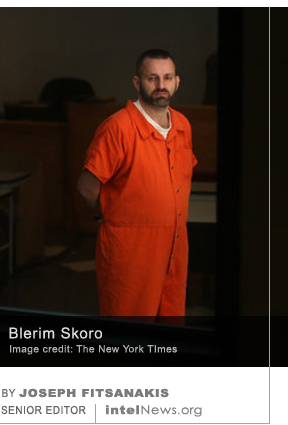 An ethnic Albanian man facing deportation from the United States says he was trained by the Central Intelligence Agency to spy on “the most ruthless, dangerous terrorists in the Balkans and the Middle East”. Blerim Skoro, 45, from the former Yugoslav Republic of Kosovo, was arrested last February in Brooklyn, New York, for illegally using a discounted student MetroCard. He was then found to have entered the US illegally and is currently in prison in New Jersey, facing possible deportation back to Kosovo. But Skoro told The New York Times in an
 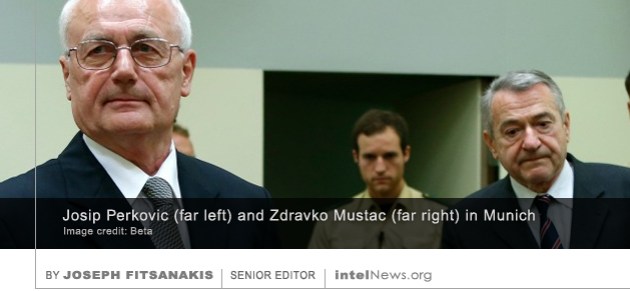 A former officer in the Cold-War-era Yugoslav intelligence service has begun testifying at a trial concerning the 1983 murder in Germany of a Yugoslav dissident by assassins sent by authorities in Belgrade. Stjepan Đureković, who was of Croatian nationality, defected from Yugoslavia to Germany in 1982, while he was director of Yugoslavia’s state-owned INA oil company. Upon his arrival in Germany, he was granted political asylum and began associating with Croatian nationalist émigré groups that were active in the country. He was killed on July 28, 1983, in Wolfratshausen, Bavaria. His killing was part of an operation codenamed DUNAV, which was conducted by the Yugoslav State Security Service, known by its Serbo-Croatian acronym, UDBA.








Sophisticated spy malware found on Russian government computers
August 1, 2016 by Ian Allen 1 Comment
The FSB said that once installed, the virus gave its handler control of the infected computer system. It permitted an outside hacker to turn on a computer’s microphone or camera, and capture screenshots. It also stealthily installed keylogging software, thus allowing an outside party to monitor keyboard strokes on an infected system. Based on its functions, the malicious software seems to be designed to conduct deep surveillance on infected computers and their physical surroundings. The FSB would not attribute the malware to a specific hacking group or nation. But it said it believed that the malware attack was “coordinated”, “planned and planned professionally”. It also said that the coding of the virus “required considerable expertise”. In a brief statement released Saturday, the FSB said that aspects of the coding of the virus, as well as other identifying information, resembled those detected in preceding hacking attacks on computer servers in Russia and other countries. The statement did not elaborate, however.
The news about hacked Russian computers comes less than two weeks after it was claimed that Russian government-backed hackers stole electronic data belonging to the Democratic National Convention (DNC) in the United States. The Democratic Party’s presidential candidate, Hillary Clinton, publicly accused the Russian government of orchestrating the hacking of the DNC computer systems in an attempt to damage her campaign.
► Author: Ian Allen | Date: 01 August 2016 | Permalink
Filed under Expert news and commentary on intelligence, espionage, spies and spying Tagged with computer hacking, cybersecurity, FSB, News, Russia