Britain to ‘modernize’ counterespionage laws following criticism from parliament
July 23, 2020 Leave a comment
 Senior United Kingdom officials have said the country will seek to “modernize” its laws on counterespionage, after a long-awaited parliamentary report criticized the government for failing to stop Russian spy operations. Earlier this week saw the release of the report by the British Parliament’s Intelligence and Security Committee. The report [.pdf] focuses on Russia. It concludes that British intelligence agencies remain incapable of combating espionage and psychological operations by Russian spy agencies, of which many aim to influence British politics on a mass scale.
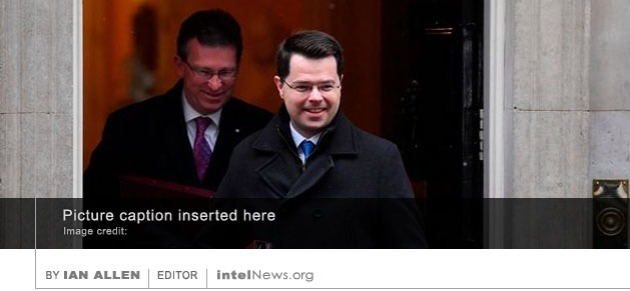
On Wednesday Britain’s Minister of State for Security, James Brokenshire, pushed back against the report’s findings that the government had failed to manage the thread posed by Russian intelligence activities on British soil. Speaking during an extraordinary meeting of parliament to discuss the report, Brokenshire rejected claims that a succession of British conservative administrations went out of their way to avoid investigating Russian spy activities. He claimed that the activities of the Kremlin remained one of Britain’s “top national security priorities”. During the same meeting, British Prime Minister Boris Johnson told members of parliament that “no country in the Western world is more vigilant in countering Russia” than the United Kingdom.
Some government officials said the government now plans to implement a new Espionage Bill, which is currently in the drafting stage, and is expected to provide the authorities with more powers to combat foreign espionage. Additionally, Whitehall is considering initiating a large-scale review of the Official Secrets Act and redrafting it so as to include a foreign agent registration clause. The proposed clause would resemble the Foreign Agent Registration Act in the United States, which requires those working or lobbying on behalf of a foreign government —except accredited diplomats— to register with the authorities.
This would allow British authorities to arrest, deport or imprison those found working on behalf of foreign powers, even if they are never caught committing espionage or transmitting classified information to a foreign entity.
► Author: Ian Allen | Date: 23 July 2020 | Permalink








 intelNews.org
British soldier who spied for Iran found guilty of espionage and terrorism
December 2, 2024 by intelNews 4 Comments
Prior to his arrest, Khalife was reportedly seen by his fellow soldiers and superiors as a promising soldier. Having joined the British Army at 16, he was quickly promoted to lance corporal (the lowest ranking of a non-commissioned officer) and cleared to work in the area of signals intelligence. He had also expressed a strong interest in joining the Special Air Service (SAS), which are the British Army’s special forces.
However, on November 9, 2021, Khalife voluntarily called the national security concerns hotline of the British Security Service (MI5). He told the operator on the other end of the line that he was a British soldier who had been spying for Iran for “more than two years”, but had now decided to become a double agent by cooperating with the British government. Khalife called again, and although he did not identify himself during the telephone conversations, MI5 was able to track him.
It has since become known that Khalife began spying for Iran when he was just 17 years old, shortly after joining the British Army. Over the next two years, Khalife provided his Iranian handlers with information about the identities of SAS personnel, military computer systems, as well as government surveillance programs and hardware, including unmanned aerial vehicles. Throughout that time, he communicated with his Iranian handlers via the Telegram instant messaging service, or via dead drops in Britain, as well as during trips abroad.
Shockingly, Khalife was temporarily able to escape justice twice following his arrest. In January 2023, he disappeared while on bail. He was found after nearly a month, living in a stolen van, which he had converted into a rudimentary camper. In September of that year, Khalife escaped from Wandsworth prison (pictured) in southwest London, by hiding beneath a delivery vehicle. He was captured three days later and eventually taken to court, where he was convicted and is now awaiting sentencing.
According to reports, British authorities are still unable to piece together the entirety of the information that Khalife shared with the Iranians. Consequently, the full extent of the damage he caused to British national security remains unknown. What is clear is that the Khalife case has exposed serious vulnerabilities in the security clearance-vetting process, which is “lacking in a lot of ways” —not least in the fact that it relies largely on self-reporting, as one expert told The Guardian newspaper on Saturday.
► Author: Joseph Fitsanakis | Date: 02 December 2024 | Permalink
Filed under Expert news and commentary on intelligence, espionage, spies and spying Tagged with British Army, counterintelligence, Daniel Khalife, Iran, Official Secrets Act (UK), Terrorism Act (UK), UK