India arrests Moscow embassy security employee for spying for Pakistan
February 5, 2024 3 Comments
 AUTHORITIES IN INDIA HAVE arrested a security employee at the Indian High Commission in Russia, accusing him of spying for Pakistani intelligence. The embassy of India in Moscow is one of its largest in the world and is viewed as critical to New Delhi’s strategic relations with Russia. Employees that staff the Moscow embassy are highly vetted and typically represent the cream of the crop of India’s Ministry of External Affairs. It follows that news of the arrest of a Moscow embassy security employee on espionage charges must have raised eyebrows in India.
The employee in question has been identified in news reports as Satendra Siwal, a resident of the village of Shahmahiuddinpur, located in the Hapur district of Uttar Pradesh. He is believed to have been employed as an India-Based Security Assistant (IBSA) at the Indian embassy in Moscow since 2021. Siwal reportedly belongs to the embassy’s Multi-Tasking Staff (MTS), a broad job title that encompasses a variety technical support specialists working at India’s diplomatic facilities worldwide.
According to reports, Siwal was arrested by members of the Anti-Terrorist Squad (ATS) in the northern Indian city of Meerut, 250 miles northeast of New Delhi. He was charged with participating in “anti-India activities”, which included providing government secrets to Pakistan’s Inter-Services Intelligence (ISI) Directorate. According to the ATS, the secrets given to the ISI by Siwal included information about strategic planning by the Indian Ministry of Defense, the Ministry of External Affairs (Siwal’s direct employer), and the Indian military. Siwal allegedly spied for the ISI in exchange for financial compensation.
Indian authorities said the case against Siwal was built with the help of “electronic surveillance” and other “evidence collection”, but did not provide details. In a statement issued on Monday, the ATS said Siwal had allegedly “confessed to his crime” during questioning. The espionage suspect is now facing charges under India’s Official Secrets Act.
► Author: Joseph Fitsanakis | Date: 5 February 2024 | Permalink
 THE FEDERAL BUREAU OF Investigation arrested two men on Wednesday, who allegedly tried to influence four agents of the United States Secret Service with money and gifts, according to an affidavit. The men were identified on Thursday as Haider Ali, 36, and Arian Taherzadeh, 40. Both are United States citizens and residents of Washington, DC. On the same day, FBI personnel searched five apartments and a number of cars that belong to the two men.
 THE DIRECTOR-GENERAL OF Pakistan’s Inter-Service Intelligence (ISI) directorate, which is one of the country’s most powerful institutions, has been replaced, following weeks of speculation. On Wednesday, a press release issued by the Pakistani military announced that Lieutenant General Faiz Hameed would step down from his post of director of ISI, and will be
  INTELLIGENCE COOPERATION BETWEEN THE United States and India has reached historic levels in the closing months of 2020, and is driven by the two countries’ mutual distrust of China. This development is particularly noteworthy for India, which has traditionally maintained a non-aligned stance in military and intelligence matters for much of its existence. New Delhi’s increasingly close relationship with Washington is
 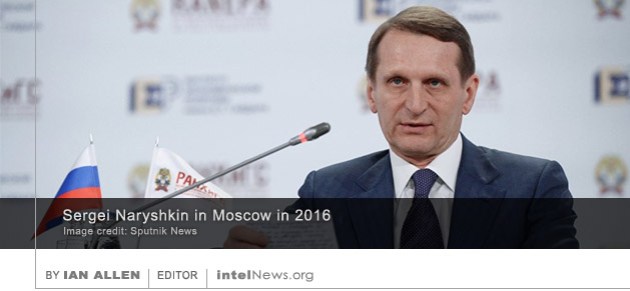 • Russian spy chief in rare interview with the BBC. In an exclusive
 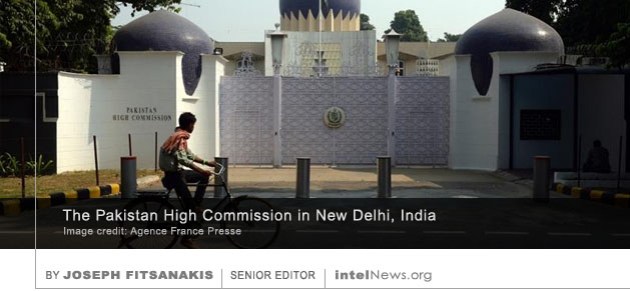 India has expelled two officials at the High Commission of Pakistan in New Delhi, after they were allegedly caught with fake Indian identity papers while trying to acquire classified documents. But the Pakistani government has rejected the allegations and subsequent expulsions as “a part of persistent anti-Pakistan propaganda” from India, and said the two officials were tortured while under detention by Indian authorities.
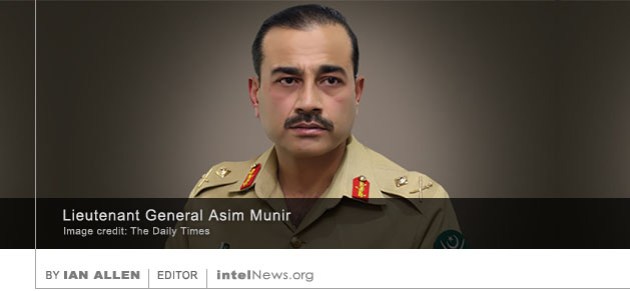 In a surprising move the Pakistani military has dismissed the head of the powerful Inter-Services Intelligence (ISI) spy agency just eight months after appointing him to that position. The decision was announced on Sunday in a brief statement by the Inter-Services Public Relations, the public-relations wing of the Pakistan Armed Forces. The statement said that Lieutenant General Asim Munir had stepped down from his post as director of ISI and would take over as commander of the Gujranwala Corps in Punjab, Pakistan’s second-largest province. The statement did not explain the reasons for the reshuffle; the latter came as a surprise, as ISI directors typically serve for at least three years in that post. General Munir’s tenure
 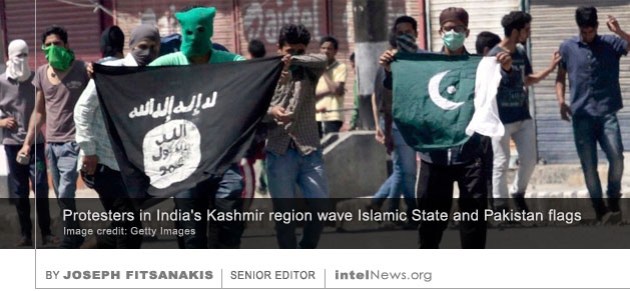 The group calling itself the Islamic State has announced the establishment of a new overseas province in Pakistan, just days after proclaiming another new overseas province in northern India. Until recently, the Islamic State’s operations in Asia were conducted under the banner of the Islamic State – Khorasan Province, or IS-KP. The shadowy group was founded in early 2015 and was led by former Taliban warlords who pledged allegiance to Abu Bakr al-Baghdadi, the spiritual leader and self-proclaimed emir of the Islamic State. Since that time, at least two of IS-KP’s leaders have been killed by United States forces, while the group has been engaged in a war against rival militant groups in Afghanistan and Pakistan, notably the Taliban.
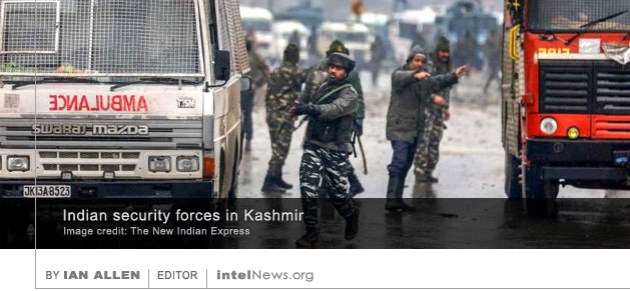 The government of Pakistan employed terrorist groups to attack India, according to Pakistan’s former president, Pervez Musharraf, who also accused India of doing the same. Musharraf, 75, took power in Pakistan in 1999 through a coup d’état supported by the country’s military leadership. The four-star Army general ruled as Pakistan’s 10th president until 2008, when he resigned from power to avoid being impeached. He currently lives in exile in the United Arab Emirates and is wanted in Pakistan for alleged crimes, including high treason. His critics accuse him of arresting several judges in 2007 and suspending the country’s constitution.
 The former director of Pakistan’s powerful intelligence agency has been stripped of his military pension and associated benefits for co-authoring a controversial book about intelligence with his Indian counterpart. Lieutenant General Asad Durrani (ret.) served as director-general of Pakistan’s Directorate for Military Intelligence between 1988 and 1989. From 1990 to 1992 he was director of the Inter-Services Intelligence Directorate, which is arguably Pakistan’s most powerful government institution. Durrani, 78, has been severely criticized in some Pakistani nationalist circles for co-authoring a book entitled The Spy Chronicles: RAW, ISI and the Illusion of Peace, with his Indian counterpart, A.S. Daulat. Daulat, 79, headed India’s Research and Analysis Wing from 1999 to 2000.
 Media reports in Pakistan claimed yesterday that “an international spying network” had been dismantled in the country following the arrests of at least five intelligence officials who were working for foreign interests.






 intelNews.org
Report claims India behind ‘methodical’ assassination campaign deep inside Pakistan
January 2, 2025 by Joseph Fitsanakis 1 Comment
Since 2023, intelNews has covered/ the high-level dispute between India and Canada, after Ottawa uncovered an extensive Indian assassination program targeting Sikh separatist leaders on Canadian soil. Last month, intelNews guest editor Dr. Stephan Blancke analyzed the mounting concern across the European Union about Indian covert activities that target members of the Indian expatriate community on European soil. But The Washington Post report touches on a potentially new dimension of India’s assassination program, which focuses on Pakistan.
According to the report, Prime Minister Modi has been fully supporting RAW’s targeted killings program since at least 2021. In the ensuing years there have been six assassinations inside Pakistan that bear the hallmarks of RAW operations. These operations have been carried out through a “sophisticated network” of intermediaries in the Middle East —particularly in Dubai— who command compartmented teams of surveillance operatives, hitmen, as well as logisticians. Payments are allegedly facilitated through informal hawala networks managed by Middle Easterners, Afghans, and others.
Many of those killed have been current and former members of militant Pakistani-aided groups like Jaish-e-Muhammad and Lashkar-e-Taiba, who have been designated terrorist organizations by most Western nations. For this reason, the West, including the United States, have been hesitant to accuse India of breaking international law. The Washington Post report claims that the Pakistanis have expressed their frustration to the United States, through Nadeem Anjum, director general of the Inter Services Intelligence (ISI) Directorate, Pakistan’s primary intelligence agency. In 2022, Anjum reportedly informed William Burns, director of the United States’ Central Intelligence Agency, about the Indian assassination program. However, no notable action was taken by the United States in response to Anjum’s revelations, the article claims.
► Author: Joseph Fitsanakis | Date: 02 January 2025 | Permalink
Filed under Expert news and commentary on intelligence, espionage, spies and spying Tagged with assassinations, covert operations, India, News, Pakistan, Research and Analysis Wing (India)