Analysis: Turkey and Qatar emerge as Taliban government’s main envoys to the West
September 7, 2021 Leave a comment
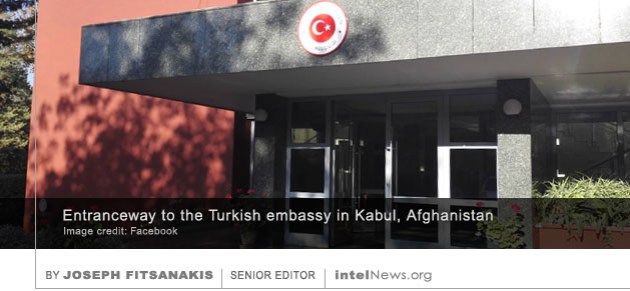
TURKEY AND QATAR, TWO countries with a growing diplomatic and intelligence network inside Afghanistan, are emerging as significant envoys to the Western world for the new government of the Taliban. Their newfound role in the Central Asian country puts them in direct competition with China and Russia, which have kept their embassies in Kabul open throughout the dramatic events of the past month. Three other countries with historically close ties to the Taliban, Pakistan, Saudi Arabia and the United Arab Emirates, are also important players amidst the new reality in the war-torn country.
As a recent article by the BBC points out, Pakistan, Saudi Arabia and the United Arab Emirates were the only countries to recognize the Taliban government in the 1990s, when the group last held the reins of power in Kabul. But they quickly cut diplomatic ties with it following the terrorist attacks of September 11, 2001. Their contacts with some of the older Taliban leaders remain strong, however.
In contrast to the older generation, some of the younger leaders of the Taliban see Qatar and Turkey as important mediators and conduits of communication with the outside world, and especially with the West. It is no accident that the Taliban entrusted the restoration of the —undoubtedly soon to be renamed— Hamid Karzai International Airport in Kabul to technicians from Turkey and Qatar, who were hurriedly flown to the Afghan capital last week for that purpose.
In establishing relations of trust with the Taliban, Qatar is relying on a lengthy record of facilitating diplomatic connections between the militant group and Western powers. It should be recalled that it was in Doha that American and Taliban representatives negotiated the terms of Washington’s exit over several meetings spanning several administrations in the White House. In the past month, the Qataris used their links to the Taliban to assist numerous Western nations, including the United States, in evacuating their citizens from Afghanistan. Read more of this post
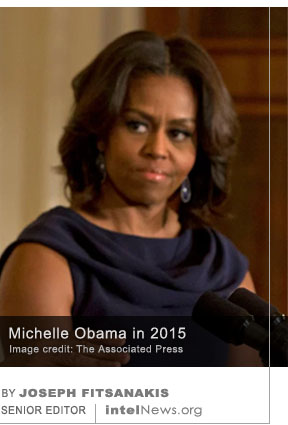 MICHELLE OBAMA HAD SOME of her personal emails intercepted by a group of American cyber-spies who were working for the government of the United Arab Emirates (UAE), according to a new book. The book, This Is How They Tell Me the World Ends, is written by Nicole Perlroth, who covers cybersecurity-related topics for The New York Times. It tackles what the author describes as the global “cyber-weapons arms race” and its impact on international security.
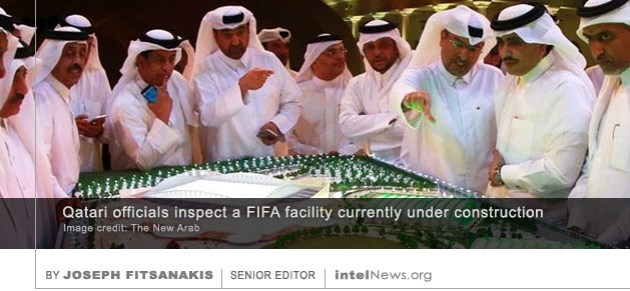 The government of Qatar, which won the right to host the 2022 FIFA World Cup, hired a high-profile public relations group and a team of former officers of the United States Central Intelligence Agency (CIA) in order to undermine rival bids to host the tournament, according to a British newspaper. In December 2010, Qatar was named as the host of the lucrative tournament, which is held every four years under the auspices of the International Federation of Association Football. In winning the right to host the tournament, the Middle Eastern oil kingdom beat formidable rival bids from Japan, South Korea, Australia and the United States. FIFA’s decision to award the 2022 World Cup to Qatar has been heavily criticized –not least because it will take place in the winter, so as to avoid Qatar’s scorching summer temperatures. Many countries in Europe, Latin America and elsewhere will therefore have to resort to the highly unusual step of disrupting their domestic football seasons in order to send their national teams to compete in Qatar.
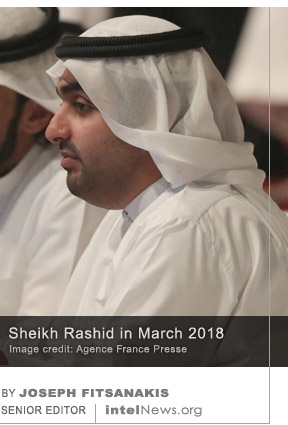 A member of one of the United Arab Emirates’ seven royal families has defected to Qatar and asked for political asylum, in what appears to be the first time that an Emirati royal has publicly turned against the oil-rich kingdom. In May of last year, the UAE
  ►►This website has
 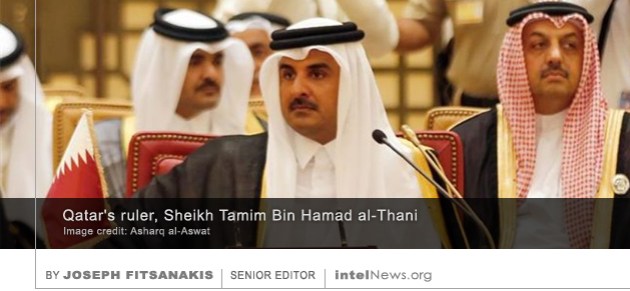 American officials appear to confirm Qatar’s allegations that its news media were hacked by its Gulf adversaries, who then used the fake news posted by hackers to launch a massive campaign against it. Tensions between Qatar and other Muslim countries have risen since late May, when the country’s state-controlled news agency appeared to publish an incendiary
 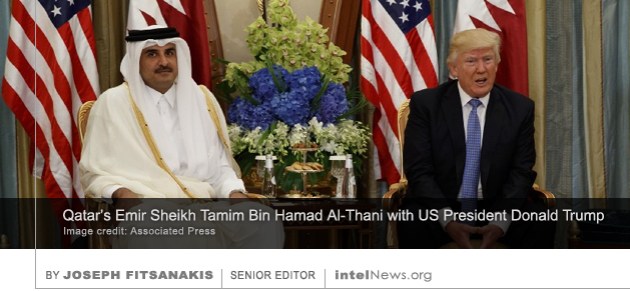 A former director of Qatar’s intelligence agency broke ranks with the government of Qatar and accused Doha of supporting terrorism. He also warned that the United States, which has a base in Qatar, would not allow the presence of foreign troops there.







 intelNews.org
Qatargate corruption scandal probe widens to include Moroccan spy services
January 2, 2023 by Joseph Fitsanakis 1 Comment
On December 9 and 10, Belgian and Italian police arrested a dozen politicians, European Parliament aides, civil servants, lobbyists, and members of their families. Over €2 million in cash and other assets has since been seized by authorities, as a Europe-wide investigation continues. Those arrested included Eva Kaili, vice president of the European Parliament, which is among the core legislative bodies of the European Union. Kaili and her co-conspirators are accused of selling their ability to influence European Union policies on Qatar, in exchange for cash and other perks. Although the government of Qatar vehemently denies having a role in the scandal, it is widely believed that operatives linked to Qatari authorities facilitated the bribes.
During the past week, however, several reports in European news outlets have been alleging that, in addition to Qatar, the Kingdom of Morocco also appears to have been involved in parallel efforts to buy influence within the European Parliament. Early clues of this development surfaced during the week of December 12 in the Belgian broadsheet Le Soir and the Italian daily La Republica. The reports focused on an intelligence operative codenamed M118, who allegedly worked for the General Directorate for Studies and Documentation (DGED), the foreign spy service of Morocco.
Last week, a new report in the German newsmagazine Der Spiegel supported the theory that M118 is Mohamed Belahrech. Belahrech is allegedly an identified DGED operative, who is believed to have recruited two members of the European Parliament from Italy, Antonio Panzeri and Andrea Cozzolino, as well as Francesco Giorgi, Kaili’s Italian partner. Giorgi, a key figure in Qatargate, remains in custody. Der Spiegel also claims that Abderrahim Atmun, Morocco’s ambassador to Poland, led the Moroccan government’s efforts to recruit the three Italians. According to the report, the three were in direct communication with Mohamed Yassine Mansouri, director general of the DGED.
► Author: Joseph Fitsanakis | Date: 02 January 2023 | Permalink
Filed under Expert news and commentary on intelligence, espionage, spies and spying Tagged with Belgium, corruption, covert operations, DGED (Morocco), European Parliament, European Union, influence operations, Morocco, News, Qatar