Reuters publishes details about alleged Russian airline sabotage plot

DHL AviationTHE REUTERS NEWS AGENCY has disclosed more information about an alleged plot by Russian intelligence to detonate bombs on cargo flights from Europe to North America. Initial details of the plot emerged in October 2024, when it was reported that explosions had occurred earlier that year at shipping warehouses in England and Germany. It later emerged that a similar explosion had occurred at a third shipping warehouse, located in Poland.

It is now understood that the explosions occurred on July 19, 20 and 21, 2024, and that at least two of them took place in facilities belonging to DHL, a German logistics firm headquartered in Bonn. Affected facilities are reportedly located in Leipzig, Warsaw, and Birmingham. All three explosions were caused by rudimentary incendiary devices hidden inside commercial shipments. European officials said at the time that the explosions were part of a broader wider campaign by Russian intelligence to sabotage Western European transportation and shipping networks.

Now the Reuters news agency claims that the explosions were meant to test security systems in preparation for a major sabotage operation. The operation aimed to detonate explosive mechanisms in mid-air on cargo flights from Europe to the United States and Canada. Moreover, a fourth incendiary device, which was found at a Warsaw shipping facility, failed to explode and has been forensically examined by bomb experts, Reuters said. Citing “interviews with more than a dozen European security officials”, including a person familiar with the case in Poland, the news agency said it was able to provide “the most granular account yet of the alleged plot”.

The report claims the incendiary devices were concealed inside pillows, bottles of cosmetics, and sex toys. They were ignited with the use of remote timers taken from cheap Chinese electronic goods. Once detonated, the timers sparked explosions with the help of gelled flammable cocktails that included compounds such as nitromethane—a highly flammable liquid chemical used in industrial applications. All ingredients used in the incendiary devices, including nitromethane, are easily accessible to consumers at a relatively low cost.

According to Reuters, the procedures followed in the DHL attacks fit the profile of similar operations that have been carried out in recent years by the Main Intelligence Directorate of the Russian Forces’ General Staff, known as GRU. Such procedures include hiring disposable agents, most of which are not Russian citizens, for one-off operations. In the case of the DHL attacks, the agents were allegedly hired on the encrypted messaging platform Telegram and paid with the use of cryptocurrencies, or in cash.

Among the alleged suspects in the case is a Ukrainian man identified by Reuters as Vladyslav Dekravets, who was recruited in southern Poland and is now facing extradition to Poland from Bosnia. Another suspect, identified in the Reuters report as Alexander Bezrukavyi, allegedly packaged parcels containing sneaker shoes for shipment to the United States and Canada. The shipments were intended to help the GRU “gather information about parcel-processing methods and timing”. During the operation, the two men came in contact with individuals who appeared to be GRU officers, using the cryptonyms WARRIOR and MARY.

The DHL cases remain at a pre-trial stage in several European countries, Reuters said. They involve the pending extradition of suspects from elsewhere in Europe. The trials are going to feature evidence gathered from criminal investigators and intelligence agencies, according to the report.

Author: Joseph Fitsanakis | Date: 07 April 2025 | Permalink

Germany charges three dual German-Russian nationals with espionage

Grafenwoehr Training Area GermanyTHE OFFICE OF THE Federal Prosecutor in Germany has charged three dual German-Russian citizens with acts of espionage on behalf of Russia, with the intent of harming the national security of the German state. In compliance with German privacy laws, the three espionage suspects have been publicly identified only by their first names and last name initials. They are: Dieter S.,  Alex D., and Alexander J.

Dieter S. appears to be the central suspect in this case. Following his arrest by the German Federal Criminal Police Office, he was found to have participated in military operations of the secessionist Donetsk People’s Republic in Ukraine. By that time, German authorities had already charged him with being in contact with an individual known to be a member of Russian intelligence, who operated as his handler.

According to the indictment, throughout his interactions with his Russian handler, Dieter S. repeatedly made it known that he was willing and able to carry out acts of sabotage against security-related installations in Germany, on behalf of the Russian Federation. He also offered to carry out arson attacks and use explosives against transportation facilities and infrastructure, such as railway lines, which were used by the German state to transport military supplies to Ukraine.

Subsequently, Dieter S. was instructed by his Russian handler to collect intelligence about potential targets in southeastern Germany. He thus engaged in systematic surveillance activities targeting the Grafenwoehr Training Area, a United States Army military training base located near Grafenwöhr, in eastern Bavaria. Grafenwöhr is the largest training facility maintained by the United States in Europe. Since 2022, it has been used to instruct Ukrainian troops on how to operate American-built tanks.

Dieter S. is also believed to have conducted surveillance at several loading stations used by the German and American militaries, as well as the facilities of private-sector contractors to the German military. In his surveillance operations, Dieter S. was assisted by Alex D. and Alexander J. All three men took photographs and videos of the targeted facilities. The collected material was eventually passed on to Dieter S.’s Russian handler.

Official charges against the three suspects were filed before the State Security Senate of the Munich Higher Regional Court on December 9. They were publicized by the office of the Federal Public Prosecutor General on December 30. A trial date is now pending.

Author: Joseph Fitsanakis | Date: 06 January 2025 | Permalink

Possible Russian role probed in incendiary devices found in Britain and Germany

DHLAUTHORITIES IN BRITAIN AND Germany are reportedly investigating the possibility that the Russian intelligence services may be behind two fires that occurred in shipping warehouses last summer. The fires occurred in late July in facilities belonging to DHL, a German logistics firm headquartered in Bonn.
On September 1, the German government issued a warning about unknown suspects allegedly shipping “unconventional incendiary devices” throughout Europe. The warning referenced a fire that occurred at a DHL logistics center in the east German city of Leipzig. Germany’s Federal Office for the Protection of the Constitution (BfV) warned at the time that “further incendiary incidents” were anticipated, but provided no further details.

Late last week, British newspaper The Guardian reported that an incident like the one that occurred in Leipzig had taken place in a DHL warehouse in Minworth, a suburb of the city of Birmingham, located in the British Midlands region. In subsequent reporting, the paper alleged that British and German authorities have been investigating a link between the two incidents. Moreover, authorities are reportedly probing the possibility that the incidents may be part of a wider campaign by Russian military intelligence to sabotage Western European transportation and shipping networks.

Meanwhile, Lithuanian media revealed on Friday that a suspect had been arrested in Lithuania in connection with the two fires in Britain and Germany. The reports suggested that the two incendiary devices had been shipped from Lithuania by the same individual. However, there have been no updates about who may be behind the apparent sabotage campaign.

Author: Joseph Fitsanakis | Date: 21 October 2024 | Permalink

Russia uses merchant navy fleet for intelligence operations in North Sea, study reveals

undersea telecommunications cable

HUNDREDS OF RUSSIAN MERCHANT ships have been utilized by the Kremlin for over a decade to carry out intelligence operations in the North Sea, a major new investigation has revealed. Belgian newspaper De Tijd and the investigative journalism website Follow the Money (FTM) carried out the joint investigation, using data provided by Global Fishing Watch, a Google-based international nonprofit organization that gathers information on commercial fishing activities worldwide.

Encompassing 220,000 square miles, the North Sea lies between France, Belgium, the Netherlands, the United Kingdom, Norway, Denmark, and Germany. It hosts many of the world’s major shipping lanes, an extensive network of energy pipelines, as well as key undersea communication cables. The development of large-scale offshore energy production has further-augmented the significance of the North Sea for the security of Europe in recent years. The strategic value of the North Sea has become even clearer since the onset of the Russo-Ukrainian war in 2014.

According to the De Tijd/FTM study, the Russian government has been highly active in the North Sea through a variety of stealthy means –primarily by deploying civilian vessels to collect intelligence and possibly even carry out sabotage operations. The study focused on 1,012 Russian-flagged non-military vessels that have been active in the North Sea since 2014. These consist of oil tankers, scientific research vessels, fishing boats, cargo ships, and even privately owned yachts.

The study identified 60,000 loitering events involving these Russian vessels. In the shipping domain, the term ‘loitering event’ refers to vessels that deviate from their normal route, reduce speed for no obvious reason, drift aimlessly, or circle around a location that may initially appear arbitrary. Loitering and other such peculiar behavior by merchant ships makes no economic sense, as it requires more fuel and results in added compensation for crews. Notably, close to 1,000 loitering events by nearly 170 different Russian ships were found to have taken place within less than a mile from an underground cable or energy pipeline. Read more of this post

France arrests Russian-Ukrainian dual national with fake passports following explosion

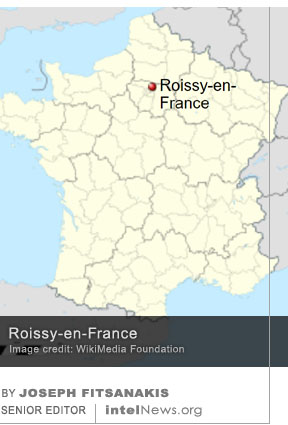
Roissy-en-FranceAN INVESTIGATION HAS BEEN launched in France after a Ukrainian-born Russian national reportedly detonated explosives in a hotel room near Paris, suffering severe burns in the process. Sources from France’s National Anti-Terrorism Prosecutor’s Office (PNAT) said the incident occurred on Monday in a hotel in Roissy-en-France, a small bedroom community located 15 miles northeast of downtown Paris.
At the scene of the explosion police found a severely burned man, who was later identified as a 26-year-old from the Donbas region of eastern Ukraine. Most of the Donbas region has been under Russian military occupation since 2014. The man is reportedly a Russian speaker and holds both Ukrainian and Russian nationalities. He is currently in hospital receiving treatment for severe burns, and is formally under arrest.

The PNAT and the General Directorate for Internal Security (DGSI), France’s counterterrorism and counterespionage agency, are investigating the suspect’s background and activities. According to media reports, the suspect’s hotel room contained “substances and materials intended for the manufacture of explosive devices”. A number of guns and forged passports were also found in the room.

As intelNews reported earlier this week, French police arrested a Bulgarian, a Ukrainian and a German national, who deposited five coffins, draped in French flags, at the base of the Eiffel Tower. The flags reportedly bore the inscription “Dead French Soldiers of Ukraine”. While the investigation is ongoing, French authorities are said to have classified the incident as a Russian psychological operation aimed at affecting French public opinion. It is not known whether the two cases are in any way connected.

Author: Joseph Fitsanakis | Date: 06 June 2024 | Permalink

Poland and Germany charge Russian operatives with assassination, sabotage plots

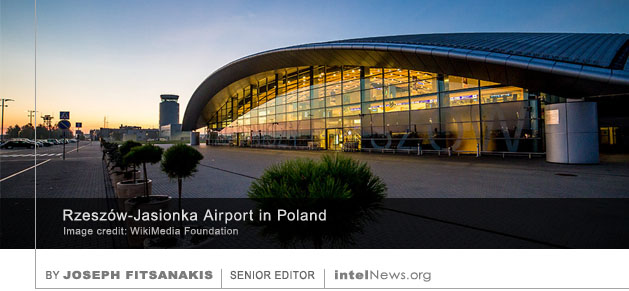
Rzeszów-Jasionka AirportAUTHORITIES IN GERMANY and Poland have charged three individuals with working on behalf of Russian military intelligence in planning acts of sabotage and assassination on European soil. One of the plots allegedly involved an effort to assassinate Ukrainian President Volodymyr Zelenskyy. Another aimed to sabotage commercial airport facilities that are being managed by the United States military.

Polish and Ukrainian authorities announced last week the arrest of Paweł K., a Polish citizen, who is believed to have been engaged in collecting information about the security of the Rzeszów-Jasionka Airport. Located in southeastern Poland, Rzeszów-Jasionka is a relatively small provincial airport. Its proximity to the Ukrainian border has made it central to efforts by Kyiv’s allies to supply it with war materiel following the expansion of Russia’s occupation of Ukraine in February 2022. Military supplies are transported to Rzeszów-Jasionka from across the world and then transferred across the Ukrainian border with trucks. Additionally, many high-level meetings between Ukrainian and Western officials take place at the airport. The United States military is currently providing security at the Rzeszów-Jasionka Airport.

Polish authorities said last week that Paweł K. was part of a Russian intelligence collection operation that was “intended to assist in the planning of a potential assassination of a foreign state leader”, namely President Zelenskyy. The Security Service of Ukraine (SBU) said it informed its Polish counterpart agency about the assassination plot, which had been foiled “as a result of the close co-operation” between Ukrainian and Polish intelligence. Paweł K. is not a diplomat and thus has no immunity from prosecution in Poland. If convicted, therefore, he could face up to eight years in prison.

In a seemingly unconnected development, police in the southeastern German state of Bavaria arrested two dual German-Russian nationals, who have been charged with planning to sabotage military and industrial facilities on German soil. The plot appears to be part of broader Russian efforts to disrupt the production and delivery of military aid to Ukraine. At least one of the locations that the suspects are accused of targeting is a local military base under the command of the United States. The two suspects have been identified as Dieter S., 39, and Alexander J., 37. Both were arrested in the small city of Bayreuth.

Germany’s Federal Foreign Office, led by Minister Annalena Baerbock, summoned Sergei Nechayev, Russian Ambassador to Berlin, shortly after the arrest of Dieter S. and Alexander J. Some media reports noted the “unusually hasty” way Nechayev was summoned, which may indicate that German authorities have acquired “unequivocal proof of the link between the plot and the Kremlin”. An announcement made by the Russian embassy in Berlin confirmed that Nechayev had been summoned in connection to the arrests, but added that the ambassador had been presented with “no proof” that the two suspects were connected with Russian intelligence or that they had planned acts of sabotage.

Author: Joseph Fitsanakis | Date: 22 April 2024 | Permalink

Ukraine is running networks of saboteurs inside Russia, report claims

Security Service of Ukraine SBUTHE UKRAINIAN INTELLIGENCE SERVICES are training and arming cells of saboteurs inside Russia, who are responsible for several acts of sabotage on Russian soil, including a recent attack on the Kremlin, according to CNN. In an exclusive report published on Monday, the American television channel cited “multiple people familiar with US intelligence on” the activities of Ukrainian “agents and sympathizers” inside Russia.
According to the report, pro-Ukrainian saboteurs may be responsible for a growing number of incidents involving mysterious explosions, fires and malfunctions of Russian critical infrastructure. In recent months, such incidents have caused serious damage on Russian military warehouses, energy pipelines, fuel depots and refineries, railway networks, and military enlistment offices. Last month saw a widely reported attack by a fleet of unmanned aerial vehicles (UAVs) on the Kremlin, which serves as the official residence of the Russian president in Moscow.

The CNN report claims that the UAV attack on the Kremlin, and possibly other similar incidents that have taken place inside Russia in recent months, represent the “culmination of months of effort” by the Ukrainian government. The latter has now allegedly assembled and is operating semi-autonomous sabotage cells inside Russia. These cells are said to consist of Ukrainian nationals operating in an undercover capacity, as well as of Russian nationals who sympathize with Ukraine. They also include Russians who are militantly opposed to the administration of President Vladimir Putin.

These cells have been “well-trained” in sabotage and have been provided with lethal hardware —including UAVs or UAV components— by the Ukrainian government, CNN said. These provisions reach the saboteurs through “well-practiced smuggling routes” that the Ukrainians have established across the Ukrainian-Russian border. The latter is “vast and very difficult to control”, and has been so for decades, according to the report. In most cases, the weaponry used in acts of sabotage is assembled and operated from within Russia, rather than from command centers in Ukraine, the CNN report claims.

The broad strategic parameters of the saboteurs Russia have reportedly been established by the highest echelons of the Ukrainian government, under the direct supervision of President Volodymyr Zelensky. However, the Security Service of Ukraine (SBU) officers who handle, train and arm the saboteurs have deliberately given them significant autonomy in terms of targeting and tactics. CNN said it contacted the Ukrainian government for comment on this report. The SBU did not confirm or deny that it was involved in handling cells of saboteurs inside Russia. However, a SBU spokesperson told CNN that “the mysterious explosions and drone strikes inside Russia would continue”.

Author: Joseph Fitsanakis | Date: 06 June 2023 | Permalink

Alleged Russian spy and sabotage cell busted in Poland [updated]

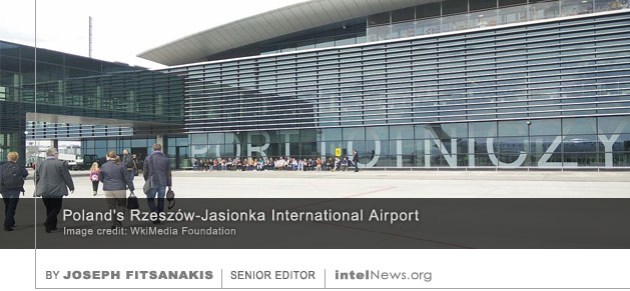
Rzeszów–Jasionka International Airport PolandSIX NINE MEMBERS OF AN alleged Russian saboteur cell have been arrested in Poland, according to media reports and official acknowledgements by Polish authorities. Early reports on Wednesday afternoon local time centered on the arrests of six nine individuals, who were detained on suspicion of conducting espionage and planning sabotage attacks against various elements of transportation infrastructure.

Radio station RMF24 FM reported that the six nine individuals were detained following a number of early-morning raids conducted by the Polish Internal Security Agency (ABW), which is the country’s primary counterintelligence and counterterrorism organization. At least some of the six nine individuals are reportedly Belarusian nationals who were active in Poland’s southeastern Podkarpackie Voivodeship, a largely rural province that borders Ukraine’s Lviv Oblast. Later on Wednesday, the RMF24 FM report was confirmed by Polish government officials, who spoke to the BBC.

Notably, the Podkarpackie Voivodeship is home to the Rzeszów–Jasionka International Airport, located near the village of Jasionka, which is approximately 60 miles, or 100 kilometers, from the Ukrainian border. Since the February 2022 Russian invasion of Ukraine, this provincial airport has been transformed into a major logistical gateway for the transportation of Western military and humanitarian aid to Ukraine. Dozens of Western aircraft land there every day, carrying supplies that are then loaded onto trucks or trains en route to Ukraine.

According to RMF24 FM, the six nine foreign nationals installed hidden miniature cameras at railway junctions and other strategic transportation hubs throughout the Podkarpackie Voivodeship. The cameras were allegedly used to collect information on the movement of trains and trucks that were being used to transport supplies from the Rzeszów–Jasionka International Airport to Ukraine. The radio station said that Polish authorities were scheduled to provide further information about the alleged spy cell at a press conference on Thursday.

[Updated to reflect arrest of nine individuals, as opposed to six, as initially reported]

Author: Joseph Fitsanakis | Date: 16 March 2023 | Permalink

Mystery blasts, fires, prompt rumors of sabotage campaign inside Russia (updated)

Kremlin, RussiaA SERIES OF LARGE-scale incidents of destruction, which have been occurring across Russia in recent days, are prompting speculation that the county may be experiencing a wave of attacks against its strategic infrastructure. The incidents include enormous fires at power plants, munition depots and state-owned storage facilities. The collapse of at least one railway bridge has also been reported. There are additional reports of massive wildfires raging across Siberia, which are imposing heavy demands on Russia’s emergency response infrastructure.
On April 21, a massive blaze engulfed the Central Research Institute for Air and Space Defense of the Russian Defense Ministry in Tver, a city located around 120 miles northwest of Moscow. According to Associated Press, which reported the news about the fire, the institute “was involved in the development of some of the state-of-the-art Russian weapons systems, reportedly including the Iskander missile”. By next morning, at least 17 people were believed to have died as a result of the fire.

Late last week, the Sakhalinskaya GRES-2 power station, a vast 120-megawatt coal-fired power plant in Russia’s far-eastern Sakhalin province, went up in flames, giving rise to persistent rumors of sabotage. On May 1, Russian state-owned news agencies reported that a railway bridge in the western province of Kursk, 70 miles from the Ukrainian border, had been destroyed. Analysts at the Washington-based Atlantic Council think tank claimed that the bridge had been used extensively by the Russian military to transport equipment to eastern Ukraine. Later on the same day, a cluster of fuel-oil tanks in Mytishchi, a mid-size city located northeast of Moscow, were completely destroyed by a fast-spreading fire.

On May 2, a munitions factory in Perm, a major urban center in western Siberia, was hit by a “powerful” explosion. Ukrainian government officials hinted at sabotage in social media posts, though no proof has been provided, and the Kremlin has not commented on the matter. On the following day, the Prosveshchenie publishing house warehouse in Bogorodskoye, northeast of Moscow, was destroyed by a massive fire. The warehouse belongs to Russia’s state-owned publisher of school textbooks. The fire occurred almost simultaneously as another fire engulfed a polyethylene waste storage facility in the central Siberian city of Krasnoyarsk.

Meanwhile, the sprawling forests that surround Krasnoyarsk and other Siberian urban centers are experiencing seasonal wildfires of near-unprecedented scale. Some early reports claimed that the Russian government was finding it difficult to contain these fires, because the country’s emergency response personnel has been sent to the frontlines of the war in Ukraine. But these reports were denied by Russia’s Ministry of Emergency Situations, which claimed earlier this week that the fires were mostly under control.

Author: Joseph Fitsanakis | Updated: 09 May 2022 | Research credit: M.R. | Permalink

Israeli Mossad targeted Iran nuclear plant with three-pronged assault, report claims

Natanz Iran

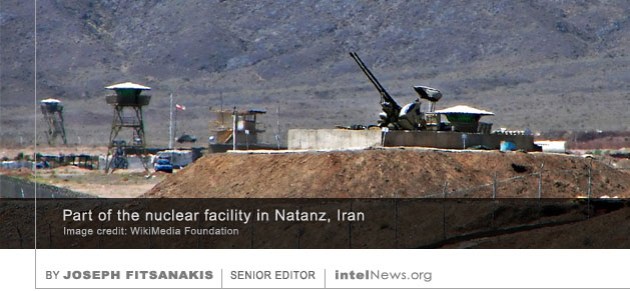
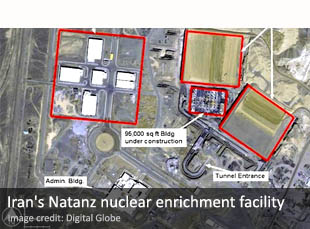
THE NATANZ ENRICHMENT FACILITY, which lies at the heart of the Iranian nuclear program, has repeatedly been the target of a multi-pronged sabotage operation by Israeli intelligence, according to a new report. The existence of the hardened fuel enrichment plant near the city of Natanz, in Iran’s Esfahan Province, was first acknowledged in 2002, when it was revealed by an Iranian whistleblower. In July 2020 and April 2021, Iranian authorities acknowledged that the facility had suffered major damage, reportedly due to acts of sabotage.

New a new report, published on Thursday in the London-based journal The Jewish Chronicle, claims that the Israeli agency Mossad was behind the sabotage in Natanz, which allegedly destroyed 90 percent of the plant’s nuclear centrifuges. The journal said that a team of over 1,000 technicians, intelligence analysts and operations officers was behind the attacks. The latter were carried out in a variety of ways that included infiltrating supply chains, recruiting Iranian scientists, and deploying a so-called suicide drone.

According to the The Jewish Chronicle, in 2019 the Mossad managed to infiltrate the supply chains used by Iran to build additions to several buildings and underground facilities in Natanz. Consequently, Israeli intelligence operatives posing as construction material wholesalers were able to supply building materials to Iranian government officials, which were “filled with […] explosives”. These were detonated remotely in July 2020, causing substantial damage to the nuclear plant.

At around the same time, Mossad officers posing as Iranian dissidents began recruiting Iranian scientists working at Natanz. The Chronicle cites an unnamed source who says that “the scientists’ motivations were all different” and that the Mossad offered each of them “what they deeply wanted in their lives”. The Mossad supplied the recruited scientists with explosives, which were dropped into the Natanz compound by drones, or smuggled inside boxes of catering supplies. The bombs were “remotely set off” in April 2021 and almost completely destroyed Natanz’s A1000 underground centrifuge hall, which is buried beneath 12 meters of reinforced concrete. Following the attack, 10 Iranian scientists were “spirited away to a safe location. All of them are safe today”, according to the unnamed source.

Two months later, a third attack was carried out, this time against a manufacturing facility of the Iran Centrifuge Technology Company in the city of Karaj, which is located 30 miles northwest of the Iranian capital Tehran. The attack was reportedly carried out with the use of a loitering munition —also known as a suicide drone— the size of a motorcycle. Mossad operatives had previously managed to smuggle the device into Iran in small components, which were then re-assembled.

The Chronicle reports that the attacks against the Natanz nuclear plant were carried out by Israeli spies without the participation of American intelligence agencies. The journal also claims that Israel recently put in motion “a new policy of launching covert attacks on Iranian soil in retaliation for its meddling in the region”. This means that “further undercover operations [inside Iran] are in the pipeline”, the report concludes.

Author: Joseph Fitsanakis | Date: 03 November 2021 | Permalink

Speculation grows that Israel may be behind spate of mystery blasts in Iran

Iran's Natanz nuclear enrichment facilityThere is growing speculation that Israel’s intelligence services may be behind a spate of blasts that have damaged military and civilian industrial sites in Iran in recent days. Citing a “Middle Eastern intelligence official”, The New York Times reported on Sunday that Israel was behind at least one of the blasts, which struck an Iranian nuclear complex.

The earliest known attack took place on May 9, when one of Iran’s busiest shipping hubs, the Shahid Rajaee Port, experienced a major cyber-attack that brought the port terminal “to an abrupt and inexplicable halt” and caused “massive backups on waterways and roads leading to the facility”. On June 26, a massive  blast destroyed a liquid fuel production facility for ballistic missiles in Khojir, a military complex located 20 miles southeast of Tehran. Four days later, on June 30, there was another explosion at a medical clinic in the Iranian capital, which killed 19 people.

On July 2, a major blast and subsequent fire were reported at the site of the Natanz nuclear facility, which is situated 150 miles south of Tehran. The attack is believed to have targeted a laboratory facility housing advanced centrifuge systems for enriching uranium. The BBC reported on Monday that a previously unknown group calling itself “The Homeland Cheetahs” claimed responsibility for the attack. The group sent BBC reporters information about the Natanz blast, including a video of the incident, before it was reported by Iranian media. In its statement, the group claimed to represent dissidents in the Iranian military, but some speculated that it could be a front for a foreign intelligence agency. On Sunday, The New York Times said the Natanz blast was orchestrated by the Israeli Mossad.

On July 3, a large fire broke out in Shiraz, Iran’s fifth largest city, while on the next day a fire engulfed the Zargan power plant in Ahwaz, following a large blast that was reportedly audible several miles away. Also on July 4, a large leak of chlorine gas occurred at the Karoun petrochemical plant in Bandar-e Mahshahr, in Iran’s Khuzestan Province. The leak caused 70 workers at the plant to be hospitalized.

In recent days, Iranian officials have claimed that the above incidents have been part of a sabotage campaign orchestrated by the Mossad, and have warned Israel of an impending retaliation. At a press conference in Jerusalem last Thursday, reporters asked the Israeli Prime Minister Benjamin Netanyahu whether the country’s spy agencies were behind the attacks in Iran. Mr. Netanyahu responded by saying: “I don’t address such topics”.

Author: Joseph Fitsanakis | Date: 07 July 2020 | Permalink

Russia sent spies to Ireland to check undersea fiber-optic cables: report

Undersea cableThe Russian government sent a team of spies to Ireland to monitor undersea fiber-optic cables, which enable communications traffic between North America and Western Europe, according to a new report. The spies were allegedly sent to Ireland by the Main Directorate of the General Staff of the Russian Armed Forces, which is known in Russia as GU, and formerly as GRU.

Due to its geographical proximity to both North America and Europe, Ireland constitutes a major hub for several of the more than 300 undersea cables that currently cross the world’s oceans. Totaling over 500,000 miles, these cables deliver Internet and telephone traffic across every continent. Nearly all transcontinental communications traffic is facilitated through these cables.

According to the London-based Sunday Times newspaper, the Irish security services believe that the GU spies were sent to Ireland to check the cables for weak points, in case Moscow decides to sabotage them in the future. Others claim that the Russian spies sought physical access to the cables in order to install wiretaps. The Times article also claims that Russian spies were detected by Irish security personnel monitoring the Dublin Port, which is Ireland’s primary seaport. This, said The Times, prompted a security alert in government facilities along the Irish coastline.

The same report claimed that the GU has been using Ireland as a base for operations in northwestern Europe, from where Russian spies can gather intelligence on European targets such as Belgium, the United Kingdom, Holland and France.

Author: Ian Allen | Date: 18 February 2020 | Permalink

Emirates authorities confirm four ships targeted by ‘sabotage operations’

Fujairah UAE EmiratesAuthorities in the United Arab Emirates said on Sunday that four commercial ships were targeted by “sabotage operations”, but did not point to possible culprits. The announcement came hours after false reports circulated in Iranian and Lebanese media stating that explosions had been witnessed at the port of Fujairah, a major Emirati commercial shipping facility that borders the Sultanate of Oman and is visible from the coast of Iran. The alleged explosions were first reported by Al-Mayadeen, a Shiite-Lebanese satellite television station, and were then picked up by a host of Iranian news outlets.

The reports caused alarm in international energy market circles, as observers feared that the explosions may have resulted from deliberate attacks by Iranian forces. Located less than 100 miles from the Strait of Hormuz, through which over 30 percent of the world’s sea-transported oil is trafficked, the Port of Fujairah is the world’s second largest shipping fueling hub. Even a partial destruction of the port would cause major disruptions in the international energy transportation system. Several hours later, however, the Associated Press dismissed the reports as false, saying it had spoken to “Emirati officials and local witnesses” and had found the earlier reports of explosions at Fujairah to be “unsubstantiated”.

Later on Sunday, state-owned Emirates News Agency published a statement by the Ministry of Foreign Affairs, which said that four ships had indeed “suffered acts of sabotage” while sailing off the Emirati coast. The Foreign Ministry’s statement said that the ships were “civilian trading vessels of various nationalities” and that they had been “subjected to […] acts of sabotage”. It added that “subjecting commercial vessels to sabotage operations and threatening the lives of their crew is considered a dangerous development”. However, Emirati officials refused to elaborate on the nature of the sabotage that the ships allegedly suffered, or discuss the possible culprit or culprits of the alleged attacks. On Friday, the United States Maritime Administration (MARAD) warned that Iranian military forces could target “US commercial ships, including oil tankers”. There was also an “increased possibility” of “Iran or its regional proxies taking action against US and partner interests”, said MARAD.

Author: Joseph Fitsanakis | Date: 13 May 2019 | Permalink

FBI warns against alleged Russian campaign to destabilize US elections

Putin and ObamaThe Federal Bureau of Investigation is among several intelligence agencies in the United States that have expressed concerns about an alleged Russian campaign to destabilize November’s presidential elections. The Washington Post, which revealed the FBI’s concerns on Monday, claimed that Moscow recently launched an “active measures” operation aimed at covertly sabotaging the integrity of the US election process. Russia’s goal, said the paper, was to “counter US leadership and influence in international affairs”, thus subverting America’s image, especially in countries of the former Eastern Bloc or former Soviet republics.
According to The Post, the FBI and other US intelligence agencies have “no definitive proof” that Moscow is attempting to promote public distrust in American political institutions. But there are strong indications that have made this topic “a priority” for intelligence officials from the FBI, the Department of Homeland Security, the National Security Agency and the Central Intelligence Agency, said the paper. These indications include the hack of the computer systems at the Democratic National Committee, the official governing body of the US Democratic Party, which was revealed in June. The hack resulted in the disclosure of over 20,000 internal emails and led to the resignation of Debbie Wasserman-Schultz, the DNC’s Chairwoman. According to The Post, the hack is “not yet officially ascribed by the US government to Russia”, but US intelligence officials are convinced that Moscow was behind it.

The DNC hack prompted the FBI to send a so-called “flash alert” to US election officials in July, urging them to remain vigilant against “attempts to penetrate election systems”, which have been detected in several states, according to the report. The unprecedented FBI alert did not expressly name Russia as a national-security threat, nor did it give details of electoral sabotage. But it urged state election officials to “be on the lookout for intrusions into their election systems”. Citing unnamed intelligence officials, The Post said that the investigation into alleged Russian operations against the US Presidential election is being coordinated by James Clapper, the US Director of National Intelligence.

Author: Joseph Fitsanakis | Date: 07 August 2016 | Permalink

Iran silent about deadly blast that ‘lit up sky’ near Tehran

Parchin military complexBy JOSEPH FITSANAKIS | intelNews.org
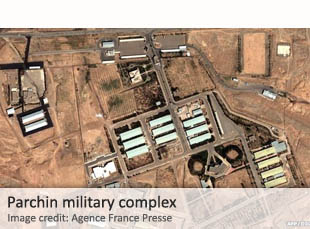
The government of Iran is refusing to comment on a reported blast at a secretive military facility that some sources say “lit up the sky” last week. The blast is said to have taken place on Sunday night at the Parchin military complex, located approximately 20 miles southeast of Iranian capital Tehran. The semi-official Islamic Republic News Agency (IRNA) reported on Monday that the explosion had been caused by a “fire [that] broke out in an explosive materials production unit” east of Tehran, and that two people had died. Interestingly, however, the news agency did not specify the precise location of the blast, nor did it identify the “explosive materials production unit” in question. There was also no mention of the cause of the fire that allegedly resulted in the blast. A few hours later, the Iranian-language news site SahamNews, which is politically linked to the Iranian opposition, claimed that the blast happened at Parchin and that it was a “massive explosion” that “lit up the evening sky” and caused windows to shatter as far as 9 miles away from the complex. It is worth noting that the blast was reported just hours after Israeli officials accused Iran of conducting nuclear implosion tests at a host of nuclear facilities, including Parchin. Israel is among several countries, including the United States, that have accused Iran of conducting nuclear experimentation at Parchin. The last time that the site was inspected by the International Atomic Energy Agency was in 2005. Since then, Iranian authorities have rejected repeated IAEA requests for access to the site. There are suspicions that the latest explosion may be part of what many suspect is a longstanding campaign of sabotage against the Iranian nuclear program, orchestrated by Israel with the possible cooperation of the US and other countries. The campaign is believed to include psychological operations, sabotage, as well as targeted assassinations of senior Iranian nuclear scientists. Read more of this post