Opinion: Saudi Arabia will not go to war with Iran, but it may pay others to do so
September 25, 2019 1 Comment
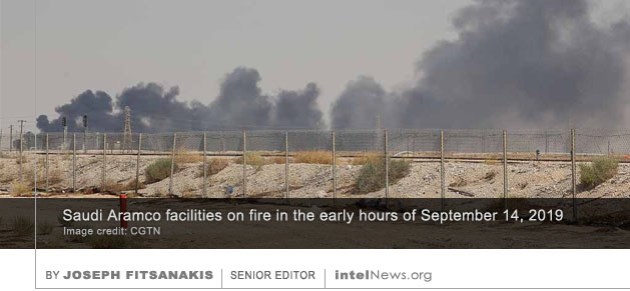 Ever since a barrage of drone and missile attacks struck Saudi Arabia on September 14, many have wondered whether the oil kingdom will go to war with Iran. Riyadh has directly accused the Islamic Republic of being behind the attacks. But the speculation about a possible war is baffling, argues Nesrine Malik in a well-argued article published last Sunday in Britain’s Guardian newspaper. Saudi Arabia does not “go to war”, she says —it pays others to do so on its behalf.
The war in Yemen is a perfect example, argues Malik. Even though the Saudi monarchy is leading the foreign military involvement in that war, Saudi Arabia is supplying almost no ground troops in that war. There are only Saudi commanders who are managing groups of mercenaries from Morocco, Jordan and Egypt. A large portion of the Saudi-led force consists of Sudanese child soldiers, whose families are paid handsomely for supplying the oil kingdom’s force in Yemen with what Malik describes as “cannon fodder”. The Saudi commanders communicate their battle orders to their hired troops via satellite phones and use unmanned drones and high-flying planes to attack the predominantly Shiite Houthi rebels. That largely explains the high civilian toll in that war.
Meanwhile, the United States government announced last week that it will be sending several hundred troops to the oil kingdom and will be beefing up its air defense systems. But Malik wonders why it is that Saudi Arabia, which has been the world’s largest weapons importer since 2014, and whose 2018 arms purchases accounted for 12 percent of global defense spending last year, requires the presence of American troops on its soil for its protection. The answer is simple, she says: the Saudi regime purchases weapons, not to use them, but to make Wester defense industries dependent on its purchasing power. In other words, the Saudi monarchy buys Western weapons for political reasons. These purchases enable it to get away with its abysmal human-rights record at home, as well as its kidnappings and assassinations abroad.
In the meantime, says Malik, if Saudi Arabia goes to war against Iran, it will do so the way it always does: it will hire proxies —including the United States— to fight on its behalf.
► Author: Joseph Fitsanakis | Date: 25 September 2019 | Permalink
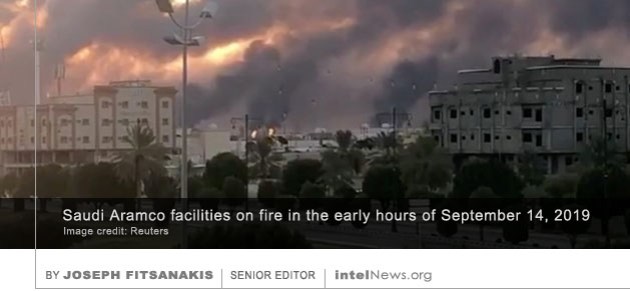 United States officials are considering increasing substantially America’s intelligence-sharing with Saudi Arabia following last weekend’s drone attacks that halved the Kingdom’s oil production and shook global markets. The attacks occurred in the early hours of Saturday, September 14, at two refineries located in eastern Saudi Arabia. The refineries are owned by Aramco, Saudi Arabia’s government-owned oil conglomerate, and are part of the world’s largest crude oil processing facility. The massive fires caused by the attacks were contained within hours and no casualties were reported. But the facilities had to cease operation so that repairs could be completed. This cut Saudi Arabia’s oil production by close to 50 percent, which amounted to a 5 percent reduction in global oil production. The impact on the world’s financial markets was immediate: by Monday morning, oil prices had seen their most significant one-day surge since the 1991 Gulf War.
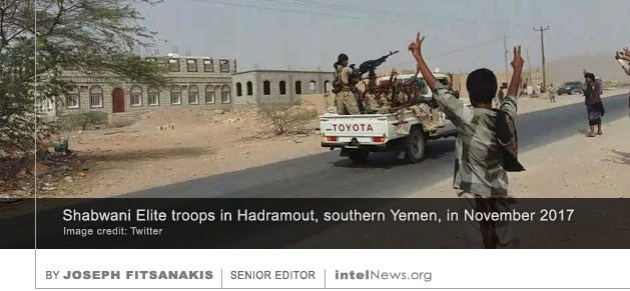 Weapons supplied to the Saudi and Emirati governments by the United States and other Western nations are ending up in the hands of al-Qaeda-linked Sunni militias in Yemen, according to two separate investigations. The weapons are being supplied to the militaries of Saudi Arabia and the United Arab Emirates by the West on the understanding that they will be used in the war in Yemen. The war has been going on since 2015, when a alliance of rebel groups from Yemen’s Shiite communities formed the Houthi movement, which quickly seized control of much of the country. The Houthis effectively toppled the government, prompting a reaction by a coalition of Sunni Arab states, which see the Shiite movement as an Iranian front. In an effort to restore Yemen’s Sunni-dominated government, Western countries have supplied Saudi Arabia and the United Arab Emirates with more than $5 billion-worth of weaponry.
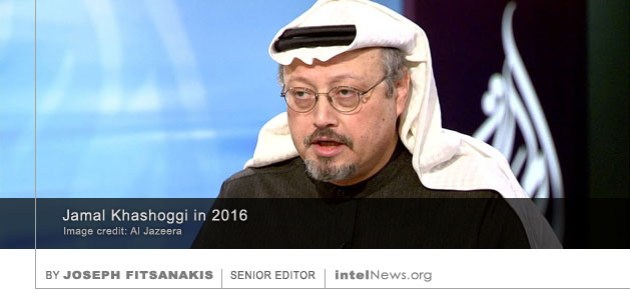 An international law center based in New York is suing the United States Central Intelligence Agency for access to classified files relating to the death of the Saudi journalist Jamal Khashoggi. Khashoggi, 59, was a Saudi government adviser who became critical of the Kingdom’s style of governance. He moved to the United States and began to criticize Saudi Arabia from the pages of The Washington Post. He was
  The Saudi royal who is suspected by the international community of having ordered the state-sponsored murder of journalist Jamal Khashoggi is now leading a committee to reform the Kingdom’s spy services. Khashoggi, 59, was a Saudi government adviser who became critical of the Kingdom’s style of governance. He moved to the United States and began to criticize Saudi Arabia from the pages of The Washington Post. He was
 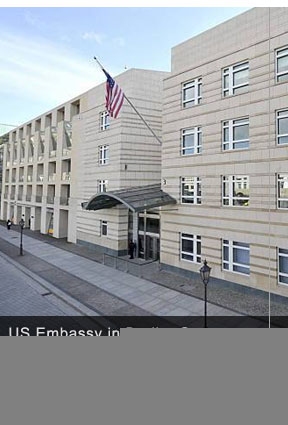 Saudi Crown Prince Mohammed bin Salman sent at least eleven text messages to the man in charge of the 15-member hit team that killed journalist Jamal Khashoggi last month, according to a classified report produced by the United States Central Intelligence Agency. The CIA report was leaked to The Wall Street Journal, which said in a
 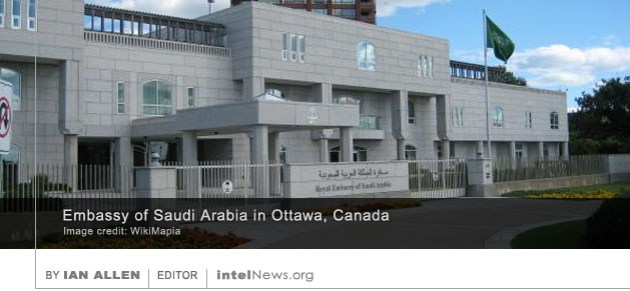 The government of Saudi Arabia is spying on expatriate dissidents in Canada using commercially available software designed by an Israeli company, according to researchers at the University of Toronto. This is alleged in a
 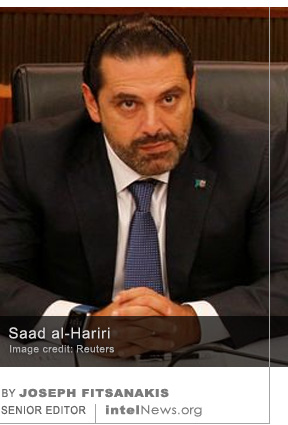 Western intelligence services warned Lebanon’s former Prime Minister Saad al-Hariri of an assassination plot against him, thus prompting him to resign on Sunday, according to Saudi news media. Hariri is a Saudi-born Lebanese politician, reputed to be one of the world’s wealthiest people. He is the second son of the late Rafiq Hariri, who ruled Lebanon for much of the 1990s but was assassinated in 2005. Saad al-Hariri spent most of his life in Saudi Arabia, the United States and France, but returned to Lebanon in 2014 to lead the Future Movement, a center-right political party supported by Sunni Muslims and some Christians. He became prime minister in 2016.
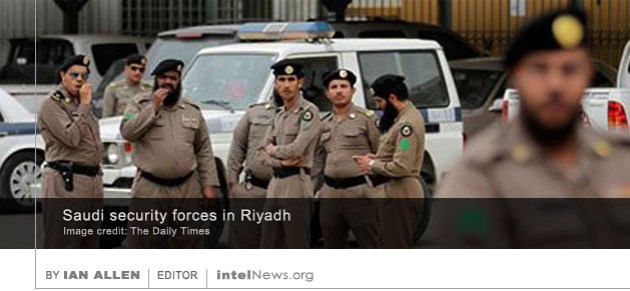 Officials in Saudi Arabia said on Tuesday that they foiled an elaborate suicide attack on the country’s defense ministry headquarters and infiltrated a foreign spy ring in the Kingdom, arresting its members. The near-simultaneous announcements were made by a member of the Presidency of State Security, an intelligence body founded only in July of this year, which is directly accountable to the county’s prime minister.
 At least three prominent Saudi dissidents living in Europe, who openly criticized Saudi Arabia’s system of government, have been illegally abducted by the country’s monarchy in the past two years, according to a report by the BBC. All three, who are members of the Saudi royal family, are missing, believed to be dead or held against their will in Saudi Arabia. But the country’s government will not comment on their fate.






 intelNews.org
Head of Saudi king’s security detail shot dead in mysterious circumstances
September 30, 2019 by Joseph Fitsanakis 3 Comments
But details of al-Fagham’s killing remain sparse. Saudi officials began posting social-media messages of condolence about al-Fagham and his family late on Saturday evening. It wasn’t until late on Sunday evening that the kingdom’s official media began to publish official reports of al-Fagham’s demise. State-run Saudi television said that al-Fagham, whom it described as a “bodyguard of the custodian of the two holy mosques”, had been killed following a “dispute of a personal nature”. A subsequent television report stated that al-Fagham had died on Saturday evening at a house belonging to a close friend of his in Jeddah, Saudi Arabia’s second-largest city, which is located on the shores of the Red Sea.
It has since emerged that while visiting his friend’s house, al-Fagham had a prolonged argument with another visitor named Mamdouh bin Meshaal al-Ali. The latter left the house in anger and later returned with a rifle, which he used to kill al-Fagham and injure two others, according to reports. Al-Fagham was taken to a nearby hospital, where he died of gunshot wounds. Meanwhile, police surrounded the house where the shootout took place and tried to arrest al-Ali. But the alleged culprit refused to surrender to police and was subsequently shot dead by security officers, following a firefight that injured several people.
The New York Times said on Sunday that around al-Fagham’s murder the Saudi intelligence services contacted their American counterparts seeking information on a number o Saudi citizens with alleged connections to terrorism. But it is not known whether the request for intelligence was in any way connected to al-Fagham’s killing.
► Author: Joseph Fitsanakis | Date: 30 September 2019 | Permalink
Filed under Expert news and commentary on intelligence, espionage, spies and spying Tagged with Abdulaziz al-Fagham, Mamdouh bin Meshaal al-Ali, News, Royal Guard Corps (Saudi Arabia), Saudi Arabia, suspicious deaths