Analysis: Is US diplomat arrested in Russia a CIA case officer?
May 16, 2013 11 Comments
 By JOSEPH FITSANAKIS | intelNews.org |
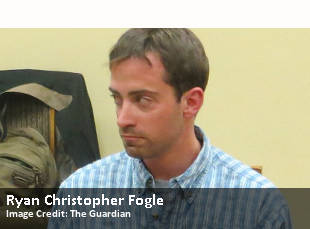
The Russian Ministry of Foreign Affairs lodged an official complaint yesterday with the United States Ambassador to Russia over the alleged espionage activities of Ryan Christopher Fogle. The Third Secretary in the Political Section of the US embassy was arrested with great media fanfare on Monday night, allegedly as he was trying to recruit a Russian intelligence officer. As can be expected, the Russian media had a field day with Fogle’s arrest; after all, it has been nearly a decade since the last time an American intelligence operative was publicly uncovered on Russian soil. Many Western observers, however, have questioned if Fogle could really be an officer of the Central Intelligence Agency, and whether the Russian Federal Security Service (FSB) simply framed an unsuspecting junior American diplomat. Much of the skepticism expressed by Western commentators focuses on the articles that were allegedly found by the FSB in Fogle’s backpack. They included several pairs of sunglasses, recording devices, as well as two wigs. Would a CIA officer be foolish enough to be carrying with him surreptitious recording devices in downtown Moscow? And do modern case officers still employ wigs when walking the streets of foreign capitals recruiting spies? The answer is, of course, yes. Read more of this post










 intelNews.org
News you may have missed #881 (Cold War history edition)
August 14, 2014 by Ian Allen Leave a comment
►►McCarthy-era prisoner tries to overturn espionage conviction. In 1950, Miriam Moskowitz was secretary to Abraham Brothman, an American chemical engineer who was convicted for providing secret industrial information to communist spy Elizabeth Bentley. Moskowitz, who was having an affair with Brothman at the time of his arrest, was convicted of obstructing justice and served two years in prison. Now at age 98, she claims she has discovered evidence that key witness testimony about her role in Soviet espionage was falsified, and wants her conviction thrown out. In 2010, Moskowitz authored the book Phantom Spies, Phantom Justice, about her case.
►►Files show USSR spied on Czechoslovak communist leaders after 1968. The Soviet KGB spied aggressively on senior members of the Czechoslovak Communist Party (KSČ) for two decades following the Prague Spring of 1968, because it mistrusted them. The information on Soviet intelligence activities against the KSČ comes from files in to the so-called Mitrokhin Archive. Vasili Mitrokhin was a KGB archivist, who painstakingly copied tens of thousands of pages of the spy agency’s files prior to defecting to Britain following the dissolution of the USSR.
►►Canada’s spy agency reveals Cold War-era spying equipment. As part of its celebrations for its 30-year anniversary, the Canadian Security and Intelligence Service has released photographs of what it calls “tools of the trade” –gadgets designed to hide or transport secret communication, acquire surreptitious photographs, listen in on private conversations, etc., without detection. The gadgets include Soviet defector Igor Gouzenko‘s gun, a toy truck with a concealment compartment for hiding a microdot reader, a hollowed-out battery used to contain clandestine messages or microfilm, and many others.
Filed under Expert news and commentary on intelligence, espionage, spies and spying Tagged with 0 Canada’s spy agency reveals Cold War-era spying equipment, 0 Files show USSR spied on Czechoslovak communist leaders after 1968, 0 McCarthy-era prisoner tries to overturn espionage conviction, Canada, Cold War, CSIS (Canada), Czechoslovak Communist Party, Czechoslovakia, espionage, history, Miriam Moskowitz, News, news you may have missed, spycraft, United States, USSR, Vasili Mitrokhin