Russia expels two UK diplomats, accuses London of sabotaging Trump peace plan

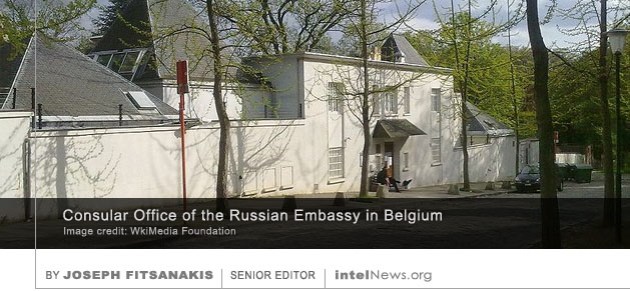
FSB RussiaTHE RUSSIAN FEDERATION HAS revoked the accreditation of two British diplomats over espionage allegations, while also accusing the United Kingdom of sabotaging the United States’ “peace plan” for Ukraine. The Russian Federal Security Service (FSB) said on Monday that the diplomatic expulsions involved two British men, a diplomat stationed at British embassy in Moscow, as well as a spouse of another British diplomat.

According to the FSB, the two men “intentionally provided false information” to Russian authorities when they were granted official permission to enter the country, which made them ineligible for continued accreditation. Additionally, the FSB claims it has in its possession evidence that the two men have been “carrying out intelligence and subversive work” on Russian soil, which “threatens the security of the Russian Federation”.

In February of this year, the United Kingdom expelled a Russian diplomat in an apparent response to earlier expulsions of British diplomats by Russia, which occurred in November 2024. The rounds of diplomatic expulsions between London and Moscow go back to at least 2022, after Russia invaded eastern Ukraine for the second time. This week’s expulsions raise the number of British diplomats that have been expelled from Russia to seven.

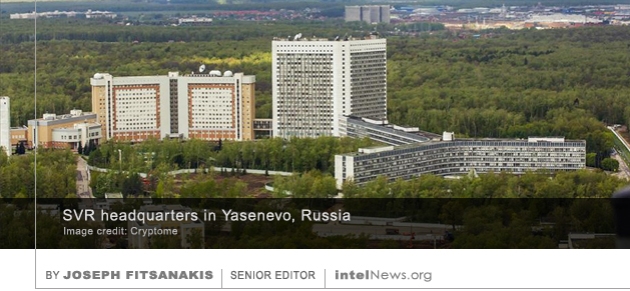
Meanwhile Russia’s Foreign Intelligence Service (SVR), which carries out intelligence operations abroad, has accused Britain of being “the world’s biggest warmonger”. In a statement shared with reporters on Monday, the SVR claimed that London was actively sabotaging American efforts to “secure peace” in Ukraine by “undermining the peacekeeping efforts” of United States President Donald Trump.

In a statement issued on Monday, the British Foreign and Commonwealth Office said it was not the first time that Russia had leveled “malicious and baseless accusations” against its diplomats.

Author: Joseph Fitsanakis | Date: 10 March 2025 | Permalink

At least four Russians released in prisoner exchange with West are verified ‘illegals’

SVR hqAT LEAST FOUR OF the eight Russians released by the United States and its allies last week, in exchange for 16 people held in Russian prisons, are verified ‘illegals’ —the term used to describe Russian non-official-cover intelligence personnel. All four operated using third country identity documents, including passports. In every case but one, these identity documents had been illegally acquired.

In intelligence parlance, the term ‘illegals’ emerged during the Cold War to describe Russian intelligence personnel who operated without any formal association with Russian diplomatic facilities. In many cases, these operatives used third country passports. This enabled them to operate with an unusual degree of flexibility and evade the attention of rival intelligence services. At the same time, however, the absence of diplomatic credentials prevented these operatives from claiming diplomatic immunity if caught. It thus exposed them to the possibility of lengthy prison terms upon discovery.

THE TWO GRU ILLEGALS

Among the prisoners exchanged last week was Pavel Alekseyevich Rubtsov. Rubtsov was born in the Soviet Union as the grandson of a Spanish evacuee, who had been taken to Moscow as a child by the leftist Spanish Republic during the Spanish Civil War. At the age of 9, Rubtsov moved with his mother to Spain, where he had his name legally changed to Pablo González Yagüe and grew up in Catalonia and the Basque Country. He was arrested in Poland in 2022 and charged with participating in foreign intelligence activities against Poland on behalf of the Main Directorate of the Russian Armed Forces’ General Staff, which is commonly known as GRU.

IntelNews has previously reported on the case of Mikhail Valeryevich Mikushin, who was also released and returned to Russia on Thursday. Mikushin lived for several years in Canada and Norway using a Brazilian passport under the name of José Assis Giammaria. When he was arrested by Norwegian authorities, Mikushin was working as a researcher on arctic security affairs for the Arctic University of Norway. Among other things, Mikushin was a volunteer researcher for a UiT GreyZone, a scholarly project that studies contemporary hybrid threats and grey zone warfare. Like Yagüe, Mikushin is also believed to have been employed by the GRU.

THE TWO SVR ILLEGALS

Arguably the most unusual case of illegals among those unveiled last week is that of Artem Dultsev and Anna Dultseva. The couple moved from Argentina to Ljubljana, the capital of Slovenia, in 2017. They brought with them their two young children, a boy and a girl, both of whom appear to have been born in Argentina. Artem Dultsev’s Argentinian passport bore the name Ludvig Gisch, born in 1984 in the West African country of Namibia. Dultsev posed as an information technology executive. His wife, Anna Dultseva, who operated an art gallery, used the cover name Maria Rosa Mayer Munos and went by Mayer. Read more of this post
Russian intelligence planned to assassinate SVR defector living in the United States

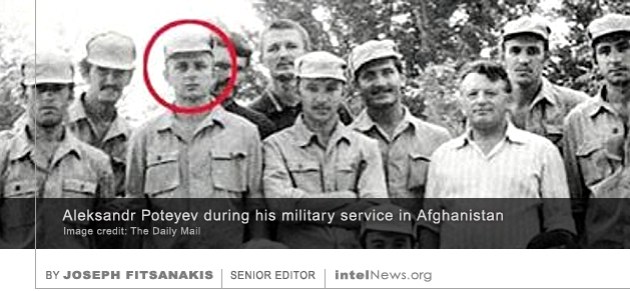
Aleksandr PoteyevTHE RUSSIAN INTELLIGENCE SERVICES planned to assassinate a Russian former intelligence officer, who had defected to the United States and was living in an apartment complex in Florida, according to a new report. The alleged assassination plan is discussed in the forthcoming book Spies: The Epic Intelligence War Between East and West (Simon and Schuster), authored by Harvard University academic Calder Walton.
According to Dr. Walton, Russian intelligence targeted Aleksandr Poteyev, who served as Deputy Director of the Russian Foreign Intelligence Service (SVR) from 2000 until 2010. Poteyev was reportedly in charge of the SVR’s Directorate “S”, which oversees the work of illegals —a term that refers to SVR operations officers who work in without official cover around the world. It is believed that Poteyev began working for the United States Central Intelligence Agency (CIA) in 1999, as an agent-in-place.

By 2010, when he openly defected to the United States, Poteyev had provided the CIA with information that led to the high-profile arrest of 10 Russian illegals by the Federal Bureau of Investigation (FBI). Some believe that the SVR defector was also responsible for the arrests of Russian spies in Germany and Holland. In 2011, a Russian court tried Poteyev in absentia and sentenced him to 25 years in prison. Poteyev remains at large and is believed to be living in the United States under the protection of the CIA’s National Resettlement Operations Center.

On Monday, The New York Times reported that it had independently confirmed Dr. Walton’s claims, with the help of “three former senior American officials who spoke” to the paper “on the condition of anonymity”. According to The Times, a 2016 report by the Moscow-based Interfax news agency, which claimed that Poteyev had died in the United States, was part of a deliberate disinformation operation by the SVR, which was aimed at enticing the defector to emerge from his hideout.

When that attempt failed, the SVR allegedly recruited a Mexican scientist who lived in Singapore, Hector Alejandro Cabrera Fuentes, to travel to Miami, Florida, in 2020, in order to locate Poteyev. But Fuentes attracted the attention of the authorities while driving around in Miami and was subsequently detained by US Customs and Border Protection agents as he was trying to board a flight to Mexico City. Fuentes then provided details of his mission to the FBI. The Bureau eventually determined that the goal of the SVR had been to assassinate Poteyev.

According to The New York Times, the realization that the SVR had planned to carry out an assassination operation on American soil “spiraled into a tit-for-tat retaliation by the United States and Russia”, which included cascading sanctions and diplomatic expulsions on both sides. The paper reports that, in April 2021, the White House ordered the expulsion of 10 Russian diplomats from the United States, including the SVR’s chief of station, who had two years left on his Washington, DC, tour. The Kremlin responded by expelling an equal number of American diplomats from Russia, including the CIA station chief in Moscow.

Author: Joseph Fitsanakis | Date: 21 June 2023 | Permalink

Ukrainian drone strikes may have targeted Moscow homes of Russian spies

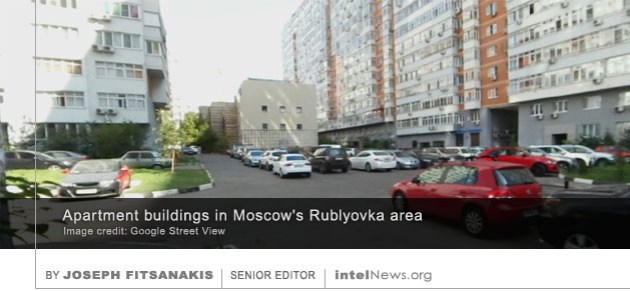
Rublyovka, MoscowA SERIES OF COORDINATED drone strikes that struck Moscow last week were not random, but may in fact have targeted the homes of senior Russian intelligence officials, according to a new report by an American television network, which cited knowledgeable sources and data by an open-source research firm.
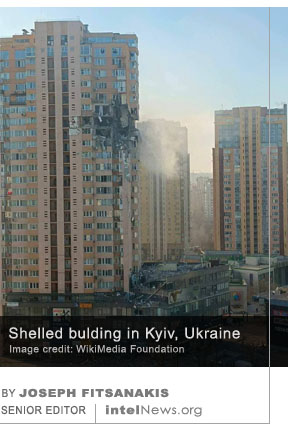
In the early morning hours of May 30, a fleet of at least six unmanned aerial vehicles (UAVs) struck what appeared to be residential apartment blocks in Moscow’s southeastern suburbs. The targets were all located in Moscow’s Rublyovka area, which contains some of the wealthiest neighborhoods in the Russian capital. Many expressed surprise at the airborne assault, as it was the first known attack against residential targets in Moscow since the latest phase of the Russian invasion of Ukraine, which began in February 2022.

Upon initial inspection, the targets of the early-morning attack appeared to have been chosen at random. Yesterday, however, the American television network NBC claimed that the targets of the attack had been carefully selected as “a part of Ukraine’s strategy of psychological warfare against Russia”. Citing “multiple sources familiar with the strikes”, including a senior United States official and a congressional staffer, NBC said that the targets of the attacks were all residences of Russian government personnel.

The television network also cited data by Strider Technologies, an open-source strategic intelligence company located in the American state of Utah, according to which at least one of the buildings that were struck by the UAVs housed a Russian state-controlled military contractor. According to Strider Technologies, the contractor provides services to a military unit that is known to be a front for Russia’s Foreign Intelligence Service (SVR). NBC further claimed that other targets in the alleged Ukrainian operation targeted the residences of senior Russian intelligence personnel.

Author: Joseph Fitsanakis | Date: 08 June 2023 | Permalink

U.S., Russian spy agencies publish rival ads encouraging would-be informants

Russia Ukraine WarRIVAL ONLINE CAMPAIGNS BY American and Russian intelligence agencies are encouraging each other’s citizens to contact them, share information and possibly even defect. At least three ads have been  on social media, with the Federal Bureau of Investigation (FBI) issuing the earliest one in February of this year. The Central Intelligence Agency (CIA) and its Russian counterpart, the Foreign Intelligence Service (SVR), are now believed to have published similar ads.
The FBI ad initially appeared on Twitter, directing users to the website of the Bureau’s Washington Field Office. There, a text in Cyrillic urges Russian nationals to “change [their] future” by contacting the FBI. The CIA followed suit on Monday of this week by posting a video on its new channel on Telegraph, a popular social media platform among young Russians. The CIA video portrays frustrated Russian government employees morally torn by the Kremlin’s policies. It concludes with them contacting the CIA through a secure online connection. A narrator’s voice states, “my family will live with dignity thanks to my actions”. Viewers are then assured that their safety is the CIA’s highest priority, should the choose to do the same.

Shortly after the CIA video appeared online, the Russian Ministry of Foreign Affairs’ Director of Information, Maria Zakharova, said that the Russian government would respond “appropriately” to what she called a “CIA provocation”. On Wednesday, a number of Western media outlets reported that the SVR had unveiled a short recruitment video seemingly targeting Americans. The video, shared on Telegram, includes archival news footage of United States military and police personnel, flag-burning demonstrators, and protests against abortions. It concludes with footage of President Joe Biden overlaid with a sniper crosshairs. A narrator states in English: “If you want to help normalcy, help the Foreign Intelligence Service of the Russian Federation”.

Amid the ongoing war in Ukraine, both the United States and Russia are engaging in extensive cyber-enabled operations aimed at each other’s targets. However, these recruitment videos underscore the continued need for highly placed human sources and their central role in multi-platform intelligence collection efforts.

Author: Joseph Fitsanakis | Date: 18 May 2023 | Permalink

More on Russian alleged spies expelled from the Netherlands and Belgium

Kremlin KootAs intelNews reported earlier this week, a joint investigative effort by Dutch and Belgian media exposed details about a group of alleged Russian intelligence officers, who were expelled by Belgium and The Netherlands in March 2022. Dutch state broadcaster NOS and its flagship current affairs program, Nieuwsuur, aired the names, photos and backgrounds of 17 Russian intelligence officers, who were expelled from the Netherlands in March of this year. According to the Dutch government, the expelled diplomats were involved in counterintelligence and in espionage targeting the country’s high-tech sector.

According to the reports, at least 20 Russian official-cover officers were active in the Netherlands in early 2022. The reporters said they spoke with intelligence sources and the Dossier Center. That organization is financed by banned Russian oligarch and Putin critic Mikhail Khodorkovsky, and claims to have access to leaked databases that contain information about the education and background of Russian intelligence officers.

Eight of the expelled officers work for the Russian Foreign Intelligence Service (SVR), while the other nine work for the Main Directorate of the Russian Armed Forces’ General Staff (GRU). Some of them presented themselves as trade representatives in Amsterdam, as military attachés, or as diplomats at the Organisation for the Prohibition of Chemical Weapons. Read more of this post

Journalists reveal names of Russian diplomats expelled by Netherlands for espionage

SVR hq

AN INVESTIGATION BY A consortium of journalists from the Netherlands and Belgium has revealed the identities of 17 Russian diplomats, who were expelled in April by Dutch authorities for allegedly engaging in espionage. The expelled diplomats were among hundreds of members of the Russian diplomatic corps, who were expelled from all over Europe in March and April of this year, in response to Russia’s invasion of Ukraine.

As intelNews reported on April 4, the diplomats who were expelled from the Netherlands were serving at the Russian embassy in The Hague. Some of them also represented Russia at the Organization for the Prohibition of Chemical Weapons (OPCW) headquarters in The Hague. Russia responded on April 19, by announcing the expulsion of 15 Dutch diplomats from the embassy of the Netherlands in Moscow. As is customary in such cases, neither the Netherlands nor Russia revealed the names of the expelled diplomats.

Now, however, the identities of the expelled Russian diplomats have been revealed, thanks to an investigation by of a group of Dutch and Belgian journalists. The investigation was conducted under the auspices of the Dossier Center, a London-based Russian-language organization that specializes in investigative reporting. The conclusions of the invesgitation were first reported by Belgian newspaper De Tijd and by Netherlands public television, NOS.

According to the investigation, eight of the 17 expelled Russian diplomats were employees of the Russian Foreign Intelligence Service, known as SVR. The remaining nine were employed by the Main Directorate of the Russian Armed Forces’ General Staff, which is commonly known as GRU. At least six of the expelled diplomats worked as encryption specialists. They handled the communications systems that the Russian intelligence personnel who were stationed in the Netherlands used in order to exchange secret information with Moscow. A smaller number worked in counterintelligence, and were tasked with preventing efforts by adversary intelligence services to recruit Russian diplomatic personnel stationed in the Netherlands.

The report by the Dossier Center includes information about the identities of the Russian diplomats, as well as photographs and detailed biographical data about their background. According to the authors of the report, all information included in the report was collected from open sources, including from social media accounts that were maintained by the expelled Russian diplomats.

Author: Joseph Fitsanakis | Date: 17 October 2022 | Permalink

Newspaper discloses names of Russian alleged spies expelled from Belgium

Russian embassy in BelgiumA BRUSSELS-BASED NEWSPAPER has publicized the names and backgrounds of nearly two dozen Russian diplomats, who were recently expelled by the Belgian government on suspicion of espionage. A total of 21 Russian diplomats were expelled from Belgium in April, in co-ordination with dozens of European governments. The move was part of a broader European wave of diplomatic expulsions of Russian diplomatic personnel, in response to the Russian invasion of Ukraine.
Like other governments in Europe, the Belgians carried out the expulsions of Russian diplomats in secret, and employed a “no comment” policy in response to media requests. Such an approach is customary when it comes to diplomatic expulsions. It allows the government ordering the expulsions to expect a similar level of discretion if and when its own diplomats are expelled in a possible tit-for-tat move by an adversary. It is therefore highly unusual for information concerning expelled diplomatic personnel to be made public. And yet that is precisely what happened earlier this week, when the EUObserver, an English language newspaper based in Brussels, published information about the names and backgrounds [PDF] of the 21 expelled Russian diplomats. The paper said the information was leaked by a source, but did not elaborate.
According to the newspaper, all 21 expelled diplomats were men. It further alleged that 10 of them were intelligence personnel of the Main Directorate of the Russian Armed Forces’ General Staff. A further nine diplomats worked for the Foreign Intelligence Service (SVR, Russia’s equivalent to the United States Central Intelligence Agency), while two were employees of the external service of the Russian Federal Security Service (FSB). Most were in their 40s, though at least one was in his early 60s and one was in his late 20s. The EUObserver said that some of the information about the alleged spies was unearthed by The Dossier Center, a British-based open-source information outlet, which is similar to Bellingcat. The Dossier Center is funded by the oligarch Mikhail Khodorkovsky, who is a critic of the Russian President Vladimir Putin. Read more of this post

Russian sleeper agent Mikhail Vasenkov reportedly dead at 79

Mikhail VasenkovRUSSIAN DEEP-COVER SPY Mikhail Vasenkov, who was caught by authorities in the United States in 2010, and was later part of a multi-person spy-swap between Washington and Moscow, has reportedly died. Vasenkov was an officer for the Soviet-era Committee for State Security (KGB), under which he constructed his non-official cover identity. In 1976, he reportedly arrived in Lima, Peru, from Madrid, Spain. He traveled on a Uruguayan passport bearing the name “Juan Jose Lazaro Fuentes”. The forged identity had been constructed by the Soviet KGB. The spy agency had used the birth certificate of a Uruguayan child, who had died of respiratory failure in 1947.
In 1979, Lazaro applied for, and was granted, Peruvian citizenship. A few years later, he met and married Peruvian journalist Vicky Pelaez, with whom he had a son. In 1985, the Lazaros moved to New York, along with their child and a son Pelaez had from a previous relationship. The couple were arrested by the FBI in 2010, and later admitted being in the service of Russian intelligence. They were among 10 Russian non-official-cover intelligence officers, who were swapped for a number of Western-handled intelligence agents held in Russian prisons.

In January of 2020, the Russian Foreign Intelligence Service (SVR), which is one of the KGB’s successor agencies, admitted for the first time that Vasenkov had been an intelligence officer. This unusual announcement directly contradicted Vasenkov’s own claims 10 years earlier: the spy had allegedly said that he was not Russian, did not understand or speak Russian, and wanted to move to Peru.

On April 6 of this this month, the SVR announced Vasenkov’s death, saying he was 79 years old. The announcement gave no cause of death. It added that Vasenkov had served in the so-called “special reserve staff” of the organization, which refers to spies who do not operate under diplomatic cover abroad. The obituary noted that Vasenkov had “created and headed an illegal residency”, which “obtained valuable political information, that was highly appreciated” by Russian decision-makers. It also said that Vasenkov had acquired the rank of colonel in 2005.

Author: Joseph Fitsanakis | Date: 22 April 2022 | Permalink

Colombia and Russia expel diplomats over espionage allegations

SVR hqCOLOMBIA EXPELLED TWO RUSSIAN diplomats earlier this month, without publicly explaining why, according to news reports. Several Colombian news outlets reported on Tuesday that the two Russians were expelled after they were found engaging in espionage. Also on Tuesday, Colombian officials confirmed earlier reports that Moscow had expelled two Colombian diplomats in a tit-for-tat response.

At a press conference held in Bogota on Tuesday December 22, officials from Colombia’s Ministry of Foreign Affairs revealed that two Russian diplomats had been expelled from the Colombian capital on December 8. However, they refused to provide the reasons for the expulsions, other than to claim that the two Russians had “engaged in violations” of the Vienna Convention on Diplomatic Relations. In a separate interview, Colombian President Ivan Duque said that “to reveal more information at this moment would not correspond with the principal of continuing bilateral relations” between Colombia and Russia.

However, several leading Colombian newspapers, including El Tiempo and Semana claimed that the two Russians had engaged in espionage that targeted Colombia’s energy and minerals industry in the city of Cali. An urban center of 2.2 million inhabitants, Cali is known as southern Colombia’s leading economic hub, and is among Latin America’s fastest-growing local economies.

El Tiempo named the two Russians as Alexander Paristov and Alexander Belousov. Also on Tuesday, Colombia’s W Radio alleged that Paristov is an officer in the Russian Foreign Intelligence Service, which is the Russian equivallent of the United States’ Central Intelligence Agency. It added that Belousov is an officer in the Main Directorate of the Russian Armed Forces’ General Staff, which is known as GRU.

The Russian Ministry of Foreign Affairs and the Russian embassy in Bogota did not respond to questions by Colombian media about the diplomats’ expulsions.

Author: Joseph Fitsanakis | Date: 24 December 2020 | Permalink

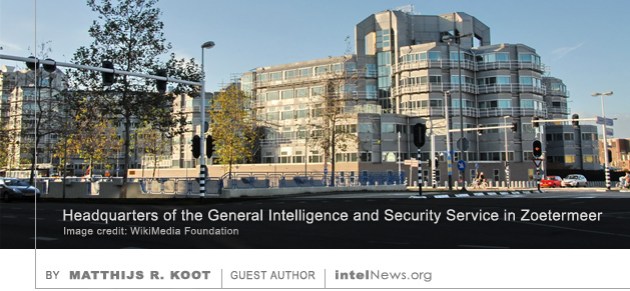
Holland expels two Russian diplomats, summons Kremlin envoy to issue protest

AIVD HollandOn 10 December 2020, the Dutch Minister of the Interior and Kingdom Relations, Kajsa Ollongren, sent a letter to the House of Representatives to inform them about the disruption of a Russian espionage operation in the Netherlands by the Dutch General Intelligence and Security Service (AIVD).
In connection with Ollongren’s revelations, two Russians using a diplomatic cover to commit espionage on behalf of the Russian Foreign Intelligence Service (SVR) were expelled from the Netherlands. The Russian ambassador to the Netherlands was summoned by the Dutch ministry of Foreign Affairs, which informed him that the two Russians have been designated as persona non grata (unwanted persons). In an unusual move, the AIVD also issued a press statement about this incident in English. The AIVD also released surveillance footage (see 32nd minute of video) of one of the two Russian SVR officers meeting an asset at a park and exchanging material.

The two expelled persons were officially accredited as diplomats at the Russian embassy in The Hague. Minister Ollongren says one of the two SVR intelligence officers built a “substantial” network of sources working in the Dutch high-tech sector. He pursued unspecified information about artificial intelligence, semiconductors, and nano technology that has both civilian and military applications. The Netherlands has designated “High Tech Systems and Materials” (HTSM) as one of 10 “Top Sectors” for the Dutch economy.

In some cases the sources of the SVR officers received payments for their cooperation. According to Erik Akerboom, Director-General of the AIVD, said the agency had detected “relatively intensive” contact between sources and the SVR officers in ten cases. The case involves multiple companies and one educational institute, whose identities have not been revealed. The minister states in her letter that the espionage operation “has very likely caused damage to the organizations where the sources are or were active, and thereby to the Dutch economy and national security”.

The minister announced that the Immigration and Naturalization Service (IND) will take legal action against one source of the two Russians, on the basis of immigration law. The minister also announced that the government will look into possibilities to criminalize the act of cooperating with a foreign intelligence service. Currently, that act on and by itself is not a punishable offense. Under current Dutch and European law, legal possibilities do exist to prosecute persons for violation of confidentiality of official secrets or company secrets.

This newly revealed espionage operation follows other incidents in the Netherlands, including a GRU operation in 2018 that targeted the Organization for the Prohibition of Chemical Weapons in The Hague, and a case in 2015 involving a talented Russian physicist working on quantum optics at the Eindhoven University of Technology. In the latter case, no information was made public about what information the physicist sold to Russian intelligence services. And in 2012, a senior official of the Dutch Ministry of Foreign Affairs was arrested for intending to sell classified official information to a Russian couple in Germany who spied for Russia. He was eventually given an eight year prison sentence.

Author: Matthijs Koot | Date: 14 December 2020 | Permalink

News you may have missed #908

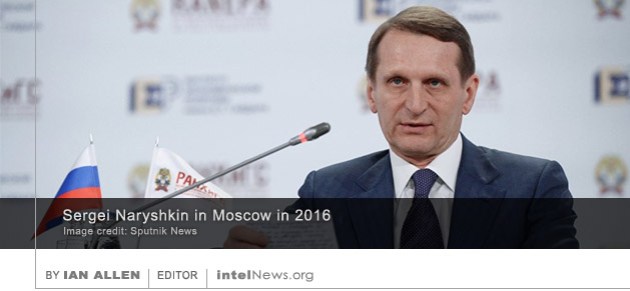
Sergei NaryshkinRussian spy chief in rare interview with the BBC. In an exclusive interview, Sergei Naryshkin (pictured), the head of Russia’s Foreign Intelligence Service (SVR) has told the BBC that America has been trying to “rule the world” and this could lead to “disaster”. Russia’s spy chief, who was talking to the BBC’s Steve Rosenberg on the occasion of the 75th anniversary of the end of World War Two, also said that Russia doesn’t trust what the British government says about the Salisbury poisonings.
India and Pakistan embassies to cut staff by half over spy row. India is expelling close to half of the staff at Pakistan’s embassy in New Delhi over espionage claims. Islamabad has reciprocated with the same orders for the Indian High Commission. Notably, both commissions do not have a permanent ambassador in place. Tensions have remained high since India scrapped Kashmir’s semi-autonomous status last year.

Israel moves to redeploy spy agency to track surging virus cases. Israel’s parliament gave initial approval Wednesday to a controversial bill enabling the government to use its domestic security agency to track cases of coronavirus, which are rising again. Cabinet mandated Shin Bet to use cell phone surveillance as an emergency measure to combat the virus in mid-March as mounting numbers of Israelis tested positive for the novel coronavirus. The specifics were kept secret, but security officials said the agency had tracked virus carriers’ movements through their phones. The measure was discontinued on June 10 as infection rates dropped. But following two weeks that have seen growing numbers of Israelis infected with the virus, Prime Minister Benjamin Netanyahu decided to table the bill.

Russian spy agency reveals identities of undercover officers in rare move

Sergei NaryshkinIn an extremely rare move, the head of Russia’s spy agency has disclosed the identities of several undercover officers during an event marking the centenary of the KGB and its modern-day successor, the Russian Foreign Intelligence Service, or SVR.

The identities of the officers —most of whom are now retired or dead— were disclosed on Tuesday by Sergei Naryshkin, head of the SVR. Speaking at a press conference in Moscow, Naryshkin revealed the names and read the brief biographical notes of seven non-official-cover officers, referred to in Russian as “pазведчики-нелегалы”, or ‘illegals’. The term refers to undercover intelligence officers who are secretly posted abroad without diplomatic cover. Accordingly, they have no official connection to a Russian diplomatic facility, while some even pose as citizens of third countries.

Since 1922, illegals have operated out of the KGB’s and (after 1991) the SVR’s “S” Directorate, whose formal title is First Main Directorate or First Chief Directorate. It is customary to keep the identities of illegals secret following their retirement and even after death. However, in December of last year Naryshkin surprised many by announcing that he would soon disclose the identities of a number of former members of what he described as the “special reserve staff”, at an event to mark the centenary of the KGB and SVR.

He did so on Tuesday, when he disclosed the names of seven individuals and described their work in broad terms. The names disclosed by Naryshkin were: Yury Anatolievich Shevchenko (born 1939), Yevgeny Ivanovich Kim (1932-1998), Mikhail Anatolyevich Vasenkov (born 1942), Vitaly Viacheslavovich Netyksa (1946-2011) and his spouse Tamara Ivanovna Netyksa (born 1949), Vladimir Iosifovich Lokhov (1924-2002) and Vitaly Alekseyevich Nuykin (1939-1998).

The accompanying biographies released by the SVR disclose no specifics about the countries in which these illegals operated, the type of work they carried out, and the specific dates in which they were active. Most of them operated between the late 1960s and the early 1990s.

Author: Ian Allen | Date: 29 January 2020 | Permalink

Russian security services honor members of the Cambridge spy ring with plaque

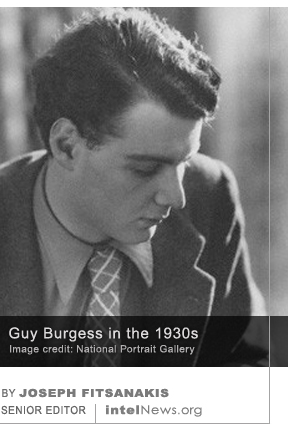
Guy BurgessThe intelligence service of Russia has openly honored two British members of the so-called Cambridge Five spy ring, who caused great controversy during the Cold War by defecting to Moscow. The intelligence services of the Soviet Union recruited five Enlishmen, H.A.R. ‘Kim’ Philby, John Cairncross, Donald Maclean, Anthony Blunt, as well as an unnamed fifth person, to spy for them in the 1930s. All five were recruited while they were promising young students at Britain’s elite Cambridge University, and entered the diplomatic and security services in order to supply Moscow with classified information about Britain and its allies.
In 1951, shortly before they were detained by British authorities on suspicion of espionage, Burgess and Maclean defected to the Soviet Union. They both lived there under new identities and, according to official histories, as staunch supporters of Soviet communism. Some biographers, however, have suggested that the two Englishmen grew disillusioned with communism while living in the Soviet Union, and were never truly trusted by the authorities Moscow. When they died, however, in 1963 (Burgess) and 1983 (Maclean), the Soviet intelligence services celebrated them as heroes.

On Friday, the Soviet state recognized the two defectors in an official ceremony in the Siberian city of Samara, where they lived for a number of years, until the authorities relocated them to Moscow. Kuibyshev, as the city was known during Soviet times, was technically a vast classified facility where much of the research for the country’s space program took place. While in Kuibyshev, Burgess and Maclean stayed at a Soviet intelligence ‘safe house’, where they were debriefed and frequently interrogated, until their handlers were convinced that they were indeed genuine defectors.

At Friday’s ceremony, officials unveiled a memorial plaque at the entrance to the building where Burgess and Maclean lived. According to the Reuters news agency, the plaque reads: “In this building, from 1952-1955, lived Soviet intelligence officers, members of the ‘Cambridge Five’, Guy Francis Burgess and Donald Maclean”. On the same day, a letter written by Sergei Naryshkin, head of Russia’s Foreign Intelligence Service (SVR), one of the institutional descendants of the Soviet-era KGB, appeared online. In the letter, Naryshkin said that Burgess and Maclean had made “a significant contribution to the victory over fascism [during World War II], the protection of [the USSR’s] strategic interests, and ensuring the safety” of the Soviet Union and Russia.

Last year, Russian officials named a busy intersection in Moscow after Harold Adrian Russell Philby. Known as ‘Kim’ to his friends, Philby was a leading member of the Cambridge spies. He followed Burgess and Maclean to the USSR in 1963, where he defected after a long career with the British Secret Intelligence Service (MI6).

Author: Joseph Fitsanakis | Date: 22 December 2019 | Permalink

Son of Russian spies posing as Canadians gets to keep Canadian citizenship

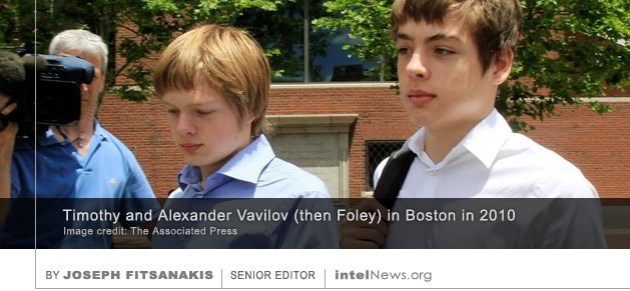
Vavilov FoleyThe son of a Russian couple, who fraudulently acquired Canadian citizenship before being arrested for espionage in the United States, has won the right to keep his Canadian citizenship, which was effectively annulled when his parents were found to be Russian spies.


Tim and Alexander Vavilov are the sons of Donald Heathfield and Tracey Foley, a married couple arrested in 2010 under Operation GHOST STORIES —a counterintelligence program run by the US Federal Bureau of Investigation. Following their arrest, their sons, who allegedly grew up thinking their parents were Canadian, were told that their parents were in fact Russian citizens and that their real names were Andrei Bezrukov and Elena Vavilova. Their English-sounding names and Canadian passports had been forged in the late 1980s by the KGB, the Soviet Union’s primary external intelligence agency.

Since their parents’ arrest on espionage charges, the two brothers, who were born in Canada, have been involved in a prolonged legal battle to have their Canadian citizenship reinstated. The latter was rescinded when it became clear that their parents’ Canadian passports were fraudulent. According to the Canadian Citizenship Act, children born in Canada to “employees of a foreign government” are not entitled to Canadian nationality. But the brothers have argued that they were 20 and 16 when their parents were arrested and were unaware of their double identities. It follows, their lawyers have argued, that they cannot be punished for their parents’ crimes.

In June of 2017, Canada’s Federal Court of Appeal overturned the decision of a lower court and ordered the government to reinstate Alexander Vavilov’s Canadian citizenship. But the Canadian government appealed the decision of the Federal Court of Appeal, which sent the case to the Supreme Court of Canada. The government claimed that the Vavilov brothers should be denied Canadian citizenship because their parents were, effectively, secret employees of a foreign government. The two Russian spies may not have been accredited by the Canadian state as foreign employees, it says, but they were in reality “dedicated to serving their home country, except in their case, the employment was carried out clandestinely”.

On Thursday, however, Canada’s Supreme Court sided with Alexander Vavilov’s lawyers and ordered that he can keep his Canadian citizenship. This decision, which has effectively upheld the earlier decision of the Federal Court of Appeal, almost certainly means that Alexander’s brother, Tim, will also have his Canadian citizenship reinstated.

Author: Joseph Fitsanakis | Date: 20 December 2019 | Permalink