Syrian government accuses Israel of planting spy devices

Alleged spy device found in SyriaBy JOSEPH FITSANAKIS | intelNews.org |
News media affiliated with the government of Syria accused Israel on Thursday of planting a number of spy devices disguised as rocks, which were found located near “sensitive sites” in the country. The government-owned Syrian Arab News Agency, which published photographs of the alleged spy devices, said they were discovered “in the past few days” at an unspecified region on Syria’s Mediterranean coast. Later on the same day, video footage of the devices was aired on Syrian state television. The video footage and photographs show what appear to be large-sized faux rocks. Nestled in their hollow interior are cameras, microphones, transmission devices, as well as large batteries. Syrian media reports said that the transmission gear enabled the devices to broadcast audio and video signals in real time. The camouflaged contraptions closely resemble a number of “mystery devices” found on mountain ranges around the Lebanese capital Beirut in 2010 and 2011. The electronic devices found in Lebanon were hidden under two fake boulders and consisted of surveillance cameras, electronic transmitters, as well as satellite signal reception systems. One of the devices was even connected to a third fake boulder containing long-lasting batteries, which powered the surveillance system. The devices, which were discovered by the Lebanese militant group Hezbollah, displayed manufacturing labels bearing writing in Hebrew and in English, which included the name of a company called “Beam Systems Israel Ltd”. Read more of this post

New information emerges on Hezbollah commander’s assassination

Imad MughniyahBy JOSEPH FITSANAKIS | intelNews.org |
A Lebanese newspaper has published the most detailed account to date of the 2008 assassination of Hezbollah commander Imad Mughniyah. The car explosion that killed Mughniyah in Syrian capital Damascus on February 12, 2008, is widely believed to have been the work of the Mossad, Israel’s foremost covert-action agency. Mughniyah was among the founders of Hezbollah, the Shiite militant group that controls large parts of southern Lebanon. At the time of his assassination, Mughniyah headed the Hezbollah’s security apparatus and was among the organization’s most senior intelligence officials. On Tuesday, Arabic-language newspaper al-Akhbar , which is based in Lebanese capital Beirut and is informally affiliated with Hezbollah, published a detailed article that reads like an unclassified version of the militant group’s internal investigation into Mughniyah’s killing. The article claims that “Hezbollah is absolutely positive that Israel was behind […] the operation from A to Z”. It says that Mughniyah’s assassins “were not Syrian citizens”, but rather entered Syria from abroad and stayed there six weeks while planning and executing the assassination operation. The article also claims that the Mossad recruited a Syrian expatriate, who visited Damascus on a regular basis in order to provide logistical support for the operation. This included renting a villa in the outskirts of Damascus and purchasing at least three vehicles to be used in the operation. Read more of this post
News you may have missed #822 (Israeli airstrikes on Syria)

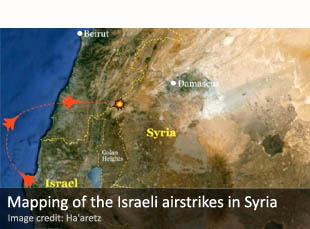
Mapping of the Israeli airstrikes in SyriaBy IAN ALLEN | intelNews.org |
►►Should we be preparing for another Mideast war? Assad may not want a war with Israel, but Tehran could have other calculations. Over the weekend, Iran warned that it would consider any attack on Syria to be an attack on Iran. Claims by Syrian television that Israel hit a research facility near Damascus might be a pretext for an Iranian escalation with Israel. The Israeli army also deployed some of its Iron Dome batteries to northern Israel for the first time. It would not have done so if the chances of a war on Israel’s northern border weren’t increasing.
►►Why did Israel attack Syria now and why did the Syrians admit it? Two days before the Israeli attack on Syria, Iran said it would view any attack on Syrian territory as an attack against Iran itself. But the combination of strategic circumstances in the region at the moment makes the chance of a direct Iranian response unlikely. A Syrian military response seems even less likely, though neither possibility can be ruled out. The most worrying unknown since Tuesday night concerns Hezbollah’s reaction. It seems we are at the beginning of the story —and not the end.
►►Ex-Mossad head says Syria and Hezbollah will not respond. The former Director of Israel’s Mossad spy agency, Danny Yatom, has ruled out any response by the Syrian army or Hezbollah in Southern Lebanon to the Israeli attack on Syria. He told newspaper Yedioth Ahronoth on Wednesday he did not think there would be “any response, since there is no benefit for Hezbollah and Syria to do so”. He added: “Al-Assad is experiencing deep problems in his country and Hezbollah is doing its best to help him, so I don’t think that they will consider any response”.

[Updated] World braces as Israel attacks Syria for first time in 5 years

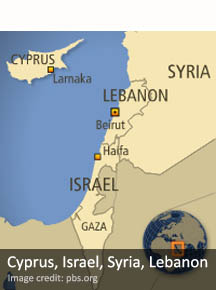
Cyprus, Israel, Syria, LebanonBy JOSEPH FITSANAKIS | intelNews.org |
Alarm bells were sounding all over the Middle East Wednesday as Syria confirmed it had been attacked by Israeli military jets for the first time since 2007. It remains unclear at this point whether the Israeli airstrikes were meant to disrupt the flow of weapons to neighboring Lebanon, or whether Israel has officially entered the Syrian Civil War. Unnamed United States officials told The New York Times late on Wednesday that the Israel Air Force had entered Syrian airspace and destroyed a single truck transporting a “game-changing” cache of weapons to Lebanon. The cargo, allegedly consisting of Russian SA-17 anti-aircraft missiles, is said to have been destined for Hezbollah, the Shiite militant group that controls large parts of southern Lebanon. The alleged attack occurred near Zabadani, a small town on the road that connects Syrian capital Damascus to the Lebanese border. Hours later, however, Syrian state television confirmed the Israeli attack, but said the target was a “military research center aimed at raising the level of resistance and self defense” of the Syrian nation, located near Damascus. Some Israeli media suggest that, if the Syrian government’s claims are accurate, the target of the Israeli attack would seem to have been the so-called Syrian Scientific Studies and Research Center, also known as CERS. Both The New York Times and Israel’s Ha’aretz newspaper report that Israel informed the United States prior to launching the attack, but neither Washington nor Tel Aviv have so far commented on the airstrikes. In the absence of credible corroboration, confusion persists on whether the Israeli action was directed against Hezbollah, or meant to assist the aims of the Syrian opposition –or both. Read more of this post

Syrian President’s mother said to have ‘defected’

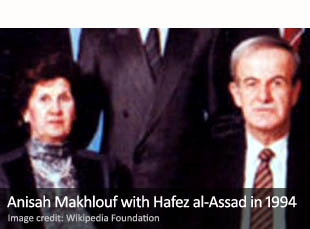
Anisah Makhlouf with Hafez al-Assad in 1994By IAN ALLEN | intelNews.org |
Arab media reports appeared to confirm yesterday an allegation made last week by a senior American diplomat that the mother of embattled Syrian President Bashar al-Assad had abandoned the country. Speaking to CNN last week, Ambassador Robert Ford, who served as the United States’ envoy to Syria until he was recalled by Washington in 2011, said Anisah Makhlouf al-Assad had escaped to the United Arab Emirates. The 78-year-old widow of late Syrian President Hafez al-Assad, who ruled the country with an iron fist from 1970 until his death in 2000, is a revered figure among government supporters. As the current President’s mother, she is said to exercise significant influence on the Syrian regime’s core decision makers, despite her advanced age. According several reports in Arab media, Anisah has now joined her daughter Bushra al-Assad in the Emirates. Bushra, who is the Syrian President’s oldest sister, escaped with her five children to the Gulf oil state in July 2012, after her husband, Assef Shawkat, Syria’s deputy Minister of Defense, was assassinated by the opposition in Damascus along with two other senior Syrian government officials. In his CNN interview, Ambassador Ford argued that Anisah’s defection showed that, “little by little, the inner core [of the Syrian regime] is weakening” as its members are “flaking off. They themselves know they are losing”, he added. Read more of this post

Russia evacuating its citizens from Syria: A political turning point?

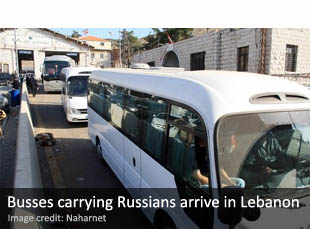
Busses carrying Russians arrive in LebanonBy JOSEPH FITSANAKIS | intelNews.org |
In a move that surprised observers, the government of Russia began on Tuesday to evacuate its citizens from Syria. Late on Tuesday afternoon, four chartered busses carrying nearly a hundred Russians, mostly women and children, arrived at the Jdaidet Yabous border crossing, which links Syria with Lebanon. As soon as they stepped on Lebanese soil in Masnaa, which is located five miles west of Jdaidet Yabous, the evacuees were met by an official from the Russian embassy in Beirut, who had been waiting for them for several hours. Russian officials dismissed rumors that this is the beginning of a mass evacuation of Russian citizens from Syria. But international observers described this development as “the strongest indication yet” that Moscow is acknowledging the eventual collapse of the regime in Damascus. Russia has persisted in its role as the strongest international backer of the regime of Syrian President Bashar al-Assad since 2011, when the Syrian uprising against his government began. But many view the Kremlin’s move to evacuate some of its citizens as “a turning point in its view of the civil war” in the Middle Eastern country. According to reports by the Associated Press, the Russians onboard the buses, which had been chartered by the Russian government, appeared to have been briefed to avoid contact with the press at the border crossing. Many covered the bus windows closest to them with curtains so as not to be photographed by journalists, and most refused to speak with press crews. The few who spoke publicly said without exception that they were simply traveling to Russia “to visit relatives”. The evacuees were taken to Beirut, where they have been scheduled to board two airplanes chartered by the Russian government, headed for Moscow. Read more of this post

How did the US know that Syria was about to use chemical weapons?

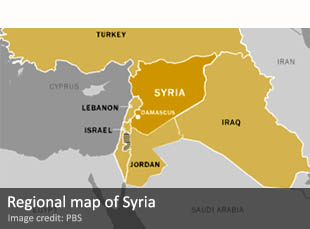
Regional map of SyriaBy IAN ALLEN | intelNews.org |
Early last December, United States President Barack Obama issued a surprise warning to the government of Syria, saying that if it made “the tragic mistake” of using chemical weapons against rebel forces, there would be “immediate consequences”. Most observers took this as a clear indication that the US was prepared to intervene militarily in the ongoing Syrian civil war. Today, a month after Obama’s December ultimatum, one question is still in need of an official answer: namely, how did the United States come to suspect that the Syrians were contemplating using chemical weapons? An article by The New York Times‘ Eric Schmitt and Dave Sanger suggests that Washington was alarmed in late November by a tip-off from Israeli intelligence. According to The Times, the Israelis shared with officials at the US Department of Defense a series of satellite images showing Syrian government troops transporting tank-loads of chemicals to at least two storage sites along the country’s border with Jordan. The paper, which says it confirmed this information by speaking to “half a dozen military, intelligence and diplomatic officials”, claims that Syrian troops were ordered to load sarin nerve gas onto dozens of 500-pound bombs. The plan was for the bombs to be secretly transported by land to military air bases and from there onto planes, pending final approval by Syrian President Bashar al-Assad. According to the Israelis, the bombs could be airborne less than two hours after Assad’s order. By the time the information from the Israelis reached President Obama, American military commanders realized they had been caught by surprise, as there was no time to act in the two hours that it would take the Syrians to deploy the bombs. Read more of this post

CIA helped senior Syrian defector escape to Washington, say sources

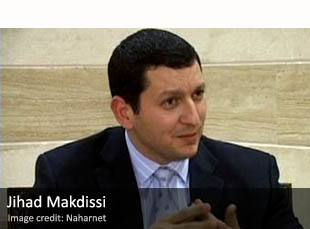
Jihad MakdissiBy JOSEPH FITSANAKIS | intelNews.org |
American intelligence operatives helped facilitate the escape of a senior Syrian government official, who is now allegedly assisting the Central Intelligence Agency’s operations in Syria, according to a British newspaper. The sudden disappearance last November of Jihad Makdissi, official spokesperson of Syria’s Foreign Affairs Ministry, caused widespread speculation that he might have defected. Makdissi, a career diplomat, had been a close collaborator of senior Syrian cabinet officials, including Minister of Foreign Affairs Walid al-Moallem, and Dr. Adnan Hassan Mahmoud, Minister of Information. Initial reports claimed that Makdissi, who is a Christian and is fluent in English and French, had crossed into Lebanon and was hiding in a Christian Beirut neighborhood. But London-based newspaper The Guardian said on Monday that the diplomat had been assisted by “US intelligence officials”, who organized his escape into Lebanon, along with his wife and two children, before secretly transferring them to Washington, DC, “almost one month ago”. If The Guardian’s claim is true, it would mean that US intelligence has secured the cooperation of one of the Syrian regime’s most prominent defectors in recent times. Some argue that Makdissi’s importance as a defector is second only to that of Syria’s former Prime Minister, Riyad Farid Hijab, who escaped with this immediate family to Jordan in August. Read more of this post

Israel special forces conducting cross-border operations in Syria

Regional map of SyriaBy JOSEPH FITSANAKIS | intelNews.org |
Teams of Israeli special forces are currently operating inside Syria in an effort to detect and sabotage the Syrian military’s chemical and biological arsenal. Citing an unnamed “Israeli source”, the London-based Sunday Times newspaper said yesterday that the operation is part of a wider “secret war” to track Damascus’ non-conventional weapons stockpiles and “sabotage their development”. The Israeli government refused comment on the paper’s allegation. However, Israel’s covert activities against the Syrian government’s chemical and biological arsenal go back almost 30 years. Reputedly, some of the more recent such activities may have involved the targeting of Russian scientists. Although Russia routinely denies it, it is believed that Syria’s non-conventional arsenal was significantly augmented in the late 1980s and early 1990s with the help of Russian retired general Anatoliy Kuntsevich. Kuntsevich, one of the Soviet Red Army’s top scientists, is said to have helped Damascus build its XV nerve agent stockpiles, which are still believed to be in existence today. Interestingly, Kuntsevich died suddenly in 2003 onboard a flight from the Syrian capital to Moscow. It was widely speculated at the time that the Mossad, Israel’s covert-action agency, may have played a role in the Russian general’s sudden death. In 2010, another retired Russian general, Yuri Ivanov, who had served as Deputy Director of the GRU, Russia’s military intelligence agency, died in unclear circumstances. The body of 52-year-old Ivanov was found in Turkey on August 16, 2010, several days after he had disappeared close to a Russian naval facility in Syria. Russian media did not report Ivanov’s death until several days later, when he was quietly buried in Moscow. According to reports in the Israeli press, the former GRU official was on his way to a meeting with Syrian intelligence officers when he went missing. Read more of this post

Israel asked for Jordan’s approval to bomb Syria, say sources

Regional map of SyriaBy JOSEPH FITSANAKIS | intelNews.org |
The government of Israel has sent Jordan at least two requests in the past two months to bomb targets in Syria, according to intelligence sources. The Atlantic magazine, which published the revelation on Monday, said Tel Aviv has been seeking Amman’s “permission” to move ahead with “a plan to take out many of Syria’s chemical weapons sites”. Citing unnamed “intelligence officials in two countries”, The Atlantic said that the Israeli requests were communicated to the Jordanian government by officials from the Mossad, Israel’s primary covert-action agency. In both instances, the Mossad delegation was allegedly dispatched to Amman on the orders of the Office of Benjamin Netanyahu, Israel’s Prime Minister. However, the Jordanians are so far resisting the Israeli proposals, says The Atlantic, telling their Jewish neighbors that “the time [is] not right” for direct military action. It is worth pointing out that Israel does not technically require Jordan’s permission to bomb Syria. Its air force can do so without assistance from Amman. This was demonstrated on September 6, 2007, when Israel bombed a target at Al-Kibar, deep in the Syro-Arabian Desert, thought to be the site of a nuclear reactor. Even though Tel Aviv has not officially admitted a role in the attack, Israeli officials have repeatedly hinted that Israel was behind it. According to German newsmagazine Der Spiegel, which published a detailed account of the bombing, the attack was codenamed Operation ORCHARD. The difference this time appears to be that many of Syria’s chemical weapons facilities, which Israel allegedly wants to destroy, are located along the Syrian-Jordanian border. Read more of this post

Jordan claims arrest of seven-member Syrian spy cell in Amman

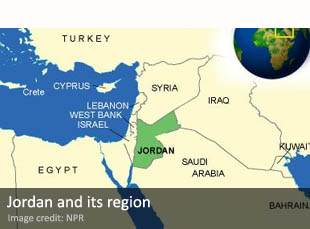
Jordan and its surrounding regionBy IAN ALLEN | intelNews.org |
Security services in the Kingdom of Jordan announced on Tuesday the detention of seven Syrian nationals who were allegedly caught with sophisticated communications devices in their possession. The announcement was made in a laconic press release issued early yesterday evening by Jordan’s Public Security Directorate (PSD), which is the Kingdom’s counterintelligence agency operating under the Ministry of the Interior. The press release said a Syrian national had been arrested in Jordanian capital Amman following “intelligence tips”. Following his detention, the man allegedly told his interrogators that he was a member of a larger Syrian spy cell active in and around Amman. On Monday, PSD forces conducted simultaneous raids across Amman and the nearby city of irbid (50 miles north of the capital), and arrested another six Syrians. According to the PSD, the detainees were found to be in possession of 35 “advanced communications devices” that are “banned in the Kingdom of Jordan”. Sources tell intelNews that the devices are portable two-way radio transceivers, which appear to be satellite-enabled and to have encryption capabilities. In addition to the transceivers, Jordanian counterintelligence allegedly confiscated three laptop computers and a “night vision device”. Special Police Force spokesman Mohammed Khatib told reporters on Tuesday that the seven Syrians were collaborating with Jordanian authorities, but refused to provide specific information on their identities, condition or whereabouts. Read more of this post

Comment: The Significance of the Killing of Lebanon’s Security Chief

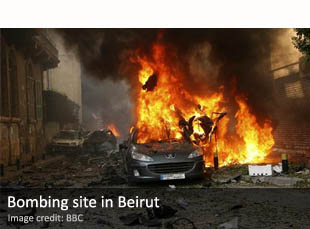
The bombing that killed Wissam al-HassanBy JOSEPH FITSANAKIS*| intelNews.org |
Perhaps the only concrete reality reflected in last week’s assassination of Lebanon’s security chief is the confusion that continues to dominate Western reporting about Lebanese politics. On Friday, Lebanese capital Beirut experienced its most powerful bombing in nearly four years, when a car laden with explosives detonated killing at least eight and injured nearly 100 people. Among the dead was Brigadier General Wissam al-Hassan, head of the intelligence section of Lebanon’s national police force, known as the Internal Security Forces (ISF).  Hassan, a career intelligence officer, was a Sunni Muslim strongly associated with Lebanon’s former Prime Minister Rafik Hariri. Hariri, who was assassinated in Beirut in 2005, was openly anti-Syrian, as was Hassan. This political identification is extremely telling in a country like Lebanon, which has existed under near-complete Syrian political and military domination for the past three-and-a-half decades. Throughout this period, the position of different actors on the Syrian question has been the core defining parameter in Lebanese politics. The same applies to Lebanese institutions. As one such institution, the ISF is widely perceived as strongly anti-Syrian, and is often considered the main rival of the Security Organ of Hezbollah, the Shiite paramilitary group that controls most of southern Lebanon. Read more of this post

Prominent Syrian defector thanks “French intelligence” for help

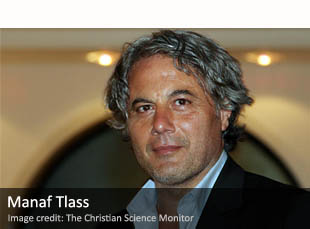
Manaf TlassBy JOSEPH FITSANAKIS | intelNews.org |
A senior Syrian military commander, whose public defection to the rebel side last summer made news headlines around the world, has thanked the French intelligence services for helping him defect.  Brigadier General Manaf Tlass, a member of the Central Committee of the Baath Party and commander of the 10th Brigade of Syria’s elite Republican Guard, secretly left the country in early July. On July 6, he resurfaced in Paris and said he had defected to the rebel-led Free Syrian Army (FSA). His defection was hailed by both the FSA and Western powers as “an enormous blow” to the regime of Syrian President Bashar al-Assad. His central position in Syria’s governing apparatus aside, Tlass was a major symbolic figurehead for the regime. His father, Mustafa Tlass, was Syria’s Minister of Defense for over three decades during the reign of Hafez al-Assad, the current President’s father. Consequently, the Tlass family has long been fully integrated in the Syrian political and military elite that has run the country for nearly half a century.  Although there were reports that the extended Tlass family was considered too close to the rebels by the Assad regime, Tlass’ defection in July came as a shock to most Syrians. The General reportedly disappeared from his post sometime in early July, shortly after sending his wife and son to Beirut, Lebanon. Rumor has it that he secretly traveled to Turkey and from there to Paris, France, either directly or after joining his family in Lebanon. The details of his defection, however, remain obscure. Speaking on Monday to French television channel BFM, Tlass, who is now based in Paris, said he was helped in “getting out of Syria” by what he called “the French services” —presumably the French intelligence services. When the French journalist asked him to clarify how exactly he was able to leave Syria, Tlass responded that he would rather not be drawn into a discussion on the details of his escape, because it could place his contacts inside Syria in danger. Instead, the prominent Syrian defector said he was grateful to the “French services for helping me get out of Syria, and I thank them for that”. Read more of this post

CIA Director reportedly in Turkey for secret talks

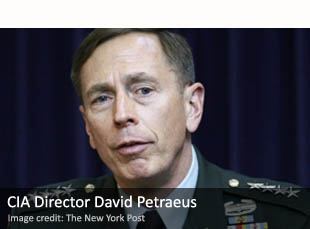
David PetraeusBy JOSEPH FITSANAKIS | intelNews.org |
Turkish and American authorities have refused comment on persistent reports that the Director of the Central Intelligence Agency is currently on a secret visit to Turkey. News of the alleged trip was first reported on Monday by Turkish tabloid daily Akşam. The newspaper said David Petraeus, who heads the United States’ foremost civilian intelligence agency, had arrived earlier that day in Istanbul’s Atatürk International Airport, on his private plane. According to the article, the CIA chief decided to embark on the unannounced trip in order to discuss “counterterrorism and the situation in Syria” with senior Turkish officials. Several hours later, French news agency Agence France Presse reported that, according to “a US official”, the CIA Director was indeed in Turkey, holding secret “meetings on regional issues”. However, the unnamed US source would not provide specific information about Petreaeus’ meeting arrangements while in Turkey, nor would (s)he divulge the names of the Turkish officials that were scheduled to meet with him. Another Turkish daily, Hürriyet, said the CIA Director would probably meet with his Turkish counterpart, MİT chief Hakan Fidan, as well as with Turkey’s Prime Minister Recep Tayyip Erdoğan . But repeated efforts by the paper to confirm this were rebuffed by representatives of the US embassy in Ankara, as well as Turkish officials. Read more of this post

Syria denies Air Force intelligence chief assassinated

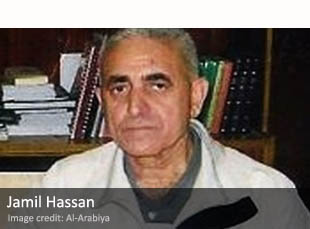
Jamil HassanBy JOSEPH FITSANAKIS | intelNews.org |
A Syrian state-owned television channel has denied reports that the head of Syria’s Air Force Intelligence has been assassinated by one of his aides. The government-controlled al-Dynya TV called reports about the assassination of Lieutenant Jamil Hassan “absolutely false”. However, unlike Syria’s Vice-President, Farouq al-Sharaa, who appeared on television yesterday to dispel rumors he had defected to Jordan, Hassan made no such appearance. Earlier on Sunday, sources affiliated with the opposition Free Syrian Army (FSA) told the Saudi-owned Al-Arabiya television network that Lieutenant Hassan had been killed in his office in Syrian capital Damascus. Born into a prominent military family in the western city of Homs, Syria’s third-largest city and site of some of the worst violence in the ongoing Syrian uprising, Hassan belongs to the country’s Alawite community. It is the same Syrian-based branch of Shiite Islam that counts the country’s President, Bashar al-Assad, as its member. Hassan is believed to be a key member of the Syrian military and a close advisor of the President. Opposition forces consider Hassan a hardline supporter of the Assad regime and charge him with leading the ‘iron fist’ caucus inside the Syrian government. A Syrian opposition source once quoted Hassan as telling Assad: “let me kill a million protesters to end the revolution and I will go to [the International Criminal Court in] The Hague in your place”. Although this quote remains anecdotal, there is little doubt that Hassan’s vocal support for the Assad regime has repeatedly attracted the attention of the opposition FSA, which sees him as one of the most vicious and criminal elements inside the Syrian state. Read more of this post