No evidence Islamic State had foreknowledge of Sri Lanka bombings, says official
June 24, 2019 Leave a comment
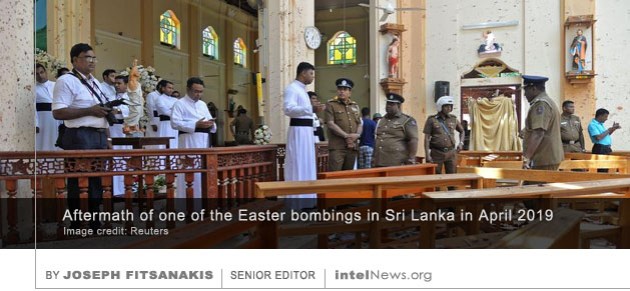 It is not at all clear that the Islamic State and its leader, Abu Bakr al-Baghdadi, who claimed responsibility of the Sri Lanka bombings in April, had foreknowledge of the attacks, according to a top official. The militant Sunni group claimed it was behind the nine suicide blasts that targeted Catholic churches and five-star hotels in Sri Lanka’s western and eastern coastal regions on April 21. The near-simultaneous bombings killed 258 people and injured over 500. They are believed to constitute the bloodiest terrorist attack in the country’s history. Interestingly, many questioned the authenticity of the Islamic State’s claim of responsibility, which came a full two days following the deadly blasts. The group typically issues statements immediately following attacks by its followers around the world. The 48-hour delay in the case of the Sri Lanka bombings, therefore, was deemed “uncharacteristic” by some experts.
Now The Hindu, India’s most-circulated English-language daily, has claimed that the Islamic State probably became aware of the Sri Lanka attacks after they happened. The Islamic State’s news agency, Amaq, issued a statement of responsibility, accompanied by a video showing the suicide bombers pledging allegiance to al-Baghdadi. But The Hindu has quoted “a senior official […] familiar with the probe” into the attacks, who claims that the militant group was contacted by its followers in Sri Lanka only after the attacks made international news headlines. A local Salafi jihadist communicated with the Islamic State on behalf of the National Thowheeth Jama’ath (NTJ), the local group that carried out the bombings. The Islamic State then secured the video of the suicide bombers “through a third party”, said the senior official. Sri Lankan Salafi jihadists eventually convinced the militant group to issue a statement endorsing the attacks in order to “honor those who sacrificed their lives” for the Islamic State’s cause, said the source. It follows, said the official, that the local suicide bombers “were all sympathizers of the Islamic State. But it remains unclear how they maintained links with the Islamic State, if in fact they did”, he added.
The deadly attacks continue to dominate the headlines in Sri Lanka, despite the passage of more than two months since they occurred. Three separate investigations have been launched by the government —one by former Supreme Court judges appointed by the president; one by the Sri Lankan parliament; and one by the country’s police and security services. None of these probes have uncovered evidence that the NTJ militants were in contact with the Islamic State before they launched their wave of suicide attacks on April 21, said The Hindu.
► Author: Joseph Fitsanakis | Date: 24 June 2019 | Permalink
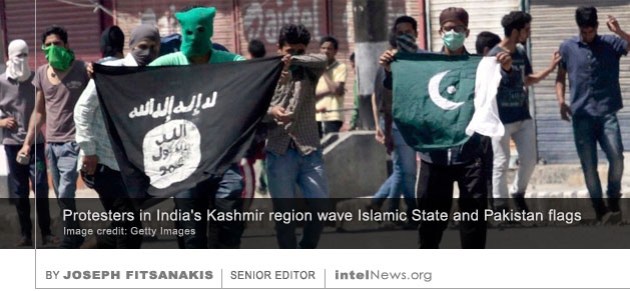 The group calling itself the Islamic State has announced the establishment of a new overseas province in Pakistan, just days after proclaiming another new overseas province in northern India. Until recently, the Islamic State’s operations in Asia were conducted under the banner of the Islamic State – Khorasan Province, or IS-KP. The shadowy group was founded in early 2015 and was led by former Taliban warlords who pledged allegiance to Abu Bakr al-Baghdadi, the spiritual leader and self-proclaimed emir of the Islamic State. Since that time, at least two of IS-KP’s leaders have been killed by United States forces, while the group has been engaged in a war against rival militant groups in Afghanistan and Pakistan, notably the Taliban.
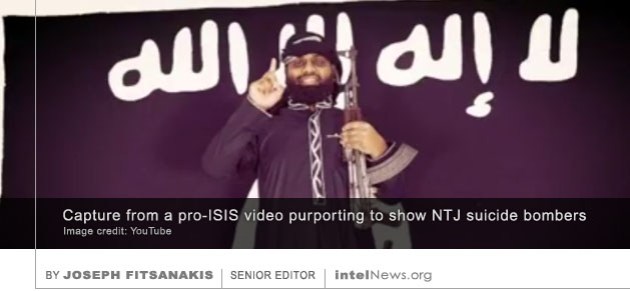 A video posted online by supporters of the Sunni militant group Islamic State appears to show the suicide bombers who carried out Sunday’s bloody attacks in Sri Lanka posing alongside Islamic State flags. Three Catholic churches and three five-star hotels were targeted on Easter Sunday by a total of nine separate blasts, which killed nearly 260 people and injured over 500. The near-simultaneous attacks struck locations in Sri Lanka’s western and eastern coasts and are believed to constitute the bloodiest terrorist attack in the country’s history.
 Documents acquired from retreating Islamic State fighters in Syria appear to show that the militant group is planning a series of high-profile attacks in Europe and the Middle East, using newly formed sleeper cell units. The information was
 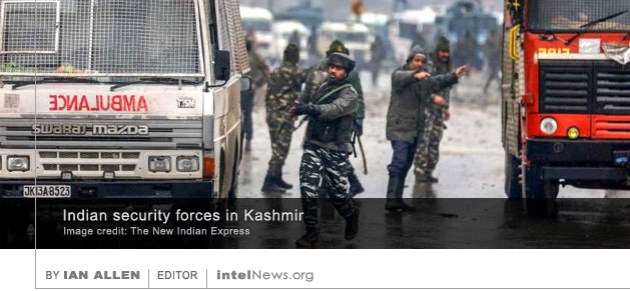 The government of Pakistan employed terrorist groups to attack India, according to Pakistan’s former president, Pervez Musharraf, who also accused India of doing the same. Musharraf, 75, took power in Pakistan in 1999 through a coup d’état supported by the country’s military leadership. The four-star Army general ruled as Pakistan’s 10th president until 2008, when he resigned from power to avoid being impeached. He currently lives in exile in the United Arab Emirates and is wanted in Pakistan for alleged crimes, including high treason. His critics accuse him of arresting several judges in 2007 and suspending the country’s constitution.
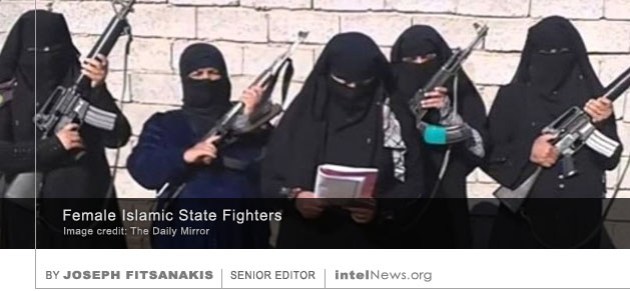 The role of women inside the Islamic State is growing, as the Sunni militant group is transmuting into an underground organization, according to a Harvard University terrorism expert. Since its meteoric rise in Iraq and Syria, the Islamic State has been known for advocating for strict segregation between men and women. In the early stages of the group’s emergence, combat roles were exclusively performed by men, while women’s roles were limited to childbearing and housework. But according to Vera Mironova, Visiting Scholar in the Economics Department at Harvard University, and former Associate of the International Security Program at Harvard’s Belfer Center, the Islamic State’s policy on gender roles is shifting rapidly.
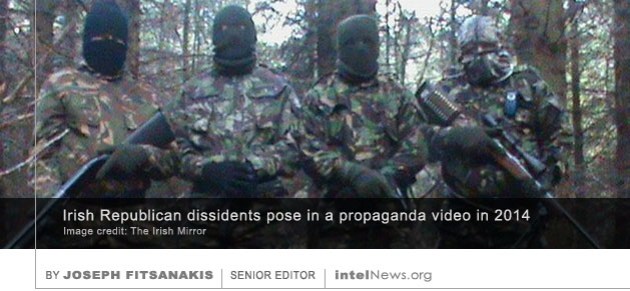 The British Security Service (MI5) has over 700 officers —more than 20 percent of its entire force— stationed in Northern Ireland, due to fears that the Brexit process might reignite the centuries-long sectarian conflict there. In 1922, nationalist rebels managed to dislodge Ireland from the British Empire. But six counties in Ireland’s north remained under British dominion, and today form the British territory of Northern Ireland. Irish nationalists have for decades engaged in an unsuccessful campaign —at times peaceful and at times violent— to unite these counties with the Republic of Ireland. Following the Good Friday Agreement of 1998, nationalist and British loyalist groups in Northern Ireland terminated their armed operations and entered the political arena, effectively sharing power in the British territory. The integration of Ireland and Britain into the European Union helped in that process by effectively bringing to an end border checks between the two countries. Thus, pro-British loyalists continued to live under British rule, while nationalists have been able to cross from Northern Ireland to the Irish Republic and back without restrictions, as if the two states were effectively unified.
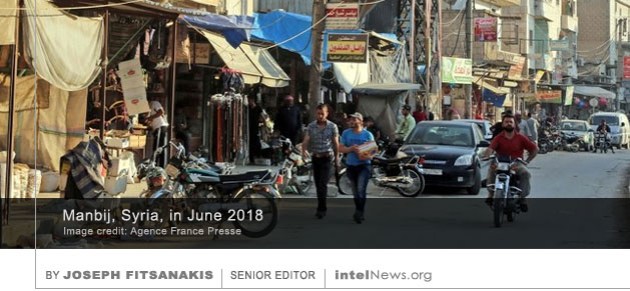 The “illusion of safety” has been blamed for the death of four American service members in northern Syria last week, after a suicide bomber attacked a restaurant, killing at least 19 people and wounding countless others. The deadly attack happened in Manbij, a small Kurdish-majority town near the Syrian-Turkish border, which American forces previously viewed as an oasis of security in the war-torn country. American troops fought alongside a coalition of Kurdish and Arab fighters who in 2016 took control of Manbij from the Islamic State of Iraq and Syria (ISIS). Since then, American forces have remained in the area —mostly to prevent a military invasion by Washington’s ally Turkey, which views the Kurds as terrorists and has threatened to destroy their armed forces.
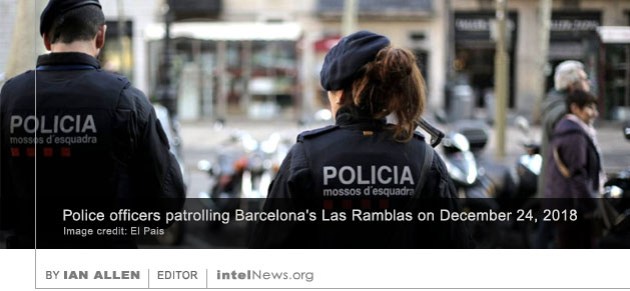 Police in Barcelona have intensified security checks in some of the Spanish city’s most recognizable landmarks, following a security warning from the United States Department of State. The surprise warning came in the form of a post on the popular social networking site Twitter on Sunday, December 23. In the
  On the heels of chaotic scenes at Britain’s Gatwick Airport, which
 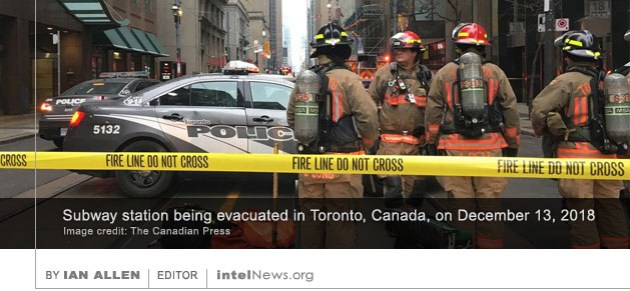 An unprecedented “flood of bomb threats” prompted hundreds of evacuations and closures of private buildings, transport hubs and offices in four countries on Thursday, causing confusion and in some cases panic. The threats —which numbered in the hundreds— were issued throughout the day Thursday against businesses, schools, hospitals and media companies in the United States, Canada, New Zealand and the United Kingdom. It is the first time in history that such a large wave of bomb threats was issued against so many targets internationally.
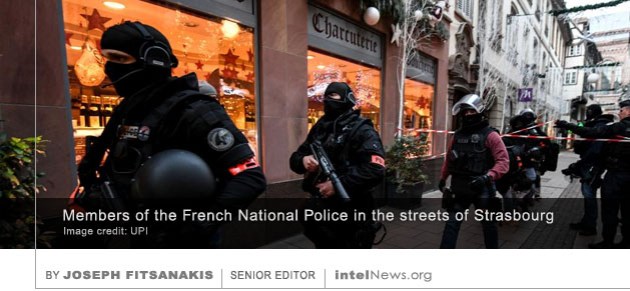 The terrorist attack in the French city of Strasbourg on December 11 raises important security concerns for Europe’s ability to defend itself against a
  France has seized the financial assets of two Iranian spies and frozen all assets belonging to the Iranian Ministry of Intelligence, in response to a foiled bomb attack in Paris, which the French government has blamed on Tehran. The alleged bomb attack was
 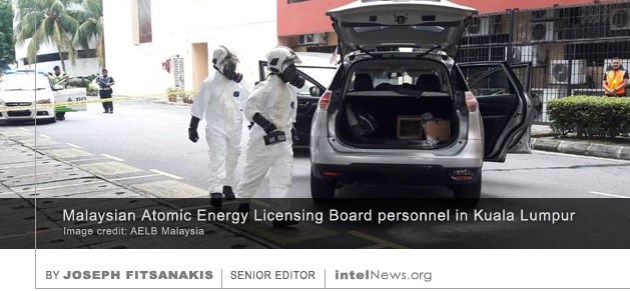 A highly radioactive device used by an energy company has gone missing in Malaysia, sparking a nationwide emergency for fear that it might have been stolen by a militant group. According to Malaysia’s Straits Times newspaper, a radioactive dispersal device (RDD), which is used for the industrial radiography of oil and gas supplies, disappeared during transit on August 10. The device, which weighs approximately 50 pounds, or 23 kilograms, disappeared from the back of a company truck in the early hours of the morning while it was being transported by two technicians. They were






 intelNews.org
ISIS militant was first-ever Filipino suicide bomber, say police officials
July 3, 2019 by Joseph Fitsanakis Leave a comment
The Islamic State —known also as the Islamic State of Iraq and Syria (ISIS)— claimed responsibility for the attack, leading many to speculate that the suicide bombers were not Filipinos, but other Arab nationals. That would fit the pattern of the two previous suicide bombings that have taken place in the history of the Philippines. In July of 2018, a Moroccan ISIS follower drove a van laden with explosives at an army checkpoint on the island of Basilan, killing ten people. And in January of this year, two Indonesian suicide bombers attacked a Roman Catholic congregation on Jolo Island, killing 23 and injuring over 100 churchgoers. All three suicide bombers were members of Abu Sayyaf, a Filipino Salafi jihadist group that pledged allegiance to ISIS in 2014. Moreover, none of the three suicide bombers were native Filipinos; rather they had traveled to the island country in order to carry out terrorist attacks.
This pattern may have changed as of last Friday, however. According to local military officials, a Filipino woman identified the remains of one of the two suicide bombers as belonging to her son. The woman reportedly told authorities that her son was named Norman Lasuca and was 23 years old. She also said that he, like his father, belonged to the Tausūg, a million-strong predominantly Muslim ethnic group that includes many recent converts to Islam.
On Tuesday, several Philippine Army commanders gave a press conference in Sulu, where they discussed the latest information regarding last week’s suicide attacks. One of the speakers, Brigadier-General Edgard Arevalo, said that the purported mother of the suicide bomber had provided DNA samples to the authorities, in order to help positively identify the body. If the DNA tests are positive “then […] we can say conclusively that the person is Filipino”, which will be a first, said Arevalo. A positive result would suggest that the ideology of ISIS may be more appealing to local Filipino youth than has generally been assumed by counterterrorism officials, Arevalo concluded.
► Author: Joseph Fitsanakis | Date: 03 July 2019 | Permalink
Filed under Expert news and commentary on intelligence, espionage, spies and spying Tagged with Abu Sayyaf Group, Basilan (Philippines), Islamic State, Moro ethnic group, News, Philippines, suicide bombings, Sulu (Philippines), terrorism