News you may have missed #0235

  • How the CIA was conned by a compulsive gambler. In 2003, the CIA took seriously the fabricated claims of Dennis Montgomery, co-owner of a software gaming company in Nevada, who claimed he could read messages hidden in barcodes listing international flights to the US, their positions and airports to be targeted by al-Qaeda.
  • Obama names intel advisory board members. The US President has appointed members to the President’s Intelligence Advisory Board (PIAB), a critical oversight group tasked with alerting the White House about US intelligence activities that may be illegal or may go beyond Presidential authorization. The appointees are Roel Campos, Lee Hamilton, Rita Hauser, Paul Kaminski, Ellen Laipson, Les Lyles, and Jami Miscik. For more on PIAB, see here.
  • Turkey arrests three on espionage charges. Turkish media won’t say which country the arrestees allegedly spied for, but one of them is said to have “often visited Greece”. A tit-for-tat?

Bookmark and Share

Protestant alleges links between N. Ireland loyalists and British state

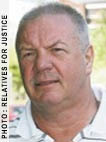
Raymond McCord

Ray McCord, Sr.

By JOSEPH FITSANAKIS | intelNews.org |
On November 9, 1997, Royal Air Force officer Raymond McCord Jr. was beaten to death in Belfast, Northern Ireland, by members of the Mount Vernon branch of the Ulster Volunteer Force (UVF). McCord’s beating was one of many instances in which Northern Ireland’s most violent loyalist gang targeted members of its own Protestant community. The difference in McCord’s case was that his father, Raymond McCord Sr., decided to come forward and speak out about the decades-old collusion between Northern Irish loyalist paramilitaries and Britain’s security services. Despite repeated death threats and intimidation, McCord’s campaign prompted an official investigation into the matter by Northern Ireland’s police ombudsman Nuala O’Loan. Her 2007 report confirmed that the leader of the Mount Vernon UVF, Mark Haddock, had been repeatedly protected by police authorities, despite being routinely implicated in extortion, blackmail, drug dealing and arson, as well as in dozens of paramilitary-style attacks that resulted in 16 murders and 10 attempted murders. Read more of this post

Book claims CIA turned blind eye on Pakistan’s post-9/11 terror links

Jean-Louis Bruguiere

J.L. Bruguiere

By JOSEPH FITSANAKIS | intelNews.org |
A new book by France’s former leading investigating magistrate on counterterrorism affairs alleges that the CIA allowed the Pakistani army to train members of a notorious Islamist militant group, even after 9/11. In the book, entitled Ce que je n’ai pas pu dire (The Things I Would Not Utter), Jean-Louis Bruguiere says the US spy agency was aware that Pakistani army trainers worked with Lashkar-e-Taiba, a Pakistani group responsible for a series of sophisticated strikes in India, including the 2008 Mumbai attacks. The former magistrate bases his allegations on official testimony provided by Willy Brigitte, a French citizen from Guadeloupe, who was arrested in Australia in 2003, in connection with Lashkar-e-Taiba activities there. Soon after the US invasion of Afghanistan, Brigitte traveled to Pakistan aiming to join the Taliban insurgency, but was unable to cross the Pakistani-Afghan border. Read more of this post

News you may have missed #0168

  • 1,600 suggested daily for FBI’s terrorist watch list. Newly released data show that, during a 12-month period ending in March this year, the US intelligence community suggested 1,600 names daily for entry on the FBI’s terrorist-watch list. The ever-churning list is said to contain over a million entries and more than 400,000 unique names, of which around 5 percent are US citizens or legal residents.
  • German spies keep files on leftist politicians. Germany’s Federal Office for the Protection of the Constitution, a domestic intelligence service, has kept tabs on 27 elected German lawmakers since 2005. All of those targeted are members of Germany’s Left Party. The news, disclosed during an internal German parliament investigation, is certain to upset members and supporters of the Left Party, which holds 76 seats in the country’s 662-seat federal parliament.

Bookmark and Share

Analysis: Is US supporting suicide terrorists in Iran?

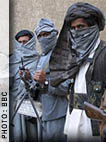
Jundullah men

Jundullah men

By JOSEPH FITSANAKIS | intelNews.org |
Jundullah, a militant anti-regime Sunni group in Iran, claimed responsibility last week for an October 18 suicide attack that killed 42 people, including five senior members of the Islamic Republic’s Revolutionary Guards corps. Tehran blamed the attack, which is part of a wider low-intensity guerilla war in the country’s southeastern Sistan-Baluchistan province, on the work of covert American, British and Pakistani operatives. Should the Iranian allegations be taken seriously? IntelNews has written before about Washington’s complex relationship with Jundullah and the Mujahedeen-e Khalq (MEK), two of several armed groups officially deemed terrorist by the US State Department. In 2007, ABC News went so far as to claim that Jundullah “has been secretly encouraged and advised by American officials since 2005″.   Read more of this post

News you may have missed #0141

Bookmark and Share

Anti-Castro terrorist was CIA informant, declassified documents show

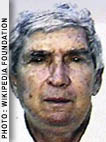
Luis Posada Carriles

Posada Carriles

By JOSEPH FITSANAKIS | intelNews.org |
An anti-Castro operative, who has admitted planting bombs against civilian targets in Cuba, and currently faces immigration fraud charges in the US, was a CIA informant, newly declassified documents show. Five CIA memoranda from 1965 and 1966 reveal that Luis Posada Carriles, code name “A15”, acted as an information link between Langley and violent anti-Castro groups in Miami, Florida, in which he was active. The five documents were declassified by the CIA between 1998 and 2003 and were made public on Tuesday by Peter Kornbluh, who heads the National Security Archive’s Cuba Documentation Project at George Washington University. Remarkably, the documents show that Posada’ handler at the CIA, Grover T. Lythcott, believed that the Cuban exile was a “moderate force” who could be counted on not to embarrass the US government or the CIA with his actions. Read more of this post

Analysis: Is Afghanistan really important in the “war on terrorism”?

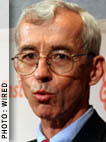
Paul P. Pillar

Paul P. Pillar

By JOSEPH FITSANAKIS | intelNews.org |
The Deputy Chief of the CIA’s Counterterrorism Center from 1997 to 1999, Paul Pillar, has authored an interesting editorial in which he asks “how important are physical havens to terrorist groups, such as al-Qaeda?”. The answer: not very. Writing in The Washington Post, Pillar points out that the main unstated assumption behind the US invasion of Afghanistan, namely that the country must not be allowed to again become a haven for terrorist groups, is incompatible with what we know about how such groups organize. If they are offered a haven, groups such as al-Qaeda will use it for basic training of recruits, says Pillar. But operations planning and training does not require such a base, nor is such a center crucial for successful execution of operations. Read more of this post

News you may have missed #0059

  • Torture report says UK government ministers shielded MI5, MI6. A new report from Britain’s parliamentary human rights committee accuses senior cabinet ministers of “hiding behind a wall of secrecy” to avoid being held to account over allegations of British intelligence agents’ collusion in torture.
  • US cyber czar resigns. Senior intelligence official Melissa Hathaway, who was US President Barack Obama’s choice to monitor America’s online security, said in an interview that she is leaving “for personal reasons”.
  • South Korean opposition skeptical of request for new intelligence powers. Opposition parties in South Korea are critical of the National Intelligence Service’s (NIS) recent request to gain access to information on financial transactions amounting to 20 million won or more without a warrant.

Bookmark and Share

News you may have missed #0056

  • South Korean spy agency seeks increased access to financial intelligence. The National Intelligence Service is pushing for legal revisions that will allow it to access information on financial transactions of over 20 million won (US$16,000) without a warrant. The agency claims the new powers will help track down “terrorism-related funds”.
  • Nepal to create new spy agency. The Maoist Nepali government is preparing to set up a powerful intelligence body that will be directly accountable to the Prime Minister. IntelNews hears that Indian government advisors are actively involved in setting up the new agency, which will “gather information on foreign intervention in Nepal”.
  • Peru’s Defense minister denies alleged espionage against Chile. Rafael Rey has denied any participation by Peru’s government in the case of Business Track, a company accused of telephonic and electronic interception to Chilean Army officers.

Bookmark and Share

News you may have missed #0049

  • Return to court for ex-CIA station chief accused of rape. Andrew M. Warren has been free on bail since February of 2009, when he was unceremoniously recalled to the US from the CIA’s Algiers station. He is accused of having drugged and raped two Algerian women at his official residence. On Tuesday he was back at a federal courtroom in Washington for a status hearing.
  • Swedish spy threat at Cold War levels, claims report. A study by the Swedish Military Intelligence and Security Service (MUST), says spying on Sweden by “several countries, including those in our immediate surroundings” is “at the same level […] as during the Cold War”.
  • Former CIA station chief doubts Daniel Boyd story. Milt Bearden, former CIA station chief in Pakistan, doubts that Boyd, who was arrested along with seven others in North Carolina on domestic terrorism charges, ever saw action in Afghanistan, as stated by his prosecutors.

Bookmark and Share

Analysis: Iranian Terrorist Group Enjoys US, EU Protection

By JOSEPH FITSANAKIS | intelNews.org |
The Mujahedeen-e Khalq (MEK), also known as the People’s Mujahedeen Organization of Iran, is one of several armed groups deemed terrorist by Washington and the European Union (EU). On January 26, however, the EU decided to remove MEK from its official list of terrorist organizations, a move that some observers believe was secretly supported by the US. This is because, despite MEK’s terrorist designation, Washington has routinely collaborated with it since 2003, prompted by the group’s fierce opposition to the regime in Tehran. In 2003, when the US invaded Iraq, American forces entered Camp Ashraf, MEK’s main military base in Iraq, to find “armored personnel carriers, artillery, anti-aircraft guns and vehicles […] along with more than 2,000 well-maintained tanks”. However, even though the group if officially classified by the US as terrorist, US troops were ordered by the Pentagon to give military protection to MEK armed groups in Iraq. Since then, Western correspondents in Iraq have frequently reported that US military personnel “regularly escort MEK supply runs between Baghdad and […] Camp Ashraf”. Read article →