October 31, 2019
by Joseph Fitsanakis
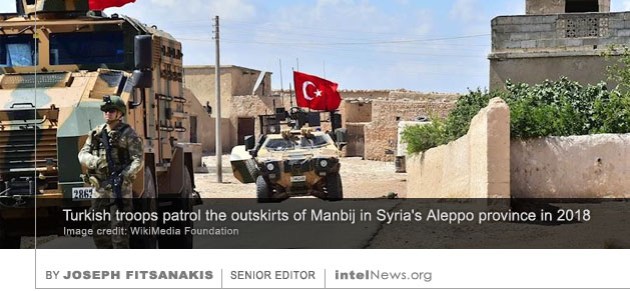 In 2011, the discovery of Osama bin Laden’s hideout in Abbottabad raised questions about Pakistan’s knowledge of his whereabouts. Today it is hardly controversial to suggest that at least some elements in the Pakistani government must have been aware of bin Laden’s location. Last week’s discovery of Abu Bakr al-Baghdadi in a region of Syria controlled by Turkey inevitably raises similar questions about Ankara’s role in the Syrian conflict and its relationship with the Islamic State.
The self-proclaimed caliph of the Islamic State was found hiding in Barisha, a village in the Syrian province of Idlib, which is located just two miles from the Turkish border. The region that surrounds Barisha is under the control of Turkey and can most accurately be described as a Turkish protectorate inside Syria. The area north of Barisha has been under Turkish control since August of 2016, when Ankara launched Operation Euphrates Shield, a cross-border operation conducted by the Turkish Armed Forces in cooperation with Turkish-baked militias in Syria. In early 2018, Turkish and pro-Turkish forces extended their territorial control further south, capturing Barisha and all surrounding regions. They remain in control of the area to this day.
Turkish-occupied northern Syria is often described as a “proto-state”. It is governed by a collection of local councils of Turkmens and Arabs, with some Kurds and Yazidis also present. These councils elect representatives to the self-proclaimed Syrian Interim Government, which was formed in Turkey by Turkish-backed Syrian exiles and is currently headquartered in Azaz, an Arab-majority city of 30,000 that is under direct Turkish military control. Azaz is also the headquarters of the Turkish-backed “Free Police”, a gendarmerie-style militia that is funded, trained and equipped by the Turkish government.
In addition to the Turkish troops, the region is controlled by the Turkish-funded Syrian National Army. The 25,000 troops of the SNA —which is jokingly referred to by the locals as the “Turkish Syrian National Army”— operate completely under Turkish command. A substantial portion of the SNA’s force consists of former Islamic State fighters who switched their allegiance to the SNA once they saw the writing on the wall. Others are former members of the group that used to call itself Jabhat al-Nusra, an al-Qaeda affiliate that has become the most powerful Salafi-jihadist force in Syria after the demise of the Islamic State.
Turkish-occupied northern Syria is also the base of Ahrar al-Sham, a Salafi-jihadist group consisting of over 20,000 fighters, which is not officially aligned with al-Qaeda, but has similar goals. Since at least 2017, Ahrar al-Sham has effectively operated as a Turkish proxy militia and is in charge of dozens of check points and observation posts throughout the region. Lastly, the area is home to Hurras al-Din, yet another Salafi-jihadist group that is affiliated with al-Qaeda —though its leaders deny it. The group is able to operate in Turkish-controlled areas of Syria with suspicious ease. It was this group, Hurras al-Din, that sheltered al-Baghdadi in Barisha in return for cash.
Given Turkey’s military and political control of Idlib province, the question arises of how the world’s most high-profile terrorist leader was able to enter the region and receive protection from a militia that operates there under the watchful eye of the Turkish military. The New York Times reports that al-Baghdadi had been living in Barisha for several months before last week’s raid, and that Washington had been aware of his hideout location since the summer. Was Turkish intelligence also aware of the Islamic State leader’s whereabouts? If not, how could that be? If yes, why did it take a Kurdish spy, handled by Syrian Kurdish intelligence, to locate him and provide information to the Untited States? More importantly, what exactly is the relationship between Turkey and the al-Qaeda-linked Islamists who seem to operate freely in Idlib and provide protection to senior Islamic State officials in exchange for cash?
There are clearly more questions than answers here. If the United States is serious about combating Islamist extremism in the Middle East, it must press Ankara on these questions as a matter of urgency.
► Author: Joseph Fitsanakis | Date: 31 October 2019 | Permalink
 • Turkish court jails US consulate employee for terrorism offenses. A Turkish employee of the US consulate in Istanbul has been sentenced to almost nine years in prison, allegedly for aiding a terrorist organisation. Metin Topuz was arrested in 2017 and accused of having links to an “armed terror group” that Turkey blames for a failed coup the previous year. Topuz is reported to have spent decades working as a translator and fixer for the US Drug Enforcement Administration (DEA) in Istanbul. He denies the allegations. The US has said there is “no credible evidence” to support his conviction.
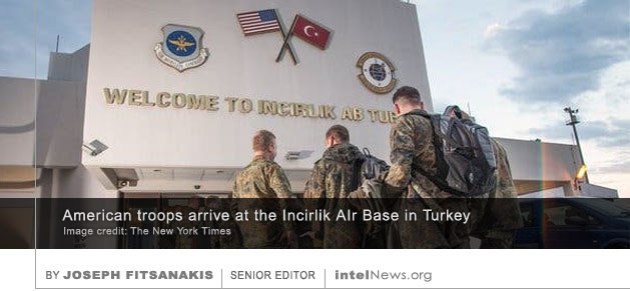 The United States has indefinitely suspended a longstanding military intelligence-sharing program with its North Atlantic Treaty Organization ally Turkey. The program, which targets a Kurdish separatist group, is believed to have been in place since 2007. According to the Reuters news agency, which published the story on Wednesday, it has never before been reported on by news media.
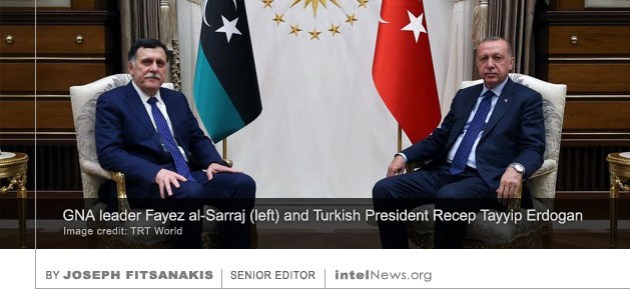 Turkish President Recep Tayyip Erdoğan has said his country is prepared to deploy troops to Libya, just days after Ankara surprised analysts by announcing an agreement with the embattled Libyan government in Tripoli. The Turkish-Libyan agreement has spurred angry reactions from Israel, Greece and Egypt, all of which are
 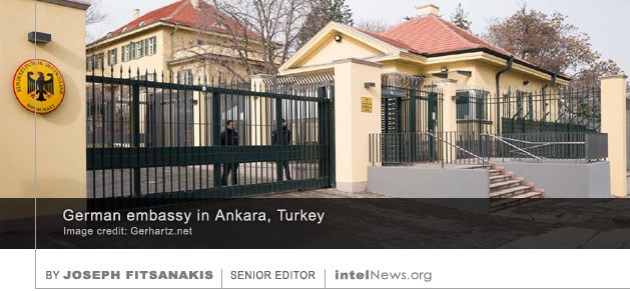 Turkish authorities have charged a lawyer working for the German embassy in Ankara with espionage, further-straining the already tense relationship between the two North Atlantic Treaty Organization allies. German newsmagazine Der Spiegel, which
 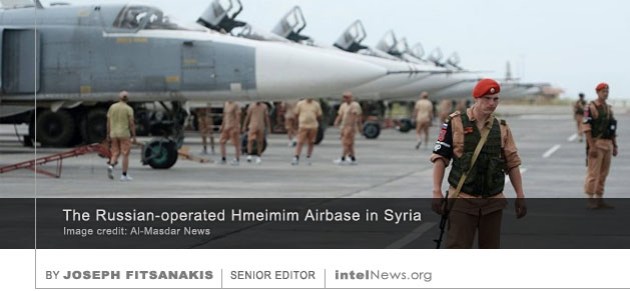 Authorities in Turkey were concerned that Russia might bomb the presidential palace in Ankara in 2015, to retaliate against the downing of a Russian fighter jet by the Turkish military, according to an intelligence report. On November 25 of that year, a Russian Sukhoi Su-24M attack bomber was shot down by a Turkish F-16 fighter jet over the Syrian-Turkish border. Ankara claimed that the Russian aircraft had violated Turkish airspace for longer than five minutes and had failed to respond to 10 warning messages communicated by radio. By the time the Russian plane was fired upon it was nearly 1.5 miles inside Turkish airspace, according to Turkey’s Ministry of Defense. But the Kremlin claimed that the downed aircraft had been flying a mile south of the Turkish border when it was shot down.
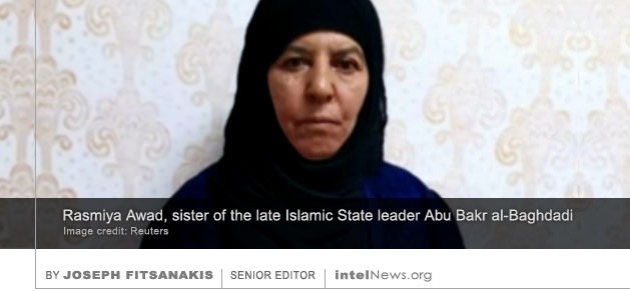 A Turkish government official has described the arrest of the sister of the late Islamic State leader Abu Bakr Al-Baghdadi as “an intelligence goldmine”. The official was referring to the arrest of Rasmiya Awad, an Iraqi citizen, who was reportedly arrested on Monday. Little is known about al-Baghdadi’s sister. She is believed to have been born in 1954, which makes her 65 years old this year.
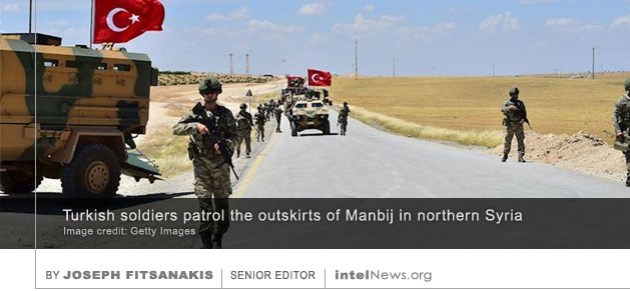 Senior White House officials close to United States President Donald Trump believed that Turkish President Recep Tayyip Erdoğan was bluffing when he threatened to invade northern Syria, according to sources. For over two years, most of northern Syria has been controlled by American-supported Kurdish militias, who were instrumental in helping Washington defeat the Islamic State. But the growing strength of the Kurdish forces alarmed Turkey, which views Kurdish nationalism as a bigger threat than the Islamic State.
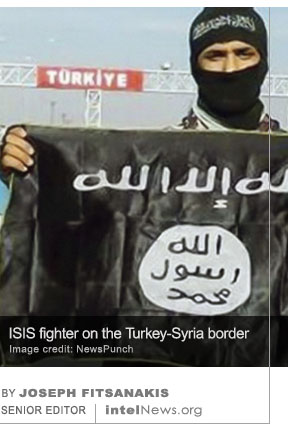 Officials in the United States, Europe and the Middle East have warned that thousands of jailed members of the Islamic State could escape from Kurdish-controlled prisons in northern Syria if Turkey invades the region. For more than two years, the area has been controlled by American-supported Kurdish militias, who were instrumental in helping Washington defeat the Islamic State —also known as Islamic State of Iraq and Syria, or ISIS. But the growing strength of the Kurdish forces has alarmed Turkey, which views Kurdish nationalism in the region as a bigger threat than Salafi jihadism. Ankara has repeatedly threatened to invade northern Syria and disarm the Kurdish groups, which it sees as terrorist.
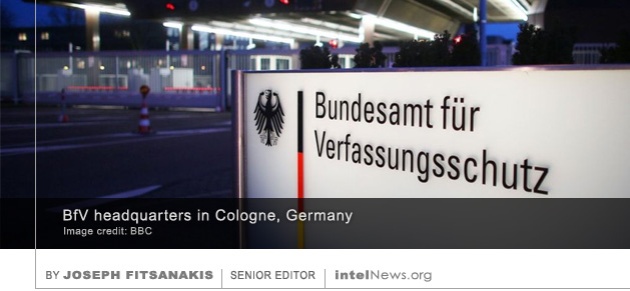 Turkey’s spy agency has developed a smart phone application to enable pro-government Turks living in Germany inform on their compatriots who speak out against the ruling Justice and Development Party (AKP). The existence of the phone application was revealed in the annual report of the Federal Office for the Protection of the Constitution (BfV), Germany’s primary counterintelligence agency. The report covers terrorist and foreign intelligence activity that took place in 2018 in Baden-Württemberg, a state in southwest Germany that borders Switzerland and France. Deutsche Welle, Germany’s state broadcaster, which
 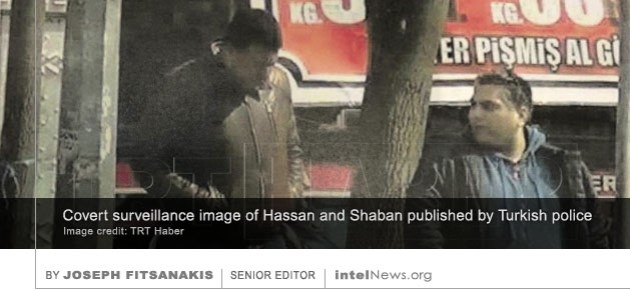 The family of a man who died in a Turkish prison on Sunday while awaiting trial for allegedly spying for the United Arab Emirates has called for an international investigation into this death. Zaki Mubarak Hassan and Samer Shaban —both Palestinians— were reportedly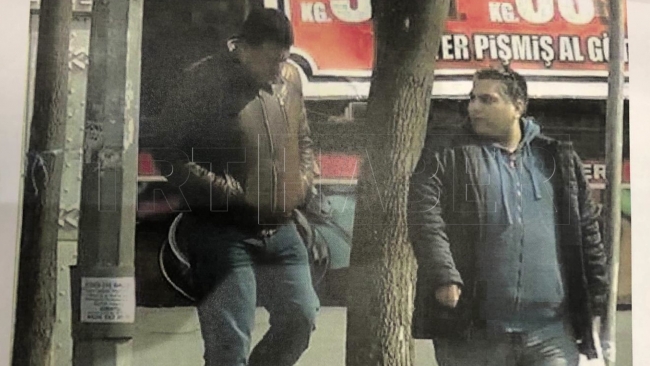







 intelNews.org
Turkey arrests four members of alleged French spy ring in Istanbul
June 24, 2020 by Joseph Fitsanakis Leave a comment
The Turkish daily newspaper Sabah said on Tuesday that the leader of the French-handled spy ring is named Metin Özdemir. He is reportedly a Turkish citizen who worked in the security department of the French consulate in Istanbul. According to the paper, Özdemir admitted to Turkish police that he was sent to France where he took an eight-month-long surveillance and counter-surveillance training course. He was then sent to Georgia by France’s General Directorate for External Security (DGSE), where he gathered intelligence for his French handlers. In exchange for his services, the DGSE allegedly gave Özdemir regular cash payments and offered him a job in the French Foreign Legion.
Özdemir eventually returned to Turkey and was allegedly handled by two DGSE officials that he named as “Virginia” and “Sebastian”. He recruited three more Turkish citizens, including two utility workers, who formed a spy ring. The spy ring members were supplied by the DGSE with forged credentials, identifying them as employees of Turkey’s National Intelligence Organization (MİT). According to Sabah, the spy ring supplied the DGSE with information on 120 individuals, most of whom were members of ultra-conservative religious organizations with alleged links to the Islamic State. The spy ring also allegedly spied on the Directorate of Religious Affairs, Turkey’s state-funded religious authority. Recently, however, Özdemir reportedly fell out with his French handlers and approached Turkish authorities, who promptly arrested him and the rest of the members of his spy ring.
The Sabah report comes just days after France filed a formal complaint with NATO, alleging that one of its warships was threatened in the open seas by a Turkish Navy vessel on June 10. According to French officials, the warship Courbet attempted to approach a Turkish Navy ship named Cirkin, which was believed to be smuggling weapons to Libya. The Turkish vessel refused to identify itself to the Courbet, which was inquiring on behalf of the NATO alliance. It also flashed its radar lights at the French ship, which is usually seen as a sign of impending confrontation, while its crew members were seen wearing bullet-proof vests and standing behind the ship’s mounted weapons. Turkey has denied the French allegations, but NATO said it will launch an investigation into the incident.
► Author: Joseph Fitsanakis | Date: 24 June 2020 | Permalink
Filed under Expert news and commentary on intelligence, espionage, spies and spying Tagged with 2011 Libyan civil war, DGSE (France), espionage, France, French consulate in Istanbul, Istanbul, Metin Özdemir, News, Turkey