Attack kills wife of Ukraine commander behind alleged plan to assassinate Putin

Amina Okuyeva Adam OsmayevAn armed attack in the outskirts of Kiev has killed the wife of a Chechen commander of a Ukrainian paramilitary unit, who is wanted in Russia for an alleged plan to kill President Vladimir Putin. Adam Osmayev is believed to have survived the attack, but his wife, Amina Okuyeva, was reportedly shot in the head and died on the spot. Osmayev, a Russian Chechen, became widely known in Ukraine in February of 2012, when he was arrested by police in Odessa, a major port city located on the northwestern shore of the Black Sea in the country’s south. He was found to be carrying forged identity documents. When police searched his apartment, they found large quantities of illegal explosives. Authorities in Moscow told the Ukrainian government that Osmayev was involved in a conspiracy to kill Russian President Vladimir Putin. A Chechen associate of Osmayev, Ilya Pyanzin, was handed over to Russia by the Ukrainians and was given a 10-year prison sentence by a Moscow court.

But Osmayev’s legal team was able to argue that his human rights would not be guaranteed if Ukraine extradited him to Russia. In 2013, the European Court of Human Rights ruled that Osmayev should serve his sentence in Ukraine, at which point Kiev rejected Moscow’s extradition request. In late 2014, Osmayev was released from prison and allowed to remain in Ukraine. Soon after his release from prison, Osmayev entered the ranks of the Dzhokhar Dudayev battalion. The armed group was one of over 30 paramilitary units organized by Ukraine’s Ministry of Defense to combat pro-Russian separatists in southeastern Ukraine. By early 2015, Osmayev had risen to the rank of commander of the battalion and was increasingly treated as a celebrity by Ukrainian nationalists. But he continued to face threats from Russia and pro-Russian separatists in Ukraine. On June 1 of this year, Osmayev and Okuyeva survived an apparent assassination attempt by a man who was wounded but managed to escape following a shootout with the couple.

Ukrainian media reported on Monday that Okuyeva was killed earlier that day, after the car that her husband was driving was ambushed by a group of masked assailants on the outskirts of Kiev. According to eyewitnesses’ accounts, the assailants opened fire at Osmayev’s car as it was passing through a railway crossing. Osmayev was reportedly injured in the attack, but Okuyeva was shot in the head and died at the scene. Footage aired on Ukrainian national television showed Osmayev’s heavily damaged car, which reportedly sustained “a hail of bullets” fired by the attackers. The Chechen paramilitary commander told reporters that the attackers’ main goal was to assassinate him. No group or government has claimed responsibility for the attack.

Author: Joseph Fitsanakis | Date: 31 October 2017 | Permalink

Ukraine releases rare footage showing arrests of North Korean nuclear spies

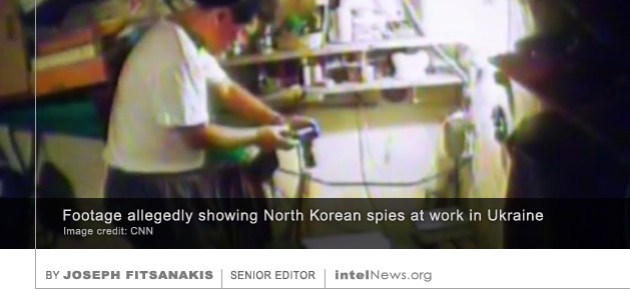
North Korean SpiesUkrainian authorities have released rare surveillance footage filmed during a sting operation that ended with the capture of three North Korean spies. The North Koreans, two of whom are now serving prison sentences in Ukraine, had traveled there in 2011 believing they would be given missile technology secrets. Last July, North Korea surprised missile technology experts by successfully testing two intercontinental ballistic missiles (ICBMs). Government-controlled media in Pyongyang claimed that North Korean ICBMs were capable of reaching the United States’ mainland.

On August 14, a report by the London-based International Institute of Strategic Studies (IISS) suggested that North Korea’s technological leap had been achieved with assistance from abroad. The report claimed that one possible source of North Korea’s technical advancement was the Yuzhnoye Design Office, a corporation that specializes in the design of rockets and satellites. Based in the central Ukrainian city of Dnipro, Yuzhnoye has its roots in the Soviet space and weapons program of the early 1950s. Following the publication of the IISS report, some experts claimed that North Korean spies may have illicitly purchased or stolen missile designs from Yuzhnoye. Ukrainian authorities strongly denied these allegations, and argued that Russia was a far more likely source of North Korea’s technical knowledge —something that Moscow refutes. In an effort to strengthen their claims, Ukrainian officials were authorized to release details of counterespionage operations against North Korean spies in recent years. They told the US-based news network CNN that several North Korean spies had been caught spying in Ukraine in recent years, and that Ukraine responded in 2016 by barring all North Koreans from entering the country.

The Ukrainians also released to CNN surveillance footage filed during a sting operation in 2011, in which three North Korean diplomats were caught photographing classified documents in Ukraine. The documents, which contained technical blueprints of missiles, were fake, and the operation had been planned by the Ukrainians several years prior. The three North Koreans had traveled to Ukraine from the Democratic People’s Republic of Korea’s embassy in Moscow. One of the men, who had been tasked with transporting stolen hardware missile parts out of Ukraine, was deported following his arrest. His two accomplices are currently serving eight-year prison sentences in a Ukrainian prison located nearly 90 miles west of Kiev. Reporters from CNN were also granted access to the two North Korean prisoners, known only as “X5” and “X32”. The younger prisoner, who goes by X32, declined to be interviewed. But X5, who is in his mid-50s, told CNN that he was born in Pyongyang and that at the time of his arrest he was serving as a trade representative in the DPRK’s embassy in Belarus.

Ukrainian officials told CNN that the two men were visited in jail once by officials in the DPRK’s embassy in Moscow, but that was their only contact —face-to-face or otherwise— with North Korean citizens since their arrest. The officials argued that this information about Ukraine’s counterespionage operations against North Korean spies should help dispel all allegations that Pyongyang may have acquired its missile knowhow from Ukrainian sources.

Author: Joseph Fitsanakis | Date: 28 August 2017 | Permalink

Ukrainian military intelligence commander killed in Kiev car explosion

Colonel Maksim ShapovalA senior military intelligence officer, who commanded a Ukrainian special-forces unit that fought against the Russians in eastern Ukraine, was killed on Monday when his car exploded in broad daylight in Kiev. Initially, the Ukrainian government sources simply said that the dead driver of the car was a member of the Ministry of Defense’s Main Directorate of Intelligence. Later, the casualty was identified as Colonel Maksim Shapoval, a senior commander of the Main Directorate of Intelligence, who led an elite special-forces unit. Subsequent media reports said that Colonel Shapoval’s unit had fought against Russian-backed guerillas in eastern Ukraine in the past year.

A police report said that Colonel Shapoval died instantly when his car exploded at an intersection in central Kiev. The explosion took place at 8:15 a.m. local time on Monday, and was reportedly caused by a powerful bomb that had been attached to the outer floor of the vehicle, right below the driver’s seat. A video taken at the scene of the explosion showed the charred frame of a silver-colored sedan in the middle of a city street, surrounded by debris.

A Ukrainian government spokesman said on Tuesday afternoon that Kiev was treating the incident as an act of terrorism. When asked about possible suspects, the spokesman said that Colonel Shapoval’s killing appeared to be the work of professionals. He added that investigators were looking for possible evidence of Russian state involvement in the attack. Authorities in Ukraine have repeatedly accused Russia of involvement in the extrajudicial killings of Ukrainian leaders or Russian dissidents since 2014, when Moscow illegally annexed the Ukrainian province of Crimea. Since then, the Kremlin is believed to be secretly supporting pro-Russian rebels who have taken over several regions of southeastern Ukraine. Ukraine’s Chief Military Prosecutor alleged on Tuesday that the killings of Colonel Shapoval and others were perpetrated by Russian intelligence operatives. He added that his office would launch a detailed investigation into Colonel Shapoval’s killing.

Author: Joseph Fitsanakis | Date: 28 June 2017 | Permalink

Ukraine raids Russian internet search engine company as part of ‘treason’ probe

YandexUkrainian security service personnel raided the offices of a Russia-based internet search engine firm in two cities on Tuesday, as part of a treason investigation. The probe is reportedly related to the ongoing dispute between Kiev and Moscow, which intensified after 2014, when Russia unilaterally annexed the Russian district of Crimea. The Ukrainian government also accuses the Kremlin of clandestinely supporting pro-Russian insurgents in southeastern Ukraine, something that Moscow denies.
Earlier this month, Kiev announced that it would be blocking its citizens from using social media networks that are popular in Russia, including Yandex, a search engine that holds the lion’s share of the Russian internet usage market. The Ukrainian government argued that Russian social are were being used by Moscow to stir up pro-Russian sentiment and organize pro-Russian insurgents and activists inside Ukraine.

On Tuesday, members of Ukraine’s Security Service (SBU) raided the offices of Yandex in the Ukrainian capital Kiev and in the city of Odessa, Ukraine’s third largest city, located on the Black Sea coast. The two locations that were raided by the SBU are registered as subsidiaries of Yandex, which is based in the Russian capital Moscow. In a statement issued on the same day, the SBU said that the simultaneous raids were part of a wider “treason probe”. The security service argues in the statement that Yandex had been found to be sharing the personal information of Ukrainian Internet users with the Russian intelligence services. The illegally shared information included the details of Ukrainian military personnel, said the SBU statement. In turn, Moscow used the data provided by Yandex to plan, organize and carry out “espionage, sabotage and subversive operations” in Ukraine, said the SBU.

Late on Tuesday, a statement issued by Yandex in Moscow confirmed the SBU raids and said it would cooperate with the investigation by the Ukrainian authorities. Meanwhile, Kiev has said that the ban on Russian social media and Internet search engines will remain active for at least three years.

Author: Joseph Fitsanakis | Date: 31 May 2017 | Permalink

Ukraine gives Britain intel about Russian ‘hybrid war’ tactics in Crimea

UkraineUkrainian intelligence and defense officials are sharing intelligence with Britain about cutting-edge Russian military tactics in the Crimea and parts of eastern Ukraine. Since the 2014 Russian military intervention in Ukraine, observers have noted the sophisticated tactics used by Moscow. The Russian forces seem to be combining their advanced conventional arsenal with electronic warfare and information operations. The latter include the use of deception, spreading propaganda through social media, and computer hacking. Some experts have described Russia’s tactics in the Crimean Peninsula and the Donbass region of Ukraine as a form of “hybrid warfare”, which has its roots in Soviet times. The difference in the contemporary operational landscape is the prominence of electronic resources, which the Russians are simultaneously employing as disinformation channels and tools of sabotage. Following the Ukrainian crisis of 2014, the former Soviet republic is today seen as being at the forefront of Russia’s experimentation with “hybrid warfare”.

According to British newspaper The Times, a delegation of Ukrainian military officials, with considerable experience in studying Russia’s war tactics in Donbass and Crimea, secretly visited the United Kingdom in July for consultations. The paper quoted an anonymous British military source saying that the visit was part of a series of meetings between Ukrainian and British officials. The goal of the meetings, it said, is to understand Russia’s military tactics in the 21st century. The agenda of the secret meetings includes discussion on topics such as the use of radio-electric weapons that disrupt GPS and drone signals, the deployment of sabotage and covert action, or the use of social media to spread disinformation. Russian tactics that have been discussed include the use of acoustics to locate snipers in an urban battlefield, tactical coordination of drones in fleets, and the widespread use of cellular telephone messages to target civilian populations.

A representative of the UK’s Ministry of Defense, who was contacted by The Times, admitted that “a small delegation from Ukraine was hosted” in Britain “as part of a think-tank sponsored visit”, but refused to provide further details. The paper said the meetings will probably continue and may even widen in scope to include staff from North Atlantic Treaty Organization member states.

Author: Ian Allen | Date: 12 August 2016 | Permalink

Russia claims arrest of alleged CIA-trained spy

Lubyanka SquareThe Russian government says it has arrested a senior Ukrainian intelligence officer, who was allegedly trained by the United States Central Intelligence Agency and tasked with infiltrating the Russian secret services. In a statement published on Thursday, Russia’s Federal Security Service, known as FSB, said the alleged infiltrator is a “senior level employee” of the SBU, the Security Service of Ukraine. The SBU is Ukraine’s primary counterterrorism and counterintelligence agency, with much of its output focused on the Russian Federation.
The FSB statement identified the Ukrainian man as Lieutenant Colonel Yuriy Ivanchenko, but did not release further information about his background and identity, nor did it specify the details of his activities in Russia. According to the Russians, Ivanchenko allegedly entered the country in recent weeks, ostensibly in order to visit family members who live in Russia. But his real goal, according to the FSB, was to make contact with Russian intelligence and infiltrate the country’s security structure. Moscow says that Ivanchenko had planned to pose as a willing spy, namely an employee of Ukrainian intelligence who was offering to provide information to Russia. He was not a genuine spy, however, but rather a ‘dangle’ —namely someone posing as a genuine spy, but who is in fact attempting to deceive a rival intelligence agency by knowingly giving it misleading or inaccurate information.

Moreover, the Russians claim that Ivanchenko was being jointly run by the SBU and the CIA, and that the American intelligence agency had trained him to pose as a ‘dangle’ in order to collect information about FSB activities in Ukraine. The goal of the CIA, said Moscow, was to “lure an FSB employee and capture him with incriminating information”. However, the FSB statement said that Ivanchenko’s SBU connection and CIA affiliation were known to Russia prior to his arrival in the country, as he had previously tried to offer his services to Moscow. He was therefore arrested and will be deported in the coming days with a persona non grata (unwelcome person) designation. The CIA and SBU have not commented on Russia’s allegations.

Author: Joseph Fitsanakis | Date: 01 April 2016 | Permalink

How are Ukrainian weapons ending up in the hands of ISIS?

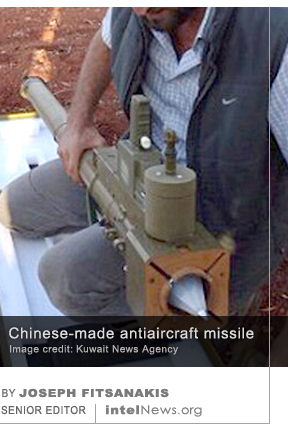
Antiaircraft missileSignificant amounts of Ukrainian-manufactured weapons are ending up in the hands of the Islamic State, prompting accusations that Kiev may be arming the militant group in an effort to impair its regional foe Russia. Persisting rumors that Ukraine may be secretly arming the Islamic State —also known as the Islamic State of Iraq and Syria, or ISIS— resurfaced last week, when authorities in Kuwait arrested six men suspected of working for the militant group. Among them was Osama Mohammed Saeed Khaiyat, a Syrian citizen of Lebanese background, who is believed to have traveled to Europe and the Middle East in search of weapons to be purchased by the Islamic State. Khaiyat, 45, allegedly told his captors that he has made several trips to Ukraine in the past, where he has purchased weapons and ammunition on behalf of the group. The weapons are purchased with cash, said Khaiyat, and are then delivered to Islamic State fighters in Syria through smuggling routes in the Black Sea and in Turkey.
As can be expected, Khaiyat’s revelations rekindled rumors that the government of Ukraine may be secretly funding the Islamic State, or may be turning a blind eye to secret dealings between weapons merchants and Islamic State arms procurers. The theory goes that Kiev is hoping that a well-armed Islamic State may be able to bog down Russian armed forces in Syria and thus distract Moscow from its military operations in eastern Ukraine. However, there is no proof that Ukraine’s state-owned Ukroboronprom weapons conglomerate, which oversees the country’s military–industrial complex, is the source of the weapons. It is worth noting that millions of weapons have been stolen from Ukrainian government depots since the start of the war in Donbass, and that weapons-smuggling has increased dramatically as a result. Moreover, Khaiyat told his Kuwaiti captors that FN-6 portable antiaircraft surface-to-air missiles were among the weapons he bought in Ukraine. The FN-6 is a Chinese-manufactured weapon, which has never been sold to the Ukrainian military. On the other hand, the Ukrainians could have purchased that weapon from the Chinese through a front-company, before supplying it to the black market.

Speaking to Russian news agency TASS, a spokesman for the Ukrainian military said on Friday that authorities in the former Soviet republic had no idea how the weapons were reaching the Islamic State. Vladislav Seleznyov, who speaks on behalf of the Ukrainian Armed Forces’ General Staff, told TASS that Kiev had “not produced or purchased Chinese-designed antiaircraft missile systems”, nor had it “provided transit for their transportation” to Syria. He added that reporters “should turn to law enforcement agencies on this issue”, as the Ukrainian military had “nothing to report on this topic”.

Author: Joseph Fitsanakis | Date: 23 November 2015 | Permalink

Informant ‘got $47m reward’ for clues on MH17 downing over Ukraine

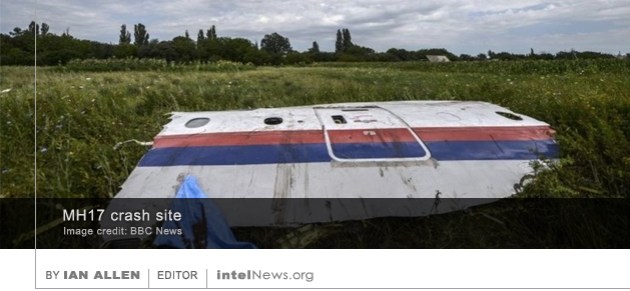
MH17 crashA German investigator, who is probing the downing of a civilian airliner over Ukraine nearly a year ago, says that an informant has claimed a multimillion reward for information pointing to those responsible for the attack. The investigator, Josef Resch, of Lübeck, Germany, says that a binding non-disclosure agreement does not allow him to reveal his client, who offered the $47 million reward. But he told German business magazine Capital that he is hopeful his client will soon reveal the details, since “people who pay that kind of money in exchange for information do not keep it for themselves”. However, he also hinted that his client may be an intelligence agency, who may decide to “deal with the matter without fanfare”.
Resch was speaking in reference to the murder of 295 people in July 2014, who died when the Malaysia Airlines Boeing 777-200 they were on was shot down 1 near the Ukrainian city of Donetsk. The city has a large Russian population and constitutes a major front in the current War in Donbass, which is being fought between the Ukrainian government and pro-Russian Ukrainians. For that reason, the downing of MH17 has become politically contentious: the United States claims 2 that it was shot down by Russian-supported rebels, while Russia accuses 3 the Ukrainian Air Force of deliberately firing on the airliner in order to blame the rebels.

If Resch’s claim is accurate, it would mean that someone with inside knowledge about the identity of the shooters has has come forward with crucial information about the killing of nearly 300 civilians over Donetsk. The size of the award also implies that those offering it are prepared to take some form of action in response to the information. Capital notes 4 that the multimillion award is higher than the amount offered in the past by the government of the United States for information leading to the capture of Osama bin Laden.

Resch told Capital that he is not certain whether the anonymous informant was able to claim the entire reward amount, or just part of it. He also said that he never came in direct contact with the informant, as the latter was represented “by a Swiss middleman” throughout the negotiations.

Author: Ian Allen | Date: 18 June 2015 | Permalink: https://intelnews.org/2015/06/18/01-1717/


  1. J. FITSANAKIS “Ukraine rebels ‘admit downing Malaysia plane’ in phone intercepts” intelNews [18jul2014] 
  2. I. ALLEN “US spies say incriminating flight MA17 recordings are genuine” intelNews [24jul2014] 
  3. I. ALLEN “Russia says it traced Ukraine fighter jet near downed Malaysia plane” intelNews [22jul2014 
  4. J. BRAMBUSCH “Informant zu MH 17 packt aus” Capital [15jun2015] 

Ally of Ukraine’s pro-Russian ex-president found dead in Kiev

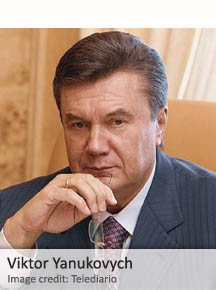
Viktor YanukovychBy JOSEPH FITSANAKIS | intelNews.org
An ally of Ukraine’s deposed pro-Russian President Viktor Yanukovych has been found dead with gunshot wounds, in what is the eighth death in mysterious circumstances of a member of his family or close associate this year. Oleg Kalashnikov was a former parliamentarian representing the pro-Moscow Party of Regions, which was led by Yanukovych. He was among Ukraine’s most vocal pro-Russian politicians during the violent protests that led to the toppling of Yanukovych and the establishment of a pro-Western government in Kiev. Reports from the Ukrainian capital said on Wednesday that Kalashnikov’s body was found outside his apartment there. Other sources said he was found dead inside his apartment. It was not immediately clear whether he had been murdered or whether he had committed suicide. Ukrainian police say they have launched an investigation in to the former parliamentarian’s death.

Kalashnikov’s death marks the eighth such macabre ending of a family member or close associate of Yanukovych this year. Last March, intelNews reported the death of Yanukovych’s 33-year-old second son, also called Viktor, who drowned in a lake in the Russian region of Siberia. He had been living in Russia with his wife and child since February of last year, when street protests by pro-Western Ukrainians toppled his father’s government.

Prior to Yanukovych’s son’s death, the former president’s close political ally, Oleksandr Peklushenko, once a regional governor with the Party of Regions, was found dead with a gunshot wound to the neck, in what Ukrainian authorities said was a suicide. Authorities say they have been unable to establish a common motive linking the numerous deaths of former Yanukovych allies and relatives. Most cases have been ruled suicides and no arrests have been made.

Ex-Ukraine pro-Russian leader’s son killed in mystery accident

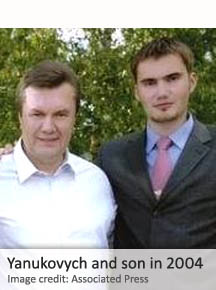
By JOSEPH FITSANAKIS | intelNews.orgViktor Yanukovych and son
The son of Viktor Yanukovych, Ukraine’s pro-Russian former president, has been killed in Siberia, in what is the seventh death in mysterious circumstances of a member of his family or close associate this year. Yanukovych’s 33-year-old second son, also called Viktor, was reportedly drowned in a lake in the Russian region of Siberia last Friday evening. He had been living in Russia with his wife and child since February 2014, when street protests by pro-Western Ukrainians toppled his father’s pro-Moscow government. He had been a member of Ukraine’s national parliament, the rada, since 2012, representing the pro-Moscow Party of Regions, which at the time was led by his father.

According to reports, Yanukovych’s son was killed when a Volkswagen minibus carrying him and five other people fell through thin ice near Lake Baikal’s Olkhon Island. The lake, known as the world’s deepest, regularly attracts tourists and campers due to its natural beauty. The group was apparently touring that part of the lake to take photographs when their vehicle plunged into the frozen waters. Yanukovych was reportedly the only one in the group to die, as the other five members were found alive following a two-hour rescue operation by local authorities.

Several Western media noted on Sunday that Yanukovych’s death marks the seventh such macabre ending of a family member or close associate of the former president this year. Most recently his close political ally, Oleksandr Peklushenko, a former regional governor with the Party of Regions, was found dead with a gunshot wound to the neck, in what Ukrainian authorities said was a suicide. The BBC notes that Yanukovych’s son’s demise also marks the latest in a series of deaths of members of the former president’s team in traffic accidents, dating as far back as 2009. Neither the Yanukovych family nor the Ukrainian government have commented on the reported death of the former president’s son.

News you may have missed #883

Oleg KaluginBy IAN ALLEN | intelNews.org
►►Indonesia, Australia renew intelligence ties. Australia and Indonesia have signed a pledge not to use intelligence to harm each other, signaling a resumption in cooperation, which had been suspended after last year’s spy scandal. Australian Foreign Minister Julie Bishop and her Indonesian counterpart, Marty Natalegawa, signed the “joint understanding of a code of conduct” in Nusa Dua, Bali, on Thursday.
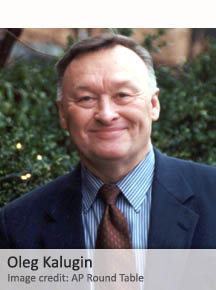
►►Ex-KGB general says Russia has already won in Ukraine. Russia has already won “the real victory”​ in Ukraine, according to former KGB general Oleg Kalugin, who is now living in the United States. The “southeast of Ukraine, that’s part of the general battle between the Russians and Ukrainians, but it’s not as crucial as the real victory and pride of Russia —the Crimea, I mean”, he said on Thursday. Kalugin reiterated that he does not believe Russian president Vladimir Putin wants annex another region of the country. “It’s not in the interest of Putin”, Kalugin said. “His position as of today is fairly strong in the country, in his own country, so why put it at risk by moving further?”
►►China says Canadian couple were spies disguised as ordinary citizens. Kevin and Julia Garratt have been accused of stealing Chinese military and national defense research secrets. They were detained on August 4, 2014, but not formally arrested, and China has offered little information on what they are accused of doing. The couple ran a coffee shop near the border with North Korea, worked with Christian groups to bring humanitarian aid into North Korea, and worked to train North Korean Christians inside China. Their detention by China’s State Security Bureau has been seen by Canadian authorities as reprisal for the arrest of Su Bin, a Chinese immigrant to Canada suspected of masterminding the electronic theft of US fighter jet secrets.

US spies say incriminating flight MH17 recordings are genuine

Malaysia Airlines crash site near DonetskBy IAN ALLEN | intelNews.org
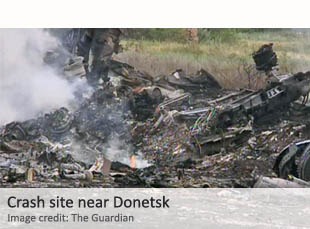
American intelligence officials said on Tuesday that the intercepted conversations between pro-Russian rebels in Ukraine, in which they admit shooting down a plane at approximately the same time Malaysian Airlines Flight 17 crashed in eastern Ukraine, are “authentic”. The officials were speaking on condition of anonymity at a press briefing in Washington, organized by the United States government to provide its own take on the tragic incident, which killed almost 300 people last week. On Monday, Russian military officials said Moscow had evidence that a Ukrainian fighter jet was trailing the civilian airliner shortly before it crashed. But American officials told reporters on Tuesday that satellite images, voice traffic, as well as information gathered from social media used by pro-Russian rebels in Ukraine, “point overwhelmingly” to direct rebel responsibility for the attack. The officials said that the possibility that Ukrainian military forces might have shot down the plane was “not a plausible scenario”, because Kiev had “no antiaircraft missile system within range of the Malaysian flight at the time it was struck”. They added that photos from the crash site showed damage consistent with that caused by a Russian-made SA-11 missile, though they stressed that the data backing this assertion is still preliminary. They also pointed out, however, that US intelligence experts had verified the authenticity of the intercepted telephone conversations released shortly after the plane disaster by the Security Service of Ukraine. The voices in the recordings are allegedly those of senior pro-Russian rebel commanders, as well as of officials in Russia’s Main Intelligence Directorate of the General Staff, known commonly as GRU. In one conversation, recorded 20 minutes after the Malaysia Airlines plane was shot down, Igor Bezler, a leading commander of the self-proclaimed Donetsk People’s Republic, tells GRU Colonel Vasily Geranin: “We have just shot down a plane […]. It fell down beyond Yenakievo”. Read more of this post

Russia says it traced Ukraine fighter jet near downed Malaysia plane

General Kartopolov (left) speaking in MoscowBy IAN ALLEN | intelNews.org
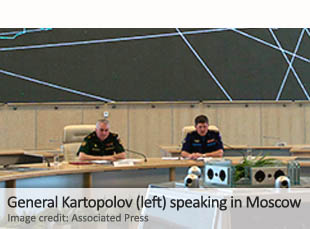
Russian government officials have made a presentation in Moscow showing alleged evidence of a Ukrainian fighter jet, which they claim was trailing a civilian airliner that crashed on Thursday in eastern Ukraine. All 295 people onboard the Malaysia Airlines Boeing 777-200, which came down in a field east of the city of Donetsk, were killed. Last week, Ukrainian intelligence sources released telephone intercepts said to contain direct admissions by pro-Russian rebels that they shot down the civilian airliner. But Russian defense officials fought back on Monday with a hi-tech news conference in Moscow, which included several slides, charts and images relating to the airline disaster over Donetsk. The media briefing, which was specifically called to showcase Moscow’s take on the incident, featured two senior-ranking officials from the Russian general staff. One of the presenters, Lieutenant-General Andrei Kartopolov, told the gathered reporters that the government of Ukraine was most likely behind the plane’s downing. He said Russian radars showed the Malaysian Airlines plane had been forced to “deviate from its route to the north” for up to “14 kilometers” (10 miles). He added that the plane was all the while being trailed by an SU-25 fighter jet belonging to the Ukrainian government, which Russian radars indicated was flying at a distance of “three to five kilometers” (3 miles) from the civilian airplane. Kartopolov stressed that the SU-25 fighter jets are typically armed with air-to-air missiles. Pointing to a series of graphs showing radar activity around Donetsk, the Russian general stated that Ukrainian radar stations had also displayed “unusual activity” in the hours preceding the attack on the civilian airliner. He told reporters that the Russian Ministry of Defense had evidence that “the intensity of the operation of Ukrainian radar stations increased to the maximum” during the time period surrounding the fateful attack on the plane. Read more of this post

Ukraine rebels ‘admit downing Malaysia plane’ in phone intercepts

Malaysia Airlines crash site near DonetskBy JOSEPH FITSANAKIS | intelNews.org
Ukrainian intelligence has released telephone intercepts said to contain direct admissions by pro- Russian rebels that they shot down a civilian airliner that crashed on Thursday in eastern Ukraine. All 295 people onboard the Malaysia Airlines Boeing 777-200, which came down in a field east of the city of Donetsk, are presumed dead. An American intelligence official told the Associated Press, on condition of anonymity, that Washington is certain the airliner was brought down by a surface-to-air missile. Late on Thursday, Valentyn Nalivaichenko, director of the Security Service of Ukraine (SSU), said in a press conference that his agency had conclusive evidence showing that pro-Russian rebels had shot down the plane. Nalivaichenko said the evidence included recordings of telephone conversations between rebel commanders and Russian intelligence officers, which were intercepted just minutes after the plane was brought down. During Nalivaichenko’s press conference, the SSU published the intercepted conversations on YouTube with subtitles in English, French, German and Polish. The videos identify some of the participants in the conversations, including Igor Bezler, a leading commander of the self-proclaimed Donetsk People’s Republic, and Vasily Geranin, who is said to be a Colonel in Russia’s Main Intelligence Directorate of the General Staff, known commonly as GRU. In one phone call, allegedly made at 4:40 Kiev time, 20 minutes after the Malaysia Airlines plane was shot down, Bezler appears to tell Geranin: “We have just shot down a plane […]. It fell down beyond Yenakievo”. In a subsequent intercept, another rebel commander calls a Russian intelligence officer from the site of the crash to report that the downed plane appeared to be civilian, not military, as originally thought, and that the crash site was filled with casualties. “It’s 100 percent a passenger aircraft”, he reports, adding that there are no weapons visible on site: “absolutely nothing. Civilian items, medicinal stuff, towels, toilet paper”, he says. Read more of this post

UK military scrambling to rehire retired Russian-language analysts

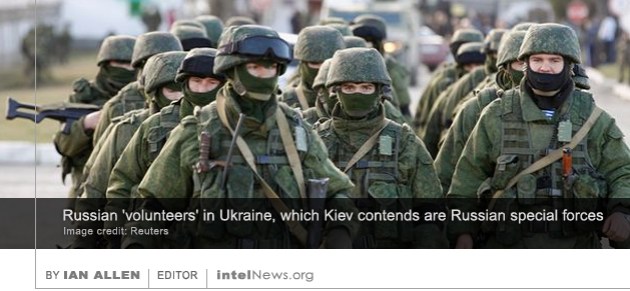
Russian troops in UkraineBy JOSEPH FITSANAKIS | intelNews.org
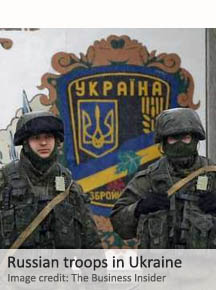
The crisis in Ukraine is causing the British military to reach out to hundreds of retired Russian-language analysts who left the service at the end of the Cold War, according to media reports. British newspaper The Daily Telegraph said on Saturday that Russia’s actions in the Ukraine had exposed significant shortages of Russian-language analysts in the British Armed Forces. The paper said it had seen internal government documents that detailed efforts by military officials to contact associations of retired intelligence personnel in search of qualified Russia experts. The article referenced one recent memorandum from an unnamed senior officer in a military intelligence brigade, which asks retired military personnel to help by contacting retired Russian-language analysts, most of whom are now in their 60s. Other documents suggest that, in addition to analysts, the British military is in need of experts that can help monitor and translate information collected from open-source Russian information channels. The Telegraph places the blame for the shortage on budget cuts implemented by successive British governments on the nation’s Armed Forces. It also faults the defense and security agencies’ “recent focus on the Middle East and Asia”, which is said to have occurred at the expense of Russian linguistic and analytical expertise. The article quotes an unnamed “intelligence source” as saying that Britain’s Ministry of Defense used to offer “extremely good” Russian-language courses, but that “after 9/11” a focus on Arabic displaced Russian and other languages associated with the Cold War. There are also complaints by Russian experts in the British Army that they were “openly derided as being nothing more than a ‘language club’” in the years following 9/11. Read more of this post