Israel reportedly behind discovery of Russian antivirus company’s spy links
October 11, 2017 1 Comment
 Israeli spy services were reportedly behind the United States government’s recent decision to purge Kaspersky Lab antivirus software from its computers, citing possible collusion with Russian intelligence. Last month, the US Department of Homeland Security issued a directive ordering that all government computers should be free of software products designed by Kaspersky Lab. Formed in the late 1990s by Russian cybersecurity expert Eugene Kaspersky, the multinational antivirus software provider operates out of Moscow but is technically based in the United Kingdom. Its antivirus and cybersecurity products are installed on tens of millions of computers around the world, including computers belonging to government agencies in the US and elsewhere. But last month’s memorandum by the US government’s domestic security arm alarmed the cybersecurity community by alleging direct operational links between the antivirus company and the Kremlin.
On Tuesday, The New York Times reported that the initial piece of intelligence that alerted the US government to the alleged links between Kaspersky Lab and Moscow was provided by Israel. The American paper said that Israeli cyber spies managed to hack into Kaspersky’s systems and confirm the heavy presence of Russian government operatives there. The Times’ report stated that the Israelis documented real-time cyber espionage operations by the Russians, which targeted the government computer systems of foreign governments, including the United States’. The Israeli spies then reportedly approached their American counterparts and told them that Kaspersky Lab software was being used by Russian intelligence services as a backdoor to millions of computers worldwide. The Israelis also concluded that Kaspersky’s antivirus software was used to illegally steal files from these computers, which were essentially infected by spy software operated by the Russian government.
It was following the tip by the Israelis that he Department of Homeland Security issued its memorandum saying that it was “concerned about the ties between certain Kaspersky [Lab] officials and Russian intelligence and other government agencies”. The memorandum resulted in a decision by the US government —overwhelmingly supported by Congress— to scrap all Kaspersky software from its computer systems. Kaspersky Lab has rejected allegations that it works with Russian intelligence. In a statement issued in May of this year, the company said it had “never helped, nor will help, any government in the world with its cyberespionage efforts”.
► Author: Joseph Fitsanakis | Date: 11 October 2017 | Pemalink
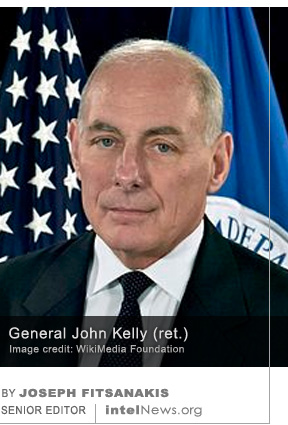 The personal cell phone of the White House Chief of Staff John Kelly (photo) was compromised by persons unknown and may have been bugged for nearly a year, according to United States government officials. General Kelly retired from the US Marine Corps in 2016, after serving as chief of the US Pentagon’s Southern Command, where he supervised American military operations in Latin America and the Caribbean. Soon afterwards, he was appointed by US President Donald Trump to lead the Department of Homeland Security, which he joined in January of 2017. Six months later, however, he replaced Reince Priebus, who resigned abruptly from the post of White House Chief of Staff, citing differences over management style with the Trump administration.
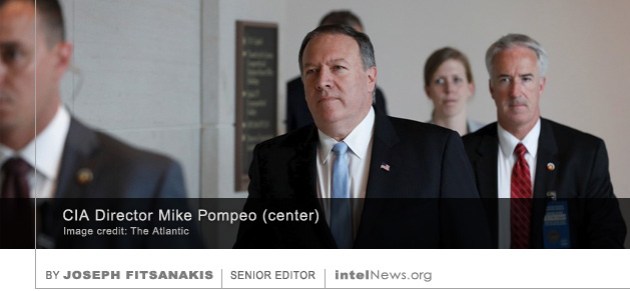 The man appointed by President Donald Trump to lead the United States Central Intelligence Agency has outlined his plans to promote more aggressive intelligence operations and combat what he described as “red tape” in the agency’s culture. Mike Pompeo, a former aerospace and oil executive, who is a member of the conservative Tea Party movement, assumed the directorship of the CIA in January of this year. He succeeded John Brennan, a career CIA officer, who has been an outspoken critic of the Trump administration’s attitude to intelligence since he left office in January.
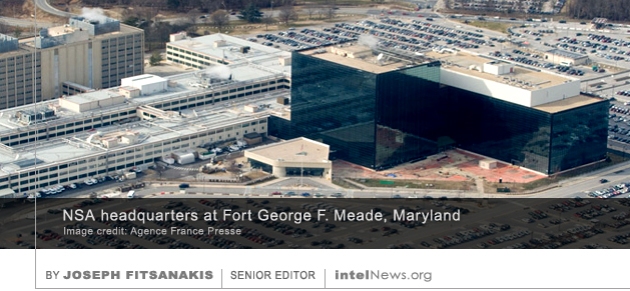 Representatives from the United States National Security Agency (NSA) withdrew a proposal to introduce new global industry standards for data encryption, after encountering prolonged skepticism by experts representing other Western countries. Some observers have interpreted this development as indicative of the damaged relationship between the NSA and its Western counterparts following revelations by American defector Edward Snowden.
 Australia rejected a secret request by the United States Central Intelligence Agency to open an embassy in North Korea, which the Americans hoped to use as a base from where to collect intelligence on the communist state.
  American officials have revealed more information about a mysterious sonic device that is believed to have caused numerous diplomats to suffer hearing loss and other serious ailments. Last month, the Associated Press
  American troops deployed in Syria have exchanged fire with rebels that were until recently supported by the United States Central Intelligence Agency. In 2013, soon after the outbreak of the Syrian Civil War, the then-US President Barack Obama instructed the Central Intelligence Agency to provide covert support to fighters in Syria. Acting on the president’s directive, the CIA promptly joined forces with spy agencies from Britain, France, Saudi Arabia and the United Arab Emirates, to assist fighters affiliated with the Free Syrian Army. At that time, Washington saw the Free Syrian Army and forces affiliated with it as ideologically moderate. It also agreed with the group’s main aim, which was to topple the regime of Syrian President Bashar al-Assad.
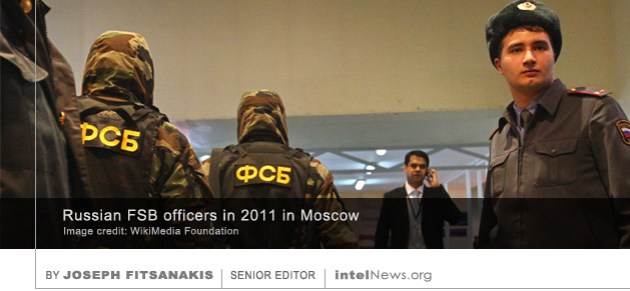 Two senior officers in the Russian intelligence services were charged with treason after they were found to have helped the United States catch two notorious Russian hackers, according to reports in the Russian media. Sergey Mikhailov was a career officer in the Federal Security Service —a descendant of the domestic section of the Soviet-era KGB— which is often referred to as Russia’s equivalent of the United States Federal Bureau of Investigation. Mikhailov had risen through the ranks of the FSB to eventually head the agency’s Center for Information Security. Known in Russia as CIB, the Center is tasked with investigating electronic crime in the Russian Federation.
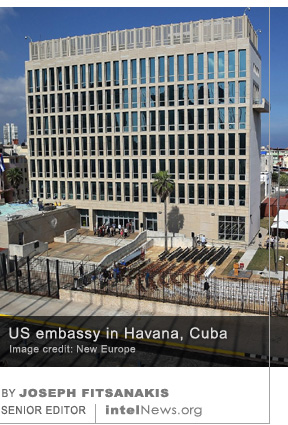 Authorities in Cuba, the United States and Canada are investigating reports that several foreign diplomats stationed in Havana have been experiencing severe hearing loss in recent months.
  The role of the CIA in funding and helping to organize anti-Soviet groups inside the USSR has been known for decades. But, as intelNews explained in
 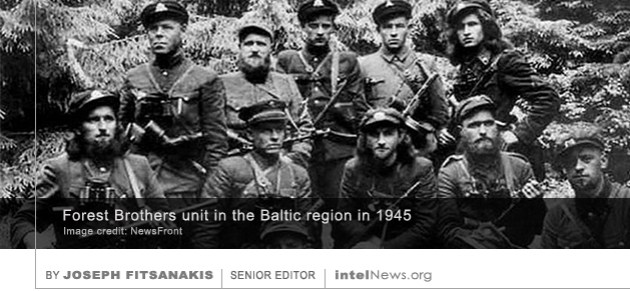 Recently declassified documents from the archive of the Central Intelligence Agency detail financial and material support given by the United States to groups of armed guerrillas in Soviet Latvia in the 1950s. The documents, initially marked ‘Top Secret’ but now declassified, show that the CIA was aware and supported the activities of an anti-Soviet guerrilla army known as ‘the Forest Brothers’. Known also as ‘the Forest Brethren’, the group was formed in the Baltic States in 1944, as the Soviet Red Army established Soviet control over the previously German-occupied states of Estonia, Latvia and Lithuania. The Soviet Union had previously occupied and annexed the three Baltic countries, in a failed attempt to pre-empt Germany’s eastward military expansion. Groups like the Forest Brothers consisted of the most militant members of anti-Soviet groups in the Baltic States, many of whom were ideologically opposed to Soviet Communism.
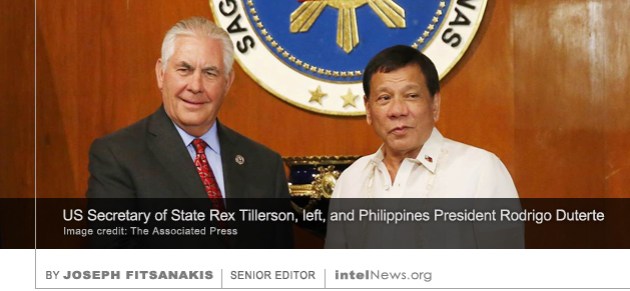 The United States is reportedly weighing plans to launch airstrikes in the Philippines, against militant groups that are affiliated with the Islamic State of Iraq and Syria. However, some American officials are skeptical about reports of possible airstrikes, while Philippine government officials claim no such action is necessary. For more than 40 years, the Philippine army has been fighting a counterinsurgency campaign against secessionist Moros in the country’s southwest. The region is home to most of the Philippines’ Muslim population, which constitutes around 6 percent of the country’s overall population. In recent years, some Muslim secessionist groups, including the most formidable, Abu Sayyaf, have pledged allegiance to the Islamic State of Iraq and Syria, known as ISIS.
 The decision by the White House to terminate American support for rebels in war-torn Syria could backfire by causing the suddenly unemployed fighters to join jihadist organizations, according to experts. The United States’ support for the rebels began in secret in early 2013, after the then US President, Barack Obama, instructed the Central Intelligence Agency to provide covert support to fighters in Syria. The CIA then joined forces with spy agencies from Britain, France, Saudi Arabia and the United Arab Emirates, to assist fighters affiliated with the Free Syrian Army. At that time, Washington saw the Free Syrian Army and forces affiliated with it as ideologically moderate. It also agreed with the group’s main aim, which was to topple the regime of Syrian President Bashar al-Assad.
 Nearly half a billion of American taxpayers’ funds were wasted by contractors hired by the United States government to train Afghan intelligence personnel, according to a scathing report by a Congressional body. The funds were spent between 2010 and 2013 by the US Department of Defense, in order to train several thousand members and a few dozen aspiring trainees of the Afghanistan National Defense and Security Forces (ANDSF). Two companies, Legacy Afghanistan R&D and Afghanistan Source Operations Management, oversaw the training program. It was primarily executed by a contractor, Imperatis Corporation, and a subcontractor, New Century Consulting, at a total cost of $457 million to the US taxpayer.






 intelNews.org
Revealed: China arrested US diplomat believing him to be CIA officer
October 13, 2017 by Joseph Fitsanakis Leave a comment
On Wednesday, Politico said it spoke with “more than half a dozen current and former national security officials” in the US, who confirmed that an American diplomat stationed at the Chengdu consulate was abducted and detained for several hours. The website said that the abduction took place in January 2016. The diplomat was reportedly “grabbed off the street” in the middle of the day by plainclothes Chinese officers and driven to a detention facility in an unmarked van. He was allegedly kept there for several hours despite his diplomatic status with full immunity, which protects diplomats from being subjected to arrest and detention in the host country. American officials claim that the Chinese authorities did not notify the US consulate of the diplomat’s whereabouts until several hours later. By that time, the diplomat had been aggressively interrogated and his responses had been filmed by his captors, who claimed that he was an officer of the CIA. He was later released but left the country soon afterwards, according to Politico.
American officials told the website that the diplomat’s abduction was “an unusually bold act” that illustrates an ongoing and increasingly tense confrontation between Chinese and American intelligence services. Several American diplomats told Politico that Chinese authorities followed them around and in some cases broke into their apartments and “searched their rooms and belongings”. According to the news website, Washington responded to the American diplomat’s abduction by issuing a formal protest and threatening to expel Chinese intelligence officers operating in the US with diplomatic cover. However, it is not believed that the threat materialized.
► Author: Joseph Fitsanakis | Date: 13 October 2017 | Permalink
Filed under Expert news and commentary on intelligence, espionage, spies and spying Tagged with Chengdu (China), China, CIA, diplomacy, diplomatic expulsions, espionage, News, United States, US consulate in Chengdu