US files espionage charges against military contractors with Turkish ties

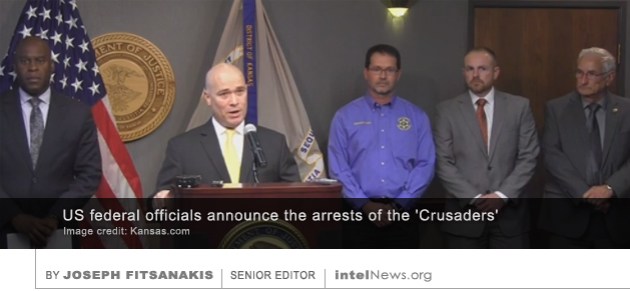
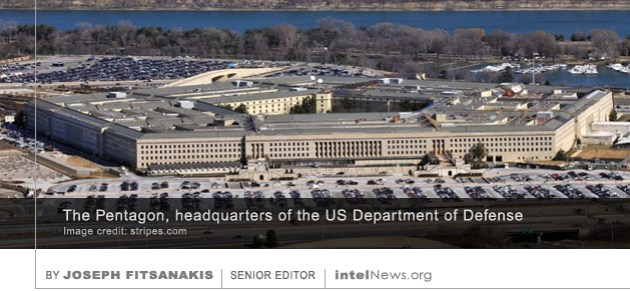
PentagonIn a development that is expected to contribute to the downward spiral in Turkish-American relations, the United States government has reportedly filed espionage charges against three Department of Defense contractors with Turkish background. The three are believed to have been charged with transferring US military secrets abroad and are currently in prison.

A statement published by the US Pentagon said that the group consists of two men and a woman, all of whom are of Turkish background. Two of them are naturalized American citizens. They are listed as owners of a company that conducts research in military technology and has contracted for many years with the US Pentagon. All contracts were allegedly won following competitive bids and can only be awarded to bidders who are in possession of US citizenship and top security clearances. According to Turkey’s pro-government English-language newspaper, Daily Sabah, the three contractors have helped develop and manufacture parts for missile-launching systems used on American warplanes. They have also worked on several generations of grenade launchers used by the US military.

But on Sunday, the three contractors were arrested in simultaneous raids and charged with “funneling military secrets out of the country”, according to Sabah. The paper said the US government decided to arrest the three once it became known that some hardware parts related to the Pentagon bids handled by their company were being illegally manufactured in Turkey. There is no information in the Pentagon’s press release on whether the top-secret military components were also shared with the Turkish government. Relations between Washington and Ankara, two North Atlantic Treaty Organization member-states, have suffered since the failed July 15 military coup in Turkey. Many in the administration of Turkish President Recep Tayyip Erdoğan blame Washington for the coup and for allegedly shielding the man behind it, the Islamic cleric Muhammed Fethullah Gülen, who lives in the US state of Pennsylvania.

Author: Joseph Fitsanakis | Date: 12 October 2016 | Permalink

Arrested contractor may have worked for NSA’s elite cyber spy unit

NSAA United States federal contractor, who remains in detention following his arrest last summer for stealing classified documents, may have worked for an elite cyber espionage unit of the National Security Agency. The man was identified by The New York Times last week as Harold Thomas Martin III, a 51-year-old employee of Booz Allen Hamilton, one of the largest federal contractors in the US. The paper said that, prior to joining Booz Allen Hamilton, Martin served as a US Navy officer for over a decade, where he specialized in cyber security and acquired a top secret clearance. But last August, agents of the Federal Bureau of Investigation raided Martin’s house in Maryland and arrested him on charges of stealing government property and illegally removing classified material.

Media reports suggest that the FBI discovered significant quantities of classified information, some of it dating back to 2006, on a variety of electronic devices that Martin had stored —though apparently not hidden— in his house and car. Another interesting aspect of the case is that there is no proof at this point that Martin actually shared the classified information with a third party. There is some speculation that he may be behind a disclosure of a collection of NSA hacking tools, which were leaked in August of this year by a previously unknown group calling itself “the Shadow Brokers”. But some speculate that Martin may have taken the classified material home so he could write his dissertation for the PhD he is currently undertaking at the University of Maryland’s Information Systems program.

A few days ago, The Daily Beast quoted an unnamed former colleague of Martin who said that the NSA contractor was a member of one of the agency’s elite cyber spy units. The existence of the secretive unit, which is known as the NSA’s Office of Tailored Access Operations, was revealed in June 2013 by veteran NSA watcher Matthew M. Aid. Writing in Foreign Policy, Aid cited “a number of highly confidential sources” in alleging that the NSA maintained a substantial “hacker army” tasked with conducting offensive cyber espionage against foreign targets. More information on NSA’s TAO was provided in January 2014 by German newsmagazine Der Spiegel. If The Daily Beast’s allegations about Martin are accurate, they would explain why anonymous government sources told The Washington Post last week that some of the documents Martin took home “could be expected to cause exceptionally grave damage to the national security of the United States”. The case also highlights the constant tension between security and the privatization of intelligence, which was also a major parameter in the case of Edward Snowden, another Booz Allen Hamilton contractor who defected to Russia in 2013.

Meanwhile, Martin remains in detention. If he is convicted, he will face up to 11 years behind bars.

Author: Joseph Fitsanakis | Date: 10 October 2016 | Permalink

FBI seeking former Syrian intelligence officer reportedly hiding in Florida

Moustafa Abed AyoubA Syrian former intelligence officer, who was given American citizenship several years ago, is being sought by authorities in the United States. The man was named by the Federal Bureau of Investigation last week as Moustafa Abed Ayoub, a 75-year-old resident of Fort Lauderdale, Florida. A statement by the FBI said the wanted man is believed to be hiding in southern Florida, possibly in the Miami area. A reward is now offered for information leading directly to Ayoub, according to the FBI press release. The release did not specify whether the former intelligence officer is wanted in connection with the ongoing civil war in Syria.

The FBI press release described Ayoub as a former brigadier general in Syria’s powerful Mukhabarat, the Military Intelligence Directorate, which operates under the auspices of the country’s Ministry of Defense. He is reported to have served in the Mukhabarat for nearly 20 years, from the early 1980s to the late 1990s. According to the FBI release, Ayoub served initially in Hama and Homs before he was transferred to Damascus. It appears that Ayoub is accused by the FBI of procuring American citizenship unlawfully, after giving deliberately false testimony during his naturalization proceedings. To be eligible for American citizenship, an applicant must have lived in the US for at least 30 months during the period leading to his or her naturalization application. Ayoub is accused of not telling immigration authorities that he had spent over 1,000 days outside the US in the months leading to his application for citizenship.

The FBI said it issued a warrant for Ayoub’s arrest in Florida, where he is believed to be hiding. However, the FBI release noted that Ayoub may have returned to Syria, or may be currently residing in the Lebanese capital Beirut.

Author: Ian Allen| Date: 30 September 2016 | Permalink

Public event held in Cuba for the first time to demand release of US spy

Ana Belen MontesA public event has been held for the first time in Havana to demand the release Ana Belen Montes, an American former intelligence analyst who is serving a 25-year prison term for spying on the United States for Cuba. The event appeared to be sanctioned by the Cuban government and is bound to reignite rumors that a deal between Washington and Havana to release Montes may be in the works.

Montes grew up in Kansas. In 1985 she joined the US Defense Intelligence Agency, which collects and analyzes military-related information from abroad. Montes quickly distinguished herself in the DIA, and by the mid-1990s she was seen as one of the US government’s most knowledgeable and capable Cuba experts. She was the main author of nearly every major assessment on Cuba that was produced by the US Intelligence Community in the 1990s. But on September 21, 2001, Montes was arrested by the Federal Bureau of Investigation and charged with having committed espionage for Cuba. During her trial, US government prosecutors argued that Montes had been recruited by Cuban intelligence before she joined the DIA, and that she eventually compromised every US intelligence collection program targeting the Caribbean island. The former DIA analyst was also accused of having given Havana the identities of US intelligence officers who had secretly operated in Cuba. In 2002, Montes was sentenced to 25 years in prison, after pleading guilty to having committed espionage throughout her 16-year career in the DIA.

In recent months, there has been speculation that Montes could be released and allowed to relocate to Cuba. In return, Havana would reportedly extradite to the US Assata Shakur, a former member of militant black nationalist groups in the United States, who is accused of the 1973 murder of a state trooper in New Jersey. These rumors were denied by the US Department of State in August. Last week, however, the first public event took place in Havana to demand Montes’ release. The event featured performances by artists, as well as a keynote speech by Manuel David Orrio, a retired officer in the Cuban General Intelligence Directorate (DGI). Orio told those present at the event in downtown Havana that committees to demand Montes’ release had been formed in several Cuban provinces, as well as in Sweden, France, Puerto Rico and the Dominican Republic. He added that formally requesting Montes’ release would be an “extremely complex” and delicate affair for the Cuban government, but that social pressure groups were free to press US officials.

In the past, the Cuban government has been silent about Montes’ case, and very few Cubans are aware of her existence. The fact that the government is now mobilizing popular committees and other pressure groups may point to a change of policy in Havana.

Author: Joseph Fitsanakis | Date: 28 September 2016 | Permalink

Cease-fire near collapse after US airstrike kills 62 and injures 100 Syrian troops

Deir al-Zour SyriaA cease-fire that was launched with much fanfare by the United States and Russia last week appeared in tatters on Sunday night, after Washington acknowledged it mistakenly killed over 60 Syrian troops on Saturday. American officials expressed regret for the alleged error, but Syrian and Russian officials accused Washington of deliberately sabotaging the cease-fire agreement. Russian sources said the US air strike killed 62 and injured over 100 Syrian government troops who were engaged in a battle against Islamic State forces in Syria’s eastern province of Deir al-Zour. American military officials insisted that the pilots, who flew into Syria from bases in Iraq, believed they were targeting Islamic State forces. The operation was allegedly aborted as soon as US forces were notified by the Russian military that Syrian government troops were being targeted.
According to media reports, the US government has apologized to Damascus though Russian intermediaries for the “unintentional loss of life of Syrian forces”. But the incident has incensed Moscow, as it marks the first known engagement between US and Syrian forces since American military forces began fighting the Islamic State in 2014. The incident was described by The Washington Post late on Saturday as having sparked “one of the most hostile diplomatic exchanges between Washington and Moscow in recent years”. Soon after the US airstrike, Russia called an emergency meeting of the United Nations Security Council, during which the Russian delegation accused the United States of deliberately trying to derail the cease-fire. According to reports, the American delegation stormed out of the closed-door meeting and denounced it as a “stunt” after the Russians openly accused Washington of aiding the Islamic State and al-Qaeda in Syria.

American officials have launched an investigation into Saturday’s incident and are so far refusing to speculate whether it was caused by human error or an intelligence failure. In Washington, a State Department spokesman insisted that “coalition forces would not intentionally strike a known a Syrian military unit”. But in a statement issued on Saturday, Russian Major General Igor Konashenkov said that, if the US air strike was in error, it was a “direct outcome of the US side’s stubborn unwillingness to coordinate its activities  in Syria with Russia”.

Author: Joseph Fitsanakis | Date: 19 September 2016 | Permalink

US spy agencies are significantly expanding operations against Russia

CIAAmerican intelligence agencies are diverting counterterrorist resources to Russian accounts, prompting some commentators to describe the move as the greatest expansion of spy operations against Russia since the Cold War. In a leading article published on Wednesday, The Washington Post’s Greg Miller cites unnamed United States officials in describing “a shift in resources across spy services”. The shift allegedly reflects an increasing emphasis on Russia, with many of the resources coming from accounts focusing on terrorism threats and war zones in the Middle East and Central Asia, which were created in the aftermath of 9/11.

In contrast to the Cold War, when US intelligence agencies devoted most of their resources to the Soviet Union and its allies around the world, today the US Intelligence Community designates “at most 10 percent” of its budget on espionage targeting Russia, according to Miller. But this is now beginning to change, he says, as the Office of the Director of National Intelligence has now “moved Russia up the list of intelligence priorities for the first time since the Soviet Union’s collapse” in 1991. This move, which reflects current national-security priorities in the White House, will have a spiraling effect on the resources devoted to Russia by every American intelligence agency. There will be more human intelligence collection conducted by the CIA against Russian targets, more attention paid by the National Security Agency to Russian communications, and more reconnaissance activity over Russia by satellites operated by the National Reconnaissance Office, among other changes.

This change in direction comes after a prolonged period of tension between Washington and Moscow, which has been marked by America’s intervention in North Africa during the Arab Spring, which Moscow strongly objected to, Russia’s annexation of Crimea, the Syrian Civil War, and numerous instances of cyber espionage. As a result, says Miller, “surging tensions now cut across nearly every aspect of the US-Russia relationship”. He adds that some voices in Washington have raised concerns about the slow response by the US Intelligence Community to Russia’s resurgence as a world actor, especially in Eastern Europe and the Middle East. He quotes one unnamed senior US intelligence official as saying that American spy agencies are now “playing catch-up big time with Russia”. However, some US officials stress that, given the level of reduction in US intelligence capabilities targeting Russia since 1991, it will take years to rebuild them. Regardless, they say, there is no desire in Washington to return to Cold War levels of intelligence activity any time soon.

Author: Joseph Fitsanakis | Date: 15 September 2016 | Permalink

FBI arrests two more members of hacker group that targeted CIA director

Computer hackingTwo more members of a computer hacker group that targeted senior United States intelligence officials, including the director of the Central Intelligence Agency, have been arrested by the Federal Bureau of Investigation. The arrests of Justin Liverman, 24, and Andrew Boggs, 22, took place on Thursday in Morehead City and North Wilkesboro, in the US state of North Carolina. They are accused by the FBI of being members of Crackas With Attitude (CWA) an international group of computer hackers that specialized in targeting American intelligence and law enforcement officials.

Last October, the international whistleblower website WikiLeaks published personal emails and documents belonging to CIA Director John Brennan. The documents included a 47-page application for security clearance that Brennan had submitted to the US government a few years earlier. It was apparently found on his personal America Online (AOL) email account, which had been hacked by the CWA hacker group. Members of the group, who are all in their late teens or early 20s, routinely employed a method known as ‘social engineering’ to gain access to their victims’ information. The method refers to impersonating technicians or other service provider company personnel to gain access to private email or telephone accounts.

CWA members used these techniques to target dozens of senior US government officials from October 2015 until February 2016. Their targets included the Director of National Intelligence James Clapper and the Deputy Director of the FBI, Mark Giuliano. The hackers also gained access to electronic databases belonging to the US Department of Justice, from where they obtained the names, personal telephone numbers and home addresses of nearly 30,000 employees of the FBI and the Department of Homeland Security. That information was eventually published online by the hacker group.

In February, a 16-year-old hacker known as ‘Cracka’, who is the purported ringleader of CWA, and whose name cannot be released due to his young age, was arrested in the East Midlands region of Britain. It is believed that information on the teenager’s electronic devices eventually led the FBI to the capture of Liverman and Boggs. The two men have been charged with computer crime and are expected to appear in court in the US state of Virginia next week.

Author: Joseph Fitsanakis | Date: 09 September 2016 | Permalink

FBI warns against alleged Russian campaign to destabilize US elections

Putin and ObamaThe Federal Bureau of Investigation is among several intelligence agencies in the United States that have expressed concerns about an alleged Russian campaign to destabilize November’s presidential elections. The Washington Post, which revealed the FBI’s concerns on Monday, claimed that Moscow recently launched an “active measures” operation aimed at covertly sabotaging the integrity of the US election process. Russia’s goal, said the paper, was to “counter US leadership and influence in international affairs”, thus subverting America’s image, especially in countries of the former Eastern Bloc or former Soviet republics.

According to The Post, the FBI and other US intelligence agencies have “no definitive proof” that Moscow is attempting to promote public distrust in American political institutions. But there are strong indications that have made this topic “a priority” for intelligence officials from the FBI, the Department of Homeland Security, the National Security Agency and the Central Intelligence Agency, said the paper. These indications include the hack of the computer systems at the Democratic National Committee, the official governing body of the US Democratic Party, which was revealed in June. The hack resulted in the disclosure of over 20,000 internal emails and led to the resignation of Debbie Wasserman-Schultz, the DNC’s Chairwoman. According to The Post, the hack is “not yet officially ascribed by the US government to Russia”, but US intelligence officials are convinced that Moscow was behind it.

The DNC hack prompted the FBI to send a so-called “flash alert” to US election officials in July, urging them to remain vigilant against “attempts to penetrate election systems”, which have been detected in several states, according to the report. The unprecedented FBI alert did not expressly name Russia as a national-security threat, nor did it give details of electoral sabotage. But it urged state election officials to “be on the lookout for intrusions into their election systems”. Citing unnamed intelligence officials, The Post said that the investigation into alleged Russian operations against the US Presidential election is being coordinated by James Clapper, the US Director of National Intelligence.

Author: Joseph Fitsanakis | Date: 07 August 2016 | Permalink

US denies it plans to free top intelligence analyst who spied for Cuba

Ana Belen MontesThe White House has no plans to release an American former military analyst who spied for the government of Cuba, according to an official letter sent to a member of the United States Congress. The denial came weeks after some media reports in Miami and Cuba suggested that Washington was examining a request by Havana to release Ana Belen Montes, an American intelligence analyst and expert on Cuba, who is serving a 25-year prison sentence for spying on the United States on behalf of Cuba.

Montes, who is the daughter of an American military doctor, grew up in Kansas. In 1985 she joined the Defense Intelligence Agency, a US Department of Defense body that collects and analyzes military-related information abroad. Montes quickly distinguished herself in the DIA, and by the mid-1990s she was seen as one of the US government’s most knowledgeable and capable Cuba experts. She was the main author of nearly every major assessment on Cuba that was produced by the US Intelligence Community in the 1990s. But on September 21, 2001, Montes was arrested by the Federal Bureau of Investigation and charged with having committed espionage for Cuba. During her trial, US government prosecutors argued that Montes had been recruited by Cuban intelligence before she joined the DIA, and that she eventually compromised every US intelligence collection program targeting the Caribbean island. The former DIA analyst was also accused of having given Havana the identities of US intelligence officers who had secretly operated in Cuba. In 2002, Montes was sentenced to 25 years in prison, after pleading guilty to having committed espionage throughout her 16-year career at the DIA.

But in recent months, there has been speculation that Montes could be released and allowed to relocate to Cuba. In return, Havana would reportedly extradite to the US Assata Shakur, a former member of militant black nationalist groups in the United States, who is wanted for the 1973 murder of a state trooper in the state of New Jersey. Shakur, whose birth name is JoAnne Deborah Byron, escaped from an American prison in 1979 and resurfaced in Cuba in 1984. The island’s socialist government gave Shakur political asylum, but the FBI has designated her a terrorist.

The rumors about a possible exchange between Montes and Shakur prompted US Representative Devin Nunes, a Republican from California, who chairs the House Permanent Select Committee on Intelligence, to voice concern. In a letter to US President Barack Obama, Nunes urged against Montes’ release. The Congressman described the imprisoned former intelligence analyst as “one of the most brazen traitors in US history” and remarked that she “richly deserved her 25-year prison sentence, and must serve every day of it”. According to El Nuevo Herald, Nunes received a written response from the US Department of State, which said that “the United States government has no intention of releasing or exchanging Montes”. According to the Florida-based, Spanish-language newspaper, the State Department letter “assured” Nunes that it was “responding on the president’s behalf”, suggesting that the Obama administration has no plans to release Montes.

Author: Joseph Fitsanakis | Date: 29 August 2016 | Permalink

US Pentagon hires private intelligence contractor for Syria operations

PentagonThe United States Department of Defense has released details of an agreement with a private intelligence contractor, which experts believe involves the provision of services to American Special Forces working clandestinely inside Syria. The announcement, made on the Pentagon’s website, is believed to be the first public admission of the use of a private intelligence contractor by the US government in Syria. In the brief press release, the DoD identifies the contractor as Six3 Intelligence Solutions, a McLean, Virginia-headquartered company that specializes in intelligence, biometrics and security.

Six3 Intelligence Solutions is a subsidiary of CACI International Inc., one of the largest defense, security and intelligence contractors in the US. According to The Daily Beast, CACI purchased Six3 Intelligence Solutions in 2013 for $820 million, in what a CACI media statement said was “the biggest deal” in the company’s 50-year history. Public records indicate that Six3 Intelligence Solutions is already fulfilling a $30 million contract with the Pentagon, involving the provision of nondescript “intelligence services” to American troops stationed in Afghanistan. The latest contract, worth $9.5 million, was announced on July 27. It is a no-bid contract, otherwise known as a ‘sole source contract’, which means that the government believes that only one company can provide the services required. Thus, the process by which a no-bid contract is awarded is non-competitive.

The Pentagon’s July 27 announcement states that, under the contract, work by Six3 Intelligence Solutions personnel “will be performed in Germany, Italy, and Syria”. There is no mention of the precise nature of the work, though it is generally assumed that it will support the operations of US Special Forces troops that are currently stationed in Syria. American troops have been active in Syria for at least a year. Nearly 300 US Special Forces members are believed to be presently operational in the war-torn country, working with officers of the Central Intelligence Agency. The Daily Beast said it contacted CACI and the DoD about the recently announced contract, but received no responses.

Author: Joseph Fitsanakis | Date: 15 August 2016 | Permalink

US Congressional probe finds DoD intelligence on Islamic State was altered

ISISAn investigation by Republican lawmakers in the United States House of Representatives has reportedly found that military intelligence analysts were pressured into changing reports on the Islamic State by their superiors. The investigation follows allegations made a year ago by analysts at the Defense Intelligence Agency (DIA), the Pentagon’s primary human-intelligence agency. As many as 50 analysts claimed that their reports about the Islamic State were being deliberately tweaked by officials at the US Central Command (CENTCOM), the Pentagon body that directs and coordinates American military operations in Egypt, the Middle East and Central Asia. Some of the reports related to al-Qaeda activity in Iraq and Syria, but most were about the Islamic State, the militant Sunni organization that controls large swathes of territory in Iraq and Syria.

The allegations prompted two separate investigations, one by the Department of Defense and one by a task force consisting of Republican members of three committees in the US House of Representatives —namely the Committee on Armed Services, the Permanent Select Committee on Intelligence, and the Defense Subcommittee of the Committee on Appropriations. According to The Daily Beast, the committees have now concluded their five-month investigation and are preparing to release a 10-page report before the end of August. Citing three unnamed US officials, the website claims that the soon-to-be-released report will corroborate claims by DIA analysts that their intelligence reports were deliberately doctored in order to make American efforts against ISIS seem more successful than they have been.

According to the three officials, who are reportedly “familiar with the task force’s findings”, the 10-page document will not corroborate claims that the pressure on the intelligence analysts was exercised by senior sources inside the White House. But they told the website that the Congressional investigation could continue after the release of the report. The Daily Beast said it contacted CENTCOM for a comment on the story, but was told that the Pentagon body has yet to receive the task force report. Meanwhile, the Pentagon’s own investigation into the analysts’ allegations continues and expected to release its findings by the end of 2016.

Author: Joseph Fitsanakis | Date: 11 August 2016 | Permalink


Notorious Russian arms dealer ‘refused US offer for lighter sentence’

Viktor BoutThe wife of Viktor Bout, the imprisoned Russian arms dealer dubbed ‘the merchant of death’, said he rejected an offer by his American captors who asked him to testify against a senior Russian government official. Born in Soviet Tajikistan, Bout was a former translator for the Soviet military. After the end of the Cold War, he set up several low-profile international air transport companies and used them to transfer large shipments of weapons that fueled wars in Africa, Asia, Latin America and Europe. He made millions in the process and acquired international notoriety, which inspired the Hollywood blockbuster Lord of War. But his business ventures ceased in 2008, when he was arrested in Bangkok, Thailand, by the United States Drug Enforcement Administration, with the cooperation of the Royal Thai Police. He was eventually extradited to the US and given a 25-year prison term for supplying weapons to the Afghan Taliban, and for trying to sell arms to the Revolutionary Armed Forces of Colombia (FARC). Bout is currently serving his sentence at the Brooklyn Metropolitan Detention Center in New York.

In a newspaper interview on Tuesday, Bout’s wife, Alla Bout, said her husband could have gotten away with a considerably lighter sentence had he agreed to testify against a senior Russian government official. Speaking to Moscow-based daily Izvestia, Alla Bout said her husband had been approached by American authorities after being extradited to the United States from Thailand. He was told that US authorities wanted him to testify against Igor Sechin, a powerful Russian government official, whom American prosecutors believed was Bout’s boss. In return for his testimony, US prosecutors allegedly promised a jail sentence that would not exceed two years, as well as political asylum for him and his family following his release from prison. Alla Bout added that her husband’s American lawyers were told by the prosecution that the ‘merchant of death’ “would be able to live in the US comfortably, along with his wife and daughter”, and that his family could stay in America during his trial “under conditions”. Alla Bout claimed she was told this by Bout himself and by members of his American legal team.

From 2008 to 2012, Sechin, who has military background, served as Russia’s Deputy Prime Minister. Today he heads the Board of Directors of Rosneft, a government-owned oil extraction and refinement company, which is considered one of the world’s most powerful business ventures. Many observers see Sechin as the most formidable man in Russia after Russian President Vladimir Putin. He is also believed to be a senior member of the Siloviki, a secretive group of government officials in the Putin government who have prior careers in national security or intelligence. Although Bout and Sechin have never acknowledged having met each other, some investigators of Bout’s weapons-trading activities believe that the two were close allies. It is believed that the two men first met in Angola and Mozambique in the 1980s, where they were stationed while serving in the Soviet military. But the two men deny they knowing each other. According to Alla Bout, Viktor told his American captors that he “never worked for Sechin and did not know him in person”. He therefore turned down the prosecution’s offer and was handed a 25-year sentence. When asked by the Izvestia reporters whether Bout was simply protecting the powerful Russian government official, Alla Bout insisted that the two “have never even met, not once”.

Author: Joseph Fitsanakis | Date: 10 August 2016 | Permalink

Iran executes nuclear scientist who claimed he was kidnapped by CIA

Shahram AmiriAuthorities in Iran have admitted that they executed a former scientist for the country’s nuclear program, who claimed that he was abducted by the United States after disappearing from Iran for a year. Shahram Amiri worked for the Atomic Energy Organization of Iran, the government body that is responsible for operating and regulating the country’s nuclear installations. But in the summer of 2009, while on a religious pilgrimage to the Saudi Arabian city of Mecca, Amiri disappeared. Iranian authorities alleged at the time that Amiri had been kidnapped and possibly killed by Saudi, Israeli or American intelligence operatives.

Remarkably, the Iranian scientist reappeared almost a year later in Washington, DC. He entered the embassy of Pakistan in the American capital and asked to speak to the official in charge of the embassy’s Iranian interests section (since America and the Islamic Public have no official diplomatic relations, Pakistan’s embassy serves as an intermediary). He told officials at the embassy that he had been abducted by the Central Intelligence Agency after being drugged in Saudi Arabia. He also claimed that he was secretly transported to the US, where he was “subjected to intense psychological pressure” involving psychotropic drugs, interrogated and forced to reveal secrets about Iran’s nuclear program. But US officials denied Amiri’s claims and said the Iranian scientist had defected on his own accord and was free to return to Iran, if he wanted. Unconfirmed reports suggested that Amiri had changed his mind after defecting to the US, because he feared that Iranian authorities would harm his family. Some anonymous sources in Washington also claimed that Amiri had been offered $5 million for the information he gave the CIA, but that he had chosen to return to Iran instead of accepting the money.

On July 15, 2010, just three days after contacting the Pakistani embassy in DC, Amiri returned to a hero’s welcome in Iran, which was televised live. Meanwhile, Iranian officials accused the US and Israel of employing dirty tactics against the Islamic Republic. However, in May 2011 Amiri was suddenly arrested at his family home in Tehran and charged with treason. He underwent a secret trial, was convicted and was never again seen in public. On Saturday, Amiri’s family said they had received his body from the government, and that it appeared that he had died from hanging, judging by rope marks around his neck. On Sunday, Iran’s first deputy chief justice and former intelligence minister, Gholam-Hossein Mohseni-Eje’i, told reporters that Amir had indeed been executed by hanging. During his brief announcement, Mohseni-Eje’i said Amiri had endangered the Islamic Republic by giving “vital intelligence about the country to the enemy”, by which he said he meant the United States.

Author: Joseph Fitsanakis | Date: 07 August 2016 | Permalink

Countries using Eastern Europe to flood Syria with weapons, study finds

AK-47Unprecedented quantities of weapons and ammunition worth in nearly $1.5 billion have been procured from Eastern Europe and sent to Syria to arm nearly every side in the ongoing civil war, a study has found. The weapons are transported through the Balkans and sold legally to countries bordering Syria, including Jordan, Saudi Arabia and Turkey. Once there, they are secretly transported to Syria for use in the bloody five-year civil war, which has so far killed or displaced millions. The revelation resulted from a year-long investigative project by the Serbia-based Balkan Investigative Reporting Network (BIRN) in the Organised Crime and Corruption Reporting Project (OCCRP) in Bosnia.

The probe found that the weapons transferred to the Middle East include heavy machine guns, rocket and mortar launchers and shells, anti-tank weapons, as well as thousands of assault rifles and rounds of ammunition. Many originate from Ukraine, Belarus and the former Yugoslavia and are procured by companies in eight Eastern European countries including Bulgaria, Slovakia, Romania, the Czech Republic, Montenegro, and Bosnia. The governments of these countries give the companies permission to sell weapons to Middle Eastern countries, even though it is informally understood that they will eventually end up in Syria, in contravention of international agreements.

Investigators say the smuggled weapons have been traced to various factions fighting in Syria, primarily the Free Syrian Army, which is fighting against the government of Syrian President Bashar al-Assad. But many have ended up in the hands of Islamist militias, including the Islamic State, Ansar al-Islam, and the group formerly known as Jabhat al-Nusra. Some of the weapons have also surfaced in Yemen, in the hands of Sunni fighters there. According to the probe’s findings, Middle Eastern countries like Turkey, Jordan or Saudi Arabia, whose militaries use Western-made weaponry, were never large purchasers of Eastern European weapons. But that quickly changed in 2012, as the Syrian Civil War picked up pace.

According to British newspaper The Guardian, which published some of the findings of the BIRN-OCCRP report, the United States has used this weapons-smuggling channel as a way to arm Syrian opposition forces. The study found that, since December of last year, the US military’s Joint Special Operations Command has commissioned at least three cargo ships that left ports in the Black Sea for the Middle East carrying weapons for Syria. Regular intelNews readers will remember a report from November 2013, according to which the Greek authorities seized a ship that had left Ukraine heading for Syria or Libya, carrying 20,000 AK-47s, as well as explosives and ammunition. Two years later, in November 2015, we reported on allegations that Ukraine may be secretly arming the Islamic State in an effort to impair its regional foe, Russia.

Author: Joseph Fitsanakis | Date: 29 July 2016 | Permalink

Turkish media accuse US general, CIA, of plotting coup

Yeni Şafak’sAmerican officials have strongly denied accusations in the Turkish press that Washington was behind the failed July 15 coup in Turkey. On July 25, Yeni Şafak, a popular Turkish daily, alleged that the failed coup had been funded and organized by the United States government. The newspaper, which is headquartered in Istanbul, is known for its conservative political stance and close links to the AKP, the party of Turkish President Recep Tayyip Erdoğan. Its editorials typically reflect the AKP’s position on the political affairs of the day.

In its leading article on Monday, Yeni Şafak cited “senior government officials” in claiming that the CIA had organized the plotters behind the July 25 military putsch. It also fingered retired US Army General John F. Campbell as the principal intermediary between the CIA and the coup plotters in the Turkish military. Born in 1957, General Campbell served as the US Army’s Vice Chief of Staff until 2014, when he assumed the command of all US armed forces in Afghanistan. Upon his retirement, in 2016, he stepped down from that post as the last commander of the International Security Assistance Force in the Central Asian country. Yeni Şafak’s July 25 front-page headline read: “This man led the coup”, next to a photograph of General Campbell. In the corresponding article, the retired American General was accused of having “organized and managed the soldiers” behind the coup, and having handled “at least $2 billion” in CIA funds, which he allegedly distributed to the coup plotters via the Nigeria-based United Bank for Africa (UBA).

But in a statement issued on Tuesday, UBA called Yeni Şafak’s allegations spurious and insisted it had “no involvement with, or connection to” the July 15 coup attempt in Turkey. Speaking to The Wall Street Journal, General Campbell also dismissed the allegations against him as “absolutely ridiculous”, adding that they “don’t even warrant a response”. On the same day, the Chairman of the US Joint Chiefs of Staff, General Joseph Dunford, described the Turkish newspaper’s article as “absurd”. Speaking at a press conference held jointly with US Defense Secretary Ashton Carter in Washington, General Dunford said: “I really don’t know where that report could have come from”. Last week, US President Barack Obama telephoned his Turkish counterpart to assure him that the US had no prior knowledge of, or involvement in, the coup.

Pro-AKP media in Turkey have repeatedly accused Washington of being behind the July 15 coup attempt. But the Yeni Şafak article marked the first time that a foreign individual was named as a leading coup plotter. Ankara claims that the main culprit of the coup is Fethullah Gülen, a charismatic religious figure who leads a large anti-AKP religious movement from his place of exile in the US state of Pennsylvania. Turkey has said that it will issue a formal request for Gülen’s extradition. But the White House says it will consider extraditing Gülen only in light of sufficient evidence from Ankara. Gülen himself denies all charges of involvement in the plot.

Author: Joseph Fitsanakis | Date: 28 July 2016 | Permalink