US spies fear Trump travel ban will hurt recruitment of Muslim assets
January 30, 2017 Leave a comment
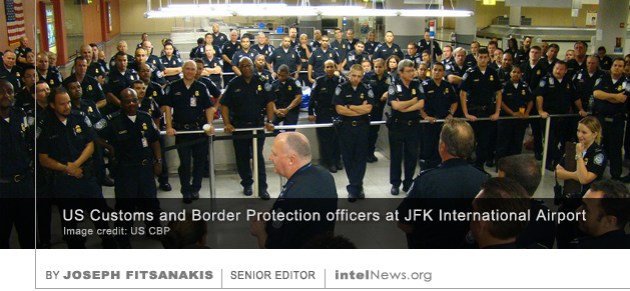 Intelligence veterans have raised concerns that the temporary ban on immigrants and refugees from seven Muslim-majority nations, which has been imposed by the White House, will significantly hinder American efforts to recruit intelligence assets and sources in Muslim countries. United States President Donald Trump signed an executive order on Friday, banning entry into the United States of citizens of Iran, Iraq, Syria, Yemen, Sudan, Somalia and Libya. According to the White House, the goal of the temporary ban is to help increase domestic security in the US. But according to Jeff Stein, a former intelligence officer and veteran intelligence correspondent, many in the US Intelligence Community view the travel ban as counterproductive and potentially fatal for their ability to operate.
In an article for Newsweek, Stein explains that, ever since the Cold War, American intelligence agencies have guaranteed to their assets —foreigners who agree to spy for the US— that they and their families will be exfiltrated to America if their lives are in danger. In other cases, assets or their family members are given costly medical treatment or educational opportunities in the US. The promise of eventual resettlement in America is a core recruiting tool used by case officers working in agencies such as the Central Intelligence Agency or the Defense Intelligence Agency. It is especially valuable in Muslim countries, where American spy agencies have traditionally found it difficult to operate, and where asset recruitment is arduous and dangerous. If current and potential assets are in any way concerned that they may not be able to enter the US, or not respected once they enter, their willingness to cooperate with their American spy handlers can quickly evaporate. Stein quotes Cindy Storer, who served 20 years as an analyst in the CIA, mostly on counterterrorism, and was in the agency team that led the successful hunt for al-Qaeda founder Osama bin Laden. Storer exclaimed that the travel ban “hurts, capital H-U-R-T-S” the CIA’s ability to collect intelligence. Another CIA veteran, Phillip Lohaus, who also served in the US Special Operations Command, lamented the “reduced likelihood that those in countries targeted by the ban will work with us in the future”.
Henry Miller-Jones, who worked for many years as a CIA operations officer in the Middle East, warned that the travel ban was likely to damage the flow of useful intelligence collected by US agencies from “students, professors, visiting businessmen and others” from Muslim countries. The latter are often recruited by US intelligence agencies when visiting America. Additionally, said Miller-Jones, Americans who travel or live in the Muslim world would now “get the cold shoulder” from potentially valuable contacts in those regions. He told Stein that CIA case officers often struggle to convince potential assets that America respects their religion and culture. The travel ban, no matter how geographically limited or temporary, will make it even more difficult to convince these potential assets to work for US intelligence now, he said.
► Author: Joseph Fitsanakis | Date: 30 January 2017 | Permalink
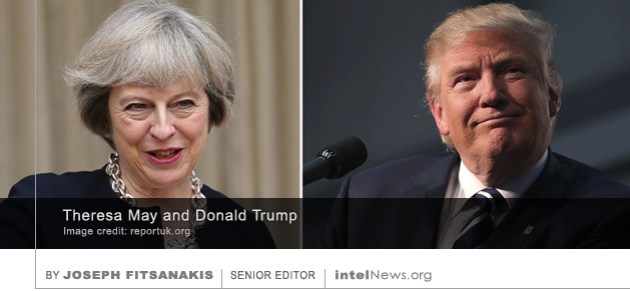 The British government may limit or end intelligence cooperation with the United States, if Washington revives its post-9/11 torture program, according to reports. On Wednesday, US President Donald Trump said he had asked “people at the highest level of intelligence […], does torture work?” and had received the answer “yes, absolutely”. He added that he was considering reviving some of the torture techniques that were used in the “war on terrorism”, including waterboarding and, in his words, “a hell of a lot worse”.
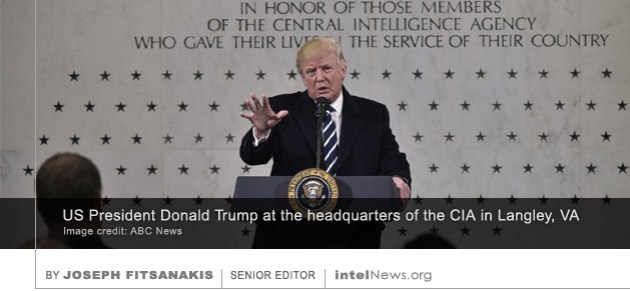 Officials at the United States Central Intelligence Agency have questioned whether it is safe for them to reveal the sources of their information about Russia to America’s new President, Donald Trump, according to a report. The implication is that some at the CIA are concerned that Trump’s allegedly close ties with Russian officials may put CIA operations officers in danger. The information was shared on Monday by Mary Louise Kelly, national security correspondent for National Public Radio (NPR). She
  There is no doubt whatsoever that Russia has compiled ‘information’ on United States President Donald Trump. Russian intelligence considers it a rightful duty to compile information on persons of relevance, especially when they are conducting significant business or maintain political relations with Russia. Trump qualified under that definition long before he even thought about running for president. Even I have been followed, during my numerous times in Russia, both openly and tacitly. I have had my computer hacked and hotel phone bugged. And my affairs in Russia have come nowhere near to the financial or political relevance of Donald Trump.
 intelligence on Trump has nothing to do with American celebrity culture. If it truly exists, this would have been done under the edict of ‘national security’ for Russian geopolitical interests. As such, the proper Russian intelligence behavior would be to deny its existence and hold on to anything it has until a time deemed strategically best. The least efficient usage of that compromising material would be to just embarrass him publicly before he is inaugurated, TMZ ‘gotcha’ style. Russians simply don’t work that way. Rather, keeping it secret and using it in a non-public but strategically effective manner for their national interests is the Russian way.
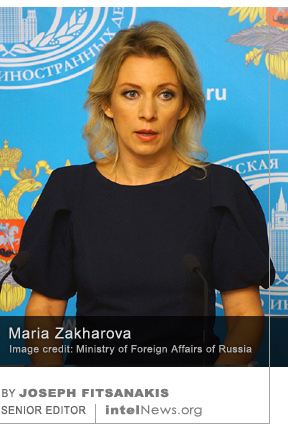 A senior Russian official has accused the United States Federal Bureau of Investigation of trying to blackmail a Russian diplomat who was attempting to purchase anti-cancer drugs in an American pharmacy. The allegation was made Sunday on live Russian television by Maria Zakharova, spokeswoman for Russia’s Ministry of Foreign Affairs. She was being interviewed on Sunday Night with Vladimir Solovey, a popular politics roundtable show on Russia’s state-owned Rossiya 1 television channel. Zakharova told Solovey that, a few years ago, the Russian government authorized one of its diplomats in the United States to purchase several thousand dollars’ worth of anti-cancer drugs. The drugs were to be used by Yevgeny Primakov, Russia’s prime minister in the late 1990s, who was battling liver cancer.
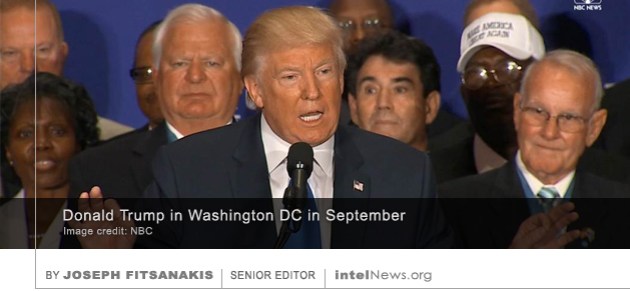 American intelligence officials allegedly warned their Israeli counterparts not to share intelligence with Washington once Donald Trump becomes president of the United States. The reason was that, according to the US officials, there was no guarantee that the intelligence would not be leaked to Russia. There was also the danger, they claimed, that the compromised intelligence would end up in the hands of Russia’s ally Iran, a regional adversary of Israel. The claim was
 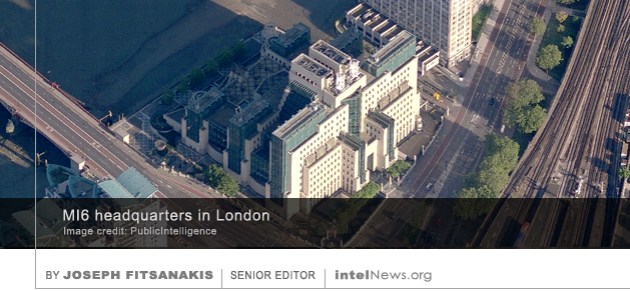 British intelligence agencies gave their United States counterparts an early warning about Russian attempts to influence the outcome of the American presidential election, according to The New York Times. The American newspaper
  There had been rumors for some time about a possible expulsion of Russian diplomats from the United States, in response to alleged Russian interference in the 2016 US Presidential election. The White House confirmed the rumors on Thursday morning, by
  United States President Barack Obama has signed a new law that designates $160 million to set up a government center for “countering foreign propaganda and disinformation”. The law authorizes the US departments of State and Defense to work with other federal agencies in establishing the new body. Its precise tasks are not yet known, nor is the role in it —if any— of intelligence agencies, though the Director of National Intelligence is mentioned in the
 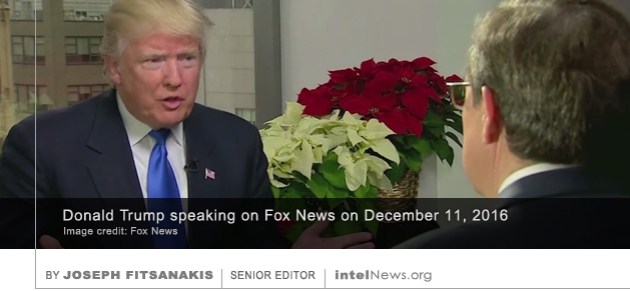 No person familiar with the theory and practice of intelligence will be shocked by allegations that Russia interfered in the recent American presidential election. On the contrary, the claim will strike experienced observers as a textbook case of covert operation —an intelligence activity designed to influence foreign political, military or economic developments. Far from being physically violent, most covert operations involve actions like secretly funding political parties, planting misinformation or propaganda in foreign media outlets and —in more extreme cases— bribing or extorting key political actors. During the Cold War, hardly a national election took place without attracting the
  in last month’s US election. Indeed, the opposite would be strange.
 candidates. This was about the reputation of the American electoral process. In fact, the primary goal of Russia’s involvement in the US election —which, again, must be presumed— was not to empower a particular candidate, but to weaken the reputation of American political institutions as a whole. Those who claim that the Kremlin tried to promote Trump because the Republican candidate appears to be more favorably disposed toward Russia are wrong. They misunderstand the complex nature of Russian-American relations and underestimate Russian strategy. Moscow understands that its bilateral relationship with Washington rests on a set of longstanding geopolitical variables and does not depend on ephemeral personal relations between individual leaders. Furthermore, the Kremlin views Trump as an inherently unpredictable actor that is not to be trusted. The Russian plan, therefore, was not to help elect Trump. Rather, it was to sow mistrust between American –and by extension Western– civil society and its political institutions. Given the challenges currently being faced by European and American democracy, that is not a far-fetched goal.
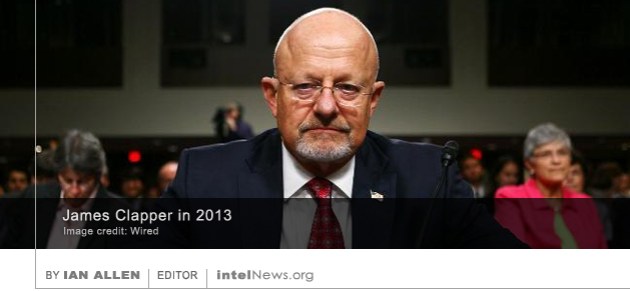 The United States’ senior intelligence officer has told Congress that new legislation requiring spy agencies to act against alleged Russian covert operations constitutes “micromanagement” of the American Intelligence Community. The Intelligence Authorization bill, which includes a number of intelligence-related requirements and provisions, is debated and enacted each year by Congress. This year’s legislation has already been approved by the intelligence committees of the Senate and House of Representatives. Last week it was enacted by the House, while the Senate is preparing to debate it this week.
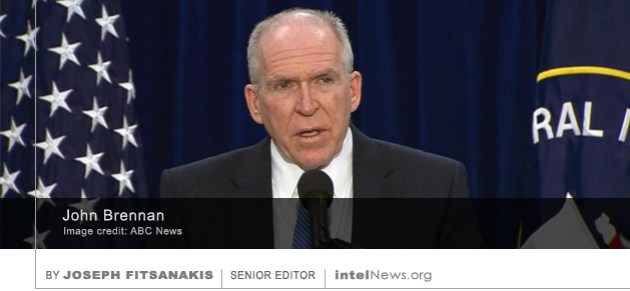 The outgoing director of the United States Central Intelligence Agency has warned in an interview that it would be “disastrous” for Washington to abandon a nuclear treaty with Iran, which was agreed in 2015. John Brennan is a career intelligence officer and fluent Arabic speaker, who has served in the CIA for 25 years. He was appointed director of the agency in March of 2013 by President Barack Obama and is scheduled to leave the position in January of 2017, after nearly four years at the helm of the CIA.
 Coordinated efforts by Anglo-American military and intelligence agencies have resulted in the killing or capturing of nearly every senior commander of the Islamic State’s online force. The close-knit group of Islamic State hackers and online propagandists, which are informally known as “the Legion”, is responsible for hacking and online recruitment incidents that led to several lone-wolf attacks in the West. In one incident in March of 2015, the Legion claimed responsibility for the unauthorized release of personal details of over 1,300 American government employees, with orders to Islamic State volunteers to kill them. In other instances, Legion operatives reached out to impressionable young men and women in Western Europe and the United States and convinced them to move to Syria or conduct attacks at home.







Trump removes DNI, reinstates CIA on the National Security Council
January 31, 2017 by Ian Allen Leave a comment
On Monday, a new statement by the White House revised last week’s memorandum, by listing the director of the CIA as a “regular attendee” in NSC meetings. When asked by journalists about the change, White House Press Secretary Sean Spicer explained that “[t]he president has such respect for [CIA] Director [Mike] Pompeo and the men and women of the CIA, that today the president is announcing that he will amend the memo to add the CIA back into the NSC”.
Throughout the Cold War, the CIA was viewed as the most powerful and influential agency in the US Intelligence Community. It answered directly to the president and its director mediated between the White House and all of the nation’s intelligence agencies. That changed in 2005, when the administration of George W. Bush established the Office of the Director of National Intelligence as the central coordinating body of the US Intelligence Community. In the same year, the Bush administration replaced the CIA director’s place in the NSC with the DNI. Since that time, the DNI has acted as the de facto intelligence representative on the NSC. But Monday’s memorandum changes that, by essentially removing the DNI from the NSC and replacing him with the director of the CIA. Some believe that the change is bound to create tension between the DNI and the CIA, two agencies that have had a stormy relationship in the past decade. The CIA and the ODNI have not yet commented on the amended memorandum issued by the White House.
► Author: Ian Allen | Date: 31 January 2017 | Permalink
Filed under Expert news and commentary on intelligence, espionage, spies and spying Tagged with CIA, DNI, Donald Trump, National Security Council, News, United States