In change of policy, Russia and US begin sharing intelligence with France

Hollande and PutinThe United States and Russia, which have traditionally been cautious about sharing Middle East-related intelligence with France, have both announced that they will begin giving classified information to Paris. On Wednesday, France’s Defense Minister Jean-Yves Le Drian said at a press conference that intelligence shared by the US had been instrumental in enabling the French Air Force to intensify its air campaign against the Islamic State. Asked to respond to Drian’s comments, US Department of Defense spokesman Peter Cook said that the US Armed Forces had indeed “increased intelligence-sharing with France”.

French officials described that development as a “change in the US position”. IntelNews readers will recall that the United States and France limited their intelligence cooperation last summer, after it emerged that the US had spied on the communications of three French presidents, from 1995 to 2012. Paris scaled back drastically its intelligence cooperation with Washington following subsequent revelations that the National Security Agency had targeted the personal cell phone of Francois Hollande, France’s current head of state.

Also on Wednesday, Russian President Vladimir Putin instructed the Russian Armed Forces stationed in Syria to treat their French counterparts “as allies”. Putin reportedly told the leadership of the Russian military in Syria that they “must establish direct contact with the French and work with them as with allies”. This is a significant development, given that Russia is one of the few countries that continues to maintain an active intelligence-collection program on the ground in Syria. Unlike the US, France, and most other Western states, Russia has not closed its embassy in Damascus and is thus able to run networks of human sources throughout the country. The news of increased Russian intelligence-sharing with France came as Moscow announced//announced// on Wednesday that it was stepping up intelligence-gathering throughout the Middle East, according to Andrei Kartapolov, a senior official in the Russian Army’s General Staff.

Meanwhile, an unnamed Moroccan security official told Reuters on Wednesday that intelligence shared by the Moroccan intelligence services with their French counterparts led to a raid in an apartment in Paris in connection with the November 13 attacks there. Two people were shot dead or committed suicide and seven others were arrested during Wednesday’s dramatic raid in the Paris suburb of St. Denis.

Author: Joseph Fitsanakis | Date: 19 November 2015 | Permalink
US defense contractors allegedly hired Russian computer programmers

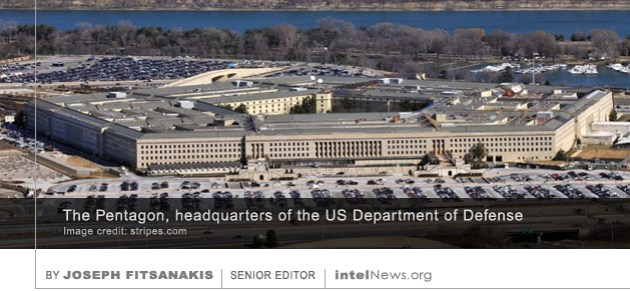
PentagonTwo American firms contracted by the Department of Defense have settled a lawsuit accusing them of having hired Russian programmers based in Moscow to write computer code for classified systems. The hires allegedly occurred as part of a $613 million contract, which was awarded by the US Pentagon to Massachusetts-based Netcracker Technology Corporation and Virginia-based Computer Systems Corporation (CSC). The two companies were hired to write software for the US Defense Information Systems Agency (DISA), a Pentagon outfit that provides the US armed forces with secure real-time combat communications. But in 2011, contractor John C. Kingsley, who had a supervisory role in the project, notified the US government that the two companies had farmed out part of the contract’s coding duties to programmers in Moscow and other Russian cities.

If true, Kingsley’s allegations would mean that Netcracker and CSC were in violation of federal regulations, which specify that only American citizens with the appropriate security clearances should be employed to work on classified communications systems. A subsequent government investigation, which lasted four years, gave rise to a lawsuit against the two companies. The court was told that the code written by the Russian programmers had allowed the installation of “numerous viruses” on the communications systems of the Pentagon “on at least one occasion”. Witnesses also accused Netcracker and CSC of being guided mainly by greed, since it was able to save over 60% of wage costs by employing the Russian programmers.

Last week, the two companies chose to settle the case, by paying the government a combined fee of nearly $13 million in civil penalties. It is important to note, however, that they both deny the government’s accusations that they violated the terms of their federal contract. In statement issued last week, the companies stated that their decision reflected their belief that it was “in the best interest of all stakeholders to settle the matter”. A spokeswoman for the DISA told The Daily Beast that she could not comment on the case, because doing so would “compromise the Agency’s national security posture”. According to The Daily Beast, last week’s settlement does not prevent the Department of Justice from filing criminal charges against Netcracker and CSC.

Author: Joseph Fitsanakis | Date: 12 November 2015 | Permalink | News tip: C.H.

UK, US see bomb behind downing of Russian airliner in Egypt

KogalymaviaInformation gathered by British and American intelligence agencies raises the possibility that a bomb may have brought down the Russian civilian airliner that crashed in Egypt last week. The Metrojet Airbus 321 left the Egyptian resort of Sharm el-Sheikh on Saturday, heading for St. Petersburg, Russia. But it crashed in the Sinai Peninsula less than 30 minutes after it took off, killing all 224 passengers and crew onboard, the vast majority of whom were Russian citizens.

Earlier this week, Russian airline Kogalymavia, which operated the flight, said its investigation indicated that an “external influence” was responsible for the airplane’s downing. On Wednesday, the British government appeared to confirm the company’s suspicions. Britain’s Secretary of Foreign Affairs, Philip Hammond, told a press conference in London that the British government’s Crisis Response Committee had concluded that there was “a significant possibility that the crash was caused by an explosive device on board the aircraft”. He added that Whitehall was suspending effective immediately all flights operated by British carriers to and from Sharm el-Sheikh.

Soon after Hammond’s comments, the Associated Press quoted an unnamed American government official saying that the US had reached the “tentative conclusion” that Islamist militants in Sinai were responsible for planting the bomb on the Kogalymavia airplane. The Americans seem to have reached this conclusion based on intercepted communications messages from the Sinai region.

Egyptian officials have rejected claims that Islamist militants were behind the plane crash, and have criticized London’s decision to suspend all flights to and from Sharm el-Sheikh as unnecessary and premature. Experts in Russia have also said it is too early to draw formal conclusions about the crash. Meanwhile, the airplane’s flight data recorder has been recovered and will be analyzed by investigators in the coming days.

Author: Joseph Fitsanakis | Date: 05 November 2015 | Permalink

Washington to investigate Chinese-owned radio stations in the US

CRI ChinaAuthorities in Washington are preparing to launch an investigation into a dozen radio stations operating in major cities in the United States, which are allegedly owned by a subsidiary of the Chinese government. The investigation appears to have been sparked by a report published by the Reuters news agency on Monday, which claims that the Chinese government is operating a “covert radio network” inside the US, aimed at broadcasting news reports that reflect Chinese views. According to Reuters, the radio stations broadcast in at least a dozen large American cities, including Houston, San Francisco, Boston and Philadelphia.
All stations in question are managed by broadcasting firm G&E Studioa, based in West Covina, California, which is owned by James Su, a Shanghai-born American broadcasting entrepreneur. According to the news agency, G&E Studio controls the vast majority of these stations’ air time, which it fills with entertainment and public-affairs programming produced in its studios in California. However, the Reuters report claimed that G&E Studio is 60% owned by China Radio International (CRI), which is a Chinese state-controlled broadcaster. Founded as Radio Peking in 1941, then renamed to Radio Beijing during the Cold War, CRI is the Chinese equivalent of the Voice of America or the BBC World Service: it is officially affiliated with the Chinese government and reflects its point of view. What is more, said Reuters, some of the programming aired on G&E Studio-managed stations is produced by CRI in Beijing. Consequently, news programming on these stations tends to reflect the Chinese government’s point of view, on subjects such as Taiwan, naval rights in the South China Sea, trade policies and other major topics of the day.

The investigation has been launched by the US Federal Communications Commission (FCC) because American law prohibits representatives of foreign governments, or foreign governments themselves, from owning or managing US broadcast stations. Moreover, individuals or companies seeking to influence American politics or public opinion on behalf of a foreign agency, group or government, must register with the US Department of State. It doesn’t appear that G&E-owned radio stations have done that, said Reuters on Monday. The news agency quoted FCC spokesman Neil Grace, who said that an investigation had been launched into “the foreign ownership issues raised in the stories, including whether the Commission’s statutory foreign ownership rules have been violated”. The Department of State, however, refused to confirm or deny that an investigation into G&E Studios was underway.

Author: Joseph Fitsanakis | Date: 3 November 2015 | Permalink

Israeli military warns its soldiers against recruitment attempts by the CIA

First Post HIsrael’s military intelligence agency has issued a warning to all soldiers in the Israeli armed forces to resist attempts by the United States Central Intelligence Agency (CIA) to recruit them. The existence of the highly unusual warning was revealed on Sunday by Chanel 2, one of Israel’s most popular television stations. According to the report, the communique was sent to every member of the Israel Defense Forces (IDF) by the Military Intelligence Directorate (MID). It cautioned Israeli troops to “be alert and report any unusual incidents” involving American intelligence personnel. The warning made specific reference to the CIA, saying it might be trying to recruit Israeli soldiers as informants.

The communique references a real-life case that is believed to have taken place three years ago, involving several Israeli citizens who had served in the MID. According to media reports, the Israelis, who were traveling to the US, were stopped during passport control and questioned at length by American officials. The latter, who were presumed to be CIA personnel, were alleged to have tried to persuade the Israelis to provide information about their military duties and knowledge of Israeli military affairs. But the Israelis reportedly refused to cooperate with the Americans and reported the incidents to their superiors in the Israeli military.

It is not unusual for the MID to issue warnings regarding soldiers’ use of online social media, or on topics such as confidentiality and discretion when using non-encrypted telephone networks. However, such warnings are typically only communicated to MID personnel and never mention foreign intelligence agencies by name, opting for generic language instead. It is highly unusual for such warnings to identify foreign intelligence agencies, and allied ones at that. The recent move has thus prompted intense speculation in Israel that the MID may have reacted to actual attempts by the CIA to recruit IDF personnel.

An Israeli military spokesperson told Channel 2 that the MID had indeed sent soldiers a written warning about possible recruitment attempts by the CIA. But the representative refused to discuss why the CIA was mentioned in the letter, or why the warning was issued last week.

Author: Joseph Fitsanakis | Date: 02 November 2015 | Permalink

Nuclear black market thriving in Eastern Europe despite efforts to stop it

MoldovaThe United States Federal Bureau of Investigation is assisting authorities in some of Europe’s poorest states in their efforts to stop criminals with Russian connections from selling radioactive material to foreign terrorist organizations. The Associated Press said earlier this month that joint efforts by the FBI and Eastern European governments have frustrated at least four attempts to sell stolen radioactive material in the black market since 2010.
In one case, which involved a criminal gang in the former Soviet Republic of Moldova, the smugglers were trying to sell radioactive material to representatives of the Islamic State in Iraq and Syria. The Associated Press said it spoke to law enforcement and judicial authorities in Moldova, who have set up a small team of detectives to investigate the nuclear black market. The Moldovans told the Associated Press that they were working with the FBI, and even shared some of their investigative case files with the news agency.

In another recent case, which was cracked by authorities in February of this year, a smuggler in Moldova tried to sell a significant quantity of cesium, a radioactive metal typically extracted from the waste produced by nuclear reactors. According to the Moldovans, the quantity of the fission product was “enough to contaminate several city blocks”. Additionally, the Moldovan investigators told the Associated Press that the smuggler was specifically seeking a buyer from the Islamic State.

In yet another case, a joint US-Moldovan investigation targeted Alexandr Agheenco, a mysterious Russian-born smuggler, who in the spring of 2011 said he had access to bomb-grade uranium. According to Moldovan investigators, a middleman working for Agheenco told a prospective buyer from Sudan that he would be willing to sell an unspecified quantity of uranium, as well as “blueprints for a dirty bomb”. Although the sale was prevented by the US-Moldovan investigators, Agheenco managed to escape.

According to the Moldovans, the worsening relations between Washington and Moscow are making it more difficult for investigators from the two countries to share intelligence on nuclear smuggling rings. As a result, smugglers are finding it easier to operate across Eastern Europe and parts of the former Soviet Union. Many leading black-market operatives manage to avoid capture and prosecution, while even those arrested are usually able to evade lengthy convictions, which means that they quickly return to nuclear smuggling, reports the Associated Press.

Author: Joseph Fitsanakis | Date: 30 October 2015 | Permalink | News tip: J.B.

Why is the US federal tax agency using phone interception devices?

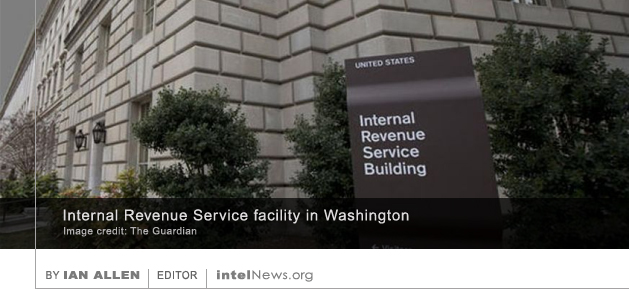
Internal Revenue ServiceDocuments acquired by a newspaper show that the Internal Revenue Service, which is the United States government’s agency responsible for collecting taxes, has purchased devices used to intercept cell phone messages. Founded in 1862, the IRS is the revenue service of the US state, and operates as a bureau of the Department of the Treasury. But it also maintains a number investigative components, including the Criminal Investigation Division. The latter consists of between 3,000 and 4,000 personnel and is tasked with investigating and helping build cases for the prosecution relating to tax evasion, money laundering and other financial crimes.

Historically, the Criminal Investigation Division’s scope and tactics have been limited and rarely relied on telecommunications interceptions. But according to British newspaper The Guardian, the IRS purchased a number of Stingray devices in 2009 and 2012. Known also as IMSI catchers, Stingrays are portable communications-interception devices, which mimic the operation of cell phone towers. They gather data, including the phone numbers dialed, duration of phone calls and location of users, from cell phones that communicate with them. Some Stingray models are said to be able to intercept the content of telephone calls made by unsuspecting cell phone users.

According to The Guardian, the IRS made an initial order to purchase Stingray equipment in 2009 and repeated the request in 2012. At least 12 US federal agencies and hundreds of local law enforcement agencies use Stingrays for communications-interception purposes. But the London-based paper says this is the first time that the IRS has been found to be using the devices. It is unclear, however, what the IRS uses the Stingrays for. The Guardian said it contacted an IRS spokesman who refused to respond to questions on the matter.

Author: Ian Allen | Date: 27 October 2015 | Permalink

Russian subs looking for undersea Internet cables, say US officials

Undersea cableAn increased presence of Russian submarines near American territorial waters appears to correspond to the location of undersea Internet cables used for commercial and military communications, according to officials. Citing “more than half a dozen” American and European officials, including naval commanders and intelligence professionals, The New York Times said on Sunday that the United States Department of Defense was paying close attention to what it described as “significantly increased Russian activity” along known routes of the cables. The paper was referring to Russian underwater vessels, which Washington believes are equipped with technology designed to tap into the cables, or even to sabotage them, by severing them.

According to The Times, officials at the Pentagon believe that Moscow is less interested in tapping into the cables and more interested in mapping their location so that it can attack them during a hypothetical clash with the US. Superficially, the paper said that, according to US officials, the Russian Navy appeared to be seeking to locate the precise coordinates of the fiber-optic cables. The ultimate goal was to sever them “at some of their hardest-to-access locations” if Russia ever needed to disrupt the flow of communication to and from the US. The Russian submarines seem to be seeking some of the deeper locations of the undersea cable networks, which would make it harder for repair crews to locate and repair severed fiber-optic cables.

The New York Times said that, alongside commercial Internet cable networks, Russian submarines were looking for military networks, whose location is usually classified. The paper quoted a European diplomat, who said anonymously that Russian submarine patrols in American territorial waters had increased by nearly 50% since 2014. The level of activity of Russian submarines was now “comparable to what we saw in the Cold War”, said the diplomat.

Author: Ian Allen | Date: 26 October 2015 | Permalink

Iraq now using Russian intelligence in war against Islamic State

Baghdad IraqThe Iraqi government is now using intelligence supplied by the Russian military in its war against the Islamic State, according to officials in Baghdad. As intelNews reported in September, the Iraqi Joint Forces Command announced it had entered a formal intelligence-sharing agreement with the governments of Russia, Syria and Iran. The purpose of the collaboration was to defeat the Islamic State, the Sunni militant group that currently controls a third of Iraq’s territory and much of neighboring Syria. Many were surprised by last month’s announcement, as it was the first time that Iraq, an American ally, had entered an alliance with Washington’s Cold-War adversary Russia, as well as with Iran and Syria, two countries with which the United States has no diplomatic relations.

According to US media reports, the headquarters of the intelligence-sharing center is located in Baghdad’s so-called Green Zone, where US forces were stationed until 2012. Each of the member states has six officers at center, who are given intelligence by their respective countries’ militaries with the intent of sharing it with the other three participating militaries. In addition to these officers, there are two Russian one-star generals stationed at the center, according to The Washington Times, which cited “an Iraqi official who asked not to be identified”.

Back in September, when the four-partite agreement was announced, the US said it respected Iraq’s freedom to enter into security pacts with regional governments, but warned that Syria was a major violator of human rights and should not be part of the intelligence-sharing treaty. On Tuesday, White House press secretary Josh Earnest said he could see no reason why Baghdad would want to enter into an intelligence-sharing agreement with Moscow, given that the US-led coalition had been sharing intelligence with Iraq for over a year. The coalition’s intelligence collaboration with Baghdad had “worked effectively with the Iraqis to make progress against [the Islamic State] inside of Iraq”, he said.

Author: Joseph Fitsanakis | Date: 15 October 2015 | Permalink

Argentina says fugitive ex-spy official hiding in the United States

SIDE ArgentinaAn Argentine former senior intelligence official, who is wanted in connection with the murder of a federal prosecutor in Buenos Aires, is hiding in the United States, according to the President of Argentina, who says Washington should extradite him. Antonio Horacio Stiuso, better known as Jaime Stiuso, rose through the ranks of Argentina’s Secretaría de Inteligencia del Estado (SIDE) to become its director of counterintelligence. In 2012, Argentine President Cristina Fernández de Kirchner appointed Stiuso to chief operating officer of SIDE, working directly under the agency’s director. However, Stiuso was fired in a massive agency shake-up in February of this year, when the government suddenly dissolved SIDE and replaced it with a new agency, called Agencia Federal de Inteligencia.

The radical reorganization was prompted by the death of federal prosecutor Alberto Nisman, whose body was discovered in his Buenos Aires apartment on January 19. Nisman had caused international headlines in the week before his death, after launching a criminal complaint against President Kirchner and several other notable personalities of Argentine political life. Nisman accused them of having colluded with the government of Iran to obstruct an investigation into the bombings of the Israeli embassy and a Jewish cultural center in Buenos Aires in the mid-1990s. A dozen people died in the bombing of the embassy, while another 85 were killed two years later, when the Asociación Mutual Israelita Argentina community center in the Argentine capital was bombed.

But President Kirchner accused SIDE of feeding Nisman fabricated information implicating her and her government minsters in a fictional collusion with the Islamic Republic, and then killing him in order to destabilize her rule. She proceeded to dissolve SIDE and charge its leadership with involvement in Nisman’s killing. According to the Argentine government, Stiuso fled Buenos Aires for Brazil, from where he flew to Miami, Florida, on February 19, using an Italian passport. According to Reuters, President Kirchner said Washington had failed to answer “repeated enquiries” about Stiuso’s whereabouts, and suggested that the former spy official may have been working for American intelligence agencies all along.

Author: Joseph Fitsanakis | Date: 13 October 2015 | News tip: R.W. | Permalink

Pinochet considered killing own spy chief to hide role in US bombing

Orlando LetelierThe president of Chile in the 1970s considered killing his own spy chief in order to conceal his government’s involvement in a terrorist attack in Washington DC, which killed two people, according to declassified memos from the United States Central Intelligence Agency. The target of the attack was Orlando Letelier, a Chilean economist who in the early 1970s served as a senior cabinet minister in the leftwing government of Salvador Allende. But he sought refuge in the US after Allende’s government was deposed in a bloody coup on September 11, 1973, in which Allende was murdered. He taught in several American universities and became a researcher at the Institute for Policy Studies (IPS) in Washington. At the same time, he publicly pressured the US to break off diplomatic and military ties with the Chilean dictatorship.

On September 21, 1976, Letelier died along with American IPS campaigner Ronni Moffitt, when the car they were in suddenly exploded in front of the embassy of Ireland in downtown Washington DC. It is believed that DINA, the Chilean secret police, carried out the bombing. In a private memorandum in 1987, the then-US Secretary of State George Schultz described the bombing as “the only clear case of state-supported terrorism that has occurred in Washington DC”. But the Chilean government, which at the time had friendly relations with the White House, refused to cooperate with the US investigation into the incident.

But declassified US government documents now show that the CIA had concluded that the Chilean government was indeed behind Letelier’s murder. Additionally, the bombing had been directly authorized by the country’s dictator, General Augusto Pinochet, who had led the coup against Allende in 1973. Copies of the documents were personally delivered to Chilean President Michelle Bachelet last week by US Secretary of State John Kerry, as Santiago is seeking to reopen the investigation into the murders. They reveal that Manuel Contreras, head of DINA at the time of the bombing, told an American source that he had supervised the operation to murder Letelier’s under direct orders by General Pinochet. Additionally, according to the CIA documents, the Chilean dictator tried to sabotage the US investigation in to the bombing, and even contemplated killing Contreras in order to hide his personal involvement.

As intelNews has reported before, the US investigation led to the arrest of Michael Townley, an American professional assassin who had previously worked for the CIA. Townley was hired by DINA to help assassinate Letelier’s. He was extradited to the US by the Chilean government in 1978 after strong US pressure. He served just 62 months in prison, in return for agreeing to collaborate with US government investigators. Townley is currently said to be living under the US Witness Protection Program.

Author: Ian Allen | Date: 12 October 2015 | Permalink

Third person charged in probe into alleged US Pentagon ‘rogue operation’

PentagonA third person has been charged in a complex criminal investigation into the procurement of weapon silencers by the United States Department of Defense, which one American newspaper has described as a possible “rogue operation”. The case concerns the Directorate for Plans, Policy, Oversight and Integration, an obscure civilian-led Pentagon office, whose stated mission is to provide logistical support and procurement for intelligence operations conducted by the US Navy and Marine Corps.

According to media reports, more than three years ago the Directorate ordered 349 weapon suppressors, known commonly as silencers. By general admission, silencers are not the type of military hardware used in conventional combat. More importantly, the procurement cost of the silencers should have been no more than around $10,000. However, purchase records show that the Directorate paid the supplier of the silencers over $1.6 million. The supplier then turned out to be the brother of the Directorate’s officer in charge of intelligence, David W. Landersman. Last week it was revealed that Landersman became the third person to face charges of theft and conspiracy as part of the investigation.

Initially, Pentagon officials suggested that the silencers had been purchased for a top-secret operation codenamed UPSTAIRS. The operation was allegedly a “special-access program” aimed at arming foreign paramilitary forces while avoiding the risk of the weapons being traced back to the US. Though limited details were provided, one government witness told the court that military hardware acquired through UPSTAIRS was intended for the US Navy’s Sea, Air, Land Team 6, commonly known as US Navy SEAL Team 6. The special-forces team became famous in 2010, when it carried out the Central Intelligence Agency’s operation NEPTUNE SPEAR, which killed al-Qaeda founder Osama bin Laden in Pakistan. Later during the course of the investigation, however, SEAL Team 6 representatives told court officials that their unit “had not ordered the silencers” and knew nothing about them. Following that development, government prosecutors objected to further discussion of the case in open court due to the alleged “sensitive nature” of the case. Since then, much of the court documentation on the case has been filed under seal on grounds of national security.

But the discrepancies in the case led The Washington Post to speculate last year that the procurement of the weapons silencers may have been part of a “rogue operation”, that is, a military activity not authorized by the Pentagon leadership. The Post spoke to an unnamed “former senior Navy official familiar with the investigation”, who said the Pentagon’s Directorate for Plans, Policy, Oversight and Integration was “building its own mini law enforcement and intelligence agency” without oversight from higher-ups. Another unnamed source, a former Pentagon official familiar with the Directorate, told the paper that “deeper issues might be in play” in the case.

Last week, a Pentagon spokesman said Landersman was “no longer performing duties in any way associated with intelligence” for the US government, though he appeared to still be employed by the US Navy in a clerical capacity, pending the outcome of the investigation.

Author: Ian Allen | Date: 06 October 2015 | Permalink

CIA pulled officers from Beijing embassy following OPM database hack

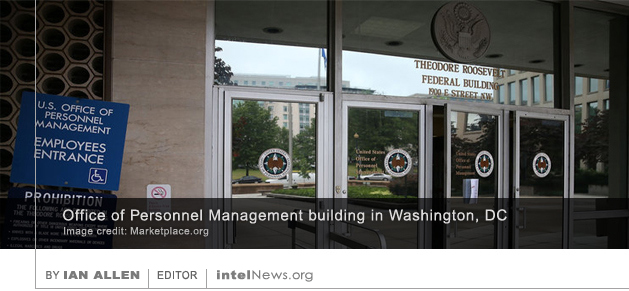
Office of Personnel ManagementThe Central Intelligence Agency (CIA) pulled a number of officers from the United States embassy in Chinese capital Beijing, after a massive cyber hacking incident compromised an American federal database containing millions of personnel records. Up to 21 million individual files were stolen in June of this year, when hackers broke into the computer system of the US Office of Personnel Management (OPM), which handles applications for security clearances for agencies of the federal government. The breach gave the unidentified hackers access to the names and sensitive personal records of millions of Americans who have filed applications for security clearances —including intelligence officers.
According to sources in the US government, the records of CIA employees were not included in the compromised OPM database. However, that is precisely the problem, according to The Washington Post. The paper said on Wednesday that the compromised OPM records contain the background checks of employees in the US State Department, including those stationed at US embassies or consulates around the world. It follows that US diplomatic personnel stationed abroad whose names do not appear on the compromised OPM list “could be CIA officers”, according to The Post. The majority of CIA officers stationed abroad work under diplomatic cover; they are attached to an embassy or consulate and enjoy diplomatic protection, which is typically invoked if their official cover is blown. However, they still have to present their credentials and be authorized by their host country before they assume their diplomatic post. The CIA hopes that foreign counterintelligence agencies will not be able to distinguish intelligence personnel from actual diplomats.

Although the US has not officially pointed the finger at a particular country or group as being behind the OPM hack, anonymous sources in Washington have identified China as the culprit. If true, The Post’s claim that the CIA pulled several of its officers from the US embassy in Beijing would add more weight to the view that the Chinese intelligence services were behind the cyber theft. The paper quoted anonymous US officials who said that the CIA’s decision to remove its officers from Beijing was directly related to the OPM hack, and it was meant to safeguard their personal security, as well as to protect CIA programs currently underway in China.

Author: Joseph Fitsanakis | Date: 1 October 2015 | Permalink

Hackers stole 5.6 million US government employee fingerprints

Office of Personnel Management 2A massive cyber hacking incident that compromised a United States federal database containing millions of personnel records also resulted in the theft of 5.6 million fingerprint records, American officials have said. Up to 21 million individual files were stolen in June of this year, when hackers broke into the computer system of the US Office of Personnel Management (OPM), which handles applications for security clearances for all agencies of the federal government. The breach gave the unidentified hackers access to the names and sensitive personal records of millions of Americans who have filed applications for security clearances —including intelligence officers.

Back in July, OPM officials told reporters that just over 1 million fingerprint records had been compromised by the cyber hack. However, a new statement issued by the White House last week said that the actual number of stolen fingerprints from the OPM database was closer to 5.6 million. In a subsequent statement, the OPM said there was little that the hackers could do with the fingerprint records, and that the potential for exploitation was “currently limited”. But it added that, as technology continued to be developed, the risk of abuse of the stolen fingerprint records could increase. Therefore, an interagency working group would be put together to “review the potential ways adversaries could misuse fingerprint data now and in the future”, the OPM statement said. It added that the group would be staffed with fingerprint specialists for the Federal Bureau of Investigation, the Department of Defense and the Department of Homeland Security.

External American intelligence agencies, which typically send their officers abroad posing as diplomats, and sometimes under cover identities, are reportedly concerned that certain foreign counterintelligence agencies will be able to use the stolen fingerprints to identify the true identities or professional background of US government employees stationed abroad.

Author: Ian Allen | Date: 29 September 2015 | Permalink

UPDATED: Pentagon admits US-trained Syrian rebels joined al-Qaeda

Jabhat al-NusraAfter issuing successive denials earlier in the week, United States officials have now confirmed reports that a group of Syrian rebels trained by the American military surrendered to an al-Qaeda affiliate in Syria almost as soon as they were deployed there from bases in Turkey. Early this week, the United States Central Command (CENTCOM) confirmed that 71 fighters calling themselves the New Syrian Force (NSF) had entered Syria to fight the Islamic State. The NSF group is part of a larger force calling itself Division 30, which consists of what Washington calls “moderate” Syrian rebels that have US support. Around two hundred fighters have been trained in Turkey by the US Pentagon under a $500 million program aimed to build a 5,400-strong rebel force to combat the Islamic State, which today controls much of Syria and Iraq.

But soon after the NSF group entered Syrian territory, a man claiming to be its commander issued a statement saying his group of rebels had denounced the US and broken off from Division 30. Major Anais Ibrahim Obaid, more commonly known as Abu Zayd, said in his statement that the NSF would continue to fight the Islamic State, but would do so independently. Shortly afterwards, a statement from Jabhat al-Nusra (also known as al-Nusra Front), al-Qaeda’s affiliate in Syria, claimed that Major Obaid and his men had surrendered their weapons to them. According to the statement, issued by Jabhat al-Nusra commander Abu Fahd al-Tunisi, the NSF had surrendered its ammunition, weaponry and several pick-up trucks in exchange for safe passage though al-Nusra-controlled territory. He also claimed that Major Obaid had said he had tricked his American trainers in order to receive weapons from them.

On Wednesday, the US Department of Defense had rejected claims that the NSF had surrendered to al-Qaeda. Pentagon spokesman Captain Jeff Davis told reporters that the US had “no information to suggest that [such claims were] true”. A brief statement issued by CENTCOM insisted that “all coalition-issued weapons and equipment are under the positive control of NSF fighters”. No further information on the matter has been released by the US government. On Friday, however, a Pentagon spokesman admitted that “the NSF unit now says it did in fact provide six pick-up trucks and a portion of their ammunition to a suspected al-Nusra Front” group.

This development marks the second major setback for Division 30 in recent months. In August, when the group sent its first team of 54 fighters to Syria, al-Nusra forces quickly attacked and kidnapped many of them. Last week, CENTCOM commander General Lloyd Austin told the US Congress that the Division 30 training program had only managed to produce around 200 fighters, a far cry from its intended 5,400. Of those, said General Austin, only about a handful were still active inside Syria.

Author: Joseph Fitsanakis | Date: 25 September 2015 | Permalink