Argentina says fugitive ex-spy official hiding in the United States

SIDE ArgentinaAn Argentine former senior intelligence official, who is wanted in connection with the murder of a federal prosecutor in Buenos Aires, is hiding in the United States, according to the President of Argentina, who says Washington should extradite him. Antonio Horacio Stiuso, better known as Jaime Stiuso, rose through the ranks of Argentina’s Secretaría de Inteligencia del Estado (SIDE) to become its director of counterintelligence. In 2012, Argentine President Cristina Fernández de Kirchner appointed Stiuso to chief operating officer of SIDE, working directly under the agency’s director. However, Stiuso was fired in a massive agency shake-up in February of this year, when the government suddenly dissolved SIDE and replaced it with a new agency, called Agencia Federal de Inteligencia.

The radical reorganization was prompted by the death of federal prosecutor Alberto Nisman, whose body was discovered in his Buenos Aires apartment on January 19. Nisman had caused international headlines in the week before his death, after launching a criminal complaint against President Kirchner and several other notable personalities of Argentine political life. Nisman accused them of having colluded with the government of Iran to obstruct an investigation into the bombings of the Israeli embassy and a Jewish cultural center in Buenos Aires in the mid-1990s. A dozen people died in the bombing of the embassy, while another 85 were killed two years later, when the Asociación Mutual Israelita Argentina community center in the Argentine capital was bombed.

But President Kirchner accused SIDE of feeding Nisman fabricated information implicating her and her government minsters in a fictional collusion with the Islamic Republic, and then killing him in order to destabilize her rule. She proceeded to dissolve SIDE and charge its leadership with involvement in Nisman’s killing. According to the Argentine government, Stiuso fled Buenos Aires for Brazil, from where he flew to Miami, Florida, on February 19, using an Italian passport. According to Reuters, President Kirchner said Washington had failed to answer “repeated enquiries” about Stiuso’s whereabouts, and suggested that the former spy official may have been working for American intelligence agencies all along.

Author: Joseph Fitsanakis | Date: 13 October 2015 | News tip: R.W. | Permalink

Pinochet considered killing own spy chief to hide role in US bombing

Orlando LetelierThe president of Chile in the 1970s considered killing his own spy chief in order to conceal his government’s involvement in a terrorist attack in Washington DC, which killed two people, according to declassified memos from the United States Central Intelligence Agency. The target of the attack was Orlando Letelier, a Chilean economist who in the early 1970s served as a senior cabinet minister in the leftwing government of Salvador Allende. But he sought refuge in the US after Allende’s government was deposed in a bloody coup on September 11, 1973, in which Allende was murdered. He taught in several American universities and became a researcher at the Institute for Policy Studies (IPS) in Washington. At the same time, he publicly pressured the US to break off diplomatic and military ties with the Chilean dictatorship.

On September 21, 1976, Letelier died along with American IPS campaigner Ronni Moffitt, when the car they were in suddenly exploded in front of the embassy of Ireland in downtown Washington DC. It is believed that DINA, the Chilean secret police, carried out the bombing. In a private memorandum in 1987, the then-US Secretary of State George Schultz described the bombing as “the only clear case of state-supported terrorism that has occurred in Washington DC”. But the Chilean government, which at the time had friendly relations with the White House, refused to cooperate with the US investigation into the incident.

But declassified US government documents now show that the CIA had concluded that the Chilean government was indeed behind Letelier’s murder. Additionally, the bombing had been directly authorized by the country’s dictator, General Augusto Pinochet, who had led the coup against Allende in 1973. Copies of the documents were personally delivered to Chilean President Michelle Bachelet last week by US Secretary of State John Kerry, as Santiago is seeking to reopen the investigation into the murders. They reveal that Manuel Contreras, head of DINA at the time of the bombing, told an American source that he had supervised the operation to murder Letelier’s under direct orders by General Pinochet. Additionally, according to the CIA documents, the Chilean dictator tried to sabotage the US investigation in to the bombing, and even contemplated killing Contreras in order to hide his personal involvement.

As intelNews has reported before, the US investigation led to the arrest of Michael Townley, an American professional assassin who had previously worked for the CIA. Townley was hired by DINA to help assassinate Letelier’s. He was extradited to the US by the Chilean government in 1978 after strong US pressure. He served just 62 months in prison, in return for agreeing to collaborate with US government investigators. Townley is currently said to be living under the US Witness Protection Program.

Author: Ian Allen | Date: 12 October 2015 | Permalink

Third person charged in probe into alleged US Pentagon ‘rogue operation’

PentagonA third person has been charged in a complex criminal investigation into the procurement of weapon silencers by the United States Department of Defense, which one American newspaper has described as a possible “rogue operation”. The case concerns the Directorate for Plans, Policy, Oversight and Integration, an obscure civilian-led Pentagon office, whose stated mission is to provide logistical support and procurement for intelligence operations conducted by the US Navy and Marine Corps.

According to media reports, more than three years ago the Directorate ordered 349 weapon suppressors, known commonly as silencers. By general admission, silencers are not the type of military hardware used in conventional combat. More importantly, the procurement cost of the silencers should have been no more than around $10,000. However, purchase records show that the Directorate paid the supplier of the silencers over $1.6 million. The supplier then turned out to be the brother of the Directorate’s officer in charge of intelligence, David W. Landersman. Last week it was revealed that Landersman became the third person to face charges of theft and conspiracy as part of the investigation.

Initially, Pentagon officials suggested that the silencers had been purchased for a top-secret operation codenamed UPSTAIRS. The operation was allegedly a “special-access program” aimed at arming foreign paramilitary forces while avoiding the risk of the weapons being traced back to the US. Though limited details were provided, one government witness told the court that military hardware acquired through UPSTAIRS was intended for the US Navy’s Sea, Air, Land Team 6, commonly known as US Navy SEAL Team 6. The special-forces team became famous in 2010, when it carried out the Central Intelligence Agency’s operation NEPTUNE SPEAR, which killed al-Qaeda founder Osama bin Laden in Pakistan. Later during the course of the investigation, however, SEAL Team 6 representatives told court officials that their unit “had not ordered the silencers” and knew nothing about them. Following that development, government prosecutors objected to further discussion of the case in open court due to the alleged “sensitive nature” of the case. Since then, much of the court documentation on the case has been filed under seal on grounds of national security.

But the discrepancies in the case led The Washington Post to speculate last year that the procurement of the weapons silencers may have been part of a “rogue operation”, that is, a military activity not authorized by the Pentagon leadership. The Post spoke to an unnamed “former senior Navy official familiar with the investigation”, who said the Pentagon’s Directorate for Plans, Policy, Oversight and Integration was “building its own mini law enforcement and intelligence agency” without oversight from higher-ups. Another unnamed source, a former Pentagon official familiar with the Directorate, told the paper that “deeper issues might be in play” in the case.

Last week, a Pentagon spokesman said Landersman was “no longer performing duties in any way associated with intelligence” for the US government, though he appeared to still be employed by the US Navy in a clerical capacity, pending the outcome of the investigation.

Author: Ian Allen | Date: 06 October 2015 | Permalink

CIA pulled officers from Beijing embassy following OPM database hack

Office of Personnel ManagementThe Central Intelligence Agency (CIA) pulled a number of officers from the United States embassy in Chinese capital Beijing, after a massive cyber hacking incident compromised an American federal database containing millions of personnel records. Up to 21 million individual files were stolen in June of this year, when hackers broke into the computer system of the US Office of Personnel Management (OPM), which handles applications for security clearances for agencies of the federal government. The breach gave the unidentified hackers access to the names and sensitive personal records of millions of Americans who have filed applications for security clearances —including intelligence officers.
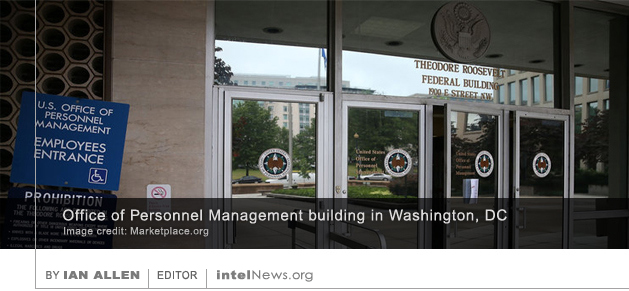
According to sources in the US government, the records of CIA employees were not included in the compromised OPM database. However, that is precisely the problem, according to The Washington Post. The paper said on Wednesday that the compromised OPM records contain the background checks of employees in the US State Department, including those stationed at US embassies or consulates around the world. It follows that US diplomatic personnel stationed abroad whose names do not appear on the compromised OPM list “could be CIA officers”, according to The Post. The majority of CIA officers stationed abroad work under diplomatic cover; they are attached to an embassy or consulate and enjoy diplomatic protection, which is typically invoked if their official cover is blown. However, they still have to present their credentials and be authorized by their host country before they assume their diplomatic post. The CIA hopes that foreign counterintelligence agencies will not be able to distinguish intelligence personnel from actual diplomats.

Although the US has not officially pointed the finger at a particular country or group as being behind the OPM hack, anonymous sources in Washington have identified China as the culprit. If true, The Post’s claim that the CIA pulled several of its officers from the US embassy in Beijing would add more weight to the view that the Chinese intelligence services were behind the cyber theft. The paper quoted anonymous US officials who said that the CIA’s decision to remove its officers from Beijing was directly related to the OPM hack, and it was meant to safeguard their personal security, as well as to protect CIA programs currently underway in China.

Author: Joseph Fitsanakis | Date: 1 October 2015 | Permalink

Hackers stole 5.6 million US government employee fingerprints

Office of Personnel Management 2A massive cyber hacking incident that compromised a United States federal database containing millions of personnel records also resulted in the theft of 5.6 million fingerprint records, American officials have said. Up to 21 million individual files were stolen in June of this year, when hackers broke into the computer system of the US Office of Personnel Management (OPM), which handles applications for security clearances for all agencies of the federal government. The breach gave the unidentified hackers access to the names and sensitive personal records of millions of Americans who have filed applications for security clearances —including intelligence officers.
Back in July, OPM officials told reporters that just over 1 million fingerprint records had been compromised by the cyber hack. However, a new statement issued by the White House last week said that the actual number of stolen fingerprints from the OPM database was closer to 5.6 million. In a subsequent statement, the OPM said there was little that the hackers could do with the fingerprint records, and that the potential for exploitation was “currently limited”. But it added that, as technology continued to be developed, the risk of abuse of the stolen fingerprint records could increase. Therefore, an interagency working group would be put together to “review the potential ways adversaries could misuse fingerprint data now and in the future”, the OPM statement said. It added that the group would be staffed with fingerprint specialists for the Federal Bureau of Investigation, the Department of Defense and the Department of Homeland Security.

External American intelligence agencies, which typically send their officers abroad posing as diplomats, and sometimes under cover identities, are reportedly concerned that certain foreign counterintelligence agencies will be able to use the stolen fingerprints to identify the true identities or professional background of US government employees stationed abroad.

Author: Ian Allen | Date: 29 September 2015 | Permalink

UPDATED: Pentagon admits US-trained Syrian rebels joined al-Qaeda

Jabhat al-NusraAfter issuing successive denials earlier in the week, United States officials have now confirmed reports that a group of Syrian rebels trained by the American military surrendered to an al-Qaeda affiliate in Syria almost as soon as they were deployed there from bases in Turkey. Early this week, the United States Central Command (CENTCOM) confirmed that 71 fighters calling themselves the New Syrian Force (NSF) had entered Syria to fight the Islamic State. The NSF group is part of a larger force calling itself Division 30, which consists of what Washington calls “moderate” Syrian rebels that have US support. Around two hundred fighters have been trained in Turkey by the US Pentagon under a $500 million program aimed to build a 5,400-strong rebel force to combat the Islamic State, which today controls much of Syria and Iraq.
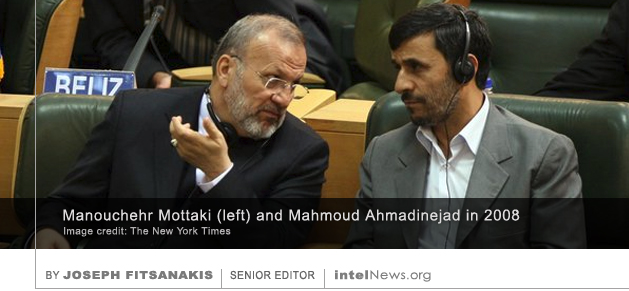
But soon after the NSF group entered Syrian territory, a man claiming to be its commander issued a statement saying his group of rebels had denounced the US and broken off from Division 30. Major Anais Ibrahim Obaid, more commonly known as Abu Zayd, said in his statement that the NSF would continue to fight the Islamic State, but would do so independently. Shortly afterwards, a statement from Jabhat al-Nusra (also known as al-Nusra Front), al-Qaeda’s affiliate in Syria, claimed that Major Obaid and his men had surrendered their weapons to them. According to the statement, issued by Jabhat al-Nusra commander Abu Fahd al-Tunisi, the NSF had surrendered its ammunition, weaponry and several pick-up trucks in exchange for safe passage though al-Nusra-controlled territory. He also claimed that Major Obaid had said he had tricked his American trainers in order to receive weapons from them.

On Wednesday, the US Department of Defense had rejected claims that the NSF had surrendered to al-Qaeda. Pentagon spokesman Captain Jeff Davis told reporters that the US had “no information to suggest that [such claims were] true”. A brief statement issued by CENTCOM insisted that “all coalition-issued weapons and equipment are under the positive control of NSF fighters”. No further information on the matter has been released by the US government. On Friday, however, a Pentagon spokesman admitted that “the NSF unit now says it did in fact provide six pick-up trucks and a portion of their ammunition to a suspected al-Nusra Front” group.

This development marks the second major setback for Division 30 in recent months. In August, when the group sent its first team of 54 fighters to Syria, al-Nusra forces quickly attacked and kidnapped many of them. Last week, CENTCOM commander General Lloyd Austin told the US Congress that the Division 30 training program had only managed to produce around 200 fighters, a far cry from its intended 5,400. Of those, said General Austin, only about a handful were still active inside Syria.

Author: Joseph Fitsanakis | Date: 25 September 2015 | Permalink

US spied on 143-member Iran delegation to 2007 UN summit

Manouchehr Mottaki and Mahmoud AhmadinejadThe United States National Security Agency spied on the Iranian president, foreign minister, and over 140 Iranian dignitaries who visited New York in 2007 to participate in the United Nations General Assembly. The allegation was aired on Wednesday by American television station NBC, which cited former intelligence officials and a top-secret report on the espionage operation. The original report was included in an October 2007 issue of SID Daily, an internal NSA newsletter published by the spy agency’s Signal Intelligence Division. The report, which is entitled “Tips for a Successful Quick Reaction Capability”, commends the espionage operation against the Iranian UN delegation as an exemplary illustration of a collaborative effort between managers, technical experts, and analysts.

The operation appears to have been directly initiated in early 2007 by the George W. Bush White House, which asked the NSA to spy on Iran’s UN delegation. The blanket permission included espionage conducted against the then Iranian President Mahmoud Ahmadinejad and Minister of Foreign Affairs Manouchehr Mottaki, who were scheduled to be in New York in September of that year to attend the 62nd session of the UN General Assembly. In response to the White House authorization, the NSA deployed a small army of technical experts and analysts to spy on the entire 143-member Iranian delegation for 19 hours a day during the summit.

The NSA teams were allegedly able to record, transcribe and analyze 2,000 conversations of various lengths per day. According to NBC, the NSA was able to intercept the personal conversations of President Ahmadinejad, a number of video conferences involving members of the Iranian delegation, as well as calls made using Skype. The latter were intercepted using a secret technology codenamed BLARNEY by NSA, while the agency also relied on bugs installed in hotel and conference rooms used by the Iranians, said NBC. The intercepted communications were subsequently examined by the NSA’s Social Network Analysis Office in an effort to map the “social networks” of the Iranian government’s senior echelons.

The Iranian government did not respond to NBC’s requests for comment. Iranian President Hassan Rouhani is scheduled to arrive in New York today to attend the 70th UN General Assembly debate.

Author: Joseph Fitsanakis | Date: 24 September 2015 | Permalink

Obama delegation switches hotels allegedly due to espionage fears

Waldorf AstoriaThe president of the United States and his delegation will be housed at a different hotel during a United Nations General Assembly meeting later this month, allegedly due to concerns over Chinese espionage activity. Since the late 1940s, the American president and his diplomatic entourage have resided at the Waldorf Astoria for several days in September, while attending the annual UN General Assembly in New York. The luxury hotel, which is located on Park Avenue on the island of Manhattan, has also served since 1947 as the residence of the US ambassador to the UN. That is also why the American delegation is usually hosted there, courtesy of the ambassador. This year, however, President Barack Obama and his sizeable delegation will be staying at the New York Palace Hotel, located at the corner of Manhattan’s 50th Street and Madison Avenue. The announcement was made last week by the White House and the US Department of State.
According to The Associated Press and The New York Times, the decision to relocate the American high-level delegation is primarily due to security concerns. The reports cited well-placed sources in the US government as stating that the relocation was prompted by the sale last year of the Waldorf Astoria to the Chinese firm Anbang Insurance Group. The McLean, VA-headquartered Hilton Worldwide Holdings, Inc., which sold the hotel to the Chinese firm, pocketed nearly $2 billion from the transaction. Based on the terms of the agreement, the American company will continue to operate the Waldorf Astoria until 2114. But Anbang announced last spring that the hotel would be undergoing a massive renovation program, which, according to media reports, has alarmed American counterintelligence officials. The latter are concerned that Chinese intelligence technicians may use the renovation to install eavesdropping equipment in Waldorf Astoria’s rooms and compromise the hotel’s Internet network.

The US diplomatic exit from the Waldorf Astoria was first reported back in mid-June, but was not confirmed by the White House or the Department of State. Since that time, no American cabinet official, including Secretary of State John Kerry and Vice President Joe Biden, has stayed at the Waldorf. But President Obama’s upcoming trip renewed the media’s interest in the change of hotels, and US government officials finally confirmed that the Chinese-owned hotel had been dropped based “on several considerations, including space, costs and security”. A State Department official told reporters last week that the change took “into account changing circumstances”. The Times also reported that the US government is examining whether its ambassador to the UN will continue to be headquartered at the Waldorf.

Author: Joseph Fitsanakis | Date: 14 September 2015 | Permalink

Dual US-Russian citizen pleads guilty to spying for Russia

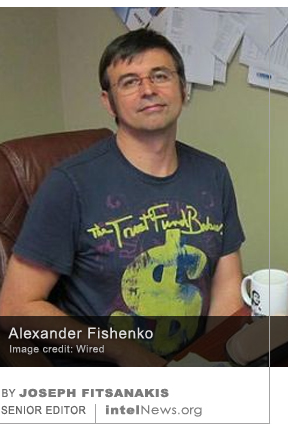
Alexander FishenkoA resident of Texas, who is accused by United States authorities of setting up a front company in order to illegally acquire American technology on behalf of Russia’s intelligence services, has pleaded guilty to espionage charges. Alexander Fishenko, 49, was one of 11 people arrested in October 2012 by the Federal Bureau of Investigation. The arrests came during several raids in locations around Houston, Texas, which included the headquarters of Arc Electronics, Inc. The FBI accused the export firm of having shipped over $50 million-worth of military-grade micro-electronics since 2008. The supplies were received in Moscow, Russia, by a mysterious procurement company called Apex System LLC. Counter-intelligence investigators in the US claim that both firms are part of an elaborate scheme set up by Russian military intelligence, aimed at stealing dual-use electronics hardware created by American firms.

According to the indictment, Arc Electronics told its US suppliers that the microelectronics technologies were intended for use in various types of streetlights. But in reality, said the FBI, the company gave the hi-tech supplies to the Russian Ministry of Defense for use in airborne surveillance systems, as well as in remote weapons guidance systems, among other military applications. Federal prosecutors said that, for over four years, Arc Electronics engaged in a prolonged “surreptitious and systematic” scheme to circumvent US government export controls, thus seriously damaging US national security. Following the early-morning raids, the FBI unsealed indictments against 11 Arc Electronics employees, most of whom were charged with “acting as unregistered agents of the Russian Federation in the United States” —legal jargon for espionage.

Fishenko, who is originally from Kazakhstan, was scheduled to face trial on September 21 in New York. But on Wednesday he chose to plead guilty to the charges leveled against him. He is the fifth member of the 11 Apex System employees arrested back in 2012 to plead guilty to espionage. A government spokesman said the Fishenko’s plea did not result from an agreement to cooperate with the FBI. He now faces up to 15 years in prison. His lawyer, Richard Levitt, declined comment when he was contacted on Wednesday. The Russian government has denied that it had any involvement with Fishenko’s operations.

Author: Joseph Fitsanakis | Date: 08 September 2015 | Permalink

Secret program gave CIA ‘unfiltered access’ to German communications

CIAThe United States Central Intelligence Agency had direct and unfiltered access to telecommunications data exchanged between German citizens, according to a new document that has surfaced in the German press. The program, codenamed GLOTAIC, was a collaboration between the CIA and Germany’s Federal Intelligence Service, known as BND. According to German newsmagazine Der Spiegel, which revealed the existence of the program last week, it lasted from 2004 to 2006. During those years, the CIA was given access to telephone and fax data carried by US telecommunications provider MCI Communications, which is owned by Verizon. The US-headquartered company owns a network switching facility in the German city of Hilden, located 10 miles east of Düsseldorf near the country’s border with Holland.

The existence of joint collection programs between the BND and American intelligence agencies has been established in the past, and has prompted the creation of a special investigative committee in the German parliament. The Committee of Inquiry into Intelligence Operations was set up in 2014, after files leaked by American defector Edward Snowden revealed that the US had been spying on the telephone communications of German Chancellor Angela Merkel. But it has also been investigating whether the BND’s collaboration with American intelligence agencies violated the rights of German citizens.

The committee had previously been told that all telecommunications data given to the US by German agencies had previously been vetted by BND officers. But the GLOTAIC documents published by Der Spiegel states that audio recordings of intercepted telephone calls were “directly routed to the US” in the interests of technical efficiency. The parliamentary committee had also been told that the data shared with the CIA concerned non-German citizens using German telecommunications networks. But the documents published last week state that a “technical glitch” in the GLOTAIC system allowed “massive German traffic” to be directly accessed by the CIA without having been first filtered by the BND.

Another document published by Spiegel reveals that the BND warned project CLOTAIC supervisors that the agency faced “serious risks” should the secret operation become public, because it had allegedly violated German federal privacy regulations.

Author: Joseph Fitsanakis | Date: 08 September 2015 | Permalink

Obama authorizes Special Forces, CIA, to conduct assassinations in Syria

Islamic State convoy in SyriaThe United States Central Intelligence Agency is collaborating with the country’s Special Forces in a targeted killing program aimed against senior members of the Islamic State and other militant groups in Syria. The program, which has been directly authorized by US President Barack Obama, is limited in scope and has so far involved fewer than a dozen strikes against suspected militants. But it is believed to reflect increasing frustration in Washington about the lack of progress shown by the military campaign against the Islamic State. Recent reports by American intelligence agencies confirm that the militant group is “fundamentally no weaker” today than it was a year ago, despite an intense US-led bombing campaign involving thousands of airstrikes in Iraq and Syria.

The Washington Post, which revealed the existence of the program on Tuesday, said it brought together the CIA’s Counterterrorism Center (CTC) and the Joint Special Operations Command (JSOC). The CTC is believed to be primarily responsible for identifying and locating senior Islamic State figures in Syria, while the JSOC is in charge of killing them, mostly through the use of unmanned drones, according the paper. The two agencies continue to operate separate drone centers, said The Post, in Virginia and North Carolina respectively; but they have exchanged several of advisors who have constant access to each other’s drone video feeds.

The goal of the targeted killing program is to assassinate what the CIA refers to as “high-value targets”, which includes Islamic State leaders and those members of the organization whose job is to build a membership base outside the territorial boundaries or the Islamic State’s self-described caliphate. The Post said that the list of Islamic State members killed by the CIA-JSOC program includes Junaid Hussain, a British citizen who was instrumental in building and maintaining the Islamic State’s outreach campaign on social media. The paper noted that the CIA-JSOC targeted killing campaign is not part of the wider American military offensive against the Islamic State.

Author: Ian Allen | Date: 01 September 2015 | Permalink

British government releases MI5 file on little-known Cold War spy

Cedric BelfrageThe British government has released a nine-volume file on an influential film critic who some believe was “one of the most important spies the Soviet Union ever had”. Cedric Belfrage was born in 1904 in London and read English Literature at Cambridge University in the 1920s. While a student at Cambridge he made a name for himself as a reviewer of motion pictures, and by the early 1930s he was known as Britain’s highest-paid film critic. Soon afterwards he moved to the American city of Los Angeles, where he became a film and theater correspondent for British tabloid newspaper The Daily Express. But a multivolume file on him compiled by the British Security Service (MI5) and released last week by the National Archives in London, confirms that Belfrage spied for Soviet intelligence under the codename BENJAMIN.

According to the file, Belfrage turned to communism after witnessing the effects of the Great Depression in the United States. After a 1936 trip to the USSR, he reached out to the Communist Party of the US, which eventually put him in touch with a number of Soviet intelligence operatives in America. In 1940, the Secret Intelligence Service (MI6) set up the British Security Coordination (BSC) in New York. It was a clandestine propaganda project aimed at turning local public opinion in favor of America’s entry into World War II. Belfrage was one of many writers and intellectuals that were recruited by the BSC to help counter the prevalent isolationist sentiment in the country. The film critic worked for MI6 until 1943, and then returned to Britain to join another wartime propaganda outfit, the Political Warfare Executive.

At war’s end, Belfrage returned to the US, only to find that he had attracted the attention of the Federal Bureau of Investigation. The FBI had discovered that the British film critic had dealings with the Communist Party in the 1930s and suspected that he may have worked for Soviet intelligence. Further investigations revealed that Belfrage had indeed conducted espionage under the guidance of Jacob Golos, a Ukrainian-born American who managed a large network of pro-Soviet spies in America in the interwar period. But when he was questioned by the FBI, Belfrage said that he had given Golos a number of British —not American— government documents under direct orders by MI6. The latter allegedly hoped that the Soviets would reciprocate the move within the context of the anti-Nazi alliance between the UK and the USSR.

Eventually, Belfrage was brought up before the House Un-American Activities Committee (HUAC) of the US Congress in 1953. The Committee was conducting public hearings aimed at unmasking suspected communist sympathizers in the American entertainment industry. But the British-born film critic refused to answer questions put to him, prompting HUAC to recommend that he should be deported from the country. The government adopted the Committee’s recommendation and deported Belfrage in 1955 for having been a member of the Communist Party under a fake name. Belfrage traveled throughout the Caribbean and Latin America before settling in Mexico, where he died in 1990, aged 86.

Interestingly, the British files reveal that MI5 decided not to prosecute Belfrage, most likely in order to avoid the embarrassment of admitting that British intelligence had employed a Soviet spy. The decision was probably not unrelated to the public scandal that followed the escape of the so-called Cambridge spies to the Soviet Union. Interestingly, Belfrage studied at Cambridge at the same time that Kim Philby (Soviet cryptonym STANLEY), Donald Duart Maclean (HOMER) and Guy Burgess (HICKS) were students there. But there is no evidence he ever collaborated with them, as he was not interested in politics at that time.

Author: Joseph Fitsanakis | Date: 24 August 2015 | Permalink

US warns China against use of non-official-cover operatives

Chinese Ministry of State SecurityThe White House has warned the Chinese government to stop deploying on American soil intelligence operatives masquerading as tourists, business executives or other false covers. Nowadays the standard practice for intelligence personnel deployed abroad is to be posted as diplomatic staff in a foreign embassy or consulate. But there are some intelligence officers who do not follow that practice. These are known as non-official-cover operatives, or NOCs in American intelligence parlance. NOCs are typically high-level principal agents or officers of an intelligence agency, who operate without official connection to the diplomatic authorities of the country that is employing them. They typically pose as business executives, students, academics, journalists, or non-profit agency workers. Unlike official-cover officers, who are protected by diplomatic immunity, NOCs have no such protection. If arrested by authorities of their host country, they can be tried and convicted for operating as unregistered agents of a foreign government.

According to The New York Times, a significant number of Chinese NOCs have recently entered the United States as part of the Chinese government’s Operation FOX HUNT. Supervised by China’s Ministry of State Security (MSS), FOX HUNT is aimed at the thousands of former officials and other fugitives from China, who are alleged to have embezzled funds and are now living abroad, usually in considerable wealth. As part of the MSS operation, teams of intelligence agents are said to have been dispatched around the world in order to hunt down these fugitives, many of whom are believed to have embezzled hundreds of millions of dollars in government funds. Chinese media reports claim that nearly 1000 such fugitives have been “repatriated”, either voluntarily or involuntarily, since the launch of FOX HUNT. The tactics used by the Chinese NOCs are not clear, and some suspect that they include direct or indirect threats against the fugitives’ family members in China. Chinese reports have described FOX HUNT operatives as “mostly young, highly skilled”, and accustomed to “rapid-fire deployment” around the world.

The Times said that Washington views the parts of Operation FOX HUNT that take place on US soil as “a departure from the routine practice of secret government intelligence gathering” that both America and China practice against each other. The US, therefore, does not want Chinese officers without official diplomatic credentials, but posing instead as students, tourists or business representatives, engaging in intelligence operations on US soil, said the paper. It added that Washington’s warning had been delivered to Beijing “in recent weeks”. The Times article did not include specific descriptions of FOX RUN activities on American soil.

Author: Joseph Fitsanakis | Date: 17 August 2015 | Permalink

CIA’s internal watchdog post remains vacant despite mounting calls to fill it

CIAThe administration of United States President Barack Obama has yet to nominate a replacement for the Central Intelligence Agency’s inspector general despite calls by Congress to quickly fill the sensitive post. The position has remained vacant since the end of January of this year, when David Buckley resigned after four years on the job. The position was created in 1989 in the aftermath of the so-called Iran-Contra affair, as part of a broader effort to institute independent oversight of the CIA. The Agency’s inspector general is tasked with, among other things, probing allegations of institutional illegality or personnel misconduct, and evaluating concerns raised by whistleblowers.

According to Michael Isikoff, chief investigative correspondent of Yahoo News, there are “mounting concerns on Capitol Hill” about the failure of the White House to nominate a replacement for Buckley, more than six months following his departure. Isikoff wrote that Senator Diane Feinstein (D-Ca), who chairs the Senate’s Select Committee on Intelligence, wrote to President Obama in June urging him to nominate a new CIA inspector general “as soon as possible”. In her letter, Feinstein expressed alarm over the delay, which could adversely affect a growing list of sensitive internal probes at the Agency. But the White House has yet to respond to Feinstein, let alone nominate a candidate for the position, said Isikoff.

Several government watchdogs and observers told Yahoo News that the situation at the CIA inspector general’s office is “hardly unique” and noted that the process for appointing inspector generals for US government agencies usually “takes too long”. Moreover, the Agency’s office of the inspector general is not headless; it is led by interim inspector general Christopher R. Sharpley, a government lawyer who worked under Buckley. However, many wonder whether the delay stems from the President’s inability to find an individual with a reputation for impartiality and the determination to handle one of the US Intelligence Community’s most challenging posts.

Author: Joseph Fitsanakis | Date: 06 August 2015 | Permalink

Is brother of China’s ex-chief of staff seeking to defect to the US?

Ling WanchengA well-connected Chinese businessman, described by officials as potentially one of the most damaging defectors in the history of modern China, is reputed to have requested political asylum in the United States. Ling Wancheng, 54, is the multimillionaire brother of Ling Jihua, a close aide of China’s former premier, Hu Jintao, who rose through the ranks of the Communist Party of China to eventually lead its Central Committee’s General Office. With the help of his brother’s connections and political influence, Ling Wancheng transformed himself from a journalist to an entrepreneur in the early 2000s. Soon after receiving his graduate degree in business administration, he founded an investment firm and joined China’s nouveau riche elite. His wealth, which is estimated to be in the hundreds of millions of dollars, coupled with his older brother’s senior position within the Communist Party, made him one of China’s most politically connected entrepreneurs.

However, the Ling family’s fortunes turned dramatically for the worse in March of 2012, when Ling Jihua’s 23-year-old son was killed in a Beijing street while driving a Ferrari after a night of wild partying. Two half-naked women, who were also riding in the car, were seriously injured; one later died of her wounds. The circumstances of the crash, as well as Ling Jihua’s failed efforts to cover it up, were seen as symbolic of a spoiled generation of government officials, whose corrupt practices have isolated the Communist Party from the Chinese populace. Soon afterwards, the new administration of President Xi Jinping initiated a massive anti-corruption campaign as a means of restoring the reputation of the Communist Party. Ling was immediately demoted, cut off from the top echelons of the Chinese government, and in 2014 there were rumors that he would soon be facing a corruption investigation. In July of this year, it was officially announced that Ling had been expelled from the Communist Party and that he would be facing trial on charges of accepting bribes.

The announcement of Ling’s trial stated that he was accused of “accepting certain bribes for himself and on behalf of his family”. But no charges were filed against Ling Wancheng, and there were rumors that he was being pressured by Communist Party officials to testify against his brother. But it appears that the multimillionaire businessman, who owns several properties in the US, was able to flee China and is now in an undisclosed location on US soil. The New York Times, who tried to locate Ling earlier this week, spoke to unnamed American officials, who confirmed that he had indeed fled China and was in the US. The officials refused to confirm that Ling had applied for asylum. But they said that, if he did defect to America, Ling “could become one of the most damaging defectors in the history of the People’s Republic”, due to his political connections.

The Times added that Beijing had contacted the White House requesting that Ling be extradited to China. But the administration of US President Barack Obama appears unwilling to satisfy the Chinese government’s request, given that Chinese hackers are believed to be responsible for the recent theft of up to 24 million American government workers’ personal data.

Author: Joseph Fitsanakis | Date: 04 August 2015 | Permalink