Memos may relate to secret NSA deal with leading cryptography vendor

William FriedmanIn 2007 I wrote in my “National Security Agency: The Historiography of Concealment” that America’s leading signals intelligence agency had made a secret deal with Crypto AG, a Swiss-based manufacturer of cryptographical equipment. The agreement, which lasted for much of the Cold War, allegedly allowed the NSA to read the classified messages of dozens of nations that purchased encoding equipment from Crypto AG. As I expected, the claim drew criticism from individuals connected with Crypto AG, including company scientists, who argued that the Swiss manufacturer would never have agreed to a deal that undermined its professional reputation as a trusted and neutral vendor of cryptological devices. Now, however, the BBC has revealed two recently declassified NSA memos that appear to provide further proof of the deal.

My 2007 claim was based on a string of well documented allegations that surfaced in the early 1980s. While conducting research for his seminal book The Puzzle Palace, historian James Bamford came across references to Project BORIS, which involved a pact between the NSA and the Swiss company. To be precise, the deal appeared to have been struck between the Swiss inventor and Crypto AG founder Boris Hagelin and William F. Friedman, an American cryptologist who led the Armed Forces Security Agency, a forerunner of the NSA. The two men were united by a deep personal friendship, which was forged during World War II by their mutual hatred of Nazism.

Bamford’s claim was echoed in 1996 by Scott Shane and Tom Bowman, reporters for The Baltimore Sun. In a six-part investigative series about the NSA, the two journalists wrote that Friedman visited Hagelin during a trip to Switzerland in 1955 and asked for his help so that American could dominate its Cold War rivals. According to Shane and Bowman, Hagelin agreed and built a type of cryptological backdoor in Crypto AG’s devices, which allowed the NSA to read millions of messages for many decades. The company, of course, reacted furiously, saying that claims of a secret deal were “pure invention”.

On Thursday, however, BBC security correspondent Gordon Corera confirmed that a BBC investigation of 55,000 pages of documents, which were declassified by the NSA in April, claim to have found proof of the secret agreement. The declassified material, said Corera, contains two versions of the same NSA memorandum, as well as an earlier draft, which refer to a “gentleman’s agreement” between Friedman and Hagelin. Under the agreement, Crypto AG would inform the NSA about periodical changes to the technical specifications of its encoding machines. The company would also provide the American spy agency with detailed lists showing the precise models purchased by various national governments around the world. Furthermore, Crypto AG agreed not to sell the more advanced, customizable models of its equipment to countries viewed by Washington as directly adversarial. This, says the BBC, amounted to Crypto AG deceiving some of its customers, by offering them “watered-down versions” of its encoding devices.

Corera notes that there is no evidence in the memos that Crypto AG built any kind of back door in its devices for use by the NSA. Instead, by providing the American agency with detailed operational knowledge of the devices, it enabled American codebreakers to reduce the time and effort needed to break encoded messages intercepted by the NSA.

There are a couple of minor errors in Corera’s article. For instance, the “father of American code-breaking” is not Friedman, as he claims, but Herbert Yardley, who led the so-called Black Chamber (also known as the Cipher Bureau) in 1919, long before Friedman was in the picture. Additionally, he fails to mention Bowman’s contribution to Shane’s Baltimore Sun article, which was published in 1996, not 1995, as he writes. These minor errors aside, however, the BBC discovery is absolutely crucial for our understanding of cryptological history in the Cold War.

Author: Joseph Fitsanakis | Date: 31 July 2015 | Permalink

US Congressional review considers impact of federal database hack

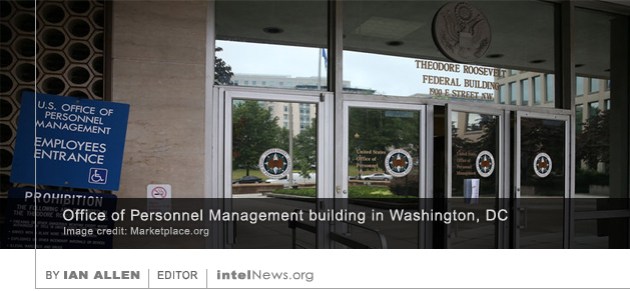
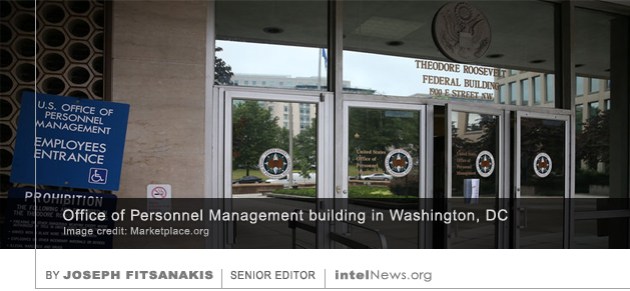
Office of Personnel Management 2A United States Congressional review into last month’s cyber theft of millions of government personnel records has concluded that its impact will go far “beyond mere theft of classified information”. Up to 21 million individual files were stolen in June, when hackers broke into the computer system of the Office of Personnel Management (OPM). Part of OPM’s job is to handle applications for security clearances for all agencies of the US federal government. Consequently, the breach gave the unidentified hackers access to the names and sensitive personal records of millions of Americans —including intelligence officers— who have filed applications for security clearances.

So far, however, there is no concrete proof in the public domain that the hack was perpetrated by agents of a foreign government for the purpose of espionage. Although there are strong suspicions in favor of the espionage theory, there are still some who believe that the cyber theft could have been the financially motivated work of a sophisticated criminal ring. But a new report produced by the Congressional Research Service, which is the research wing of the US Congress, seems to be favoring the view that “the OPM data were taken for espionage rather than for criminal purposes”. The report was completed on July 17 and circulated on a restricted basis. But it was acquired by the Secrecy News blog of the Federation of American Scientists, which published it on Tuesday.

The 10-page document points out that strictly financial reasons, such as identity theft or credit card fraud, cannot be ruled out as possible motivations of the massive data breach. But it points out that the stolen data have yet to appear in so-called “darknet” websites that are used by the criminal underworld to buy and sell such information. This is highly unusual, particularly when one considers the massive size of the data theft, which involves millions of Americans’ credit card and Social Security numbers. Experts doubt, therefore, that the OPM data “will ever appear for sale in the online black market”. This inevitably leads to the conclusion that the breach falls “in the category of intelligence-gathering, rather than commercial espionage”, according to the report.

The above conclusion could have far-reaching consequences, says the report. One such possible consequence is that high-resolution fingerprints that were contained in the OPM database could be used to blow the covers of American case officers posing as diplomats, and even deep-cover intelligence operatives working secretly abroad. Furthermore, the hackers that are in possession of the stolen files could use them to create high-quality forged documents, or even publish them in efforts to cause embarrassment to American intelligence agencies.

Author: Ian Allen | Date: 30 July 2015 | Permalink: https://intelnews.org/2015/07/30/01-1746/

Will Israeli spy Pollard receive secret spy wages after US lets him go?

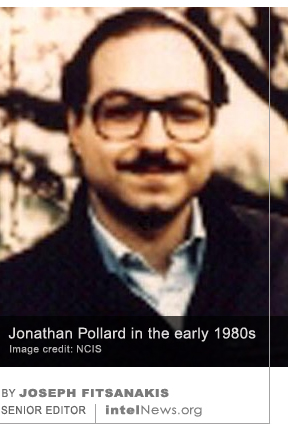
Jonathan PollardLawyers for Jonathan Pollard, an American with Israeli citizenship who spied on the United States for Israel in the 1980s, confirmed on Tuesday that he will be released in November, by which time he will have served 30 years of a life sentence. The news was welcomed by Pollard’s supporters in Israel, who consider him a hero, as well as by pro-Israel Americans, who have been pressuring the US government to release him. But Newsweek’s veteran intelligence correspondent Jeff Stein responded to the news of Pollard’s release by posing an interesting question: when Pollard is released, will he have access to close to $1 million in spy wages that his Israeli handlers are reputed to have deposited for him in a Swiss bank account?
Stein was referring to a practice that is common among intelligence agencies, namely to deposit cash in offshore bank accounts as a way of compensating their assets. The latter can gradually access those funds during trips abroad, usually after their retirement, long after having ceased their espionage activities. If the asset is arrested or perishes, the funds are usually passed on to the asset’s surviving relatives. This method protects the asset from the prying eyes of counterintelligence agencies in the asset’s home country, and sends a message to future recruits that assets and their families will be taken care of by their handlers.

Following Pollard’s arrest in 1985, US government prosecutors repeatedly rejected the view, put forward by Pollard’s legal team, that the former US Navy analyst was a romantic who had spied on the US for Israel because he wanted to assist a small country surrounded by enemies. They told the court that Pollard had also spied for South Africa and had tried to spy for Australia, before finally settling for working for Israel. Far from being a romantic, they said, Pollard was a calculated businessman, who sought financial compensation for his services to the Jewish state. Indeed, according to the Naval Criminal Investigative Service and the Federal Bureau of Investigation, Pollard had pocketed at least $50,000 from his Israeli handers by the time of his arrest, in addition to receiving several expensive items as gifts. The spy had also been promised that Israel would deposit $30,000 every year in a Swiss bank account, which Pollard could access after his retirement.

In his article published Tuesday, Stein wonders whether Israel has continued to deposit $30,000 a year in Pollard’s reputed Swiss bank account, which is a standard practice for intelligence agencies. If the answer is yes, then the amount available today would be in the neighborhood of $1 million. If Pollard moves to Israel come November, as many believe he will, will he then have access to the money he earned by spying on the US government as an unregistered agent of a foreign power? And if so, how should this be expected to affect the already rocky relations between Washington and Tel Aviv?

Stein said he spoke to Pollard’s New York lawyer, Eliot Lauer, who called the rumors of a secret Swiss bank account “poppycock” and added that Pollard had been “secured employment and housing […] in the New York area”. Additionally, there are some who speculate that Pollard may not be allowed to leave the US as part of the conditions of his parole. At this stage, however, nobody knows for sure. Stein contacted the US Parole Commission, NCIS and the Central Intelligence Agency, but all declined comment.

Author: Joseph Fitsanakis | Date: 29 July 2015 | Permalink: https://intelnews.org/2015/07/29/01-1745/

US spy for Israel ‘may be released’ as part of Iran nuclear deal

Jonathan PollardA United States Navy intelligence analyst, who is serving a life sentence for spying on America for Israel, may soon be set free in an effort by Washington to quieten Israeli criticism of a recently struck international agreement on Iran’s nuclear program. Many in US counterintelligence consider Pollard, who acquired Israeli citizenship in 1995, one of the most damaging double spies in American history. But he is widely viewed as a hero in Israel, and many Israelis, as well as pro-Israel Americans, have been pressuring the US administration of President Barack Obama to release him. He has so far served nearly 30 years of his life sentence.
The Wall Street Journal published an article on Friday suggesting that the Obama administration was “preparing to release” Pollard. Citing unnamed US officials, the paper said Washington hoped that the move would “smooth [America’s] relations with Israel in the wake of the Iran nuclear deal”. The latter was signed earlier this month between Tehran and the so-called P5+1 nations, namely the five permanent members of the United Nations Security Council plus Germany. The New York Times added to the speculation on Saturday with a detailed front-page article, which confirmed that “some in Washington appear to be highlighting” Pollard’s upcoming 30-year parole hearing, which is set to take place in November. It added that the White House was contemplating using Pollard’s release to appease, not only Tel Aviv, but also pro-Israel supporters in Congress, many of whom have campaigned for years in favor of Pollard’s release.

But the paper also cautioned that linking a possible release of the jailed American spy with the Iranian nuclear deal was risky and could in fact provoke a serious backlash. It quoted Israeli and American analysts who said that, although Israel was in the past prepared to accept Pollard’s release in exchange for minor concessions in its conflict with the Palestinians, the coalition government of Israeli Prime Minister Benjamin Netanyahu considers the nuclear agreement with Iran to be “too serious a threat” to concede to, no matter what the trade-off is from Washington. Some Israeli commentators used strong words to describe Washington’s alleged plan to release Pollard as a way of appeasing Israel, describing it as “cynical, cheap and misguided”.

The Times said it contacted the US National Security Council on Friday and was told by a spokesman that there was “absolutely zero linkage between Mr. Pollard’s status and foreign policy considerations”.

Author: Joseph Fitsanakis | Date: 27 July 2015 | Permalink: https://intelnews.org/2015/07/27/01-1743/

Did US DEA forces pose as Mexican troops to capture drug kingpin?

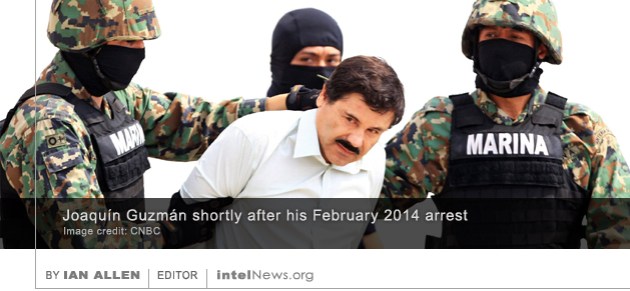
Joaquín ‘El Chapo’ GuzmánThe notorious drug lord Joaquín ‘El Chapo’ Guzmán captured the attention of the world’s media a few weeks ago, when he escaped from a maximum security prison in Mexico through a secret tunnel. But his cinematic prison breakout may have overshadowed the story of his arrest, which, according to recent reports, may be as interesting as that of his latest escape from prison.

Guzmán was arrested in a pre-dawn raid on February 22, 2014. He was reportedly captured in Mazatlán, a resort town in Mexico’s west-coast state of Sinaloa, by an elite squad of Mexican marines. The marines, we were told at the time, were receiving crucial intelligence support from a several United States government agencies. Or at least that is the official story of the drug kingpin’s arrest. On July 18, however, Mexico’s leading investigative newsmagazine, Proceso, published a lead article alleging that Guzmán was not arrested by Mexican marines, but by American operatives disguised as Mexican marines.

The article was written by J. Jesús Esquivel, a longtime reporter on intelligence and security affairs, who has authored two books on the history of operations conducted by the Drug Enforcement Administration (DEA), the Central Intelligence Agency (CIA) and other American security and intelligence agencies in Mexico. In his July 18 article, Esquivel says he was told by two American officials —who he does not name— that Mexican marines had little to do with Guzmán’s capture. The drug lord was tracked down by the US Marshals Service and the DEA through a web of informants and electronic tracking devices. Once they knew they had him, he two agencies, supported by a third American agency, which Esquivel does not identify, raided Guzmán’s hotel suite in Mazatlán, dressed in Mexican marine uniforms and driving vehicles bearing Mexican navy insignia.

The Intercept, which covered Proceso’s story on Thursday, correctly stated that, if the newsmagazine’s allegations are true, they would not mark the first time that American government agents posing as Mexican troops have conducted counternarcotics operations in Mexico. The practice has been revealed before, most recently by The Wall Street Journal. But, if true, Proceso’s allegations would seem to indicate an unprecedented degree of operational activity by US intelligence and security agencies south of the border. Additionally, it is alleged that the American agencies deliberately chose to keep their Mexican counterparts in the dark until after Guzmán had been captured, because they feared that the drug kingpin would be notified by informants inside the Mexican government. If this information is accurate, it would indicate that the line separating the Mexican drug cartels from the country’s government remains markedly blurry.

Author: Ian Allen | Date: 24 July 2015 | Permalink: https://intelnews.org/2015/07/24/01-1742/

CIA using Macau casinos to recruit Chinese officials, says report

Sands casino in Macau ChinaOfficials in China think that United States spy agencies are using casinos in Macau to entrap Chinese government employees, according to a report produced on behalf of an American-owned casino chain in the former Portuguese colony. The report was produced by a private investigator and was commissioned by Sands China, the Macau branch of a casino venture owned by American gambling magnate Sheldon Adelson. Its goal was to investigate why the Chinese-appointed authorities in Macau were hostile to the gambling industry in general and Sands China in particular.
The report is dated June 25, 2010, and includes a warning that it should not be shared with Chinese officials in Macau or in mainland China. It cites several unnamed officials in China’s Liaison Office, which governs Macau and Hong Kong, as well as sources in China’s Ministry of Foreign Affairs, and Chinese businessmen with close ties to the government in Beijing. It suggests that Beijing is weary of the damage caused to its public image by thousands of its employees gambling away an estimated $2 billion each year in Macau. Additionally, says the report, the central government in Beijing is hostile to the foreign-owned gambling industry in Macau because it believes that it collaborates with Western intelligence agencies. Sands China establishments in Macau, in particular, are believed by the Chinese government to be recruiting grounds for the United States Central Intelligence Agency, says the 2010 report.

Citing “well-placed sources” in the Chinese capital, the report suggests that the fear of espionage is “the primary subject” that causes Beijing’s hostility toward Sands China. It notes that “many of the [Chinese] officials we contacted were of the view that US intelligence agencies […] have penetrated and utilized the casinos [in Macau] to support their operations”. It adds that Chinese counterintelligence agencies have “evidence” that CIA operatives “monitor mainland government officials” who visit Macau to gamble, paying particular attention to those losing large amounts of money, or those visiting Macau without the knowledge of their superiors. They then “lure and entrap” them, forcing them “to cooperate with US government interests”.

The report was uncovered by the Investigative Reporting Program of the University of California Berkeley’s Graduate School of Journalism and published on Wednesday in British broadsheet The Guardian. The paper said the report was among a set of documents filed with a court in Las Vegas, where the former head of Sands’ Macau casinos is suing the company for wrongful dismissal. The Guardian contacted the Sands Company, which rejected the contents of the report as “a collection of meaningless speculation”. Its senior vice president for global communications and corporate affairs, Ron Reese, also dismissed the report as “an idea for a movie script”.

Author: Joseph Fitsanakis | Date: 23 July 2015 | Permalink: https://intelnews.org/2015/07/23/01-1741/

French-US spy cooperation continues despite WikiLeaks revelations

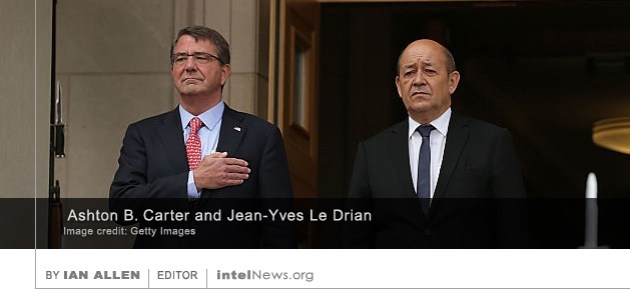
 Ashton B. Carter and  Jean-Yves Le DrianA fortnight ago, I gave an interview to Spanish newspaper La Razón, in which I argued that last month’s WikiLeaks revelations about American espionage against France would not cause any drastic disruption in the intelligence cooperation between the two countries. I added that “the two countries depend on each other to address a number of international issues that affect both, such the worrying situation in Syria and Iraq, the continuing crises in Ukraine and in Libya, as well as the financial meltdown in Greece. So there is a recognition that their intelligence agencies must continue to work together on several pressing issues”.

This was confirmed on Monday morning, as the American and French defense secretaries met in the US. French Minister of Defense Jean-Yves Le Drian paid his first visit to the Pentagon since Ashton B. Carter was appointed Secretary of Defense, in February of this year. After an extensive meeting behind closed doors, the two men told reporters gathered at the Pentagon that America’s security cooperation with France “has never been stronger”. Secretary Carter pointed to France’s leading military involvement in several African nations, including Mali, Chad, and Niger, and said that French forces deployed there could expect “more intelligence-sharing with the United States”. He added that actions had been taken during that morning’s meeting to “increase that [intelligence-sharing] yet further”.

The French Defense Minister agreed with his American counterpart and added that the “multiplication of international crises” were bringing the defense and intelligence establishments of France and the US closer. Both men pointed to examples of ongoing French-American security collaboration in Mali and Chad, where the Pentagon is providing French military forces with aerial cargo delivery and refueling facilities. They also mentioned the FS Charles de Gaulle, France’s flagship aircraft carrier, which has been deployed to the Arabian Gulf since March of this year. Secretary Carter told reporters that the Charles de Gaulle had “integrated seamlessly” with American forces in the region, and was helping the Pentagon launch airstrikes against Islamic State forces in Iraq.

The two men declined comment on last month’s claims by WikiLeaks that the US National Security Agency wiretapped three successive French presidents, including the country’s current head of state, Francois Hollande.

Author: Ian Allen | Date: 08 July 2015 | Permalink: https://intelnews.org/2015/07/08/01-1731/

Cold War files show secret war between CIA and KGB in Canada

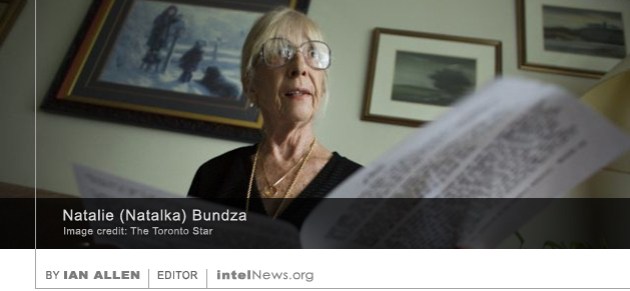
Natalie (Natalka) BundzaA set of declassified intelligence documents from the 1950s and 1960s offer a glimpse into the secret war fought in Canada between American and Soviet spy agencies at the height of the Cold War. The documents were authored by the United States Central Intelligence Agency and declassified following a Freedom of Information Act request filed on behalf of the Canadian newspaper The Toronto Star. According to the paper, they show that Toronto was a major hub of a prolonged espionage conflict fought between the CIA and the Soviet KGB.
Much of the espionage activity by the two spy agencies concentrated on Toronto’s sizable Eastern European expatriate community, especially on immigrants with Ukrainian and Polish roots. In one document dating from 1959, a CIA officer details the profiles of 18 Canadian citizens, most of them Toronto residents, who were suspected by Langley to be working for the KGB. Most of them were believed to be non-official-cover operatives, or NOCs, as they are known in the US Intelligence Community. The term typically refers to high-level principal agents or officers of an intelligence agency, who operate without official connection to the diplomatic authorities of the country that employs them. The declassified document explains that the suspected NOCs had secretly traveled to the USSR after being recruited by the KGB. They were then trained as spies before returning to Canada years later under new identities.

Others, like a naturalized Canadian identified in the documents as Ivan Kolaska, were believed by the CIA to have immigrated to Toronto as part of a broader KGB effort to infiltrate the ranks of the anti-communist Eastern European expatriate community in Canada. Some of these infiltrators were able to settle in Canada, marry locals, get jobs and have families, while living a double life. The Star spoke to one Ukrainian immigrant to Canada whose name features in the declassified CIA files. Natalie Bundza, now 78, worked as a travel agent in 1950s’ Toronto and regularly led tourist groups to communist countries. She was a Ukrainian nationalist and anticommunist, but the CIA believed she was pretending to have these beliefs in order to infiltrate the Ukrainian expatriate community in Toronto. The American agency kept tabs on her and was able to compile a sizable file with information about Bundza’s friends and associates, her travel itineraries, and even the contents of her suitcases she took with her on international trips.

Author: Ian Allen | Date: 3 July 2015 | Permalink: https://intelnews.org/2015/07/03/01-1728/

US spies voiced concerns about Fed database prior to massive hack

Office of Personnel ManagementUnited States intelligence officials expressed concerns about a federal database containing details of security-clearance applications in the years prior to a massive cyber hacking incident that led to the theft of millions of personnel records. Up to 18 21 million individual files were stolen last month, when hackers broke into the computer system of the US Office of Personnel Management (OPM), which handles applications for security clearances for all agencies of the federal government. The breach gave the unidentified hackers access to the names and sensitive personal records of millions of Americans who have filed applications for security clearances –including intelligence officers.
Until a few years ago, however, Scattered Castles, the database containing security clearance applications for the US Intelligence Community, was not connected to the OPM database. But in 2010, new legislation aiming to eliminate the growing backlog in processing security-clearance applications required that Scattered Castles be merged with the OPM database. The proposed move, which aimed to create a unified system for processing security clearances made sense in terms of eliminating bureaucratic overlap and reducing duplication within the federal apparatus. But, According to the Daily Beast, US intelligence officials expressed concerns about the merging of the databases as early as 2010. The website said that security experts from the Intelligence Community expressed “concerns related to privacy, security and data ownership” emerging from the impending merge. One official told the Daily Beast that there were fears that the “names, Social Security numbers, and personal information for covert operatives would be exposed to hackers”.

However, the merge went ahead anyway, and by 2014 parts of the Scattered Castles databases were gradually becoming accessible through the OPM network. The Daily Beast cited an unnamed US official as saying that there was “no connection between Scattered Castles and the OPM hack”. But when asked whether Scattered Castles was linked to the OPM system, he referred the website to the Federal Bureau of Investigation, which is probing last month’s hack attack.

Author: Joseph Fitsanakis | Date: 1 July 2015 | Permalink: https://intelnews.org/2015/07/01/01-1726/

New documents show US spied ‘on every major French company’

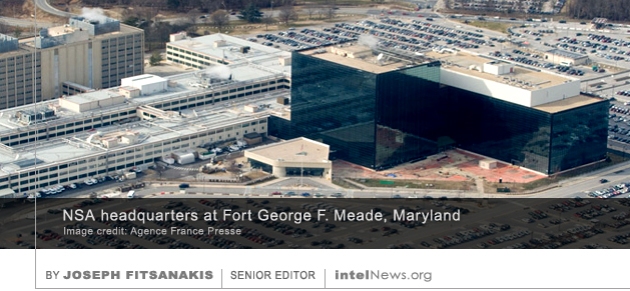
NSANew information published by international whistleblower website WikiLeaks seems to suggest that the United States National Security Agency (NSA) collected information on export contracts by French companies and sought inside information on France’s position in international trade negotiations. According to the website, which published the new material on Monday, the documents appear to suggest concerted efforts by Washington to obtain secret information about the economic policies of the French government and the country’s financial sector.

The WikiLeaks release contains a list of “Information Needs” (IN), which signifies collection requirements on France that are part of the US National Signals Intelligence Requirements List. The latter is updated regularly to reflect wide-ranging intelligence requirements put to the NSA by its customers, who include US policy makers and other members of the US Intelligence Community. The IN list is labeled “2002-204”, which means it was created in 2002 and has been updated ever since. The documents also include an “Essential Elements of Information” (EEI) list, which points to more narrow areas of interest that the NSA’s collection teams are instructed to focus on. The EEI list released by WikiLeaks includes France’s economic relations with the US and other Western countries and France’s dealings with international financial agencies and institutions. It also includes France’s international economic and trade policies, as well as its policy maneuvers in the G-8 and G-20 group of nations.

At one point, the EEI list appears to instruct NSA collection units to target every French-registered company involved in negotiations for international projects or other sales contracts valued at over $200 million. According to WikiLeaks, the target list would inevitably include every major French company, including car makers Peugeot and Renault, banking conglomerate BNP Paribas, as well as Credit Agricole, one of Europe’s leading agricultural credit unions.

Representatives of the US Intelligence Community do not deny spying on foreign companies. But they insist that Washington does not use information collected from such operations to benefit American companies competing for international contracts. However, the latest WikiLeaks revelations are bound to fuel speculation in Europe that US intelligence-collection priorities may include an economic component. Last week, US President Barack Obama had to personally assure his French counterpart, Francois Hollande, that he was not being spied on by the NSA, after WikiLeaks released documents showing that the American spy agency had targeted the communications of three successive French presidents.

Author: Joseph Fitsanakis | Date: 30 June 2015 | Permalink: https://intelnews.org/2015/06/30/01-1725/

Calls in France to offer asylum, citizenship, to Snowden and Assange

Assange and SnowdenLeaders from all sides of the French political spectrum urged the French government on Thursday to offer political asylum, and even French citizenship, to the American defector Edward Snowden and to WikiLeaks founder Julian Assange. The calls were made in response to news earlier this week that the United States National Security Agency spied on the personal communications of three French presidents from the 1990s to at least 2012. The files were published on Tuesday by the international whistleblower website WikiLeaks. They consist of what the website described as “top secret intelligence reports and technical documents”, which detail NSA spying operations against the French presidency, as well as espionage directed at several French government ministers and at France’s ambassador to the US. As intelNews predicted on Wednesday, the French government’s response to the revelations has been relatively muted. But many French politicians, including one minister in the government of French President Francois Hollande, called for Paris to extend offers of political asylum, and even French citizenship, to Assange and Snowden.

The initial call was issued by Laurent Joffrin, the influential managing editor of Libération, the Paris-based newspaper that partnered with WikiLeaks to release the NSA documents earlier this week. In a leading editorial published in the paper on Thursday, Joffrin said that French protests against NSA spying “have no more effect than scolding a rude toddler”, and added that by offering asylum to Snowden, France would “stand up [to America] and send a clear and effective message to Washington”.

Shortly after Joffrin’s editorial, Jean-Christophe Lagarde, president of the centrist Union of Democrats and Independents in the French Parliament, said that France should have given Snowden political asylum back in 2013, when he originally requested it. Lagarde was quoted in the French press as saying that “the French nation has already been dishonored by refusing to accept Edward Snowden’s request for political asylum when he asked for it in 2013”. Jean-Luc Mélenchon, the leftist member of the European Parliament, agreed with Lagarde, adding that Assange and Snowden must not only receive political asylum in France, but also be given “the French nationality”.

On Thursday afternoon, Jean-Pierre Mignard, a close friend and longtime political advisor to President Hollande, said that “given the service they have rendered to the cause of human freedom, France could accommodate a request for asylum from Assange and Snowden, should they request it”. Mignard added that “French law allows the Republic to grant asylum to any foreign subject who faces persecution for taking action in favor of human freedom”.

When asked by BFM TV, France’s most popular news channel, whether political asylum could be extended to Snowden and Assange, France’s Justice Minister Christiane Taubira said that she was “absolutely shocked by the idea”, because such a course of action would drive a powerful wedge between France and the US, two countries with deep historical ties. But she added that such a move would constitute a strong “symbolic gesture” against espionage, and thus remained on the table as a possible policy maneuver to be adopted by the government of France.

Late on Thursday, however, France’s Prime Minister Manuel Valls indicated that any discussion of an offer of asylum to Assange and Snowden by the government of France was premature. Speaking at a hastily organized press conference to discuss the NSA espionage revelations during an official visit to Colombia, Valls told reporters that the question of offering asylum to the two men “did not arise” during internal government talks. “And in any case”, said Valls, such an initiative “would not address the issue at hand”, namely American espionage against the French presidency. France’s goal is to extract guarantees from Washington that all espionage against French officials would stop, noted the French prime minister. If France offered asylum to Assange and Snowden, American espionage against French targets would likely reach unprecedented levels, he added.

Author: Joseph Fitsanakis | Date: 26 June 2015 | Permalink: https://intelnews.org/2015/06/26/01-1723/

Analysis: French are upset, but not surprised, by news of US spying

Before Edward Snowden, the revelation that the United States National Security Agency spied on three successive French presidents would have shocked many. But in the post-Snowden era, the news came and went without much tumult. The French President, Francois Hollande, called two emergency meetings of senior government officials at the Élysée Palace; the American ambassador to France was summoned for an official protest; but nothing more came of it. It was reported that US President Barack Obama spoke directly with his French counterpart on Wednesday, and assured him in no uncertain terms “that the US is no longer spying on France”.

The French leader, who is one of three French presidents mentioned in the WikiLeaks documents as a target of the NSA, is genuinely upset. And there will be some in his government who will push for a harder response than simply summoning the American envoy in Paris to file an official protest. But nobody in Paris or Washington thinks that Mr. Hollande, or indeed any other senior French official, was shocked or even surprised by the revelations of American espionage against France. Nor will the revelation cause any drastic disruption in the intelligence cooperation between France and the US. The two countries depend on each other to address a number of international issues that affect both, such the worrying situatioQ Quoten in Syria and Iraq, the continuing crises in Ukraine and in Libya, as well as the financial meltdown in Greece. So there is a recognition that their intelligence agencies must continue to work together on several pressing issues.

However, the French response may become a lot more direct if WikiLeaks publish further revelations about US espionage against French officials. The whistleblower website noted on Tuesday that “French readers can expect more timely and important revelations in the near future”. Unlike Edward Snowden, who is known to release progressively more damning documents in stages, WikiLeaks does not have a history of aiming for a crescendo through progressive releases of classified information. But there is speculation that Edward Snowden may in fact be the source of this latest WikiLeaks disclosure. If that is the case, we should not exclude further releases of relevant documents, and thus a more robust French response.

And what about America’s retort? Washington has suffered considerable diplomatic blowback from revelations in 2013 and 2014 that it spied on the leaders of Germany, Brazil and Argentina. Is the NSA still spying on America’s allied leaders? I am of the opinion that the NSA is not currently targeting the personal communications of allied government leaders as a matter of Q Quoteroutine practice. However, I do believe that this regimen can easily be changed to address particular needs, through what is called a “presidential finding”, basically a direct order issued by the president of the United States to target an individual foreign leader.

In the past two years, we have witnessed the diplomatic fallout that can result from publicly revealing these practices. However, for an intelligence agency like the NSA, having access to the personal communications of a foreign head of state is a temptation that is simply too difficult to resist. Moreover, it should not be assumed that political leaders are always completely in the know about the practices of their country’s intelligence agencies. American intelligence history amply demonstrates this truism. Finally, I would point to the well known maxim that intelligence agencies do not typically distinguish between adversaries and allies. All targets are considered fair game. This will admittedly do little to appease the French, but it will at least give them an accurate impression of what to expect in the brave new world of wholesale communications interception.

* This editorial is based on an interview given by the author to the Spanish newspaper La Razón.

Author: Ian Allen | Date: 25 June 2015 | Permalink: https://intelnews.org/2015/06/25/01-1722/

French president calls crisis meeting to discuss US spy revelations

France Hollande ObamaThe president of France has convened an emergency meeting of the country’s highest national security forum in response to revelations that the United States spied on three French presidents. The Conseil de la Défense is to convene in Paris on Wednesday to discuss the emergence of documents that appear to implicate the US National Security Agency (NSA) in spying on Jacques Chirac and Nicolas Sarkozy, who ruled France from 1995 to 2012. The documents further indicate that the NSA may have also targeted the personal communications of Francois Hollande, France’s current head of state.

The files were published on Tuesday by the international whistleblower website WikiLeaks. They consist of what WikiLeaks described as “top secret intelligence reports and technical documents”, which detail NSA spying operations against the French presidency, as well as espionage directed at several French government ministers and at France’s ambassador to the US. WikiLeaks would not indicate whether it acquired the documents from American defector Edward Snowden, who is currently living in Russia. But it said that “French readers can expect more timely and important revelations in the near future”.

The material –termed “Espionnage Élysée” by WikiLeaks– features a list of “selectors”, which includes French government telephone numbers targeted for interception. One of the numbers is identified as belonging to the president of France. The document collection also includes a handful of intelligence briefs, which are presumably based on intercepted communications from the telephone lines listed among the “selectors”. They detail the thoughts and diplomatic maneuvers by French presidents and other senior officials on subjects such as the Greek economic crisis, the Israeli-Palestinian dispute, and the United Nations.

French newspaper Liberation, which partnered with WikiLeaks to release the NSA material, said on Tuesday that the revelation should not surprise anyone in the post-Snowden era, but that it was still likely to cause a significant rift in French-American relations. In 2014, Germany expelled the station chief of the Central Intelligence Agency in Berlin –essentially the highest-ranking American intelligence officer in the country– over revelations that the US spied on the personal communications of Chancellor Angela Merkel.

Liberation contacted the NSA but was told by its spokesman, Ned Price, that the Agency was “not going to comment on specific intelligence allegations”. A spokesman from the Élysée Palace told the paper that an official statement would be issued following the Conseil de la Défense meeting on Wednesday.

Author: Joseph Fitsanakis | Date: 24 June 2015 | Permalink: https://intelnews.org/2015/06/24/01-1721/

CIA chief paid secret visit to Israel ahead of Iran nuclear deal

John BrennanThe director of the United States Central Intelligence Agency visited Israel in secret last week to discuss the Jewish state’s refusal to endorse an emerging deal with Iran over its nuclear program. Citing “two senior Israeli officials”, the Tel Aviv-based Israeli newspaper Haaretz said on Tuesday that CIA Director John Brennan arrived in Israel last Thursday. Although he was officially hosted by Tamir Pardo, director of Israeli intelligence agency Mossad, Brennan used the opportunity to hold secret meetings with several senior Israeli officials, said Haaretz. Among them were Prime Minister Benjamin Netanyahu, National Security Adviser Yossi Cohen, as well as Major General Hartzl Halevi, who heads Israel’s Military Intelligence Directorate.

According to Haaretz, Brennan’s visit to Israel had been planned “long ahead of time”, and should not be interpreted as a sudden diplomatic move from Washington. However, it came just weeks ahead of a deadline for a far-reaching settlement next month between Iran and six world powers over the Islamic Republic’s nuclear program. If successful, the much-heralded deal will mark the conclusion of ongoing negotiations between the Islamic Republic and a group of nations that have come to be known as P5+1, representing the five permanent members of the United Nations Security Council plus Germany. Israel, however, has strongly criticized the negotiations, referred to as ‘the Geneva pact’. Last year, the Israeli Prime Minister called the pact a “historic mistake” that would enable “the most dangerous regime in the world” to get closer to “attaining the most dangerous weapon in the world”.

It is not known whether Brennan brought with him a message from US President Barack Obama addressed to the Israeli Prime Minister, said Haaretz. On Monday, just 72 hours after Brennan’s departure, another senior American official landed in Tel Aviv —openly this time. It was General Martin Dempsey, Chairman of the US Joint Chiefs of Staff, who was hosted by his Israeli counterpart, General Gadi Eisenkot. Like Brennan before him, General Dempsey met with Prime Minister Netanyahu and Minister of Defense Moshe Yaalon. Haaretz contacted the CIA about Brennan’s secret visit to Israel, but an Agency spokesperson refused to comment.

Author: Joseph Fitsanakis | Date: 10 June 2015 | Permalink: https://intelnews.org/2015/06/10/01-1712/

Belgium launches official probe into alleged German-US espionage

BelgacomThe Belgian government has announced the start of an official investigation into allegations that the country’s tele- communications networks were spied on by a consortium of German and American intelligence agencies. A press release issued Friday by the Belgian Ministry of Justice said the minister, Koen Geens, had authorized an examination of claims of espionage by the United States National Security Agency and Germany’s Bundesnach-richtendienst (BND). The statement was referring to EIKONAL, an alleged collaboration between the NSA and the BND, which was revealed last month by Austrian politician Peter Pilz. Pilz told a press conference in Bern, Switzerland, that EIKONAL had targeted European telecommunications carriers for at least four years, from 2005 to 2008. The governments of Switzerland and the Netherlands have already launched their own investigations into EIKONAL.

After speaking with Pilz, Belgian politician Stefaan Van Hecke told Belgian media last month that the BND-NSA consortium had penetrated the network of Proximus, the mobile subsidiary of Belgacom, Belgium’s national telecommunications carrier. Speaking anonymously about the investigation, a Belgian official told the country’s largest French-language newspaper, Sud Presse, that if the alleged espionage is confirmed, it would have “not only legal implications, but will also affect relations between Belgium, Germany and the US”. A Justice Ministry spokeswoman said on Friday that if the allegations of espionage were confirmed “the government would take appropriate action”, but she refused to elaborate.

IntelNews regulars will remember the last time Belgacom surfaced in the news: in 2013, we reported that the company’s technicians had detected an “unidentified virus” that had infected several dozen mainframe computers. The virus specifically targeted telecommunications traffic carried by Belgacom’s international subsidiaries in Africa and the Middle East. Belgium’s Federal Prosecutor’s Office said at the time that the malware’s complexity, coupled with its grand scale, “pointed towards international state-sponsored cyber espionage”.

Author: Ian Allen | Date: 8 June 2015 | Permalink: https://intelnews.org/2015/06/08/01-1710/