Analysis: French are upset, but not surprised, by news of US spying
June 25, 2015 4 Comments
Before Edward Snowden, the revelation that the United States National Security Agency spied on three successive French presidents would have shocked many. But in the post-Snowden era, the news came and went without much tumult. The French President, Francois Hollande, called two emergency meetings of senior government officials at the Élysée Palace; the American ambassador to France was summoned for an official protest; but nothing more came of it. It was reported that US President Barack Obama spoke directly with his French counterpart on Wednesday, and assured him in no uncertain terms “that the US is no longer spying on France”.
The French leader, who is one of three French presidents mentioned in the WikiLeaks documents as a target of the NSA, is genuinely upset. And there will be some in his government who will push for a harder response than simply summoning the American envoy in Paris to file an official protest. But nobody in Paris or Washington thinks that Mr. Hollande, or indeed any other senior French official, was shocked or even surprised by the revelations of American espionage against France. Nor will the revelation cause any drastic disruption in the intelligence cooperation between France and the US. The two countries depend on each other to address a number of international issues that affect both, such the worrying situatio n in Syria and Iraq, the continuing crises in Ukraine and in Libya, as well as the financial meltdown in Greece. So there is a recognition that their intelligence agencies must continue to work together on several pressing issues.
However, the French response may become a lot more direct if WikiLeaks publish further revelations about US espionage against French officials. The whistleblower website noted on Tuesday that “French readers can expect more timely and important revelations in the near future”. Unlike Edward Snowden, who is known to release progressively more damning documents in stages, WikiLeaks does not have a history of aiming for a crescendo through progressive releases of classified information. But there is speculation that Edward Snowden may in fact be the source of this latest WikiLeaks disclosure. If that is the case, we should not exclude further releases of relevant documents, and thus a more robust French response.
And what about America’s retort? Washington has suffered considerable diplomatic blowback from revelations in 2013 and 2014 that it spied on the leaders of Germany, Brazil and Argentina. Is the NSA still spying on America’s allied leaders? I am of the opinion that the NSA is not currently targeting the personal communications of allied government leaders as a matter of  routine practice. However, I do believe that this regimen can easily be changed to address particular needs, through what is called a “presidential finding”, basically a direct order issued by the president of the United States to target an individual foreign leader.
In the past two years, we have witnessed the diplomatic fallout that can result from publicly revealing these practices. However, for an intelligence agency like the NSA, having access to the personal communications of a foreign head of state is a temptation that is simply too difficult to resist. Moreover, it should not be assumed that political leaders are always completely in the know about the practices of their country’s intelligence agencies. American intelligence history amply demonstrates this truism. Finally, I would point to the well known maxim that intelligence agencies do not typically distinguish between adversaries and allies. All targets are considered fair game. This will admittedly do little to appease the French, but it will at least give them an accurate impression of what to expect in the brave new world of wholesale communications interception.
* This editorial is based on an interview given by the author to the Spanish newspaper La Razón.
► Author: Ian Allen | Date: 25 June 2015 | Permalink: https://intelnews.org/2015/06/25/01-1722/
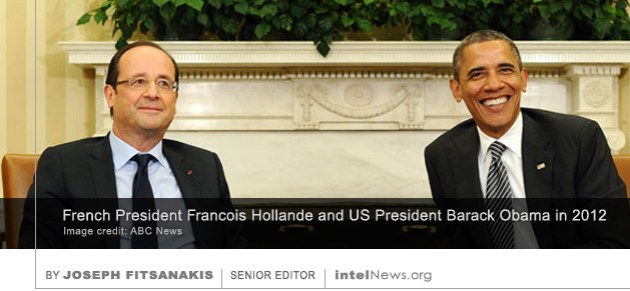 The president of France has convened an emergency meeting of the country’s highest national security forum in response to revelations that the United States spied on three French presidents. The Conseil de la Défense is to convene in Paris on Wednesday to discuss the emergence of documents that appear to implicate the US National Security Agency (NSA) in spying on Jacques Chirac and Nicolas Sarkozy, who ruled France from 1995 to 2012. The documents further indicate that the NSA may have also targeted the personal communications of Francois Hollande, France’s current head of state.
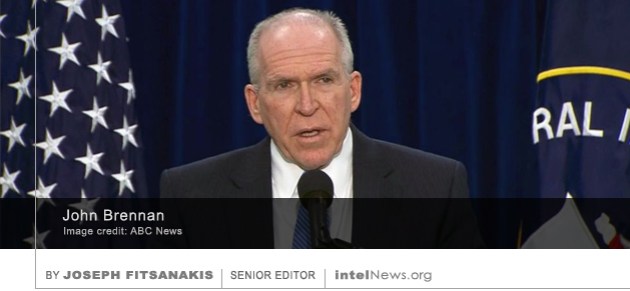 The director of the United States Central Intelligence Agency visited Israel in secret last week to discuss the Jewish state’s refusal to endorse an emerging deal with Iran over its nuclear program. Citing “two senior Israeli officials”, the Tel Aviv-based Israeli newspaper Haaretz said on Tuesday that CIA Director John Brennan arrived in Israel last Thursday. Although he was officially hosted by Tamir Pardo, director of Israeli intelligence agency Mossad, Brennan used the opportunity to hold secret meetings with several senior Israeli officials, said Haaretz. Among them were Prime Minister Benjamin Netanyahu, National Security Adviser Yossi Cohen, as well as Major General Hartzl Halevi, who heads Israel’s Military Intelligence Directorate.
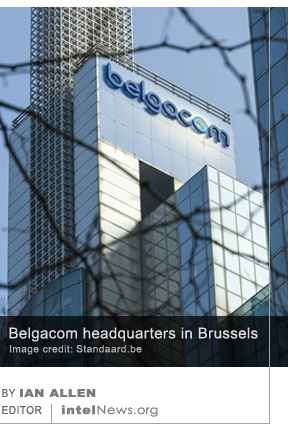
 The office of the Swiss Federal Prosecutor has launched an investigation into claims that the country’s largest telecommunications provider was spied on by a consortium of German and American intelligence agencies. The spy project was



 By JOSEPH FITSANAKIS | intelNews.org








Calls in France to offer asylum, citizenship, to Snowden and Assange
June 26, 2015 by Joseph Fitsanakis 4 Comments
The initial call was issued by Laurent Joffrin, the influential managing editor of Libération, the Paris-based newspaper that partnered with WikiLeaks to release the NSA documents earlier this week. In a leading editorial published in the paper on Thursday, Joffrin said that French protests against NSA spying “have no more effect than scolding a rude toddler”, and added that by offering asylum to Snowden, France would “stand up [to America] and send a clear and effective message to Washington”.
Shortly after Joffrin’s editorial, Jean-Christophe Lagarde, president of the centrist Union of Democrats and Independents in the French Parliament, said that France should have given Snowden political asylum back in 2013, when he originally requested it. Lagarde was quoted in the French press as saying that “the French nation has already been dishonored by refusing to accept Edward Snowden’s request for political asylum when he asked for it in 2013”. Jean-Luc Mélenchon, the leftist member of the European Parliament, agreed with Lagarde, adding that Assange and Snowden must not only receive political asylum in France, but also be given “the French nationality”.
On Thursday afternoon, Jean-Pierre Mignard, a close friend and longtime political advisor to President Hollande, said that “given the service they have rendered to the cause of human freedom, France could accommodate a request for asylum from Assange and Snowden, should they request it”. Mignard added that “French law allows the Republic to grant asylum to any foreign subject who faces persecution for taking action in favor of human freedom”.
When asked by BFM TV, France’s most popular news channel, whether political asylum could be extended to Snowden and Assange, France’s Justice Minister Christiane Taubira said that she was “absolutely shocked by the idea”, because such a course of action would drive a powerful wedge between France and the US, two countries with deep historical ties. But she added that such a move would constitute a strong “symbolic gesture” against espionage, and thus remained on the table as a possible policy maneuver to be adopted by the government of France.
Late on Thursday, however, France’s Prime Minister Manuel Valls indicated that any discussion of an offer of asylum to Assange and Snowden by the government of France was premature. Speaking at a hastily organized press conference to discuss the NSA espionage revelations during an official visit to Colombia, Valls told reporters that the question of offering asylum to the two men “did not arise” during internal government talks. “And in any case”, said Valls, such an initiative “would not address the issue at hand”, namely American espionage against the French presidency. France’s goal is to extract guarantees from Washington that all espionage against French officials would stop, noted the French prime minister. If France offered asylum to Assange and Snowden, American espionage against French targets would likely reach unprecedented levels, he added.
► Author: Joseph Fitsanakis | Date: 26 June 2015 | Permalink: https://intelnews.org/2015/06/26/01-1723/
Filed under Expert news and commentary on intelligence, espionage, spies and spying Tagged with Christiane Taubira, communications interception, Edward Snowden, France, Jean-Christophe Lagarde, Jean-Pierre Mignard, Julian Assange, Laurent Joffrin, Manuel Valls, News, NSA, United States, Wikileaks