US offensive cyber campaign disabled Iran’s strike capabilities, say sources
August 30, 2019 1 Comment
 The Islamic Revolutionary Guard Corps (IRGC) is still recovering from the damage it suffered by an offensive American cyber campaign against it that took place in June, according to sources. The attack allegedly degraded the IRGC’s ability to strike at oil tankers and other ships in the Persian Gulf. The New York Times said on Thursday that the cyber attack took place on June 20, hours after United States President Donald Trump called off airstrikes on Iran. The White House had considered launching the airstrikes in retaliation against the downing of an American surveillance drone by Iranian forces and their alleged use of limpet mines against commercial oil tankers by the IRGC the previous month.
The paper did not reveal details of the cyber campaign, but said it did not target any part of Iran’s missile or other defense programs. Its mission was to degrade the covert strike capabilities of the IRGC, which operates in a paramilitary capacity and is not supervised by the military. Washington blamed the IRGC for the limpet mine attacks against oil tankers, and expressed concerns that they would continue. The cyber attack corrupted the computer databases and communications networks that the IRGC uses to co-ordinate covert operations at sea, and resulted in the temporary cessation of IRGC attacks on oil tankers, said The Times.
The June 20 cyber attacks were not meant to be permanent but their effects have endured much longer than was expected, according to the paper. It cited claims by anonymous senior American officials that the IRGC is “still trying to repair critical communications systems and has not recovered the data lost in the attack”. It is also worth noting that, according to US sources, Iran did not escalate its own cyber attacks against Western targets in retaliation to the American cyber campaign against the IRGC.
However, according to The Times, some American officials have expressed doubts about the wisdom and long-term impact of the cyber operation. They claim that the cyber attack gave the Iranians the opportunity to collect valuable information about US cyber capabilities. It also allowed them to detect and fix their vulnerabilities so that they are now better able to defend against future cyber attacks. Lastly, the attacks neutralized IRGC communications networks, which the US had penetrated and was collecting vital intelligence from, they argue.
► Author: Joseph Fitsanakis | Date: 30 August 2019 | Permalink
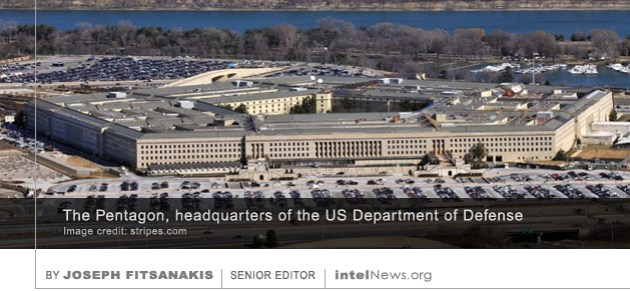 The White House will soon announce its decision to strengthen the United States Cyber Command and separate cyber war operations from intelligence functions, according to insider reports. For many decades, the National Security Agency has been in charge of protecting America’s cyber network and combating online threats. But in 2009, the Administration of US President Barack Obama established a brand new Cyber Command, proposing that the online environment represented a new theater of war. Since that time, the US Department of Defense has been campaigning in favor of strengthening the new Cyber Command and completely removing it from the patronage of the NSA –despite the fact that the latter is also a Pentagon agency.
 The global reach of the Islamic State through the use of the internet remains “largely intact” despite relentless efforts by some of America’s most advanced cyber warfare experts to neutralize the group’s online presence. It is now over a year since the United States Department of Defense announced that it had launched a cyber war against the Islamic State —the militant Sunni Muslim group that today controls large parts of Syria and Iraq.
 Following a request from the White House, the United States Department of Defense is putting together options to launch offensive cyber operations of an unprecedented scale against the Islamic State. The White House







 intelNews.org
Pentagon orders its cyber arm to stop operations against Russia [updated]
March 1, 2025 by Ian Allen 12 Comments
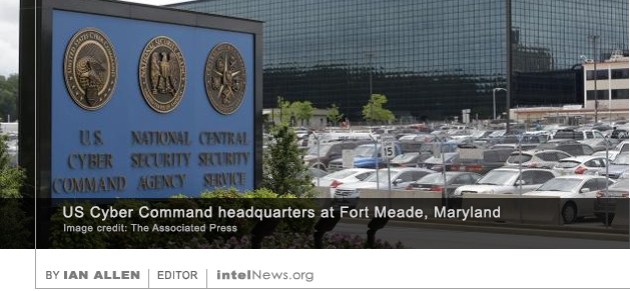
Established in 2009, the US Cyber Command is among the 11 unified combatant commands of the US Armed Forces. It coordinates and directs cyber operations in the Department of Defense, having achieved a degree of autonomy from the National Security Agency (NSA), which has historically led the US military’s defensive and offensive cyber operations.
According to the Record, Secretary Hegseth’s order appears to encompass all offensive cyber operations aimed at Russia. These are carried out by US Cyber Command’s National Mission Teams, as well as all component commands, which reside under the US Armed Forces branches —namely the Army, Marine Corps, Air Force, and Navy. The order also appears to apply to all cyber operations carried out by the US European Command. However, the order does not apply to the NSA, according to the report.
The precise scope of Secretary Hegseth’s order remains unclear. The exact duration of the order is also not known at this time. But, according to the Record, Hegseth’s order provides “more evidence of the White House’s efforts to normalize ties with Moscow,” as the Trump administration continues to push for a negotiated end to the Russo-Ukrainian war.
In a separate development, Secretary Hegseth reportedly told Mexican government officials on Friday that the US military was “prepared to take unilateral action” to combat drug cartels in the country. According to the Wall Street Journal, which first reported this development, the Trump administration has begun transporting nearly 2,000 troops to the US-Mexican border, to assist in “machine operation, medical evacuation and administrative support.
UPDATE: The New York Times is also reporting this as of March 2, stating that move is “apparently part of a broader effort to draw President Vladimir V. Putin of Russia into talks on Ukraine and a new relationship with the United States.”
► Author: Ian Allen | Date: 01 March 2025 | Permalink
Filed under Expert news and commentary on intelligence, espionage, spies and spying Tagged with News, Pete Hegseth, Russia, United States, US DoD, US DoD Cyber Command