ISIS is tenacious, well-funded and quickly reasserting itself, new UN report warns
February 3, 2020 1 Comment
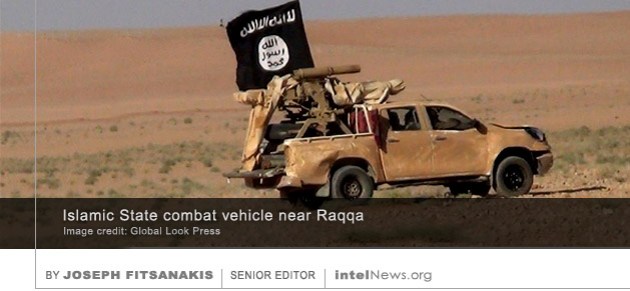 The Islamic State remains committed to its goals and continues to utilize ample funding sources, according to a new report by the United Nations. The report warns that the militant Sunni group, which was previously known as the Islamic State of Iraq and Syria (ISIS), is quickly reasserting itself in the Middle East.
The report (.pdf) was authored by a committee of the UN’s Security Council that monitors the impact of UN-imposed international sanctions designed to weaken the Islamic State, al-Qaeda, and groups aligned with them. It was completed on January 20 and submitted to the UN Security Council last week. Its authors state that the information used to compile it came from intelligence shared with the UN by its member states.
The report recognizes that the Islamic State has suffered significant defeats in the field of battle, which have shattered its once formidable military and logistical power. Despite these setbacks, however, the militant group remains “tenacious and well-funded”, with much of its financial income stemming from sound investing practices in business opportunities throughout the Middle East, says the report. Meanwhile, its armed units in Syria continue to sell protection and carry out extortion, now even during daylight hours, it adds. The group’s steady funding even allows it to continue to provide monthly pensions to close family members of its dead fighters.
Additionally, says the report, the Islamic State has learned to take advantage of the deficiencies of Syrian and Iraqi security forces, and is now carrying out progressively brazen armed attacks against a variety of military and civilian targets. Although it is operationally weak, it continues to aspire to launch attacks in Europe in the future. Additionally, its leaders continue to seek ways of freeing thousands of the group’s supporters from detention camps in Syria and Iraq.
The report concludes that the death of the group’s leader, Abu Bark al-Baghdadi, and his replacement by Amir al-Salbi (also known as Abdullah Qardash) is not expected to signal drastic changes in the Islamic State’s strategic direction. However, Qardash is not an Arab and may not stay at the group’s helm for long, as an Arab Emir would be more likely to be met with acceptance by the group’s wilayats, or provinces, the report adds.
► Author: Joseph Fitsanakis | Date: 03 February 2020 | Permalink
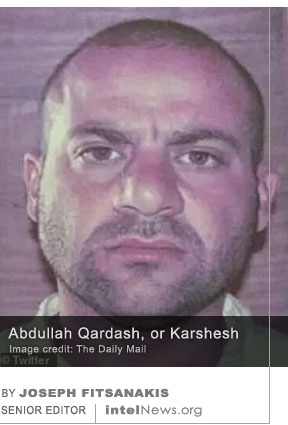 Barely a day after the United States announced the killing of Islamic State leader Abu Bakr al-Baghdadi, the militant Sunni group has replaced him with an Iraqi former military officer, according to sources. US President Donald Trump said on Sunday that al-Baghdadi, the self-styled Caliph of the Islamic State of Iraq and Syria (ISIS), died by detonating an explosive vest. He reportedly did so after being cornered by American Special Operations Forces troops at his hideout in the northwestern village of Barisha, which is located in the Syrian province of Idlib near the border with Turkey.
 Despite its military defeat in the Middle East, the Islamic State retains the ability to launch “complex international attacks” and will likely do so this year, according to a new report by a United Nations monitoring team. These attacks will occur in “unexpected locations” around the world, says the
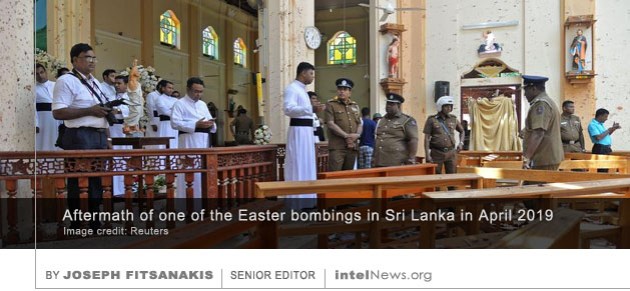
 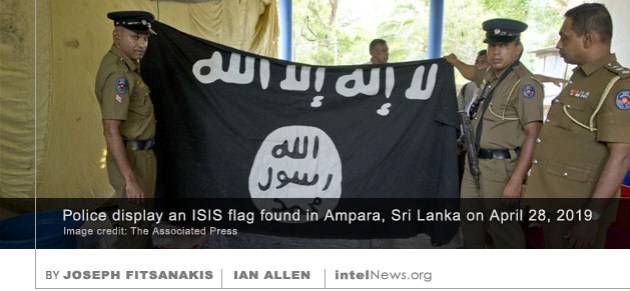 The April 21 suicide attacks in Sri Lanka, which were claimed by the Islamic State, may indicate that the militant group is moving east in search of fertile recruiting ground, according to some observers. In
  ranks. It follows that Sri Lanka is one of several East Asian countries that face major threats by the group, as the latter tries “to ignite creating fear in societies already battling so much division”, says Ash Gallagher, an American war correspondent based in East Asia. Writing for the British newspaper The Independent, Gallagher notes that not only is the Islamic State already established in Afghanistan (where it has “swallowed whole units of Taliban fighters”,
 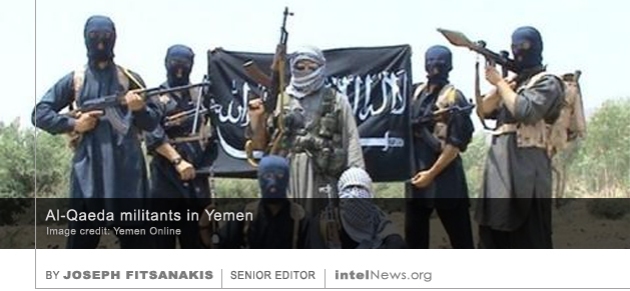 There are four times as many Sunni Islamist militants today in the world than on September 11, 2001, despite an almost 20 year-long war campaign by the United States and its allies, according to a new report. Washington launched the ‘global war on terrorism’ in the aftermath of the 9/11 attacks that were perpetrated by al-Qaeda. In the ensuing years, American and other Western troops have engaged militarily in over a dozen countries, including Afghanistan, Iraq, Pakistan, Syria, Libya, Yemen, Somalia, Sudan, and the Philippines. But a
 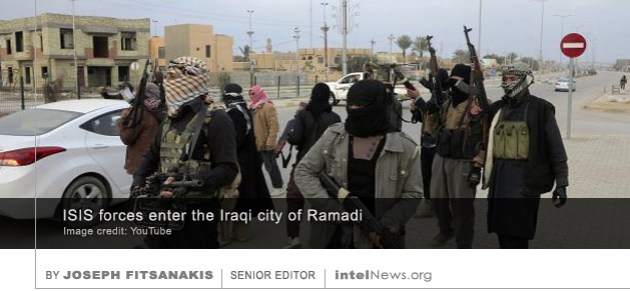 The Islamic State has recovered from some of its recent defeats in the battlefield and has as many as 30,000 committed members in Iraq and Syria, according to two reports by American and United Nations experts. Last month, the Iraqi government announced that the war against the group, which is also known as the Islamic State of Iraq and Syria (ISIS) had been won. The statement was
  way out. The group’s meteoric rise marked a watershed moment in the modern history of militant Sunni Islam. Even if it is militarily annihilated —a prospect that is far from certain— its physical absence will in no way erase its impact and influence among its millions of supporters and sympathizers. In fact, experts warn that the group is —like al-Qaeda before it— proving to be resilient and able to withstand intense military pressure from its enemies. Currently, all signs show that the Islamic State is actively reorganizing under the command of its leader, Abu Bakr al-Baghdadi. The prolonged absence of the Iraqi-born al-Baghdadi has prompted wild speculation about this supposed demise or severe incapacitation. There are even some who
 With
With  The Taliban have an open and constant presence in 70 percent of Afghanistan, according to an extensive study undertaken by the BBC, which was conducted over several months in every corner of the country. The report comes nearly 17 years after a military coalition led by the United States invaded Afghanistan in response to the attacks of September 11, 2001. Since then, Western forces, most of them members of the North Atlantic Treaty Organization, have spent countless lives and billions of dollars in an effort to defeat the Pashtun-led insurgency of the Taliban. American forces in the country, which at the end of 2009 numbered close to 100,000 troops, were reduced to a force of fewer than 8,000 by 2014, when US President Barack Obama declared the war over.
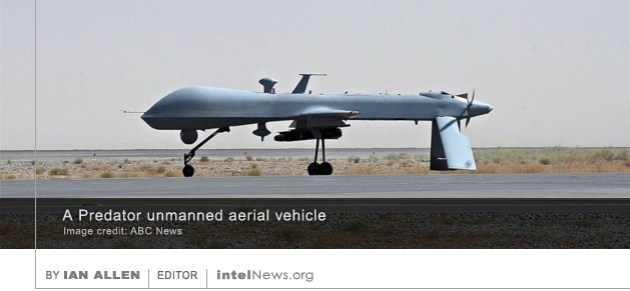 United States President Donald Trump has reportedly authorized the Central Intelligence Agency to bring back the routine use of lethal airstrikes by unmanned aerial vehicles (UAVs), which his predecessor, Barack Obama, curtailed in 2013. Washington began employing limited strikes by UAVs, otherwise known as drones, in the early 1990s, during the administration of President Bill Clinton. But it was under the Obama administration that the use of drone strikes reached an all-time high, with hundreds of such attacks documented after 2008. It is believed that Obama used this remote attack method to combat the Taliban and al-Qaeda, while at the same time keeping his promise of bringing back American troops from the Middle East and Central Asia. However, in 2013 the US president severely curtailed the controversial program, which some say damaged America’s image by inflicting civilian casualties.







 intelNews.org
News you may have missed #900
May 30, 2020 by Ian Allen Leave a comment
• Islamic State is back and this time the west is ill-prepared to take it on. Hassan Hassan, of the Center for Global Policy, and co-author of ISIS: Inside the Army of Terror, argues that “the current trends seem more favourable to the Islamic State than to local forces in Iraq”. Additionally, “tensions between the US and Iraqi forces also make it harder for the two partners to work in harmony as they did during the fight against Isis in places like Mosul”.
• New Senate intelligence committee director warns against virus conspiracies. Senator Marco Rubio (pictured), the new Republican chairman of the Senate Intelligence Committee, has warned that foreign actors will seek to amplify conspiracy theories about the coronavirus and find new ways to interfere in the 2020 presidential election. The Florida Republican said in an interview with The Associated Press on Tuesday that one possibility could be an effort to convince people that a new vaccine against the virus, once created, would be more harmful than helpful.
Filed under Expert news and commentary on intelligence, espionage, spies and spying Tagged with 0 China may set up Hong Kong spy agency under new law, 0 Islamic State is back and this time the west is ill-prepared to take it on, 0 New Senate intelligence committee director warns against virus conspiracies, China, Hong Kong, Islamic State, Marco Rubio, news you may have missed, US Senate Select Committee on Intelligence, War on Terrorism