Spain’s second largest bank under investigation in massive espionage scandal
July 31, 2019 1 Comment
 Spain’s second largest bank has been placed under investigation in connection with a probe into an illegal network that spied on scores of politicians, business executives, journalists and judges for over 20 years. The investigation centers on José Manuel Villarejo (pictured), a 67-year-old former police chief, who remains in pre-trial custody following his arrest in November of 2017 for carrying out illegal wiretaps. State prosecutors accuse Villarejo of running an illicit information-collection enterprise that violated the privacy of hundreds of unsuspecting citizens. Villarejo’s victims were targeted by corporate competitors and individual wealthy clients. Many were eventually blackmailed by the recipients of the information that was collected by the former police chief and his network.
On Tuesday, Spain’s High Court, the Audiencia Nacional, placed the country’s second-largest bank, the BBVA, under formal investigation in connection with the Villarejo case. Audiencia Nacional Judge Manuel García-Castellón took the decision to investigate the BBVA after government prosecutors argued that the bank was one of Villarejo’s main clients, as shown in documents seized from the former police chief in 2017. According to the prosecution, the bank made illicit payments to a company called Cenyt, which was owned by Villarejo. The payments lasted for over 13 years, during which Villarejo earned close to €10 million ($11.1 million) from BBVA. In return, Villarejo and his employees carried out surveillance operations on behalf of the bank. One of the operations targeted Sacyr, a large Spanish-based construction company, which had tried to purchase BBVA in 2004 and 2005. Spanish government prosecutors now accuse BBVA of bribery, disclosure of sensitive information, and corrupt business practices.
In January of 2018 five active police officers and an employee of the Agencia Tributaria, Spain’s tax revenue service, testified in court about having worked for Villarejo’s network. They disclosed information about Operation KITCHEN, an espionage effort that targeted Luis Bárcenas, a senator and party treasurer of Spain’s conservative Partido Popular. The purpose of Operation KITCHEN was to wiretap Bárcenas’ communications without acquiring a court warrant, said the witnesses. Last year Bárcenas was jailed for 33 years for his role in the so-called Gürtel case, the largest corruption scandal in modern Spanish history, which brought down the conservative government of Prime Minister Mariano Rajoy in July of 2017. Villarejo’s trial continues.
► Author: Ian Allen | Date: 31 July 2019 | Permalink
 A judge in Spain has widened an investigation into an illegal network that spied on scores of politicians, business executives, journalists and judges for over 20 years, in return for payments by wealthy clients. At the center of the case is José Manuel Villarejo, a 67-year-old former police chief, who was arrested in November of 2017 for carrying out illegal wiretaps and remains in pre-trial custody. State prosecutors accuse Villarejo of running an illicit information-collection enterprise that violated the privacy of hundreds of unsuspecting citizens. The latter were targeted by corporate competitors and individual wealthy clients. Many of Villarejo’s targets were eventually blackmailed by the recipients of information collected by the former police chief and his network.
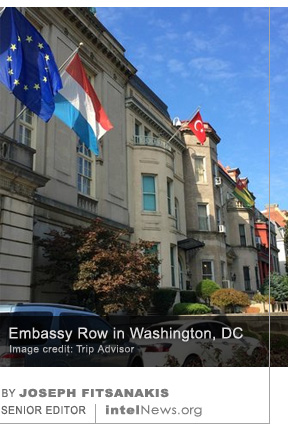 The United States government has for the first time admitted publicly that it has detected devices known to be used by foreign intelligence services to spy on cellular communications in the nation’s capital. Known commonly as Stingrays, after a leading hardware brand, these devices are primarily used by government agencies, including law enforcement. But they can be purchased by anyone with anywhere from $1,000 to $200,000 to spare. They work by simulating the activity of legitimate cell towers and tricking cell phones into communicating with them. That allows the users of these cellphone-site simulators to monitor the physical whereabouts of targeted cell phones. Some of the more expensive Stingray models can intercept the actual content of telephone conversations and can even plant Trojans on the compromised phones of unsuspecting users.
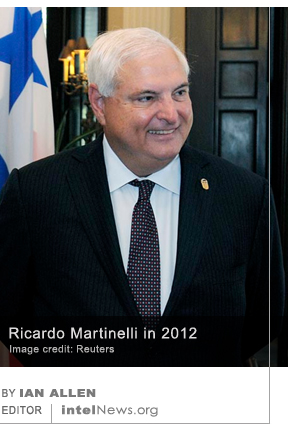 Police in the United States have arrested Panama’s former president Ricardo Martinelli, who is wanted in the Central American country on charges of using state resources to spy on his political opponents and business rivals. The center-right US-educated businessman won the 2009 presidential election in the country with a landslide, receiving over 60 percent of the national vote. His election prompted positive comments from Washington, because it marked a rare ascent to power of a conservative Latin American leader in a sea of socialist heads of state. But the euphoria did not last long. In 2014, Martinelli was succeeded in the presidency by his Vice President, Juan Carlos Varela. Varela promptly launched nearly 200 criminal investigations against his former political partner on issues ranging from embezzlement of state funds to political espionage.
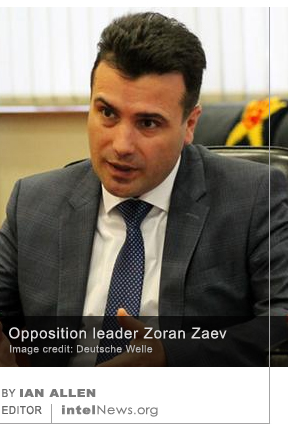 Several former and current intelligence officers, including a former director of the national spy service, have appeared in court in Macedonia, accused of illegally wiretapping thousands of people on orders of the government. The wiretap scandal has sparked the deepest political crisis in the impoverished Balkan country, which has existed since declaring independence from Yugoslavia in 1991.
 By JOSEPH FITSANAKIS | intelNews.org


 By IAN ALLEN | intelNews.org |








 intelNews.org
Argentine former president and spy agency director indicted in wiretapping probe
June 2, 2020 by Joseph Fitsanakis Leave a comment
In 2015, Macri, a successful businessman and former mayor of Buenos Aires, became the first democratically-elected president of Argentina in 100 years that came from a party other than the populist brand described as ‘Peronist’ in the post-war era. His presidency was marked by a turn to the right, as well as numerous investigations into allegations of corruption against prior heads of state, notably Cristina Fernández de Kirchner, whom Macri succeeded in the presidency.
But Kirchner is now back, serving as vice-president under Argentina’s new president, Alberto Fernández. Fernández, a Peronist, took office in December of 2019, after defeating Macri in a hotly contested race. Among Fernández’s top agenda items is the reform of the country’s Federal Intelligence Agency (AFI). The agency used to be known as the Secretaría de Inteligencia del Estado (SIDE) until 2015, when then-President Kirchner dissolved the organization and replaced it with the AFI, in order to combat alleged human-rights abuses by SIDE agents. But Kirchner has always said that her work in reforming the old SIDE was left incomplete. Her running mate, Fernández, promised to complete her work if elected. In his first post-election speech, President Fernández said that the SIDE/AFI would be reformed. He famously told his jubilant supporters: “Never again, the secret state. Never again, the cellars of democracy”. Soon afterwards, Fernández appointed Cristina Caamaño, an attorney and government administrator with experience in the area of civil liberties, to lead the AFI.
Last week, Caamaño gave a federal court in Buenos Aires a deposition containing list of over 80 names of Argentine citizens, who were allegedly spied on by the AFI without a warrant during Macri’s administration. In her deposition, Caamaño alleges that the individuals had their emails “spied on without any court order”, from as early as June 2016 until the final days of Macri’s presidency. According to local media reports, the list of alleged victims includes political opponents of Macri, as well as investigative journalists, government officials, and notable members of Argentina’s business community. There are also police and military officers on the list as well as artists, intellectuals, and trade unionists. Caamaño asked the court to investigate, aside for Macri, Gustavo Arribas, who served as AFI director under the previous president, as well as his deputy director in the spy agency, Silvia Majdalani, and her brother-in-law, Darío Biorci. The names of other alleged culprits in Caamaño’s deposition remain secret, reportedly because these individuals are still serving as undercover agents in the AFI.
On Wednesday, Caamaño’s deposition was shared with the Argentine Congress, and are now being debated in various committees, including the intelligence committee. Congress members from President Fernández’s Partido Justicialista have expressed strong support for the probe. But the opposition is highly skeptical and has asked for more information from Caamaño’s office.
► Author: Joseph Fitsanakis | Date: 02 June 2020 | Permalink
Filed under Expert news and commentary on intelligence, espionage, spies and spying Tagged with AFI (Argentina), Alberto Fernández, Argentina, civil liberties, Cristina Caamaño, intelligence reform, Mauricio Macri, News, SIDE (Argentina), warrantless communications interception