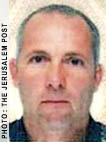
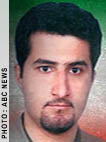
British government to investigate death of former Mossad agent

Ashraf Marwan

Ashraf Marwan

By JOSEPH FITSANAKIS | intelNews.org |
In June 2007, Dr. Ashraf Marwan, son-in-law of the late Egyptian president Gamal Abdel Nasser, fell to his death from the balcony of his London home. Last week, British authorities initiated a previously announced official investigation into Dr. Marwan’s death, following accusations by his widow, Mona Nasser, that he had been murdered. Undoubtedly, the late Dr. Marwan had plenty of enemies. In 1969 he walked in the Israeli embassy in London and told diplomatic officials that he wished to be employed as an agent for Israeli intelligence. After several interview sessions with Mossad officers, some involving the use of polygraph techniques, the Mossad employed him as an agent. It is said that Dr. Marwan proved invaluable to the Israelis, over a number of years. Read more of this post

News you may have missed #396 (Russian spy ring edition V)

  • 12th Russian spy network member deported from US. Alexey Karetnikov, a 23-year-old Russian citizen living in Seattle, has been deported to his home country, apparently in connection with the Russian illegals spy network uncovered by the FBI last month. A photograph of Karetnikov is available here.
  • Returned spies look to changed identities. Several of the Russian agents detained in the United States in June and handed over to Russia last week will change their identities under a witness protection program, a Russian intelligence official said last week. All but three of the agents were using false names when they were arrested by the FBI on June 27.
  • Russian spy Chapman stripped of UK citizenship. Anna Chapman, also known as Anya Kushchenko, one of the Russian spies deported from the United States, has been deprived of her British citizenship, and exclusion is expected to follow, meaning she cannot travel to the UK. She has a UK passport through a previous marriage.


Bookmark and Share

Fate of 11th Russian spy suspect remains a mystery

Christopher Metsos

C.R. Metsos

By IAN ALLEN | intelNews.org |
As the world’s media attention is focused firmly on last week’s 14-member spy swap between Russia and the United States, the fate of the 11th member of the Russian deep-cover intelligence network remains unknown. The operative, known as Christopher R. Metsos, was listed as “defendant No. 1” in the FBI criminal complaint against the now infamous Russian illegals network. Like his co-defendants, he was not charged with espionage, but with “acting as an unregistered agent of a foreign government”. He was also charged with money laundering, and was described as the main financier of his ten co-defendants. However, Metsos escaped arrest in the US, because during the FBI raids he was in Cyprus, where he had arrived on June 17. He was arrested on June 29 at the island’s Larnaca International Airport, while trying to board a flight for Budapest, Hungary. A much younger woman traveling with him was allowed to leave on the flight, according to Cypriot media. Read more of this post

News you may have missed #395 (Russia-US spy swap edition IV)

  • All children of Russian spies repatriated. All the children of the 10 Russian spies freed by the US in a dramatic swap with Moscow have been sent to Russia to rejoin their parents, US attorney general Eric Holder has said.
  • Moscow relieved that spy scandal is over. A sense of relief seemed to pervade the halls of the Russian government over the weekend that a potentially embarrassing spy scandal with the United States was over. But few Russian officials showed any enthusiasm about discussing the two-week affair.
  • Russia ‘gave spies hundreds of thousands of dollars’. US Attorney General Eric Holder says 10 Russian secret agents deported by US authorities as part of a spy swap had received hundreds of thousands of dollars from Moscow.

Bookmark and Share

News you may have missed #394 (Russia-US spy swap edition III)

  • Russian spy’s call to father triggered arrests. A telephone call from Russian spy Anna Chapman to her father in Moscow led US counterintelligence services to hasten the arrests of her and nine Russian agents in the United States, claims The Washington Post.
  • Non-Russian spy Pelaez to return to Peru in month. Vicky Pelaez, a journalist with dual US-Peruvian citizenship, who was deported from the United States to Russia on a spy swap, will return to Peru no sooner than in a month, Pelaez’s lawyer, Carlos Moreno, said on Monday.
  • Alleged CIA spy Sutyagin may return to Russia. Igor Sutyagin, a Russian arms expert convicted of espionage in 2004, may return home after he was deported to England in a spy swap with the US, according to his former colleague Pavel Podvig. “He has Russian citizenship, his wife and daughters are in Russia and he has been pardoned by the President”, said Podvig.

Bookmark and Share

News you may have missed #393

  • US warns Turkey against Gaza flotilla probe. London-based Arabic-language newspaper al-Hayat claimed on Saturday that US President Barack Obama told Turkish Prime Minster Recep Tayyip Erdogan that an independent inquiry into the Free Gaza Flotilla massacre “could turn into a double-edged sword” against Ankara.
  • US experts doubt North Korea sunk South Korean ship. A new study by US researchers raises questions about the investigation into the sinking of the Cheonan, a South Korean navy ship, which went down last March, killing 46 sailors. International investigators have blamed a North Korean torpedo, raising tensions on the Korean peninsula.
  • Nixon-Kissinger dialogue raises CIA assassination suspicions. A loaded dialogue between President Richard M. Nixon and his trusted national security adviser, Henry A. Kissinger, dating from 1971, appears to confirm that the CIA had a role in the 1970 assassination of Chilean army commander-in-chief Rene Schneider.

Bookmark and Share

Poland to extradite Israeli spy to Germany on lesser charges

Uri Brodsky

"Uri Brodsky"

By IAN ALLEN | intelNews.org |
A judge in Poland has ruled in favor of the extradition to Germany of an Israeli alleged spy, wanted by Interpol in connection with the assassination of a Hamas official last January. The court ruling stipulates that Israeli citizen Uri Brodsky, who was arrested upon arriving in Poland on June 4, is to be extradited to Germany, where he will face charges of forgery. Authorities in Berlin accuse Brodsky of having helped an assassination team working for Israeli intelligence agency Mossad to acquire a forged German passport, used by an assassination team member to travel in and out of Dubai, United Arab Emirates. While there, the Israeli assassins are thought to have killed Mahmoud al-Mabhouh, a weapons procurer for Palestinian group Hamas, who was in Dubai on a business trip. Shortly after Brodsky’s arrest in Warsaw, Poland and Berlin came under intense pressure from Israel to ignore the Interpol arrest warrant for the alleged Israeli spy, drop all charges, and allow him to flee to Israel. Read more of this post

News you may have missed #392

  • Soviet spy stood ready to poison DC’s water, says Ex-KGB general. A Soviet deep-cover agent, who was in the United States from around 1963 to 1965, had orders to poison Washington DC’s water and to sabotage its power supply if war with the United States became imminent, according to Oleg Kalugin, former chief of KGB operations in North America.
  • Two interesting interviews. George Kenney, of Electric Politics, has aired two interesting interviews, one with Dr. Thomas Fingar, former US Deputy Director of National Intelligence, touching on a variety of issues, and one with Philip Alston, the United Nations Special Rapporteur on extrajudicial killings, who comments on the CIA drone attacks in Afghanistan and Pakistan.
  • Lawyers who won NSA spy case want $2.63 million. Eight lawyers, who managed to prove that Saudi charity al-Haramain was illegally wiretapped by the US National Security Agency (see here for previous intelNews coverage), are demanding millions of dollars in damages from the US government.

Bookmark and Share

Comment: Defector’s Wish to Return to Iran Not Unusual

Shahram Amiri

Shahram Amiri

By IAN ALLEN | intelNews.org |
This website has covered extensively the case of Dr. Shahram Amiri, a scientific researcher employed in Iran’s nuclear program, who disappeared during a religious pilgrimage to Mecca in May or June of 2009. Tehran maintains that Dr. Amiri was abducted by CIA agents. However, most intelligence observers, including this writer, believe that the Iranian researcher willfully defected to the West, following a long, carefully planned intelligence operation involving the CIA, as well as French and German intelligence agencies.

Read more of this post

News you may have missed #391 (Russia-US spy swap edition II)

  • Expelled spies to experience life in changed Russia. Like those before them, the sleeper spies who were deported to Russia last week in one of the biggest espionage exchanges in decades will probably miss the United States, picket fences and all. But what perhaps most distinguishes this affair from its cold war precursors is what awaits these Russians in their motherland.
  • Past Russian spies have found post-swap life gets a bit sticky. While life in Moscow may be duller than New York, Boston, New Jersey, Seattle and Washington, DC, where the 11 Russians charged last week allegedly lived as long-term, deep-penetration agents, it won’t be too bad, either, if their predecessors’ experience is any guide.
  • Life a nightmare for spies returning to Russia, says Soviet dissident. Vladimir Bukovsky, 67, a Soviet dissident exiled to Europe in a 1976 prisoner swap, says the Russian spies expelled from America to Russia last week “will go from living affluent lives with real freedom, to living under constant surveillance by the Russian secret services”.

Bookmark and Share

Russia-US spy swap plan was almost shelved, say Russian media

Igor Sutyagin

Igor Sutyagin

By IAN ALLEN | intelNews.org |
The unprecedented spy exchange between Russia and the United States nearly failed, after American and Russian planners came across several unforeseen problems during the run-up to the swap. Moscow-based daily newspaper Moskovsky Komzomolez cited a confidential source in Russian intelligence, who said that Washington almost cancelled the exchange deal in the early hours of July 9. This was after Russian media published the names of the four jailed Russian citizens who were to be given up by Moscow, in exchange for the ten Russian deep-cover spies arrested by the FBI in several US cities in June. The agreement almost came to a standstill again a few hours later, after Russian nuclear weapons expert Igor Sutyagin refused to officially admit guilt, a step that was required for the planned exchange to take place. The Russian scientist, who chaired a division in the Russian Academy of Sciences’ USA and Canada Institute, was serving a 15-year sentence for allegedly passing state secrets to a foreign company that was a front for the CIA. Read more of this post

News you may have missed #390 (Russia-US spy swap edition I)

  • In spy swap, agents were pawns in a practiced game. The US arrests were not made to facilitate a swap, said a US official, speaking on condition of anonymity. Rather, they were precipitated, at least partly, by the plans of several of the Russians to leave this country this summer.
  • Russian spies get tepid reception in Moscow. The 10 spies who pleaded guilty to acting as foreign agents in the United States, including one Peruvian, were given a tepid, uneasy reception in Russia on Friday. State-controlled national television channels reported their return briefly, with no patriotic fervor. No national TV channels carried live coverage of the plane’s landing, even though it was available from international news agencies.
  • Russian, US spies start new lives but mystery swirls. The 14 spies swapped by Moscow and Washington were starting new lives in Russia and the West last weekend, but mystery shrouded their precise whereabouts. In one case, Igor Sutyagin, a Russian nuclear arms expert who allegedly spied for the US, found himself at a hotel somewhere in Britain, without a visa and still wearing his Russian prison clothes.

Bookmark and Share

Dead defector not connected to Russian spies, insists friend

Sergei Tretyakov

Sergei Tretyakov

By IAN ALLEN | intelNews.org |
On July 2, based on an excellent analysis by Stratfor of the 10 Russian deep-cover agents arrested in the US in June, we entertained the possibility that Sergei Tretyakov, a senior Russian SVR agent who defected to the US in 2000, may have helped the FBI identify the Russian spy ring. Last Friday, it emerged that 53-year-old Tretyakov had died at his home in Florida. When he defected to the US, along with his wife and daughter, Tretyakov was second-in-command at the SVR (Russian external intelligence) station operating out of Russia’s United Nations mission in New York. This is the same outfit that coordinated the 10 Russian deep-cover agents arrested by the FBI in June. Tretyakov’s death was announced by the late Russian spy’s friend and confidante Pete Earley, who in 2008 wrote a book about the defector. It is worth noting that Tretyakov actually died on June 13, but his wife, Helen Tretyakov, requested that his death not be publicly announced until the precise cause of death was determined. Read more of this post

News you may have missed #389

  • Secrecy over attack on Syrian nuclear plant unjustified, says ex-CIA chief. The secrecy surrounding the Israeli attack on the nuclear plant in eastern Syria in September 2007 was justified only for the period immediately after the operation, according to the CIA head at the time, Gen. Michael Hayden. That secrecy had been meant to save Syrian President Bashar al-Assad from embarrassment that could have provoked him to retaliate, argues Hayden in an authorized scholarly journal article.
  • No proof yet of Colombian spying, says Ecuador. Ecuadorean Security Minister Miguel Carvajal said Thursday that allegations that Colombian security agency DAS spied on Ecuadorean President Rafael Correa and other officials is “so far just a newspaper story”. Late last month, the Ecuadorean government threatened to break off diplomatic ties with Colombia over the media revelations.
  • GCHQ releases Stalin-era Soviet intercepts. A series of newly released telegrams and telephone conversations, intercepted by the UK’s General Communications Headquarters, paint a picture of Joseph Stalin’s regime in the immediate aftermath of the Second World War.

Bookmark and Share

Russia, US, in largest spy swap since World War II

Igor Sutyagin

Igor Sutyagin

By IAN ALLEN | intelNews.org |
The Russian and American governments have agreed to conduct one of history’s largest spy exchanges, as ten Russian agents captured in the US last month have been swapped for four Russian citizens imprisoned by Moscow for spying for the US and Britain. The ten Russians arrested by the FBI in June were non-official-cover (NOC) operatives, otherwise known as ‘illegals’, a term used to identify deep-cover intelligence operatives not associated with a country’s diplomatic representation. According to reports, they were all instructed by the SVR, Russia’s equivalent of MI6, which is responsible for all foreign intelligence operations abroad, to plead guilty to “acting as unregistered foreign agents” a charge not equivalent to espionage in either seriousness or repercussions. They were then legally forbidden from ever returning to the United States and summarily expelled. They were taken from the courtroom directly to the airport, where they boarded a plane to Vienna, Austria. In return, Russian government sources have confirmed that four Russian citizens, arrested in recent years for spying on behalf of the US or Britain, will be released from prison and delivered to US authorities. Read more of this post