News you may have missed #534

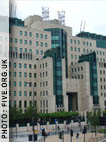
MI6 HQ

By IAN ALLEN | intelNews.org |
According to extracts from the diary of Alastair Campbell, British Prime Minister Tony Blair’s communications director from 2000 to 2003, officials from the MI6 intelligence agency told Blair that France and Germany aimed to “exploit his feud” with then Chancellor of the Exchequer Gordon Brown. Gotta love European unity. In Kuwait, meanwhile, the oil state’s Al-Shahed daily quotes “knowledgeable sources”, who claim that “a lot of spy networks exploit the Kuwaiti environment” and use the country as a transit point to spy on neighboring countries. Hopefully the Kuwaitis will not emulate authorities in Dubai, which in March of last year called on all foreign spies “to leave the region within a week. If not”, they warned, “we will cross that bridge when we come to it”. In the nearby state of Israel, public opinion is still divided about former Mossad chief Meir Dagan’s criticism of the Netanyahu government. As Bloomberg columnist Jeffrey Goldberg notes, Dagan has “called into question the wisdom –and, privately, even the sanity– of any Israeli leader who contemplates a preemptive strike on Iran’s nuclear facilities”. But why is he doing it, and could it backfire?
News you may have missed #533

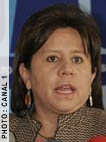
María del Pilar Hurtado

María Hurtado

By IAN ALLEN | intelNews.org |
The government of Colombia will –finally– officially request from Panama the extradition of Maria Pilar Hurtado, former director of Colombia’s disgraced DAS intelligence agency, who was granted political asylum in the Central American country last year. The Colombian government has been contemplating this move for some time, as the investigation into illegal activities by the DAS is progressing extremely slowly. In Iran, the government says that it plans to try dozens of American intelligence officials in absentia. The announcement has raised the possibility that Tehran may out US spies which the Iranians claim attempted to recruit locals as part of a sophisticated intelligence-gathering operation. One former CIA operative, Glenn Carle, voluntarily came out a few years ago, following retirement, and made news headlines last month, in connection with alleged CIA spying on American academic Juan Cole. Carle, who worked for the CIA for 23 years, in Africa, the Balkans and Latin America, among other locales, has written a book. It focuses on a several-month period he spent questioning a suspected leader of al-Qaeda. The interrogations took place in two countries, which he says he is not permitted to name.

News you may have missed #532

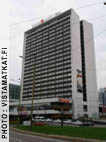
Viru Hotel

Viru Hotel

By IAN ALLEN | intelNews.org |
A new exhibition in Tallinn, called The Viru Hotel and the KGB, showcases the Soviet KGB operations in the Estonian capital’s most prestigious Soviet-era hotel. According to the curators, the 23rd floor of the hotel served as the KGB’s operational center in the city. The exhibition focuses specifically on KGB bugging technology during the last stages of the Cold War. Speaking of the Cold War, The Oak Ridger hosts an interesting interview with Francis Gary Powers Jr., son of the CIA pilot who was shot down over the USSR and later captured by the Soviets in 1960. Powers insists his father “never divulged America’s secrets” during his two-year imprisonment in Moscow. Interestingly, declassified documents from that time show that the CIA doubted Powers’ plane had been shot down by the Soviets, and believed the pilot had willingly defected to the USSR. In Canada, meanwhile, a new report to parliament by the Canadian Security Intelligence Service’s (CSIS), claims that cyber-spying is fastest growing form of espionage in the country. The report also states that, as a matter of policy, CSIS views some private-sector cyberattacks as a national security issue.

Security minister, ex-spy directors arrested in Hungary

Gyorgy Szilvasy

Gyorgy Szilvasy

By JOSEPH FITSANAKIS | intelNews.org |
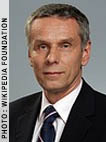
One former government minister and two former directors of Hungary’s domestic intelligence service have been arrested on suspicion on espionage, according to reports. On June 28, Hungarian police arrested Lajos Galambos, who was Director of Hungary’s National Security Office (NBH) from 2004 to 2007. Three days later, on July 1, police forces arrested Sandor Laborc, who succeeded Galambos as NBH director, and Gyorgy Szilvasy (pictured), who was minister in charge of overseeing the civilian security services from 2007 to 2009. All three served in key government positions during the socialist government of former Prime Minister Ferenc Gyurcsany. Despite repeated media request, government prosecutors have refused to disclose the precise nature of the charges against the three officials, except to say that they are suspected of having committed “crimes against the state”. One Hungarian daily, Tabloid Blikk, suggested that the arrests are linked to the Egymasert Public Foundation, headed by wanted fugitive Robert Jakubinyi.  Egymasert was found last year to have been used to facilitate money laundering and the illegal sale of shares. But other reports interpret the high-level arrests as a form of political payback for the so-called ‘UD Zrt affair’, also known as ‘the Hungarian Watergate’, which rocked Hungarian public opinion in 2008. Read more of this post

News you may have missed #531 (US edition)

  • US spy agencies looking into cloud computing. In-Q-Tel, the investment arm of the US intelligence community, recently sunk money into a cloud-based storage company called Cleversafe. The CIA has emerged as one of the US government’s strongest advocates of cloud computing, but some US intel insiders are not so hot on the idea.
  • Obama administration drops most CIA torture probes. So, this is how one of the darkest chapters in US counterterrorism ends: with practically every instance of suspected CIA torture dodging criminal scrutiny. Wired’s Danger Room blog calls it “one of the greatest gifts the Justice Department could have given the CIA as David Petraeus takes over the agency”.
  • US report shows increase in authorized wiretaps. US federal and state applications for orders authorizing or approving the interception of wire, oral or electronic communications increased 34 percent in 2010, compared to the number reported in 2009.

Radio station names hundreds of Zimbabwe secret agents

Happton Bonyongwe

Bonyongwe

By JOSEPH FITSANAKIS | intelNews.org |
A Zimbabwean opposition radio station has begun disclosing the names of hundreds of Zimbabwe intelligence operatives, in what experts say could potentially decimate Zimbabwean intelligence collection activities around the world. On June 30, SW Radio Africa, which is based in London, United Kingdom, aired the names of 83 officers of Zimbabwe’s Central Intelligence Organisation (CIO), and promised to air over 400 more in the coming weeks. The revelation is based on a 2001 document, which was leaked to the station by an unnamed CIO insider. In a statement, SW Radio Africa station manager Gerry Jackson dismissed national security concerns, arguing that the CIO “is not used to protect national security and to safeguard Zimbabweans”, but rather as “the brains behind the regime” of Zimbabwe’s President Robert Mugabe and his political grouping, ZANU PF. Jackson also cited a 2007 Human Rights Watch report, which found that the CIO is among the country’s most serious perpetrators of widespread human rights abuses. The station said that it decided to publish the names “in the interests of transparency and accountability and in the hope that by exposing these names […] some of the perpetrators of violence [will] think twice before they commit further human rights abuses”. Among the names included in the initial list of 83 persons is that of Hamad Adam, who is listed as a “political councilor” in the embassy of Zimbabwe in Berlin, Germany, as well as Paul Chikawa, who is a staffer in the country’s consulate in Hong Cong. Read more of this post

News you may have missed #530

  • Another spy ring reportedly busted in Kuwait. Kuwait has allegedly busted another spy ring, working for the intelligence services “of an Arab country [that] is currently embroiled in political turmoil”, reports Al-Jaridah daily. The paper also said that information gathered by the spy ring was sent to a liaison officer in the embassy of that country. Last April, two Iranians and a Kuwaiti national, all serving in Kuwait’s army, were sentenced to death for belonging to an Iranian spy ring.
  • How defectors come in from the cold. Interesting historical account of how defectors adjust to their new lives, from the BBC’s News Magazine. Sadly, much of the article is about –you guessed it– the Cambridge Five, which the British seem unable to get over, half a century later.
  • UK report says hackers should fight cyber spies. Britain faces losing its position at the leading edge of technology unless new ideas are developed to fight cyber attacks, including recruiting computer hackers to help fight organized cyber crime and espionage by foreign powers. This is the conclusion of a new report by the University College London’s Institute for Security and Resilience Studies.

News you may have missed #529 (analysis edition)

  • Analysis: US Senate backs Petraeus for CIA chief. The US Senate Intelligence Committee on Tuesday unanimously approved General David Petraeus’s nomination to head the CIA. But, asks, The Washington Post‘s Walter Pincus, which Petraeus will arrive at the CIA? The officer or the gentleman?
  • Analysis: US spies can’t stop buying face microchips from China. US military officials have known since 2005 that they have a quality control problem with the microchips they’ve been buying from China. Already, thousands of fake Chinese microchips are crashing American military networks. Last week, the US government finally announced that they want to find a way to spot “trojan horse” chips. What took them so long?
  • Analysis: Has the CIA penetrated Hezbollah? Hezbollah’s admission that it has seized three spies in its ranks, two supposedly recruited by the CIA, is a serious blow to the Iranian-backed movement’s prestige soon after it took control of Lebanon’s government for the first time. On the other hand, it is worth noting that, in recent years, the Lebanese Shiite group has proven near-impenetrable to both the CIA and the Mossad.

News you may have missed #528

News you may have missed #527

  • Has Microsoft broken Skype’s encryption? The US Congress has finally discovered Skype. But the timing may be bad, since there are rumors that Microsoft has found a way to break the encryption behind Skype communications, rendering all Skype calls potentially open to surveillance by governments. The company (Microsoft) has even filed a related patent application. Communications interception experts have been trying for some time to achieve this.
  • Ex-CIA agent loses legal battle over ‘unauthorized’ book. A former CIA deep-cover operative, who goes by the pseudonym ‘Ishmael Jones’, may have to financially compensate the Agency for publishing a book without the CIA’s approval, after a US judge ruled against him. Jones maintains that the CIA is bullying him because of his public criticism of its practices.
  • Family of accused Australian spy seeks support. The family of Australian-Jordanian citizen Eyad Abuarga, who has been charged with being a technical spy for Hamas, have called on the Australian government to do more to help him, with less than a month before he is due to face trial in Israel.

News you may have missed #526

  • Russia convicts colonel of exposing US spy ring. Colonel Alexander Poteyev has received a (relatively lenient) 25-year sentence for exposing a Russian ‘sleeper cell’ network in the United States. The sentence was delivered in absentia, as Poteyev is believed to have defected to the US, where he probably lives under an assumed identity. As he was fleeing Russia in June 2010, he texted his wife: “try to take this calmly: I am leaving not for a short time but forever. I am starting a new life. I shall try to help the children”. Here is the most detailed recent account the Poteyev’s case in English.
  • Libyan defector holed up in luxury hotel. Moussa Koussa, Libya’s former intelligence chief and foreign minister, faced calls last night to return to Britain for prosecution after he was tracked down to a penthouse suite at the Four Seasons Hotel in Doha, the capital of Qatar, where he has been living under the protection of the Qatari security services.
  • New NZ SIGINT spy agency boss named. The government of New Zealand has appointed Simon Murdoch as the acting chief executive and director of the Government Communications Security Bureau (GCSB) intelligence agency.

New Gaza flotilla organizers accuse Mossad of sabotaging ships

Gaza Freedom Flotilla raid

2010 Flotilla raid

By JOSEPH FITSANAKIS | intelNews.org |
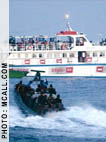
International organizers of a new fleet of ships that is preparing to sail for the Gaza strip, in a bid to challenge the Israeli embargo, have accused Israeli intelligence services of secretly sabotaging two of the vessels. The first announcement emerged on Tuesday from the crew of the Juliano, a Swedish/Norwegian ship harbored in Piraeus, Greece. The organizers, who said that their technicians had documented the results of the sabotage on video, claimed in a statement that “hostile divers had destroyed the [ship’s] propeller house and cut the propeller shaft”. A day later, Irish organizers onboard the MV Saoirse, which is currently docked in Turkey, told Reuters that the vessel experienced major technical damage as it was sailing for refueling to the harbor town of Göcek. The ship was eventually inspected by a marine engineer, who confirmed that it had been sabotaged. Speaking to Irish media, former Irish rugby international Paul Trevor Hogan, who is one of the activists onboard the MV Saoirse, said the damage was “identical [to that of] the Swedish boat and you don’t need to be Sherlock Holmes to figure out who is behind this”. Another member of the ship’s crew, Irish Member of the European Parliament Paul Murphy, called on the government in Dublin to expel the Israeli ambassador to the country. Read more of this post

News you may have missed #525

  • Hacker group LulzSec to disband after attacks on CIA. The publicity-seeking hacker group that has left a trail of sabotaged websites over the last two months, including attacks on law enforcement and releases of private data, said unexpectedly on Saturday it is dissolving itself.
  • NSA veteran publishes book on secretive listening base. Good book review of Inside Pine Gap: The Spy Who Came in From the Desert, written by 23-year US National Security Agency veteran David Rosenberg, who worked for 18 years at the joint US-Australian intelligence facility at Pine Gap, a small technical encampment outside Alice Springs in the Australian outback.
  • Aussie spy agencies feeling budget cuts effect. Australia’s Federal Government has been urged, in a report by the Parliamentary Joint Committee on Intelligence and Security, to review the effects of its cost-saving drive on the country’s intelligence community.

US helped France go nuclear to keep Europe divided, documents show

Henry Kissinger

Henry Kissinger

By JOSEPH FITSANAKIS| intelNews.org |
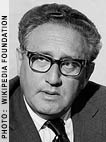
The government of the United States secretly helped France expand its nuclear arsenal, in order to promote its rivalry with Britain, according to newly declassified documents. The clandestine assistance to France, which tested its first nuclear bomb in Africa in 1960, began during the Richard Nixon administration, and was actively directed by Henry Kissinger, Nixon’s senior National Security Advisor. The documents, which were obtained by researchers at the George Washington University and the Woodrow Wilson International Center for Scholars, include a 1973 memorandum authored by Kissinger, in which he writes: “We want to keep Europe from developing their unity as a bloc against us. If we keep the French hoping they can get ahead of the British, this would accomplish our objective”. Toward that goal, the US ought to provide the French with information that will make them “drool but doesn’t give [them] anything but something to study for a while”. By doing so, Washington would be able to force Britain to stop “behaving shitty” and conform to American foreign policy objectives: “if they know we have another option, they might buck up”, writes Kissinger. Read more of this post

News you may have missed #524 (analysis edition)

  • US intelligence shift shows change in Afghan war aims. American military intelligence officers were scrambling a year ago to collect and analyze the social, economic and tribal ins and outs of each valley and hamlet in Afghanistan. But the gradual scaling back of US operations (and ambitions) in Afghanistan is driving a shift away from that labor-intensive attention to detail. Now targeting insurgent leaders and their close support networks is seen as an important part of the US exit strategy (some would call this settling old scores before the US leaves the area).
  • Ex-CIA officer questions West’s motives in Syria. The European and American intervention in Syria is designed to harm Iran and to protect Israel and Lebanese Christians, not Syrian people, according to Robert Baer, a retired CIA officer with direct experience in the region.
  • Will new CIA director rein in the drone war? When General David Petraeus takes heads to the CIA, he’ll put “relentless pressure” against al-Qaida, he told senators last week. But in a rare public discussion of the CIA’s drone war in Afghanistan and Pakistan, Petraeus suggested it may not be his first counterterrorism option.