Mystery ‘spy devices’ found in Lebanon mountains

Surveillance device

Spy device

By IAN ALLEN | intelNews.org |
A statement issued by the Lebanese armed forces last week details the discovery of at least two mysterious spy devices located in mountain ranges around the Lebanese capital Beirut. The discovery, which was apparently made early last week, concerns two allegedly Israeli-made electronic devices hidden under two fake boulders. According to the statement, the two devices were found carefully concealed in the mountain of Sannine, directly north of Beirut, and Barouk, which is adjacent to the city’s southern suburbs. There were also reports last Wednesday of a loud explosion in Sidon, a port in southern Lebanon, which some news media said was an operation by unknown assailants to destroy a third surveillance device before it was discovered by the Lebanese security forces. The two devices captured by the Lebanese forces consist of surveillance cameras, electronic transmitters, as well as satellite signal reception systems. One of them was even connected to a third fake boulder, containing long-lasting batteries, which powered the device. Read more of this post

News you may have missed #460

Leaked cable confirms end of US-NZ spy quarrel

Hillary Clinton

Hillary Clinton

By JOSEPH FITSANAKIS | intelNews.org |
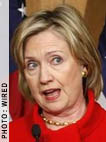
To regular readers of this blog, this is not so much a revelation, as it is a confirmation. Back in October of 2009, we wrote about a peculiar comment made Hillary Clinton. The United States Secretary of State had told a press conference that “we [the US] are resuming our intelligence-sharing cooperation [with New Zealand], which we think is very significant”. Resuming? When had it been disrupted, and why? Most intelligence observers agree that the only glitch that could have caused the cooperation to end would have been New Zealand’s nuclear ban. It was in 1984 when, under mounting popular pressure, the Labour government of David Lange voted to bar nuclear-powered or nuclear-armed ships from entering New Zealand territorial waters. At the time, the ban was heralded by the global nuclear disarmament movement as a major victory. But Washington did not see it that way. Successive US administrations pressured Wellington to repeal the nuclear-free legislation and allow US warships to make use of strategic New Zealand ports. Washington’s pressure increased in the years after 9/11, culminating in 2006, when it threatened to cancel a free-trade agreement between the two countries if New Zealand refused to repeal the ban. It appears that, at some point in time, possibly after 9/11, the US actually terminated intelligence sharing between the two countries in order to force New Zealand to comply. Read more of this post

Largest Afghan narcotrafficker was CIA, DEA informant

Haji Juma Khan

Haji Juma Khan

By JOSEPH FITSANAKIS | intelNews.org |
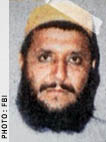
The history of operational collision between the Central Intelligence Agency and illicit narcotics traders is both long and largely documented. But new revelations published in The New York Times this week come to add a new chapter in this ever-expanding saga. The revelations this time concern Haji Juma Khan, perhaps the most notorious of Afghanistan’s drug lords, who has been described by US federal officials as arguably the most dangerous narcotrafficker in Central Asia. In 2008, Khan was finally arrested in New York, where he was charged with conspiracy to fund terrorist operations through trading in narcotics. American prosecutors allege that Khan literally “helped keep the Taliban in business”, providing them with weapons and cash on a systematic basis. But The Times reveal that, over a number of years, Khan also acted as an informant for both the CIA and the Drug Enforcement Administration and was “paid a large amount of cash” in return for his services. Read more of this post

German police probe poisoning of ex-KGB colonel

KGB seal

KGB seal

By JOSEPH FITSANAKIS | intelNews.org |
Police in Berlin are investigating a possible attempt to assassinate a Russian former KGB operative and his wife, through mercury poisoning. According to German newsmagazine Focus, Viktor Kalashnikov, a former colonel and authority on military matters for the Soviet KGB, was taken in critical condition to a Berlin hospital along with his wife, Marina. The two were found to have over ten times the highest permissible level of mercury in their blood, which, according to medical experts, points to a deliberate poisoning attempt. Colonel Kalashnikov, who arrived in Germany three months ago, is known as one of the Russian government’s harshest critics. He became famous in the 1990s, when he joined other former KGB operatives —most notably the late Alexander Litvinenko, who was assassinated in 2007, and whose widow is also named Marina— in accusing the Russian administration of Vladimir Putin of manipulating the separatist Chechen movement in order to solidify his vision of “a national security state” in Russia. Read more of this post

Three more Latin American countries recognize Palestinian state

Israel, Palestine

Israel, Palestine

By IAN ALLEN | intelNews.org |
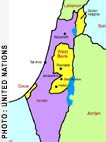
Three more Latin American countries officially recognized the state of Palestine last week, prompting harsh diplomatic responses from Israel and the United States. The recognitions were announced by the governments of Brazil, Argentina and Uruguay, which make up the majority of Mercosur, a South American common market area modeled after the European Union. All three nations said they officially recognized a Palestinian state based on internationally established borders prior to the 1967 Six Day War, during which Israel illegally occupied the West Bank and Gaza. The official recognitions were immediately endorsed by Riyad al-Maliki, Foreign Affairs Minister of the Palestinian National Authority (PNA) in the West Bank, who said that the PNA expected Paraguay —Mercosur’s fourth member— to follow suit early next year. The new recognitions by Brazil, Argentina and Uruguay follow earlier similar moves by Nicaragua, Venezuela, Costa Rica and Cuba. Diplomatic observers expect Palestine to soon be officially recognized by the vast majority of Latin American nations, with Colombia, Peru and a handful of Central American states being the few exceptions. Read more of this post

News you may have missed #459 (Russia edition)

  • Son of CIA double spy strikes deal with FBI. Nathan Nicholson, son of CIA officer Harold James Nicholson, who in 1997 was jailed for spying for Russia, has avoided a prison sentence after promising to help the FBI build a new case against his father. The latter has pleaded guilty to enlisting his son from prison to sell the Russians more secrets and collect money owed to him by the Russian spy services.
  • Moscow warns UK of tit-for-tat expulsions. Alexander Sternik, the Russian government’s senior official in Britain, has hinted that any attempt to deport parliamentary assistant Katia Zatuliveter, detained by MI5 for allegedly spying for Russia, could result in tit-for-tat expulsions.
  • Kim Philby honored by plaque at Moscow SVR HQ. Russia has honored British Cold War spy Kim Philby with a plaque at the headquarters of the country’s foreign intelligence agency. Philby, who defected to the Soviet Union in 1963, is depicted in a sculptured portrait on the plaque as the two-faced Roman god Janus.

Even more underreported WikiLeaks revelations

WikiLeaks

WikiLeaks

By JOSEPH FITSANAKIS | intelNews.org |
It appears increasingly likely that Sweden will extradite Julian Assange to the United States, where the WikiLeaks founder will face espionage charges. But the WikiLeaks revelations keep coming, although not all of them receive the worldwide media attention that they deserve. Take for instance the disclosure that at least three senior Australian Labour Party (ALP) politicians have operated as “protected sources” (diplomatic parlance for secret informants), providing regular updates on internal ALP politics to US embassy operatives in Canberra. According to internal US diplomatic cables released on Thursday, ALP politicians Bob McMullan, Michael Danby and Mark Arbib, who currently serves as the Australian federal government’s Minister for Sport, regularly held secret meetings with US embassy officials after 2004.  All three deny accusations that they acted as spies for the US. Another underreported WikiLeaks revelation concerns a 2008 proposal by the Saudi government to create an US- and NATO-backed Arab military force to invade Lebanon, seeking to obliterate Shiite paramilitary group Hezbollah, which controls large sections of the country. Read more of this post

News you may have missed #458

  • More arrests of alleged Russian agents in Georgia. The government of Georgia arrested six people suspected of being agents for Russia and accused them of staging a series of explosions, including one outside the US embassy in capital Tbilisi. At least 13 more people were arrested last month in Georgia, and are facing charges of spying for Moscow.
  • Iran defector says Tehran hosted N. Korean techs. Mohammad Reza Heydari, who resigned in January from his post as Iranian consul in Norway, and defected to the West, has told a conference in Paris that he saw North Korean technicians “repeatedly” travel to Iran.
  • Spy scandal MP helped second Russian woman stay in UK. British Liberal Democrat parliamentarian Mike Hancock, whose assistant, Katia Zatuliveter, is accused by MI5 of spying for Russia, helped 25-year-old Russian citizen Ekaterina Paderina stay in Britain after she ran into visa problems, in the late 1990s.

Some spy news in the shadow of WikiLeaks’ revelations

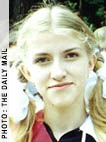
Katia Zatuliveter

Katia Zatuliveter

By JOSEPH FITSANAKIS | intelNews.org |
The WikiLeaks revelations continue, and so does the global news storm concerning the whistleblower site. Obviously, the news value of the WikiLeaks disclosures is unquestionable. However, there are notable intelligence-related developments taking place outside the now-familiarWikiLeaks context. Take for instance the recent arrest of what appears to be a Polish spy in Limassol, Cyprus. The unidentified man, who was reportedly detained in the vicinity of a Greek-Cypriot military base on the island, was carrying “a camera containing photos of National Guard posts, a laptop, two mobile phones, five memory cards, a GPS system and three pairs of binoculars”. Another interesting development concerns the arrest on espionage charges of Katia Zatuliveter, a Russian citizen who works as an assistant to British Member of Parliament Mike Hancock. Zatuliveter is expected to be deported on the basis of evidence gathered by MI5, Britain’s counterintelligence service, which has apparently been monitoring her for several months. Interestingly, Mr. Hancock, who is a member of the British House of Commons’ Defence Select Committee, is standing by his assistant. Read more of this post

FBI allegedly looking for Russian spy inside NSA

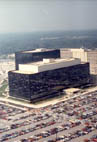
NSA Headquarters

NSA HQ

By IAN ALLEN | intelNews.org |
American counterintelligence investigators are allegedly trying to uncover at least one Russian-handled double agent operating inside the US National Security Agency (NSA), according to information published on Wednesday in The Washington Times. The paper based its allegation on an interview with an anonymous “former intelligence official” with close ties to the NSA —America’s largest intelligence agency, which is tasked with worldwide communications surveillance as well as communications security. The anonymous source told the Times that the probe is directly connected to the arrest of nearly a dozen Russian deep-cover operatives by the FBI last summer. Washington eventually exchanged the Russian spies with several Western-handled Russian operatives captured by Moscow and held in Russian prisons. But the FBI allegedly believes that the deep-cover operatives, most of whom used false identity papers and had lived in the US for years, were primarily tasked with aiding at least one Russian-handled double spy operating inside the NSA’s Forge George F. Meade headquarters, in the US state of Maryland. Read more of this post

News you may have missed #457

  • Belgium investigates Colombian spying allegations. Judicial authorities in Brussels have formally opened an investigation into the alleged spying activities of Colombia’s foreign intelligence agency, DAS, in Belgium. The investigation is in response to claims by human rights organizations that the DAS broke Belgium’s espionage laws and spied on European Union politicians.
  • Russia reshuffles foreign intelligence after spy scandal. Russia’s foreign intelligence service, the SVR, is holding a “minor staff reshuffle” following last summer’s Russian-American spy scandal, in which 10 alleged deep-cover Russian spies were arrested in the United States.
  • Israel gets new spy chief amid big shuffle. Israel’s Prime Minister Binyamin Netanyahu has appointed Tamir Pardo, a veteran spy, as the new chief of the Mossad, Israel’s foreign intelligence service. Pardo, who was twice deputy director of the Mossad, will replace hard-charging former army general and black operations specialist Meir Dagan, who has run the agency since 2002.

More underreported WikiLeaks revelations

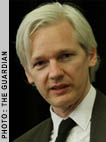
Julian Assange

Julian Assange

By JOSEPH FITSANAKIS | intelNews.org |
As the world’s media shift their attention to the consequences of the WikiLeaks revelations for its founder Julian Assange, as well as the reactions of American officials, the leaked diplomatic cables keep coming in, almost on an hourly basis. Some of the least noticed revelations include a 2009 dispatch from a US diplomat in Tel Aviv, which appears to confirm the close secret relations between Israel and the United Arab Emirates, despite the fact that these two countries have no official diplomatic connections. Another diplomatic cable reveals that Iranian intelligence officials approached their Canadian counterparts in 2008 and offered to share with them “information on potential attacks in Afghanistan”. Perhaps not surprisingly, the Canadians reacted guardedly, with Canadian Security Intelligence Service Director Jim Judd stating that his agency had “not figured out what they [the Iranians] are up to”. Read more of this post

Some underreported WikiLeaks revelations

WikiLeaks

WikiLeaks

By JOSEPH FITSANAKIS | intelNews.org |
There is little point in recapping here the bulk of disclosures contained in the ongoing WikiLeaks revelations. The news sphere is jam-packed with them —and perhaps this is the real story in the WikiLeaks revelations, namely the fact that espionage and intelligence issues have near-monopolized the global news cycle for the first time since the post-Watergate Congressional investigations of the 1970s. But it is worth pointing out a handful of news stories on the WikiLeaks revelations that have arguably not received the media coverage that they deserve. Undoubtedly the most underreported disclosure concerns a 2007 meeting between US officials and Meir Dagan, the then Director of Israel’s Mossad intelligence agency. During the meeting, Dagan apparently “presented US with five-step program to perform a coup in Iran“.  But there are other underreported disclosures. Take for instance the revelation that US Secretary of State Hillary Clinton personally authorized US diplomats to engage in all-out and indiscriminate spying on senior United Nations officials. Although there is nothing here that will surprise seasoned intelligence observers, the breadth of intelligence collection that US diplomats are instructed to engage in (which includes collecting credit card numbers and biometric data of UN officials) is astonishing and certainly unprecedented. Moreover, it should be noted that many senior UN officials are in fact American, which leads to the intriguing question of whether US diplomats are routinely required to engage in intelligence collection against American UN officials. Read more of this post

Blasts target Iranian nuclear scientists, killing one [updated]

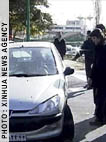
Shahriari's car

Shahriari's car

By JOSEPH FITSANAKIS | intelNews.org |
Teams of unknown assailants chose the first day of the WikiLeaks diplomatic revelations to attack two senior Iranian nuclear scientists in capital Tehran, managing to kill one of them. While the world is preoccupied with the WikiLeaks releases of United States diplomatic cables, two teams of motorcyclists, each consisting of a driver and a backseat rider, targeted the two scientists during the morning rush hour in Tehran, as they were driving to work with their wives in their cars. They attached small bombs to the car windows of their targets and detonated them from a relatively safe distance before speeding away through heavy traffic. The attackers managed to kill Dr. Majid Shahriari, a senior nuclear researcher and prominent professor at the Shahid Beheshti University in the northern suburbs of Tehran, who had taught at the Iranian armed forces’ Supreme National Defense University. Dr. Shahriari’s wife was injured in the attack. A separate bomb attack injured Dr. Fereydoon Abbasi Davan, who also teaches at Shahid Beheshti, and is described in Iranian media reports as “one of a handful of [Iranian] experts who are able to isolate isotopes” for the purpose of manufacturing uranium required for both nuclear energy and weapons. Read more of this post