Defector claims US agreed to let thousands of Islamic State fighters leave Raqqa
December 8, 2017 Leave a comment
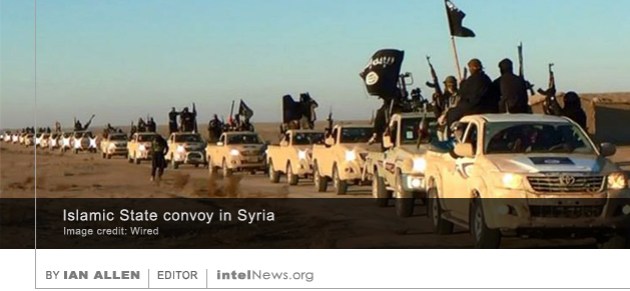 A senior former commander of one of Syria’s largest Kurdish rebel groups, who recently defected to Turkey, has accused the United States of agreeing to let thousands of heavily armed Islamic State fighters escape from Raqqa in exchange for conquering the city without a fight. The Syrian city served as the de facto capital of the Islamic State from early 2014 until October of this year, when it was captured by a coalition of forces supported by the United States and other Western powers. The Syrian Democratic Forces (SDF), a predominantly Kurdish militia, was among the groups that captured Raqqa. One of its spokesmen, Talal Silo, told Western media correspondents back in October that the Western-backed coalition had allowed fewer than 300 hardline fighters of the Islamic State to leave the war-ravaged city during the final stages of the battle.
But several news agencies reported at the time that a large convoy of vehicles was seen leaving Raqqa, composed of dozens of trucks, buses and over a hundred cars. The BBC reported on November 13 that the convoy was 4 miles long and was seen heading toward Deir ez-Sor, an Islamic State stronghold located two hours’ drive southeast of Raqqa. Coalition partners, including the United States, Germany, the United Kingdom and France, denied that such a convoy existed. But the BBC’s claims have now been corroborated by Silo, the same SDF spokesman who last October rejected them as fictional. In October, Silo, who is a Syrian Turkoman, defected to Turkey and is now living in Ankara under heavy security protection. He told the Reuters news agency in a recent interview that the BBC’s claims were correct, and that the number of Islamic State militants who were allowed to leave Raqqa with their weapons were in their thousands, not 300 as the SDF had originally claimed.
According to Silo, a secret agreement was reached between the Western-backed coalition and the Islamic State for the evacuation of “about 4,000 people” from Raqqa. Of those fewer than 500 were unarmed civilians, said Silo. He added that the convoy went to Deir ez-Sor, which at the time was still under the control of Islamic State. The SDF defector also told Reuters that the deal struck with the Islamic State was kept secret from media correspondents. The latter were told that they were not allowed to approach Raqqa due to heavy fighting, when the real goal was to prevent them from witnessing the peaceful departure of the Islamic State convoys. According to Silo, the deal was approved by all members of the Western-backed coalition, including the United States.
On Thursday, the SDF denied that Silo’s allegations were true and claimed that he was being pressured to make them by Turkey. The Turkish government accuses the SDF of being a Syrian branch of the Kurdish Workers Party (PKK), with which it is at war. American military officials also denied Silo’s claims, calling them “false and contrived”. The officials said that the US “does not make deals with terrorists”.
► Author: Ian Allen | Date: 08 December 2017 | Permalink
 A senior Chinese People’s Liberation Army (PLA) military official, who was seen as a close ally of President Xi Jinping, has allegedly committed suicide, according to Chinese state media. Zhang Yang was one of the most high-profile generals in the Chinese PLA. His rise to power after Xi became president of China was meteoric. He was appointed member of the Central Military Commission (CMC) of the Communist Party of China, which exercises political supervision of the Chinese armed forces. In addition to his role in the CMC, Zhang directed the General Political Department of the PLA’s Ground Force, which made him the top political commissar in the army.
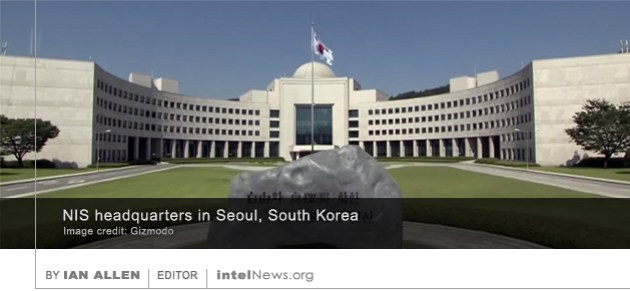 A South Korean prosecutor has charged three former directors of the country’s spy agency of secretly diverting funds from the agency’s clandestine budget to aid the country’s disgraced former President, Park Geun-hye. The three men, Nam Jae-joon, Lee Byung-kee and Lee Byung-ho, headed South Korea’s National Intelligence Service (NIS) between 2013 and 2016, when Mrs. Park was head of state. The conservative politician was impeached late last year, following accusations of corruption, bribing and extortion. In March this year, Mrs. Park’s government was brought down and she is currently in prison, awaiting trial. Her successor in the presidency, leftist politician Moon Jae-in, was elected after pledging to combat corruption in South Korea’s political inner circle.
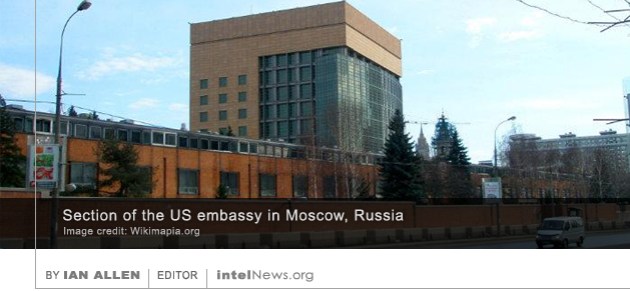 Several American diplomatic facilities in Russia, including the United States embassy in Moscow, as well as consulates in other major Russian cities, will be guarded by a firm with ties to a former senior KGB official. The New York Times
 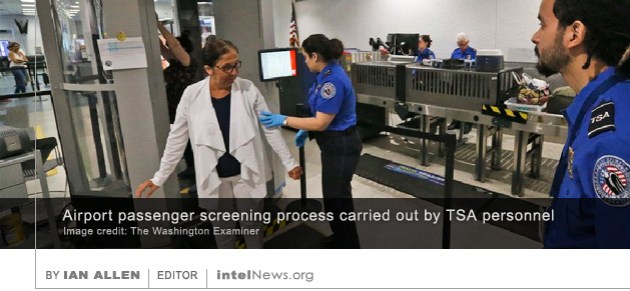 Attempts by undercover investigators to smuggle weapons, explosives and contraband aboard American passenger flights were successful between 70 and 80 percent of the time in the past year, according to reports. The results of the investigations were revealed in Congress behind closed doors on Wednesday of last week, prompting lawmakers to severely criticize the United States Transportation Security Administration (TSA). The TSA was founded in November 2001 in direct response to the tragic events of September 11 of that year. It is primarily concerned with air travel and is responsible for ensuring the safety of the traveling public across the US.
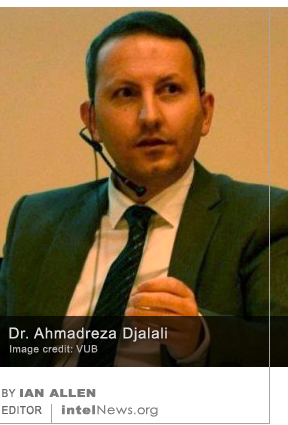 A court in Iran has sentenced a prominent Iranian academic to death for allegedly helping Israel assassinate nuclear scientists and sabotage Tehran’s nuclear program. Four Iranian physicists, who were employed in Iran’s nuclear program, are known to have been
 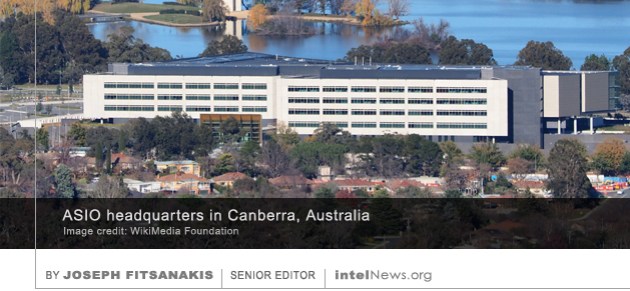 The primary intelligence agency of Australia says its resources are overextended as the country faces “espionage and foreign interference [of an] unprecedented” scale. In its annual report to the Australian houses of parliament, which was produced on Tuesday, the Australian Security Intelligence Organisation (ASIO) says it lacks resources to counter “harmful espionage” and “malicious activity” against the country. The unclassified report is published every year as a summary of a much longer classified report, which is shared with senior government officials and senior civil servants. It is endorsed by ASIO Director Duncan Lewis, who serves as Australia’s Director-General of Security.
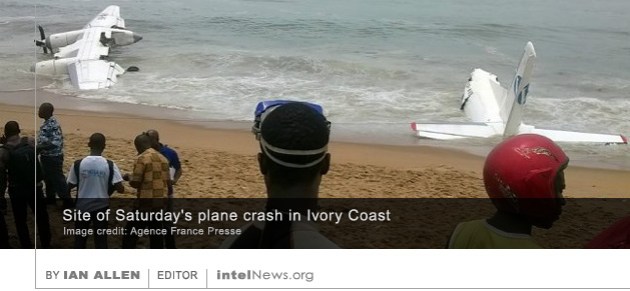 A plane crash that killed four off Côte d’Ivoire last week had been chartered by the French military as part of its counterinsurgency mission in West Africa, it has been admitted. Ivorian authorities identified the aircraft as a Ukrainian-made Antonov transport airplane. It reportedly took off from Ouagadougou, the capital of Burkina Faso, on last Saturday morning. Shortly afterwards, the aircraft crash-landed in the Atlantic Ocean past Abidjan, one of West Africa’s largest cities, on the southern coast of Côte d’Ivoire. Local officials said the airplane broke in half and immediately caught fire. Of the ten people that were on board, four are reportedly dead; six others are seriously hurt. Reports said that the four dead passengers were all Moldovan nationals. Two other Moldovans and four French nationals were injured.
 Germany’s most famous living spy is on trial this week for hiding assets totaling $50 million in offshore bank accounts. He claims the money was given to him by unspecified “Western intelligence agencies” for his services. Werner Mauss became widely known in 1997, when he was arrested in Colombia for using a forged passport. He had traveled to the Latin American country to secure the release of a German woman who had been kidnapped by leftist guerrillas. The Colombian authorities eventually released him, following heavy diplomatic pressure from the German government. But the German media began investigating his background, and it soon became apparent that he was working for the German Federal Intelligence Service.
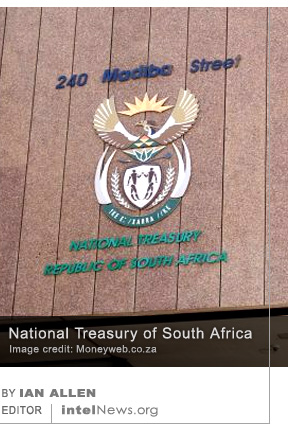 South Africa’s National Treasury threatened to terminate all funding for covert operations last year, after the country’s spy agency refused to account for tens of millions of dollars in expenses, saying the money had been put to “secret use”. An investigation by two leading South African news outlets, the Afrikaans-language weekly newspaper Rapport and the English-language online news portal News24, has revealed the existence of a major bureaucratic spat between the National Treasury and the State Security Agency (SSA), the country’s primary civilian intelligence organization.
 The Parliament of Australia is reportedly reviewing the use of cell phones built by a Chinese manufacturer, after an Australian news agency expressed concerns about the manufacturer’s links with the Chinese military. The cell phone in question is the popular Telstra Tough T55 handset. It is made available to Australian parliamentarians though the Information, Communications and Technology (ICT) unit of the Department of Parliamentary Services (DST). Any parliamentarian or worker in Australia’s Parliament House can order the device through the Parliament’s ICT website. According to data provided by the DST, 90 Telstra Tough T55 cell phones have been ordered through the ICT in the current financial year.
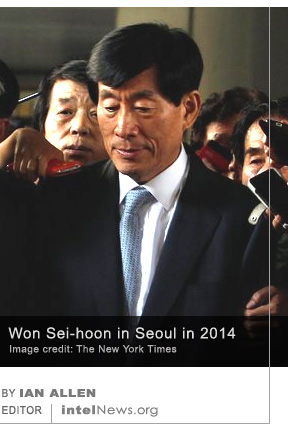 The former director of South Korea’s main intelligence agency has been sent to prison for organizing a large-scale illegal campaign to influence the result of the country’s 2012 presidential election. Won Sei-hoon headed the NIS from 2008 to 2013, during the administration of conservative President Lee Myung-bak. During the 2012 presidential election, Won ordered a group of NIS officers to “flood the Internet” with messages accusing liberal political candidates of being “North Korean sympathizers”. One of those candidates, Moon Jae-in, of the left-of-center Democratic Party of Korea, is now the country’s president. Mr. Moon succeeded his main right-wing rival, Park Geun-hye, who resigned in March of this year following a series of financial scandals. She is now facing charges of bribery, abuse of power, leaking government secrets, and corruption.
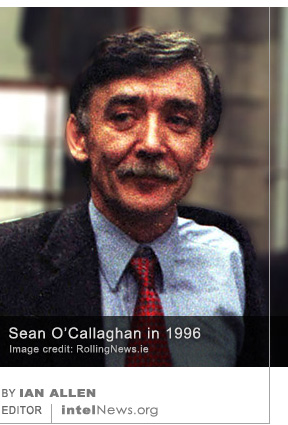 Sean O’Callaghan, one of the most contentious figures in the history of the Provisional Irish Republican Army, has died in Jamaica. He was born in County Kerry, Republic of Ireland, in a strongly republican family, which sided with opponents of the Ango-Irish treaty and fought against the official Irish government in the Irish Civil War of 1922-1923. In 1971, aged just 17, O’Callaghan joined the Provisional Irish Republican Army, which fought to unite British-controlled Northern Ireland with the independent Republic of Ireland. Not long after, O’Callaghan was arrested by the Garda Síochána (Irish police) in his home county of Kerry, when a small quantity of explosives he was hiding in his parents’ house accidentally detonated.
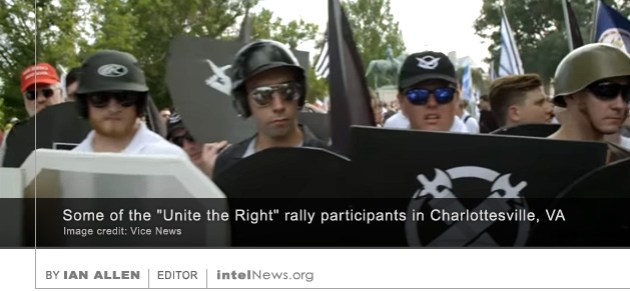 Canadian spy organizations are working with domestic and international agencies in response to reports that several Canadian far-right activists attended the “Unite the Right” rally in Charlottesville, Virginia, earlier this month. The rally drew the attention of the world’s media after violent clashes between protesters and counter-protesters left a woman dead. Two Virginia State Police officers were also killed when a helicopter used in crowd control in Charlottesville crashed near the site of the demonstrations. The rally, which took place on August 11 and 12, drew members of various white supremacist, white nationalist, neo-Nazi and neo-Confederate groups. There were also heavily armed members of a self-styled militia at Emancipation Park, where a soon-to-be-removed statue of the late Confederate General Robert E. Lee became the focal point of the far-right demonstrators.






 intelNews.org
Russian hacker claims he was hired by Kremlin to target US Democratic Party
December 15, 2017 3 Comments
Last Monday, Russian website The Bell reported that Kozlovsky said during his court testimony in August of this year that he was hired by the Kremlin to hack into the computers of the Democratic Party in the US. The website claimed that he and his fellow Lurk hackers regularly worked for the FSB, Russia’s Federal Security Service. For nearly a decade, said Kozlovsky, he and other hackers “performed different tasks on assignments by FSB officers”. In his testimony of August 15, Kozlovsky reportedly said that some of the tasks performed by Lurk on behalf of the FSB included hacking into the computers of the Democratic National Committee, which is the governing body for the Democratic Party in the US. He also claimed that he and his fellow hackers stole emails belonging to the Democratic presidential candidate Hillary Clinton.
The Bell published Kozlovsky’s claims on its website in both Russian and English. According to to The Times of London, the website also posted minutes from the court hearing, as well as a recording of Kozlovsky’s testimony, on its page on Facebook. Kozlovsky also claimed that the FSB recruited him in 2008, when he was 16 years old, and that he worked under the supervision of Dmitry Dokuchaev, a notorious criminal hacker known as ‘Forb’, who was arrested and subsequently recruited by the FSB. Kozlovsky added that he participated in “very serious military enterprises of the United States and other organizations” under Dokuchaev’s supervision.
► Author: Ian Allen | Date: 15 December 2017 | Permalink
Filed under Expert news and commentary on intelligence, espionage, spies and spying Tagged with cyberespionage, cybersecurity, Democratic National Committee, Dmitry Dokuchaev, FSB, Konstantin Kozlovsky, Lurk (hacker group), News, Russia