News you may have missed #878 (ISIS edition)

ISIS parade in SyriaBy IAN ALLEN | intelNews.org
►►Backgrounder on Islamic State in Iraq and Greater Syria. The Islamic State in Iraq and Greater Syria (ISIS), a predominantly Sunni jihadist group, seeks to sow civil unrest in Iraq and the Levant with the aim of establishing a caliphate —a single, transnational Islamic state based on sharia. The group emerged in the ashes of the US-led invasion to oust Saddam Hussein as al-Qaeda in Iraq, and the insurgency that followed provided it with fertile ground to wage a guerrilla war against coalition forces and their domestic allies.
►►ISIS stole $425m and became world’s richest terrorist group. The most stunning revelation to emerge out of the wreckage of Mosul this week is that ISIS just got extremely rich. Several ISIS insurgents stopped at Mosul’s central bank, where an incredible amount of cash was reportedly on hand, and the group made off with 500 billion Iraqi dinars —approximately US$425 million.
►►The Battle for Iraq Is a Saudi War on Iran. Currently on vacation in Morocco, Saudi Arabia’s King Abdullah has so far been silent on the developments in Iraq. But the situation there could well prompt him to cut short his stay and return home. This is because the ISIS advance represents a setback for Iraqi Prime Minister Nouri al-Maliki, which has been the dream of Saudi Arabia’s King Abdullah for years. He has regarded Maliki as little more than an Iranian stooge, refusing to send an ambassador to Baghdad and instead encouraging his fellow rulers of the Gulf Cooperation Council to take a similar standoff-ish approach.
►►Iran deploys Revolutionary Guard forces to fight Iraq militants. The threat of Sunni extremists eclipsing the power of its Shiite-dominated Arab ally presents Iran with the biggest security and strategic challenge it has faced since the US-led invasion of Iraq in 2003. With ISIS, an offshoot of al Qaeda, rapidly gaining territory, Iran deployed Revolutionary Guards units to Iraq, according to Iranian security officials.
►►Jihadist gains in Iraq blindside American spies. United States intelligence agencies were caught by surprise when fighters from ISIS seized two major Iraqi cities this week and sent Iraqi defense forces fleeing, current and former US officials said Thursday. With US troops long gone from the country, Washington didn’t have the spies on the ground or the surveillance gear in the skies necessary to predict when and where the jihadist group would strike.

Iran serious about nuclear deal, says senior Israeli intelligence official

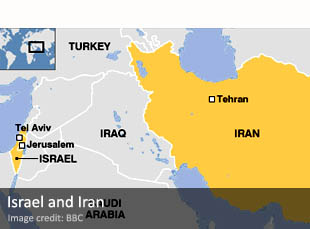
Israel and IranBy IAN ALLEN | intelNews.org
A senior Israeli intelligence official said on Monday that Iran appears to be genuinely interested in entering an agreement with world powers that would lead to the termination of its nuclear program. In November of 2013, Iran signed a Joint Plan of Action with six world powers in Geneva, Switzerland. Known as the Geneva interim agreement, the pact eases economic sanctions on the Islamic Republic in exchange for a short-term suspension of core aspects of the Iranian nuclear program. The Israeli government’s negative response to the agreement was headed by Benjamin Netanyahu. The Israeli Prime Minister called the pact a “historic mistake”, which enabled “the most dangerous regime in the world” to get closer to “attaining the most dangerous weapon in the world”. Since that time, Tel Aviv has continued to criticize the governments of the United States, Russia, China, Germany, France, and the United Kingdom, known as P5+1, for signing the interim agreement with Tehran. On Monday, however, Israel’s senior intelligence analyst, Brigadier-General Itai Brun, told a conference near Tel Aviv that Iran has so far abided by the interim agreement and added that he was cautiously optimistic about the future of the negotiations between Iran and the P5+1. Brun was speaking at the Herzliya Conference, an annual gathering of senior Israeli political leaders, which typically serves as a public platform for articulation of Israel’s national policy on critical issues. Senior figures in Israel, including the President and Prime Minister, typically use their keynote addresses at the conference to set the tone for the future policies of their administration. Brig. Gen. Brun, 51, has led the research division of the Military Intelligence Directorate of the Israeli Defense Forces. His position is generally viewed as the second most senior within Israel’s military intelligence establishment. Brun’s address at the conference appeared to be deliberately designed to challenge Netanyahu’s skepticism of the Geneva interim agreement. He told conference participants that it was “very possible” that Iran and the P5+1 were “moving toward the signing of a permanent nuclear deal”. Read more of this post
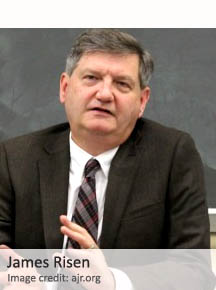
US journalist facing jail term for refusing to testify in CIA officer’s trial

James RisenBy IAN ALLEN | intelNews.org
A leading American journalist is facing a possible jail term after the United States Supreme Court refused to consider his appeal against testifying at the trial of a former Central Intelligence Agency officer. Jeffrey Alexander Sterling, who worked for the CIA from 1993 until 2002, was arrested in early 2011 in St. Louis, Missouri. He was charged with leaking classified information about Operation MERLIN, a botched CIA covert operation targeting Iran’s nuclear weapons program. The operation was publicly revealed for the first time in New York Times reporter James Risen’s 2006 book State of War: The Secret History of the CIA and the Bush Administration. In chapter 9 of the book, Risen details a bungled operation by the CIA’s Iran Task Force to pass to the Iranians a series of faulty nuclear bomb design documents. Risen alleges that the CIA operation backlashed and may actually have helped the Iranian nuclear weapons program, as Iranian nuclear engineers would have been able to “extract valuable information from the blueprints while ignoring the flaws”. Risen was summoned to testify in Sterling’s trial, but refused, arguing that having to identify the source of his allegation about Operation MERLIN would infringe on press freedom. On the other side of the argument, the United States government claimed that the freedom of the press does not permit journalists “to refuse to provide direct evidence of criminal wrongdoing by confidential sources”. Risen filed a case in a Virginia court, arguing that he should not be forced to comply with the subpoena issued to him to testify at Sterling’s trial. After the court upheld the subpoena, Risen’s legal team filed an appeal with the Supreme Court. But the Court has now refused to hear the case, which means that Risen will have to testify in Sterling’s trial or face a possible jail sentence. Read more of this post

FBI kept tabs on Mandela’s first-ever visit to the US, files show

Nelson MandelaBy IAN ALLEN | intelNews.org
The United States Federal Bureau of Investigation has released for the first time some of its internal files on the late South African leader Nelson Mandela. Among other things, the documents reveal that the Bureau closely monitored Mandela’s first ever visit to the United States in 1990. The legendary black campaigner arrived in the United States in June of that year, just four months following his release from prison after 27 years of captivity. The FBI documents include a redacted memorandum from the Bureau’s field office in Atlanta, Georgia, addressed to William Sessions, who was the FBI’s Director at the time. The memorandum notes that the Bureau had been able to recruit an informant inside, or closely affiliated with, Mandela’s inner circle. The source had provided his FBI handlers with a detailed itinerary of Mandela’s 11-day US tour. The memorandum stresses that the “confidential source” was “newly opened” and thus his or her “reliability [was] not yet established”. But Mandela’s travel itinerary, which had apparently been planned by a member of staff in the office of Coretta Scott King, Dr. Martin Luther King Jr.’s widow, was carefully dissected by the FBI. The documents show that the Bureau’s principal concern was safeguarding the life of the South African political leader, who had received countless death threats in the days prior to his arrival. According to the declassified files, the threats originated from various racist skinhead and neo-Nazi groups, the Ku Klux Klan, as well as a host of white supremacist organizations. But alongside its concern about “terrorist activity being directed” at the civil rights campaigner, the Bureau was obligated to monitor his activities on US soil because at that time Washington still designated the African National Congress, which Mandela led, as a “foreign terrorist organization”. The designation was finally lifted in 2008. Read more of this post

News you may have missed #877

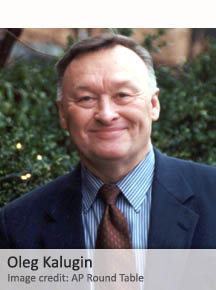
Oleg KaluginBy IAN ALLEN | intelNews.org
►►China to ditch US consulting firms over suspected espionage. State-owned Chinese companies will cease to work with US consulting companies like McKinsey and Boston Consulting Group over fears they are spying on behalf of the US government. Last Thursday, China announced that all foreign companies would have to undergo a new security test. Any company, product or service that fails will be banned from China. The inspection will be conducted across all sectors —communications, finance, and energy.
►►Ex-KGB general says Snowden is cooperating with Russian intelligence. Former National Security Agency contractor Edward Snowden probably never envisioned that he would someday be working for the Russian Federal Security Service, or FSB. But according to former KGB Major General Oleg Kalugin, he is now, albeit as a consultant or technical advisor. “The FSB are now his hosts, and they are taking care of him”, Kalugin claimed in an interview. “Whatever he had access to in his former days at NSA, I believe he shared all of it with the Russians, and they are very grateful”, added the former Soviet spy.
►►Snowden claims he was ‘trained as a spy’. American intelligence defector Edward Snowden says he knows how US spies operate because he was trained as one of them. In an interview with NBC News, Snowden dismissed allegations that he was just a low-level analyst with the US government before revealing highly classified details of US spying activities in 2013. “I was trained as a spy in sort of the traditional sense of the word in that I lived and worked undercover overseas, pretending to work in a job that I’m not, and even being assigned a name that was not mine”, he said in a portion of the interview that aired on Tuesday.

White House ‘investigating’ inadvertent naming of CIA station chief

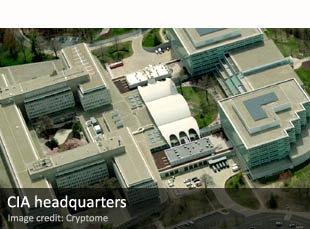
CIA headquartersBy IAN ALLEN | intelNews.org
United States government officials are said to be investigating the apparently inadvertent disclosure of the name of America’s senior spy in Afghanistan last weekend. The Washington Post reported on Sunday that the name of the person in charge of all Central Intelligence Agency operations in Afghanistan had been mistakenly included in a press release issued to a host of news organizations by the White House. The release included the names of all individuals that had been scheduled to meet with US President Barack Obama, during the latter’s unannounced trip to Afghanistan. The US President visited American soldiers stationed in the Asian country during part of the Memorial Day weekend, a federally sanctioned commemoration in the United States, which is designated to honor those who have died while serving in the country’s armed forces. The press release, which was directly issued to over 6,000 journalists, included the name of the CIA official, followed by the designation “Chief of Station, Kabul”. A CIA Chief of Station is the highest-ranking Agency official in a particular country or region, tasked with overseeing CIA operations within his or her geographical area and maintaining a functional institutional relationship with the host nation’s intelligence agencies. Speaking on CNN on Tuesday, President Obama’s Deputy National Security Adviser, Tony Blinken, said the White House was “trying to figure out what happened [and] why it happened”, adding that US officials wanted to “make sure it won’t happen again”. He added that the White House Counsel, Neil Eggleston, had been tasked by White House Chief of Staff, Denis McDonough, to “look into the matter”. CNN reporters asked Blinken whether the inadvertent identification of the CIA’s Station Chief in the Afghan capital had endangered the life of the officer and his family. Read more of this post

Alleged CIA spy seeks retrial after Iranian court slashes his sentence

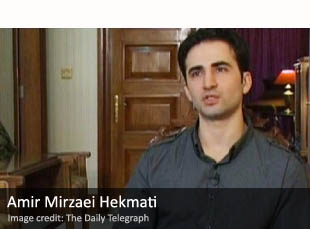
Amir Mirzaei HekmatiBy IAN ALLEN | intelNews.org
A United States citizen held in Iran since 2011 on spy charges has appealed for a retrial after an Iranian court quashed his earlier death sentence for espionage. Amir Mirzaei Hekmati, a former Marine born in the US state of Arizona, was arrested in August of 2011 in Iran and charged with carrying out a covert mission for the Central Intelligence Agency. In December of 2011, Hekmati appeared on Iranian state television and acknowledged that he was an operative of the CIA. He said in an interview that he had been trained “in languages and espionage” while in the US Army and that, in 2009, after nearly a decade of intelligence training, he was recruited by the CIA and specifically prepared to carry out what intelligence operatives sometimes refer to as a ‘dangling operation’ in Iran. The aim of the mission, said Hekmati, was to travel to Tehran, contact Iran’s Ministry of Intelligence and National Security, and pose as a genuine American defector wishing to supply the Iranians with inside information about American intelligence. His immediate task was to gain the trust of Iranian authorities by giving them some correct information in order to set the stage for a longer campaign of disinformation aimed at undermining a host of Iranian intelligence operations. In 2012, Hekmati was sentenced to death for spying. Members of his family, however, who live in Michigan, have continuously denied that he is an intelligence operative and maintain that he traveled to Iran to visit his grandparents. Their denials have been echoed by the government in Washington, which has denied employing Hekmati in any intelligence capacity. In March of 2012, the Supreme Court of Iran quashed Hekmati’s death sentence and ordered a retrial, calling his previous prosecution “incomplete”. At the retrial, Iran’s Revolutionary Court overturned Hekmati’s initial espionage conviction, charging him instead with “collaborating with a hostile government”. His original sentence was reduced to 10 years in prison. But Hekmati’s lawyer, Mahmoud Alizadeh Tabatabaei, told journalists on Sunday that his client would appeal even that sentence, thus seeking an immediate release from prison. Read more of this post

Western companies to suffer backlash in China-US espionage spat

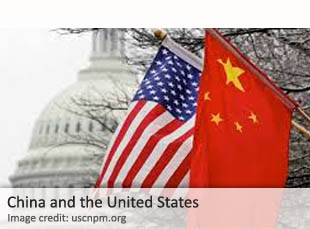
China and the United StatesBy IAN ALLEN | intelNews.org
China’s response to America’s allegations of cyberespionage will probably not be directed against the United States government, but at Western technology companies, according to business insiders. On Monday, the United States Department of Justice identified five members of the Chinese People’s Liberation Army as directly responsible for a series of cyberespionage operations targeting American firms. Since then, sources in the business community have said that American companies operating in China were “caught off guard” by the Justice Department’s charges, and that they were “given no advanced notice” by US government officials. On the one hand, business insiders claim that Chinese cyberespionage against Western firms is so aggressive that many in the corporate community were broadly supportive of Washington’s move. But, on the other hand, some industry analysts have told the Reuters news agency that, although Beijing’s response to Washington’s allegations will not be “immediate or obvious”, Western technology firms should prepare to face a lot more difficulties in doing business in China. Specifically, some business observers expect the Chinese government to respond to America’s cyberespionage allegations by “precluding foreign companies from certain sectors” of its economy. Beijing might even use the controversy to justify a “turn to internal suppliers” of technological products and services, say experts. The news agency reports that American hardware and software suppliers have already seen their sales in China drop as a result of the revelations by American intelligence defector Edward Snowden. The current clash over cyberespionage between America and China is likely to have a further negative effect on American business activities all over Southeast Asia. The ongoing dispute between the two countries is likely to have an effect in Europe as well, say The Financial Times. The London-based paper reports that Washington’s recent indictment has “struck a chord in German industry”, which is also concerned about the perceived theft of intellectual property by Chinese hackers. Read more of this post

Court allows CIA to keep Cuba invasion document secret

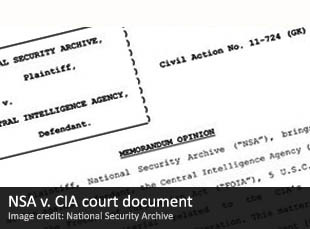
Court documentsBy IAN ALLEN | intelNews.org
The United States Central Intelligence Agency has successfully defended itself against a lawsuit that sought the release of a secret document detailing the failed Bay of Pigs Invasion. On April 17, 1961, a brigade of 1,300 CIA-funded and -trained anticommunist Cubans mounted a surprise assault on the Caribbean island. The failure of the operation prompted the CIA to produce a multi-volume report, whose fifth and final part was authored in the early 1980s by CIA resident-historian Jack Pfeiffer. The first four volumes of the history of the Invasion have been released to the public, one voluntarily by the CIA and three through Freedom of Information Act requests. George Washington University’s National Security Archive sued the CIA in 2011, eventually forcing the Agency to declassify Volumes I, II and IV of the report. This left Volume V, which is the subject of an ongoing dispute between historians and the CIA, going back to 2005. On Tuesday, the US Court of Appeals for the Circuit of the District of Columbia ruled in a split 2-1 decision that the CIA had the right to maintain the secrecy of the entire fifth volume of the report. The two judges that ruled in favor of the CIA’s position, Brett Kavanaugh and Stephen Williams, argued that the volume in question had been “rejected for inclusion in the final publication” of the CIA report. As such, it was not a finished product, but rather a draft manuscript and was therefore not subject to US declassification rules under the Freedom of Information Act. The judges added that, since the document was “predecisional and deliberative” in character, it should be granted the so-called “deliberative process privilege”. This clause stipulates that the authors of deliberative documents are entitled to concrete and long-lasting assurances that the draft documents they are producing will remain secret. This, said the two judges, would allow the authors to advise those who commission their work freely and candidly. Read more of this post

Analysis: Russia’s policy in Ukraine part of wider anti-NATO plan

Marina KaljurandBy IAN ALLEN | intelNews.org
Russia’s tactical maneuvering in Ukraine is part of a wider strategy of pushing back Western influence from former Soviet territories, according to East European and Western officials. That is the conclusion in a lead article in the latest issue of Time magazine, which quotes several eponymous sources, including John McLaughlin, former director of the Central Intelligence Agency, and Marina Kaljurand, Estonia’s ambassador to Washington. She tells the newsmagazine that Russia’s meddling in Ukraine forms part of a carefully organized and well-funded strategy that involves “overt and covert” operations throughout Eastern Europe, the Caucasus and Central Asia. Kaljurand says the operations include “a range of Cold War espionage tools”, such as planted agents, citizen groups funded by the Kremlin, as well as recruitment of intelligence assets. The aim, she argues, is to “restore in one form or another the power of the Russian Federation in the lands where Russian people live”. Western officials quoted in the Time article seem to agree that the strategy has a long-term, wider goal, which is “to undermine and roll back Western power” in former Soviet lands. Currently, Russian push-back operations are not only underway in Ukraine, but also in Latvia, where nearly half of the population consists of ethnic Russians, as well as in Estonia, where one in four citizens is Russian in origin. As in all former Soviet republics, many ethnic Russians in Estonia are members of the Coordination Council of Russian Compatriots, a group that is coordinated, guided, and often funded, by the Russian embassy in the country. In a recent report, the Estonian Internal Security Service said the Russian embassy in Tallinn is “guiding the Russian-speaking population […] by using influence operations inherited from the KGB”. IntelNews regulars will recall the case of Herman Simm, the high-level official at the Estonian Ministry of Defense, who once headed the country’s National Security Authority. He was arrested in 2008 and later convicted for —among other things— giving classified North Atlantic Treaty Organization (NATO) material to Russia. Two years later, Estonia had been subjected to a sustained cyberattack after its government removed a statue commemorating the Soviet military contribution to World War II from downtown Tallinn. Read more of this post

Germans kidnapped in Ukraine had ‘intelligence connections’

Map of UkraineBy IAN ALLEN | intelNews.org
Four German military observers, who were kidnapped in Ukraine by pro-Russian separatists, are members of a military agency that has intelligence contacts, but are not themselves spies, according to a leading German newspaper. The German observers were abducted along with several other Western military officials on April 25, in the eastern Ukrainian city of Sloviansk. They were participating in a military verification mission organized by the Organization for Security and Cooperation in Europe (OSCE). At the time of the abduction, one pro-Russian separatist leader, Vyacheslav Ponomarev, said his group had decided to detain the OSCE monitors due to “credible information” that they were spies for the North Atlantic Treaty Organization (NATO). The OSCE strongly denied the accusation that its monitors were intelligence operatives, saying that the kidnappers’ claims were aimed at damaging the reputation of the organization. With nearly 60 signatories to its charter, the OSCE has operated since 1975 with the aim of securing peace across the European continent. It regularly supplies military observers to investigate what it terms “uncommon military operations” in nations that formally invite their presence, as Ukraine did last month. On Monday, German newspaper Süddeutsche Zeitung said that, although the four German OSCE observers are not employees of German intelligence agencies, they do maintain “certain connections” with Germany’s Federal Intelligence Service, known as Bundesnachrichtendienst, or BND. The Munich-based broadsheet claimed that the inspectors, who had been given diplomatic status during their deployment in Ukraine, are not members of staff at the BND or MAD, Germany’s Military Counterintelligence Service. However, they are employed at the Verification Center of the Bundeswehr —Germany’s federal armed forces. The mission of the Center, which is based in the town of Geilenkirchen, in Germany’s North Rhine-Westphalia, is to verify compliance with weapons control agreements signed between Germany and other countries. Read more of this post

Are America’s most senior military intel officers being forced out?

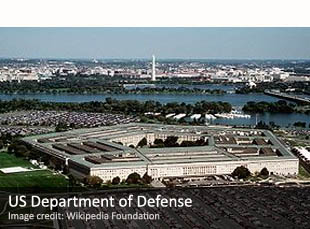
The US Department of DefenseBy IAN ALLEN | intelNews.org
There are rumors that the two most senior military intelligence officers in the United States, who have announced their intention to step down in the coming months, are being forced out by the White House. Lieutenant General Michael T. Flynn, who directs the Defense Intelligence Agency, and his Deputy Director, David R. Shedd, both said on Wednesday that they intend to quit their jobs before the end of the summer. The Department of Defense said later on Wednesday that the two officials had been scheduled to step down “for some time” and that the leadership of the DoD “appreciates the service of these two dedicated and professional leaders”. But the announcement does not change the fact that America’s two leading military intelligence administrators have suddenly decided to quit their jobs. Shedd entered his current post in 2010, while Flynn rose to the DIA’s top position in 2012. If he does indeed step down in the coming months, he will be doing so at least a year before he was officially scheduled to depart from the DIA. The Washington Post claimed on Wednesday that Flynn “faced pressure” to step down, from senior US government officials, including James R. Clapper, Director of National Intelligence. According to the paper, Clapper, whose main job is to coordinate the activities of America’s intelligence agencies, approached Flynn several weeks ago and told him that the administration of US President Barack Obama had decided that “a leadership change was necessary” at the DIA. As the so-called “global war on terrorism” has been winding down, the DIA has been faced with calls for significant changes in both operations and scope. The latter have included plans to expand the agency’s human intelligence operations abroad, as was seen in the Pentagon’s recent effort to launch a new intelligence agency, called Defense Clandestine Service. But in late 2012 the US Senate blocked the plan, citing gross mismanagement of the Pentagon’s existing intelligence operations. The failed plan had been strongly supported by both Flynn and Shedd, who had vowed to increase the DIA’s intelligence-collection operations abroad, and had campaigned in favor of turning the agency’s attention to locations other than Iraq and Afghanistan. Read more of this post

Article sheds light on life of legendary Israeli spy Jacob Cohen

Jacob “Yakuba” CohenBy IAN ALLEN | intelNews.org
Within the ranks of the Israeli intelligence community, Jacob “Yakuba” Cohen is considered a legend. An intelligence officer for the Israel Defense Forces, the Mossad, and finally for Shin Bet, Cohen remains a deeply mysterious figure in the history of Israeli intelligence. Now a new article, published in Israel Defense magazine, which includes parts of a testimony Cohen allegedly gave to a close friend in the years before his death, sheds light on the life and times of one of the 20th century’s most enigmatic intelligence operatives. Cohen was born in 1924 in a predominantly Jewish neighborhood of central Jerusalem. His family, however, had Persian origins, and he spent most of his childhood fraternizing with the Arab populations of nearby neighborhoods and villages. In the late 1930s, Cohen joined the Haganah, a violent paramilitary force set up by nationalist Jews to resist the formation of the British Mandate for Palestine. Cohen eventually entered the ranks of the Palmach, a special-forces outfit of the Haganah, which also conducted intelligence operations. Cohen’s asset, which eventually made him a good fit for Israeli intelligence, was his ability to assimilate into Arab society. He spoke fluent Arabic and was able to observe Arab Muslim cultural conventions and religious practices, regularly attending Mosque services. Soon after the establishment of the state of Israel, Cohen assumed the cover of Jamil Mohammad Rushdi, a Syrian Arab, and moved to Lebanon, where he worked as a taxi driver, regularly transporting customers from Lebanese capital Beirut to Tripoli, Syria, and back. Israeli intelligence historians credit Cohen’s stint in Lebanon as having been instrumental in laying the infrastructure that enabled the eventual creation in Arab countries of Israeli intelligence networks consisting of long-term sleeper agents and other non-official-cover operatives. After Israel’s Sinai campaign of 1956, Cohen was tasked with interrogating thousands of Egyptian prisoners of war. Read more of this post

British spy chiefs ‘warn against’ Western military action in Ukraine

Map of UkraineBy IAN ALLEN | intelNews.org
The heads of British intelligence agencies are said to have advised London that interfering militarily in Ukraine would likely prompt a violent Russian response. The Sunday People said last weekend that Whitehall has been advised a Western military interference in Ukraine would “risk spiraling into an all-out war with Russia”. The Labour-supporting paper, which is published by the Trinity Mirror group, claimed that the head of MI6, Sir John Sawers, is understood to have told British Prime Minister David Cameron that the Russian government “will not stand idly by” if Western troops enter Western Ukraine, ostensibly to prevent westward military advances by Russian forces. One “senior source” told The People that the message delivered to Whitehall was that “it’s not worth starting World War Three over Ukraine”. The briefing appears to rest on intelligence acquired from sources in Russia, as well as by MI6 operatives on the ground in eastern Ukraine, which, according to the paper, “have been moving around [eastern Ukraine] covertly, monitoring border crossing points and towns where Russian support is strongest”. Meanwhile on Monday the United States Department of State distributed an 11-page document with photographs alleging that Russian Spetsnaz (special purpose forces) troops are among the occupiers of government buildings in eastern Ukraine. The same document was distributed last week by Ukrainian officials at a meeting of the Organization for Security and Co-operation in Europe. Early on Tuesday, US Vice President Joe Biden, who is visiting Ukrainian capital Kiev, pledged $50 million to help the country’s government carry out unspecified “political and economic reforms”. About a fifth of that amount has been earmarked to help fund Ukraine’s presidential election in late May of this year. Read more of this post

CIA operative who defected to Cuba resurfaces in British film

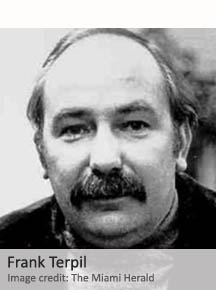
Frank TerpilBy IAN ALLEN | intelNews.org
An operative of the United States Central Intelligence Agency, who defected to Cuba in 1981 to avoid charges of criminal conspiracy, has reemerged in a British documentary film about the late Libyan dictator Muammar al-Gaddafi. Frank Terpil, 74, resigned from the CIA in 1970, allegedly after he was caught running a pyramid scheme in India, where he had been posted by the CIA. Soon after his forced resignation from the Agency, US federal prosecutors leveled criminal charges on Terpil and his business partner. The former CIA operative was also charged with conspiracy to commit murder, after it was found that he had helped facilitate the illegal transfer of over 20 tons of plastic explosives to the government of Libya. Terpil managed to leave the US and reappeared in Lebanon in 1980, shortly before a court in New York sentenced him in absentia to five decades in prison for conspiring to smuggle 10,000 submachine guns to African warlords, including Uganda’s dictator Idi Amin. As agents of various countries started to zero in on Terpil’s Lebanon hideout, he disappeared again and resurfaced in 1981 in Havana, Cuba. Shortly afterwards, Cuba’s General Intelligence Directorate hired him as an operative under the operational alias CURIEL. Since that time, Terpil has been repeatedly mentioned as having played a part in Cuban intelligence operations around the world, but has rarely given interviews. He resurfaced again this month, however, in a documentary entitled “Mad Dog: Inside the Secret World of Muammar Gaddafi”. The film was made by British company Fresh One Productions on behalf of Showtime, an American premium cable and satellite television network. The film’s co-producer, Michael Chrisman, told news agencies that Terpil was interviewed “at his home” in Cuban capital Havana, where he apparently still lives, along with his “much younger” Cuban girlfriend. Read more of this post