India disbands spy unit that conducted covert operations abroad

VK SinghBy IAN ALLEN | intelNews.org
A controversial military intelligence unit that conducted at least eight covert operations in foreign countries between 2008 and 2012 has been disbanded by the government of India. The country’s Ministry of Defense authorized the establishment of the unit in late 2008, following the Mumbai attacks, which killed over 150 and injured nearly 600 people. The attacks, which lasted for almost four days, involved a dozen coordinated bombing attacks and shooting incidents in India’s largest urban center, carried out by Pakistani nationalists. The covert-action unit was named Technical Services Division (TSD) and led by retired General VK Singh, who served as the Indian Army’s Chief of Staff from 2010 to 2012. According to Indian news media, the TSD was approved by a host of senior Indian government officials, including Lieutenant General RK Loomba, Director General of India’s Military Intelligence. The new agency was tasked with “planning and executing special operations inside depth areas of countries of interest” to India. It was also tasked with “countering enemy efforts within the country by effective covert means”. Most of its “special operations” on foreign soil are said to have been conducted inside Pakistan, in an effort to combat what the Indian government views as “state-sponsored terrorism” by Pakistan’s Inter-Services Intelligence Directorate (ISI). Its main tactical mission centered on targeting Hafiz Saeed, the leader of Pakistani militant group Lashkar-e-Taiba, said to have been behind the 2008 Mumbai attacks. But the TSD has now been disbanded following revelations that it used its mandate to spy on Indian politicians in New Delhi and the Indian province of Kashmir, whose political views on India’s relations with Pakistan were seen as too conciliatory. Read more of this post

News you may have missed #851

EuropolBy IAN ALLEN | intelNews.org
►►Allegations that NSA has a listening post in Vienna. Both the US and Austrian governments have denied reports claiming to expose a major surveillance operation by the National Security Agency from within a villa in the Austrian capital Vienna. Austrian media reported last week that the US government had decided to end operations at the site because its cover was blown. Meanwhile, the allegations have turned into an Austrian affair of state.
►►Europol fighting unprecedented crime levels. Europe is dealing with an unprecedented surge in organized crime as sophisticated multinational groups, including child sex abusers and counterfeit gangs, expand their networks, according to Rob Wainwright, the British head of the European Union’s criminal intelligence agency, Europol. Wainwright says that thousands of gangs are capitalizing on the rise of smartphone and internet technology.
►►Are NSA revelations helping US tech industry? Edward Snowden’s unprecedented exposure of US technology companies’ close collaboration with national intelligence agencies, widely expected to damage the industry’s financial performance abroad, may actually end up helping. Despite emphatic predictions of waning business prospects, some of the big Internet companies that the former National Security Agency contractor showed to be closely involved in gathering data on people overseas –such as Google and Facebook– say privately that they have felt little if any impact on their businesses.
Australian civil servant accused of spying denied access to evidence

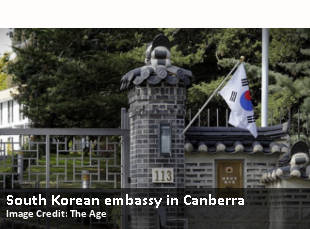
Embassy of South Korea in AustraliaBy IAN ALLEN | intelNews.org |
Australia’s Federal Court has rejected a bid by a senior civil servant to view the evidence the government is using to accuse him of espionage. Until September of 2011, Dr. Yeon Kim was a career civil servant with the Australian Bureau of Agricultural and Resource Economics and Sciences (ABARES). His specialization in international trade policy required a security clearance, which Kim had possessed since 2001. But in 2011, he was sacked and had his security clearance revoked for allegedly holding clandestine meetings with officers of South Korea’s National Intelligence Service (NIS). The Australian government accuses Kim of meeting repeatedly with Hoo-Young Park, an employee of the South Korean embassy in Canberra, who had been declared to the Australian government as an NIS liaison officer. According to court documents, three other NIS officers serving under diplomatic cover in Australia, Bum-Yeon Lee, Sa-Yong Hong, and a third man named Kim, were involved in collecting intelligence on Australian trade secrets. The Australian Security Intelligence Organisation (ASIO), which detained Kim, said that he willingly participated in the “foreign interference” operation by the NIS. For several months now, Kim has been contesting the Australian government’s legal case against him in the Federal Court. His legal team recently requested that the Court annul two certificates issued by the Australian attorney general, designed to bar the defense from accessing evidence against Kim. The certificates were originally submitted by government prosecutors during an earlier Administrative Appeals Tribunal hearing. But the Court declined the request, saying the defense waited too long to challenge the certificates. In issuing the ruling, Justice Lindsay Foster said Kim’s legal team should have requested that the certificates be declined during the original hearing. The judge censured Kim’s defense lawyers for “stand[ing] by and watch[ing] while the certificates were [originally] deployed”, adding that it would undermine the integrity of the legal process to allow the certificates to be challenged at this late stage. Read more of this post

NSA ‘broke, circumvented Internet encryption standards’

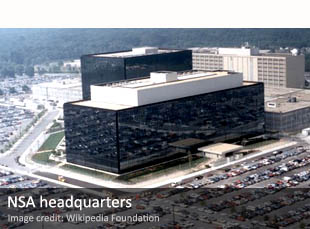
NSA headquartersBy IAN ALLEN | intelNews.org |

The United States National Security Agency (NSA) has been able to crack or get around basic encryption standards used daily by hundreds of millions of Internet users, according to newly leaked documents. The New York Times said on Friday that it was in possession of documents that prove that the NSA is not restrained by universal encryption standards used in the US and abroad. The NSA, which is America’s largest intelligence agency, and is tasked by the US government with intercepting electronic communications worldwide, is now able to routinely circumvent Secure Sockets Layer or virtual private networks, as well as encryption protection standards used on fourth-generation cell phones. It therefore has instant access to the content of billions of encrypted messages exchanged by users of some of the Internet’s most popular email companies, including Gmail, Hotmail, Yahoo and Facebook. The paper said it obtained the documents from Edward Snowden, a technical contractor for the NSA who defected to Russia this past summer. They include internal NSA memoranda that suggest the NSA deployed specially built supercomputers to break Internet encryption standards. In other cases, the Agency worked with selected companies and convinced them to “build entry points into their products”. The multi-billion effort was apparently launched by the NSA in the early 2000s, soon after the US government lost a lengthy battle with the communications industry centering on the so-called ‘clipper chip’. Read more of this post

News you may have missed #850 (Syria edition)

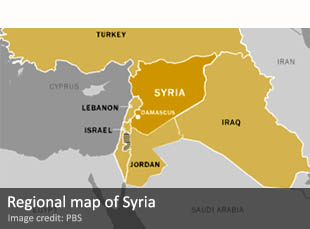
Regional map of SyriaBy IAN ALLEN | intelNews.org |
►►FBI sharpens scrutiny of Syrians in US. The FBI has increased its surveillance of Syrians inside the United States in response to concerns that a military strike against the government of President Bashar al-Assad could lead to terrorist attacks inside the US or against American allies and interests abroad. The US government has also taken the unusual step of warning federal agencies and private companies that American military action in Syria could spur cyberattacks, the officials said. There were no such alerts before previous military operations, like the one against Libya in 2011.
►►French spies provide details Syrian chemical weapons program. As Congress debates whether to authorize a military strike on Syria, the French government has released its declassified intelligence report on the August 21 chemical weapons attack in the eastern Damascus suburbs. While the American report focuses solely on the most recent attack, the French provide a comprehensive look at the nature of the Syrian chemical weapons program. Also, while US officials have conceded that they don’t know if Assad himself ordered the use of chemical weapons, the French assessment rebuts claims that the August 21 attack could have been the work of a rogue officer.
►►Ex-CIA WMD Counterterrorism Unit chief on Syria: “We cannot afford […] miscalculations in regard to Syria. We will launch our missiles and drop our bombs. Then we will announce the end of active operations. That will not signal the end of the war. It will signal its beginning […]. Assad and his Iranian and Hezbollah friends will begin to respond. They will do so on their timetable and only where they perceive the odds to be in their favor. Embassies will be struck. Hostages will be taken. American and Western tourists will be slaughtered. If the opportunity presents itself, we may even feel the impact here in the United States with attacks on prominent landmarks and public places”.

Western spy agencies tapped major undersea fiber optic cable

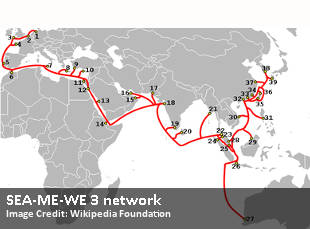
SEA-ME-WE 3 networkBy IAN ALLEN | intelNews.org |

Information obtained by a major German newspaper appears to show that an alliance of Western and Asian intelligence agencies has managed to tap into one of the world’s major undersea telecommunications cables, which facilitates worldwide communication between Europe, Asia and the Middle East. Munich-based Süddeutsche Zeitung, Germany’s largest broadsheet newspaper, claimed on Wednesday that Britain’s General Communications Headquarters (GCHQ) has been leading the ambitious interception effort. The GCHQ is Britain’s signals intelligence agency, tasked by the British government with intercepting communications from around the world. According to the Süddeutsche Zeitung, the effort is supported by the National Security Agency (NSA), which is GCHQ’s American equivalent. The paper cited American defector Edward Snowden as the source of the information. Snowden was a technical contractor for the NSA before he defected to Russia this past summer, where he has now been offered political asylum. The cable, codenamed SEA-ME-WE-3, is considered one of the world’s primary undersea fiber optic conduit. Completed in 2000, it is the longest fiber optic cable installation in the world. It runs from the northern German coast to the Straits of Gibraltar, and from there to Suez, Djibouti and Singapore, before reaching Japan and Australia. It serves as one of the world’s main communications networks that link Asia with the Middle East and Europe. It is owned by an international consortium of telecommunications companies led by France Telecom, China Telecom, British Telecom, Australia’s Telstra Corporation, Singapore’s SingTel, and other corporations from Europe, Asia and the Middle East. Read more of this post

US goes after schools that teach how to beat polygraph tests

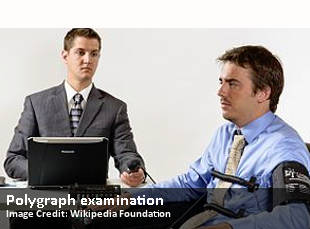
Polygraph examinationBy IAN ALLEN | intelNews.org |

The United States government has launched an extensive criminal investigation of companies and individuals who coach job applicants on how to deceive polygraph examiners. It is believed that the government administers about 70,000 polygraph tests a year to candidates seeking security-related jobs, or to employees who wish to maintain their security clearances. The significance of the tests, which can sometimes make or break a security or intelligence employee’s career, have given rise to the phenomenon of polygraph coaches. There are several dozen companies and individual instructors in the US, who claim to be able to teach people how to pass polygraph examinations. They train test-takers in methods such as controlling their breathing, tensing and relaxing their muscles, focusing their thoughts, or biting their tongue, in order to skew the results of the test in their favor. In the past, government agencies have largely ignored these instruction techniques, claiming that there is no proof they actually work (critics question whether polygraph tests themselves work, pointing to the fact that they are rarely permissible in court). But the US government’s attitude to these techniques appears to be changing, judging by a criminal investigation that was recently launched against polygraph coaches. The government has refused to acknowledge the existence of the investigation, but McClatchy newspapers said last week that its existence had been confirmed by “several people familiar” with the probe. Read more of this post

New Snowden leaks reveal thousands of NSA privacy violations

NSA headquartersBy IAN ALLEN | intelNews.org |

New documents leaked by an American intelligence defector reveal that the National Security Agency (NSA) violated privacy protections nearly 3,000 times in 2012, many of them under an interception program that was later ruled unconstitutional. The documents were supplied to The Washington Post by former NSA and Central Intelligence Agency technical expert Edward Snowden, who recently defected to Russia. The paper published the documents on Thursday, indicating that they form part of an internal NSA audit completed in May of 2012. They detail 2,776 separate incidents of what the NSA describes as “unauthorized data collection”, between May 2011 and May 2012. The documented instances involve unauthorized interception of both email and telephone data belonging to American citizens and foreign nationals operating on American soil. The NSA is forbidden from spying on American citizens, while its interception activities targeting foreign nationals inside the US are severely limited by law. According to the audit report, some of the privacy violations occurred when foreign citizens targeted by the NSA entered US soil and continued to be monitored without prior permission from the Foreign Intelligence Surveillance Court (FISC). In other instances, the NSA’s auditors reported “inadvertent collection incidents” relating to targets believed to be foreign, and later proved to be American citizens. The report notes that the privacy violations were unintentional results of “errors and departures from standard [NSA] processes”, which occurred “due to operator errors” and the failure of NSA personnel to “follow procedures”. Read more of this post

News you may have missed #849 (analysis edition)

Edward SnowdenBy IAN ALLEN | intelNews.org |
►►Are American spies the next victims of the Internet age? The furor over the NSA’s data collection and surveillance programs has been fierce. But Daniel Prieto, of the Center for Strategic and International Studies, argues that the debate should be focusing on the US intelligence apparatus, transformed in the dozen years since 9/11, can meet the challenges and that the US faces today and into the future. He asks whether the “business model” of US intelligence –how intelligence is gathered, analyzed, and used– is sufficient and sustainable, or whether it needs to evolve to “something different or something more”.
►►What did Edward Snowden get wrong? Everything. Andrew Liepman, senior analyst at RAND Corporation, former career officer at the CIA, and former deputy director of the US National Counterterrorism Center, offers an insider’s view on the Edward Snowden case. He argues that those following the Snowden saga fail to understand that the US government “truly does make strenuous efforts not to violate privacy”. This is not simply because it respects privacy on principle, he says, but also because “it simply doesn’t have the time” to access irrelevant information that is not closely connected to possible espionage or terrorist plots against Americans.
►►Why US diplomatic missions became fortresses. Even during the Cold War, American diplomatic facilities were designed to be welcoming and to project the American values of openness and individual liberty. No more, argues John Campbell, former US Ambassador to Nigeria and Ralph Bunche Senior Fellow for Africa Policy Studies at the Council on Foreign Relations. Nowadays, US diplomatic facilities increasingly showcase “Fortress America”, he argues. And he concludes that, “the need to subordinate so much to security diminishes US soft power by undermining its traditional message of openness and welcome”.

Spy agencies failed to share intelligence on Omagh bombing: report

Real IRA paradeBy IAN ALLEN | intelNews.org |
A new report on the 1998 bombing of downtown Omagh by an Irish republican splinter group claims that the tragedy could have been avoided had British, Irish and American intelligence agencies shared information with British police. The car bomb attack was carried out on August 15, 1998, by the Real Irish Republican Army (RIRA). The militant organization consisted of former Provisional Irish Republican Army volunteers who rejected the Good Friday Agreement, part of the Northern Ireland peace process. It devastated the small Northern Irish town of Omagh, killing 29 and injuring over 200 people, including six children, several teenagers and a woman who was pregnant with twins. There have been no criminal convictions in connection with the bombing, despite the fact that it was the single worst instance of violence in the so-called Northern Ireland Troubles, which began in the 1960s and ended in 1998, largely because of the Omagh bombing. But now a new report commissioned by the families of the victims of the bombing claims that intelligence services from three countries failed to share information with British police, which could have prevented the disaster in Omagh. The report, authored by a group of retired security experts on behalf of London-based law firm SBP, says the RIRA had been infiltrated by the United States Federal Bureau of Investigation (FBI), Britain’s Security Service (MI5) and the Irish Garda’s Crime and Security Branch. These agencies, claims the report, had at least two informants inside the RIRA: a smalltime Irish criminal named Paddy Dixon, who frequently smuggled stolen cars from Ireland into Britain for use by the RIRA, and David Rupert, an American of Irish descent. Read more of this post

News you may have missed #848

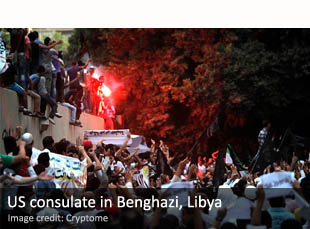
US consulate in Benghazi, LibyaBy IAN ALLEN | intelNews.org |
►►UK officials saw ‘communist spies’ in Japan in 1983. British officials believed in the early 1980s that Japanese institutions had been “slightly” penetrated by communist intelligence services, according to documents declassified last week at the National Archives in London. The documents, from 1983, assert that there were approximately 220 communist intelligence officers working in Japan: 100 for the Soviet Union, 60 for China and 60 for other communist countries.
►►‘Dozens of CIA operatives on the ground’ during Benghazi attack. CNN claims that “dozens of people working for the CIA” were on the ground the night of the attack on the US consulate in Benghazi, Libya, which killed four Americans, including Ambassador Christopher Stevens. The news station adds that, according to one source, the CIA is involved in “an unprecedented attempt to keep [its] Benghazi secrets from ever leaking out”.
►►Australians call for national debate on privatization of intelligence. Dr Troy Whitford, Associate Investigator with the Australian Research Council’s Centre of Excellence in Policing and Security, and lecturer at Charles Sturt University, has called for “a national debate on the extent, cost and consequences of Australia’s security and intelligence outsourcing”. The call was apparently prompted by news that 51% of the intelligence gathering in the US is now carried out by non-government contractors.

News you may have missed #847

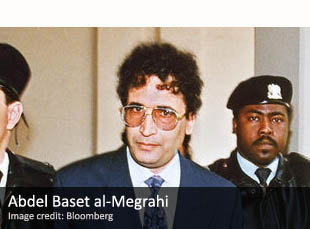
Abdel Baset al-MegrahiBy IAN ALLEN | intelNews.org |
►►Secret letter shows arms deal behind Lockerbie bomber release. An email sent in 2008 by Sir Vincent Fean, the then British ambassador in Tripoli, details how the release by Britain of Lockerbie air disaster bomber Abdelbaset al-Megrahi, was linked to a commercial deal. According to The Daily Telegraph, the email specifies that al-Megrahi would be released once Libya “fulfilled its promise” to buy an £400 million air defense system.
►►Is the US ramping up a secret war in Somalia? The US has expanded its secret war in Somalia, stepping up assistance for federal and regional Somali intelligence agencies that are allied against the country’s Islamist insurgency. It’s a move that’s not only violating the terms of an international arms embargo, according to UN investigators, but it also shows that Washington’s signature victory against al-Qaeda’s most powerful African ally may be in danger of unraveling.
►►Indonesian government ‘angry’ at alleged Western spying. The Indonesian government has reacted strongly to revelations in the Australian media that the country’s President and senior diplomats were spied upon during the 2009 G20 conference in London. The revelations appear to be based on leaks on intelligence-gathering techniques by US whistleblower Edward Snowden.

Is mismanagement driving away some of the CIA’s best talent?

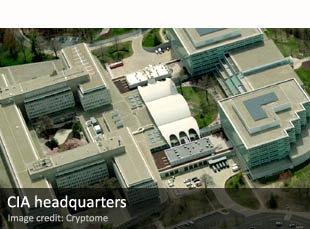
CIA headquartersBy IAN ALLEN | intelNews.org |
Poor management practices and a culture that tolerates blunders by senior officials are generating cynicism and disillusionment among employees at the United States Central Intelligence Agency, according to an internal study. Completed in 2010 by the CIA’s Office of the Inspector General, the study was released in heavily redacted form last week, in response to a Freedom of Information Act request. The Los Angeles Times, which filed the request in 2011, said the report identifies mismanagement and unaccountability among senior leadership as major factors contributing to the CIA’s “retention challenges”. It cites a 2009 Agency-wide anonymous survey, which found that around 12% of the CIA’s workforce was considering resigning. Over half of those said they wanted to leave because of “poor management and a lack of accountability for poor management” among senior-level staff. This feeling is stronger among younger recruits, “who have exhibited high resignation rates in current years”, according to the report. Operations officers at the National Clandestine Service —the CIA’s covert-action arm— are also more disturbed than other Agency employees by perceived mismanagement. The report also notes that the CIA has failed to introduce mechanisms for encouraging accountability, in response to growing concerns by lower-level staff. The Times said it spoke to “more than 20 former [CIA] officers”, who said the 2010 report echoed “longstanding concerns about the CIA’s culture”. Read more of this post

UK to pardon genius wartime cryptanalyst convicted of ‘indecency’

Alan TuringBy IAN ALLEN | intelNews.org |
One of the greatest mathematical minds of modern times, who is widely considered the father of computer science and is credited with helping the Allies win World War II, is to receive a posthumous pardon by the British government, who in 1952 convicted him of homosexuality. Alan Turing, a mathematician and logician, with careers at the universities of Cambridge and Princeton, worked as a cryptanalyst for the British government during World War II. His work for Britain’s Government Code and Cypher School (GC&CS) at Bletchley Park, the British Armed Forces’ wartime joint codebreaking center, was instrumental in helping the British crack German military ciphers. Turing is personally credited with devising a complex method for compromising the Enigma machine, a highly secretive message-encoding device used by the German military and intelligence services. In 1952, while working for the Department of Mathematics at the University of Manchester, Turing was charged with “gross indecency” under Section 11 of the Criminal Law Amendment Act of 1885, which criminalized homosexuality. After pleading guilty to having a sexual relationship with a 19-year-old unemployed man, Turing was convicted and given a choice of imprisonment or undergoing “chemical castration”. The latter was a hormonal treatment based on injections of synthetic estrogen, aimed at reducing a person’s sexual drive. Turing chose the latter option, which rendered him impotent and caused massive chemical imbalance in his brain. Read more of this post

UK to probe Chinese telecoms firm over security concerns

Huawei TechnologiesBy IAN ALLEN | intelNews.org |
The British government has confirmed that it will review the involvement of a Chinese telecommunications hardware manufacturer in a cybersecurity testing center in Oxfordshire, England. The facility, called Cyber Security Evaluations Centre, has been operating since 2010 in the town of Banbury, 64 miles northeast of London. Its establishment was part of a 2005 agreement between firm British Telecom and Chinese telecommunications hardware manufacturer Huawei. According to the stipulations of the agreement, British Telecom would purchase switches and other hardware equipment from the Chinese company, if the latter agreed to set up “the Cell”, as it is known, in Banbury, to test the equipment’s security features. However, last month, a report (.pdf)  by the British Parliament’s Intelligence and Security Committee (ISC) raised strong concerns about Huawei’s involvement at the Centre. The ISC report called the government’s attention to “the risks of Huawei effectively policing themselves” and stressed that Britain’s national security could potentially be compromised by Huawei’s alleged links to the Chinese military. The report based its concerns on the fact that virtually every member of staff at the Banbury testing facility is an employee of Huawei, barring its Director, who is a former deputy director of Britain’s General Communications Headquarters (GCHQ). The parliamentary report urged the government to overcome its “fear of jeopardizing trade links with Beijing” and pressure British Telecom to amend its agreement with Huawei. Instead of Huawei technicians, the ISC report suggested that the Banbury Centre should be staffed exclusively with personnel from GCHQ —Britain’s communications intelligence agency. Late last week, the UK Cabinet Office announced it was in agreement with the principal recommendations of the ISC report and said that a review of the Banbury testing facility will take place. Read more of this post