US government secretly obtained phone records of journalists

Associated PressBy JOSEPH FITSANAKIS | intelNews.org |
The Associated Press (AP) accused the United States government on Monday of secretly obtaining telephone records of its reporters, as part of a leak inquiry related to an intelligence operation. The news agency, which is owned cooperatively by news outlets worldwide, said the Department of Justice had secretly obtained pen-register information on 20 AP telephone lines in the US. Pen-register data includes lists of all numbers contacted from a particular telephone line and the duration of each call over a defined period. The agency said the government investigation included “the work and personal phone numbers of individual reporters”, as well as AP office telephone lines in New York and Washington, and even the main telephone line used by AP correspondents at the US Capitol Building. It is believed that government prosecutors were probing the source(s) of a May 7, 2012, AP report, which disclosed that the Central Intelligence Agency (CIA) had prevented a terrorist plot by al-Qaeda in the Islamic Arabian Peninsula. AP correspondents Matt Apuzzo and Adam Goldman had cited anonymous sources in claiming that the plot, allegedly hatched in Yemen, involved placing a bomb on a US-bound civilian airplane on the one-year anniversary of the death of al-Qaeda founder Osama bin Laden. Less than a fortnight later, sources told the Reuters news agency that the White House and CIA were furious with AP’s revelation, because it allegedly forced the termination of an “operation which they hoped could have continued for weeks longer”. Read more of this post

Ex-Mossad official denies Zygier compromised intelligence operation

Ben ZygierBy JOSEPH FITSANAKIS | intelNews.org |
A former Mossad official has dismissed as “nonsense” suggestions that an Australian-born Israeli spy, who killed himself in 2010, had been jailed for inadvertently compromising an Israeli secret mission. Ben Zygier was an officer in Israel’s covert-action agency Mossad for several years before he was placed in solitary confinement following his arrest in Israel, in February of 2010. Known to the outside world only as ‘Prisoner X’, he allegedly killed himself in his cell a few months later. In March, German newsmagazine Der Spiegel alleged that Zygier was arrested by Israeli intelligence after contacting a Lebanese Hezbollah operative without Tel Aviv’s authorization. The Australian-born spy was allegedly trying to recruit the operative on his own initiative and without permission from his superiors. In order to prove his Mossad credentials, Zygier is said to have given the man several names of Israel’s double agents operating inside Hezbollah. But the Lebanese recruit surrendered Zygier’s information to Hezbollah, which promptly arrested many of Israel’s informants inside the organization. Those arrested included Ziad al-Homsi, who at the time was believed to be one of the Mossad’s most lucrative assets inside the Lebanese militant group. On Tuesday, the Australian Broadcasting Corporation said that, at the time of his arrest in Lebanon, al-Homsi was preparing to assist the Mossad in recovering the bodies of three Israeli soldiers that had been killed in Syria during the 1982 Lebanon War. Read more of this post

MI5 wants secret court session over IRA informant’s lawsuit

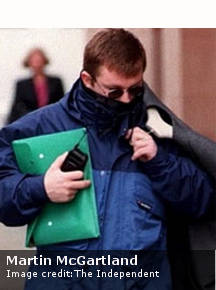
Martin McGartlandBy JOSEPH FITSANAKIS | intelNews.org |
Britain’s domestic intelligence agency, MI5, has requested a secret court hearing to deliberate a lawsuit from a high-profile spy who infiltrated the Provisional Irish Republican Army, commonly known as IRA. The mole, Martin McGartland, of Belfast, Northern Ireland, was recruited by the Special Branch of the Royal Ulster Constabulary in the 1980s. The information he supplied to the security agencies over several years is widely credited with having saved the lives of at least 50 British police officers and soldiers. His autobiographical experiences formed the basis of the 2008 motion picture 50 Dead Men Walking, written and directed by Kari Skogland and starring Jim Sturgess as Martin and Ben Kingsley. McGartland’s cover was dramatically blown in 1991, when the IRA began suspecting that he might be an MI5 mole. After several hours of interrogation by the IRA’s Internal Security Unit, McGartland managed to escape his captors and throw himself out of a third-floor window. He survived serious injuries and was taken into hiding by MI5, living in a series of safe houses across Britain for nearly a decade. However, in 1999 the IRA caught up with him at an MI5 safe house in North Tyneside, in the northeast of England, where he was shot by an IRA hit team while walking to his car one morning and left for dead. McGartland is now suing MI5 and its institutional patron, the British Home Office, claiming that they failed to support him after he was shot by the IRA. In his lawsuit, McGartland claims that government funding he was receiving for treatment for post-traumatic stress disorder was withdrawn after he publicly criticized the British government’s counterterrorism policies. Read more of this post

Alongside CIA, British spies also bankrolling Afghan government

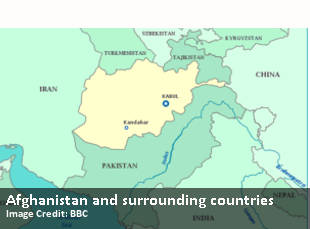
AfghanistanBy JOSEPH FITSANAKIS | intelNews.org |
British officials have publicly admitted that senior members of the Afghan government receive “direct cash payments” from London on a regular basis. British newspaper The Daily Telegraph reported over the weekend that the funds have been delivered to Afghan cabinet members “periodically” ever since 2001, when British troops entered Afghanistan alongside their American colleagues. The revelation comes only a week after the publication of a New York Times exposé, which disclosed that the United States Central Intelligence Agency (CIA) had delivered “tens of millions of dollars [in] off-the-books cash” to Afghanistan’s governing elite. The newspaper added that there was little evidence that such bribes had helped promote Washington’s interests in the country in any substantial way. According to British officials, London has channeled “a smaller fraction” of the amount paid by the CIA. The British funds are delivered to senior members of the government of Hamid Karzai by MI6, Britain’s foremost external intelligence agency. The funds are then allegedly spent on what Afghan government officials call “special projects”, implying that they are used as bribes to pacify local warlords, many of which are ethnic Pasthuns and belong to the Taliban. Last week, following The New York Times revelations, Mr. Karzai told the loya jirga —Afghanistan’s grand assembly— that there was “nothing unusual” about the CIA funneling money to his government. He added that he had implored the CIA’s Station Chief in Afghan capital Kabul to continue making regular payments despite popular concern in the US, as the funds were vital to the stability of the government: “we really need it”, he said. Read more of this post

Revealed: South Korean intel officers caught spying on Australia

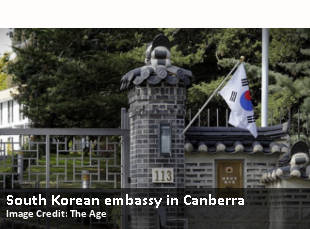
Embassy of South Korea in AustraliaBy JOSEPH FITSANAKIS | intelNews.org |
A court in Australia has released information about “inappropriate activities” allegedly conducted by South Korean intelligence officers targeting trade negotiations between Seoul and Canberra. The 2011 case involved operatives of South Korea’s National Intelligence Service (NIS), who purportedly tried “to obtain sensitive information” from Australian civil servants. The documents, released Tuesday by Australia’s Federal Court, reveal that an Australian government official, Dr. Yeon Kim, was sacked and had his security clearance revoked, for allegedly holding clandestine meetings with South Korean NIS officers. The Australian government accused Kim, who worked for the Bureau of Agricultural and Resource Economics and Sciences, of meeting repeatedly with Hoo-Young Park, an employee of the South Korean embassy in Canberra, who had been declared to the Australian government as an NIS liaison officer. According to the court documents, three other NIS officers serving under diplomatic cover in Australia, Bum-Yeon Lee, Sa-Yong Hong, and a man named Kim, were involved in collecting intelligence on Australian trade secrets. According to the Australian Security Intelligence Organisation (ASIO), which detained Kim, he willingly participated in the “foreign interference” operation by the NIS. It is worth noting, however, that there were no expulsions of South Korean intelligence officers or diplomats following Kim’s detention. On the contrary, ASIO appears to have gone to great lengths to prevent disclosure of the spy affair and even protect the identities of the NIS officers involved. In a move interpreted by some as an attempt by Canberra to safeguard its good relations with Seoul, the Australian government warned in a memo that any disclosure of the South Korean intelligence operation would have “a detrimental impact” on bilateral relations between the two nations. Read more of this post

Is US-Mexico anti-drug intelligence cooperation about to end?

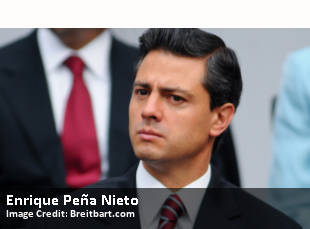
Enrique Peña NietoBy JOSEPH FITSANAKIS | intelNews.org |
Some senior American officials believe that the anti-drug intelligence cooperation between the United States and Mexico is in its closing stages, following tens of thousands of deaths in the past decade. Intelligence cooperation between the two countries reached unprecedented levels in the post-9/11 era, following the establishment of the US Office of the Director of National Intelligence (ODNI). In the past decade, cooperation between Mexico’s Center for Research and National Security (CISEN) and ODNI, as well as the Central Intelligence Agency, resulted in what some observers call “unprecedented bilateral action” directed against Latin American narcotics cartels. This arrangement culminated under the administration of Mexico’s President Felipe Calderón, when the CIA —and to a lesser extent the US Drug Enforcement Administration and the National Security Agency— were given unprecedented access to Mexican territory and civilian communications networks. However, in an extensive article published Sunday, The Washington Post says the close operational connection between Mexican and US intelligence agencies is quickly winding down. Citing interviews with over “four dozen current and former US and Mexican diplomats, law enforcement agents, military offices and intelligence officials”, the paper suggests that Mexico City is wary about Washington’s involvement in the so-called ‘war on drugs’. The major change on the Mexican side, says The Post, occurred last December with the inauguration of Mexico’s new President, Enrique Peña Nieto, of the Institutional Revolutionary Party (PRI), which has returned to power after 13 years in opposition. Under Nieto’s administration, the Mexican security establishment, worn out by over 60,000 deaths and as many as 25,000 forced disappearances in the past few years, is intent on shifting its priorities. Instead of focusing on so-called ‘beheading operations’ —arresting or otherwise neutralizing the leadership of drug cartels— it has decided to stabilize the situation by containing —rather than eliminating— the operations of drug networks. Read more of this post

CIA bankrolling Afghan government officials ‘on a vast scale’

AfghanistanBy JOSEPH FITSANAKIS | intelNews.org |
The United States Central Intelligence Agency (CIA) has delivered “tens of millions of dollars [in] off-the-books cash” to Afghanistan’s governing elite, but there is little evidence that such bribes have helped promote Washington’s interests in the country, according to a new exposé published over the weekend in The New York Times. The paper cites “current and former advisers to the Afghan leader” Hamid Karzai, who allege that, for over a decade, the CIA has secretly delivered to the presidential palace in Afghan capital Kabul monthly payments ranging “from hundreds of thousands to millions of dollars”. According to Khalil Roman, who was President Karzai’s Chief of Staff for four years until 2005, Afghan officials called the CIA funds “ghost money” because “it came in secret [and] left in secret”. The article suggests that the cash given to the Afghan government appears to be handled outside the CIA’s standard financial assistance programs, which are typically subject to restrictions and oversight from administrators both inside and outside the Agency. Some American officials, who spoke to The Times on condition of anonymity, said the CIA’s goal in funding the inner circle of the Afghan government is to maintain access to its members and to “guarantee the Agency’s influence at the presidential palace”. But there is little evidence that the funds, which are handled exclusively by a “small clique at [Afghanistan’s] National Security Council” have bought the CIA the political influence it seeks. Read more of this post

Israel spy agency has presence in Syria, says senior rebel general

Regional map of SyriaBy JOSEPH FITSANAKIS | intelNews.org |
Israel is one of several countries that maintain a significant intelligence presence inside Syria, according to the top commander of the Syrian rebel forces. General Salim Idriss, Chief of Staff for the Free Syrian Army, told CNN’s Christiane Amanpour that the Jewish state has “many, many” intelligence officers in various parts of Syria. The Arab country has been rocked since 2011 by a violent civil war, which has cost the lives of at least 60,000 people. Idriss was responding to comments made earlier this week by Brigadier General Itai Brun, senior intelligence analyst for the Israel Defense Forces (IDF). Brun, who heads the Division for Research and Analysis of the IDF’s Military Intelligence Directorate, was speaking at a conference hosted in Tel Aviv, Israel, by the Institute for National Security Studies. He told an audience of intelligence experts that the IDF was “quite certain” that the Syrian government headed by President Bashar al-Assad had resorted to the use of chemical weapons against rebel forces on at least one instance. According to Brun, footage obtained by the IDF of rebel casualties from a March 19 attack by Syrian government forces, pointed to the use of sarin nerve gas. He referred to evidence such as the victims’ dilated pupils and “the foam coming out of their mouths” as strong proof of the use of weaponized sarin nerve gas in the battlefield. Responding to Brun’s allegations, General Idriss suggested that Syrian government forces had used chemical weapons repeatedly in a variety of locations, including Aleppo, Homs, and the outskirts of capital Damascus. Read more of this post

Diplomat jailed in biggest Dutch spy affair in recent times

Raymond PoeterayBy JOSEPH FITSANAKIS | intelNews.org |
A court in the Netherlands has sentenced a diplomat to 12 years in prison for spying for Russia, in what security observers have called one of the worst espionage scandals in recent Dutch history. Raymond Poeteray, who had worked for Holland’s Ministry of Foreign Affairs since 1978, was convicted on Tuesday of spying for the Russian Foreign Intelligence Service (SVR). Poeteray was arrested in June of 2012 at Amsterdam’s Schiphol International Airport, following an extensive investigation by German counterintelligence. The diplomat was captured as he was boarding a flight to Vienna, Austria, the first leg in a return journey to Bangkok, Thailand. Dutch prosecutors claimed during Poeteray’s trial that he had arranged to meet his Russian handlers in Bangkok and give them three USB drives loaded with classified information, which were found on in his possessions upon his arrest at Schiphol. The three-judge panel that sentenced Poeteray at The Hague said he had spied on Holland “for years [while] on assignment from the Russian Foreign Intelligence Service”, in the course of which he damaged the interests of his home country in a “substantial” way. The Dutch prosecutor’s office said Poeteray had provided Moscow with sensitive information, including military and political intelligence on the European Union, inside material on the North Atlantic Treaty Organization, as well as documents belonging to the Dutch Foreign Affairs Ministry. The court heard that, in recent years, the diplomat had given the SVR information about Dutch involvement in the Libyan Civil War, classified data from European-Union-sponsored fact-finding missions in the Republic of Georgia, as well as intelligence on Dutch peacekeeping operations in Afghanistan, Kosovo, and elsewhere. Read more of this post

Analysis: Five dangerous myths about the Boston Marathon bombings

Investigating the Boston bombingsBy JOSEPH FITSANAKIS | intelNews.org |
The endless opinion pieces about the Boston bombings that have flooded the media-sphere since Monday have one thing in common: they are highly speculative and, for the most part, unreliable. At this early stage, nobody outside the security or intelligence establishments has any idea about the identity or motives behind the attacks —and if they say they do, they are lying. Even those on the inside routinely refer to the ongoing investigation as one of the most complex in the country’s post-9/11 history. As the probe continues, and the nation deals with the meaning of the Boston bombings, it is critical that some of the dangerously misinformed and premature notions about the attacks are dispelled.

To begin with, the Boston Marathon bombings were not necessarily terrorism. They were clearly calculated and indiscriminate, but in order for them to qualify as terrorism, their planners must have a broad political or ideological objective. Terrorism is a tactic used to further a political goal. There is a reason why we don’t refer to school shootings, such as the one that took place on December 14, 2013, at Sandy Hook Elementary in Newtown, Connecticut, as terrorism. They are calculated and extremely violent, but they do not contain a political motive. Before we can attach a terrorist label to the Boston bombings, we have to uncover the motive of the perpetrator(s). Barring that, the incident must be treated simply as a criminal act. Read more of this post

Technical analysis offers first clues about Boston Marathon bomber(s)

Site of one of the Boston Marathon blastsBy JOSEPH FITSANAKIS | intelNews.org |
Counterterrorism experts probing Monday’s bombings at the Boston Marathon are bound to start searching for the culprits by focusing on the technical specifications of the attacks. According to the Boston Police Department, three people were killed and at least 144 were injured —many of them critically— by the blasts, which rocked downtown Boston at 2:45 p.m. local time. The second explosion was carefully timed to coincide with the initial blast, and occurred just ten seconds later, fewer than 100 yards down the road from the site of the first explosion. At least one report stated that law enforcement teams found and dismantled up to five additional devices at the site, which had failed to detonate. But one police official later denied these reports, saying that “closer examinations led [the police] to doubt that [the devices] were bombs”. If additional devices were indeed present at the site of the blast, it is likely that they failed to detonate due to the collapse of the wireless network in Boston, which was knocked down by a sudden spurt in usage following the initial blasts. If, as it appears, these bombs were types of improvised explosive devices (IEDs), and if suicide terrorism was not involved, chances are the devices were remotely triggered using the diodes commonly found inside the speakers of inexpensive cell phones. Depending on the constitution of the bombs themselves, they could contain ball bearings, screws, or other metal fragments stuffed inside a container around some type of explosive. Read more of this post

Middle East expert to lead France’s external spy agency

Bernard BajoletBy JOSEPH FITSANAKIS | intelNews.org |
A career diplomat, who spent many years serving in embassies in predominantly Muslim countries, has been nominated to head France’s main external intelligence agency. French President François Hollande announced on Tuesday that Bernard Bajolet has been nominated for the post of Director of France’s Directorate General for External Security (Direction Générale des Services Extérieurs, or DGSE). He will be replacing Erard Corbin de Mangoux, who has headed the 5,000-strong organization since 2008. To some extent, the change of guard at DGSE is seen as a political move, as de Mangoux is a conservative known to be close to France’s former President, Nicolas Sarkozy. However, Bajolet’s nomination is interpreted by some as part of a wider effort to recalibrate the DGSE’s operational agenda to reflect the country’s increased military involvement in predominantly Muslim parts of Africa. The 63-year-old Bajolet served for many years as a career diplomat in countries such as Bosnia, Iraq, Jordan and Syria, and is currently France’s Ambassador to Afghanistan. Prior to serving overseas, Bajolet was Deputy Director for Middle Eastern Affairs at the French Ministry of Foreign Affairs. From 2008 until 2011, when he departed for Afghanistan, he served as the first-ever intelligence advisor to the French executive under President Sarkozy. Working under the direction of the French Ministry of National Defense, the DGSE has had to reinvent itself in the post-Cold-War era, shifting its focus from the Soviet Union and the Eastern Bloc to non-state actors in North Africa and beyond. During that time, many diplomats joined the agency’s personnel, which had historically been staffed primarily by military officials. Read more of this post

Pakistan secretly helped CIA drone strikes (act surprised)

Predator droneBy JOSEPH FITSANAKIS | intelNews.org |
For many years, Pakistan’s main spy agency secretly helped the United States launch hundreds of unmanned drone strikes on Pakistani soil, while the government in Islamabad publicly denounced them as infringements on its sovereignty. The US-based McClatchy news agency said on Tuesday it had uncovered the behind-the-scenes collaboration while reviewing “copies of top-secret US intelligence reports”. In an article published on its website, the news agency said the copies of the documents in its possession covered most of the unmanned drone strikes conducted on Pakistani soil by the US Central Intelligence Agency in the years 2006 to 2008 and 2010 to 2011. The documents allegedly show that nearly every strike had been approved by the Inter-Services Intelligence Directorate (ISI), Pakistan’s powerful spy agency run by the military. According to the McClatchy report, so close was the cooperation between the CIA and the ISI that the Pakistanis were even able to add some of their own targets to the CIA’s list of suspected militants for killing. This arrangement was arrived at during the early years of the administration of US President George W. Bush, when the bilateral cooperation between the two spy agencies reached its pinnacle. The report notes, however, that it is difficult to discern whether Pakistani civilian officials, who have been routinely denouncing the CIA unmanned drone strikes as illegal, have been aware of the full extent of the operational collusion between the ISI and the CIA. Technically, the ISI is supposed to operate under the control of Pakistan’s civilian leadership. In reality, however, the secretive intelligence agency is firmly under the control of the country’s military establishment. Read more of this post

French spy agency forced Wikipedia volunteer to delete entry

Wikipedia welcoming screenBy JOSEPH FITSANAKIS | intelNews.org |
A French intelligence agency forced a volunteer for online open-source reference site Wikipedia to delete n entry that allegedly contained classified information about French nuclear defense systems. According to the Wikimedia Foundation, which publishes Wikipedia, the entry describes a radio relay system located at Pierre-sur-Haute military radio station in south-central France. Operated by the French Air Force, the station is said to have a central role in transmitting the order to launch France’s nuclear missiles in case of a full-scale thermonuclear war. The French-language Wikipedia webpage —which has since been fully restored— mentions, among other things, that the radio masts at Pierre-sur-Haute are designed to withstand the type of shockwave experienced in a thermonuclear attack. According to the Wikimedia Foundation, it was approached in early March, 2013, by the Direction Central du Renseignement Interieur (DCRI), which is tasked with domestic security and counterintelligence. The agency asked the Wikimedia Foundation to delete the entire webpage referring to the Pierre-sur-Haute military radio station, because it said it contravened French national security law. The Wikimedia Foundation, however, refused to comply with the request unless it was accompanied with either a court order or concrete information explaining why the Pierre-sur-Haute revelations were a threat to French national security. The DCRI reportedly backed down, promising to return with a formal justification for its request. However, instead of doing so, it contacted a French-based Wikipedia volunteer, who was summoned to the DCRI’s office under threat of legal action. Read more of this post

Intelligence historian calls on MI6 to declassify Lumumba files

Patrice LumumbaBy JOSEPH FITSANAKIS | intelNews.org |
An historian whose book on British intelligence prompted the claim of Britain’s complicity in the 1961 assassination Patrice Lumumba has called for MI6 to declassify its secret files on the late Congolese Prime Minister. Calder Walton is a Cambridge University-educated intelligence historian whose first book, Empire of Secrets, examines the activities of British intelligence in the last days of the British Empire. A review of the book, published by Bernard Porter in The London Review of Books in March, prompted a claim that London had organized the assassination of the iconic pan-Africanist activist, who in 1960 had become Congo’s first democratically elected Prime Minister. Many believe that the United States had a hand in Lumumba’s assassination, which was aimed at preventing him from establishing close relations between uranium-rich Congo and the Soviet Union. But British Labour politician and Life peer Lord Lea of Crondall said in a letter published in response to the review of Walton’s book that Lumumba had been killed with the help of MI6, Britain’s primary external intelligence service. He claimed he had been told so by the late Baroness Park of Monmouth, who at the time of Lumumba’s death headed the Leopoldville station of MI6. In his book, Walton, who until 2009 served as research assistant for Professor Christopher Andrew’s authorized official history of MI5, Defence of the Realm, says it is unclear who organized Lumumba’s assassination. He argues that “at present, we do not know […] whether British plots to assassinate Lumumba […] ever amounted to anything”. But speaking to The London Times on Wednesday, the historian and author urged MI6 to declassify its internal archives on the Congolese leader. Read more of this post