US Senate blocks Pentagon plan to launch new CIA-style agency

The US Department of DefenseBy JOSEPH FITSANAKIS | intelNews.org |
Last week the United States Department of Defense flooded media outlets with press releases announcing the planned establishment of a new military intelligence organization that would rival the Central Intelligence Agency in both size and scope. Not so fast. The US Senate has just blocked the plan citing gross mismanagement of the Pentagon’s existing intelligence operations. The proposed Defense Clandestine Service centers on plans to build an extensive overseas intelligence network, run by the Pentagon’s Defense Intelligence Agency and based on the CIA model of stations located in large metropolitan centers. The DoD said that the new intelligence organization will help the US armed forces broaden their intelligence collection from the current concentration in Afghanistan and Iraq. But the Senate, which was asked to review and approve the plan’s financial requirements, submitted under the 2013 National Defense Authorization Act, has refused to do so. Moreover, it issued a written rationale, drafted by the Senate Armed Services Committee, in which it explicitly forbids the Pentagon using US taxpayers’ money to expand its overseas intelligence operations. According to The Washington Post, the reason for the plan’s rejection is two-fold. First, the Senate appears unhappy with the financial management of the DoD’s existing intelligence collection efforts. The Senate report cites serious concerns about the excessive financial cost and management failures associated with the Pentagon’s ongoing intelligence operations. It specifically mentions “poor or non-existent career management” for DoD intelligence operatives who are often transferred back to regular military units after undertaking “unproductive” assignments overseas, despite extensive intelligence training. The Senate Armed Services Committee’s report stipulates that, before it asks for more money to build the proposed new agency, the Pentagon must “demonstrate that it can improve the management of clandestine [human intelligence] before undertaking any further expansion”. Read more of this post

Afghan government blames Pakistan for attempt on spy chief’s life

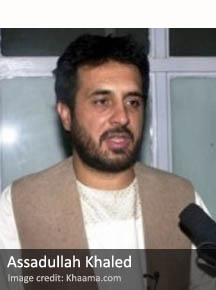
Assadullah KhaledBy JOSEPH FITSANAKIS | intelNews.org |
The Afghan President and senior cabinet officials have described the recent assassination attempt against the country’s spy chief as the work of “a professional intelligence service” and said they would be asking Pakistan “for clarification”. Assadullah Khaled, who heads Afghanistan’s National Directorate for Security (NDS), survived a suicide attack last Thursday in Kabul. According to Afghan officials, Khaled was attacked by a member of the Taliban posing as a “peace emissary”, who blew himself up as he was meeting Khaled to discuss a possible peace deal with the government. Media reports suggest that the bomber had concealed explosives in his undergarments and that he was not searched out of “respect for [Afghan] traditions and hospitality”. Shortly after the attack, the Afghan Taliban claimed responsibility and said they would try to kill Khaled again. But speaking to reporters last week, Afghan President Hamid Karzai said that “more professional hands” were behind the attack on Khaled. The Afghan leader described the suicide attack as a “very sophisticated and complicated act by a professional intelligence service” and said the Afghan security services “know [for] a fact” that the suicide bomber had entered the country from Pakistan. President Karzai stopped short of directly implicating the Inter-Services Intelligence Directorate (ISI) of directly planning the attack; but he said his government would be “seeking a lot of clarifications from Pakistan” about the bombing. Last Sunday Afghan Ministry of Foreign Affairs spokesperson Janan Musazai told reporters that Afghan officials were “100 percent sure” the suicide bomber had come to Afghanistan from the Pakistani city of Quetta. Read more of this post

Israel special forces conducting cross-border operations in Syria

Regional map of SyriaBy JOSEPH FITSANAKIS | intelNews.org |
Teams of Israeli special forces are currently operating inside Syria in an effort to detect and sabotage the Syrian military’s chemical and biological arsenal. Citing an unnamed “Israeli source”, the London-based Sunday Times newspaper said yesterday that the operation is part of a wider “secret war” to track Damascus’ non-conventional weapons stockpiles and “sabotage their development”. The Israeli government refused comment on the paper’s allegation. However, Israel’s covert activities against the Syrian government’s chemical and biological arsenal go back almost 30 years. Reputedly, some of the more recent such activities may have involved the targeting of Russian scientists. Although Russia routinely denies it, it is believed that Syria’s non-conventional arsenal was significantly augmented in the late 1980s and early 1990s with the help of Russian retired general Anatoliy Kuntsevich. Kuntsevich, one of the Soviet Red Army’s top scientists, is said to have helped Damascus build its XV nerve agent stockpiles, which are still believed to be in existence today. Interestingly, Kuntsevich died suddenly in 2003 onboard a flight from the Syrian capital to Moscow. It was widely speculated at the time that the Mossad, Israel’s covert-action agency, may have played a role in the Russian general’s sudden death. In 2010, another retired Russian general, Yuri Ivanov, who had served as Deputy Director of the GRU, Russia’s military intelligence agency, died in unclear circumstances. The body of 52-year-old Ivanov was found in Turkey on August 16, 2010, several days after he had disappeared close to a Russian naval facility in Syria. Russian media did not report Ivanov’s death until several days later, when he was quietly buried in Moscow. According to reports in the Israeli press, the former GRU official was on his way to a meeting with Syrian intelligence officers when he went missing. Read more of this post

Illegal spy agency operated in West Germany, new book claims

Willy BrandtBy JOSEPH FITSANAKIS | intelNews.org |
Conservative politicians in Cold-War West Germany set up an illegal domestic intelligence agency in order to spy on their political rivals, a forthcoming book claims. In Destroy After Reading: The Secret Intelligence Service of the CDU and CSU, German journalist Stefanie Waske exposes what she says was an elaborate plot to undermine West Germany’s rapprochement with Soviet-dominated Eastern Europe. The book, which is scheduled for publication in February of 2013, claims that the illegal intelligence agency, known as ‘the Little Service’, was set up by politicians from Germany’s conservative Christian Democratic Union (CDU) and its sister organization, the Christian Social Union of Bavaria (CSU). The two parties allegedly founded ‘the Little Service’ in 1969, in response to the election of Willy Brandt as German Chancellor in 1969. Brandt, who was leader of the center-left Social Democratic Party of Germany (SDP), was elected based on a program of normalizing West Germany’s relations with Eastern Europe. Under this policy, which became known as ‘Neue Ostpolitik’ (‘new eastern policy’), Brandt radically transformed West German foreign policy on Eastern Europe. In 1970, just months after his election, he signed an extensive peace agreement with the Soviet Union, known as the Treaty of Moscow, which was followed later that year by the so-called Treaty of Warsaw. Under the latter agreement, West Germany officially recognized the existence and borders of the People’s Republic of Poland. Brandt’s Neue Ostpolitik, which continued until the end of his tenure in the Chancellery in 1974, earned him the Nobel Peace Prize for his efforts to achieve reconciliation between West Germany and the countries of the Soviet bloc, primarily East Germany. But Brandt’s policy of rapprochement alarmed the CDU/CSU coalition, says Waske, which quickly set up ‘the Little Service’ by enlisting former members of Germany’s intelligence community. Read more of this post

Swiss intelligence employee stole ‘millions’ of classified pages

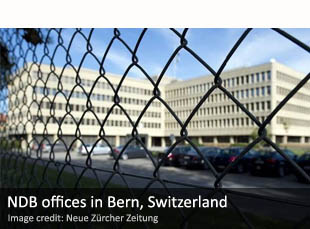
NDB offices in Bern, Switzerland

By JOSEPH FITSANAKIS | intelNews.org |
Swiss authorities have warned Western intelligence agencies that their secrets may have been compromised by a disgruntled intelligence employee who stole “thousands or even millions of pages of classified material”. Citing “European national security sources”, Reuters said the employee at the center of the case worked for the NDB, Switzerland’s Federal Intelligence Service. He had been employed by NDB for eight years as a network technician with “full administrator rights” and had unrestricted access to the NDB’s computers, as well as to those of Switzerland’s Federal Department of Defense, under which the NDB operates. About a year ago, however, the unnamed technician apparently became disgruntled after his views on how to structure the NDB’s databases were allegedly sidelined or ignored. He eventually decided to use several portable hard drives to download countless classified documents from Swiss government servers and managed to carry them out of the office building where he worked, using a backpack. According to Swiss authorities, he intended to sell the classified information to foreign governments or black-market operatives. He was apprehended, however, after he tried to set up a numbered bank account with Swiss-based UBS bank, using what bank security officials described as “suspicious identification documentation”. Read more of this post

Israel asked for Jordan’s approval to bomb Syria, say sources

Regional map of SyriaBy JOSEPH FITSANAKIS | intelNews.org |
The government of Israel has sent Jordan at least two requests in the past two months to bomb targets in Syria, according to intelligence sources. The Atlantic magazine, which published the revelation on Monday, said Tel Aviv has been seeking Amman’s “permission” to move ahead with “a plan to take out many of Syria’s chemical weapons sites”. Citing unnamed “intelligence officials in two countries”, The Atlantic said that the Israeli requests were communicated to the Jordanian government by officials from the Mossad, Israel’s primary covert-action agency. In both instances, the Mossad delegation was allegedly dispatched to Amman on the orders of the Office of Benjamin Netanyahu, Israel’s Prime Minister. However, the Jordanians are so far resisting the Israeli proposals, says The Atlantic, telling their Jewish neighbors that “the time [is] not right” for direct military action. It is worth pointing out that Israel does not technically require Jordan’s permission to bomb Syria. Its air force can do so without assistance from Amman. This was demonstrated on September 6, 2007, when Israel bombed a target at Al-Kibar, deep in the Syro-Arabian Desert, thought to be the site of a nuclear reactor. Even though Tel Aviv has not officially admitted a role in the attack, Israeli officials have repeatedly hinted that Israel was behind it. According to German newsmagazine Der Spiegel, which published a detailed account of the bombing, the attack was codenamed Operation ORCHARD. The difference this time appears to be that many of Syria’s chemical weapons facilities, which Israel allegedly wants to destroy, are located along the Syrian-Jordanian border. Read more of this post

Fourth person involved in Russian fraud scheme found dead in UK

Alexander PerepilichnyyBy JOSEPH FITSANAKIS | intelNews.org |
A Russian whistleblower who had been helping authorities in Western Europe investigate a gigantic money-laundering scheme involving Russian government officials, has been found dead in the United Kingdom. Alexander Perepilichnyy, who had been named by Swiss authorities as an indispensible informant in the so-called Hermitage Capital scandal, was found dead outside his home in Weybridge, Surrey, on November 10. The 44-year-old former businessman, who sought refuge in England in 2009, and had been living there ever since, is the fourth person linked to the money-laundering scandal to have died in suspicious circumstances. The company, Hermitage Capital Management, is a UK-based investment fund and asset-management company, which Western prosecutors believe fell victim to a massive $250 million fraud conspiracy perpetrated by Russian Interior Ministry officials who were aided by organized crime gangs. In 2006, the company’s British founders were denied entry to Russia, in what was seen by some as an attempt by the administration of Vladimir Putin to protect its officials involved in the money-laundering scheme. The scandal widened in late 2009, when Hermitage Capital lawyer Sergei Magnitsky, who had been arrested in connection with the case, died while in police custody. According to the coroner’s report, Magnitsky, who was 37 and in good physical health, died suddenly from acute heart failure at a Moscow detention facility. Some observers speculate that the lawyer was killed before he could turn into a whistleblower against some of the perpetrators of the fraud scheme. Read more of this post

Belgian intelligence employees ‘outed themselves’ on LinkedIn

LinkedIn logoBy JOSEPH FITSANAKIS | intelNews.org |
Several alleged employees of Belgian security and intelligence agencies have revealed their identities on social networking sites, it has been reported. Belgian newspaper De Standaard, which made the revelation in a leading article on Tuesday, said that many LinkedIn and Facebook users appear to list their employer as Belgium’s State Security Agency (Sûreté de l’État or SE/SV) or the Coordinating Body for Threat Analysis (OCAM/OCAD). The SE is Belgium’s foremost civilian intelligence agency, operating under the country’s Ministry of Justice. OCAM is one of Belgium’s several anti-terrorist intelligence collection and analysis agencies, which operates under the joint supervision of the Justice and Interior Ministries. De Standaard contacted the two agencies, which refused to comment on whether the social networking profiles are authentic. But the paper spoke with an unnamed Belgian senior intelligence official, who said that this was potentially a very serious issue for Belgian national security. “Russian and Chinese intelligence services employ thousands of people”, said the official, “and have the resources and time to manually search for such profiles and then exploit the information they provide. Our people could, by their very presence on such sites, become the target of hostilities”. De Standaard also spoke to Belgian Senator Dirk Claes, who is a member of the country’s Parliamentary Committee on Intelligence. He told the paper that his colleagues in the Committee would be up in arms if the profiles turned out to be authentic. “These individuals have security clearances and are obligated to stay in the background, as much as possible. I will be raising this issue in the [Intelligence] Committee”, Claes told De Standaard. Read more of this post

Freed Russian scientist convicted for spying maintains innocence

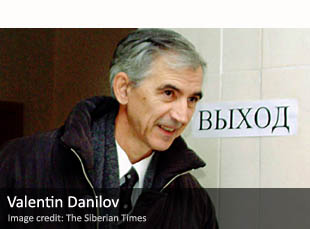
Valentin DanilovBy JOSEPH FITSANAKIS | intelNews.org |
A Russian scientist who was pardoned last week, after spending nearly a decade behind bars for allegedly spying for China, has dismissed the charges against him as “pure fantasy”. Physicist Valentin Danilov was arrested by the FSB, the Russian Federal Security Service, in February of 2001 and charged with conducting espionage in the service of the Chinese space program. At the time of his arrest, Danilov headed the Thermo-Physics Center at Russia’s Krasnoyarsk State Technical University (KSTU), located in Siberia’s third largest city. For several years leading up to his arrest, he conducted research on the impact of solar activity on the condition and performance of space satellites. During his lengthy trial, Danilov admitted selling to the Chinese information on satellite technology belonging to the Russian government. But his defense team argued that the information in question had already been declassified and available in public sources since the early 1990s. Eventually, in November of 2004, a Russian Federal court found Danilov guilty of treason and sentenced him to 14 years in prison. He was supposed to be released in 2017. Earlier this month, however, a court in Krasnoyarsk found that, since Danilov had served most of his prison sentence in good behavior, and since his health was weak, he would be released early. In his first public interview since his release, Danilov, 66, has said he intends to take his case against the Russian government to the European Court of Human Rights. Speaking to reporters as soon as he emerged from prison, the Russian scientist said: “I would truly appreciate it if someone finally told me what state secret I sold”. He went on to comment directly on Russian President Vladimir Putin: “Everybody would be the same as him in his place, because it is the court that makes the czar”, he said, employing a traditional Russian proverb. Read more of this post

Muslim to head India’s domestic spy agency in historic first

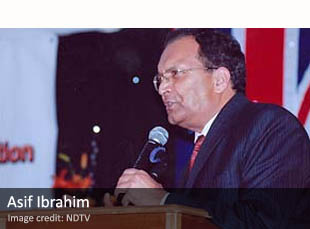
Asif IbrahimBy JOSEPH FITSANAKIS | intelNews.org |
For the first time in the history of India, a Muslim officer has been selected to head the country’s domestic intelligence agency. The Intelligence Bureau (IB), one of India’s most powerful intelligence organizations, will be led by Syed Asif Ibrahim, one of relatively few Muslim senior officers serving in the country’s predominantly Hindu security and intelligence apparatus. It will be the first time that the IB, which was formed in 1877 under British colonial rule, and today operates under the Ministry of Home Affairs, will be led by a Muslim. Formerly a senior officer in the Indian Police Service, Ibrahim, 59, has served for years in the IB’s Directorate of Operations, and recently served as the Bureau’s Chief of Station at the Indian High Commission in London, United Kingdom. His supervisory experience includes roles in the IB’s counter-cyberespionage and counterterrorism units. IntelNews hears that Ibrahim is widely seen by Indian intelligence officers as someone with a “crystal-clear understanding” of Islamic-inspired militancy inside the country. Ibrahim’s appointment was announced late last week by the Appointments Committee of the Cabinet, a senior government body lead by the Indian Prime Minister Manmohan Singh. Following the announcement, observers noted that at least four IB officials, who had been tipped for the job of director and were above Ibrahim in terms of seniority, were assigned to positions outside the Bureau, ostensibly to clear the way for Ibrahim’s appointment. Read more of this post

Sudan arrests senior intelligence officials linked to foiled coup plot

Salah GoshBy JOSEPH FITSANAKIS | intelNews.org |
Authorities in Sudan have announced the arrest of senior current and former intelligence officials over an alleged coup plot, which has reportedly been foiled. Spokesmen for the government of longtime Sudanese President Omar Hassan al-Bashir said on Thursday that thirteen senior “military and civilian figures” had been arrested for “inciting chaos […], targeting leaders [and] spreading [false] rumors” about the President’s health. Among them is Lieutenant General Salah Gosh, who directed Sudan’s National Security and Intelligence Services for a decade before stepping down in 2009 to become President al-Bashir’s Senior Security Adviser. Gosh was widely considered a key member of al-Bashir’s inner circle in Khartoum until April of 2011, when he was unexpectedly fired, allegedly for having raised criticisms of the President’s policies. Those arrested in the early hours of Thursday reportedly include Brigadier General Mohammed Ibrahim, a Field Commander in the Sudanese Army, and Major General Adil al-Tayeb, a senior military intelligence official. Reuters reports that witnesses in Khartoum saw several army tanks and dozens of armored vehicles speeding down a central street that links the capital with the Khartoum International Airport, shortly before midnight on Wednesday. However, reports from Khartoum this morning suggest that the city appears calm and traffic patterns are normal. The country’s Minster of Information, Ahmed Belal Osman, told local media that “the situation is now totally stable”. Read more of this post

Did US spies hack French government computers using Facebook?

The Palais de l'ÉlyséeBy JOSEPH FITSANAKIS | intelNews.org |
A sophisticated computer virus discovered at the center of the French government’s secure computer network was planted there by the United States, according to unnamed sources inside France’s intelligence community. Paris-based magazine L’Express, France’s version of Time magazine, says in its current issue that the alleged American cyberattack took place shortly before last April’s Presidential elections in France. It resulted in the infection of the entire computer system in the Palais de l’Élysée, which is the official residence of the President of France. The French magazine cites unnamed sources inside the French Network and Information Security Agency (ANSSI), which is responsible for cybersecurity throughout France. The sources claim that the snooping virus allowed its handlers to gain access to the computers of most senior French Presidential aides and advisers during the final weeks of the administration of French President Nicolas Sarkozy, including his Chief of Staff, Xavier Musca. The article claims that the virus used a source code nearly identical to that of Flame, a super-sophisticated version of Stuxnet, the virus unleashed a few years ago against the computer infrastructure of the Iranian nuclear energy program. Many cybersecurity analysts believe that the US and Israel were instrumental in designing both Stuxnet and Flame. IntelNews understands that the alleged virus was initially directed at employees of the Palais de l’Élysée through Facebook. The targets were allegedly befriended by fake Facebook profile accounts handled by the team that operated the virus. The targets were then sent phishing emails that contained links to phony copies of the login page for the Palais de l’Élysée intranet website. Read more of this post

Ex-intelligence official: cyber espionage more dangerous than terrorism

Raymond BoisvertBy JOSEPH FITSANAKIS | intelNews.org |
A former senior member of Canada’s intelligence community has said that the threat of cyber espionage requires more resources that are currently being diverted to counterterrorism. Ray Boisvert, who retired last year from the post of Assistant Director of Intelligence for the Canadian Security Intelligence Service (CSIS), said in an assertive speech last week that cyber espionage is “fundamentally undermining [Canada’s] future prosperity as a nation”. Speaking on Friday in Ottawa, Boisvert compared cyber espionage to the climate-change debate, which has been marked by a series of ignored warnings, due to “some willful blindness on behalf of individuals”. As a result, he said, the need to establish essential security measures to protect worldwide electronic infrastructure is being neglected, while desperately needed resources are being diverted to counterterrorism. He explained the lack of action on three levels: first, the resistance emanating from technologically challenged decision-makers in the government and private sector, who simply do not understand the technical complexities of digital telecommunications security. Second, it is rooted in the government’s reluctance to invest the funds required to shield the nation’s communications infrastructure from espionage attacks. Finally, he placed the blame on the fragmentation and shortsightedness of the private sector, which owns and operates nearly 90 percent of Canada’s critical communications infrastructure and yet is too consumed by competition to sit around the same table on matters of security. In giving examples of the seriousness of the threat of cyber espionage, Boisvert cited the attacks last year on the computer systems of Canada’s Treasury Board and Finance Department, which compromised trade secrets of several national industries. He also mentioned the attacks on Nortel Networks Inc., which he said lasted for over a decade and may have contributed to the company’s 2009 demise. Read more of this post

Russian court paroles scientist convicted of spying for China

Valentin DanilovBy JOSEPH FITSANAKIS | intelNews.org |
A court in Siberia has issued a rare verdict to parole a Russian academic who was convicted in 2004 of conducting espionage on behalf of China. Russian physicist Valentin Danilov headed the Thermo-Physics Center at Russia’s Krasnoyarsk State Technical University (KSTU), which is located in Siberia’s third largest city. For several years prior to his arrest, he conducted research on the impact of solar activity on the condition and performance of space satellites. In 1999, Danilov was among the signatories of a lucrative contract between KSTU and the state-owned China Aerospace Science and Technology Corporation, which is the main contractor for the Chinese government’s space program. The contract stipulated that KSTU was to help China Aerospace evaluate the performance of artificial satellites in real-life space conditions. Less than two years later, in February of 2001, Danilov was arrested by the FSB, the Russian Federal Security Service, and charged with conducting espionage in the service of the Chinese space program. In his trial, which took place in 2003, Danilov admitted selling to the Chinese information on satellite technology belonging to the Russian government. But his defense team argued that the information in question had already been declassified and available in public sources since the early 1990s. Largely due to this argument, the jury acquitted Danilov of all charges at the end of 2003. However, by the middle of June of next year, the physicist had been arrested again, after the Russian Supreme Court overturned his earlier acquittal. In November of 2004, another court found Danilov guilty of treason and sentenced him to 14 years in prison. Read more of this post

Analysis: Should the CIA kill less and spy more?

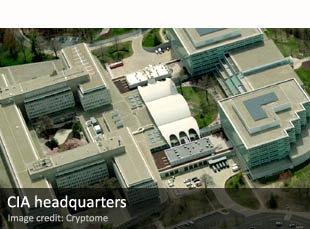
CIA headquartersBy JOSEPH FITSANAKIS | intelNews.org |
The Central Intelligence Agency’s awkward silence about the recent resignation of its Director, General David Petraeus, is indicative of an organization that remains distinctly uncomfortable with publicity. The added layer of the sexual nature of Petraeus’ impropriety has increased exponentially the degree of unease at Langley. Yet sooner or later the news media will move on to something else and General Petraeus will fade into the distance. For seasoned intelligence observers, however, the question of the CIA’s future will remain firmly in the foreground. In an interview earlier this week with Wired magazine, former CIA Director General Michael Hayden (ret.) opined that Petraeus’ resignation presents the Agency with the opportunity to return to its operational roots. Hayden, who led the CIA from 2006 to 2009, said that the Agency has been “laser-focused on terrorism” for many years. Consequently, much of its operational output “looks more like targeting than it does classical intelligence”, he said. His views were echoed by the CIA’s former Acting Director, John McLaughlin, who told Wired that the most significant challenge for the post-Petraeus CIA “may be the sheer volume of problems that require [good old-fashioned] intelligence input”. Yesterday, meanwhile, saw the publication of two opinion pieces by two of America’s most experienced intelligence watchers. In the first one, The Washington Post’s Walter Pincus urges United States President Barack Obama to pause and think about the role of America’s foremost external intelligence organization before appointing a successor to General Petraeus. For over a decade, argues Pincus, the CIA’s focus has been to fulfill covert-action tasks in the context of Washington’s so-called “war on terrorism”. But through this process, the Agency “has become too much of a paramilitary organization” and has neglected its primary institutional role, which is to be “the premier producer and analyst of intelligence for policymakers, using both open and clandestine sources”. Read more of this post