Ex-diplomat: US thinks Israeli spy Pollard was not acting alone

Itamar RabinovichBy JOSEPH FITSANAKIS | intelNews.org |
One of Israel’s former ambassadors to Washington has told a radio program that United States officials suspect Jonathan Jay Pollard, an American who spied for Israel in the 1980s, was not acting alone. Itamar Rabinovich, who was Tel Aviv’s most senior diplomat on US soil from 1993 to 1996, told Israel Radio on Monday that this is probably the reason behind Washington’s refusal to release the imprisoned spy. Pollard was a US Navy intelligence analyst who spied for Israel, in exchange for money, from 1984 until his arrest in 1986. Many in US counterintelligence consider him one of the most damaging double spies in American history. But he is widely viewed as a hero in Israel, and Israelis, as well as many pro-Israel Americans, are actively pressuring the US administration of President Barack Obama to release him. According to Rabinovich, however, the main reason behind the US refusal to release Pollard is that officials in the US Intelligence Community think that Israel has concealed the full extent of his activities on US soil. Furthermore, Rabinovich said in his interview that Washington believes Israel has shielded other Americans who either collaborated with Pollard or worked alongside him at the time. “They suspect that he wasn’t the only one, that there were additional Pollards”, said Rabinovich, adding that “Israel, despite its promises, did not reveal all the cards in this case and in similar cases”. The former ambassador said that, to his knowledge, “Israel [still] hasn’t said everything” to the Americans about the extent of Pollard’s espionage activities on US soil. Expounding on this, he said that “the claim concerning the enormous damage done to the Americans” by Pollard’s activities is one thing, “but there is also a hidden [claim], which is not voiced openly, but is implied”. The Americans, said Rabinovich, are “punishing Israel at Jonathan Pollard’s expense. They are angry with Israel more than with Pollard”. Read more of this post

Interview with agent who caught US-Israeli spy Jonathan Pollard

Jonathan PollardBy JOSEPH FITSANAKIS | intelNews.org |
Twenty-six years ago this month, a United States court convicted Jonathan Jay Pollard, a US Navy analyst who had been caught spying on his country for Israel. Pollard, who is still serving his life sentence, enjoys tremendous popularity in Israel as well as among pro-Israeli public figures in the US. His supporters in Israel and elsewhere view him as a hero who is serving an unfairly harsh sentence and they pressure the US government to release him. In light of that, it is worth paying attention to a recent radio interview with the man who caught him spying on America. The interview was conducted by Mike Lanchin, a reporter and producer for BBC radio’s Witness program. Lanchin managed to trace Ron Olive, a retired Assistant Special Agent at US Navy Counterintelligence, who in June 1986 cracked the Pollard case, leading to the spy’s arrest and eventual conviction. Olive, who now runs his own security consultancy firm in Arizona, told Witness that it took him and his fellow investigators over six months to piece together their case against Pollard. He added that, according to his investigation, “Pollard stole so many documents, so highly classified, more so than any other spy in the history of this country, in such a short period of time”. The case, said Olive, was the worst he had ever seen and it “devastated the entire [US] Intelligence Community”. The reason was not only the volume of stolen classified material, but also the fact that Pollard “could have been stopped from the very beginning”. Read more of this post

U-2 pilot captured by USSR in 1960 to receive posthumous Silver Star

Francis Gary PowersBy JOSEPH FITSANAKIS | intelNews.org |
An American Central Intelligence Agency pilot, who was criticized during the Cold War for allowing Soviet forces to capture him alive during the 1960 U-2 incident, is to be posthumously awarded a military decoration for valor. Francis Gary Powers was one of several pilots who participated in Project HOMERUN, a joint effort by the CIA and the National Security Agency that surreptitiously gathered signals and photographic intelligence on Soviet military sites. The program, which has been described by some historians as one of the most successful intelligence projects in US history, relied on the U-2’s ability to fly beyond 70,000 feet over the Soviet Union, thus avoiding detection or attack by Soviet forces. But this impression was false; in reality, Soviet radars had been able to detect nearly every U-2 flight over Soviet territory. Eventually, on May 1, 1960, Soviet forces were able to shoot down one of the U-2 flights using a surface-to-air missile. Shortly after the USSR announced that an American plane had been shot down over Soviet territory, the US administration of President Dwight Eisenhower pretended that the plane was a NASA weather research aircraft that had “drifted into Soviet airspace” when the pilot had “lost consciousness”. At that point, however, Washington had no idea that the CIA pilot, Francis Gary Powers, had been captured alive by Soviet forces. This was later announced by Soviet Premier Nikita Khrushchev, who scored a major diplomatic coup for the Soviets. Following his arrest, Powers spent nearly two years in a Moscow prison before being exchanged for Soviet KGB spy Rudolf Abel, who had been captured in the US in 1957.  Recently declassified documents show that some CIA analysts had refused to believe that the USSR was capable of shooting down a U-2 aircraft, and thought that Powers had voluntarily defected to the Soviet Union. Read more of this post

Russian colonel was ‘most successful CIA spy’ in recent years

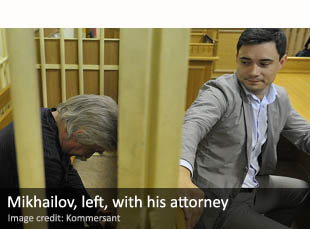
Valery Mikhailov, left, with his attorneyBy JOSEPH FITSANAKIS | intelNews.org |
Before the dust could settle from last month’s closed-door trial of Vladimir Lazar, and the arrest of an unnamed missile engineer on charges of espionage, Russia claims to have exposed yet another spy. Valery Mikhailov, a retired Russian counterintelligence officer, has been given an 18-year prison sentence for allegedly spying on behalf of the United States Central Intelligence Agency. In disclosing Mikhailov’s sentence yesterday, Moscow District Military Court officials were deliberately vague about Mikhailov’s alleged espionage activities, and provided limited information on the precise charges against him. But reporters, who were not allowed to attend Mikhailov’s trial, were told that he voluntarily approached CIA officers in Russia in 2001 and offered to spy on his country on behalf of the US, in exchange for regular payments in cash. Russian government prosecutors said that, from 2001 until 2007, when his activities were detected by Russia’s Federal Security Service (FSB), Mikhailov gave his American handlers access to over a thousand copies of secret or top-secret documents. Most of these, according to reports in the Russian media, had been prepared by FSB analysts for top-level Russian government officials, including the President, Prime Minister, and members of the Security Council of the Russian Federation. Russian government prosecutors say that Mikhailov was arrested following an extensive period of surveillance by the FSB, which allegedly resulted in the capture of an American CIA courier. The latter was apprehended while surreptitiously collecting classified documents copied by Mikhailov. Following his arrest, Mikhailov is said to have admitted that he earned over $2 million from his espionage activities. Read more of this post

Comment: Who authored computer virus that ‘dwarfs Stuxnet’?

Flame virus code segmentBy JOSEPH FITSANAKIS | intelNews.org |
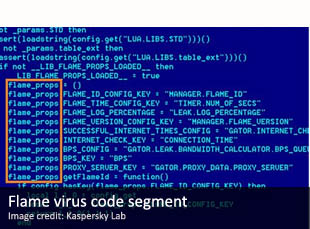
When the Stuxnet computer virus was detected, in 2010, it was recognized as the most sophisticated malware ever created. It had been specifically designed to sabotage Siemens industrial software systems, which were used in Iran’s nuclear energy program. Not surprisingly, most Stuxnet-infected computers were in Iran. Now a new, massive and extremely sophisticated piece of malware has been detected in computers belonging to the Iranian National Oil Company and Iran’s Ministry of Petroleum. It is called Flame and, according to antivirus company Kaspersky Lab, which first spotted the virus last week, it is “one of the most complex threats ever discovered”. Simply consider that Stuxnet, which caused unprecedented waves of panic among Iranian cybersecurity experts, was 500 kilobytes in size. Flame is over 20 megabytes in size, consisting of 650,000 lines of code; it is so complex that it is expected to take programming analysts around a decade to fully comprehend. The two are different, of course. Stuxnet was an infrastructure-sabotaging malware, which destroyed hundreds —maybe even thousands—of Iranian nuclear centrifuges. Flame, on the other hand, appears to be an espionage tool: it aims to surreptitiously collect information from infected systems. What connects them is their intended target: Iran. We now have Stuxnet, the most complex sabotaging malware ever discovered, which must have taken dozens of programmers several months to create, and Flame, the world’s most powerful cyberespionage tool ever detected by computer security experts. And both have been primarily directed at Iranian government computers. Read more of this post

US State Department silent on ‘massive’ China spy revelations

Hillary ClintonBy JOSEPH FITSANAKIS | intelNews.org |
The United States Secretary of State, Hillary Clinton, has declined to comment publicly on the arrest of a senior Chinese government aide, who is said to have conducted “massive” spying for Washington. According to Reuters news agency, who broke the story last week, the aide was arrested several months ago, but both the US and China have chosen to keep the issue under wraps in order “to prevent a fresh crisis in relations” between the two countries. Reuters cited “three sources [with] direct knowledge of the matter”, who said that the aide was employed at a critical post in the office of a vice minister in China’s Ministry of State Security (MSS). The MSS is China’s foremost intelligence agency, with responsibility for both domestic and international intelligence collection. According to the sources quoted by Reuters, the unnamed aide was arrested “sometime between January and March” of 2012 and stands accused of supplying his American handlers with classified information on Chinese espionage activities abroad. According to the report, the accused spy had been working for the US “for several years” and his case could represent the worst breach of China’s MSS in two decades; according to one source, the damage inflicted to the MSS’ operations by this case “has been massive”. Reuters said that the aide, who speaks English, was recruited by the US Central Intelligence Agency, and was paid “hundreds of thousands of US dollars” to provide “political, economic and strategic intelligence” to American intelligence officers. Read more of this post

New Israeli special forces command escalates covert action

Benny GantzBy JOSEPH FITSANAKIS | intelNews.org |
In recent months, intelNews has paid particular attention to senior Israeli security officials, or former officials, who routinely caution against plans for an Israeli military attack on Iran. These include Amos Yadlin, former head of Israel’s Military Intelligence directorate, and former Mossad Directors Meir Dagan and Tamir Pardo, who believes that a nuclear-armed Iran “would not be an existential threat to Israel”. But such current or former Israeli officials, who view a possible Israeli military attack on Iran as catastrophic, should not be seen as advocating pacifist views. On the contrary, they caution against an open Israeli military attack on Iran, favoring instead a covert-action approach. There are now signs that, under pressure by the United States, the Israeli administration of Benjamin Netanyahu is gradually heeding such advice. One such indication is to be found in the increasingly instrumental role played by Benny Gantz, the Chief of General Staff of the Israel Defense Forces. Lieutenant-General Gantz, who rose to the position of Israel’s most powerful soldier in February of 2011, arguably represents the most hawkish wing of the Israeli military. He is also one of the most vocal adherents of Israeli military supremacy in the Middle East ‘by any means necessary’. In April, he spoke publicly to confirm that, under his leadership, the Israeli military has “escalated special operations beyond the country’s borders”. Since then, he has refused to provide details of such operations, which he has described as “highly classified”. But an article published earlier this month in The Jerusalem Post discusses the rise in Israeli covert operations in the context of a new Israeli special forces command called Deep Corps. Read more of this post

Comment: US cybersecurity posture is not purely defensive

NSA headquartersBy JOSEPH FITSANAKIS | intelNews.org |
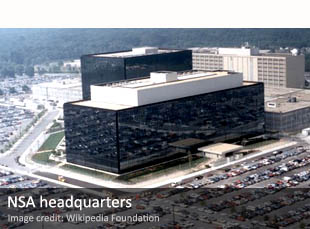
In recent years, news coverage of cyberespionage and cybersecurity has increased several times over; both subjects have escaped the narrow confines of technical literature and have entered the broad expanses of popular news media. This blog is no exception; since 2008, we have covered both cybersecurity and cyberespionage at length. In looking back at our coverage, it takes but a cursory glance to conclude that most of our reports feature the names of two countries: China and –to a far lesser extent– Russia. Moreover, the vast majority of our cybersecurity and cyberespionage coverage portrays the United States as a defensive actor, trying desperately to protect the integrity of its networks from foreign hackers. But is this accurate? How realistic is it to assume that the US, the world’s leading military power, abstains from offensive cyberespionage as a matter of strategy? The most likely answer is: not very. The problem is that much of the reporting on cybersecurity is based on national allegiances. Many American media pundits thus tend to forget that Washington, too, conducts cyberespionage. Read more of this post

Comment: US helped Canada nab accused spy Jeff Delisle

Jeffrey Paul DelisleBy JOSEPH FITSANAKIS | intelNews.org |
Back in January of this year, when the Jeffrey Delisle spy affair made headlines around the world, I spoke with several journalists from The Globe & Mail, The Canadian Press, and other Canadian news outlets. Most of them were –rightly– curious about the role of the United States in the affair, in which Sub-Lieutenant Delisle, who had been employed at Canada’s ultra-secure TRINITY communications center in Halifax, was accused of spying for a foreign power. I told them that, given that Trinity handled –aside from Canadian– NATO communications, Canada was in fact obligated to notify all of its NATO partners about the suspected penetration. That aside, I said that it could be “safely assumed” that US counterintelligence agencies were “fully involved in the Delisle case, and probably ha[d] been for several months”. By the latter phrase, I implied that US counterintelligence agencies had been closely involved in helping their Canadian counterparts build their case against Delisle. Now a new report in The Globe & Mail suggests that US counterintelligence officials “supplied vital information” to their Canadian colleagues during “the early days of the investigation” into the Delisle affair. The article says that the full extent of what the Americans told Canadian authorities remains unclear; but it quotes “a source familiar with the matter”, who claims that the US “helped Canada build its investigation”, not necessarily by providing a single tipoff clue, but through “an accumulation of information”. The paper adds that Washington’s involvement in the investigation from an early stage “adds a key new detail to [the] story”. Not necessarily, I would argue. Read more of this post

French terrorist Merah planned attack on Indian embassy in Paris

Embassy of India in ParisBy JOSEPH FITSANAKIS | intelNews.org |
Mohamed Merah, the French Muslim who killed seven and injured five people in Toulouse last March, had planned to launch a massive attack on the Indian Embassy in Paris, according to new revelations. Merah was shot dead by French Special Forces on March 22, after killing three French Army personnel on March 15, and four civilians, including two children, on March 19. But according to French newspaper Le Monde, Merah had initially planned to attack the Indian embassy in Paris. Quoting sources from France’s Central Directorate of Interior Intelligence (DCRI) and the Special Forces (RAID), the French daily says that Merah’s handlers in Pakistan had initially tasked him with attacking Indian diplomatic targets in the French capital. “That was the initial target assigned to him by the Taliban, who trained him for holy war […] in Pakistan during the summer of 2011”, a French intelligence source is quoted as saying in Le Monde. By “Taliban”, the source was most likely referring to Lashkar e-Taiba, one of Asia’s largest militant Islamist groups, which is waging a protracted war against the Indian state in Indian-administered Kashmir and elsewhere. Most Lashkar e-Taiba training camps are located in Pakistan, where Merah, who was Algerian-born, traveled in the summer of 2011. However, the paper says that the DCRI, which is said to have employed Merah as an informant, had received prior warning of the plot, and had notified Indian officials, who in turn were able to beef-up security measures at the embassy. Read more of this post

Is US considering transferring convicted arms smuggler to Russia?

Viktor BoutBy JOSEPH FITSANAKIS | intelNews.org |
Former Soviet military intelligence officer Viktor Bout is one of the world’s most notorious weapons dealers. In 2008, Bout, known informally as ‘the merchant of death’, was finally arrested in Bangkok by the United States Drug Enforcement Administration, with the cooperation of the Royal Thai Police. He was eventually extradited to the US and convicted to a 25-year prison term, which he is serving at the Brooklyn Metropolitan Detention Center in New York. Last week, it emerged that the US Bureau of Prisons was about to transfer Bout to the Florence Federal Correctional Facility in Colorado. Widely referred to as ‘Supermax’, the Florence facility houses some of America’s most notorious prison inmates. It seems a proper fit for someone like Bout, who for decades supplied weapons to African warlords, who is accused by the United States of having supplied weapons to the Taliban, and who was arrested while trying to sell arms to the Revolutionary Armed Forces of Colombia (FARC). On Tuesday, however, it was suddenly reported that the Bureau had decided to delay Bout’s transfer to Supermax. Bout’s attorney, Albert Y. Dayan, said he had been notified in a letter that the Bureau was “re-evaluating where to send Bout” and that it was “reconsidering its plan” to send the notorious weapons merchant to the Colorado maximum security facility. As might be expected, Dayan called the news “a credit [to] the Bureau of Prisons and the US Attorney’s office”; but the question, of course, is why did the Bureau decide on the delay, and what does the US Department of Justice know about it? The answer could perhaps be found in an interview given on Wednesday by no other than the US Attorney General, Eric Holder. Read more of this post

US resumes controversial weapons sale to Bahrain

Gulf Cooperation Council countriesBy JOSEPH FITSANAKIS | intelNews.org |
The United States has announced that it will resume a controversial weapons deal with the Kingdom of Bahrain, despite its government’s substandard human rights record, which has been internationally criticized in the context of the Arab Spring. The administration of President Barack Obama halted all weapons sales to the oil-rich Gulf state in September of 2011, nearly a year following the eruption of widespread popular protests in the Kingdom. On May 11, however, Washington announced that the weapons sale would go ahead after all, with the exception of some items that could be used against human rights protesters. According to The Christian Science Monitor, one of a handful of American news outlets that covered the story, US officials said that the decision to resume weapons sales to Bahrain was taken “in light of US national security interests”. The paper quotes an unnamed US government official who told reporters that Washington had given the go-ahead to the weapons sale in order to “help Bahrain maintain its external defense capabilities” against Iran. The regime in Bahrain has accused human rights activists of operating under the control of the Iranian government. The Monitor says that the resumption of US military aid to Bahrain has dealt a significant blow to the pro-democracy movement, and appears to have “incensed opposition activists”, who see it “as a signal that that the US supports Bahrain’s repression of opposition protests”. The article quotes one such activist, Mohammed al-Maskati, who describes the weapons deal as a “direct message [from the US] that we support the authorities and we don’t support democracy in Bahrain, we don’t support protesters in Bahrain”. Meanwhile, all eyes are in Saudi Arabia this week, as Arab Gulf leaders are meeting to discuss plans for forming a pan-Arab Gulf union. Read more of this post

Russia charges engineer with spying for foreign agency

The R-30 BulavaBy JOSEPH FITSANAKIS | intelNews.org |
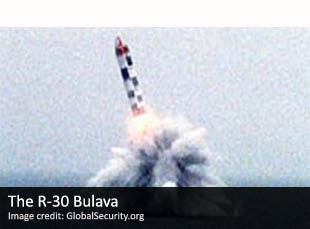
Russian authorities have charged an engineer working at a top-secret military facility in the Urals with espionage, accusing him of passing classified information about Russian ballistic missiles to agents of a foreign government. According to the InterFax news agency, which has strong links with the Russian government, the engineer had disclosed “secret data [and] state secrets concerning the area of strategic defense systems “. The Moscow-based news agency quoted an unnamed “Russian law enforcement official” who said that the accused spy worked at a critical research and development position inside a “restricted government facility that develops missile technology”. The source told InterFax that the alleged spy was working on the Russian R-30 Bulava ballistic missile, which is said to be in its final development stage. The R-30 Bulava (the Russian word for “mace”) is the name for Moscow’s latest-generation submarine-based ballistic missile technology. It is widely considered to be one of the future cornerstones of Russia’s nuclear weapons capability, and is thought to be the most expensive weapons project currently being developed in the country. The missile was approved for production last year, and is expected to come to service this coming October, when it will begin to replace Russia’s Soviet-era stock of submarine-launched nuclear missiles. The program is strongly linked to the country’s Borei-class ballistic-missile-capable nuclear submarines, which are expected to be able to launch the R-30 Bulava while underwater and in motion. Read more of this post

Denmark university professor faces charges of spying for Russia

Timo KivimäkiBy JOSEPH FITSANAKIS | intelNews.org |
Authorities in Denmark have charged a university professor with assisting “foreign intelligence operatives”, believed to be Russian. Professor Timo Kivimäki, a conflict resolution expert, who teaches international politics at the University of Copenhagen, is accused of “providing or attempting to provide” information to four Russian government officials on several documented instances between 2005 and 2010. The indictment claims Kivimäki, who was born in Finland, intended to give the Russians “information relating to individuals and subjects connected with intelligence activities”. The charges were filed after a lengthy investigation, launched in 2009 by the Danish Security and Intelligence Service (PET) in cooperation with Finland’s Security Intelligence Service (SUPO). The university professor spoke to leading Finnish newspaper Helsingin Sanomat and admitted that he carried out contractual “consulting work” for the Ministry of Foreign Affairs of the Russian Federation, for six years. He said he was paid approximately €16,000 (US$20,000) for his services, but denied that he knowingly contacted Russian intelligence operatives in the course of his consulting duties. According to Kivimäki, the Russian officials he interacted with appeared to be “diplomats, not spies”. He also pointed to the fact that none of the Russian officials he worked with as a consultant were apprehended or expelled by Danish counterintelligence, as is customary in such cases. Despite its relatively small size, Denmark had its share of international intelligence activity during the Cold War. During that period, PET amassed detailed files on approximately 300,000 Danish citizens considered to be “leftist sympathizers”. More recently, in November of 2010, media reports from Denmark suggested that the US embassy in Copenhagen maintained a network of local former police and intelligence officers, who were conducting “illegal systematic surveillance of Danish citizens”. Read more of this post

Ex-CIA officer sheds light on 1977 spy arrests in Moscow

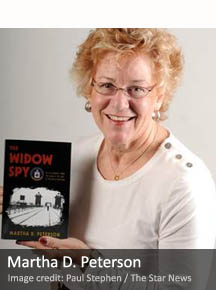
Martha D. PetersonBy JOSEPH FITSANAKIS | intelNews.org |
A recently retired CIA officer has spoken publicly for the first time about the 1977 arrest and eventual suicide of a Soviet double agent considered one of the Central Intelligence Agency’s most important assets during the Cold War. Aleksandr Dmitryevich Ogorodnik was an official in the Soviet diplomatic service who, while stationed at the Soviet embassy in Bogotá, Colombia, was compromised and later blackmailed by Colombian intelligence into spying on Moscow. Ogorodnik was initially handled by the Colombians, with little success. Later, however, when he was moved to a sensitive post in the Soviet Ministry of Foreign Affairs in Moscow, the Colombians turned him over to the CIA. He was handled by CIA officer Aldrich Ames —himself a double spy for the Soviet KGB— who gave Ogorodnik the codename TRIGON. After establishing contact with him in Moscow, the CIA provided Ogorodnik with a miniature camera and other essentials, which he used regularly to take photographs of classified Soviet documents. As a go-between, the Agency selected Martha D. Peterson, the first female CIA case officer ever to be posted in Moscow. Peterson was a fresh CIA recruit, who had completed her Career Training program in 1974, less than a year before being sent to the Soviet capital. Having retired in 2003, after 31 years with the CIA, Peterson has now published a memoire entitled The Widow Spy. In it, she reveals that she coordinated regular dead-drops with Ogorodnik for nearly two years, picking up his used film while supplying him with fresh film and other espionage accessories. On July 15, 1977, however, her mission was abruptly terminated after she was arrested by a large team of KGB officers underneath a railway bridge in Moscow, a few minutes after conducting a dead-drop for Ogorodnik. She was taken to the KGB’s Lubyanka prison, where she says she was interrogated for three days before being released by way of her diplomatic immunity, and ordered to leave the USSR. Ogorodnik was not so fortunate. A few months prior to his arrest, he had requested that the CIA provide him with a poison pill, which he could take in case he was arrested by the KGB. Read more of this post