Cell phones of leading Polish opposition figures hacked by government, group claims

Civic Coalition PolandCENTRAL FIGURES OF POLAND’S opposition coalition, which narrowly lost the 2019 parliamentary election, had their cell phones hacked with a surveillance software used by the country’s spy services, according to a new report. A major target of the hacks was Krzysztof Brejza, a member of the lower chamber of the Polish parliament and campaign director of the Civic Coalition, a centrist-liberal alliance. In the parliamentary election of 2019, the Civic Coalition challenged the all-powerful Law and Justice Party (PiS), which has ruled Poland for much of the past decade.

The PiS is a populist pro-Russian party that opposes many of the core policies of the European Union, of which Poland is a member. In contrast, the Civil Coalition is pro-Western and supports Poland’s integration into the European Union. In 2019, while the two parties were competing in a feverish electoral campaign, Poland’s state-owned television aired a number of texts acquired from Brejza’s phone, in what the opposition decried as a “smear campaign”. Eventually, the PiS won the election with a narrow majority.

The information about Brejza’s cell phone hack was revealed last week by Citizen Lab, a research unit of the University of Toronto’s Munk School of Global Affairs and Public Policy, which focuses on information technology, international security and human rights. According to the report, at least three senior figures in the Civil Coalition were under telephonic surveillance throughout the election campaign. Brejza’s cell phone was breached over 30 times between April and October of 2019, according to Citizen Lab. The other two victims of the surveillance operation were Ewa Wrzosek, a public prosecutor and leading critic of the PiS, as well as Roman Giertych, an attorney who represents leading members of the Civic Coalition.

The report claims that the surveillance against the Civil Coalition members was facilitated by Pegasus, a controversial spyware that is sold to governments around the world by NSO Group Technologies, an Israeli digital surveillance company based near Tel Aviv. Earlier this year, the United States government blacklisted NSO Group Technologies, in a move that surprised many in Israel and beyond. Meanwhile, on December 24, the Polish government denied it had any role in the phone hacking affair. Poland’s Prime Minister, Mateusz Morawiecki, dismissed the Citizen Lab revelations as “fake news”.

Author: Joseph Fitsanakis | Date: 27 December 2021 | Permalink

Turkey arrests American diplomat, claims he sold fake passport to Syrian refugee

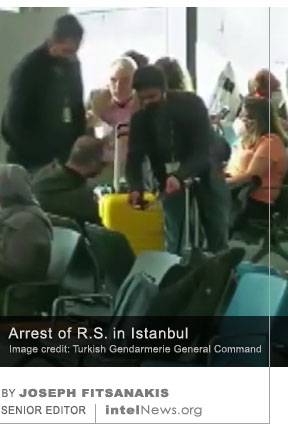
Istanbul airport arrestTURKISH POLICE ARRESTED A man reported to be an American diplomat, allegedly for selling a forged passport to a Syrian refugee who then attempted to use it in order to travel from Turkey to Germany. The incident was reported on Wednesday by Turkey’s state-run news service, Anadolu Agency. The news story was soon picked up by Hürriyet, Turkey’s leading pro-government newspaper. According to the reports, the alleged American diplomat was arrested on November 11, and he remains in prison today. He is identified only as “D.J.K.” in media reports. According to Turkish sources he works at the United States embassy in Beirut, Lebanon.

The arrest took place at the Istanbul International Airport, Turkey’s busiest air-travel hub. Turkish media aired security camera footage, which shows D.J.K. approaching the Syrian man, identified as R.S., inside the airport’s departures hall. The two men then appear to casually swap jackets before separating. The Syrian man then goes to the departures lounge, where he presents an immigration police officer with a passport. He is arrested by police soon thereafter, as is D.J.K.

Some reports claim that D.J.K. gave R.S. his own passport, while other reports suggest that it was in actually a forged passport that bore D.J.K.’s name. Allegedly R.S. gave D.J.K. $10,000 in exchange for the passport. According to Turkish police, the cash was found inside an envelope that was in D.J.K.’s possession at the time of his arrest. The Syrian man is now facing charges of forging an official document and has reportedly been released on bail. Unlike R.S., D.J.K. remains in prison in Istanbul.

No comment has been issued by the United States embassy in Beirut. Initially, the United States Department of State refused to comment on the case. Late on Wednesday, however, the Reuters news agency cited a source in the Department of State who said D.J.K. was not an American diplomat. The footage of D.J.K. and R.S.’s arrest can be watched here.

Author: Joseph Fitsanakis | Date: 23 December 2021 | Permalink
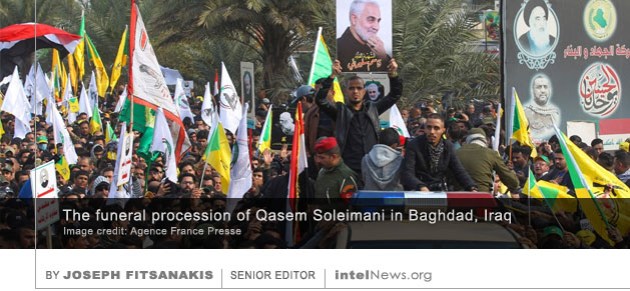
Israeli ex-intelligence chief claims Israel had role in top Iranian general’s killing

Qasem SoleimaniTHE RECENTLY RETIRED DIRECTOR of Israel’s military intelligence agency has claimed in an interview that Israel had a role in the assassination of Qassem Soleimani, who led Iran’s Islamic Revolutionary Guard Corps (IRGC). Soleimani was arguably Iran’s most revered military official. He was killed by an American targeted drone strike on January 3, 2020, in Baghdad, Iraq. The same missile strike also killed Abu Mahdi al-Muhandis, who commanded the Popular Mobilization Committee, an umbrella organization composed of around 40 pro-Iranian militias in Iraq. The then-American president, Donald Trump, claimed responsibility for the attack.
In the months that followed Soleimani’s assassination, Iranian state media claimed that the operation that targeted the IRGC had been aided with intelligence and logistical support by the governments of several countries, including Germany, the United Kingdom, Qatar, Kuwait and Lebanon. Meanwhile, reports by Western media alleged that “[i]ntelligence from Israel helped confirm the details” of Soleimani’s whereabouts shortly before he was assassinated. There has been no independent confirmation of these claims.

Now, however, it appears that a recently retired Israeli general, who headed the country’s military intelligence agency during Soleimani’s assassination, has claimed partial responsibility for his killing. According to the Associated Press, Major General Tamir Heyman, who until October of this year headed the Israel Defense Forces’ Military Intelligence Directorate, has become “the first official to confirm Israel’s involvement” in the controversial assassination.

Heyman is believed to have given an interview in late September to Mabalat Malam, the Hebrew-language magazine of the Israeli Intelligence Heritage Center, which is seen as closely affiliated with the Israeli intelligence community. In the interview, which is available in the current issue of the magazine, Heyman says that “Assassinating Soleimani was an achievement, since our main enemy, in my eyes, are the Iranians”. He adds that Soleimani’s killing was one of “two significant and important assassinations during my term” as head of army intelligence.

The Associated Press is among a number of news agencies that reached out to the IDF for clarification about Heyman’s comments. As of Tuesday night, the IDF had not responded to several requests for comment.

Author: Joseph Fitsanakis | Date: 22 December 2021 | Permalink

US, British spy agencies preparing Ukraine to withstand Russian invasion – reports

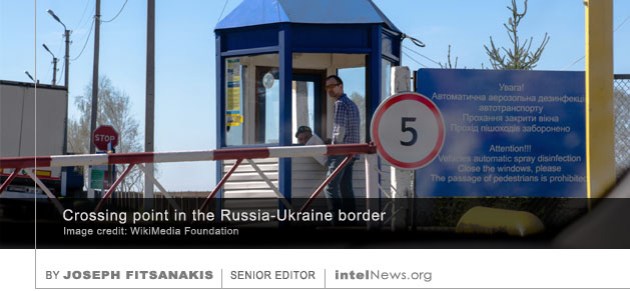
Ukraine Russia borderBRITISH, AMERICAN AND OTHER Western intelligence agencies are quietly preparing Ukrainian military and security experts to withstand a possible Russian attack, according to a number of media reports. The New York Times reported on Monday that cyberwarfare units from the United States and the United Kingdom have been dispatched to Ukraine. Their mission is believed to be helping the former Soviet republic in confronting possible large-scale cyberattacks from Moscow.
According to The Times, Ukraine has been undergoing a widespread series of cyberattacks from Russia almost without stop during the past several years. The attacks have consisted of multiple sabotage and espionage campaigns, which have targeted nearly every Ukrainian government agency, as well as the country’s energy infrastructure. These attacks have historically been low in number and intensity. This has changed in recent months, however, according to American officials.

Some observers are concerned that a series of large-scale cyberattacks may precede a military invasion by the nearly 200,000 Russian troops that are currently present along the Russian-Ukrainian border. Were they to materialize, these cyberattacks will probably attempt to sabotage core functions of Ukraine’s economy and government, including the banking and air-traffic systems. Moscow’s broader goal, according to The Times, would be to subvert the ability of President Volodymyr Zelensky’s government to govern Ukraine. This, in turn, could lead to its fall and replacement by a pro-Russian administration. If a pro-Russian government is threatened by a pro-Western revolt —something that Ukraine has seen in the past— it could potentially request military assistance from Moscow, which would provide a political pretext for an invasion.

Meanwhile, British newspaper The Daily Mirror said on Monday that American intelligence agencies have “secretly agreed to arm and train Ukrainian troops on how to fight a guerrilla war against Russian forces if they invade”. The paper said that meetings to discuss these plans have been taking place between officials from the Central Intelligence Agency and the Defense Intelligence Agency. The goal of such an effort, the report claims, would be to mirror the American help given to Afghan fighters by the CIA during the Soviet-Afghan war of the 1980s.

Author: Joseph Fitsanakis | Date: 21 December 2021 | Permalink

Israeli television channel to air details of ex-Mossad chief’s alleged affair

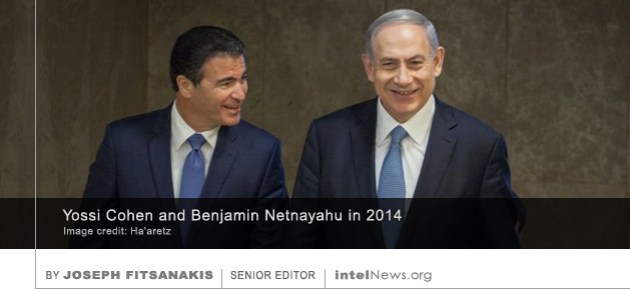
Yossi Cohen and Benjamin NetnayahuAN ISRAELI TELEVISION CHANNEL has said it will be airing details about an alleged extramarital affair involving the former director of the Mossad intelligence agency, Yossi Cohen. Cohen, 59, who has four children, served as director of the Mossad from 2015 until earlier this year. Last summer, the privately owned Channel 13 television reported that Cohen had “a close relationship” for the past two years with a woman who was not his wife, and who was believed to be a flight attendant. The report added that a complaint about the affair had been handed over to Israel’s Attorney General, Avichai Mandelblit, who was reviewing it.
At the time Cohen denied he had an extramarital affair, saying: “there is no flight attendant [and] there is no close relationship”. The former Mossad chief added that he had not been contacted by Attorney General Mandelblit about the complaint, or for any other reason. In its report back in the summer, the television station gave no further information about the alleged complaint, the identity of the flight attendant, or the state of the Attorney General Mandelblit’s investigation.

Now, however, Channel 13 says it will be airing a detailed report about the alleged extramarital affair, on Tuesday, December 21. According to preview clips, the channel’s investigative program, HaMakor, will claim that the affair began in 2018, while Cohen was director of the Mossad. What is more, the program will feature an interview with Guy Shiker, a well-known Israeli financier, who is allegedly the husband of the flight attendant.

In his interview, Shiker tells HaMakor that Cohen bragged to him and his wife about Mossad operations, and shared with them details of spy programs that were almost certainly classified. In a written response, Cohen told the television channel that he never shared any classified information with the couple or with anyone else, and that he did not divulge any operational details that he was not authorized to disclose during his tenure in the Mossad.

Author: Joseph Fitsanakis | Date: 20 December 2021 | Permalink

German chancellor warns of threat to democracy from anti-vaccine militants

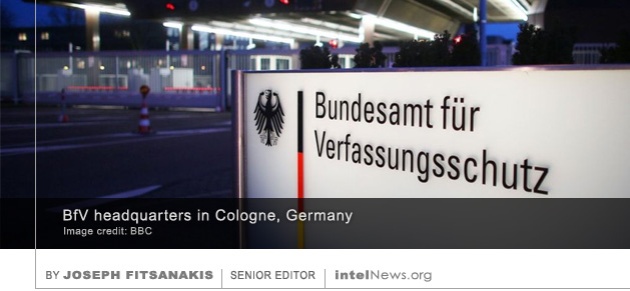
BfV GermanyGERMANY’S NEW CHANCELLOR, OLAF Scholz, warned that democracy “stands ready to defend itself”, after a special police unit uncovered an alleged assassination plot by anti-vaccine extremists in the city of Dresden. Dresden is located in the state of Saxony, which is considered a stronghold of anti-vaccine sentiment in Germany. It has one of the country’s highest COVID-19 infection rates and one of the lowest rates of vaccination among the local population.

On Wednesday morning, police raided at least five different properties in Dresden and a property in the nearby town of Heidenau, in connection with an alleged assassination plot against local government officials. According to a police statement, the searches were connected with an investigation of six German nationals, five men and one woman, who range in age from 32 to 64. All six are reportedly members of an online group calling itself “Dresden Offlinevernetzung” (“Dresden Offline Network”), which describes itself as an anti-vaccination and anti-government entity.

According to media reports, the group brings together conspiracy theorists, far-right extremists and anti-government militants, who frequently issue online calls to oppose mitigation measures against COVID-19 “with armed resistance, if necessary”. Police officials claim that members of Dresden Offlinevernetzung were planning to assassinate the prime minister of the state of Saxony, Michael Kretschmer, 47, as well as other local government officials.

Assassination plans had allegedly been discussed by members of the group through online messaging platforms, such as Telegram, as well as in face-to-face meetings. Additionally, a number of group members had posted messages indicating they had access to working firearms, machetes or hunting-style crossbows. Several members of Dresden Offlinevernetzung are now in detention and are waiting to be arraigned. A few hours after the raids and arrests, Germany’s new Chancellor, Olaf Scholz, said that German democracy was “ready to defend itself” against “this tiny minority of uninhibited extremists trying to impose their will on our entire society”. He added that he had authorized the Federal Office for the Protection of the Constitution (BfV), Germany’s federal domestic intelligence agency, to prioritize operations against violent anti-vaccine militants.

Last week, a group of anti-vaccine extremists held a Nazi-style torchlit rally in front of the home of Saxony’s Minister of Health, Petra Köpping.

► Author: Joseph Fitsanakis | Date: 16 December 2021 | Permalink

Denmark arrests four intelligence officers for disclosing ‘highly classified’ information

DDIS DenmarkFOUR CURRENT AND FORMER employees of Denmark’s intelligence community were arrested last week, as part of what Danish authorities described as a “lengthy and ongoing” counterintelligence investigation. News of the arrests came on Thursday in a brief press statement posted online by the Danish Security and Intelligence Service (PET). Known in Denmark as the Police Intelligence Service, the PET is tasked with domestic counterterrorism and counterintelligence.
In its statement on Thursday, the PET said that four individuals had been arrested the day before during “searches at various addresses” in Denmark. It did not disclose the identities of the four suspects, but said they were all current or former members of Danish intelligence agencies. At least one of them is believed to be a current or former employee of the PET itself. Denmark’s external intelligence agency, the Danish Defense Intelligence Service (FE, or DDIS in English), is also involved, according to reports.

The four suspects are accused of having disclosed “highly classified information from the intelligence services”, according to the information made available by the PET on Thursday. However, PET officials declined requests to discuss further details about the case, stating only that the arrests came after a lengthy counterintelligence investigation, which continues at this time. All four suspects have now been charged with violating Section 109(1) of the Danish Criminal Code, which is the standard law used by Danish prosecutors in espionage cases.

The last major counterintelligence case in Denmark was in 2012, when a Finnish professor at the University of Copenhagen, Timo Kivimäki, was convicted and sentenced to a short prison sentence for spying for Russia. Kivimäki, who today continues to work as an academic, claims that he carried out contractual consulting work for the Ministry of Foreign Affairs of the Russian Federation, but denies that he knowingly contacted Russian intelligence operatives in the course of his consulting duties.

Author: Joseph Fitsanakis | Date: 13 December 2021 | Permalink

New book claims former Irish head of government was Provisional IRA informant

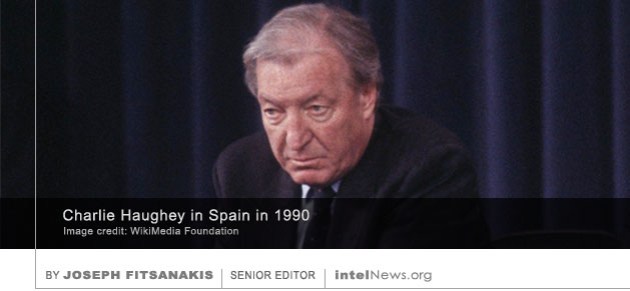
Charlie HaugheyA NEW BOOK BY a veteran Irish journalist claims that the late Taoiseach (prime minister and head of the government of Ireland) Charlie Haughey was in effect an informer of the Provisional Irish Republican Army in the 1960s and 1970s. Written by Kevin O’Connor, the longtime political correspondent of The Sunday Independent, the book also claims that Haughey maintained regular contact with the leadership of the IRA throughout the 1970s.
From the mid-1960s and until his retirement in the early 1990s, Haughey was a towering —and controversial— figure in Irish politics. He was first elected to the Dáil Éireann (Ireland’s parliament) in 1957 with Fianna Fáil, one of Ireland’s two major centrist political parties. Throughout his career, he served as Taoiseach from 1979 to 1981, for a short period in 1982, and from 1987 until his retirement in 1992. He also held scores of ministerial appointments in the 1970s and 1980s.

Haughey’s political career almost ended in 1970, when the so-called ‘arms crisis’ nearly brought down the Irish government. It was sparked by allegations that leading members of the Irish government were involved in a conspiracy to smuggle weapons to British-held Northern Ireland, in an effort to support the activities of the IRA. During the ensuing investigation, Haughey was found to have met with Cathal Goulding, who as chief of staff for the IRA. Consequently, Haughey was among several cabinet ministers who were either fired or voluntarily resigned in the aftermath of the arms crisis.

During the lengthy trial that followed the explosive allegations, Haughey claimed that his meeting with Goulding was nothing more than an unplanned encounter. He was eventually found not guilty. But many were doubtful about his innocence, and there were numerous claims that the Irish government —even the Taoiseach at the time— were fully aware and supportive of the conspiracy.

Now a new book by O’Connor, titled Political Betrayal: How Charlie Haughey Acquired €70 Million, claims that Haughey was closer to the IRA than even his staunchest critics realized. The allegations are based on what the author says are documents from the archives of the Special Branch Unit of the Garda Síochána, the police service of Ireland. The documents allegedly reveal that Haughey was routinely sharing classified information to the IRA, including warnings about government spies that operated within the organization.

In one instance, Haughey allegedly reached out to the IRA for assurances that they would not harm famous English artists who were living in Ireland at the time. Several artists moved there in the 1970s in order to take advantage of the country’s laws guaranteeing tax-free status for artists. This scheme was the brainchild of Haughey, and he was eager to ensure that it did not backfire. Among the famous artists who had taken advantage of these laws was the English journalist and novelist Frederick Forsyth, author of —among other books— The Day of the Jackal, who was a critic of the IRA. According to O’Connor, Haughey feared that the IRA might harm or kidnap Forsyth. But the militant group assured Haughey that Forsyth would not be harmed.

Haughey eventually left politics in 1992, when the government he was leading at the time was found to have illegally wiretapped the telephone lines of at least three investigative journalists. He never returned to politics. Despite his ungraceful fall from power, Haughey continues to be revered among Fianna Fáil supporters in Ireland today.

Author: Joseph Fitsanakis | Date: 09 December 2021 | Permalink

Updated: France arrests, then releases, alleged assassin of Jamal Khashoggi

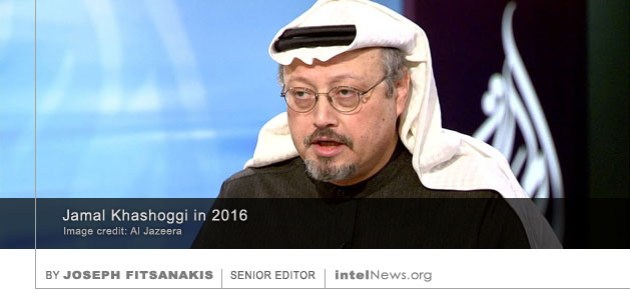
Jamal KhashoggiAN ALLEGED MEMBER OF the assassin squad that killed and dismembered Saudi journalist Jamal Khashoggi in Turkey in 2018, is reportedly under arrest in France, where he was caught trying to board an international flight. Khashoggi, 59, was a Saudi government adviser who became critical of the Kingdom’s style of governance. He moved to the United States and began criticizing Saudi Arabia from the pages of The Washington Post. He was killed on October 2, 2018, by a 15-member Saudi hit squad while visiting the Saudi consulate in Istanbul, Turkey. He had gone there to be issued a certificate of divorce from his former wife in Saudi Arabia.
After several weeks of vehemently denying any role in Khashoggi’s killing, the Saudi government eventually admitted that the journalist was killed inside the Saudi consulate in Istanbul. One of Khashoggi’s alleged killers is Khaled Aedh Alotaibi (or al-Otaibi), a 33-year-old member of the Saudi Royal Guard Regiment, whose mission is to protect the Saudi royal family. Alotaibi has been barred from entering several Western countries, including the United States and the United Kingdom. But Saudi Arabia has rejected a request by Turkey to extradite him to face charges in a Turkish court. The oil kingdom argues that Alotaibi was not among a group of “rogue” intelligence officers” who killed Khashoggi, and have since been punished under Saudi law.

Yesterday several French media outlets reported that Alotaibi had been arrested at the Paris Charles de Gaulle Airport at 9:30 am local time, as he was about to board a commercial flight to the Saudi capital Riyadh. He was apparently traveling under his real passport and not under an assumed identity. He has since been placed under judicial detention, while French authorities are trying to confirm that he is the same person who is wanted for the killing of Khashoggi. If this is confirmed, Alotaibi will be facing a preliminary hearing this week, and a French court will have to decide whether he will be extradited to Turkey.

In a statement published late on Tuesday, the Saudi embassy in France dismissed Alotaibi’s arrest as “a case of mistaken identity” and repeated the official Saudi government stance that all those who participated in Khashoggi’s murder have already faced justice in Saudi Arabia. It is worth noting that Alotaibi’s arrest occurred just days after French President Emmanuel Macron became the first major Western leader to openly meet with Saudi Arabia’s Crown Prince Mohamed Mohammad Bin Salman. The de-facto ruler of the country is believed by many to have ordered Khashoggi’s assassination.

Update: Early on Wednesday, French prosecutors said that the warrant issued by Turkey for the arrest of Alotaibi did not apply to the individual arrested on Tuesday. In a statement released to the press, the prosecutor’s office said: “Extensive checks on the identity of this person showed that the warrant did not apply to him. [Therefore] he was released”.

Author: Joseph Fitsanakis | Date: 08 December 2021 | Permalink

Israeli Mossad targeted Iran nuclear plant with three-pronged assault, report claims

Natanz Iran

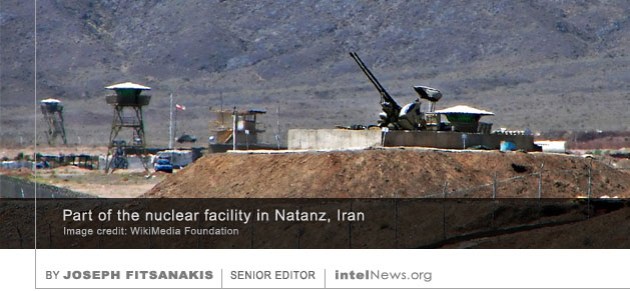
THE NATANZ ENRICHMENT FACILITY, which lies at the heart of the Iranian nuclear program, has repeatedly been the target of a multi-pronged sabotage operation by Israeli intelligence, according to a new report. The existence of the hardened fuel enrichment plant near the city of Natanz, in Iran’s Esfahan Province, was first acknowledged in 2002, when it was revealed by an Iranian whistleblower. In July 2020 and April 2021, Iranian authorities acknowledged that the facility had suffered major damage, reportedly due to acts of sabotage.

New a new report, published on Thursday in the London-based journal The Jewish Chronicle, claims that the Israeli agency Mossad was behind the sabotage in Natanz, which allegedly destroyed 90 percent of the plant’s nuclear centrifuges. The journal said that a team of over 1,000 technicians, intelligence analysts and operations officers was behind the attacks. The latter were carried out in a variety of ways that included infiltrating supply chains, recruiting Iranian scientists, and deploying a so-called suicide drone.

According to the The Jewish Chronicle, in 2019 the Mossad managed to infiltrate the supply chains used by Iran to build additions to several buildings and underground facilities in Natanz. Consequently, Israeli intelligence operatives posing as construction material wholesalers were able to supply building materials to Iranian government officials, which were “filled with […] explosives”. These were detonated remotely in July 2020, causing substantial damage to the nuclear plant.

At around the same time, Mossad officers posing as Iranian dissidents began recruiting Iranian scientists working at Natanz. The Chronicle cites an unnamed source who says that “the scientists’ motivations were all different” and that the Mossad offered each of them “what they deeply wanted in their lives”. The Mossad supplied the recruited scientists with explosives, which were dropped into the Natanz compound by drones, or smuggled inside boxes of catering supplies. The bombs were “remotely set off” in April 2021 and almost completely destroyed Natanz’s A1000 underground centrifuge hall, which is buried beneath 12 meters of reinforced concrete. Following the attack, 10 Iranian scientists were “spirited away to a safe location. All of them are safe today”, according to the unnamed source.

Two months later, a third attack was carried out, this time against a manufacturing facility of the Iran Centrifuge Technology Company in the city of Karaj, which is located 30 miles northwest of the Iranian capital Tehran. The attack was reportedly carried out with the use of a loitering munition —also known as a suicide drone— the size of a motorcycle. Mossad operatives had previously managed to smuggle the device into Iran in small components, which were then re-assembled.

The Chronicle reports that the attacks against the Natanz nuclear plant were carried out by Israeli spies without the participation of American intelligence agencies. The journal also claims that Israel recently put in motion “a new policy of launching covert attacks on Iranian soil in retaliation for its meddling in the region”. This means that “further undercover operations [inside Iran] are in the pipeline”, the report concludes.

Author: Joseph Fitsanakis | Date: 03 November 2021 | Permalink

European report claims Russia has retained Soviet-era assassination capabilities

Gävle Sweden

A REPORT FROM A European intelligence agency claims that the Russian state has retained the same capacity for worldwide extrajudicial executions that it had during the Soviet era. The report was disclosed by a Swedish broadcaster in association with the attempted murder of Tumso Abdurakhmanov, a blogger from the Russian province of Chechnya, who is a vocal critic of the Russian government and the Kremlin-backed governor of Chechnya, Ramzan Kadyrov.

Originally from the Chechen capital Grozny, Abdurakhmanov, 34, lives in Sweden, from where he regularly posts videos on YouTube criticizing Kadyrov and Russian President Vladimir Putin. His YouTube channel has over 250,000 followers. In 2020, a man who traveled to Sweden from Moscow, entered Abdurakhmanov’s apartment in Gävle, Sweden, and tried to kill him with a hammer. It appears that the man was let into Abdurakhmanov’s apartment by a woman with whom Abdurakhmanov had a relationship at the time, and is now believed to have been an accomplice of the would-be-assassin.

Abdurakhmanov survived the attack. The attacker, Ruslan Mamaev, is now serving a 12-year prison sentence, while the woman, Elmira Chapiaeva, is serving an 18-month sentence. Swedish authorities say they are looking for third person, who is believed to have been the would-be-assassins’ logistical link to the Chechen government, and remains at large. According to the Swedish Security Service, known as SÄPO, the operation to kill Abdurakhmanov was organized in Moscow in 2019.

In association with Abdurakhmanov’s attempted assassination, the Swedish broadcaster SVT published yesterday excerpts from an intelligence report, which offers a broad assessment of the Kremlin’s capabilities for extrajudicial killings around the world. According to the SVT, the report was produced by an unnamed “European intelligence agency”. It claims that many of the “instigators, planners, coordinators and operatives of [Russian-organized] extrajudicial killings are usually found in the special units [spetsnaz] of the National Guard of the Russian Federation”. This is primarily the case with spetsnaz units based in Chechnya, according to the report.

The conclusion of the report is that Russia “today has the same capacity as the Soviet Union once had to conduct assassination operations sanctioned by the state” around the world. The Kremlin has used this capability to carry out numerous assassinations and attempted assassinations of dissident expatriates, defectors, and other critics of the Russian government in Europe and beyond, the report concludes.

Author: Joseph Fitsanakis | Date: 02 December 2021 | Permalink

Underground network of spies helped Taliban score decisive victory in Afghanistan

Taliban

THE TALIBAN RELIED ON an extensive network of intelligence operatives and sleeper agents in major Afghan cities, in order to sweep to power with stunning ease last summer, according to a new report. These networks of spies had infiltrated state agencies and civil society organizations throughout Afghanistan over many years. They were quickly able to neutralize opponents of the Taliban from the inside when commanded to do so, according to the Wall Street Journal.

In a lengthy exposé published on Sunday, the newspaper said that Taliban spies had managed to successfully penetrate most government ministries, military and security bodies, as well as business entities over several years. Many Taliban operatives were also present within universities and even inside Western-funded aid organizations, especially those were headquartered in the Afghan capital Kabul, according to the Wall Street Journal.

The two authors of the report, Yaroslav Trofimov and Margherita Stancati, said they spoke about the Taliban’s spy network with Mawlawi Mohammad Salim Saad, a senior Taliban commander who belongs to the Haqqani Network. The Haqqani Network is a Sunni militant group that works closely with the Taliban, but has retained its operational independence over several decades. Saad told the Wall Street Journal that Taliban spies had posed as ordinary Afghan citizens, living in large urban centers without arousing suspicion from other Afghans or foreigners. Most of them had been specifically instructed by their Taliban handlers to adopt Western customs, such as wearing jeans and shaving their beards, said Saad.

But on August 15 of this year, large units of Taliban sleeper agents received simultaneous instructions to access hidden caches of weapons and neutralize government personnel in strategic locations around the country. The Wall Street Journal discusses the example of one such unit of Taliban spies, who quietly stormed a government compound in downtown Kabul and disarmed the stunned guards. Several of these units had specific instructions to stop government personnel from destroying classified and other sensitive documents as the state around them collapsed, according to the article.

Author: Joseph Fitsanakis | Date: 30 November 2021 | Permalink

Trump transition was ‘far and away’ most difficult in CIA history, internal report claims

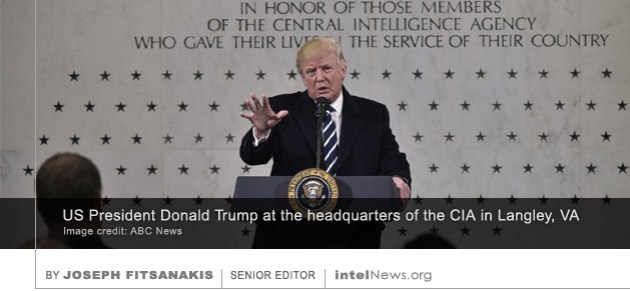
Donald Trump CIA

THE PERIOD IMMEDIATELY FOLLOWING the electoral victory of Donald Trump in 2016 was “far and away the most difficult” transition between administrations in the history of the Central Intelligence Agency (CIA). This is the conclusion of a recently declassified CIA analysis of how American presidents-elect are briefed. The term ‘president-elect’ refers to individuals who have won the US presidential election, but have yet to assume the presidency. Presidents-elect are briefed by the CIA during the transition period, which typically lasts about 75 days, from early November until late in January of the following year.

The CIA analysis appears in the most recent edition of Getting to Know the President: Intelligence Briefings of Presidential Candidates and Presidents-Elect, 1952–2016. It is authored by John L. Helgerson, a 38-year veteran of the CIA, who retired in 2009 as the Agency’s Inspector General. The volume contains lessons learned by analysts who briefed presidents-elect in over sixty years. Chapter nine of the book, which contains an assessment of Trump as president-elect, was released [pdf] last week.

The chapter chronicles some of the challenges faced by the CIA in the days immediately after Trump’s electoral victory in 2016. Such challenges included CIA analysts having to wait for over a week for the Trump team to begin communicating them, its members “apparently having not expected to win the election”. Additionally, the Trump transition team had not thought of a way to safeguard printed documents shared with them by the CIA, which necessitated the Agency having to install a safe in the Trump transition team’s headquarters.

Eventually, president-elect Trump began receiving the President’s Daily Brief (PDB), a highly sensitive classified document produced each morning for the eyes of the president, vice president and a limited number of senior administration officials. However, unlike his vice-president elect, Mike Pence, Trump did not read the PDB, and eventually told the CIA he wanted a less text-heavy approach to the document if he was going to read it. The CIA complied with the request, as it tries to adapt its briefing method to the intelligence consumers’ preferred mode. Read more of this post

Sweden arrests second suspect in high-stakes espionage case involving Iran

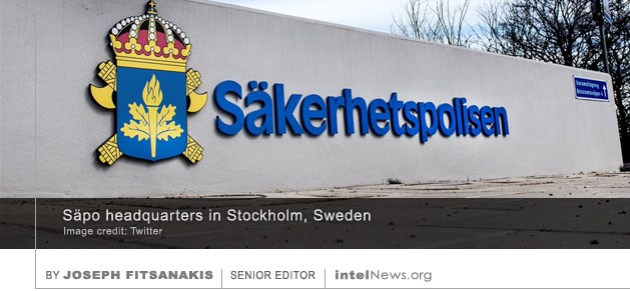
Säpo sweden

AUTHORITIES IN SWEDEN HAVE arrested a second suspect in an espionage case that appears to implicate Iranian agents operating inside some of the most secretive units of Swedish civilian and military intelligence. The most recent arrest was announced on Tuesday with statement by the Swedish Security Service (SÄPO), which said that an individual had been arrested in “central Sweden”.

The statement gave no further information about the suspect’s identity, but said that the suspect had been charged with “aggravated espionage”. It added that the arrest was connected with “a similar case” that led to an arrest of an intelligence officer in September, also connected to espionage. The “similar case” mentioned in the statement refers to the arrest of Peyman Kia, a senior civil servant and former intelligence officer, who was arrested in a pre-dawn raid on September 20 of this year.

Kia is believed to have been an officer in SÄPO, as well as in the Office for Special Information Gathering (KSI) of the Swedish Military Intelligence and Security Service (MUST). The KSI is reportedly among the most sensitive branches of the MUST. According to a number of reports in the Swedish media, Kia is of Iranian origin and is accused of having provided Iran with intelligence information. Specifically, he is “suspected of having committed serious crimes against the security of the Swedish state during the period 2011–2015”, according to reports.

The most recent arrest is reportedly directly connected with that of Kia. Swedish counterintelligence officials have described these cases as “complex”, adding that they have been “working on them for a long time”. If the charges hold in court, it will make this the first espionage affair affecting an employee of SÄPO since 1979.

Author: Joseph Fitsanakis | Date: 18 November 2021 | Research credit: A. | Permalink

Recent conviction of Chinese spy in a US court could be game changer, say insiders

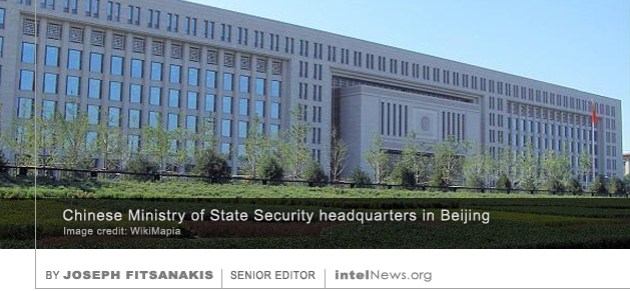
Chinese Ministry of State Security

THE RECENT CONVICTION OF a Chinese intelligence officer for espionage in a United States court could be a “seminal moment” for American counterintelligence, according to several former intelligence professionals. They spoke to The Daily Beast’s Shannon Vavra about the case of Yanjun Xu, who is also known as Qu Hui or Zhang Hui. As intelNews and others reported last month, Xu is a deputy division director in the Ministry of State Security (MSS) —China’s intelligence agency.

Xu was arrested by Belgian police in April 2018, while attempting to meet an employee of GE Aviation, a subsidiary of General Electric, whom he had allegedly tried to recruit at an academic conference in China in 2017. The Belgians extradited Xu to the United States, where he was indicted by a federal grand jury for conspiring to commit acts of economic espionage against GE Aviation. During the trial, which took place in Cincinnati, prosecutors successfully made the case that Xu’s espionage activities were part of a broader 10-year plan by the MSS to spy on aviation manufacturers around the world.

Xu’s extradition marked the first time that an employee of a Chinese intelligence agency was tried on American soil. His conviction could be a game changer, says to Bill Evanina, who was director of the United States National Counterintelligence and Security Center until earlier this year. Evanina told The Daily Beast that the case against Xu will almost certainly serve as a “legal template for future cases” by the United States government against Chinese espionage. Evanina’s view was echoed by Jim Olson, former Chief of Counterintelligence for the Central Intelligence Agency. He told The Daily Beast that Xu’s arrest, extradition and conviction “is a huge shakeup for the MSS” and its impact on how China conducts its espionage operations against the United States will be “tremendous”.

Meanwhile China has rejected all accusations against Xu. Liu Pengyu, spokesman for China’s embassy in the United States, told The Daily Beast that the charges against Xu were “pure fabrications”. He added that the Chinese state demands that Washington handles Xu’s case “according to the law and in a just manner”, so that this Chinese citizen’s “rights and interests” would be ensured.

Author: Joseph Fitsanakis | Date: 16 November 2021 | Permalink