Possible Russian role probed in incendiary devices found in Britain and Germany

DHLAUTHORITIES IN BRITAIN AND Germany are reportedly investigating the possibility that the Russian intelligence services may be behind two fires that occurred in shipping warehouses last summer. The fires occurred in late July in facilities belonging to DHL, a German logistics firm headquartered in Bonn.
On September 1, the German government issued a warning about unknown suspects allegedly shipping “unconventional incendiary devices” throughout Europe. The warning referenced a fire that occurred at a DHL logistics center in the east German city of Leipzig. Germany’s Federal Office for the Protection of the Constitution (BfV) warned at the time that “further incendiary incidents” were anticipated, but provided no further details.

Late last week, British newspaper The Guardian reported that an incident like the one that occurred in Leipzig had taken place in a DHL warehouse in Minworth, a suburb of the city of Birmingham, located in the British Midlands region. In subsequent reporting, the paper alleged that British and German authorities have been investigating a link between the two incidents. Moreover, authorities are reportedly probing the possibility that the incidents may be part of a wider campaign by Russian military intelligence to sabotage Western European transportation and shipping networks.

Meanwhile, Lithuanian media revealed on Friday that a suspect had been arrested in Lithuania in connection with the two fires in Britain and Germany. The reports suggested that the two incendiary devices had been shipped from Lithuania by the same individual. However, there have been no updates about who may be behind the apparent sabotage campaign.

Author: Joseph Fitsanakis | Date: 21 October 2024 | Permalink

Spain and US reject claims they planned to assassinate Venezuelan officials

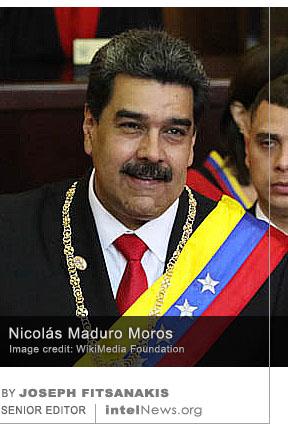
Nicolás MaduroTHE GOVERNMENTS OF SPAIN and the United States have strongly rejected allegations they were involved in an operation that aimed to kill leading Venezuelan officials, including the country’s President Nicolás Maduro. The allegations were made by a senior Venezuelan cabinet minister, following the arrests on Sunday of three Americans, as well as two Spanish and one Czech citizens. The six men have been charged with plotting to destabilize the Venezuelan government by killing Maduro and other top officials.
The allegations against the six foreign men were aired on live television by the Venezuelan Minister of the Interior Diosdado Cabello, who is a close ally of Maduro. Cabello accused the US Central Intelligence Agency (CIA) of “leading this operation” with the participation of special forces troops. The Venezuelan official went on to claim that at least one of the American citizens who were arrested over the weekend is a member of the US Navy Sea, Air, and Land (SEAL) Teams, commonly known as Navy SEALs.

Cabello referred to the six men as “mercenaries” with prior service in Colombia, Iraq, and Afghanistan. He added that they had been in contact with “French mercenaries in Eastern Europe” who had supplied them with “hundreds of weapons”. Cabello told reporters that Venezuelan authorities had seized over 400 rifles when they arrested the six men. The Venezuelan cabinet minister also claimed that the two Spanish citizens were employees of National Intelligence Center, Spain’s primary intelligence organization.

Late yesterday, however, Spanish officials issued strong denials of Cabello’s allegations. One Spanish government spokesperson told the Agence France Presse news agency that Madrid “denied and categorically rejected” Venezuela’s claims. Meanwhile, a statement issued by the US Department of State rejected as “categorically false […] any claims of US involvement in a plot to overthrow Maduro”. The French and Czech governments had yet to issue any official statements as of late last night.

Meanwhile, the BBC reported yesterday that the Spanish government has requested that Venezuelan authorities provide details of the detainees and that the Spanish embassy in Caracas is seeing to gain access to the two Spanish detainees.

Author: Joseph Fitsanakis | Date: 16 September 2024 | Permalink

Dutch prime minister bans wireless devices from meetings to ward off espionage

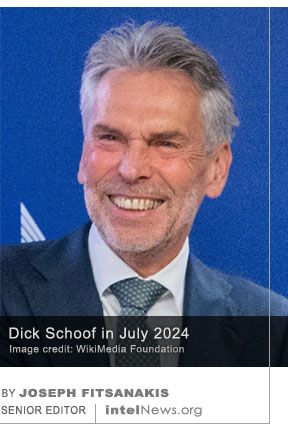
Dick SchoofTHE NETHERLANDS’ NEW PRIME minister has officially banned the use of all wireless devices from cabinet meetings, reportedly to defend against espionage operations from foreign actors. The move comes following warnings by Dutch intelligence services that the country is being targeted by Russian and Chinese spies with more intensity than at any time since the Cold War.

The current Dutch government, led by the far-right Freedom Party (PVV), was formed following the general election of November 2023. Although the PVV, headed by populist Geert Wilders, emerged as the leading political force in the Netherlands with 23% of the vote, it found it difficult to form a governing coalition. In June of this year, following lengthy negotiations, a rightwing coalition was formed between the PVV, the People’s Party for Freedom and Democracy (VVD), the Farmer-Citizen Movement (BBB), and the New Social Contract (NSC).

A key feature of the agreement was that none of the individual parties’ leaders, including Wilders, could serve as prime minister. Instead, the three parties settled on Dick Schoof as a form of compromise. The 67-year-old Schoof led the Netherlands’ Immigration and Naturalization Service from 1999 until he was appointed to head the Ministry of Security and Justice in 2010. From 2013 to 2018, he became the National Coordinator for Security and Counterterrorism —the Netherlands’ main counter-terrorism unit, which operates as part of the Ministry of Security and Justice.

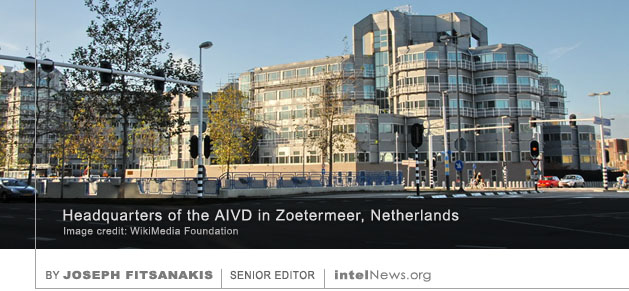
In 2018, Schoof was appointed director-general of the General Intelligence and Security Service (AIVD), the nation’s primary intelligence agency. The AIVD is tasked with foreign and domestic duties, as well as signals intelligence. Prior to his prime ministerial post, the culmination in Schoof’s career as a public servant came with his appointment as secretary-general of the Ministry of Justice and Security, in 2020. In 2021, after 30 years of being a member, Schoof officially left the Labor Party (PvdA), the Netherlands’ mainstream social-democratic, left-of-center political party. In subsequent public comments he appeared to endorse the PVV, but never officially joined it.

Speaking to reporters last week, Schoof said he was “taking a different approach” to security at cabinet meetings, which was “based on his former job in the intelligence community”. He added, “maybe I have a bit more experience with that sort of thing” and stressed that banning wireless devices from cabinet meetings was “a completely natural measure” for him. Members of the Dutch cabinet “agreed immediately” with the new measure, said the new prime minister.

Author: Joseph Fitsanakis | Date: 02 September 2024 | Permalink

At least four Russians released in prisoner exchange with West are verified ‘illegals’

SVR hqAT LEAST FOUR OF the eight Russians released by the United States and its allies last week, in exchange for 16 people held in Russian prisons, are verified ‘illegals’ —the term used to describe Russian non-official-cover intelligence personnel. All four operated using third country identity documents, including passports. In every case but one, these identity documents had been illegally acquired.

In intelligence parlance, the term ‘illegals’ emerged during the Cold War to describe Russian intelligence personnel who operated without any formal association with Russian diplomatic facilities. In many cases, these operatives used third country passports. This enabled them to operate with an unusual degree of flexibility and evade the attention of rival intelligence services. At the same time, however, the absence of diplomatic credentials prevented these operatives from claiming diplomatic immunity if caught. It thus exposed them to the possibility of lengthy prison terms upon discovery.

THE TWO GRU ILLEGALS

Among the prisoners exchanged last week was Pavel Alekseyevich Rubtsov. Rubtsov was born in the Soviet Union as the grandson of a Spanish evacuee, who had been taken to Moscow as a child by the leftist Spanish Republic during the Spanish Civil War. At the age of 9, Rubtsov moved with his mother to Spain, where he had his name legally changed to Pablo González Yagüe and grew up in Catalonia and the Basque Country. He was arrested in Poland in 2022 and charged with participating in foreign intelligence activities against Poland on behalf of the Main Directorate of the Russian Armed Forces’ General Staff, which is commonly known as GRU.

IntelNews has previously reported on the case of Mikhail Valeryevich Mikushin, who was also released and returned to Russia on Thursday. Mikushin lived for several years in Canada and Norway using a Brazilian passport under the name of José Assis Giammaria. When he was arrested by Norwegian authorities, Mikushin was working as a researcher on arctic security affairs for the Arctic University of Norway. Among other things, Mikushin was a volunteer researcher for a UiT GreyZone, a scholarly project that studies contemporary hybrid threats and grey zone warfare. Like Yagüe, Mikushin is also believed to have been employed by the GRU.

THE TWO SVR ILLEGALS

Arguably the most unusual case of illegals among those unveiled last week is that of Artem Dultsev and Anna Dultseva. The couple moved from Argentina to Ljubljana, the capital of Slovenia, in 2017. They brought with them their two young children, a boy and a girl, both of whom appear to have been born in Argentina. Artem Dultsev’s Argentinian passport bore the name Ludvig Gisch, born in 1984 in the West African country of Namibia. Dultsev posed as an information technology executive. His wife, Anna Dultseva, who operated an art gallery, used the cover name Maria Rosa Mayer Munos and went by Mayer. Read more of this post

Ex-CIA analyst accused of spying for South Korea had prior warnings from FBI, CIA

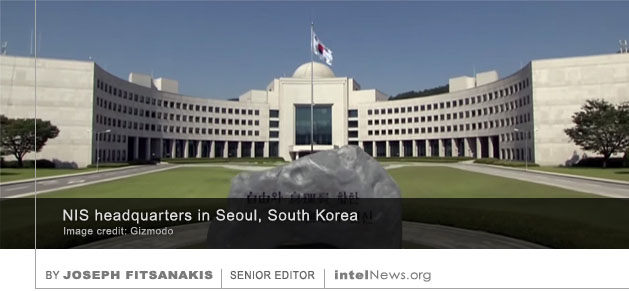
NIS South KoreaA FORMER INTELLIGENCE ANALYST for the Central Intelligence Agency (CIA), who is married to a high-profile columnist for The Washington Post, remains under arrest for allegedly spying for South Korea. According to an indictment unsealed last Tuesday in the Southern District of New York, the former CIA analyst is Sue Mi Terry, 54, of New York. Terry is a naturalized American citizen born in Seoul, South Korea, who grew up in Virginia and received a PhD from Tufts University in Massachusetts.
Terry joined the CIA in 2001 but resigned in 2008, allegedly “in lieu of termination” because her employer “had ‘problems’ with her contact with” officers from South Korea’s National Intelligence Service (NIS). After leaving the CIA, Terry worked briefly for the National Security Council and the National Intelligence Council, before transitioning to academia. Her most recent post was that of a senior fellow at the Council on Foreign Relations, where she became known as an exert on East Asian affairs with a focus on the Korean Peninsula. For over a decade, Terry has made frequent appearances on television and radio, as well as on several podcasts. She is married to the Washington Post columnist Max Boot.

The Department of Justice accuses Terry of failing to register under the Foreign Agents Registration Act and deliberately conspiring to violate that law, thus effectively operating as an unregistered agent of a foreign power. The indictment claims that Terry was gradually recruited by the NIS, beginning in 2013, two years after she stopped working for the United States government. Terry allegedly continued to work for the NIS for a decade, during which she was handled by NIS intelligence officers posing as diplomats in South Korea’s Washington embassy and permanent mission to the United Nations in New York.

It is alleged that throughout that time Terry provided her NIS handlers with access to senior US officials, disclosed “nonpublic US government information” to the NIS, and promoted pro-South Korean policy positions in her writings and media appearances. In return, Terry is alleged to have received luxury goods, free dinners at expensive restaurants, and nearly $40,000 in “covert” funding, nominally to operate a public policy program on Korean affairs. It is worth noting that, according to the unsealed indictment, the Federal Bureau of Investigation warned Terry that she should be wary of being approached by NIS officers seeking to offer her funding. Read more of this post

Former director of Dutch intelligence service sworn in as prime minister

AIVD HollandTHE FORMER DIRECTOR OF the Netherlands’ intelligence service has been sworn in as prime minister at the head of a rightwing coalition government that has pledged to radically reform the nation’s immigration system. The appointment of Dick Schoof brings an end to a seven-month deadlock that resulted from the general election of November 2023. The far-right Freedom Party (PVV), headed by populist Geert Wilders, emerged as the leading political force with 23% of the vote. However, it subsequently found it difficult to form a governing coalition.

Last month, following prolonged negotiations, a rightwing coalition was formed between the PVV, the People’s Party for Freedom and Democracy (VVD), the Farmer–Citizen Movement (BBB), and the New Social Contract (NSC). A key feature of the agreement is that none of the individual parties’ leaders, including Wilders, can serve as prime minister. Instead, the three parties settled on Schoof as a form of compromise.

The 67-year-old Schoof led the Netherlands’ Immigration and Naturalization Service from 1999 until he was appointed to head the Ministry of Security and Justice in 2010. From 2013 to 2018, he became the National Coordinator for Security and Counterterrorism –the Netherlands’ main counter-terrorism unit, which operates as part of the Ministry of Security and Justice. In 2018, Schoof was appointed director-general of the General Intelligence and Security Service (AIVD), the nation’s primary intelligence agency that is tasked with foreign and domestic duties, as well as signals intelligence. Prior to his prime ministerial post, the culmination in Schoof’s career as a public servant came with his appointment as secretary-general of the Ministry of Justice and Security, in 2020.

In 2021, after 30 years of being a member, Schoof officially left the Labor Party (PvdA), the Netherlands’ mainstream social-democratic, left-of-center political party. In subsequent public comments he appeared to endorse the PVV, but never officially joined it. In his first comments since swearing in as prime minister, Schoof said he intends to govern “on behalf of all citizens of the Netherlands”, adding that his work will not be influenced by Wilders and the PVV. Schoof went on to say that his government intends to implement the most stringent immigration and asylum policy in Dutch history. There are also reports that Schoof’s government is considering a plan to move the Dutch embassy in Israel from its current location in Tel Aviv to Jerusalem.

Author: Joseph Fitsanakis | Date: 04 July 2024 | Research credit: C.E. | Permalink

Military and intelligence officials arrested in Bolivia over coup attempt

Luis Arce

Luis Arce

NEARLY 20 MILITARY AND intelligence officials have so far been arrested in Bolivia, less than a week after a former military commander led a failed coup against the government of President Luis Arce (pictured). Several military units stormed the Casa Grande, the presidential palace in La Paz, the Bolivian capital. An armored vehicle was used to ram the main gate of the palace, allowing soldiers to enter the building. However, soldiers were later seen withdrawing from the plaza in front of Case Grande, and police took back control.

Within hours, Bolivian forces loyal to President Arce had arrested the apparent leader of the coup, General Juan José Zúñiga. Arce had appointed Zúñiga commander general of the Bolivian armed forces in 2022. The commander of the Bolivian Navy, Juan Arnez Salvador, has also reportedly been arrested, as well as over a dozen other military and intelligence officers. According to reports, over 200 military and intelligence personnel participated in the failed coup, including high-ranking officers. A press statement issued on Saturday by the Bolivian government said that the investigation into the coup will continue until all participants in the coup are identified.

Meanwhile, President Arce denied claims made by Zúñiga that he had been secretly asked by Arce to create instability in the country, in order to prompt the Bolivian population to rally around the government. In a press conference held in La Paz on Thursday, the president denied he had any involvement in the planning of the coup or that he had prior knowledge of the coup plot. Earlier on the same day, Bolivia’s Minister of the Interior, Eduardo del Castillo, had said in a radio interview that his ministry had received intelligence about potential attempts to destabilize the government. However, during his press conference, President Arce denied the existence of intelligence reports warning about a coup: “We were never informed about [Zúñiga’s] reports […]. We were surprised”, he said.

Arce, a 60-year-old former minister of economics, rose to the presidency in 2020. The 2020 elections followed a period of widespread political turmoil in Bolivia, which led to the forced resignation of then-President Evo Morales. Arce’s rise to power facilitated the return of Morales to Bolivia after a period of self-exile. However, Morales and Arce, who were once close political allies, fell out after Morales’ return to Bolivia. They now lead rival factions of the once unified Movement to Socialism (MAS).

The United States, China, and Russia, which compete for influence and access to resources in Bolivia, have remained largely silent since the coup. Arce’s government has prompted discontent in Washington by signing agreements with Chinese and Russian firms to exploit reserves of lithium, which are ample in Bolivia. Lithium is essential for the production of batteries for laptops, cell phones and other electronics, as well as electric vehicles.

Author: Joseph Fitsanakis | Date: 01 July 2024 | Permalink

Russia uses merchant navy fleet for intelligence operations in North Sea, study reveals

undersea telecommunications cable

HUNDREDS OF RUSSIAN MERCHANT ships have been utilized by the Kremlin for over a decade to carry out intelligence operations in the North Sea, a major new investigation has revealed. Belgian newspaper De Tijd and the investigative journalism website Follow the Money (FTM) carried out the joint investigation, using data provided by Global Fishing Watch, a Google-based international nonprofit organization that gathers information on commercial fishing activities worldwide.

Encompassing 220,000 square miles, the North Sea lies between France, Belgium, the Netherlands, the United Kingdom, Norway, Denmark, and Germany. It hosts many of the world’s major shipping lanes, an extensive network of energy pipelines, as well as key undersea communication cables. The development of large-scale offshore energy production has further-augmented the significance of the North Sea for the security of Europe in recent years. The strategic value of the North Sea has become even clearer since the onset of the Russo-Ukrainian war in 2014.

According to the De Tijd/FTM study, the Russian government has been highly active in the North Sea through a variety of stealthy means –primarily by deploying civilian vessels to collect intelligence and possibly even carry out sabotage operations. The study focused on 1,012 Russian-flagged non-military vessels that have been active in the North Sea since 2014. These consist of oil tankers, scientific research vessels, fishing boats, cargo ships, and even privately owned yachts.

The study identified 60,000 loitering events involving these Russian vessels. In the shipping domain, the term ‘loitering event’ refers to vessels that deviate from their normal route, reduce speed for no obvious reason, drift aimlessly, or circle around a location that may initially appear arbitrary. Loitering and other such peculiar behavior by merchant ships makes no economic sense, as it requires more fuel and results in added compensation for crews. Notably, close to 1,000 loitering events by nearly 170 different Russian ships were found to have taken place within less than a mile from an underground cable or energy pipeline. Read more of this post

Denmark arrests Russian woman in connection with covert Kremlin legal fund

PET DenmarkA RUSSIAN WOMAN IS under arrest in Denmark, reportedly in connection with a surreptitious legal fund that is allegedly connected to intelligence operations conducted by the Kremlin. The Danish Security and Intelligence Service (PET) said on Tuesday that the Russian national had been detained south of the Danish capital Copenhagen on suspicion of “enabling a foreign intelligence service to operate in Denmark”.

Crucially, the PET press statement noted that the arrest relates to recent reports about a legal defense fund with covert links to the Kremlin, which was uncovered in the press. On June 3, the state-owned Danish Broadcasting Corporation (DR) published information from 40 leaked documents about an alleged sovereign wealth fund known as Fund for Support and Protection of the Rights of Compatriots Living Abroad (Pravfond).

According to the DR report, Pravfond was set up in secret by the Russian authorities in order to finance the Kremlin’s disinformation campaigns in nearly 50 countries around the world. Pravfond also operates as a legal defense fund for Russian intelligence operatives who have been captured abroad while carrying out intelligence operations. For example, it contributed funds for the legal defense of notorious Russian weapons merchant Viktor Bout and Vadim Krasikov, a Russian assassin who is currently being held in a German prison.

The PET said that the Russian woman would be released following questioning, adding that the investigation into the espionage case would continue. The agency did not name the woman. However, according to reports in the Danish media, she is “a central figure in the Russian community in Denmark”.

Author: Joseph Fitsanakis | Date: 12 June 2024 | Permalink

France arrests Russian-Ukrainian dual national with fake passports following explosion

Roissy-en-FranceAN INVESTIGATION HAS BEEN launched in France after a Ukrainian-born Russian national reportedly detonated explosives in a hotel room near Paris, suffering severe burns in the process. Sources from France’s National Anti-Terrorism Prosecutor’s Office (PNAT) said the incident occurred on Monday in a hotel in Roissy-en-France, a small bedroom community located 15 miles northeast of downtown Paris.

At the scene of the explosion police found a severely burned man, who was later identified as a 26-year-old from the Donbas region of eastern Ukraine. Most of the Donbas region has been under Russian military occupation since 2014. The man is reportedly a Russian speaker and holds both Ukrainian and Russian nationalities. He is currently in hospital receiving treatment for severe burns, and is formally under arrest.

The PNAT and the General Directorate for Internal Security (DGSI), France’s counterterrorism and counterespionage agency, are investigating the suspect’s background and activities. According to media reports, the suspect’s hotel room contained “substances and materials intended for the manufacture of explosive devices”. A number of guns and forged passports were also found in the room.

As intelNews reported earlier this week, French police arrested a Bulgarian, a Ukrainian and a German national, who deposited five coffins, draped in French flags, at the base of the Eiffel Tower. The flags reportedly bore the inscription “Dead French Soldiers of Ukraine”. While the investigation is ongoing, French authorities are said to have classified the incident as a Russian psychological operation aimed at affecting French public opinion. It is not known whether the two cases are in any way connected.

Author: Joseph Fitsanakis | Date: 06 June 2024 | Permalink

French police arrest foreign nationals in suspected Russian influence operation

Eiffel TowerFRENCH POLICE ARRESTED THREE foreign nationals on Monday, accusing them of having deposited five coffins draped in French flags at the foot of the Eiffel Tower. The flags bore the inscription “French Soldiers of Ukraine”, while the coffins were found to contain sacks of plaster, according to media reports. The reports quoted French intelligence officials as saying that the stunt was likely a Russian operation aimed at influencing French public opinion against a potential military involvement in Ukraine.

Close circuit television footage led French police to the driver of a van that carried the coffins to the Eiffel Tower at 9:00 a.m. local time on Saturday. The 34-year-old driver, identified as “Georgi F.”, is believed to be a Bulgarian national. He told police he had arrived in Paris from Bulgaria on Friday and had been paid €40 by two other men to help transport the coffins to the iconic Paris monument. The two men, who allegedly paid the Bulgarian national, were arrested shortly afterwards while they were preparing to board a bus to Germany. One of them is believed to be a German national, while the other is said to hold Ukrainian citizenship.

The two men allegedly told French police they had been paid €400 to transport the coffins. French authorities reportedly believe the stunt was “organized from abroad” and that “Russian agents” may be behind it. There are allegations that the individual who paid the men may have been the same person who organized a similar stunt in May. In the early hours of May 14, someone defaced the Wall of the Righteous at the Mémorial de la Shoah, which includes the Holocaust museum in Paris’ 4th arrondissement. The names of nearly 4,000 people who helped save Jews in France are inscribed on that wall.

Last November, French authorities accused Russia of being behind stenciled images of Stars of David that had mysteriously appeared in the streets of Paris in late October. At least two of those arrested in the ensuing days were Moldovan nationals. The Paris prosecutor said at the time that the culprits had been in contact with a Russian-speaking individual who had offered to pay them in exchange for graffitiing the stars. Some reports speculated that the graffiti may have been part of a campaign by a “foreign actor trying to undermine French social cohesion”.

Author: Joseph Fitsanakis | Date: 04 June 2024 | Permalink

Germany arrests sixth alleged spy in less than a month

MSS ChinaAUTHORITIES IN GERMANY HAVE arrested a sixth person in less than a month, in connection with three separate cases of espionage orchestrated by Russian or Chinese intelligence. Last Tuesday, police in the east German city of Dresden arrested an assistant to a leading politician of the far-right Alternative für Deutschland party (AfD). The assistant, who is a dual German-Chinese citizen, is accused of spying for Chinese intelligence, while the far-right politician who employed him is also being investigated, according to reports.

German news reports have identified the alleged spy as Jian Guo, 43, who lives in Dresden with his wife and children. Guo reportedly entered Germany as a student and stayed there after completing his studies, eventually becoming a naturalized German citizen. In 2019 he joined the staff of the office of Maximilian Krah, a senior AfD politician, who had recently been elected to the European Parliament.

According to the German prosecutor’s office, Guo had begun working for Chinese intelligence prior to joining Krah’s office as an assistant. At least some of his alleged espionage activities involved posing as a critic of the Chinese government and joining dissident groups of Chinese expatriates in Germany. He would then provide information about the activities of these groups to Chinese intelligence, according to his indictment. The latter described Guo’s intelligence activity as “an especially severe case” of espionage.

Meanwhile, German authorities are also reportedly investigating Krah himself over payments he allegedly received from pro-Chinese and pro-Russian individuals or groups. In a statement issued late last week, the AfD politician said he had been informed about Guo’s arrest from media reports and that he had no information about this case. Shortly after Krah’s statement, the AfD described Guo’s arrest as “highly disturbing” and added that party authorities would do “everything possible to aid the investigation”.

During the month of April alone, Germany has arrested no fewer than six individuals in a series of apparently unconnected cases of espionage, connected with Russia or China. Two of these individuals are German citizens of Russian origin, who were allegedly assisting Russian intelligence plan acts of sabotage against military installations located on German soil. Three other German citizens were allegedly planning to provide designs of advanced aircraft engines to Chinese intelligence officials.

Author: Joseph Fitsanakis | Date: 29 April 2024 | Permalink

Poland and Germany charge Russian operatives with assassination, sabotage plots

Rzeszów-Jasionka AirportAUTHORITIES IN GERMANY and Poland have charged three individuals with working on behalf of Russian military intelligence in planning acts of sabotage and assassination on European soil. One of the plots allegedly involved an effort to assassinate Ukrainian President Volodymyr Zelenskyy. Another aimed to sabotage commercial airport facilities that are being managed by the United States military.

Polish and Ukrainian authorities announced last week the arrest of Paweł K., a Polish citizen, who is believed to have been engaged in collecting information about the security of the Rzeszów-Jasionka Airport. Located in southeastern Poland, Rzeszów-Jasionka is a relatively small provincial airport. Its proximity to the Ukrainian border has made it central to efforts by Kyiv’s allies to supply it with war materiel following the expansion of Russia’s occupation of Ukraine in February 2022. Military supplies are transported to Rzeszów-Jasionka from across the world and then transferred across the Ukrainian border with trucks. Additionally, many high-level meetings between Ukrainian and Western officials take place at the airport. The United States military is currently providing security at the Rzeszów-Jasionka Airport.

Polish authorities said last week that Paweł K. was part of a Russian intelligence collection operation that was “intended to assist in the planning of a potential assassination of a foreign state leader”, namely President Zelenskyy. The Security Service of Ukraine (SBU) said it informed its Polish counterpart agency about the assassination plot, which had been foiled “as a result of the close co-operation” between Ukrainian and Polish intelligence. Paweł K. is not a diplomat and thus has no immunity from prosecution in Poland. If convicted, therefore, he could face up to eight years in prison.

In a seemingly unconnected development, police in the southeastern German state of Bavaria arrested two dual German-Russian nationals, who have been charged with planning to sabotage military and industrial facilities on German soil. The plot appears to be part of broader Russian efforts to disrupt the production and delivery of military aid to Ukraine. At least one of the locations that the suspects are accused of targeting is a local military base under the command of the United States. The two suspects have been identified as Dieter S., 39, and Alexander J., 37. Both were arrested in the small city of Bayreuth.

Germany’s Federal Foreign Office, led by Minister Annalena Baerbock, summoned Sergei Nechayev, Russian Ambassador to Berlin, shortly after the arrest of Dieter S. and Alexander J. Some media reports noted the “unusually hasty” way Nechayev was summoned, which may indicate that German authorities have acquired “unequivocal proof of the link between the plot and the Kremlin”. An announcement made by the Russian embassy in Berlin confirmed that Nechayev had been summoned in connection to the arrests, but added that the ambassador had been presented with “no proof” that the two suspects were connected with Russian intelligence or that they had planned acts of sabotage.

Author: Joseph Fitsanakis | Date: 22 April 2024 | Permalink

Opinion: Fumbling Russian spies fail to stop ISIS-K attack, despite warnings from U.S.

Crocus City Hall attackNO COUNTRY HAS BETTER intelligence on the Islamic State-Khorasan Province (known as ISIS-K) than the United States. American forces have faced ISIS-K almost from the moment the group was founded in 2015 in Pakistan, just a few miles from the Afghan border. It was there that a group of disaffected members of the Tehreek-e-Taliban-e-Pakistan (TTP, commonly referred to as the Pakistani Taliban) began turning their backs on al-Qaeda, which they saw as a failing brand, and joined the Islamic State of Iraq and Syria (ISIS).

By 2017, ISIS-K had begun to draw to its ranks hundreds of fighters from central and south Asia, who were inspired by the group’s goal of establishing an Islamic caliphate in the lands of the greater Khorasan. The term refers to a historical region that extends from eastern Iran and Turkmenistan, to the mountains of Kyrgyzstan, containing all of present-day Afghanistan, most of Uzbekistan, and even some parts of the Russian Caucasus. Like the Islamic State of Iraq and Syria (ISIS) during its heyday, ISIS-K aspires to establish control over a territorially unified entity and then use perpetual war to expand its influence in central Asia and beyond.

Until 2021, the biggest obstacle to ISIS-K’s plan for regional domination was the U.S. By some accounts, American forces and Western-trained Afghan commando units had managed to eliminate more than half of ISIS-K’s 4,000-strong base in northeastern Afghanistan. Since the hurried U.S. withdrawal from the country in 2021 (which was marred by an ISIS-K suicide bombing that killed nearly 200 people, including 13 U.S. troops), ISIS-K has expanded its reach beyond all prior measure. The group has since claimed responsibility for attacks in Afghanistan, Pakistan, Iran, and now Russia, that have killed over 600 people and injured thousands.

A primary reason for the proliferation of ISIS-K’s terrorist activity is that the U.S., which has more intelligence than anyone on the group, issues warnings that are not being taken into consideration by the group’s primary targets, namely Afghanistan, Iran, and Russia. Indeed, despite the Washington’s best efforts, its warnings about pending ISIS-K attacks have been ignored by the group’s primary targets. A few days after an ISIS-K attack killed nearly 100 people in Kerman, Iran, The Wall Street Journal claimed the U.S. government had provided Tehran with “a private warning” of an imminent terrorist threat from ISIS-K. If that is true, then the Iranians clearly did not heed Washington’s warning.

It now appears that, once again, Washington had considerable intelligence insight into ISIS-K’s plans to strike inside Russia. On March 7, the U.S. embassy in Russia warned on its website that “extremists have imminent plans to target large gatherings in Moscow, to include concerts”. The warning provided no specifics. However, seeing how U.S. authorities issued private warnings to Iran, a country with which the U.S. has no diplomatic relations, then it is highly likely they provided similar information to Russia, which at least hosts American diplomats and intelligence officers on its soil. Yet, not only did the Russians ignore these warnings, but they openly dismissed them. Read more of this post

Book review of “Agent of the Iron Cross” a masterful historical account by Bill Mills

Agent of the Iron CrossFEW THINGS ARE AS valuable in the field of intelligence studies as delving into historical case work. Indeed, the study of intelligence history is indispensable for anyone wishing to engage in the contemporary setting of this often esoteric -yet critical- field. As an academic specializing in intelligence, I find Bill Mills’ Agent of the Iron Cross: The Race to Capture German Saboteur-Assassin Lothar Witzke during World War I, to shed invaluable light on clandestine operations that unfolded on American soil during the tumult of World War I. Mills masterfully chronicles the gripping saga of Lothar Witzke, a German saboteur-assassin, and his audacious exploits on American soil.

Mills’ captivating narrative unfolds against the backdrop of a world engulfed in conflict, where espionage becomes a weapon of choice for a host of warring factions. Witzke’s ambitious mission, orchestrated by German intelligence, epitomizes the high-stakes game of espionage during wartime. It is replete with a host of master spy characters, the inevitable double agents, and even ingenious sabotage devices. Although this book is not a novel, Mills intricately weaves together in a novel-like manner the threads of intrigue, offering readers a riveting account of Witzke’s daring escapades and the shadowy world of espionage that defined that relatively unexplored era in the history of intelligence.

What sets Agent of the Iron Cross apart is Mills’ ability to contextualize Witzke’s actions within the broader canvas of the historical context it which they unfolded. Through vivid prose and meticulous detail, Mills unravels the layers of deception and intrigue that characterized Imperial Germany’s covert operations on American soil. From the near-sinking of the commissioned ocean liner SS Minnesota to the clandestine explosion on Black Tom Island, Mills paints a vivid portrait of a world teetering on the brink of chaos. Standard accounts of that era underplay the role of intelligence, so it is refreshing for a professor specializing in intelligence to read Mills’ detail-oriented narrative.

At its core, Agent of the Iron Cross is a testament to the enduring allure of espionage and its profound impact on statecraft and the course of history. Mills’ narrative prowess and exhaustive research offer readers a glimpse into a little-known chapter of World War I history, underscoring the complexities of intelligence work and its far-reaching consequences. By delving into historical case studies such as this one, Mills provides invaluable insights into the nature of espionage, its challenges, and its enduring relevance in our ever-evolving world.